
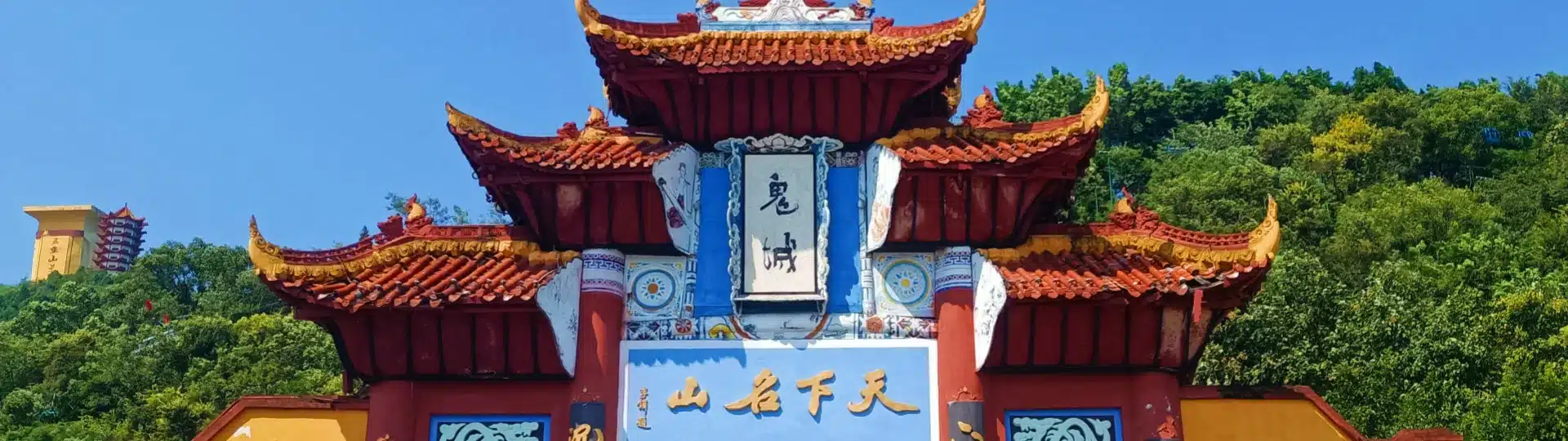
When searching for information about Chongqing tours or Yangtze River cruises online, you may constantly notice a name, “Fengdu Ghost City.” Well, this is not some abandoned building complex which got haunted by ghost, in fact, it’s a popular Yangtze River cruise stop and also one of China’s most mysterious cultural sites. It is built around a fascinating concept: the world of the dead in Chinese mythology. Chinese culture has long developed rich beliefs about the afterlife, judgment, and reincarnation. Fengdu Ghost City is where visitors can actually see how ancient Chinese people imagined the underworld and the realm where souls are judged after death.
With about 2000 years of history, Fengdu Ghost City has become one of the most unique cultural attractions along the Yangtze River Three Gorges route. More and more people are now planning to get a rare glimpse into China’s centuries-old beliefs about life, death, and the spiritual world. To help you better explore this legendary attraction, this article will introduce its basic information, history, and most importantly, the famous sites inside the city (Naihe Bridge or Ghost Gate) and how to make an unforgettable memory during the themed night tour activities.
Content Preview
- Fast Facts about Fengdu Ghost City
- Why is Fengdu a Ghost City?:Legends, Representation, and Religion
- How to Get to Fengdu Ghost City from Chongqing?
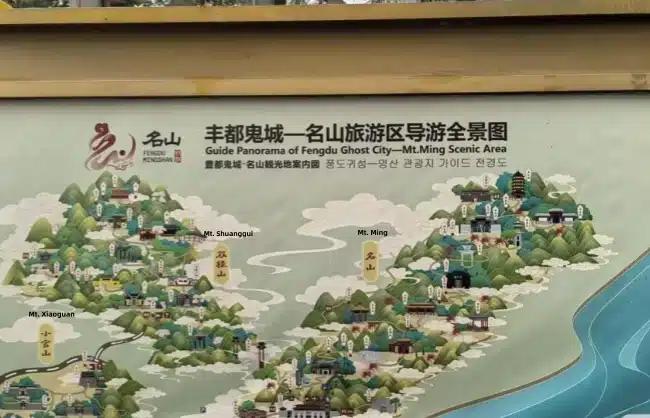
- What to See in Fengdu Ghost City
- What to Do in the Fengdu Ghost City
- Best Time to Visit
- Crucial Tips for Visiting Fengdu Ghost City
- Nearby Attractions of Fengdu Ghost City
- Is Fengdu Ghost City Worth Visiting?
- FAQ about Fengdu Ghost City
- Explore Fengdu Ghost City with China Xian Tour
Fast Facts about Fengdu Ghost City
Item |
Information |
Location |
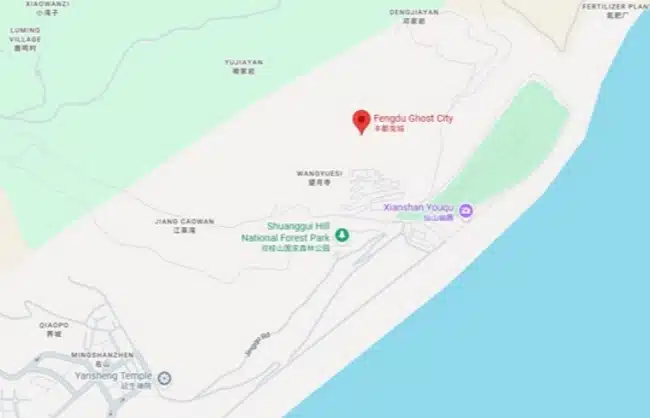
152 Mingshan Road, Mingshan Town, Fengdu County |
Regular Ticket |
90 CNY |
Night Tour Ticket |
80–100 CNY |
Cable Car |
35 CNY |
Opening Time |
7:00–17:20 |
Night Tour Time |
Only on Saturdays, public holidays, and some festivals. Usually 20:00–23:00 |
Recommended Visit Time |
2–3 hours |
Best Time to Visit |
Spring or Autumn/Festivals (Zhongyuan Festival) |
Tip: Tickets can be bought on site or online via platforms like Ctrip.
Why is Fengdu a Ghost City?:Legends, Representation, and Religion
The history of Fengdu County can be traced back to the pre-Qin period, when it served as an important stronghold of the ancient Ba State. During the Han Dynasty, the area was formally established as a county. In the Tang Dynasty and Song Dynasty, it prospered thanks to the busy shipping routes along the Yangtze River. By the Ming and Qing Dynasty, Fengdu had become a well-known religious center associated with its unique “ghost culture.”
The Legend of Yin Changsheng and Wang Fangping
There’s also a widely told story about the origin of the Ghost City comes from the Han Dynasty. In this legend, there were two Taoist practitioners, Yin Changsheng and Wang Fangping, who came to the mountain to cultivate their skills and eventually achieved immortality.
Because their surnames were “Yin” and “Wang,” people later combined them into the phrase “Yin-Wang,” which sounds exactly the same as Chinese term for “King of the Underworld.” This linguistic coincidence had helped a lot in reinforcing the belief that Fengdu was connected with the realm of spirits.
A Mythological “Underworld” Built on a Real Mountain
In Chinese legends, Fengdu is where people’s souls travel to and get judged after death. To many Western visitors, it may take time for them to understand Chinese ghost culture. The underworld actually shares a similar social structure as the real world, as there’s even a bureaucracy of underworld officials. They also give the souls judgement, if a soul is regarded as a good one, it’ll get reward. But if it’s decided as a sinful one, then it’ll get punishment.
Religious Influences
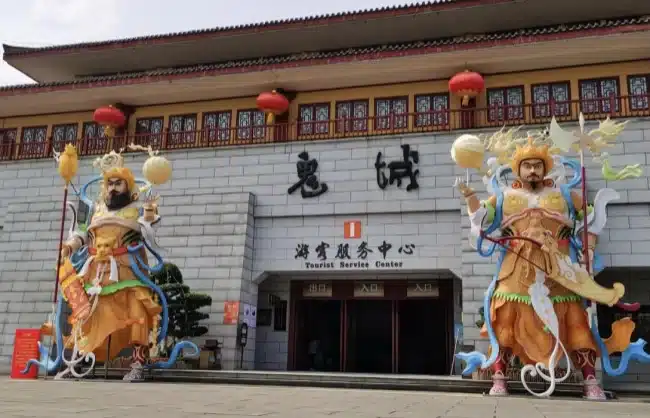
In fact, it’s a unique cultural and religious site blending Confucian, Buddhist, Taoist, and folk traditions. It provides visitors a rare and special cultural experience: while Taoism associated Fengdu with sacred spiritual lands, Buddhist ideas introduced figures such as the Yama and the concept of the Eighteen Levels of Hell. Since buildings here, such as temples, sculptures, or gates, are all made in a rather scary mythological style, the ghost city’s natural eerie atmosphere is nowhere to be found in other religious sites. As a result, it has also become an unforgettable spot along the Yangtze River Three Gorges route.
However, the old Fengdu Ghost City has been severely damaged, a large part of the scenic area people can now visit is reconstructed and restored in contemporary time.
How to Get to Fengdu Ghost City from Chongqing?
The ghost city is located on the north bank of the Yangtze River in Fengdu County, downstream from Chongqing. It is about 170 km from Chongqing city, 10 km from Fengdu county. Basically, there are two ways of getting to it: high-speed train+taxi/local bus or Yangtze River cruise.
- If you’re traveling from Chongqing, first take a high-speed train to Fengdu Railway Station, then take a taxi or Bus 204 to the scenic area. Remember that normally a taxi or car-hailing ride will only cost around 25 CNY.
Pros and Cons: This way is relatively fast and flexible, allowing you to arrange your own schedule. However, it requires transferring between different types of transportation.
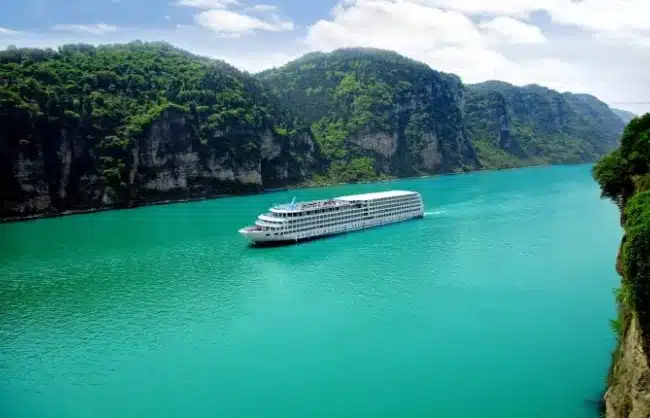
- Fengdu Ghost City is a popular stop along the Yangtze River Cruise. Regular cruises will all include short excursions to this site. It is, which attracts a lot of tourists visiting the Yangtze River. The ship normally pulls in to shore for 2-3 hours, which is quite enough for visitors to have an exploration.
Pros and Cons: The cruise allows you to enjoy the scenery along the Yangtze River at the same time. However, the visit time is fixed and less flexible.
What to See in Fengdu Ghost City
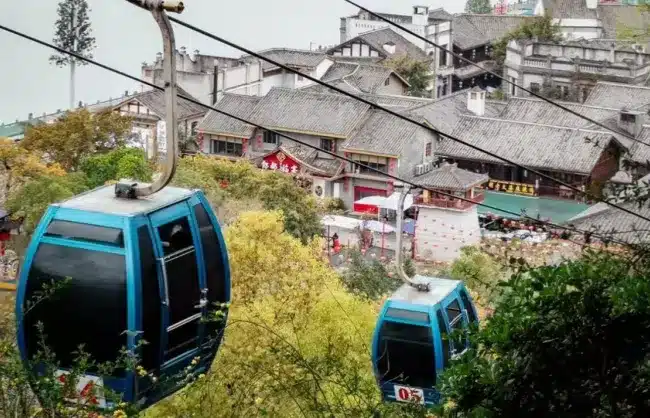
When traveling through the Fengdu Ghost City, there are a lot of core attractions to see. But before starting an exploration of the scenic area, visitors need to first climb the mountain to reach the top. It’s not a really demanding way, however, if you’re not suitable for climbing, you can take the cable car instead. But be noticed that this ride will make you miss many spots, such as Heng Ha Temple. Exploring all of the attractions is like having a symbolic journey from the human world to the afterlife, and let’s take a look at some of the most iconic ones.
Ghost Gate (鬼门关)
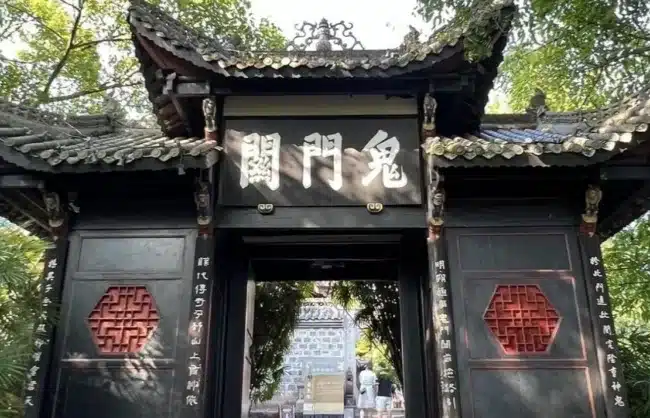
Ghost Gate is considered the entrance to the underworld, and it’s one of the most iconic spots in the . The stone archway has the inscription “Ghost Gate,” and the passage behind the gate is said to take souls from the world of the living to the realm of spirits.
According to legend, there are sixteen ghost kings guarding this gate and examining souls before they enter the underworld. Visitors often follow local customs when passing through, such as avoiding touching the threshold with your toes and heel. And also laugh loudly three times after passing the gate, which symbolizes dispelling the Yin energy and returning to the world of Yang.
Tianzi Palace (天子殿)
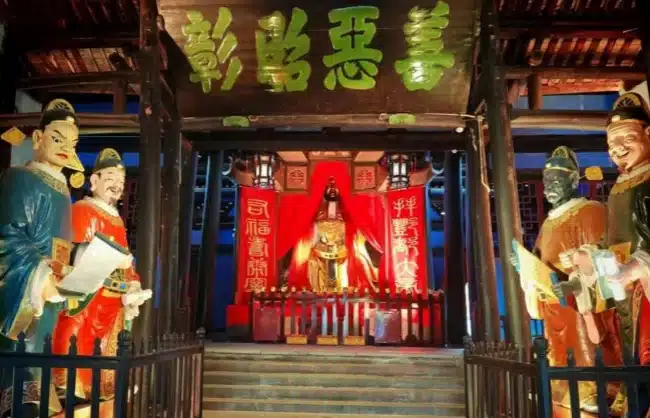
Tianzi Palace is the core of the Fengdu Ghost City. It is the oldest and largest palace that has been preserved. This palace has a history of about 1600 years, while the current buildings were largely rebuilt during the Qing Dynasty.
This hall is dedicated to Fengdu Emperor, the supreme ruler of the underworld. He governs the Ten Kings of Hell and he is also the one who gives the final judgement of souls. This place represents the highest authority in the underworld’s judicial system.
On both sides of Tianzi Palace you can see the Eighteen Levels of Hell, and they represent Buddhist concepts of hell (Naraka), meaning a world of suffering. The deeper a soul falls, the severer its punishment is. Visitors can also see different punishments for various sins at this scene. The sculptures were created to warn people to do good and avoid evil.
For a unique challenge, try test One can stand on it and try to balance for three seconds on one foot. If you manage to do it, you’ll be able to pass the judgment of divine justice.
Road to Yellow Springs (黄泉路)
Road to Yellow Springs represents the path that souls must take on their way to the underworld. Along the road stand statues of Ox-Head and Horse-Face, mythological guardians responsible for escorting souls to judgment.
In traditional belief, once a soul begins walking this road, it must not look back. And this can be seen on the warning tablets, visitors may also not do that. This idea symbolizes the irreversible journey from life to the afterlife. Following the road eventually leads to Wangxiang Terrace.
Wangxiang Terrace (望乡台)
Wangxiang Terrace is the place where souls are said to take one last look at the world of the living. According to legend, the deceased will stand here and gaze toward their hometown and loved ones for the last time. Such a scene is often overwhelmed with sadness. After entering the underworld, they will never have a second chance to do this.
Today, visitors can climb the terrace to enjoy panoramic views of the landscape. And the incredible scenery will further emphasize the symbolic meaning of this site: nostalgia, family ties, and the emotional connection between the living and the dead.
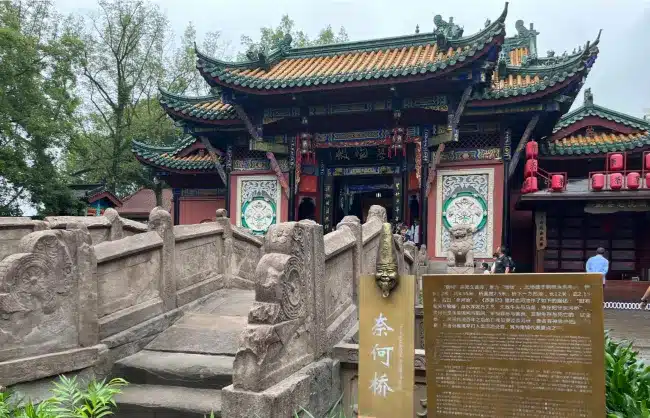
Naihe Bridge (奈何桥)
Naihe Bridge is one of the most famous landmarks in Fengdu Ghost City. It was built during the Yongle period of the Ming Dynasty. The bridge symbolizes the boundary between life and the afterlife, beneath it lies the legendary Blood River. In folklore, virtuous people will cross the bridge safely, while evil souls will fall into the Blood River below, and they will struggle forever.
The structure actually consists of three bridges:
- The central Naihe Bridge, representing the path between life and death
- The Golden Bridge on the left, symbolizing health
- The Silver Bridge on the right, symbolizing wealth
Since the bridge is very old, visitors are no longer allowed to cross it in order to protect the cultural relic.
Hengha Temple (哼哈祠)
Hengha Temple is dedicated to the Heng and Ha Generals. They are two mythological guardians originally named Zheng Lun and Chen Qi. In folklore, they are known for producing powerful sounds, “heng” and “ha,” during battle. These iconic features have given them more well-known names. Their statues look fierce and powerful, which means they can protect and maintain order in the underworld.
Thirty-Three Steps to Heaven (三十三重天)
This attraction consists of a staircase with 33 stone steps. Every step is very heavy, weighing nearly a thousand Chinese catties (about 500 kg). The construction is inspired by the ancient concept of the “Thirty-Three Heavens.” Visitors often try to run up all the steps in one breath. This move symbolizes getting good fortune and success, or “ascending to heaven in a single step.”
Meng Po Manor (孟婆庄)
in Chinese mythology. She’ll be waiting at the end of Naihe Bridge and serving passing souls the famous “Mengpo Soup.” Souls must drink the soup before reincarnation to forget their memories of their previous life. The manor recreates the atmosphere of this legend and is a hot stop, visitors can also try the Mengpo Soup here.
What to Do in the Fengdu Ghost City
Except for exploring the core sites during the days, Fengdu Ghost City will become even more interesting at night. Here are some instructions for the two popular night activities, but remember that nighttime events are only held on Saturday nights, public holiday nights, and specific festival nights (such as the Chinese Ghost Festival: Zhongyuan Festival).
Ten Kings Secret Realm (Immersive Night Experience)
Ten Kings Secret Realm is a large-scale immersive outdoor haunted attraction in the Fengdu Ghost City. It’s located near Parking Lot 4 of Ming Mountain Scenic Area, and the entrance has a 6-meter-tall statue of the Fengdu Emperor staring at visitors with crimson eyes in the dark. It starts at 19:00, our experience suggests that it’s better to go earlier, as it can be really crowded, and there will be queues in different zones. This experience blends traditional underworld culture, folklore ghost stories, and modern interactive entertainment. Visitors become “living souls” and see the thrills and mysteries of the underworld with their own eyes.
Core Experience Zones:
- Sin Mirror Platform (Horror Level: ★★★★★)
The Sin Mirror Platform is the first hall of the underworld. Here, the Sin Mirror reflects the sins of one’s past life. Visitors will step into this hall as “living souls” and perform a soul-releasing ritual.
- Filial Courtyard (Horror Level: ★★★★)
In the Filial Courtyard, visitors encounter a century-old spider spirit. It’s trapped within an intricate web maze, and it will shift between alluring and terrifying forms. The maze is designed to keep visitors on edge, with every corner potentially hiding a surprise scare. So, be ready to run.
- Hall of the Ten Kings (Horror Level: ★★☆)
The Hall of the Ten Kings presents a more emotional kind of thrill. Here, you’ll see the ghost Mei Sanniang perform a dual-personality act, and you’ll find yourself wondering in her moments of love and moments of revenge. And here, make your choice: help her release her grudges or assist her in seeking revenge? Your decisions shape the outcome of the story.
Along the Way – Hidden Highlights
- Coffin Mountain: Traditional Miao-style coffins. There are spirits seemingly ready to break free at any moment.
- Yama’s Hall: Random judgment by the King of Hell. Try making interactions with Granny Meng, who’s offering her soup.
- Roadside NPCs: each may suddenly appear close-up to scare you.
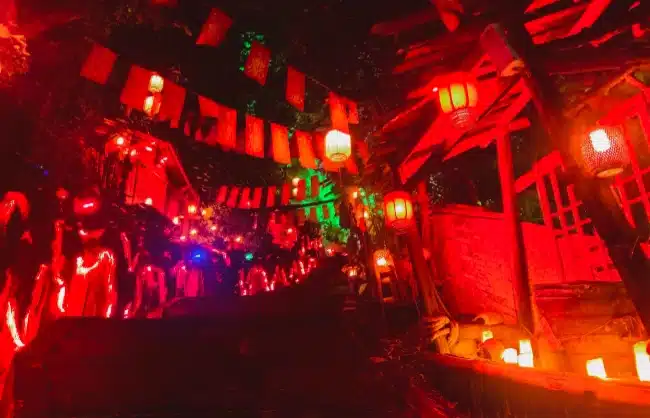
Fengdu Ghost City Night Tour
The night tour of Fengdu Ghost City runs from 20:00 to 23:00, last entry at 21:30. You need to start from the Visitor Center, and there, get your“Soul Record” booklet and a bell, which can used to track progress through interactive points along the route.
Ghost Stamp Game
One of the most interactive activities is the ghost stamp game. Use the booklet you get at the entrance and collect 4 Ghost Stamps along the way. If you get four of them, you can receive a Completion Seal at the Hall of the Emperor and exchange it for a Life-and-Death Ledger. Participants can write their names and interact with the Underworld Judge NPC, then burn the ledger at the furnace for a “reverse fate” experience. Collecting 7 or more stamps unlocks additional rewards.
Night Tour Route
The tour follows a carefully designed path through the ghost city’s iconic attractions, but don’t think that’s all, more interesting events like immersive performances and mini-games are waiting for you, and feel free to interact with the NPCs walking on the streets.
Visitor Center Hall → Neiba → Youming Ancient Realm → Shanxiao Pavilion → Corridors → Bao’en Hall → God of Wealth Hall → Naihe Bridge (bifurcation) → Wuyun Tower → Wangxiang Terrace → Huangquan Road → Ghost Gate Pass → Viewing Platform → Jade Emperor Hall → Return via Naihe Bridge
- Naihe Bridge: the right side leads to a scary route, the left side has a lot of incredible NPCs
- Several scheduled performances enhance the experience:
Huixiu Butterfly Show at Neiba (7 min) – 20:10 / 20:30 / 20:50 / 21:20
Reunion on the Broken Bridge at Naihe Bridge (10 min) – 20:40 / 21:20 / 22:20
Butterfly Bridge Meeting at Wuyun Tower (21 min) – 21:30 / 22:30
Cold Fireworks Display after Wuyun Tower shows – 21:30 / 22:30
Festival Events
If you happen to visit during festivals like Zhongyuan Festival, the night tour will become even more interesting. There will be traditional rituals and performances such as:
- Ancestor Worship Ceremony
- Mulian Rescues Mother (Performance)
- City God Patrol
- Lantern of Millions
- NPC interactions throughout the tour
Best Time to Visit
It is recommended to visit Fengdu Ghost City in spring and autumn, since these two seasons provide the most pleasant weather for outdoor activities. And if you’re on a Yangtze River cruise, you’ll be able to enjoy spring wildflowers in the mountains and stunning fall foliage at the same time.
To select specific dates, our experience is to try to plan your visit on the Zhongyuan Festival (Chinese Ghost Festival) or the third day of the third lunar month. By that time, there will be special performances held in the scenic area and also temple fairs in Fengdu City.
Crucial Tips for Visiting Fengdu Ghost City
- Wear comfortable shoes as you may walk for around three hours in the site, and there are many steps
- Night tour tickets are separate from daytime tickets.
- Better avoid traveling in (October 1st – October 7th ). This is the peak travel time, and there will be large crowds.
- If you want to have an even better experience, you can study a little bit about Chinese ghost culture and the Fengdu Ghost City in advance.
- If visiting in summer, be careful of the scorching heat. Chongqing can be really hot in summer.
Nearby Attractions of Fengdu Ghost City
- Xueyu Cave (雪玉洞): This is a spectacular karst cave world. It’s known for its snow-white stalactites and other crystalline formations that look exactly like jade and snow. This site has a high geological value and it’s listed as one of China’s most beautiful cave attractions.
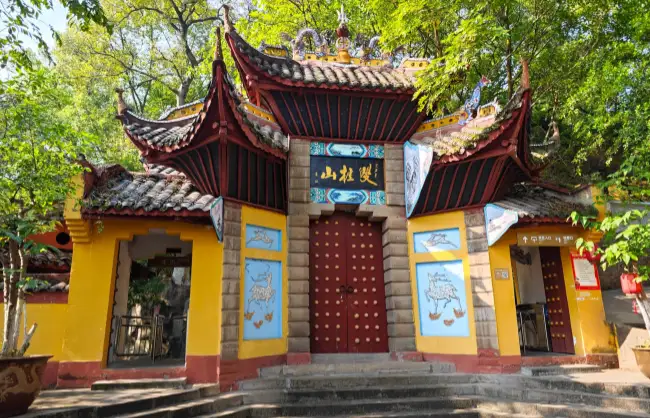
- Shuanggui Mountain National Forest Park (丰都双桂山国家森林公园): You can visit this lush forest park on the banks of the Yangtze River. It’s a pretty site with rich vegetation and cultural sites such as Luming Temple and Confucian Temple. Visitors who enjoy nature walks and panoramic views will find this park truly rewarding.
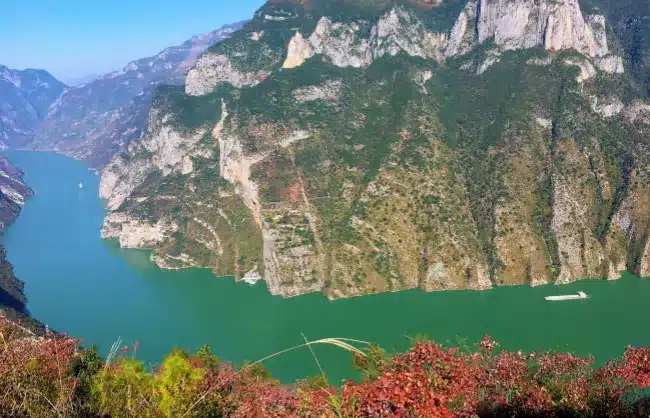
- Three Gorges (长江三峡): This is one of the most famous sites along the Yangtze River. It’s one of the world’s most famous river canyon landscapes and you can see dramatic cliffs, deep valleys, and iconic gorges like Qutang Gorge. The beautiful scenery not only surprised visitors but also inspired so many wonderful poets and artists in the past.
Is Fengdu Ghost City Worth Visiting?
Of course, yes! Fengdu Ghost City may be different from all the attractions you have ever seen. It’s quite rare to see a site fully dedicated to traditional ghost culture and the immersiveness of truly going into the “underworld” is unforgettable. Exploring this town along the Yangtze River cruise also gives you a chance to explore the astonishing beauty of the Three Gorges. However, it may be a little difficult for elders to climb the steps in the site (consider taking the cable car), and some night tour activities can be scary for kids. In general, all visitors can get a good experience if planning wisely.
FAQ about Fengdu Ghost City
Is Fengdu Ghost City real?
Yes, it’s a historic cultural attraction in Fengdu County, Chongqing. It has about 2000 years of history and it’s built based on Chinese underworld mythology.
Can visitors enter Fengdu Ghost City?
Yes, it’s open year-round. Visitors can visit the scenic area whenever they want. Just remember that the evening activities are not held every day.
How long does it take to visit Fengdu Ghost City?
If you’re just visiting during the day time, then will be enough. But if you’re also joining the night tours, then add another 2-3 hours.
Is it suitable for children to visit Fengdu Ghost City?
Daytime sightseeing is totally fine, and a visit can have a profound educational value. But the immersive night attractions can be scary for younger kids.
Explore Fengdu Ghost City with China Xian Tour
Visiting Fengdu Ghost City is easier than you think, especially if you want to combine it with a scenic Yangtze River cruise. With China Xian Tour, you can enjoy all the highlights of the ghost city without worrying about any logistics. From exploring historic temples and the famous night tours to seeing immersive cultural performances, everything can be arranged smoothly. With our best guidance, your Fengdu trip can be both thrilling and stress-free, letting you focus on exploring rather than planning.