


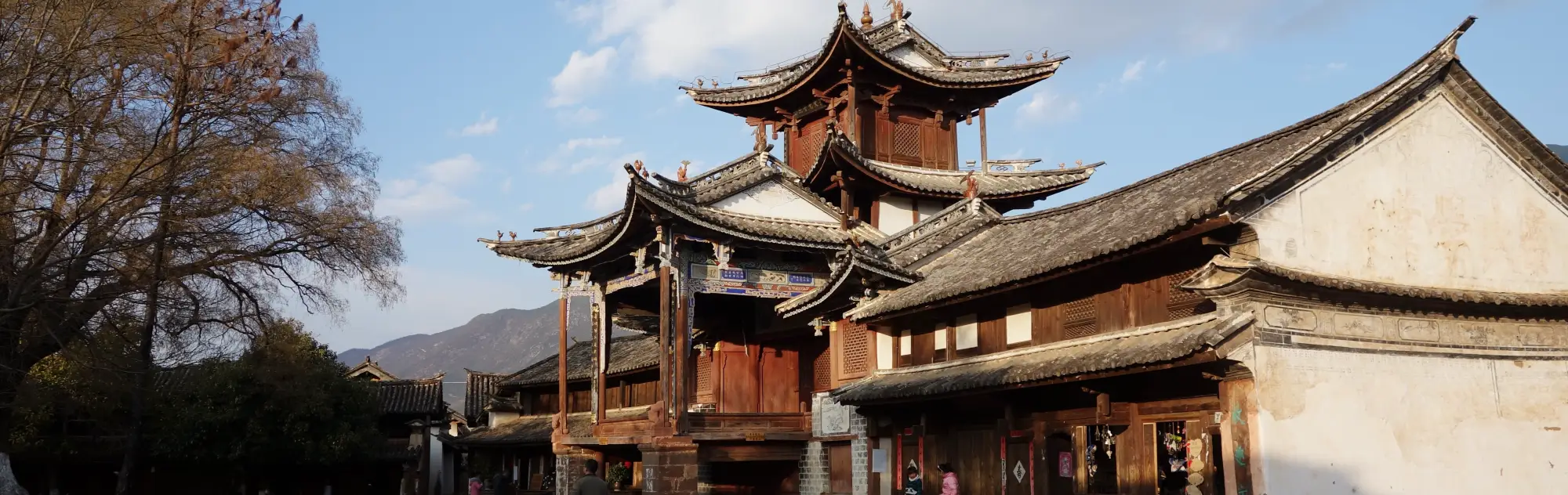
Nestled between Dali and Lijiang Ancient Town, Shaxi Ancient Town is about 130 km from Dali and about 110 km from Lijiang. It was once an important commercial hub on the Tea Horse Road connecting Yunnan with Tibet.
This historical gem is recognized as the living fossil of Bai ethnic architecture from the Ming and Qing Dynasties. In 2002, the town was listed among the 101 World Monuments by the World Monuments Fund for its well-preserved ancient architecture and rich cultural features and folk activities of the Bai people.
Continue reading to find out what to do in Shaxi Ancient Town, important events and practical travel information about visiting route, transportation and accommodation.
📍 Fast Facts & GPS Navigation: Shaxi Ancient Town
- Chinese Name: 沙溪古镇 (shā xī gǔ zhèn)
- Location: County Road 084, Jianchuan County, Dali Bai Autonomous Prefecture, Yunnan Province
- Altitude / Elevation: ~2,100 meters (6,890 feet) above sea level
- Opening Hours: The town itself is open all day; heritage sites open 08:30 – 17:30
- Entrance Fee: Free (Certain indoor historical sites may charge small entry tickets)
- Visiting Duration: 1 – 2 Days (Ideal overnight stop between Dali and Lijiang)
🗺️ Map & GPS Navigation Coordinates (for Didi / Google Maps / Baidu Maps):
Landmark Name |
GPS Coordinates (Latitude, Longitude) |
|---|---|
Shaxi Ancient Town Main Entrance & Parking |
26.3175° N, 99.8512° E (26.3175, 99.8512) |
Sideng Street / Sideng Square (四方街) |
26.3168° N, 99.8508° E (26.3168, 99.8508) |
Shaxi Ancient Opera Stage (古戏台) |
26.3166° N, 99.8510° E (26.3166, 99.8510) |
Yujin Bridge (玉津桥) |
26.3155° N, 99.8532° E (26.3155, 99.8532) |
🏛️ Sideng Square Preservation
🛒 Traditional Friday Market
🌉 Yujin Bridge Sunset
📖 Content Preview
What to See and Do at Shaxi Ancient Town
Step Back in Time Along Sideng Street (Sideng Square)
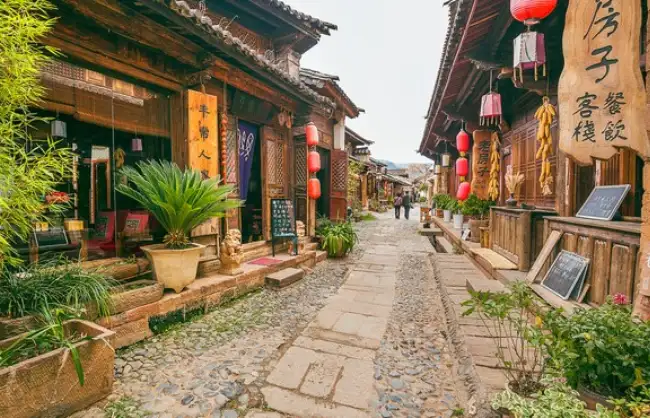
As the main street, Sideng Street is one of the core areas to look into locals’ daily life and the past prosperity of Shaxi. Its historic lanes are lined with traditional shops and Bai-style houses featuring wooden frameworks and intricate carvings and eaves. Along the street stand several well-preserved cultural and religious sites, such as the Ancient Opera Stage, Xingjiao Temple and Yujin Bridge.
Walking into Sideng Street is like stepping back to the time of thriving caravans and prosperous trade along the Ancient Tea Horse Road.

Explore the Spiritual Heart – Xingjiao Temple
- Ticket: free
- Opening Hours: 08:00–17:00
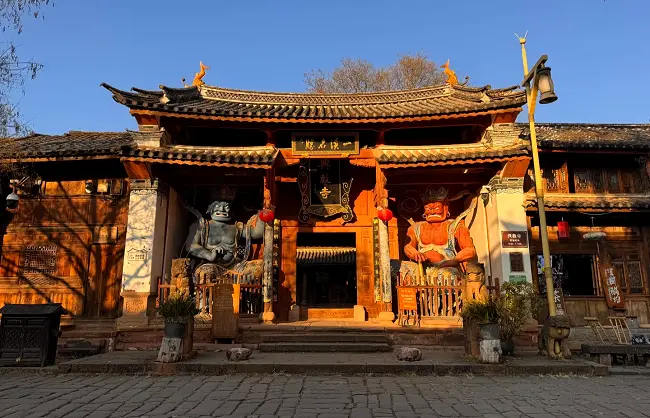
Xingjiao Temple is the only surviving Ming Dynasty Bai Azhali Buddhist temple in China. The existing buildings of the temple include a main hall and an auxiliary hall. Both halls still well preserve the original architectural components of the Ming Dynasty, which also reflect architectural lineages tracing back to the Tang, Song, and Yuan Dynasties.
The beams and columns are robust and grand, and the wooden brackets are intricate and elegant with detailed carvings. The 12 sets of Ming Dynasty murals in the main hall will offer you an insight into Bai religious art.
Capture the Yujin Bridge
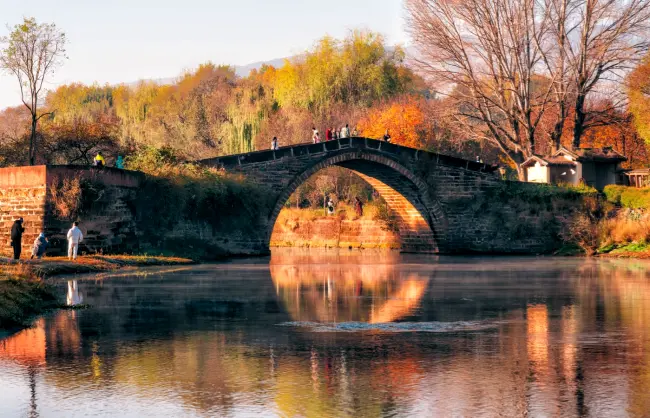
During the Ancient Tea Horse Road era, this single-arch bridge served as an important point for linking travelers and merchants traveling to Dali in the south and Lijiang in the north. To this day, we can still spot some marks of horse hooves on its stone slabs.
More than its historical significance, the bridge is also attractive for its elegant structure, exquisite decorative elements and the harmonious blend with the surrounding ancient trees and river. It’s highly recommended to visit at sunset when the golden light transforms the view into something truly picturesque.
Admire Exquisite Design of the Ancient Opera Stage
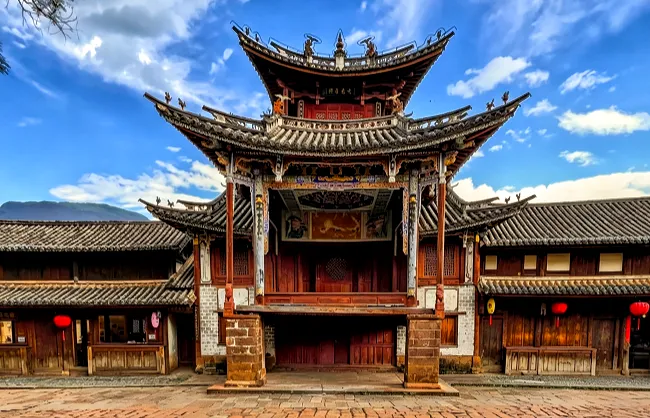
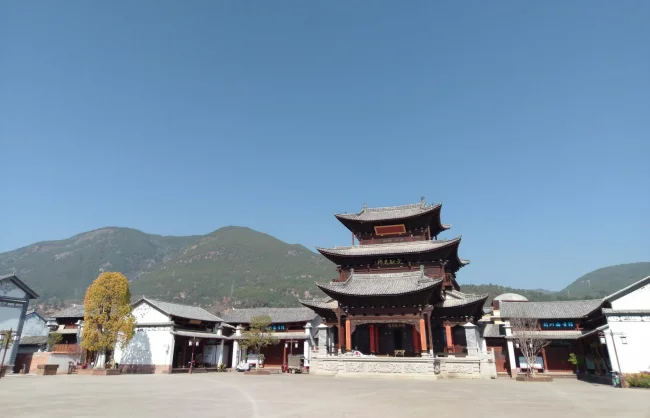
Located at the heart of Sideng Street and facing Xingjiao Temple to the west, the Ancient Opera Stage is one of the most important cultural landmarks of Shaxi Ancient Town. The stage is also a Qing Dynasty building with a three-tiered structure and a traditional Bai architectural style. In ancient times, it was an important venue for cultural and clan activities.
To admire the stage up close, you can’t help but be attracted by the flying eaves, the exceptionally detailed carvings and paintings, and the exquisite layering of a shop below, a stage in the middle, and a pavilion above.
Step into Five-star Caravansary in Ouyang Courtyard
- Ticket: CNY 10 – 20. Please refer to the notice at the entrance.
- Opening hours: 09:00 – 17:00
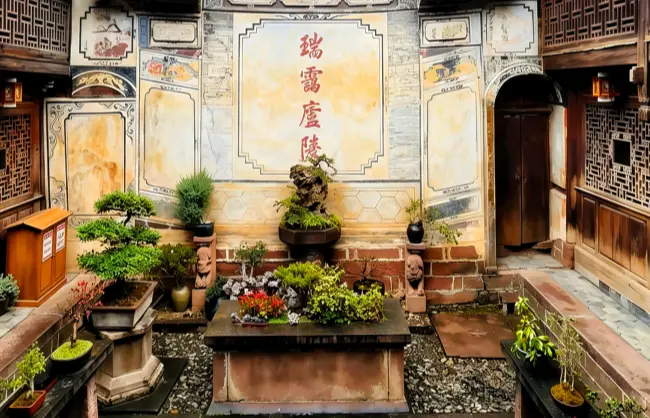
Ouyang Courtyard is one of the well-preserved caravansaries built by the Ouyang family, prominent tea-horse merchants of the Ming and Qing Dynasties. Its design maintains the typical Bai architectural layout of a screen wall and three courtyards, while its front yard is for living, the inner yard is for guests, and the back yard is a service area.
The red sandstone gateway, brick paintings and wood carvings are exquisite masterpieces of Bai architectural art.
Follow the historic Tea Horse Road on this 4-day Dali tour visiting Shaxi and Nuodeng, two preserved ancient towns that once linked China with Tibet, India, and Southeast Asia.
Savor Local Bai Cuisine
The Bai cuisine makes good use of the local materials, like dairy, mountain produce and seasonal fungi, and is known for its rich flavor. Strolling along the Sideng Street, you will find various local snacks. Dairy fan is the most classic snack you cannot miss. It is a thin slice made of milk. Toasted erkuai is a rice cake grilled over charcoal and filled with savory pickles.
For a hearty meal, step into a family-run restaurant in a local courtyard and order characteristic dishes like sour-spicy fish, free-range chicken hot pot, cured ham and stir-fried wild vegetables.

Appreciate Jianchuan Wood Carvings
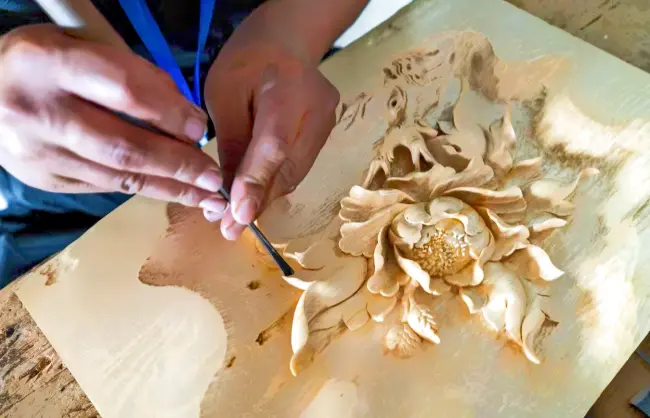
Jianchuan wood carving is renowned as one of the eight major wood carving schools in China. With a history of over 1,000 years, it originated in Tang and Song dynasties and flourished in Ming and Qing dynasties. It is not just exquisite artworks, but also a cultural symbol integrating the architecture, houses and daily life of the Bai ethnic group.
Its carving techniques are diverse with engraving and relief carving being the two main methods. The patterns include flowers, birds, animals, myths and legends, etc. It is widely seen in the architecture, furniture and handicrafts. Ouyang Courtyard is the top destination for wood carvings appreciation. Besides, Xingjiao Temple and Ancient Opera Stage also integrate these elements.
Attend the Vibrant Friday Market (Shaxi Market Square)
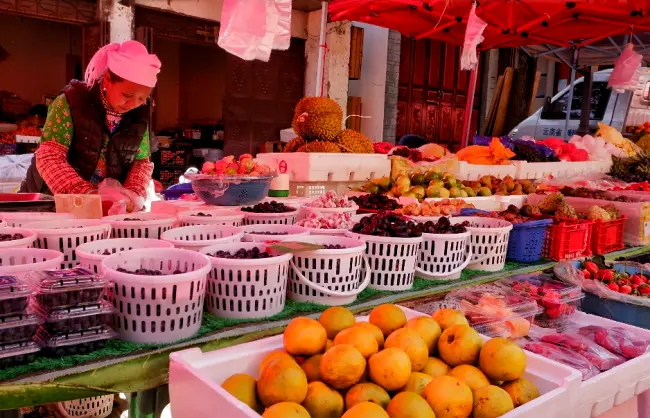
Dating from the days of the Ancient Tea-Horse Road, the Friday Market in Shaxi is the only surviving marketplace along this historic trading route. As a unique event in Shaxi, the market is held each Friday on Sideng Street, offering a rare chance to experience the local vibrant culture and daily life.
To catch its highlights, visitors just need to follow local villagers carrying baskets. Typically, villagers from different ethnic groups in the surrounding areas will gather here. By then, you can not only interact with local people, but also explore an array of local products, including fresh fruits and vegetables, specialties, dry goods, clothing, and household items.
Important Events and Festivals around Shaxi
Taizihui Holiday – The Temple Fair for Prince Shakyamuni
- Dates: Annually on the 8th day of the second lunar month
- Location: Xingjiao Temple, Sideng Street, and the surrounding areas
- Festival highlights: grand street parade, folk percussion & costumed troupes, opera performances
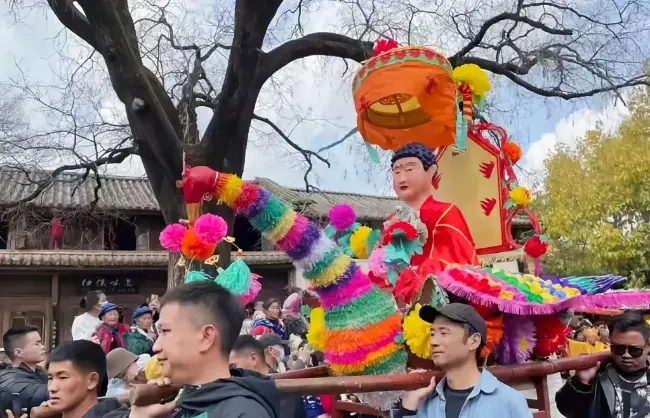
Each year, local Bai people gather at Xingjiao Temple to worship the youthful Shakyamuni Buddha, known as the prince. During the festival, a grand procession will carry the statues of the Prince and the Buddha’s mother through the streets. Accompanied by drum, gong bands, and traditional music ensembles, the parade creates the most striking scene of the festival.
If you are interested in folk performances, head to the Ancient Opera Stage. Various traditional opera performances will be showcased here. Not only do they enhance the festive atmosphere, these performances are also rare chances to gain insight into the town’s culture and traditions.
Shibao Mountain Folk Song Festival
- Dates: Annually from the 26th day of the seventh lunar month to the first day of the eighth lunar month
- Location: Shibao Mountain near Shaxi Old Town
- Festival Highlights: love duets, instrumental performances
This Bai people’s traditional festival can be traced back over 1,000 years. During the festival, young men and women will wear their most elaborate ethnic costumes, gather to celebrate the harvest, and express emotions through song. The main instrument used for the singing is the sanxian – a traditional three-stringed instrument. A main highlight of the festival is love duets, a traditional form of courtship with young men and women expressing their feelings.
Torch Festival
- Dates: Annually on the 25th day of the sixth lunar month
- Location: nearby villages
- Festival highlights: bonfire party
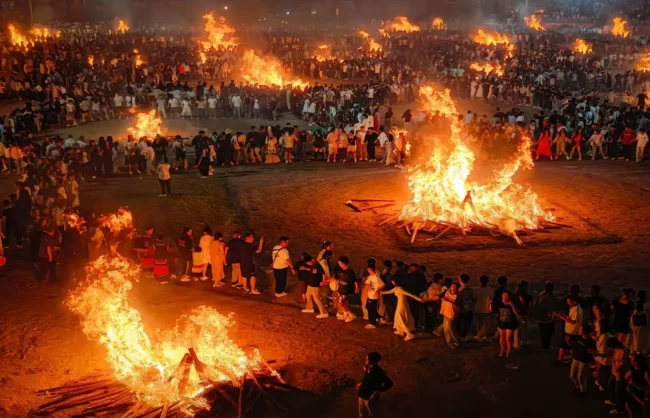
The most lively hours of the Torch Festival are after dark. All the families will set up torches made of pine wood at their doorsteps. This is a symbol of the Bai people to ward off evil spirits and bring good luck.
To protect ancient architecture, Shaxi Ancient Town usually does not light the giant torch at Sideng Street or Ancient Opera Stage. But you can follow the locals to nearby villages to witness the grand scene. The villagers will sit around the torch and sing and chat. This warm and peaceful atmosphere is the soul of Torch Festival.
Recommended tour:

Trace the Ancient Tea Horse Road from Shaxi to Lijiang, exploring Cangshan Mountain, Erhai Lake, and Dali Old Town.
Practical Travel Information about Shaxi Ancient Town
Best Time to Visit
Shaxi Ancient Town is great to visit in all seasons. Usually, February to May is preferred for the pleasant weather and more authentic atmosphere in this period. For those who want to experience traditional festivals, visit the Taizihui Holiday on the lunar calendar February 8th is recommended. Or, arrange your travel to Shaxi on a Friday to gain a chance to participate in the vibrant Friday Market.
How to Get to Shaxi Old Town (Distance & Transportation)
Currently, the old town cannot be reached by flight or train directly. The most popular ways to get to Shaxi are to take a direct shuttle bus or long-distance bus from Dali or Lijiang.
🚘 Distance & Travel Time Quick Reference:
- From Dali Old Town to Shaxi: ~130–140 km (81–87 miles) | 2.5 to 3.5 hours
- From Lijiang Ancient Town to Shaxi: ~107–110 km (66–68 miles) | 2 to 3 hours
- From Kunming to Shaxi: Take high-speed train to Dali (2 hrs), then bus/car to Shaxi (2.5 hrs)
Route |
Option 1: Direct Shuttle Bus |
Option 2: Bus via Jianchuan Transfer |
Travel Time |
Cost |
|---|---|---|---|---|
From Dali |
Departs hourly (08:00–18:00) from Xiaguan East Passenger Station & Dali Old Town. |
Bus from Dali Passenger Station to Jianchuan County (~2 hrs), then local green minibus to Shaxi (~45 mins). |
~2.5–3.5 hours |
CNY 48–80 / USD 7–12 |
From Lijiang |
Departs 09:25, 10:25, 14:55, 15:55 from Lijiang Ancient Town Passenger Station. |
Bus from Lijiang Passenger Station to Jianchuan (~1.5 hrs), then local green minibus to Shaxi (~45 mins). |
~2–3 hours |
CNY 36–50 / USD 5–7 |
Private Transfer |
Direct door-to-door private car pick-up from your hotel in Dali or Lijiang to Shaxi. |
N/A (Direct) |
~2 to 2.5 hours |
CNY 350–500 per car |
For a more convenient and faster transfer, you’d better book a private vehicle or customize a Dali or Lijiang tour including Shaxi Ancient Town. Then, all the logistical work such as transportation, itinerary and accommodation, will all be taken care of.
Recommended Visiting Route
Here are the recommended routes for a 1-day tour and 2-day tour, respectively. Both cover the major highlights. If you are on a tight schedule, follow the 1-day route. If you prefer a relaxing pace and want to experience authentic local life, the 2-day route suits you better.
- 1-day Route:
Sideng Street – Sifang Street – Xingjiao Temple – Ancient Opera Stage – North Guzong Lane/South Guzong Lane – Yujin Bridge
- 2-day Route:
Day 1: Check-in in the afternoon – Sideng Street – Sifang Street – Xingjiao Temple – Ancient Opera Stage – Ouyang Courtyard – Watch sunset at Yujin Bridge – Enjoy a dinner in Sifang Street
Day 2: Watch morning mist and experience local life at river bank or Yujin Bridge – Have breakfast in Sifang Street – Friday Market (if you visit on Friday)
Accommodation in Shaxi Ancient Town
The accommodation options in Shaxi Ancient Town are mainly composed of three types. The high-end boutique homestay is usually designed by a famous designer, so its overall layout and decoration are more beautiful. Customers can enjoy a quieter environment and butler service. The boutique resort hotel has a larger scale with more facilities and standard service, which balances comfort and feature. The characteristic Bai Ethnic Courtyard Inn can offer a more immersive living experience. This kind of hotel is transformed from the traditional Bai ethnic residence.
Recommended Hotels:
1. Jixiashan Hotel
- Location: No. 115, Sideng Street
- Feature: It is composed of 4 Bai ethnic courtyards. The style integrates that of modern Chinese garden. Each guest has a 24-hour dedicated travel butler who can arrange in-depth experience activities for you, such as making horse caravan meal.
- Price: CNY 700 – 1,500
2. Shuxia Inn
- Location: No. 30, Jianglehe Village, about 600 meters to Shaxi Ancient Town
- Feature: It is transformed from a traditional Bai ethnic residence. There are many exhibits of books on Bai ethnic culture and handicrafts, such as wood carvings and black pottery. Some guesthouses come with fenced courtyards, providing good privacy.
- Price: CNY 700 -1,300

Explore Yunnan's most atmospheric ancient towns from Dali and Lijiang to the hidden salt village of Nuodeng and tranquil Shaxi, tracing the legacy of the ancient Tea Horse Road.
How to Plan a Dali and Lijiang Trip with Shaxi Ancient Town
As the Shaxi Ancient Town is located between Dali and Lijiang, it is popular to combine them into one tour. About 6 days are needed to cover the must-visit attractions in both cities. Below is the recommended itinerary.
Day 1: Dali Arrival
Day 2: Cangshan Mountain – the Three Pagodas of Chongsheng Temple – Dali Old Town
Day 3: Erhai Lake – Zhoucheng Village – Shaxi Ancient Town – Xingjiao Temple
Day 4: Sideng Street – Lijiang – Yuhu Village – Dongba Culture Museum – Black Dragon Pool Park – Lijiang Old Town
Day 5: Jade Dragon Snow Mountain – Impression Lijiang Show – Baisha Old Town
Day 6: First Bend of the Yangtze River – Tiger Leaping Gorge – Departure

Cycle along Erhai's shores, hike Cangshan Mountain, and uncover the Tea Horse Road history at Shaxi Ancient Town before reaching Jade Dragon Snow Mountain.
History of Shaxi Old Town and Tea Horse Road
Established during the Tang and Song Dynasties, the Ancient Tea Horse Road was a vast network of routes for promoting trades of tea and horses. The route mainly connected southwestern regions of China with Tibet, northwestern regions, and further areas beyond China. It continued its prosperity through the Ming and Qing Dynasties. Besides commercial trading, the route also served as a corridor for the exchange of diverse cultures.
Since located on the route connecting the Nanzhao and Dali Kingdoms, Shaxi gradually gained prominence and earned the title “Salt Capital” as a key site for caravans along the Tea Horse Road to rest and trade. Besides commercial trading, the town also served as a witness to the diverse religious and cultural activities of the Nanzhao Kingdom. This rich history has left it with a wealth of historical relics related to the Tea Horse Road and religion.
Practical Travel Tips for Shaxi Visitors
- Cobblestone Alleys & Luggage: The historic lanes in Shaxi are paved with stone flags. Wheel suitcases can be noisy and difficult to pull; ask your guesthouse for luggage assistance from the parking lot or carry a backpack.
- Cash for Friday Market: While WeChat Pay and Alipay are accepted in most shops, local mountain villagers selling wild produce at the Friday Market prefer small cash notes (CNY 10, 20, 50).
- Altitude & Sun Protection: Shaxi sits at ~2,100 meters. UV radiation is high; wear sunscreen, sunglasses, and bring a wide-brimmed hat.
- Quiet Pace & Evening Hours: Shaxi is a peaceful slow-travel town. Street lights are low at night to preserve star-gazing, most shops and cafes close between 8:00 PM and 9:00 PM, and by 10:00 PM the town is mostly quiet.
Attractions Nearby
- Shibao Mountain: About 18 kilometers from Shaxi, Shibao Mountain is best known for its numerous Buddhist grottoes, earning it the title “Dunhuang of the Southwest”.
- Cangshan Mountain: Around 135 kilometers from Shaxi; Consists of 19 peaks, boasting stunning alpine scenery, abundant wildlife and well-developed hiking trails, the iconic natural backdrop of Dali.
- Erhai Lake: Roughly 133 kilometers from Shaxi; A breathtaking highland lake surrounded by Cangshan Mountain, the cultural symbol of the Bai ethnic group, perfect for cycling and exploring surrounding Bai villages.
- Dali Ancient Town: About 130 kilometers from Shaxi; A thousand-year-old town once served as capital of Nanzhao and Dali Kingdoms; is endowed with rich historical relics and rich Bai-style architecture.
- Xizhou Ancient Town: Around 90 kilometers from Shaxi; A time-honored Bai settlement hailed as the “Museum of Bai Architecture”, home to thousands of well-preserved ancient Bai courtyards.
- Shuanglang Village: Approximately 100 kilometers from Shaxi; A picturesque lakeside village on the eastern bank of Erhai Lake, famous for lake-view homestays, quiet waterfront paths and stunning mountain-lake vistas.
- Lijiang Old Town: 105 kilometers from Shaxi; A UNESCO-listed site featuring well-preserved ancient architecture and rich Naxi culture.
- Tiger Leaping Gorge: 120 kilometers away; One of the deepest gorges in the world, Tiger Leaping Gorge is a paradise for hiking, with towering snow-capped mountains on both sides and the roaring Jinsha River below.
Discover the Highlights of Shaxi with China Xian Tour
When planning a travel to Shaxi, you may want to find a bus departing at a reasonable time. If travelling with China Xian Tour, you do not have to worry about anything, including the transportation. Our trip is tailored. We can arrange a driver for you, so you can depart at any time you like. And we can help you to book the hotel you prefer. You only need to enjoy the trip. Just feel free to contact us at any time.
FAQs about Shaxi Ancient Town
Is Shaxi Ancient Town very crowded, especially compared to Dali or Lijiang?
Compared with Dali and Lijiang, it is not crowded at all. The number of tourists in one day is even less than 1,000, making it ideal for a peaceful slow travel experience.
Is the town easily walkable, or is transportation needed within the area?
Most main scenic spots are in the core areas and very concentrated, so walking is the best way to explore.
Where is the best place to see the traditional Bai architecture up close?
Ouyang Courtyard, Sideng Street and Ancient Opera Stage are the best places.
What are the exact GPS coordinates for Sideng Square in Shaxi?
The exact GPS coordinates for Sideng Square (Sideng Street) are 26.3168° N, 99.8508° E (26.3168, 99.8508).
How far is Shaxi Ancient Town from Dali and Lijiang?
Shaxi is about 130–140 km north of Dali Old Town (2.5–3 hours drive) and about 107–110 km south of Lijiang Ancient Town (2–2.5 hours drive).


