

As one of the : “Four Best Buddhist Temples” in Guangzhou, the Temple of the Six Banyan Trees (Liurong Temple) is not only a nationally protected cultural relic but also an ancient site that carries a thousand years of Buddhist culture. Its name derives from the great Chinese poet in Song Dynasty — Su Shi.
The core structure of this temple, the Flower Pagoda, is the tallest Song Dynasty pagoda remaining in the Lingnan region, named for its flower-like column shape.
This ancient temple, hidden in the bustling city, appears even more serene with the backdrop of the modern skyline. It provides visitors with an excellent place to experience Buddhist culture and learn about history in Guangzhou tour.
Content Preview
- Basic Travel Information for Visitors
- History of the Temple of the Six Banyan Trees
- Layout of the Temple of the Six Banyan Trees
- What to See and Do at Liurong Temple
- Best Time to Visit Liurong Temple
- How to Get To?
- Tips for Visiting the Temple
- Nearby Attractions
- Recommended Guangzhou Itinerary with the Temple of the Six Banyan Trees
- Plan Your Guangzhou Trip with China Xian Tour
Basic Travel Information for Visitors
- Location: No.87, Liu Rong Road, Yuexiu District, Guangzhou City, Guangdong Province.
- Chinese Name: 六榕寺 (Liurongsi)
- Ticket: Free admission for visitors
- Opening hours: 8:00 – 16:30 (Entry stops at 4:30 PM)
- Best time to go: 8:00-10:00 on weekdays
- Time needed: About 1 to 2 hours
- Main attractions: Flowery Pagoda (Six Banyan Pagoda), the Mahavira Hall, Hall of Avalokitesvara, Hall of Six Buddhism Patriarchs, the Heavenly Kings Hall, the Tripitaka Library, the Hall of Friendship.
History of the Temple of the Six Banyan Trees
Built in 537 in Southern dynasties, the Temple of the Six Banyan Trees has over 1400 years history. It is one of the the four best Buddhist temples in Guangzhou. The other three ones are Guangxiao Temple, Hualin Temple and Haidong Temple.
The Temple of the Six Banyan Trees has experienced many times of renaming and rebuilding. It is said that in the year 1100 during the Song Dynasty, the great Chinese poet Su Shi passed by this place. Seeing six banyan trees at the entrance, he took up his pen and named the temple Liurong Temple.
Up to now, the Temple of the Six Banyan Trees is not merely a simple temple, which has already become a modern spiritual site for local people.
Layout of the Temple of the Six Banyan Trees
With the area of 8500 square meters ,the Temple of the Six Banyan Trees has more than 13 buildings including the places where monks live. And the center of this temple is the Flower Pagoda, with Buddhist architectures lined on both sides.
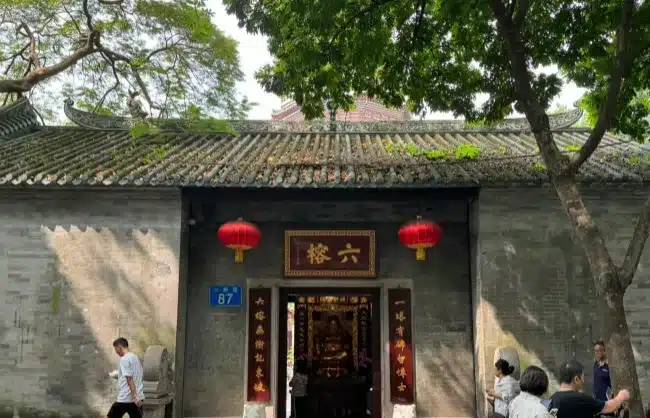
At the entrance of the temple, you will see the Mountain Gate, which is the most iconic photo spot. Upon entering, you will successively see the Heavenly Kings Hall, the Flower Pagoda, the Mahavira Hall, and the Tripitaka Library. This forms the temple’s central axis.
To the south are the auxiliary buildings, mainly including the Hall of the Sixth Patriarch and the Hall of Avalokitesvara. To the north are the Jiexing Meditation Hall (for monastic practice and reception) and the Dining Hall, which serves both visitors and monks.
What to See and Do at Liurong Temple
The Nine-Story Flower Pagoda (Hua Ta)
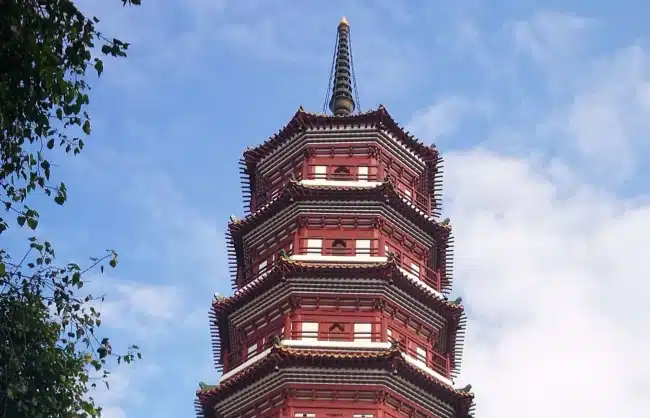
The Flower Pagoda derives its name from its overall shape, which resembles a flower stamen. Meanwhile, because it houses over a thousand Buddha statues inside, it’s also known as the Thousand Buddha Pagoda.
Its structure is octagonal and nine stories high, differing from traditional Chinese square pagodas. This design reflects the characteristics and innovations of Song Dynasty architecture. The octagonal shape symbolizes the Buddhist concept of the Noble Eightfold Path, which guides people towards liberation from suffering. The nine-story height reflects the nine celestial realms, symbolizing the gradual elevation of spiritual practice.
Since it was found firstly in 537, the pagoda has existed as a witness to the development of Buddhist culture in Lingnan region, making it an indispensable part of the temple’s heritage.
Hall of the Three Buddhas & Precious Buddhist Relics
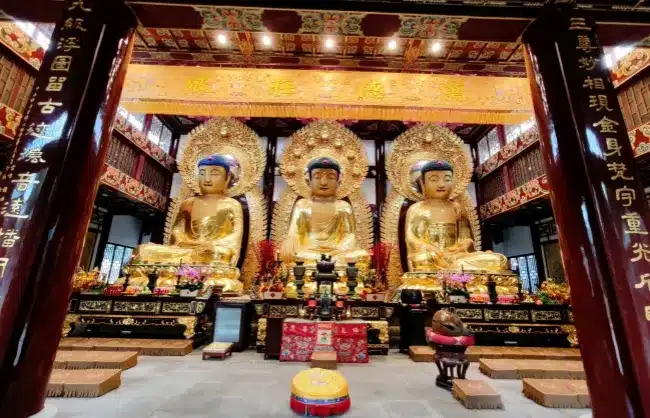
Hall of the Three Buddhas is also called the Mahavira Hall, which comes from Sanskrit. As one of the most iconic buildings in Liurong Temple, Hall of the Three Buddhas is specifically used for enshrining statues of the Three Buddhas and precious Buddhist relics.
The three Buddhas refer respectively to the central Shakyamuni Buddha (representing the present), the Medicine Buddha on the left (representing the future), and Amitabha Buddha on the right (representing the past). These three Buddha statues are over 6 meters tall and have a total weight of 10 tons. They are the largest and most complete copper-cast Buddha group from the Qing dynasty remaining in Guangdong.
More than the architecture and Buddha statues, there are many relics donated by the Buddhist community. The most famous of these is the Buddha Tooth Relic, which was brought back to China from Cambodia by Master Tanyu of the Northern and Southern Dynasties. Having withstood over a thousand years of history, it has become the foremost of the ‘Four Treasures’ of Liurong Temple.
The Six Banyan Trees and Courtyard Gardens
Excepts solemn and magnificent Buddhist halls, the banyan trees and courtyard gardens are also significant parts in Liurong Temple. These old banyan trees are not only the gift from nature, but also the soul of the temple, carrying a cherished story of history.
In Song Dynasty, the famous literary master, Sushi, was Invited to inscribe a dedication for this temple. He looked at the six tall, lush, and green banyan trees, whose branches and leaves are connected, resembling a natural courtyard. Therefore, he named this temple as Six Banyan trees Temple(Liurong Temple). Nowadays, only three trees can be seen in the temple, all of which are replanted around 1913.
And the courtyard gardens, consisting of the old Banyan trees, flowers, the Flower Pagoda and halls, have become a pure land in bustling city. Its elegant and serene atmosphere make visitors calmer and add a sense of Zen to the temple.
Experiencing Incense Rituals and Prayers
Many visitors come to Liurong Temple to pray for blessings. And most of them pray for a soulmate or children. Because Chinese people believe that Guanyin in mythology has great strength in bringing children and granting marriage opportunities.
Offer items in the Hall of Avalokitesvara, pray sincerely, and then bow three times to complete the blessing ritual. What is relatively special is that, unlike other temples, Liurong Temple doesn’t encourage incense burning. The main forms of offering are flower lanterns and agarwood.
Admire Lively Buddha Statues & Important Buddhist Relics
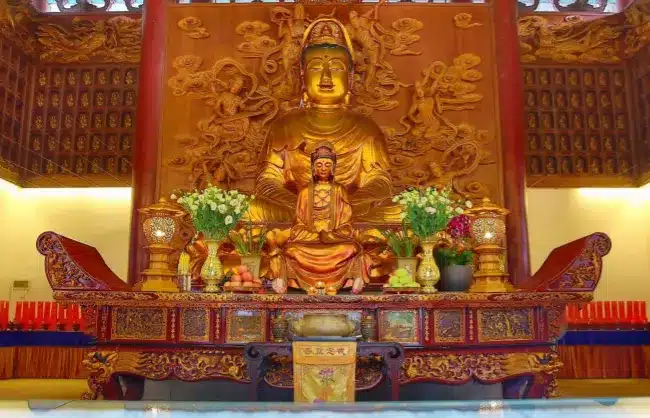
In Liurong Temple, the most and iconic things you can see maybe the Buddha statues and relics. According to rough estimates, there are over 1000 Buddha statues in total at Liurong temple. Every of them has its own Characteristics and is lifelike.
Among them, the most famous is the Maitreya Buddha in Hall of the Three Buddhas. He has kind smile and curvy figure. It is said that he was a poor but happy monk. In China, he is widely accepted and recognized.
In addition, there are many precious Buddhist relics and other statues as well, such as the Four Heavenly Kings. These relics all have different means and represent the Buddhist culture of different period.
Take Great Photos
If you want to take some great photos at the temple, below are some recommended spots for you:
- Flower Pagoda Square: Shoot at a 45° upward angle in front of the Flower Pagoda. This perspective perfectly captures the pagoda’s full view, pairedwith the blue sky and banyan trees. It is one of the most popular photo spots.
- Mountain Gate Entrance: Take photos at the Mountain Gate Entrance. You can capture both Su Shi’s inscription and the classical gate, with the distant Flower Pagoda in the background. This angle directly showcases the temple’s name and its core architecture.
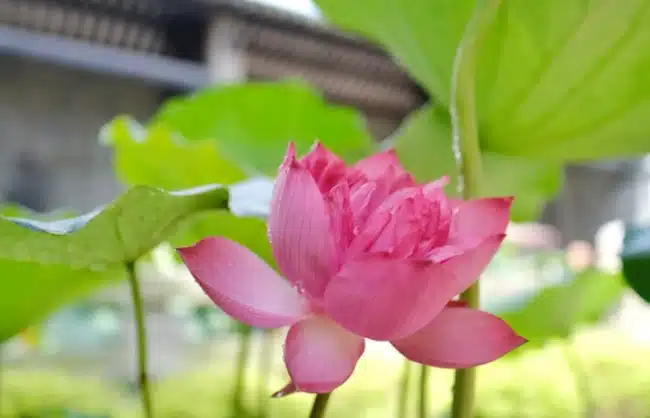
- Lotus Pond Side: The pink and white lotus flowers in the pond complement the green lotus leaves beautifully. Standing by the Lotus Pond offers you an excellent combination of colors and composition for your photos.
- The Mahavira HallSquare: stand in front of the Mahavira Hall, paired with the trees and Incense burners and you can get a photo with the solemn atmosphere.
Best Time to Visit Liurong Temple
- Best time to visit the temple:9:00 – 11:00 at weekdays
In the morning, the monks carry out their regular chanting activities. And the praying for blessings can be done all day, but traditional beliefs hold that the morning is the best time for it.
At the same time, the lighting is relatively soft, making it suitable for taking photos. And there are also fewer visitors in the morning than in the afternoon, so the experience will be more comfortable with less crowd. After viewing, between 11:30 and 12:00, you can also go to the dining hall to experience vegetarian meals, as the dining hall closes at 12 noon.
As a coastal region with humid climate, Guangzhou’s comfortable environment is friendly to visitors in most times of the year.
But try to avoid paying a visit to it in summer (from July to September), because the temperature is high and the climate is wet and hot. Compared to other seasons, the comfort will decrease.
Meanwhile, extreme weather may occasionally occur in summer, such as heavy rain or typhoons, which not only affect your travel experience in Guangzhou, but can sometimes even be dangerous.

How to Get To?
Located in the Yuexiu District, Guangzhou, Liurong Temple is very close to the city center, Tianhe District (about 10 kilometers). And it’s about 37 kilometers from Guangzhou Baiyun Airport and about 15 kilometers from Canton Tower.
Overall, the transportation to Liurong Temple is very convenient for visitors.
- By metro, you can take Line 1 to the Gongyuanqian station and then walk for about 10 minutes to reach the temple. Or you can also take the Line 2 to the Sun Yat-sen Memorial Hall Station and walk for about 12 minutes to reach it.
- By bus, you can take Bus No.11, No. 29, No.56, No.204, No.253, No.262, No.250, all of which can reach around the temple, and then walk for minutes to arrive at it.
- Besides these options, you can also reach the temple by taxi or shared bike. It mainly depends on your location and urgency.
Tips for Visiting the Temple
- Dress Code: Avoid wearing revealing or overly casual clothing (such as tank tops, shortsand slippers). This is considered disrespectful to the temple.
- Etiquette: Try to keep quiet and speak softly inside the temple, and avoid using foul language. Meanwhile, when taking photos, it is prohibited to photograph Buddha statues and monks.
- Offering Etiquette: Incense is generally not used; you can offer flowers,lamps, or agarwood. These can be purchased at shops around the temple, but make sure to choose reputable sellers and avoid being deceived.
- Visiting Etiquette: Do not enterrestricted or private areas, and do not step on door thresholds.
Nearby Attractions
- Beijing Road Pedestrian Street: This pedestrian is the most iconic and the earliest to implement standardized management pedestrian shopping stree. According to the official data, it has more than 1000 brands and 52 time-honored stores inside.
- Sacred Heart Cathedral: Ideal for enthusiasts of architectural art and religious culture. It’s about 2 kilometers from Liurong Temple, which need only 11 minutes by bike.
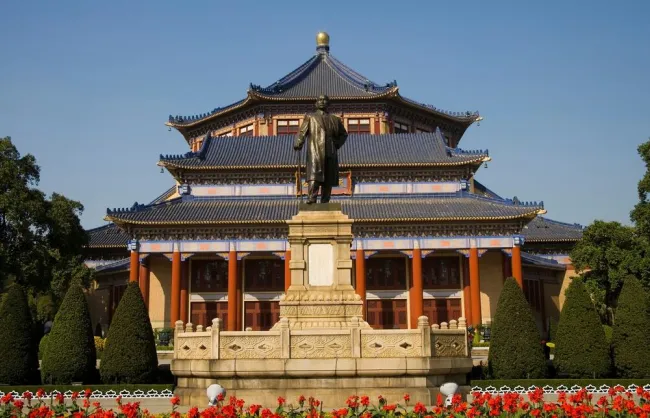
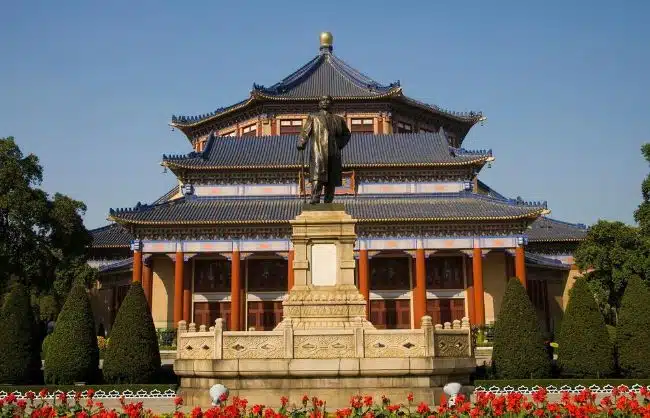
- Sun Yat-sen Memorial Hall: It is about 1.7 kilometers from Liurong Temple. The hall is the largest memorial hall for Sun Yat-sen in the world. Its design embodies a combination of Chinese and Western styles. It holds both historical significance and architectural aesthetics, making it well worth a visit.
- Guangzhou Lu Xun Memorial Hall: About 2.3 kilometers from the temple. It is the former residence and workplacefor the great Chinese writer – Lu Xun.
- Nanyue King Museum: About 3.6 kilometers away from Liurong Temple, the museum displays the most complete and the largest-scale painted stone chamber tomb of the Han Dynasty. If you have strong interests in Chinese history and ancient system, it will be a wonderful choice.
Recommended Guangzhou Itinerary with the Temple of the Six Banyan Trees
Besides Liurong Temple, we recommended to add more iconic landmarks of Guangzhou for a more thorough exploration of its history and culture. Get some inspiration from the followinng one-day Guangzhou itinerary if you are planning a trip.
- Visit Liurong Temple in the early morning. Admire the striking octagonal pagoda and experience local incense ritualsand prayers.
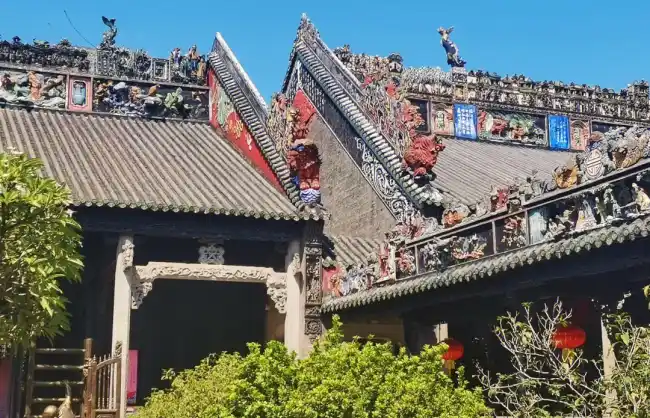
- Move on to the Chen Clan Ancestral Hallto marve at the Lingnan architectural art.
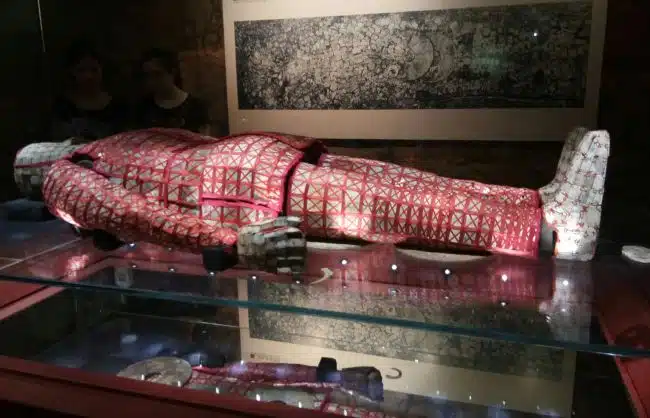
- History discovery at Mausoleum of the Nanyue King – the tomb of the second king of Nanyue Kingdom in the early Western Han Dynasty. Here you can see the king’s jade burial attire and many other precious artifacts.
- Make a visit to the Shamian Island. Stroll around the streets, admire new Baroque style Catholic church or pick up some souvenirs from local antique shops.
- At night, you can take a night cruise on the Pearl River to admire the vibrant nightscape.
If you want to explore these highlights with a local guide, consider our Guangzhou tours, which can be customized around your interests and schedule.
Recommended tour
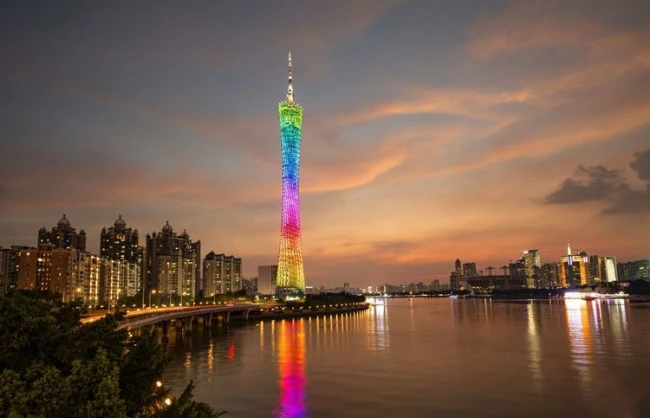
Discover 2,200 years of Guangzhou history through ancestral halls, ancient temples, modern skylines and authentic Cantonese cuisine.
Plan Your Guangzhou Trip with China Xian Tour
As a perfect combination of Guangzhou historical sites and living Buddhist architecture in China, Liurong Temple has unique value and is a must-see attraction in Guangzhou. Besided the temple, Guangzhou also boasts many other stories and interesting attractions. Feel free to contact China Xian Tour for an in-depth exploration of Guangzhou. We will offer the most comprehensive information and the most attentive service! Our over 20 years of experience will guarantee you a smooth and enjoyable trip.