



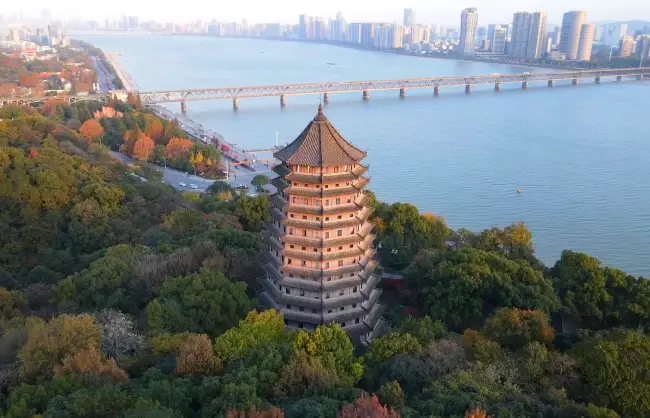
Standing by the Qiantang River, Six Harmonies Pagoda (also known as liuhe Pagoda) is not only a masterpiece of Chinese architecture, but also a culture symbol of Hangzhou. During North Song Dynasty, the Emperor Qian Chu of the Wuyue Kingdom designed this 59.89-meter-tall pagoda to control the tidal bore of the Qiantang River. Over centuries, it has endured destruction and reconstruction, so it blended elements from different dynasties like Song, Yuan, Ming and Qing. Today, it becomes a key to exploring Hangzhou’s history.
What does “six harmonies” stand for? As a term from Buddhism, it refers to different aspects of harmony, that is, body, speech, thought, view, livelihood, and conduct. Beyond its spiritual significance, Liuhe Pagoda plays an important role in China’s architectural and cultural evolution.
Essential Travel Information
- Location: Yuelun Hill, Zhijiang Road, Xihu District, HangzhouCity.
Chinese Name: 六和塔 (Liùhé Tǎ).
Opening Hours: 7:00 AM–5:30 PM. - Entrance:¥20 (adults), ¥10 (students/seniors), free for children under 1.2m and seniors over 70.
- Additional fee for ascending the pagoda: ¥10(adults), ¥5 (students/seniors), free for children under 1.2m and seniors over 70.
- Time Needed: 1.5–2 hours (including time to climb the pagoda and explore the grounds).
Best Time to Visit: Septemberfor mild weather and the Qiantang River tidal bore; spring (March–April) for nearby peony blooms.
History & Legend
Why Was the Liuhe Pagoda Built?
As a natural phenomenon, tidal bores of the Qiantang River had threatened nearby villages, farmland, and trade routes for a long time in history. To prevent people from its harm, the Six Harmonies Pagoda was built by local government. Ancient locals believed the raging tides were caused by an underwater dragon or angry river gods. Thus. the pagoda was designed to stabilize the river’s energy and protect the region from floods. Today, the pagoda extends beyond its original purpose. It stands as a testament to Hangzhou’s historical glamour, a combination of spiritual comfort and functional design.
Historical Evolution
- Northern Song Dynasty (970): Original construction under the Wuyue Kingdom.
- Southern Song Dynasty (1163): Rebuilt after being destroyed in wartime, forming the core structure visitors can see
- Ming(1368-1644) and Qing Dynasties (1644-1912): Renovations added wooden eaves, decorative carvings, and Emperor Qianlong’s inscribed plaques.
Literary Connections
The pagoda features in Jin Yong’s (a legendary Chinese novelist, essayist, and journalist) martial arts novels, such as The Book and the Sword, where Emperor Qianlong is held captive here, and The Heaven Sword and Dragon Saber, which romanticizes it as a lovers’ rendezvous. Through Jin Yong’s lens, every ancient stone in Pagoda becomes meaningful, and every tree there appears mythical, transforming a historical site into a gateway to China’s literary world.
Architectural Marvel of Liuhe Pagoda
Liuhe Pagoda is nearly 60 meters tall. From the outside, it appears to have 13 tiers. In fact, there are only seven interior floors inside. With a spiral staircase going through the building, its octagonal structure stands for grandeur and harmony,
Structure and Design
Exterior Design
The pagoda’s eaves diminish in size as they ascend, crowned with 104 iron bells hanging from upturned corners. The contrast between the bright upper eaves and shadowy lower tiers creates a striking visual harmony when viewed from afar.
Interior Features
The pagoda’s walls are adorned with Sumeru pedestals (须弥座, xūmízuò), a traditional Buddhist architectural element.
On the third-level Sumeru pedestal, intricate carvings present travelers with floral patterns, birds, mythical beasts, and celestial beings, which shows an exceptional craftsmanship from the Song Dynasty.
Brick Carvings
Over 200 brick carvings decorate the Sumeru pedestals, featuring vivid motifs such as blooming pomegranates, lotuses, and baoxiang flowers (宝相, a stylized floral design), alongside phoenixes, peacocks, and parrots in mid-flight with outstretched wings. Mythical creatures like lions and qilins (Chinese unicorns) leap dynamically, while celestial dancers (feixian) swirl in mid-air.
Artistic Elements
From the whispering iron bells to celestial dancers, every detail of Six Harmonies Pagoda transforms it into a living museum of China’s artistic heritage.
- Stone Reliefs on Sumeru Pedestals: Symbolizingprosperity, purity, and fertility, the carvings of peonies, lotuses, and pomegranates are built in the third-tier pedestal,
- Wooden Eaves Brackets:To support the pagoda’s overhanging eaves, dougong brackets are intricately carved, which combines structural function with ornate beauty.
Things to Do at Liuhe Pagoda
Ascend for Panoramic Views
Climb the spiral staircase, get to the top floor and you can have a sweeping vista of the Qiantang River, where a “white snake” is winding through lush hills and modern Hangzhou’s skyline.
Witness the Qiantang River Tidal Bore
During the autumn equinox (September–October), you can observe the world’s largest tidal bore, a thunderous natural spectacle best viewed from the pagoda’s upper levels.

Explore the Chinese Ancient Pagoda Museum
Next to Six Harmonies Pagoda, Chinese Ancient Pagoda Museum is a home to miniature models of iconic Chinese pagodas, offering insights into the nation’s architectural diversity.
How to Get to Liuhe Pagoda
- Public Transit: Take buses 4, 318, or Y5 to “Six Harmonies Pagoda”at
- Taxi/Rideshare: A 20-minute ride from West Lake (approx. ¥30–¥40).
Essential Tips for Visitors
- Comfortable Shoes: The spiral staircase is steepand narrow, so you may need a pair of comfortable shoes to make the journey easier.
- Combine with Nearby Attractions: Prepare a full day for nearby attractions like West Lake, Lingyin Temple, or Xixi Wetlands.
- Check Tidal Schedules: For optimal viewing, you’d better consult local tide tables in advance.
Six Harmonies Pagoda collects Hangzhou’s fusion of natural beauty and human ingenuity. Whether you’re a history buff, architecture enthusiast, or nature lover, it promises an unforgettable chapter in your Hangzhou tour. Plan your visit today and step into a story written over a millennium!


