




With the nickname the Ice City, Harbin in China’s Heilongjiang Province is especially famous for its long and cold winter, though it actually has four distinct seasons throughout the year. Harbin weather is nice overall, other than its freezing and snowy winter.
Winter in Harbin is dry and cold, with abundant snowfall that can reach as much as 30 to 40 centimeters. This makes Harbin a perfect destination to feel the charm of winter. In fact, a series of seasonal activities themed on snow and ice are held there annually and the best one that you can’t miss is the Ice and Snow Festival.
If you are not accustomed to the harsh winter weather, summer is also a great time for a Harbin travel as it offers a terrific escape from the scorching summer heat in many other parts of China.

Content Preview
- Best Time to Visit
- Monthly Weather
- Seasonal Weather
- Harbin Weather Overview
- Practical Travel Tips
- Travel with China Xian Tour
- FAQs
Best Time to Visit Harbin
- For Ice Festival: January is perfect for an unforgettable Harbin Tour with optimal snowy conditions and various events held in scenic areas. In case that the Spring Festival falls in January, you get double the fun in the festive atmosphere.
- For Mild Weather: If you fear the extreme cold in winter, May, June and September are optional as it is neither hot nor cold.
- Avoid: In March, as the snow and ice begin to melt, the streets become slushy, making it the least ideal time for a visit.
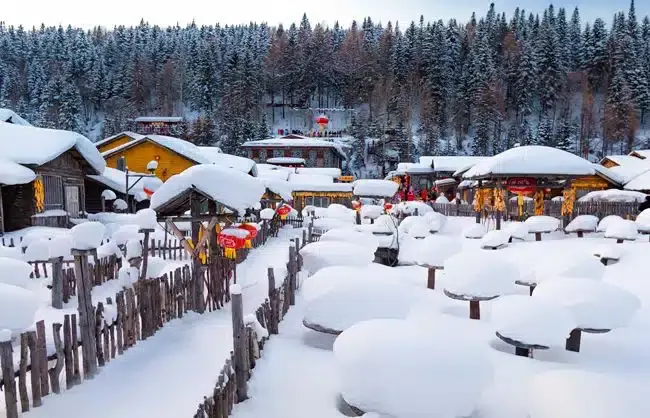
Experience Harbin's Ice-Snow World, ski at Yabuli Resort, wander Snow Town's glowing cottages, stroll European-style Central Street, and admire the Ice and Snow World.
Harbin Weather by Month: Average Temperatures and Rainfall
Harbin belongs to a typical continental monsoon climate with four distinct seasons. In July, the city is the hottest. On the contrary, it’s coldest in January. Summer is when the city receives the most rainfall, especially In July. With little rainfall, January, February and December are the driest months. Below we list the monthly summary of Harbin’s weather in a detailed chart.
Month |
Average High (°C/°F) |
Average Low (°C/°F) |
Rainfall |
Rainy Days |
Humidity |
January |
-14°C / 6.8°F |
-25°C / -13°F |
3 mm |
4 days |
70% |
February |
-8°C / 17.6°F |
-20°C / -4°F |
8 mm |
5 days |
66% |
March |
3°C /37.4°F |
-9°C / 15.8°F |
12 mm |
5 days |
61% |
April |
15°C / 59°F |
2°C / 35.6°F |
21 mm |
7 days |
49% |
May |
22°C /71.6°F |
11°C / 51.8°F |
72mm |
12 days |
56% |
June |
28°C /82.4°F |
17°C / 62.6°F |
115 mm |
15 days |
67% |
July |
29°C / 84.2°F |
20°C / 68°F |
120 mm |
14 days |
76% |
August |
27°C /80.6°F |
19°C / 66.2°F |
111 mm |
12 days |
77% |
September |
22°C / 71.6°F |
11°C / 51.8°F |
44 mm |
9 days |
70% |
October |
12°C / 53.6°F |
1°C / 33.8°F |
24 mm |
7 days |
63% |
November |
0°C / 32°F |
-9°C / 15.8°F |
15 mm |
6 days |
67% |
December |
-11°C / 12.2°F |
-21°C / -5.8°F |
9 mm |
8 days |
72% |
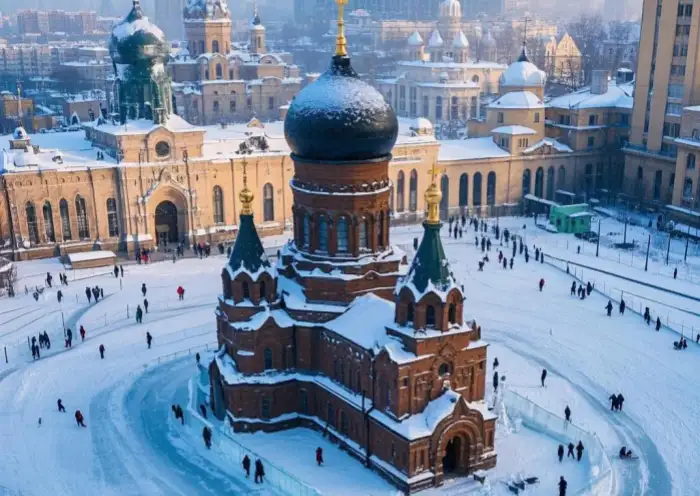
Harbin Weather by Season
Harbin Winter (November – February) – Cold and Prolonged
Winter in Harbin is dry and cold and can be very long with frequent snowfalls. The average temperature is between -25℃ (-13℉) and -15℃ (5℉).
Technically speaking, Harbin’s winter sets in from late October, when there is a chance for the first snow. From then on, temperature begins to drop below zero and the cold intensifies rapidly.
In November, winter is coming formally with temperatures consistently staying below freezing both day and night. More snowy days are expected to happen in the following period. January is the coldest month, with temperatures hitting their annual low, from -30℃ (-22℉) to -10℃ (14℉).
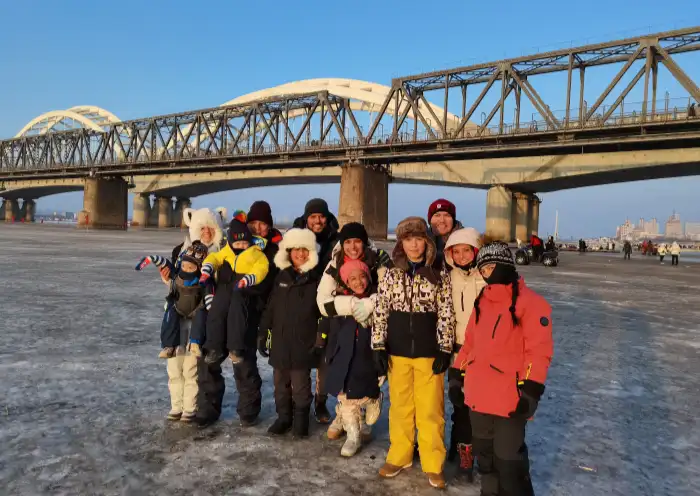
Highlights & Recommended Activities in Winter
- Step into ice world in Harbin Ice and Snow Festival:Open from late December to end of February, Harbin Ice and Snow World will treat you to various exquisite ice castles and sculptures and China’s longest ice slide. The park is like a colorful magical land when illuminated at dusk.
- Visit the Sun Island for massive snow sculptures:The Sun Island is an ideal daytime destination for breathtakingly massive snow sculptures, with some as high as 100 meters.
- Appreciate ice lantern shows at Zhaolin Park:As the birthplace of ice lanterns, Zhaolin Park is known for its lifelike ice lanterns. From Chinese totems like dragon and European-style castles, varieties of ice sculpture can be found here.
- Step into the snow fairyland in China Snow Town: If interested, you can also extend your trip to the Snow Town to admire the mushroom-shaped houses covered by snow, with the decoration of traditional red lanterns.
- Take part in winter activities around Songhua River: On the frozen Songhua River, various interesting winter activities can be experienced, including ice carts, snow tubes, horse-drawn carriages, snow drift, etc. If lucky, you will see the locals fishing and swimming.
- Go skiing at Yabuli Ski Resort: Yabuli, one of the largest ski resorts in China, offers ski runs for all levels, from beginners to advanced skiers.
- Enjoy local food: After a day in the cold, nothing is better than warming up with a traditional northeastern hotpot or cuisine, like Guo Bao Rou (double-cooked pork) and umplings stuffed withunique pickled cabbage. Don’t forget to try the frozen pears, a local specialty featuring a dark skin and juicy, sweet flesh.
What to Wear:
- A well-insulated down jacket is a must worn over thermal base layers. Wool sweaters are ideal choices for mid-layers.For your lower body, it’s advised to prepare insulated pants or thermal leggings under thick trousers.
- As there is always snow on the ground, a pair of wool socksand a pair of waterproof boots with thick, non-slip soles is indispensable.
- Other accessories include balaclava, scarf, waterproof gloves or mittens.
Learn professional advice and tips on how to keep warm in Harbin in winter.

A 3-day Harbin winter tour featuring the Ice and Snow Festival, Sun Island snow sculptures, Volga Manor's Russian scenery, and Lao Daowai's Baroque architecture.
Harbin Spring (March – May) – Changeable and Windy
With spring on the way, the weather in Harbin is getting warmer day by day from March. But it is also windy with fluctuating temperature. During the day, you may feel warm under the sun, but the temperature drops sharply as soon as the sun sets.
So, layers are still the key point for your spring wardrobe. Moistening skin products like lip balm are also needed.
Harbin Summer (June – August) – Cool and Rainy
Generally speaking, the summer weather in Harbin is warm but quite pleasant. With an average temperature between 20°C and 30°C (68°F and 86°F), it is much cooler than most cities in China, making it a reputed summer resort. Volga Manor is a summer destination preferred by both locals and tourists.
Summer is also the rainy season, but storm is rare. Just take some lightweight clothes, a light coat and an umbrella or raincoat.
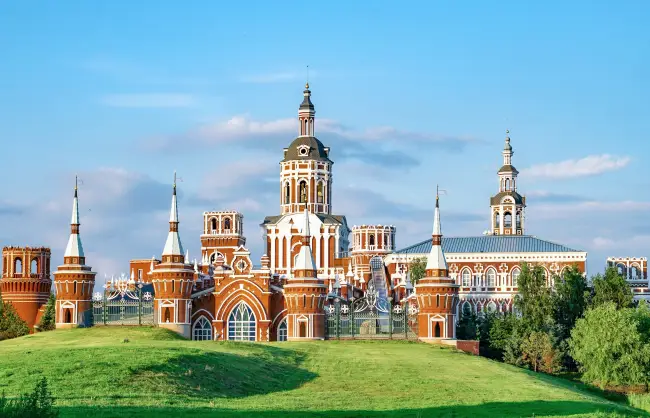

In the morning, our guide and driver will meet you at your hotel lobby. Then you will be escorted to visit Sophia Church, a typical Byzantine architecture style Orthodox Church built in 1907 by Rus...
Harbin Autumn (September – October) – Crisp and Cool
In one word, Harbin weather in autumn is crisp and cool, featuring an average temperature between 5°C and 15°C (41°F and 59°F). It lasts for only 2 months, but brings poetic landscapes of colorful foliage against blue sky.
Another striking feature is the temperature decreases after each rain. If visiting there in late October, you will feel like in winter. Hoodies, long-sleeved cotton T-shirts, thin sweaters, jeans and long pants are enough for an autumn trip in Harbin.
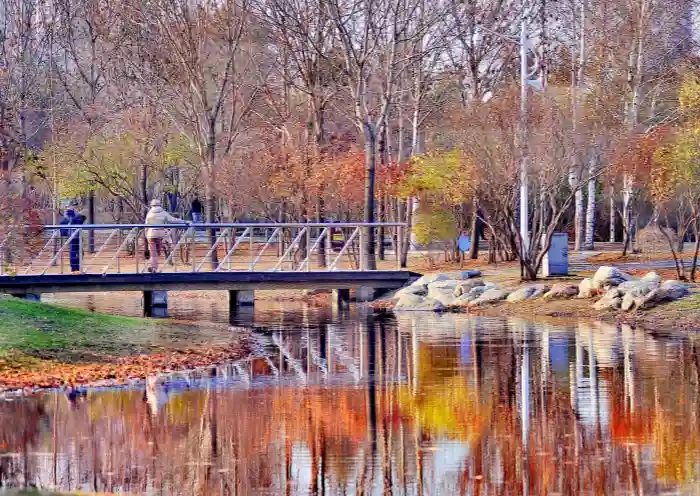
Harbin Weather Overview – Mild Summer & Freezing Winter
On the whole, Harbin belongs to the continental monsoon climate with four distinct seasons. It has pleasant mild summers, but bitterly cold winters. Comparatively, spring and autumn are short transitional seasons with rapid changes in temperature. In most years, spring is slightly warmer than autumn in Harbin.
The annual average temperature of Harbin is around 22.3℃ (72.1℉), while it reaches -14.6℃ (5.7℉) in winter. Harbin’s winter spans the three consecutive months from November to February, with an average temperature below -5℃ (23℉). According to historical records, the extreme lowest temperature in Harbin is -38.1℃ (-36.6℉), which occurred on January 4, 1970.
The average annual precipitation of Harbin ranges from 494 to 651 millimeters, mainly concentrated in July and August. Harbin gets an average 146.4 days of lying snow all year round. It sees very heavy snowfall often, with the maximum snow depth that can exceed 20 to 40 centimeters in a single storm.
Practical Travel Tips to Deal with the Harbin Weather
- Though the outdoor area is extremely cold in Harbin, the indoor area is quite warm thanks to great heating and double-glazed windows. Tourists will add or remove layers frequently throughout the tour. Give yourself 30–40 minutes to get fully bundled up before you head outside.
- The toilet in Harbin Ice and Snow World is also equipped with heating.
- Packing list: hand warmers, power bank, cold medicine and snow goggles for winter; mosquito repellent, sunscreen, sunglasses and parasol for summer. Moisturizer is required year-round.
- Even in winter, the ultraviolet ray is surprisingly strong in Harbin and the reflection from the snow and frozen river intensifies exposure, so sun protection measures are still necessary.
- It is better not to wear metal-frame glasses, as they fog instantly after entering outdoor areas, and may freeze onto your skin in extreme cold.

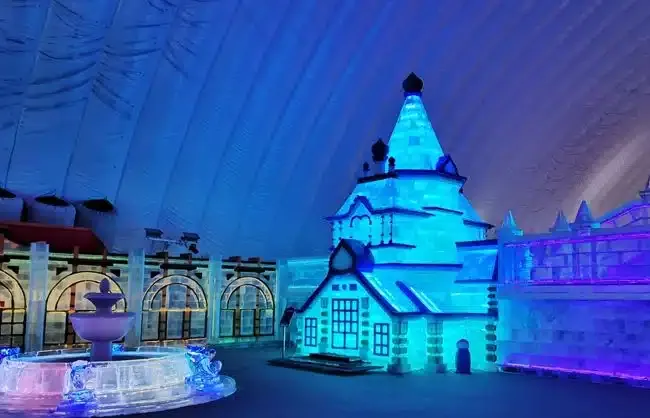
Experience Harbin's world-famous Ice and Snow Festival with dazzling ice sculptures, Siberian tigers, and Russian-style architecture.
Explore Harbin with China Xian Tour
If you are looking for a hassle-free winter adventure in Harbin, China Xian Tour will be your best choice. Our travel experts are 24-hour online to provide a tailor-made itinerary for you. Whether you are exploring the ice and snow wonderland or seeking for the greenery and Russian architecture, we are ready to design a perfect trip on the basis of your demands.
FAQs about Harbin’s Weather and Climate
Are Harbin’s winters dangerous for travelers not used to extreme cold?
Don’t worry. Though it’s cold outside, the indoor heating system works exceptionally well. You just need to prepare enough thermal clothing and don’t stay a long time outdoors.
Will my phone die in the cold?
Yes, most mobile phones will shut down below about -20°C due to battery protection. To prevent it, it is highly recommended to attach a hand warmer (暖宝宝) to the back of your phone and always keep it in an inner pocket when not using it. Besides, bring a power bank because the battery drains quickly in cold days.
How many hours of daylight does Harbin get in winter vs. summer?
Harbin has long summer days but short winter days. In summer, Harbin enjoys approximately 15.5 hours of daylight, while in winter, this value plunges to only 8.5 hours.


