
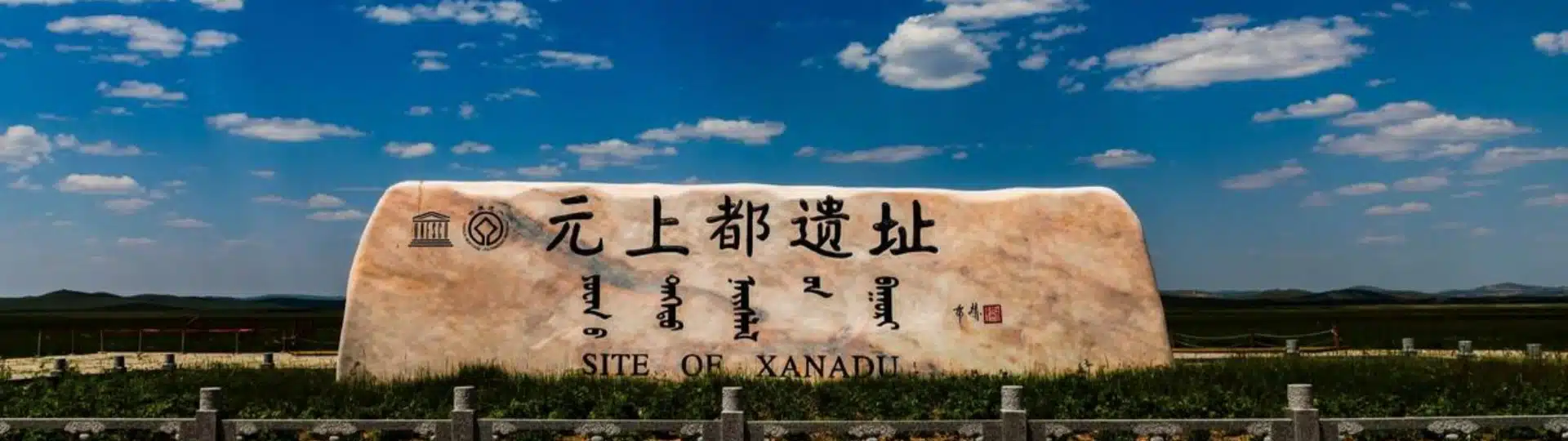
The word “Xanadu” may drive your imagination of a fantasy land of peace and tranquillity. Then is Xanadu a real place? The answer is: Yes, it is a real historical site. The Site of Xanadu, or “Shangdu,” served as the summer capital of the Yuan dynasty (1271-1368).
Xanadu represents the cultural fusion between nomadic Mongol and Han Chinese civilization. It is a major archaeological site and was listed as a UNESCO World Heritage Site in 2012. A China tour with Xanadu will offer you a rare chance to glimpse into one of the most remarkable period in Chinese history.
This guide will provide a general overview of Xanadu’s history, layout, main attractions, and some travel tips to visit this “Shangdu of the Yuan dynasty” in the grassland.
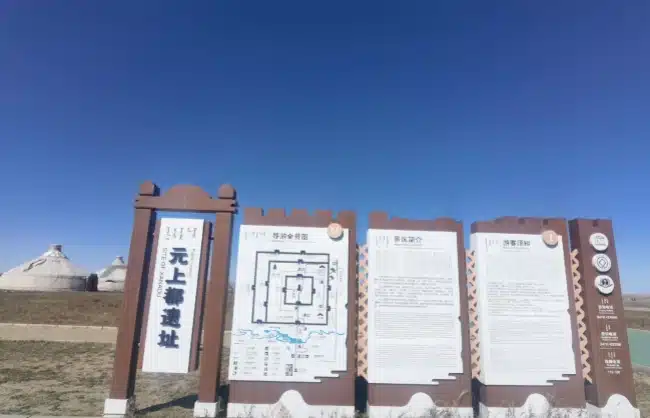
Basic facts of The Site of Xanadu
- Chinese name: 元上都 (yuán shàng dū)
- Location: Jinlianchuan Grassland in Shangdu Town, Zhenglan Banner, Xilingol League, Inner Mongolia Autonomous Region
- Opening hours: 8:30-17:00
- Tickets: 30 CNY/pp (concession tickets for children, students, and the elderly)
- Recommended Visiting Time: 1-2 hours
- Best time to go: June- September
- Suitable for:anyone interested in the Yuan dynasty and Chinese history
History of Xanadu: When Kublai Khan was in Power
Shangdu as the Yuan Dynasty’s Upper Capital
Xanadu was initially known as the Kaiping Prefecture in the Mongol Empire. Its construction began in 1256, 14 years before the Yuan dynasty was established. In 1260, Kublai Khan, Genghis Khan’s grandson, took the throne and established Dayidu (capital city) in Yanjing (current Beijing) while renaming the Kaiping Prefecture as “Shangdu”, which means “Upper Capital”.
The succession of Kublai Khan and the establishment of Shangdu/Xanadu marked the southward shift of the governance center into Han Chinese territory. It was a transformative moment in Mongol Yuan history.

Location and Symbolic Role of the Summer Capital
The Site of Xanadu was chosen for its favorable topography: it was a verdant site protected by four mountains with the Luan River flowing along its south. This spot on the Jinlianchuan Grassland offered the most pleasant scenery and climate, especially in summer, when Jinlianchuan would be as cool and mild as in autumn.
These facts account for Xanadu’s primary role as the summer capital of the Yuan Dynasty. It was where the Mongol court escaped the heat of Dayidu (Yanjing), engaged in hunting and rituals, and continued to handle state affairs in summer. Xanadu served important political and ceremonial functions.
The architecture in Shangdu featured both timber-and-earth Han Chinese palace and temple complexes, and traditional nomadic yurt-style structures. It combined the Han Chinese agrarian and Mongolian pastoral traditions. It served as a symbol of the harmony between Chinese urban planning and ecological civilization.
Xanadu in Marco Polo’s eye: The Source of the Legend
The Italian adventurer, Marco Polo, arrived at the Site of Xanadu in 1275. He built a solid friendship with Kublai Khan and was appointed as an official in the imperial court.
Recorded in his Travels was an admiration of Shangdu’s vast and splendid city and the resplendent and magnificent palace, with gold and jade vying with each other, and their gloss could even be seen from a distance. Marco Polo depicted grand Xanadu as the “richest metropolis in the world”.
Although contemporary historians suspected the credibility of Marco Polo’s accounts, the depiction of this golden land still inspired the creation of European fantasies. It stimulated curiosity to visit it in person.
For example, the British poet, Samuel Taylor Coleridge, dreamed about Mongol ruler Kublai Khan after reading the Travels. Therefore, he created the poem “Kubla Khan,” which depicted the luxurious pleasure dome along the sacred river.
What Happened to Xanadu – The Fall of Yuan and the Rediscovery of Xanadu
As a result of political corruption and class conflicts, the Red Turban army launched a rebellion against the Yuan dynasty and captured Shangdu in 1358. The splendour of Xanadu dimmed in the shadow of warfare and was eventually damaged in a conflagration.
In the early Ming period, at the original site of Shangdu, the administrative headquarters of Kaiping Garrison was established. Then, in the Xuande reign, the headquarters were relocated southward, leaving the site in ruins.
After hundreds of years in silence, the Site of Xanadu joined the list of National Key Cultural Heritage Units in 1988. Later in 2002, the cultural relics department of the Inner Mongolia Autonomous Region restored over 300 metres of the imperial city wall of Xanadu while filling in facilities such as vegetable cellars and artificial channels.
Considering Xanadu’s important role in the research of Inner Mongolia and the Yuan culture, UNESCO announced the status of the Site of Xanadu as a world cultural heritage in 2012.
Layout of the Site of Xanadu– What did Xanadu look like?
The Site of Xanadu occupied a total area of 250 square kilometers. It consisted of the City Courtyard, the Imperial City, the Outer City, the Shangdu River in the south, and the Longgang Mountains in the north.
The City Courtyard was surrounded by brick walls and lookout towers at the four corners. Most of the major attractions, like Muqing Pavilion and Da’an Pavilion, were located in the City Courtyard. At the center of the City Courtyard was a pool that diverted water from the Shangdu River.
The Imperial City had an area of 1.64 square kilometers. The main roads formed a grid pattern of four horizontal and three vertical streets. Structures were scattered across the site, including Buddhist temples, Confucian temples, and Taoist temples.
The Outer City was located on the western and northern sides of the city, occupying 2.88 square kilometers. The north of it was the imperial garden and summer palace.
Recommended tour
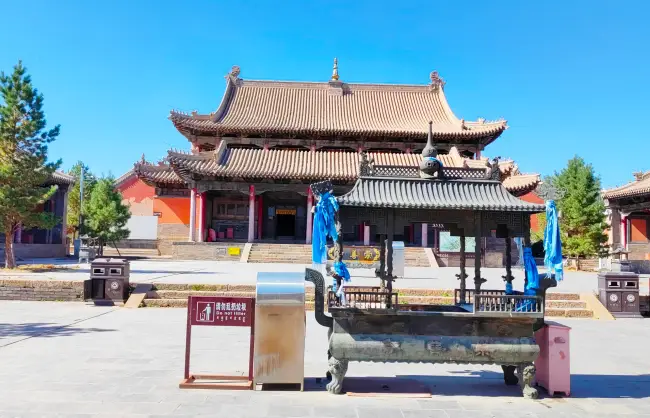
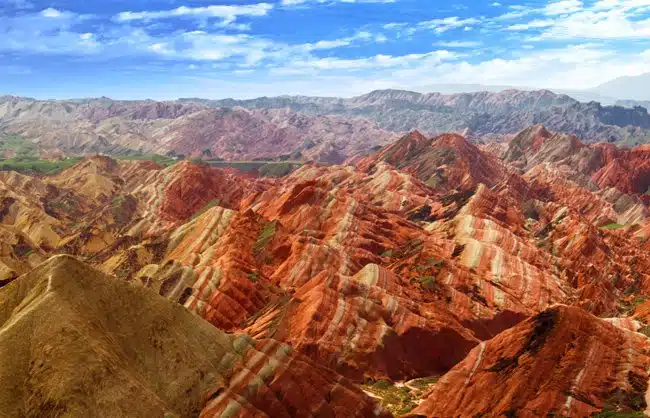
Discover Tibetan Buddhist artistry at Bezi Temple and explore the volcanic landscapes of Pingdingshan Geopark amid Xilingol's sweeping grasslands.
Main Attractions around the Site of Xanadu
The Imperial City – Mingde Gate
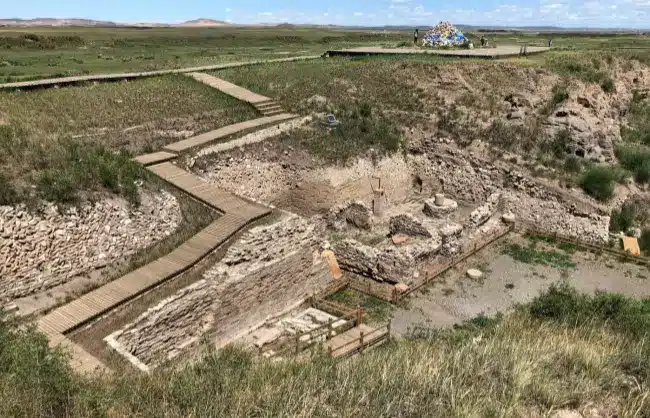
The Mingde Gate was the first city gate and the principal southern gate on the imperial road. It was located along the north-south central axis connecting the imperial city and the palace precinct. The gate passageway measured 24 meters in length and 5.7 meters in width, with walls on both sides made of blue bricks.
The Palace City
Yutian Gate
Yutian Gate was the principal southern gate of the Palace City. It was where the officials assembled to receive imperial decrees.
Da’an Pavilion
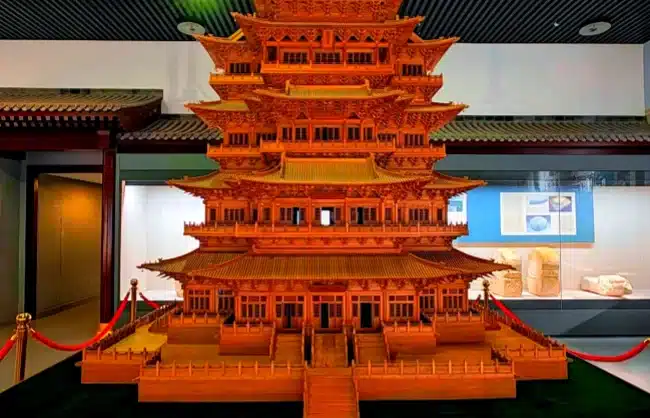
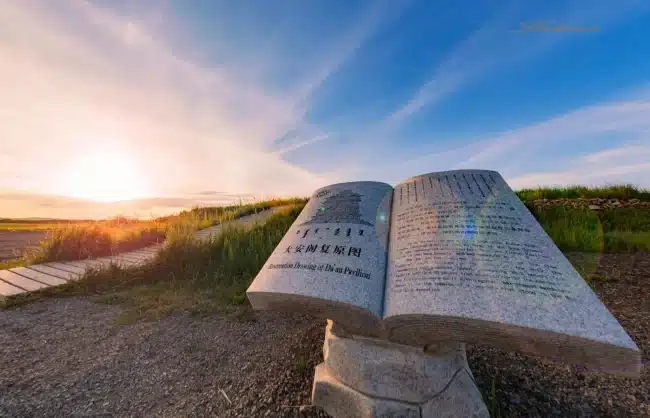
Da’an Pavilion was the main hall of the Palace City at the heart of the imperial building complex. Its architecture was in traditional Han Chinese style, with wooden mortise-and-tenon structures.
Da’an Pavilion served as a major political venue for emperors to conduct major state ceremonies, meet foreign envoys, preside over court assemblies, discuss governance with the senior officials, and perform Buddhist rituals. For example, Kublai Khan received Marco Polo and accepted the submission of the Southern Song emperor in Da’an Pavilion.
A Han Chinese-style, white marble corner pillar with carved dragon patterns was excavated at the southwestern corner of Da’an Pavilion. The pillar features symmetrical five-clawed dragons carved on its front and western sides. The dragon patterns are complemented by floral motifs, including peonies, lotuses, and chrysanthemums.
Muqing Pavilion
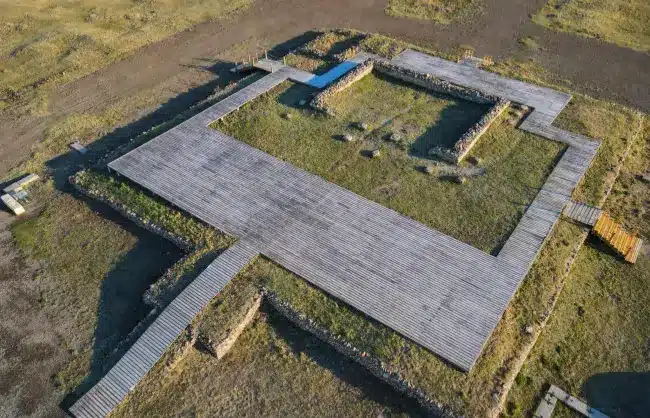
Muqing Pavilion stood on the northern terminus of the central axis. It was the largest Palace in the Palace City, where the emperor held banquets, conducted state affairs, and resided. The preserved foundation platform forms a concave “U” shape, on which the main hall and the eastern and western flanks formed a “gate-style” architectural complex.
Bronze Statue of Kublai Khan
There is a 7.5-meter-tall statue group characterized by several crucial figures of the Yuan dynasty. For example, Kublai Khan’s Chinese advisor, who was in charge of the design and construction of Xanadu, Liu BingZhong, as well as the Italian adventurer, Marco Polo.
All the statues center on the massive, bronze statue of Kublai Khan. It keeps reminding visitors of the prosperity of the Yuan dynasty, Kublai Khan’s 34-year reign, and his glorious deeds in the war.
Jinlianchuan Grassland
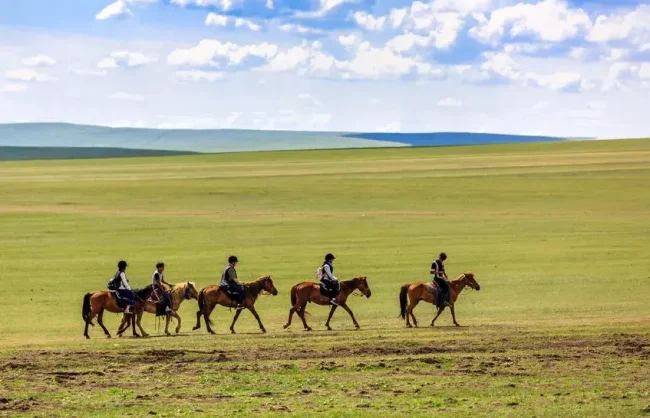
Jinlianchuan Grassland stretches 60 kilometers from east to west, and 20 kilometers from north to south. The Lightning River flows across it, bringing it a picturesque landscape with clear water and lush grass.
It has been an imperial summer retreat since the Liao dynasty. And Shizong of Jin named it Jinlianchuan, which means “Golden Lotus”, because the grassland featured clusters of nasturtiums– tiny yellow flowers in lotus shape in mid-summer.
Recommended Tour Route
Statues — Jinlianchuan Flower Appreciation Zone – Mingde Gate – Yutian Gate – Da’an Pavilion – Muqing Pavilion
Recommended tour with Xanadu

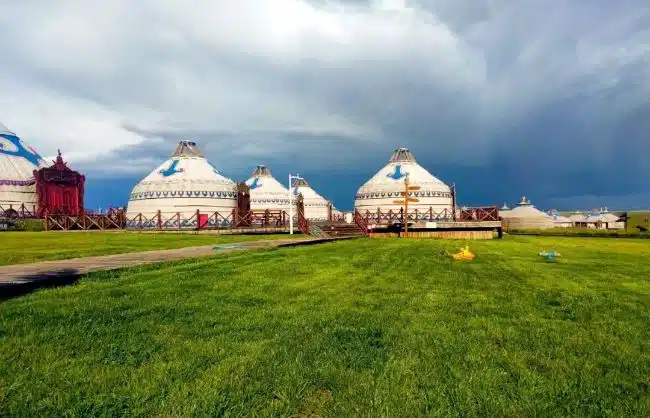
Immerse yourself in authentic Mongolian nomadic life at Xanadu Summer Pasture, staying in traditional yurts and learning horse riding and archery.
Best Time to Visit Xanadu
Being the original site of the Yuan summer palace, Xanadu offered the most comfortable temperatures and lushest grassland scenery in summer, specifically June to September. Its natural feature facilitated air convection, resulting in a cool climate and abundant rainfall.
Also, in July and August each year, nasturtiums would bloom in an extensive area. Their buds usually open in the afternoon, creating a golden sea of blossoms shining in the bright sunlight. Overall, summer would be the most beautiful and accessible time to visit Xanadu, before it was unavailable to the public from October due to the coming freezing winter. This is also the best time to visit most grasslands in Inner Mongolia.
How to Get to Xanadu
Due to Xanadu’s remote location in the grasslands and the lack of convenient long-distance public transportation, such as planes and trains, it is recommended to arrive at a major Inner Mongolia city first and then travel to Xanadu by car (either driving yourself or hiring a private vehicle).
Xanadu is about 200 kilometers away from Xilinhot City. You can reach Xanadu by car via the G207 and S308 expressways. Another recommended Inner Mongolia city is Hohhot. It is 504 kilometers from Xanadu, and the drive takes approximately five hours via S22 and G5511, or the G6 expressway.
If your travel starts in Beijing, then you are about 400 kilometers away from Xanadu. You can choose to take a flight to a major Inner Mongolia city and hire a private vehicle or drive for 6 hours via G6, G1013, and S27 expressways. Additionally, you can take long-distance shuttle buses from Beijing and major Inner Mongolia cities to Zhenglan Banner, then take a taxi to Xanadu.
How to Travel around the Site of Xanadu
As previously mentioned, the site of Xanadu occupied an area of 250 square meters in the vast grassland. It might be a bit exhausting to take a tour of the whole site on foot. To make your travel easier, you may consider the tour buses at the attractions.
Accommodation around the Site of Xanadu
Unfortunately, you might be disappointed with the insufficient choice of hotels if you wish to live closer to the Site of Xanadu. But do not worry. There are BNBs available for tourists’ accommodation. You can stay with the local hosts to experience the food, life, and culture in Inner Mongolia.
Otherwise, you may consider a hotel in a major Inner Mongolia city to take a tour of it first before traveling to Xanadu. It is also a good way to make the most of your days in Inner Mongolia.
Travel Tips for the Site of Xanadu
- It is recommended to wear comfortable shoes that are suitable for a long walk in case you choose to take a tour of the site on foot.
- The weather in the grassland could be changeable, so always remember to bring a jacket to keep you warm. It is recommended to bring sunscreen and sunglasses to protect your skin from the intense UV radiation, umbrellas and raincoats to shade yourself in the rain, and insect sprays, in case you are bitten by mosquitoes and other tiny insects.
- You may encounter local Mongolian people who still preserve their traditional lifestyle. It is important to respect their traditions and customs to avoid conflicts.
Explore the Attractions with The Site of Xanadu Insiders of China Xian Tour
After reading this guide, are you fascinated by the splendour of the Site of Xanadu? Are you curious about this magnificent city filled with gold and jade in Marco Polo’s Travels? Would you like to know more about the Yuan dynasty in Chinese history and Inner Mongolia?
Are you saying yes, yes, and yes? Then don’t hesitate to explore this wonderful Yuan summer palace with China Xian Tour today!
To provide a satisfactory and authentic Xanadu and Inner Mongolia tour, our consultant and guide teams invite the insiders/ local people who are familiar with the history, culture, and highlights of the Site of Xanadu to help with designing your personalized Xanadu tour route based on your preference.
You will not only appreciate the most mesmerizing grassland scenery, but also be embraced by the essence of the golden Shangdu and the echo of the Mongol Yuan civilization.