

6 Days Lhasa and Tsedang Highlights Tour
Tour Overview
Tsedang as the origin of Tibetan civilization has established its cultural heritage throughout Xizang region. The 6 Days Lhasa and Tsedang Tour takes you through sacred Tibetan Buddhist sites while you observe genuine local life. See the Potala Palace with the highest altitude and witness worship at Jokhang Temple.
Drive to Tsedang where you discover Tibet’s first royal palace at Yumbulhakhang and see the architectural design of Samye Monastery. Get the complete view of the Yarlung Zangbo River Valley as well. This is a deeper insight into Tibetan culture.
Travel destinations: Lhasa, Tsedang
Suitable for: Culture Seekers, Soul-awakening Travelers
Tour type: Private
Highlights of this tour:
- Feel the deep spirituality at Potala Palace and Jokhang Temple, and walk with pilgrims around Barkhor Street.
- See real Tibetan village life in Dadong Village.
- Visit Yumbulhakhang Palace in Tsedang to learn about Tibetan civilization’s beginnings.
- Explore the symbolic mandala layout of Samye Monastery.
Day-by-day Itinerary
- Day 1: Arrival in Lhasa
Welcome to Lhasa, the City of Sunlight. Upon your arrival, your tour guide and driver will pick you up at the exit and then transfer you to your downtown hotel. After check-in at your hotel, have a good rest to get acclimated to the high altitude.
Tips:
- Today, try to avoid taking a shower as much as possible to prevent an increase in oxygen consumption, which may cause symptoms of altitude sickness such as headaches, chest tightness, and difficulty breathing.
- Drink plenty of water and maintain sufficient sleep.
- Day 2: Lhasa City HighlightsDiscover Sacred Heritage at Potala Palace and Local Life around Barkhor Street
After breakfast, visit the world's highest palace, the Potala Palace, located at an altitude of approximately 3,700 meters. This architectural complex was first built in the 7th century and finally listed as a World Cultural Heritage site in 1994.
As the most iconic landscape of Xizang, it is printed on the back of the 50-yuan RMB note. The main buildings consist of the White Palace and the Red Palace. The White Palace is named so because of its white exterior. Standing seven stories tall, it was once served as the administrative headquarters of the Tibetan local government.

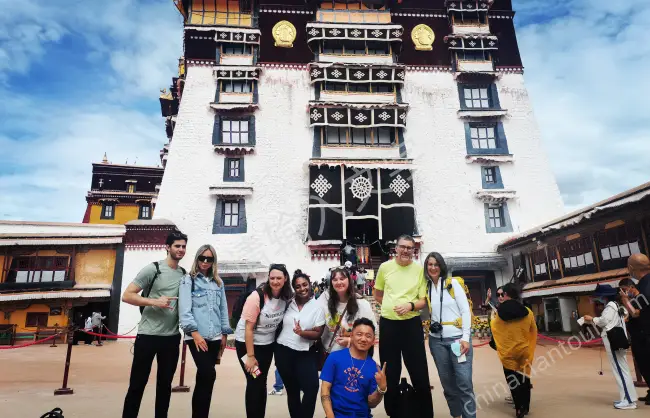
Our customers at the Potala Palace The Red Palace is located at the heart of the Potala Palace and houses over 70,000 cultural artifacts of Tibetan, Han, Manchu, Mongolian, and other ethnic groups. In the Red Palace, you can see many stupas, among which the Fifth Dalai Lama's is the first and largest one, completely wrapped in gold.
After the visit, it's time to have lunch. In the afternoon, head to Jokhang Temple. It was built by Songtsen Gampo, once the King of Tibet, to commemorate Princess Wencheng's entry into Xizang. With a history of more than 1300 years, this temple is considered the most sacred one in Tibetan Buddhism. It is not a single Tibetan architectural style, but features harmonious fusion of Indian and Nepalese styles, making it a model of Tibetan religious architecture.
Tips:
- Please remove your hat and sunglasses before entering the Jokhang Temple.
- Photography is strictly prohibited inside the temple.
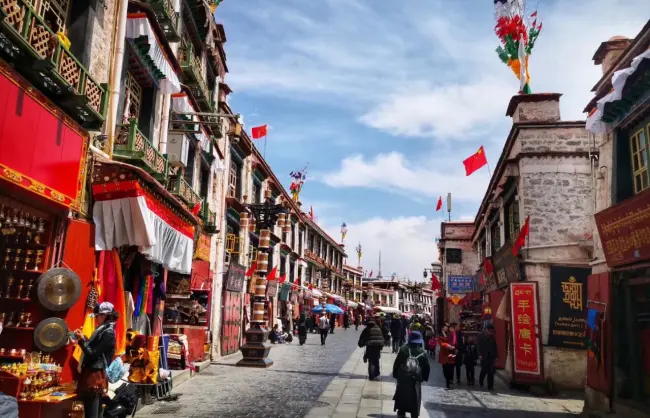
Barkhor Street Afterwards, have a short pilgrimage around Barkhor Street. Please make sure to walk clockwise and follow the flow of believers holding prayer wheels to experience the unique atmosphere. This street is the busiest in Lhasa, with shops on both sides selling various local specialties such as thangka paintings, Tibetan knives, Nepalese handicrafts, butter tea and Tibetan incense. When finishing the visit, you will enjoy butter tea and a welcome dinner.
- Day 3: Lhasa Local Village & MonasteryExperience Rural Tibetan Life, Lively Monk Debates at Sera Monastery
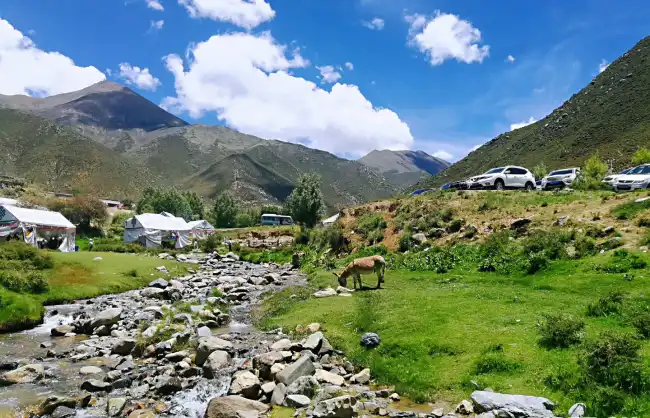
In the morning, head to a secluded valley to explore Dadong Village. In Tibetan, its name means 'walnut tree'. It is the most well protected ancient village in Xizang and is known as the "Back Garden of Lhasa". Here, the ruins of the estate where Tsangyang Gyatso once lived and the legendary "Acacia Tree" are preserved.
Dadong Village The tour guide will lead you to visit the Nyimatang Monastery with a history of nearly a thousand years. Afterwards, stroll around the village and discover a natural geothermal hot spring. Enjoy lunch at a local Tibetan family and learn about rural life in Lhasa.
Return to the city in the afternoon to visit Sera Monastery. Together with Drepung Monastery and Ganden Monastery, they are known as the “three major monasteries” in Lhasa. Inside the temple, there are tens of thousands of Vajrayana Buddha statues, some of which were brought back from India.
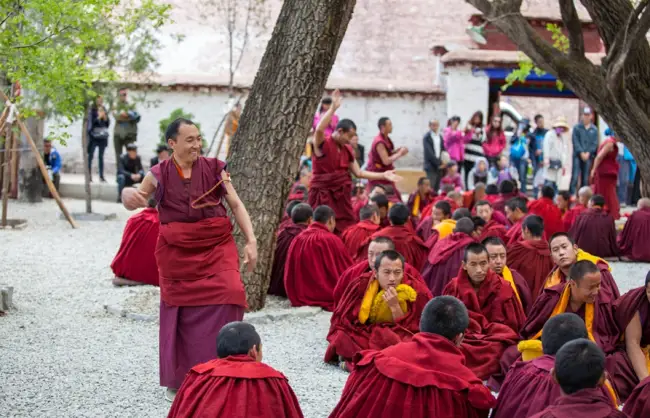
The monks are debating in Sera Monastery The highlight here is the monks' debate on scriptures. Except for Sundays, they discuss Buddhism through body language such as clapping at the northern location of the temple from 3pm to 5pm every day. In addition, you can enjoy cinnabar versions of Tibetan scriptures, scriptures written in gold ink and the famous statue of Hayagriva.
After the visit, transfer you back to the hotel to rest well.
- Day 4: Lhasa to TsedangExplore Early Tibetan History and Scenic Valley Views in Tsedang
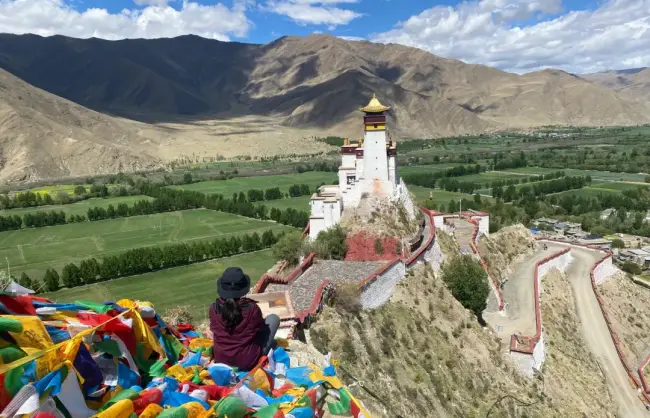
After breakfast, drive 1.5 hours to reach Tsedang Town, located southeast of Lhasa. You will visit Yumbulhakhang, a palace situated on a small hill. It is said to be the first palace in Tibet, built in the second century BC according to historical records. From the top, take a panoramic view of the Yarlung Zangbo River.
Tips: you can choose to ride a horse instead of walking up to Yumbulhakhang. An additional fee need to be paid to the local herdsmen.
Yumbulakang Palace Proceed to Trandruk Monastery. Princess Wencheng once stopped at the temple to practice. The treasure here consists of a pearl thangka which measures 2 meters in length and 1.2 meters in width and contains 29026 pearls together with one diamond, two rubies, one sapphire and 15.5 grams of gold.
The temple corridor has a copper bell, which was a testament to the cultural and religious interactions between the Tang Dynasty and the Tibetan empire during that historic period. After all visits, check in at a local hotel in Tsedang.
- Day 5: Tsedang Back to LhasaUncover Mandala-Style Architecture and Spiritual Symbolism at Samye Monastery
Samye Monastery at the base of Mount Habu will be your destination for today. The monastery dating back to the 8th century AD became the first Tibetan monastery to ordain monks. The central Buddhist hall displays a combination of Tibetan, Han and Indian architectural styles, giving the monastery another name San Yang Si (Three Styles Monastery).
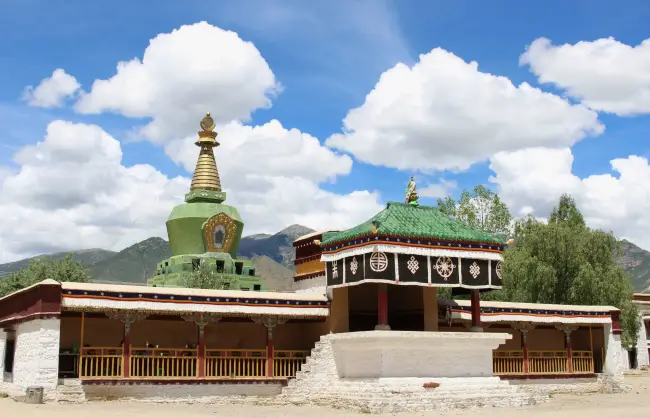
Samye Monastery features a mandala layout in its design. The main temple uses Mount Meru to represent the sacred mountain which serves as the center of the universe. The four temples face the cardinal directions to symbolize four major continents. Near each of them are two smaller halls, meaning the eight subcontinents.
Samye Monastery under blue sky At the four corners of the main temple stand stupas in red, green, black and white to protect against evil spirits and to prevent natural and human disasters. Your tour guide will explain the secrets to you in detail. If you are interested, also perform a kora up the mountain top and enjoy the panoramic view of Samye Monastery. After the visit, send you back to a hotel in Lhasa for the night.
- Day 6: Departure from Lhasa
After breakfast, enjoy your leisure time till your driver picks you up and escorts you to the airport for departure. Your 6-day Lhasa and Tsedang tour ends here. Thank you for traveling with China Xian Tour. Safe travels!
Tour Price Per Person ($=USD)
The price varies depending on the activity, number of people, travel date, and selected hotel. Please contact us for a specific price.


