
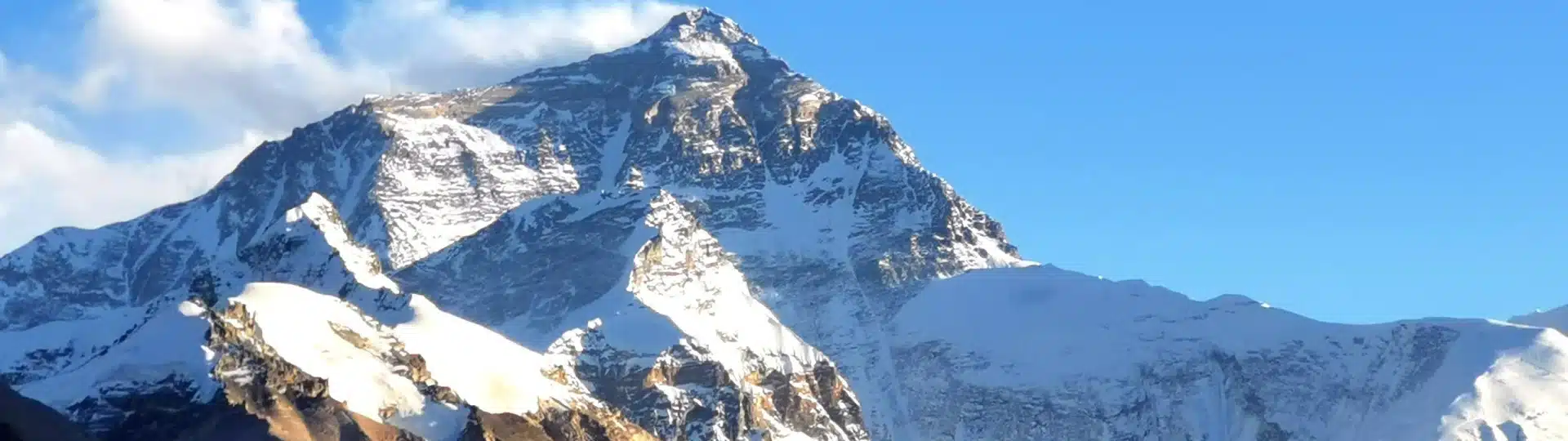
At an altitude of 8,848 meters (29,029 feet), Mount Everest (Qomolangma) is renowned as the highest mountain in the world with unique natural landscapes like rivers, lakes, glaciers, periglacial areas, and various kinds of complex geomorphic types, making it of important scientific and aesthetic values. With an elevation of 5,200 meters (17,060 feet), Everest Base Camp is one of the best locations for appreciating and photographing the mountain.
Many people may never climb Mount Everest during their lifetime, but the breathtaking scenery attracts countless visitors to explore the area. As the place closest to the sky, the Everest Base Camp has become the best choice for them to achieve their dreams of exploring the grandeur. But climbing to the camp is also challenging for tourists because the altitude sickness may bother them during their travel to Tibet. In this guide, we will introduce the measures to prevent and deal with altitude sickness so that you can enjoy a safer and more comfortable trip.
Content Preview
- Tibet Everest Base Camp Elevation: 5200 Meters
- Lhasa Vs. Everest Base Camp Altitude
- Altitude of Everest Base Camp Nearby Attractions
- Altitude Sickness at Everest Base Camp – May Easy to Suffer but Most People Experience Mild Symptoms
- How to Prevent Altitude Sickness When Visiting Everest Base Camp
- More Tips for Preventing Altitude Sickness at Tibet Everest Base Camp
- Embark on a Tibet Everest Base Camp Tour with Us
Tibet Everest Base Camp Elevation: 5200 Meters
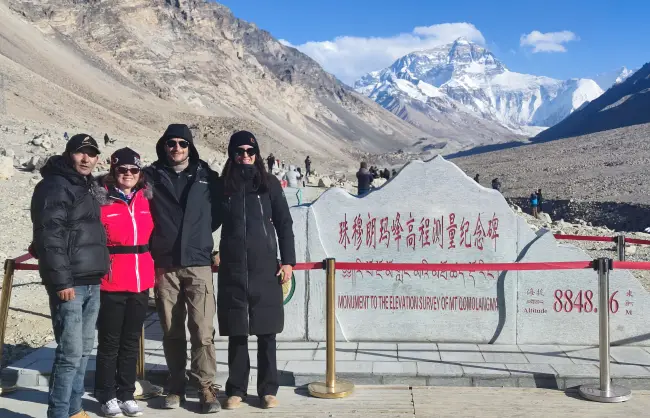
Mt. Everest Base Camp elevation is about 5,200 meters (17,060 feet) above sea level and serves as a protected area to conserve the core area of Mount Everest. As an important starting point and rear base for climbing Mount Everest, the Base Camp is equipped with complete living facilities and basic medical security. There are tents for climbers and tourists to live, as well as hotels, cafes, stores and even a post office with solar panels in front of every store to provide lighting at night. In addition, there are also 5,200-meter, 8844.43-meter and 8,848.86-meter monuments, which are landmarks for taking photos.
At the Everest Base Camp, you can take photos with monuments as a proof of your footprints or send a postcard to yourself or your beloved ones. The postcard is stamped with three postmarks, the most precious of which is the Everest commemorative stamp. And if you are lucky, you can see the Milky Way like a waterfall at night and the golden summit bathed in sunlight in the morning. The picturesque scenery will undoubtedly leave a deep impression on you.

Lhasa Vs. Everest Base Camp Altitude
Many tourists worry about altitude sickness at Everest Base Camp. In fact, compared with the altitude of Lhasa of 3,650 meters (11,975 feet), the relative elevation of Everest Base Camp is only about 1,550 meters (5,085 feet). So as long as you have already adapted to the thin air and height in Lhasa, you will not feel severe discomfort during the transition to Everest Base Camp and can acclimate well.
But to ensure a safer trip, it is strongly advised to stay in Lhasa for at least 3 days before ascending to the camp, so that you can adapt to the high altitude in advance and reduce the possibility of severe altitude sickness. During this period of time, planning a Lhasa city tour to visit the classic attractions and experience Buddhist culture is a nice choice. Potala Palace, Barkhor Street and Jokhang Temple are really worth visiting.
Altitude of Everest Base Camp Nearby Attractions
- Lhasa (3,650 meters / 11,975 feet): With Potala Palace, Norbulinka Palace and Jokhang Temple listed as the world cultural heritages, Lhasa is famous for its long history, unique folk customs and strong religious color.
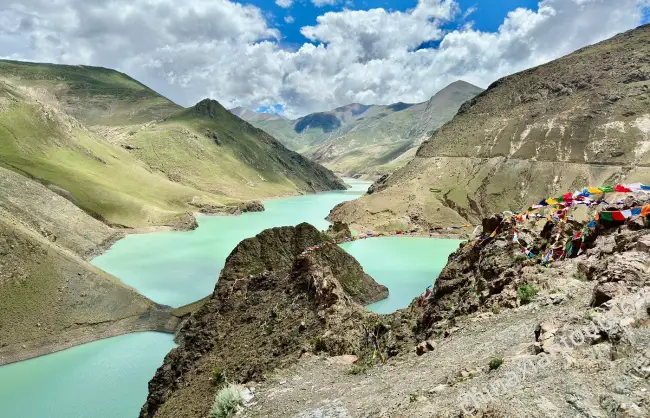
- Yamdrok Lake (4,441 meters / 14,570 feet): As one of the three scared lakes in Tibet, Yamdrok Lake boasts picturesque scenery such as plateau lakes, snow-capped mountains, pastures, hot springs, wildlife, making it the most beautiful water in the world.
- Shigatse (3,845 meters / 12,615 feet): As one of the most attractive tourist destinations in Tibet Shigatse features its ancient culture, majestic temples and magnificent natural landscapes. Tourists can overlook the whole city on Niseri Mountain and go sightseeing in the landmark Tashilhunpo Monastery located halfway up the mountain.
- Gyawu La Pass (5,210 meters / 17,093 feet): Known as the most spectacular viewing platform, Gyawu La Pass is the only viewing platform in the world where you can appreciate five 8,000-meter (26,246-feet) snow-capped peaks.
Altitude Sickness at Everest Base Camp – May Easy to Suffer But Most People Experience Mild Symptoms
Since the height of Everest Base Camp is 5,200 meters (17,060 feet) and temperature is lower there, it increases the risk of suffering from altitude sickness. But most people experience only mild symptoms, like dizziness, nausea, mild vomiting, palpitation, shortness of breath, insomnia, loss of appetite and mild headache. And these symptoms can be effectively relieved by having sufficient rest, breathing in some fresh air, drinking plenty of warm water, inhaling oxygen, or taking painkillers and medicine treating altitude sickness.
But if you suffer from moderate symptoms such as cyanosis of the lips and mouth, drowsiness or restlessness and worsening palpitation or headache and severe symptoms including prolonged severe headache, confusion of consciousness, hallucinations, coma and continuous dry cough, tell the guide immediately, measure your oxygen saturation level and start oxygen therapy, evacuate to a lower altitude and seek medical attention as soon as possible. Always put your safety in the first place.
How to Prevent Altitude Sickness When Visiting Everest Base Camp
Due to the high elevation of Everest Base Camp, the most important thing that tourists want to know is how to prevent altitude sickness. Here are some measures you can take.
Before the tour:
- Avoid strenuous activity. Do not do strenuous exercise and keep enough rest for one week before your Tibet tour.
- Keep healthy. Do not catch a cold. The disease resistance is weakened due to cold, so it may cause other plateau diseases like pulmonary edema, which may pose danger to your life.
- Pack essentials. Prepare sufficient oxygen cylinders and common drugs, such as cold medicines, gastrointestinal medicines, painkillers and anti-fever medicine, so that you can alleviate discomfort in emergency situations.
- Acclimate the high altitude gradually. Stay in cities in relatively low altitude for 2 – 3 days to reduce the possibility of developing altitude sickness, such as Lhasa at 3,650 meters (11,975 feet) or Shigatse at 3,845 meters (12614 feet).
During the tour:
- Drink enough water every day. Drink at least 3 – 4 liters of water sip by sip from the moment you wake up. Water, juice and tea are both acceptable, but carbonated beverages are not allowed.
- Slow down your pace. In Everest Base Camp with an altitude of 5,200 meters (17,060 feet), the oxygen content is low in the air, moving slowly can reduce the body’s need for oxygen and lessen the burden on the heart and lungs. So do not walk quickly and run.
- Avoid drinking wine and overeating. Because alcohol can exacerbate risk of altitude sickness. About food, it is suggested to est some light and well-digested food, and 70% full is sufficient to provide the necessary energy. Do not eat spicy or stimulating food.
- Keep warm. Besides warm overcoats and pants, thick socks, gloves, hats, masks are also necessary to help you withstand the cold. And do not take off your hat even when you are sleeping at night.
More Tips for Preventing Altitude Sickness at Tibet Everest Base Camp
- Keep a positive and optimistic attitude. Although you may feel a little bit uncomfortable at high altitude in Everest Base Camp, excessive worry and stress can make the symptoms of altitude sickness more severe, so keeping positive is crucial.
- Learn related knowledge about altitude sickness. Before you depart to Everest Base Camp, you can enhance your self-confidence by learning knowledge about the plateau environment, the features of altitude sickness and related medical care knowledge.
- Undergo a comprehensive physical examination. To guarantee your safety, it is advised to have a medical examination to make sure you do not have cardiovascular diseases, respiratory diseases, nervous system disease, etc, as these diseases will get worse at high altitude and even threaten your life.
- Avoid heavy loads. Take a lightweight backpack and keep its weight to less than 5 kilograms to reduce physical exertion. Just take some necessary items with you.
Embark on a Tibet Everest Base Camp Tour with Us
Since the Everest Base Camp is at high elevation where altitude sickness easily occur, so it is especially important to choose an experienced guide team. The members of our professional travel team are mainly local people, so they are familiar with the measures to cope with altitude sickness. Also, we can help you to apply for the Tibet travel permits quickly. We are able to arrange your Tibet tour in Everest Base Camp in a scientific way, so you can enjoy a high-quality, safe and healthy travel experience and enjoy the beauty and culture of Tibet to the fullest.
If you have enough time to enjoy a depth tour in Tibet, this 8 Days Lhasa to Everest Base Tour will be the first choice, which covers almost all the main scenic spots in Tibet, like Potala Palace, Jokhang Temple, Yamdrok Lake, Shigatse, Everest Base Camp, Gyatso-la Pass and Namtso Lake. Other recommended tours include 8 Days Tibet Tour with Everest Base Camp and 10 Days In-depth Tibet Adventure Tour, which are both small group tours. If you have different travel plans to Tibet, we also offer private tours, just contact with us to talk about more details.


