

Whether it is your first time traveling to China or not, surely there are still so many things for you to explore in this country. We’ve put together a China tour bucket list with the top 40 most beautiful places in China from world-renowned attractions to hidden treasures. You can explore a part of China that interests you or that you’ve never been to before.
Fast Guide to the Most Beautiful Places in China
To help you choose the destinations you are interested in, we have classified them into the following categories for easy reference.
Category |
Places to Visit |
Mountains |
Yellow Mountain, Rainbow Mountains, Mount Wuyi, Changbai Mountain, Mount Siguniang |
Waterscape |
Jiuzhaigou National Park, Huangguoshu Waterfall, Qinghai Lake, The Three Gorges, Hukou Waterfall, Kanas Lake, West Lake |
Unique Landform and Natural Reserves |
Zhangjiajie National Forest Park, Yangshuo, Echoing-Sand Mountain and Crescent Lake, Pudacuo National Park, Hulunbuir Grassland, Nalati Grassland, Tiger Leaping Gorge |
Historical Relics |
The Great Wall, The Forbidden City, The Terracotta Army, Potala Palace |
Buddhist Art |
Mogao Caves, Leshan Giant Buddha, Yungang Grottoes |
Ancient Town and Village |
Lijiang Old Town, Fenghuang Ancient Town, Hongcun Ancient Village, Wangxian Valley, Furong Ancient Town |
Iconic Landmark and Gardens |
The Bund, Victoria Peak, Traditional Tulous, Jiangnan Classical Gardens |
Rural Scenery |
Longji Rice Terraces, The Countryside of Wuyuan |
1. The Great Wall in Beijing
The Great Wall is arguably the most famous landmark of China. You’ve seen its pictures everywhere but seeing it in person is a whole other experience. The Great Wall has many sections, and the best ones are in Beijing.
You can of course view it from a distance, see the ancient stone structure stretch on the back of green hills. Or you can hike up the Great Wall and get close to the towers. Feel the world’s greatest man-made wonder under your feet. You can also go camping on the Great Wall or even take a helicopter tour.
The Great Wall of China Travel Tips:
- The top Great Wall sections around Beijing include Mutianyu, Badaling, Jinshanling, Simatai, and more. At each section, you’ll get a different taste of the Great Wall, so choose one that suits your circumstances.
- If you’d like to hike or camp on the Great Wall, it’s best if you learn about relevant regulations beforehand or book a Great Wall tour with a local guide.
- Check the weather before your visit and dress comfortably for walking.
Recommended tour: 4 Days Beijing Essence Tour

2. The Forbidden City in Beijing
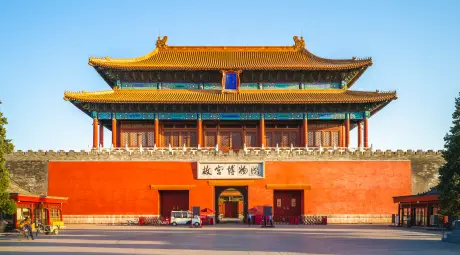
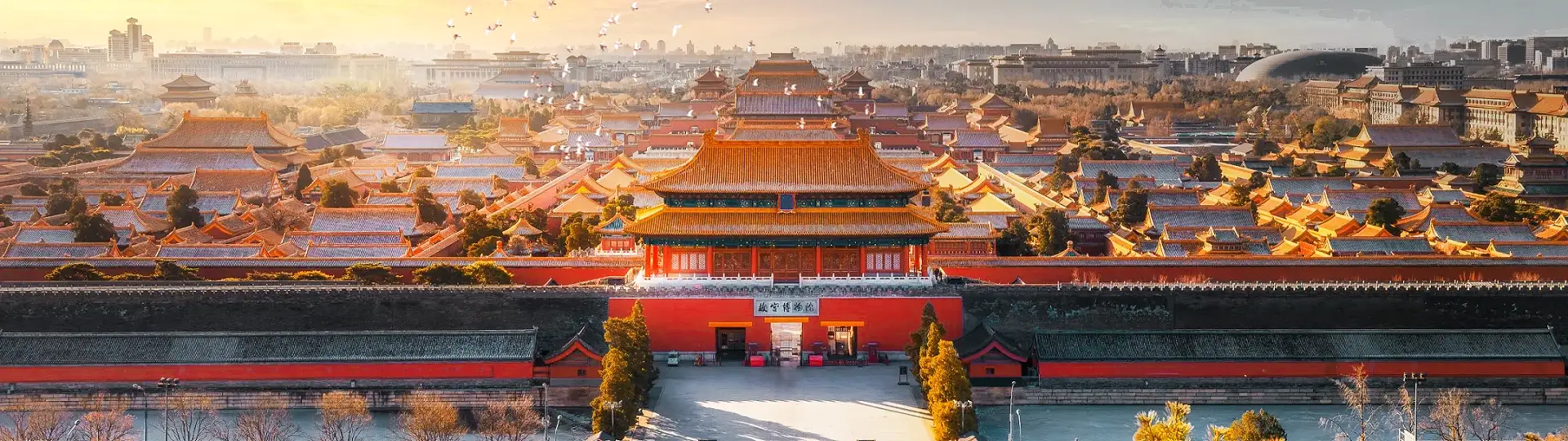
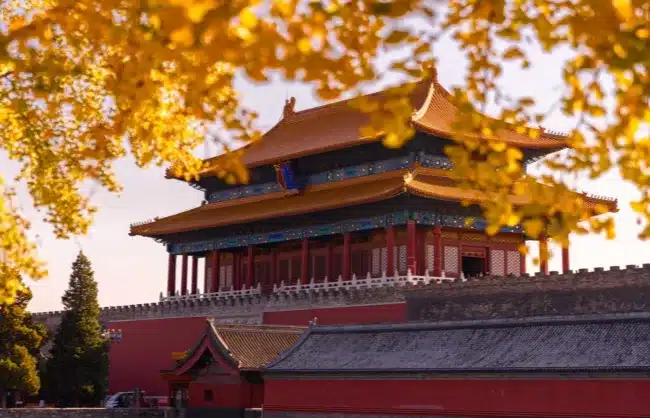
The Forbidden City is the second top highlight of Beijing. It is a symbol of the city and the country’s imperial past. As the palace of the Ming and Qing dynasties, the Forbidden City has a history of over 600 years and is the epitome of traditional Chinese architecture. It is massive in size, meticulous in its layout, and absolutely magnificent in design and furnishing.
It is now also called the Palace Museum, because it now has a huge collection of ancient Chinese treasures from artifacts to artworks, 1.8 million pieces in total. It is a top travel destination of Beijing tours and the best place to learn about Chinese history.
Other Top Things to Do in Beijing:
- Pay a visit to Tian’anmen Square, a place with great historical and cultural significance to Beijing and China
- Admire the Summer Palace, the best-preserved imperial garden
- See giant pandas at Beijing Zoo
- Experience the Beijing lifestyle in Hutong alleys
Recommended Tour: 5 Days Beijing Tour Package with Panda Encounter
3. The Terracotta Army in Xian
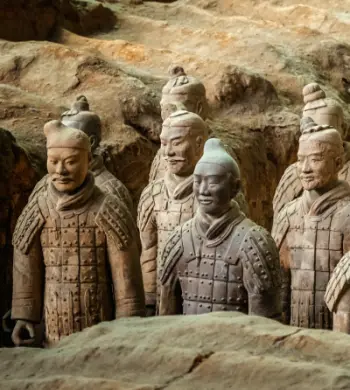
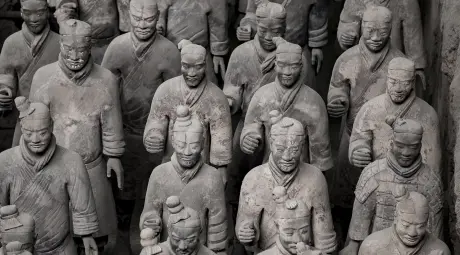
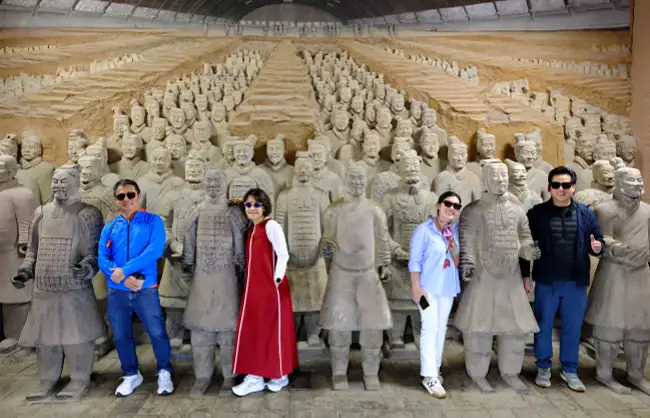
One of the most unique places to visit in China is Xi’an, the home of the Terracotta Army. The discovery of the Terracotta Army was one of the greatest in human archaeological history. It is a huge complex of thousands of life-sized soldiers, horses, and chariots made of clay. They were made after the army of the Qin Dynasty and were placed here to guard the Mausoleum of Qin Shi Huang, the first emperor in Chinese history.
There’re currently four main exhibition areas inside the Terracotta Warriors and Horses Museum, three excavation pits and the Exhibition Hall of the Bronze Chariots. You will see soldiers each with a different appearance and facial expressions, all lined up carrying different weapons. The Terracotta Army is definitely one of the coolest things to see in China.
The Terracotta Warriors and Horses Museum Travel Tips:
- It is one of the most popular attractions in the whole of China, so book your tickets well in advance, especially during peak travel season.
- You might want to learn about the interesting facts about the Terracotta Warriors before your Xi’an tour. If you want to learn more during your visit, you can book a tour with us or use the audio guides inside the museum.
Other Top Things to Do in Xi’an:
- Taste local Xi’an food and snacks at the Muslim Quarter
- Walk around or cycle on the Ancient City Wall (see below #37)
- Visit the Drum and Bell Towers, landmarks of the ancient capital
- Climb up the Big Wild Goose Pagoda built in Tang Dynasty to see the city from above
Recommended Tour: 3 Days Classic Private Shanghai City Tour
4. Wangxian Valley in Jiangxi
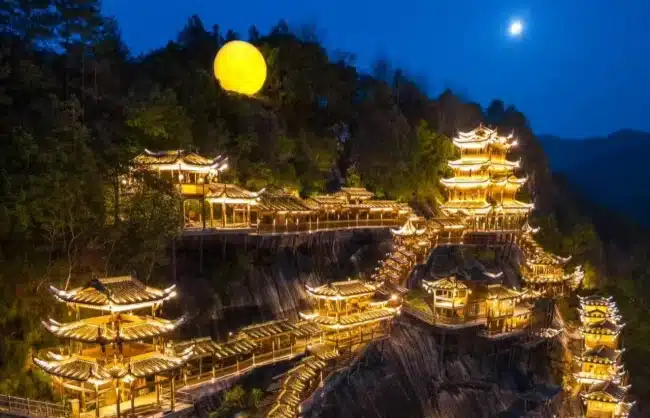
Wangxian Valley is mythical realm-themed scenic area in Shangrao City, Jiangxi Province. Built against the cliff, it looks like a sky city with layers of antique architecture, waterfalls, streams and stone bridges, just like a traditional ink painting during the day.
At night, the cliffside buildings are all lit up by warm golden lights and the fog rises from the valley bottom. It is like a fairy mountain with palaces floating in the air. Under your feet, the lanterns and lights on both banks and ancient bridges are reflected in the streams. So the night tour is a more popular choice.
Stroll along the bluestone road to get close to the picturesque landscapes, encounter tourists in Chinese hanfu and discover the traditional handicrafts, like fish lantern, and local snacks.
Useful Travel Tips:
- The entire route consists of stone paths, steps, and steep slopes, so wear non-slip sports shoes.
- If you’re staying for the night views, be aware that 21:30–22:30 is the peak exit time, when taxis and ride-hailing services are hard to book. It is advised to leave before 21:00 or just stay overnight.
- Don’t purchase the specialties sold by the vendors at the village entrance, such as wild kudzu root powder, because most are fake. Choose the intangible cultural heritage workshops on the old street.
Recommended tour: 4 Days Wuyuan Tour with Wangxian Valley
5. The Bund in Shanghai
Another one of the most representative images of China is the modern developments of Shanghai. The Bund is the best place to see where the past and modernity meet in this city. It is a busy street about a mile long that is perfect for an evening walk. On one side of it is the Huangpu River, and across from the river, you can see the iconic Shanghai skyline. Towering skyscrapers form an amazing sight at night giving off colorful lights.
On the other side of the Bund are buildings left from the former financial and foreign trade center of old Shanghai. Chinese and western styled architecture stands tall in the golden light at night. You’ll feel the sense of time and history as you stroll along the Bund, creating a huge contrast with the skyline across the river. It is one of the best places to visit on your China tour.
Other Top Things to Do in Shanghai:
- Visit Yuyuan Garden, a classical Chinese garden in the center of the metropolis
- Take a Huangpu River Cruise and get close to the skyline abover water
- Join the busy shopping scene on Nanjing Road
- Experience how time slows down in Zhujiajiao Water Town
Recommended Tour: 3 Days Classic Private Shanghai City Tour

6. Zhangjiajie National Forest Park in Zhangjiajie
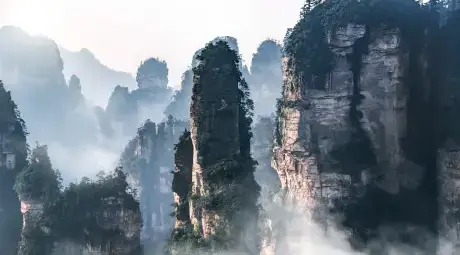
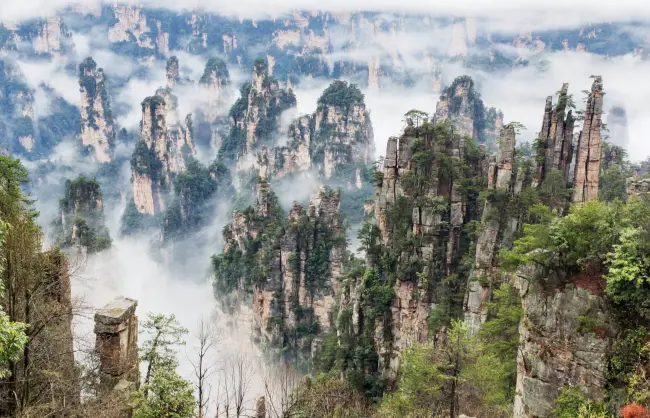
Zhangjiajie is one of the most beautiful places in China with gorgeous natural sceneries. You might have known about it as the inspiration for the world of Avatar. There are many scenic areas in Zhangjiajie, and Zhangjiajie National Forest Park is the most representative.
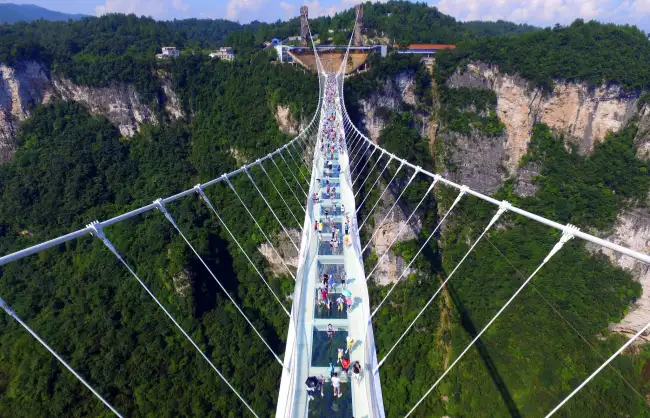
Towering sandstone pillars pierce through the clouds. You can take a hike in the mountains and take in the breathtaking views. Bailong Elevator, the tallest outdoor elevator in the world, can take you straight to the mountain top. Challenge yourself on Zhangjiajie Glass Bridge over the grand canyon. It is the longest and highest glass bridge in the world. Your Zhangjiajie tour will be an unforgettable experience.
Best Time to Visit: April to October
Zhangjiajie has the best natural landscapes from April to October when the trees are dense and flowers and in bloom. However, it’s best to avoid the official holidays of China, as there tends to be huge influxes of visitors in Zhangjiajie.
Recommended Tour
Explore Zhangjiajie's Avatar sandstone pillars and the world's highest glass bridge, then visit Furong Ancient Town's waterfall houses and Fenghuang's riverside Qing dynasty streets.
Other Top Things to Do in Zhangjiajie:
- Visit Fenghuang Ancient Town, one of the most beautiful water towns in China (see below #26)
- Take a cable-car over Tianmen Mountain
- Hike along the Golden Whip Stream
- Explore Yellow Dragon Cave, an incredible site of karst formations
7. Chengdu Research Base of Giant Panda Breeding in Chengdu
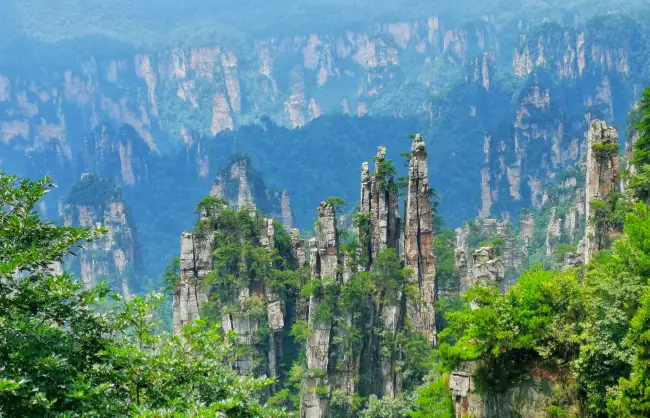
Chengdu is the hub of Southwest China. It has many beautiful destinations in its vicinity, rich regional culture, and lots of cool stuff to do. This beautiful city is probably best known for being the home of the adorable giant pandas. Chengdu Research Base of Giant Panda Breeding is one of the top conservation bases in China. It is a vast area that allows pandas to live in their natural habitat.
You can go on a Chengdu panda tour to see these beloved animals and other endangered species at the research base. Learn more about them, their living habits, and research efforts made to preserve them.
Other Top Things to Do in Chengdu:
- Go on a Chengdu food tour to taste the most authentic hotpot and other local cuisine
- Enjoy the slow-paced Chengdu lifestyle. Have some tea in a tea house and watch a Sichuan Opera
- Take a Chengdu side trip to nearby destinations like Dujiangyan, Leshan (see below #24), and Jiuzhaigou (see below #8)

Recommended Tour: 7 Days Chengdu Natural Exploration Tour with Mt. Emei & Jiuzhaigou
8. The Yellow Mountain in Huangshan
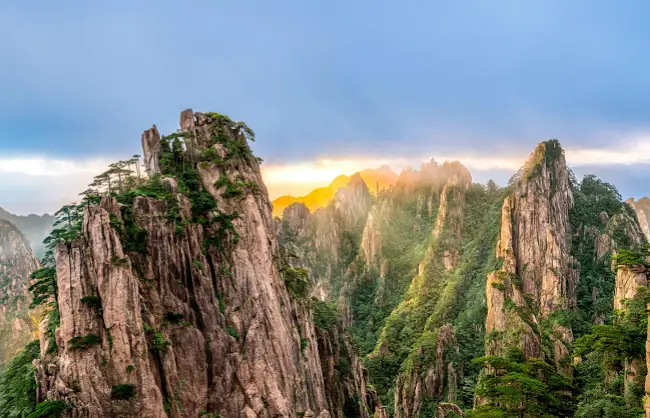
The Yellow Mountain, or Mount Huangshan, is one of the most beautiful mountains in China. It is the best place for China nature tours not far from Shanghai. It is best known for its “Four Wonders” of natural beauty. During your hike, you’ll see many oddly shaped pine trees. They thrive at a high altitude and are rooted in rocky crevices. The most famous is the 800-year-old Welcoming Pine.
Due to the geological changes over the history of the region, Mount Huangshan also has many bizarre rock formations. They appear in strange shapes and are named accordingly, like the Monkey Watching the Sea and Flying Rock. They add a lot of fun to your hike. The third wonder is the Sea of Clouds, a natural phenomenon that occurs in the early morning when the mountains are slowly submerged in the mist.
After the hike, you can relax your body in Huangshan hot springs at the foot of the mountain. The Yellow Mountain is in fact much more than its Four Wonders. You should definitely experience its stunning sunrise or sunset. And different seasons also add their unique touch to the views. A Huangshan tour is definitely worthwhile.
Best Time to Visit: all year round
Although the Yellow Mountain is suitable for visit all year round, it is best to avoid summer because it is the peak tourist season. During other times of the year, Mt. Huangshan offer changing sceneries. In the spring, from March to May, the greeneries are at their best decorated with colorful wildflowers. And the temperature is suitable for hiking.
In the fall, the foliage in the mountains turns yellow, orange, and red. Against the clear blue sky, the Yellow Mountain becomes a colorful painting. You’ve a great chance for photography. And in the winter, although hiking might be more difficult due to the low temperatures and icy trails, the snow covers the trees with a thin layer of white. The mountains are quieter and more peaceful. And you get to enjoy the hot springs after your visit.
Recommended Tour: 4 Days Huangshan Tour with Tangyue Memorial Stone Archways
9. Jiuzhaigou National Park in Sichuan
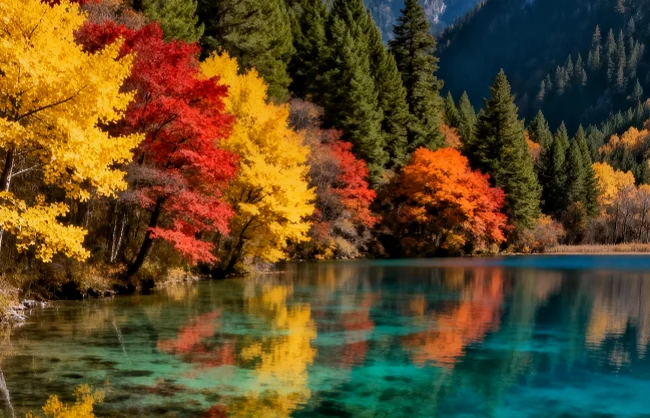
Jiuzhaigou National Park is one of the most beautiful places in China that might be unknown to many international tourists. It is located in the mountains of Sichuan Province, not far from Chengdu. The landscapes there are unreal with snow mountains in the background, clear alpine lakes and waterfalls, and dense forests. The entire place is constantly changing in color with the season. Many visitors who have been there praise it to be a fairy land on earth.
Best Time to Visit: all year round
Jiuzhaigou National Park offers different sceneries throughout the year. In the spring, the change is visible from the top to the bottom. The winter snow has not yet melted at the top of the mountains, and it becomes greener the lower the altitude. Grass and flowers are already making the area seem full of life. In the summer, Jiuzhaigou Valley remains cool and shady. The clear lakes make it feel even cooler.
Fall brings a variety of colors to Jiuzhaigou. The colorful foliage reflected in the water makes the scene seems straight out of a painting. The cool temperature and brisk air are also perfect for outdoor activities. In the winter, everything in Jiuzhaigou seems to return to a state of calmness. The lakes are frozen. It’s a different travel experience.
Recommended Tour: 8 Days Chengdu Jiuzhaigou Valley and Chongqing Tour by High-speed Train
See how to choose between Jiuzhaigou and Zhangjiajie
10. Yangshuo in Guangxi
Yangshuo is one of the prettiest places in China that many people don’t know about. Its countryside views and karst landscapes are hidden in the mountains of Guangxi, about 65 kilometers (40 miles) from Guilin. The famous Li River winds its way past the karst peaks and across the town. You can take a boat ride or a bamboo raft on the quiet waters to see the hills extending beyond your sight.
Recommended Tour
Visit giant pandas in Chengdu, walk among Zhangjiajie's floating Avatar mountains and glass bridges, then cruise the Li River through Guilin's iconic karst landscapes.

11. Echoing-Sand Mountain and Crescent Lake in Dunhuang
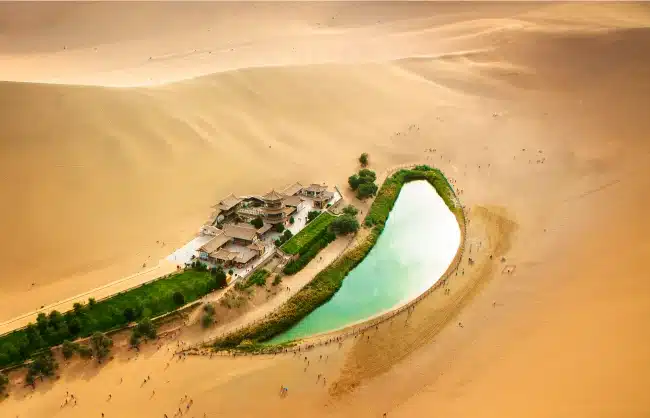
Dunhuang is an important hub along the ancient Silk Road and among the most beautiful places in China. Its most famous natural attraction is the echoing-sand mountain and crescent lake. As its name suggests, it is a large desert area with sand dunes. The fine sands pile up, and when the wind blows past the dunes, they vibrate and slide against each other, making a buzzing sound.
The crescent lake is a body of water in the shape of a crescent moon in the middle of the desert. The contrast between the arid desert and the clear water creates a wonderful visual effect. The sunset at the echoing-sand mountain is particularly gorgeous as the warm glow paints the sky orange. Apart from appreciating the views, you can also participate in desert activities like camel riding and sand sliding.
Other Top Destinations along the Silk Road:
- Xi’an – the starting point of the Silk Road
- Zhangye – beautiful Danxia landforms (see below #22)
- Jiayuguan – the western end of the Great Wall
- Gannan – grassland and Tibetan culture
- Qinghai – gorgeous alpine lakes (see below #18)
- Urumqi – diverse ethnic cultures
Recommended Tour: 7 Days Silk Road Group Tour to Dunhuang Jiayuguan Zhangye
12. Victoria Peak in Hong Kong
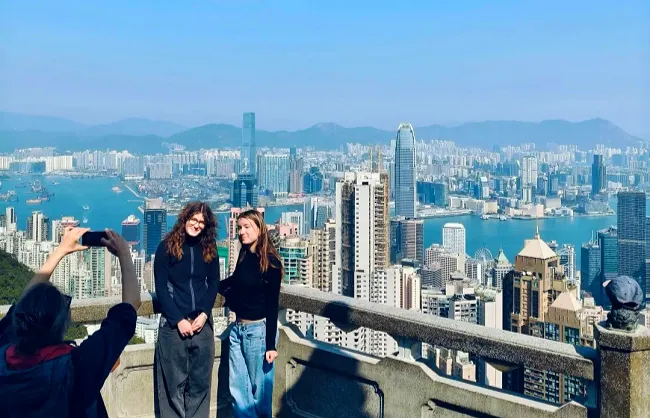
Hong Kong is another popular gateway city into China. It’s best known as a huge metropolis that represents a fine combination of eastern and western culture. It’s one of the most interesting places to visit in China because you’ll get to see a different side of the economic center that you have in mind. The Victoria Peak is is the highest point of Hong Kong. From there, you’ll have an excellent view of the city’s skyline and nearby islands.
The best activity to do is to take the Victoria Peak Tram up to the top. The service has been in operation since 1888 and has become a cultural symbol of the city. You can also take a hike up or down the trails. The beautiful views will prove to be rewarding. You can enjoy the gorgeous sunset while having dinner or a drink.
Other Top Things to Do in Hong Kong:
- Take the iconic Star Ferry across Victoria Harbor
- Go on a day trip to Lantau Island
- Discover the traditional life of Tai O Fishing Village
- Explore the many bustling markets like Temple Street Night Market
Recommended Tour: 8-Day Greater Bay Area Tour
13. Xiapu Mudflat in Fujian
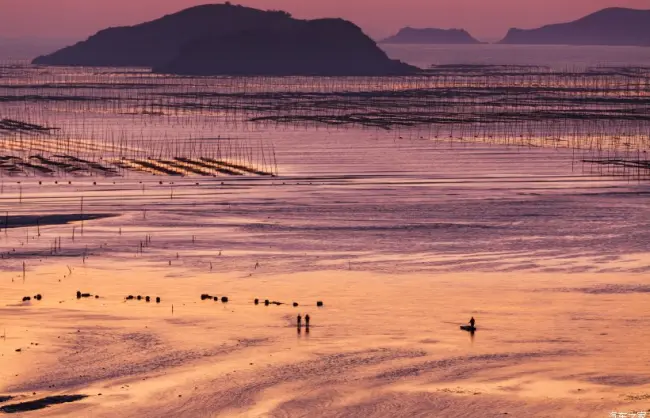
Xiapu Mudflat is a famous spot among photographers. Located in Fujian Province along the coastline, it is one of the most beautiful places in China. It extends for over 400 kilometers (250 miles). The best hours to visit are during sunrise and sunset. The mudflats reflect the warm glow of the sun and the blue sky. Different parts of it appear in different shades of colors as the tides wax and wane.
You might also catch the outlines of some fishing boats, of fishermen casting their nets wide making an elegant trajectory in the sky. The best season for capturing the beauty of Xiapu Mudflat is from April to October. It is a must-visit destination if you’re going on a China nature tour.
Best Time to Visit: April to October
Fujian weather is pleasant during these months with clear skies and lots of sun. It’s best to plan your visit on a day with great sunrise or sunset. And the tides are the highest during full moon and new moon phases.
Recommended Tour: 6-Day Fujian Tulou, Xiamen and Xiapu Mudflat Photography Tour
14. Potala Palace in Tibet
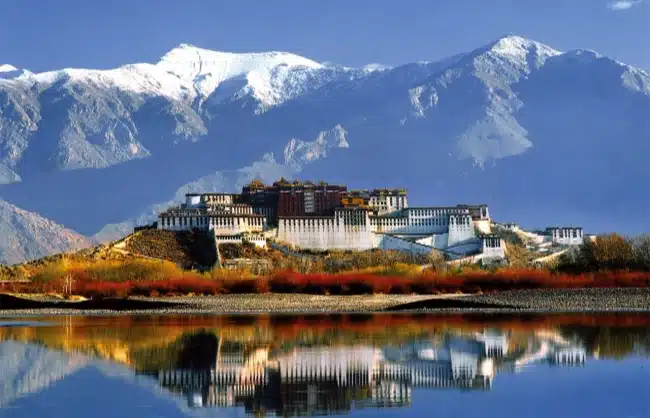
Tibet is known as the “roof of the world” for being home to Mt. Everest. Though the challenging hike to conquer the world’s highest mountain may not be for many, it is still a place you should visit at least once in a lifetime. The unbelievable landscapes and rich Tibetan culture will leave you in awe. Potala Palace in Lhasa, the highest ancient palace in the world, is the holy site of Tibetan Buddhism and Tibetan culture.
Countless visitors make the pilgrimage to admire the palace in person, to see its magnificent architecture, and precious religious relics. Potala Palace used to be the residence of Dalai Lamas. You can walk around the prayer halls and observe the lives of monks who live there, although it’s important to be respectful towards local practices.
Other Top Things to Do in Tibet:
- Challenge yourself to a trekking tour to the east slope of Mount Everest
- Visit famous Tibetan monasteries like Jokhang Temple, Drepung Monastery, and Sera Monastery
- Find authentic Tibetan life on Barkhor Street
- Enjoy the gorgeous views and tranquility of BaksumTso Lake and Yamdorktso Lake
Essential Travel Tips for Tibet Tours:
- To visit Tibet, you will need a Tibet Travel Permit on top of a Chinese visa.
- Foreign visitors cannot travel independently in Tibet. You need to book a Tibet tour with a local operator.
- Tibet has an average elevation of more than 4,000 meters (13,123 feet), so it’s very important to be aware of altitude sickness and take caution in advance.
Recommended Tour: 5 Days Lhasa Essence Tour with Yamdrok Lake & Local Tibetan Family Visit
15. Longji Rice Terraces in Guilin
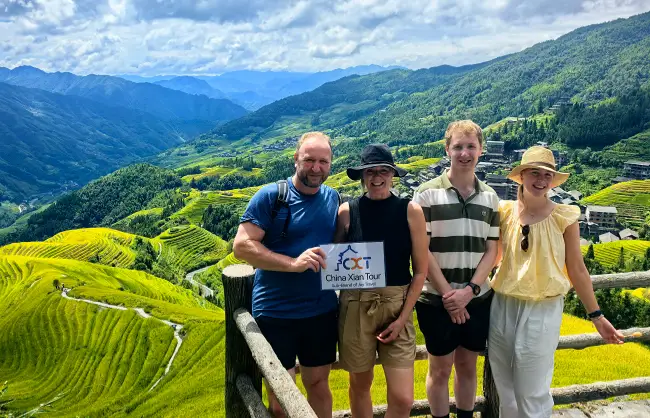
Apart from the beautiful landscapes of Yangshuo, you will also find one of the most stunning rice terraces of China in Guilin. Longji Rice Terraces are a massive area of rice fields built along the hillside. Local farmers take advantage of the terrain, and with their wisdom and love for their land, manage to create such a wonderful sight. “Longji” means the dragon’s backbone, is a metaphor for the terraces rising and falling along the slopes.
The view of the terraces changes with the seasons. In the spring, farmers fill the terraces with water to prepare for plantation. The water shimmers under the sun and reflects the color of the sky. In the summer, the fields are still green with the newly planted rice. The vast sea of green stalks extends beyond your sight, swaying in the wind. In the fall, the fields turn golden as the harvest season approaches.
Recommended Top Guilin Tours: 5 Days Guilin, Yangshuo and Terrace Field Photography Tour
16. The Three Gorges on the Yangtze River
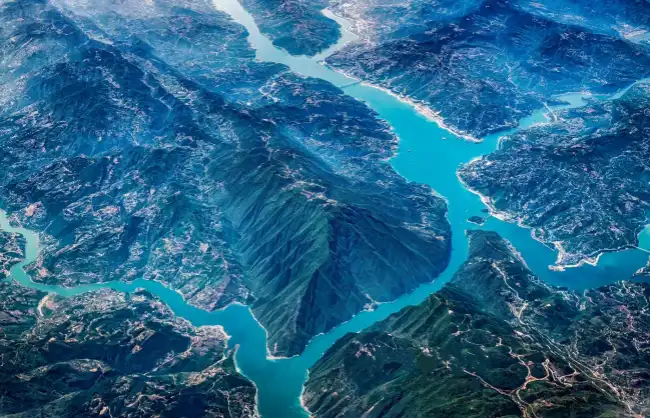
The Yangtze River is the longest river in China and the third longest in the world. Along the way, you will discover many beautiful places in China. You can take a Yangtze River cruise tour to explore the area, a unique way of travel that will allow you to take a deep dive into regional culture while enjoying the views of this beautiful part of China. The best highlight of the cruise trip is the Three Gorges.
The Three Gorges section of the Yangtze River is between Chongqing and Yichang. The mountains and cliffs along the banks are magnificent. There are also many cultural sites like Fengdu Ghost City, where you can learn about ghost culture in Chinese mythology. The Shibaozhai Pagoda is a signature piece of Chinese architecture. And the Three Gorges Dam is an enormous construction that is the best of its kind in the world.
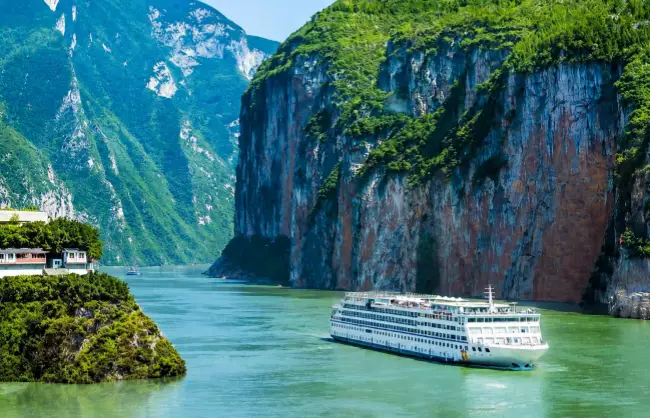
Experience China's most iconic destinations from Beijing's Great Wall to Shanghai's futuristic skyline, with a scenic Yangtze River cruise connecting ancient capitals.
17. The West Lake in Hangzhou
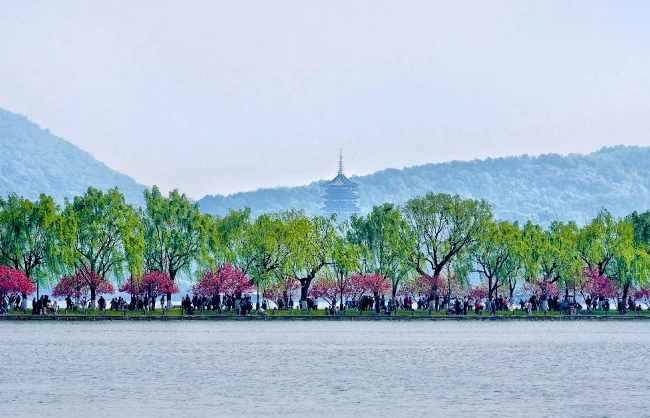
Hangzhou is probably the most romantic destination in China with gorgeous natural scenery. It’s called the “heaven on earth” alongside Suzhou. The most famous landmark in Hangzhou is the West Lake. It’s been a source of inspiration for Chinese artists and poets throughout history. It’s even featured on the one yuan note of China. The lake, temples, pagodas, and bridges form an elegant picture of the Jiangnan city.
The West Lake is historically renowned for its “ten scenes,” including Lotus Swaying in the Breeze, Autumn Moon over the Peaceful Lake, Lingering Snow over the Broken Bridge, and Evening Bell Ringing at Nanping Hill. Different seasons and weather will add different elements to your experience. You can take a leisurely walk or cycle around the lake, making stops at various attractions, and learn about the history and stories of Hangzhou.
Other Top Things to Do in Hangzhou:
- Take a day trip to nearby ancient water towns like Wuzhen and Xitang
- Tour Longjing Tea Plantation to learn about Chinese tea culture
- Discover the cultural and religious past of Hangzhou at Lingyin Temple
- Experience Hangzhou traditions on Hefang Street
Recommended Tour: 3 Days Hangzhou City Tour to Wuzhen Water Town
18. Huangguoshu Waterfall in Guizhou
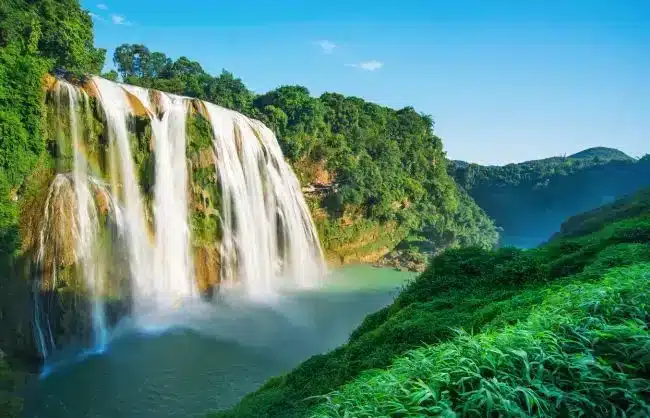
Definitely among the top 40 most beautiful places in China, is Huangguoshu Waterfall, the largest waterfall in China. And with a total of 18 waterfalls in the area, they make the world’s largest waterfall cluster. Huangguoshu Waterfall is located in Guizhou Province, a pretty part of Southwest China with diverse ethnic culture.
The spectacular waterfall is 78 meters (255 feet) tall and 101 meters (331 feet) wide surrounded by lush forests. The gushing water makes a thundering noise in the otherwise quiet mountains. You can hike along the trails of the surrounding area, see other natural attractions, and learn about local minority cultures. The best time to visit Huangguoshu Waterfall is in summer when there’s more rainfall.
Other Top Things to Do in Guizhou:
- Marvel at Dragon Palace Cave, an underground karst cave in Anshun City
- Experience the traditional culture and lifestyle of Miao and Dong minority villages
- Hike the holy Buddhist mountain, Fanjing Mountain
- Step back into Guizhou’s past in Qingyan Ancient Town
Recommended Tour: 7 Days Guizhou In-depth Tour
19. Qinghai Lake in Qinghai
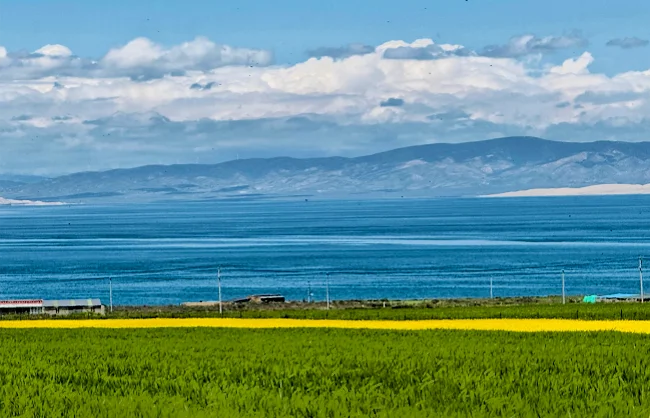
Qinghai is another important stop along the Silk Road. Located on the Qinghai-Tibet Plateau, it has a large area of mountains and other natural resources at a high altitude. Qinghai Lake is largest inland lake and saltwater lake in China. It’s often been praised to be China’s most beautiful lake and the “Sapphire on the Plateau.” In the summer, the vast blue lake is surrounded by fields of golden rapeseed flowers in bloom.
Aside from being a popular attraction on the Silk Road, it also attracts lots of cyclists to make their pilgrimage here. Nearby, there are Tibetan villages you can visit. The locals have lived by the lake for centuries. You can experience Tibetan life and customs, try their traditional foods like Qingke wine and Tibetan yogurt.
Best Time to Visit: May to October
Weather wise, these are the best months to visit Qinghai Lake. In the spring, the lake is surrounded by lush green grass and colorful wildflowers. If you want to see rapeseed flowers in bloom, plan your trip during the summer. The weather turns cooler in the fall as the leaves and grass change in color. For those who are interested in birdwatching, Qinghai Lake attracts lots of birds from May to July.
Recommended Tour: 4 Days Classic Xining Tour with Qinghai Lake and Chaka Lake
20. Pudacuo National Park in Shangri-La
Shangri-La means “the sun and the moon in the heart” in the Tibetan language. This beautiful city sits where Yunnan, Sichuan, and Tibet meet. People call it the paradise on earth because of its untouched highland beauty. Pudacuo National Park is the first national park in China to meet the international standards. With an area of 500 square miles (1,300 square kilometers), it is like a world of fiction.
The rolling mountains in the distance are capped with snow. Highland pastures unfold in front of you like a lush green carpet. In Tibetan, “pudacuo” means reaching the other side of the lake with divine help. It refers to Bita Lake and Shudu Lake, two alpine lakes with local legends. You will see cattles and sheep grazing leisurely by the water. It’s like being inside a painting.
Best Time to Visit: April to October
While it tends to be cold at Pudacuo National Park in the winter, the sceneries covered in snow is a different and equally beautiful sight to see.
Other Top Things to Do in Shangri-La:
- Visit Songzanlin Monastery, the largest Tibetan Buddhist temple in Yunnan
- Explore Dukezong Ancient Town, one of the largest Tibetan old towns in China
- Go on a hike in Meili Snow Mountain to see glaciers, its thirteen peaks, and the most unforgettable sunrise
- Hike to find the hidden Tibetan Yubeng Village
Recommended Tour: 5 Days Yunnan Tour of Lijiang and Shangri-La
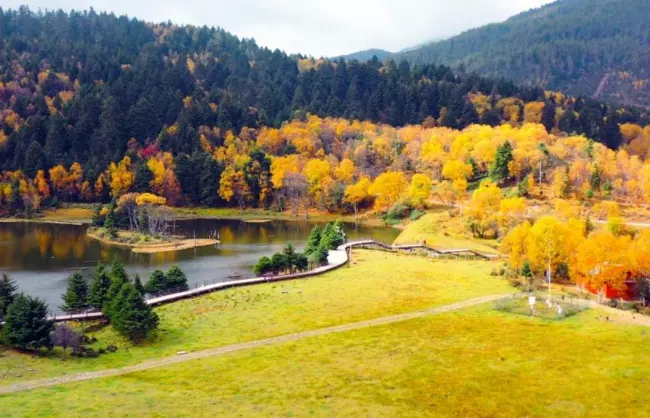
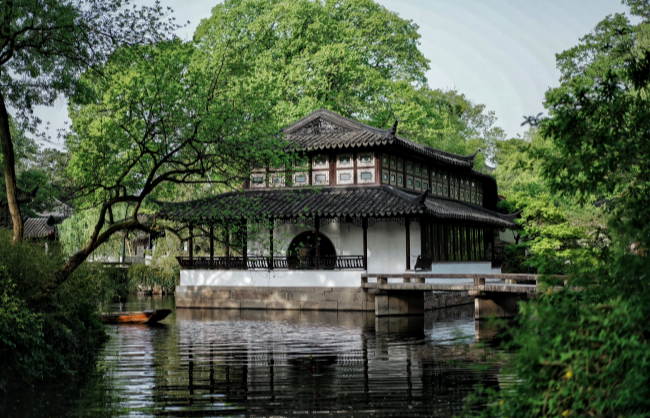
21. Jiangnan Classical Gardens in Suzhou
If you’re wondering about where to visit to experience traditional Chinese culture, Suzhou is a nice option near Shanghai and Hangzhou. It is known to embody the essence of Jiangnan culture. Most famously, Suzhou has over 60 Jiangnan classical gardens that are typical of local architectural and landscaping style. They feature unique layouts, meticulously designed greeneries, rockeries, and waterscapes.
The most representative and the largest one is the Humble Administrator’s Garden. It was built in 1509 by a retired Ming Dynasty official who wished to return to a simpler and pastoral life after his political career. You will see how this garden carried out his intentions. The Humble Administrator’s Garden is regarded as one of the top four classical gardens of China, together with the Summer Palace of Beijing, Chengde Mountain Resort, and the Lingering Garden also in Suzhou.
Other Top Things to Do in Suzhou:
- Visit some of the best water towns in China nearby Suzhou like Tongli Water Town and Zhouzhuang Water Town
- Discover Suzhou’s past on the ancient Shantang Street
- See the city skyline by Jinji Lake
- Watch a Kunqu Opera, a traditional Suzhou opera with a history dating back to the 14th centruy
Recommended Tour: 6 Days Shanghai Suzhou Hangzhou Tour with Tongli Water Town
22. Yungang Grottoes in Datong
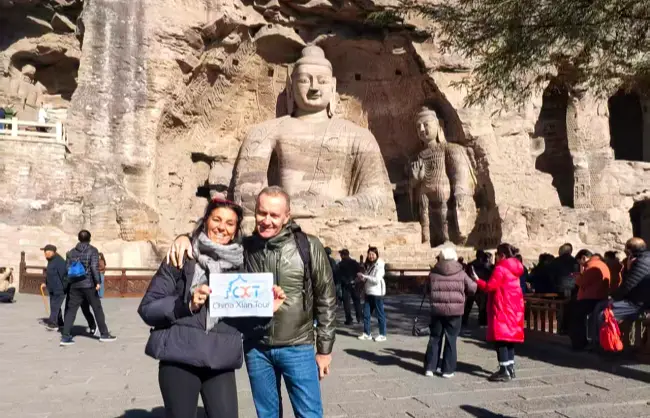
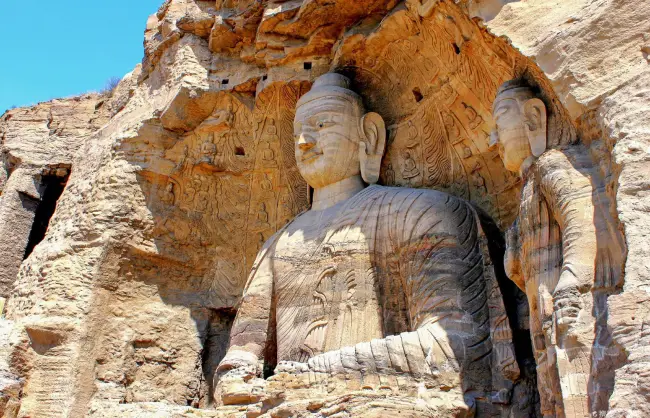
Datong in Shanxi Province was once the capital of the Northern Wei Dynasty. It is one of the nine famous ancient capitals of China, so there’re lots of historical treasures to explore in this city. Yungang Grottoes is the top on the list. The site has 252 caves and niches in total containing more than 51,000 Buddha statues and engravings from the 5th and 6th century. It’s a great place to learn about the history and arts of Chinese Buddhism.
The largest statue of Yungang Grottoes is almost 17 meters (55 feet) tall. And the carvings on the rock cliffs are of the most intricate details, depicting different themes and religious scenarios. You’ll be amazed at the craftsmanship of ancient Chinese sculptors. Yungang Grottoes is recognized as a UNESCO World Heritage Site and should definitely be included in the best China tour.
Other Top Things to Do in Datong:
- Marvel at the Hanging Temple that literally hangs on the side of a cliff
- See the amazing architecture of Yingxian Wooden Pagoda
- Climb up Mount Hengshan, one of the Five Sacred Mountains of China
- Learn more about Chinese Buddhist culture at Huayan Temple
Marvel at the gravity-defying Hanging Temple, explore Yungang Grottoes' magnificent Buddhist carvings, and wander Pingyao's perfectly preserved Ming-Qing streets.
23. Rainbow Mountains in Zhangye
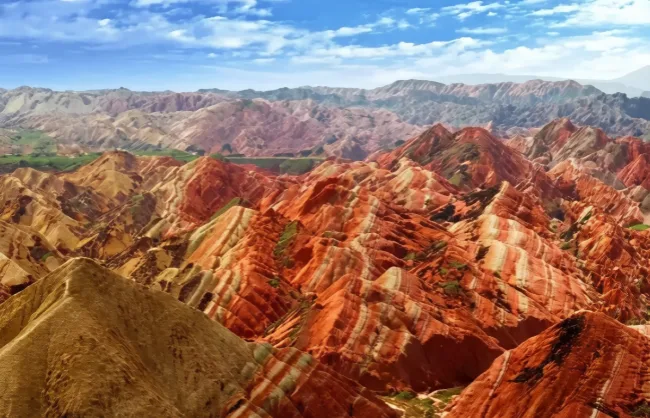
Our next big stop on the Silk Road tour is Zhangye in Gansu Province. The area is known as one of the most beautiful places in China for its Danxia landforms. The Rainbow Mountains, or Zhangye Danxia Geological Park, is the most representative and the largest Danxia area in China. It is even ranked the Top 10 Geographical Wonders of the World by National Geographic.
The Danxia landform of Zhangye took about 200 million years to form. The continuous weathering and erosion of red sandstones, with the influence of local desert conditions, climate change, and wind, created layers of colors on the peaks and rocks. The rolling mountains appear to be in various colors, hence its name, the Rainbow Mountains. It is a pretty site not to be missed by any nature or geology lovers.
Best Time to Visit: June to September
Summer and early autumn are the best time to visit Zhangye. It tends to be cool and less dry with relatively more rainfall. The weather conditions are ideal for enjoying the sunrise and sunset.
Recommended Tour: 5-Day Zhangye Xining Tour of Danxia Landform and Qinghai Lake
24. Mogao Caves in Dunhuang
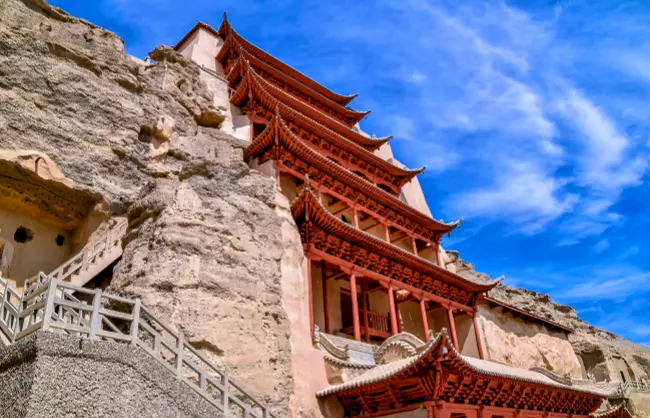
Also located in Dunhuang, Gansu Province, is Mogao Caves, one of the four greatest grottoes in China alongside Yungang Grottoes in Datong, Longmen Grottoes in Luoyang, and Maijishan Grottoes in Tianshui. Mogao Caves is also called the Thousand Buddha Caves because it houses 735 caves, 45,000 square meters of murals, and 2,415 clay painted sculptures, making it the largest collection of the Buddhist art in the world.
The caves were first built during the Sixteen Kingdoms period (year 304 to 439), and the construction went on throughout many dynasties afterward. They are located on the side of a cliff for monks to practice religious activities. You will see vivid and colorful murals depicting Buddhist stories. The sculptures are equally amazing with intricate details. Witnessing these Buddhist treasures in person will be an incredible experience.
Recommended Tour: 8 Days Classic Silk Road Tour from Xian to Dunhuang
25. Leshan Giant Buddha in Sichuan
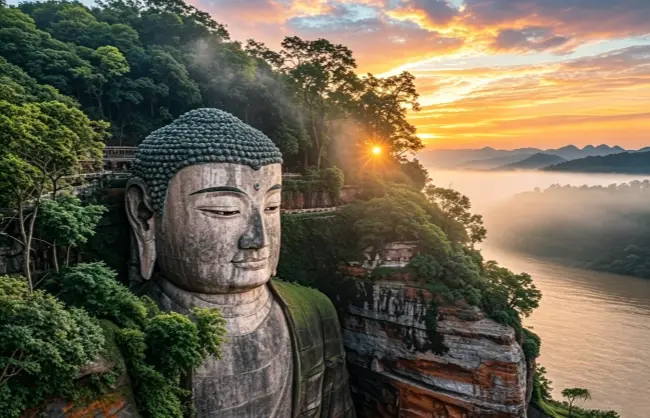
Leshan Giant Buddha is another unbelievable sight to behold in Sichuan. It is a huge stone statue of Maitreya carved into a cliff by the water, all the way from the top to the bottom. At a height of 71 meters (233 feet), it is the largest seated Buddha statue in the world. First constructed in the Tang Dynasty, it took about 90 years to complete.
Located in Leshan city, it is a popular Chengdu side trip destination. You can either hike up the mountain to see details of Leshan Giant Buddha from the top. Or you can take a cruise up to its feet and observe it from below. Either way you’ll be amazed at its size and the architectural wonder with such a long history behind it.
Recommended Tour: 4 Days Chengdu Panda Volunteer Tour with Leshan Giant Buddha
26. Lijiang Old Town in Yunnan
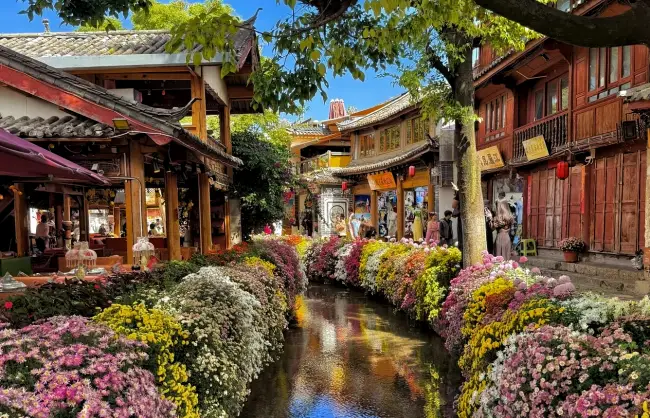
Yunnan Province is a gorgeous part of China with a variety of landscapes to explore. Apart from Shangri-La, Lijiang is also worth your time with ancient towns of Naxi culture and stunning natural sceneries. Lijiang Old Town is the most representative of its cultural landscapes. With a history of over 800 years, it is the home of Naxi people. The layout and architecture of the town and showcase a combination of many ethnic elements.
You can explore the winding cobblestone streets to find the homes and shops of the locals. Discover various aspects of Naxi culture, their customs, traditional dress, and arts including music, dancing, and paintings. It is a great place to learn about the regional ethnicity on a Yunnan tour.
Other Top Things to Do in Lijiang:
- Apart from Lijiang Old Town, Baisha Ancient Town and Shuhe Ancient Town are also good places to discover the traditions of Naxi people
- Enjoy the stunning sceneries of Jade Dragon Snow Mountain
- Uncover the hidden Lugu Lake in the mountains
Recommended Tour: 7 Days Best Yunnan Tour to Dali Lijiang Shangri-La
27. Fenghuang Ancient Town in Hunan
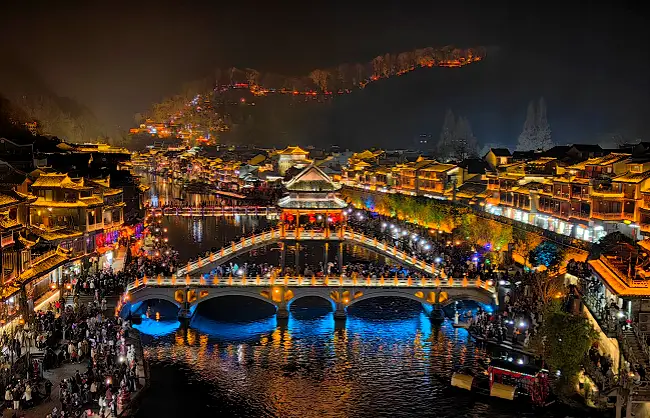
Fenghuang Ancient Town is regarded as one of the most beautiful ancient towns in China. It is home to Tujia and Miao people, built along the banks of Tuo River in Qing Dynasty. Most of its architecture are still well-preserved. Stilted buildings, a type of traditional Chinese architecture, line along the bank. The magnificent Rainbow Bridge connect the town across the river. You’ll find stores and markets on the ground floor of the bridge.
You can walk down the narrow alleyways of the town and uncover the daily life of Miao people. Enjoy their ethnic music and dance. Try traditional foods. You might also want to bring back handmade silver or embroidery products as souvenirs.
Recommended Tour: 5 Days Zhangjiajie and Fenghuang Ancient Town Tour
28. The Countryside of Wuyuan in Jiangxi
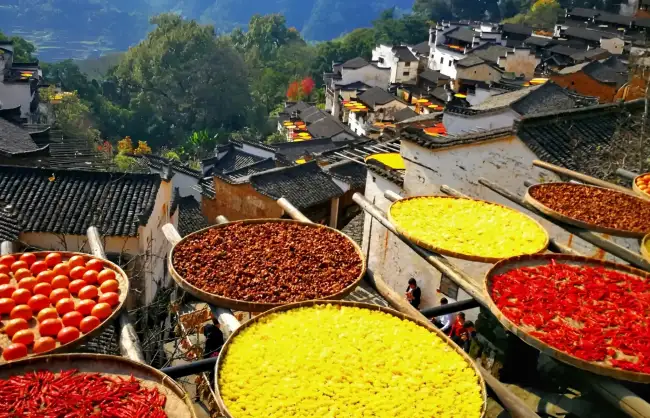
Wuyuan is a small county in Jiangxi Province, but it has become known across the country for being the most beautiful countryside in China. There are charming landscapes and many ancient Hui-style villages. Rolling hills are the home of local villagers. Villages are built on slopes, by the streams and creeks. In the spring, traditional houses are surrounded by the golden sea of rapeseed flowers pouring down the slopes.
This region in Jiangxi is a birthplace of Hui culture. You will notice the white-walled and blacked-tiled residences, which are Hui-styled architecture, sometimes decorated with intricate carvings. In the fall, villagers of Wuyuan still practice a tradition called Shaiqiu, meaning drying crops, where they put out all kinds of crops under the sun after harvest for the sake of food preservation. The colorful corn, peppers, and rice make a beautiful painting against the rural landscapes.
Other Top Things to Do in Jiangxi:
- Visit the ancient porcelain capital of Jingdezhen
- Hike up Mount Lu, a famous mountain in Chinese poetry and history
- Marvel at one of China’s Four Great Towers, Tengwang Pavilion
- Discover the dreamland of Wangxian Valley
Recommended Tour: 4 Days Jiangxi Tour of Nanchang, Mt. Lu, Jingdezhen, Wuyuan
29. Daocheng Yading in Sichuan
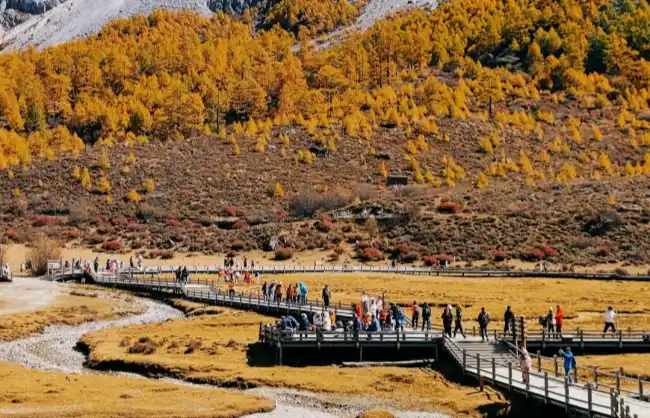
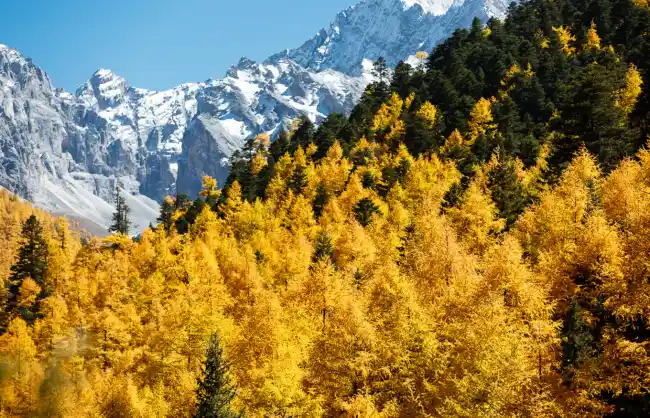
Sichuan is a land of natural treasures. Daocheng Yading is another hidden piece of paradise. At an altitude of over 4,000 meters (13,123 feet), it is surrounded by mountains covered in snow. Its diverse natural landscapes including impressive peaks, glaciers, alpine lakes, highland pastures, and primitive forests make it a popular destination for hiking trips around Chengdu.
Depending on your hiking route, you can make it a day trip for a less challenging hike, or you can stay a couple days in the village and fully immerse yourself in this surreal environment. Though as you make your travel plans, be aware that the high altitude might cause discomfort if you’re not accustomed to it. It’s recommended that you arrive one day prior to your hike to see if your body experiences any altitude sickness.
Best Time to Visit: April to May, September to October
These months offer the best weather and natural conditions for exploring Daocheng Yading. In April and May, the wildflowers are in bloom in the mountains. The trails will be beautifully decorated with colors and surprises. The days are clear with the the sacred snow mountains clear in the distance, glimmering under the sun.
In autumn, September and October, Daocheng Yading takes on a variety of colors. The trees turn golden, and you have the opportunity to see the red meadows of Sangdui Red Grassland. Against the clear blue sky, the snow mountains appear to be more elegant and sacred than ever.
Hike from Lijiang through Tiger Leaping Gorge to Shangri-La, then trek the sacred peaks of Daocheng Yading Nature Reserve.
30. Kanas Lake in Xinjiang
Xinjiang is at the western end of the Silk Road. It has some of the most beautiful landscapes of China, from snow mountains, clear lakes, to vast deserts, and grasslands. It is also home to many ethnic groups like Uyghur and Kazakh. You can experience exotic culture, their traditions, and ways of life.
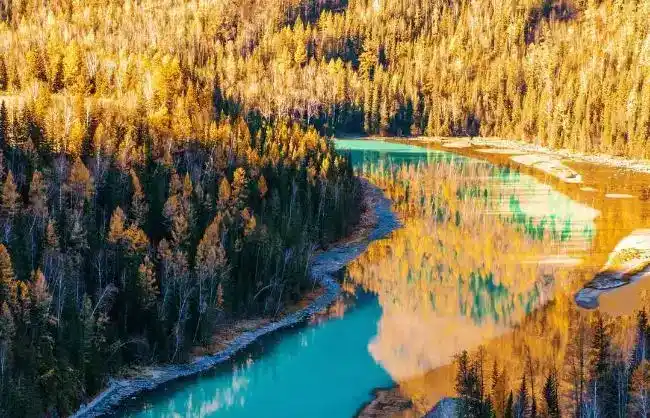
Kanas Lake in north Xinjiang is called the Pearl of the Altai Mountains. Surrounded by the lush forests on the mountains, it is clear as a mirror reflecting the colors around it. “Kanas” means the “beautiful and mysterious lake” in Mongolian. There’s in fact a legendary lake monster that is said to dwell in its depths. You can hike in the nearby mountains for the breathtaking sceneries or take a boat ride for a close-up view.
Best Time to Visit: May to October
Xinjiang is located in northwestern China, and Kanas Lake is at its northernmost part, so the region sees winter particularly early. It usually sees heavy snow in as early as November. May to October is the best time for exploring the outdoors. September and October especially, have great autumn views as the lake reflects its colorful surroundings. If you’d like to see the area turn into a winter wonderland, visit between November and the following April.
Other Top Things to Do in Xinjiang:
- Experience authentic Uyghur culture in Kashgar Old City
- Enjoy the views of the Heavenly Lake of Tianshan Mountains
- Discover Kazakh culture and customs on Nalati Grassland (see below #39)
- Uncover the lost history of Jiaohe Ruins
Recommended Tour: 11 Days Xinjiang Group Tour to Kashgar and Kanas Lake
31. Hongcun Ancient Village in Huangshan
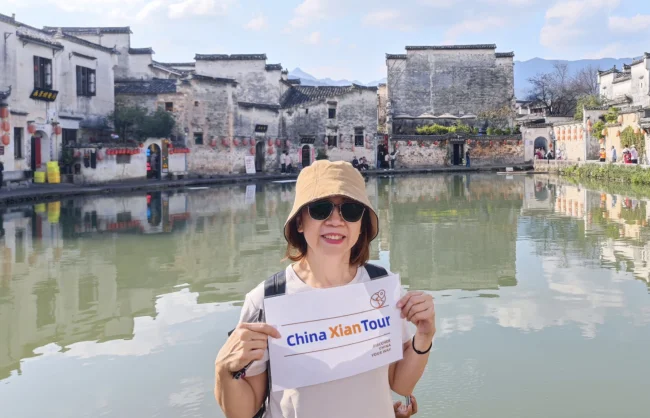
At the foot of the Yellow Mountain in Huangshan city, there are many ancient villages that still preserve the most authentic Hui culture and traditional way of life. Hongcun Village was built in 1131 and has the reputation of being “the charming village of an oil-painting.” About 140 ancient buildings of the Ming and Qing Dynasties still remain standing today. The traditional residences and narrow alleyways along the canal create a tranquil atmosphere.
Recommended Tour: 3 Days Huangshan Private Tour with Local Village
32. Mount Siguniang in Sichuan
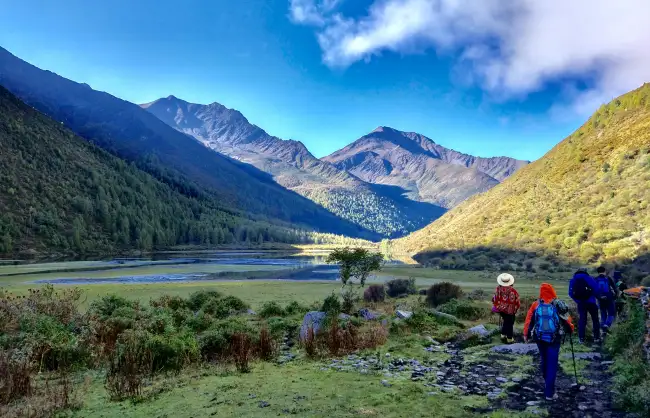
Another natural wonder of Sichuan is the “Queen of Mountains,” Mount Siguniang. “Siguniang” means four sisters in Chinese, refers to the four peaks of the mountain range. The tallest of the four is Yaomeifeng, the youngest sister, at 6,232 meters (20,446 feet). With valleys, forests, lakes, waterfalls, glaciers, and meadows, Mount Siguniang is a beloved spot for experienced hikers. It is even named the “Oriental Alps.”
The top highlight of Mount Siguniang is its three valleys, Shuangqiao Valley, Changping Valley, and Haizi Valley. They are of varied difficulty, so if you choose to go on a hike, make sure you consider one that suits you. It’s important to be aware of altitude sickness before you go on your Sichuan tour.
Best Time to Visit: May to November
These months are generally the best for trekking as the weather conditions are mild. You’ll see different kinds of flowers in bloom in different seasons. Spring and winter make hiking more challenging than usually. The temperature can drop below freezing, and the trails can get icy and slippery. However, you’re almost guaranteed to see the best snowscapes, and you can participate in winter sports like ice climbing and skiing.
Recommended Tour: 3 Days Mt. Siguniang (Four Girls Mountain) Hiking Tour
33. Traditional Tulous in Fujian
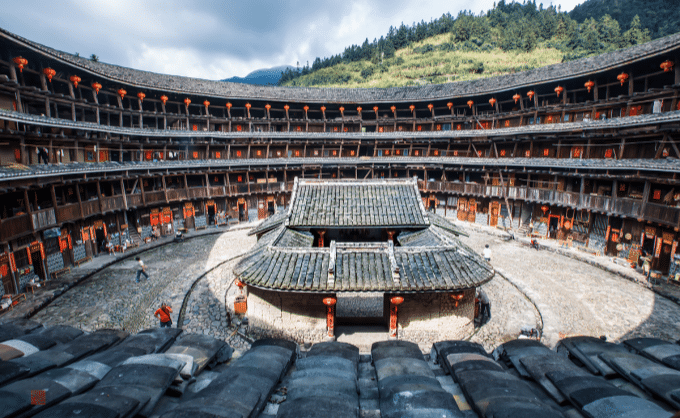
Visiting traditional Fujian Tulous is pretty much a must on Fujian tours. Tulous are also called Hakka Tulous or Hakka earth building. They are traditional residential complexes constructed by the Hakka people. This type of architecture originated in Song and Yuan Dynasties. In order to adapt to mountainous environments and for defensive purposes, people developed this kind of unique architecture using earth, wood, stone, and bamboo.
These large complexes are built for collective living, usually with two to three levels. A small Tulou can house a few dozen families, while a large one can accommodate hundreds or even thousands of people. When you travel to Fujian, you will find most of these Tulou houses concentrated in Yongding and Nanjing County, and the most common shapes are square and circular.
Recommended Tour: 4 Days Classic Xiamen, Nanjing Tulou, Fuzhou Highlights Tour
34. Hulunbuir Grassland in Inner Mongolia
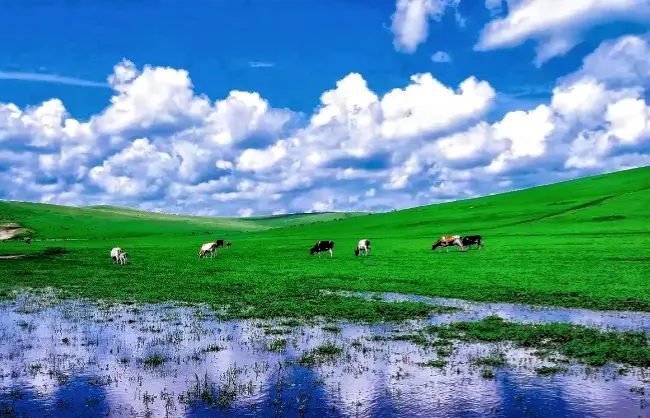
Inner Mongolia is known for having some of the world’s best grasslands and its nomadic lifestyle. Hulunbuir Grassland is one of the four largest grasslands in the world and the largest in China, over 43,500 square miles. It is called “the Purest Prairie” for its excellent preservation. It’s a beautiful destination where you can see the vast grassland, experience the nomadic lifestyle, and learn about local Genghis Khan history on your China tour.
You can take a horseback ride on the endless grassland. Under the blue sky, with cattle and sheep grazing leisurely, it’s a rare paradise on earth. During your stay, make sure you fully experience Mongolia culture. Spend a night or two in a Mongolian yurt. Join s fun bonfire parties at night with the locals. And try local foods like roasted lambs, Mongolian barbeque, milk tea, and cheese.
Best Time to Visit: June to August
Summer months offer the best weather condition for exploring the grassland. It’s often sunny. The grass is green, dotted with flowers. It is also the season for the Naadam Festival, the biggest cultural event in Inner Mongolia where people participate in the three games, wrestling, horse racing, and archery. You will have the best travel experience if you get to watch the games and join in on the festivity.
The fall is also a fine time to visit Hulunbuir Grassland, although it will be slightly cooler. The grass slowly turns golden offering a different kind of scenery. Be aware of the temperature different between day and night. Pack something warm with you.
Other Top Things to Do in Inner Mongolia:
- Visit the Mausoleum of Genghis Khan, the legendary founder of the Mongol Empire
- Go on an adventure in Badain Jaran Desert, China’s most beautiful desert
- Find China’s most beautiful fall in Ejina Populus Euphratica Forest
- Discover local Buddhist culture at Dazhao Temple
Recommended Tour: 5-Day Inner Mongolia Hulunbuir Grassland Tour
35. Tiger Leaping Gorge in Shangri-La
As you might have noticed, Sichuan and Yunnan are two of the top places for nature lovers and hikers in China. Tiger Leaping Gorge is definitely among the top trails on Yunnan hiking tours. It is one of China’s deepest canyons with amazing natural views. It got its name from the fact that at the bottom of the canyon, the river’s width at its narrowest point is only about 50 meters (164 feet). A tiger can almost leap over it.
Depending on your travel plans, your hike at Tiger Leaping Gorge can be between 1-3 days. You’ll see steep cliffs, rushing waterfalls, and the Jade Dragon Snow Mountain. If you’re interested in going on a hike when you travel to China, we can help you customize your own tour.
Best Time to Visit: April to June and September to October
Spring and autumn provide the best weather conditions for hiking. Summer sees lot of rainfall, so the trails might get slippery. Risk of mudslides and landslides will also. Be higher. And winter brings very low temperature as well as snowfall, also making it unfavorable for hiking.
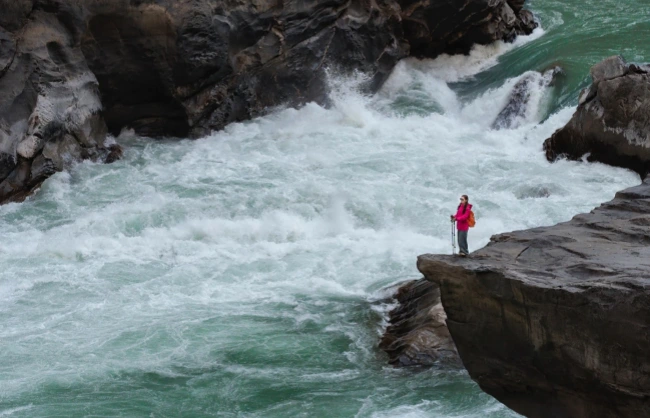
Trek through Tiger Leaping Gorge, one of the world's top-10 classic hiking trails, navigating the famous 28 Bends with stunning canyon and river panoramas.
36. Mount Wuyi in Fujian
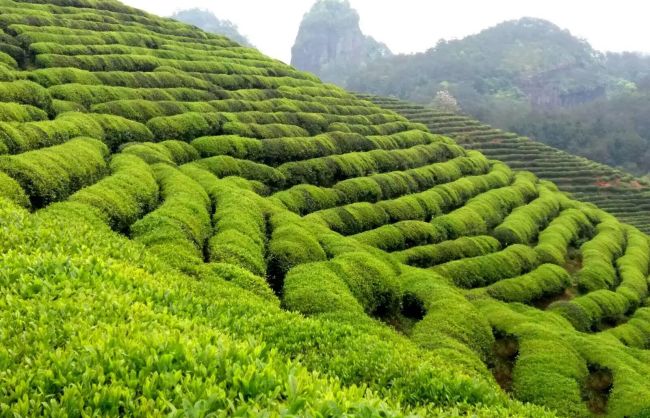
Located at the junction of Jiangxi and Fujian provinces in China, Wuyi Mountains are known for its typical Danxia landform. Besides its beautiful views, it is also a holy land of Confucianism, Taoism, and Buddhism. There’re many cultural sites to explore like temples and ruins. Mount Wuyi is also famous or being the production site of Dahongpao tea. It’s the perfect place to learn about Chinese tea culture on your trip.
There’re plenty of things to do at Mount Wuyi. You can take a bamboo raft ride on the Nine-Bend Creek. Immerse yourself in the beautiful sceneries as you slowly row past the mountains on both sides. Taste the most authentic and freshest Dahongpao at the Tea Culture Museum. Watch professional tea artists demonstrate the artful process and learn about tea cultivation in the region.
Recommended Tour: 6 Days Fujian Tulou and Xiapu Mudflat Tour
37. Furong Ancient Town in Hunan
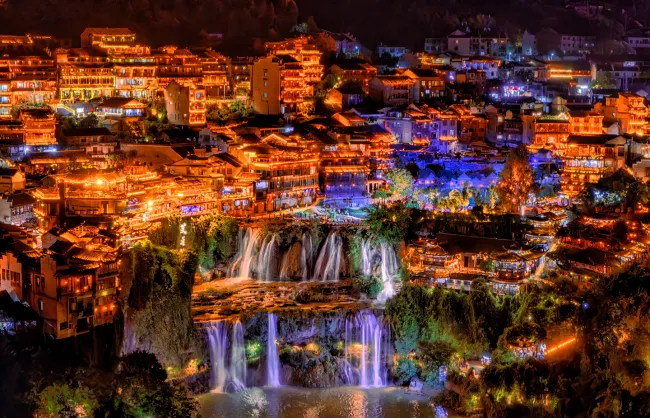
Located in Tujia-miao Autonomous Prefecture of Xiangxi, Furong Ancient Town is known as a thousand-year-old ancient town hanging on a waterfall. It attracts tourists with its dreamy night views.
Here, the long street is paved with green slabstone and winds its way up the hillside. On both sides are the Tujia stilted houses built against the cliff. When night falls, the lights of all architecture illuminate the mist of the waterfall, transforming the town into a glowing, otherworldly hot spring city in “Spirited Away”.
Explore the ancient town to watch the live dance and song performances and savor some local dishes like rice tofu and cured pork, etc. Immerse yourself in the lively atmosphere.
Useful Travel Tips:
- The best seasons to visit Furong Ancient Town are May – June and September – October, when the water is abundant and clear, offering better photography opportunities.
- It is highly recommended to stay one night in the ancient town to experience both the dazzling night views and tranquil landscapes at dawn.
- Considering the slippery bluestone path and the waterfall trail, anti-slip shoes are more recommended.
Recommended tour: 6 Days Zhangjiajie Tour to Furong & Fenghuang Ancient Towns
38. Hukou Waterfall in Shaanxi
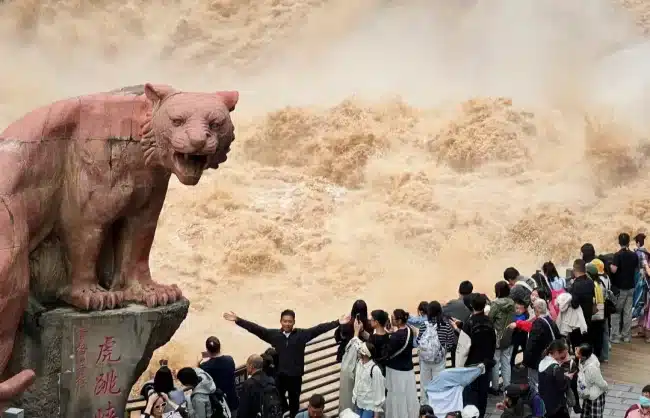
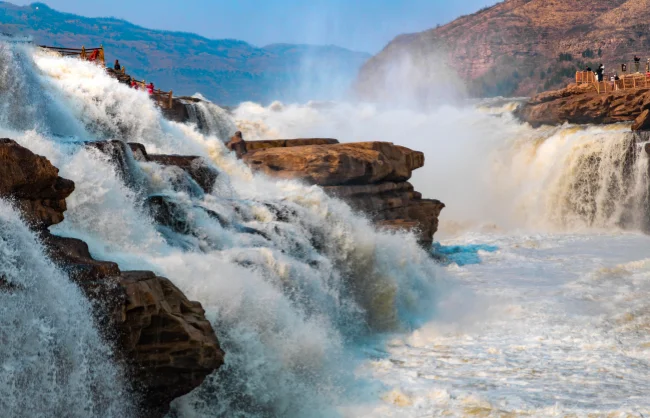
Hukou Waterfall is another famous waterfall of China. It is the second largest waterfall in the country and the largest yellow waterfall in the world. The most stunning phenomenon is when the water gains so much speed and pours down from above, it strikes back up like mist or very thick smoke. In person, all of your senses will be overwhelmed by the image, the sound, and the force of the water. Sometimes you might even see a rainbow in the air.
It is important to note that you can view Hukou Waterfall on both sides from Shanxi Province and Shaanxi Province. From Shanxi, the river is wider with a more open view. The surroundings are relatively flat, so you can take a boat tour. While in Shaanxi, the river is narrower, and the landscapes are mostly mountains and valleys. Water runs at a greater speed and force. You can explore the area by taking a hike.
Best Time to Visit: April to May and September to November
In the spring, the surroundings are more beautiful with the landscapes coming back to life and flowers in bloom. And in the fall, the rainy season brings the peak flow period for the waterfall. It is at its most magnificent. If you want to see the waterfall at its full force, it is recommended that you avoid visiting in the winter because it will be partly frozen. However, it still provides great photography opportunities.
Recommended Tour: 8 Days Xian Historic Tour with Hukou Waterfall and Valley of Waves
39. Nalati Grassland in Xinjiang
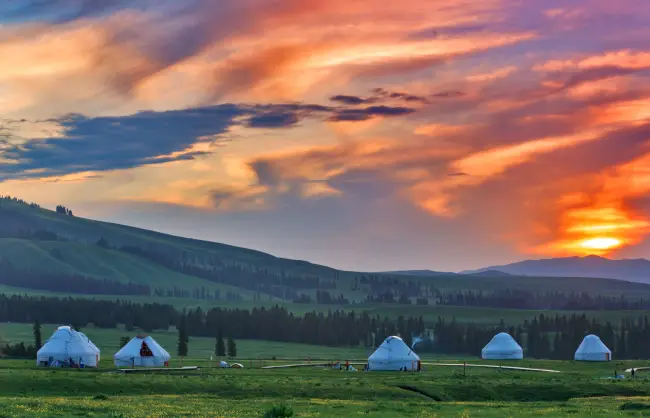
Nalati, or Naraty Grassland, is one of the four largest grasslands in the world. It is like an untouched part of the world hidden amidst the Tianshan Mountains in Xinjiang. The vast green meadows extend beyond the horizon. Cattle and sheep roam freely across it. You can also experience local nomadic culture and festivals. It’s a great destination to get away from your usually life on a Xinjiang tour.
Recommended Tour: Best 10 Days Northern Xinjiang Scenic Tour
40. Changbai Mountain and the Heavenly Lake in Jilin
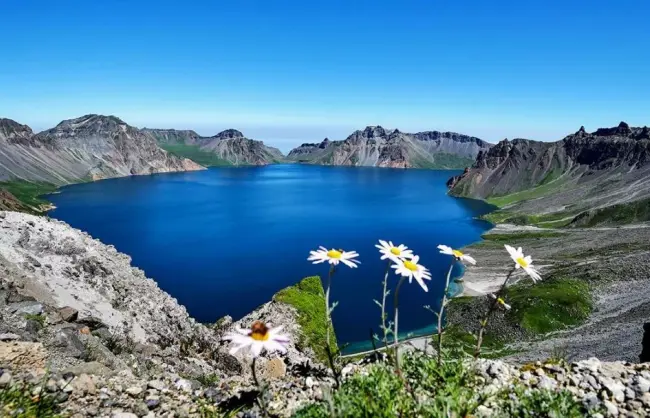
Changbai Mountain in Jilin Province is the origin of Yalu, Songhua, and Tumen rivers. It is the highest mountain range in northeast China. The sacred mountain has countless beautiful sceneries, the most famous one being the Heavenly Lake at the top of the peak. It is a stunning glacial lake that is the deepest in China and the highest volcanic lake in the world. Imagine standing at the top of the world to find the clear lake reflecting the sky.
Recommended Tour: 7 Days Harbin & Snow Town Tour with Changbai Mountain
FAQs about the “40 Most Beautiful Places in China”
What are the most photogenic spots on this list?
The Xiapu Mudflats, Rainbow Mountains of Zhangye, Jiuzhaigou Valley, Daocheng Yading, Changbai Mountain’s Heavenly Lake, Zhangjiajie National Park, Yangshuo, Yellow Mountain and Qinghai Lake all attract countless photographers to visit every year.
Which of these places are ideal for a first-time visitor to China?
For first-time visitors, you can start with some most famous cultural icons: Great Wall and Forbidden City (Beijing), the Terracotta Army (Xi’an), the Bund (Shanghai), or West Lake (Hangzhou).
For natural wonders, visiting Zhangjiajie National Forest Park or Jiuzhaigou Valley would be fine.
Is altitude sickness a concern at any of these destinations? Which ones?
Basically, if you’re traveling to any high-altitude destination, you’ll need to worry about it. It would be better if you can give yourself some time to acclimatize gradually. And also consider bringing some appropriate medication.
- High risk: Tibet (about 3,650 m) and Daocheng Yading (3,700-4,700 m)
- Medium to high risk: Mount Siguniang (3,200-3,800 m) and Shangri-La (3,300 – 3,500 m)
- Middle risk: Jiuzhaigou (2,000 – 3,100 m) and Huanglong (3,000 – 3,600 m)
- Low risk: Changbai Mountain’s Heavenly Lake (about 2,200 m)
Which destinations offer unique cultural experiences with minority ethnic groups?
Lijiang Old Town (Naxi culture) and Shangri-La (Tibetan culture) in Yunnan, villages near Huangguoshu Waterfall in Guizhou (Miao and Dong ethnic groups), Hulunbuir Grassland (Mongolian culture) and the Fujian Tulou (Hakka culture). In Xinjiang, Kanas Lake is also a good choice, which is the only settlement of the Tuva People in China.
Enjoy a China Natural and Cultural Tour with China Xian Tour
China’s beauty always lies in its blended natural, cultural and historical treasures, and every destination offers a different sense of charm. However, it could be a little overwhelming for foreign travelers, especially first-time travelers, to plan a smooth China tour which also include all your favorite sites, so that traveling with China Xian Tour is your best choice.
With experiences accumulated in over a decade, we’re dedicated to making your journey effortless and rewarding. Our expert local guides share, who will be there for you for 24 hours a day, are looking forward to share the most in-depth stories of all these top attractions, while our customized itineraries and reliable transfers can ensure you travel at your own pace without stress. From start to finish, we’ll take care of all the preparation for you, so that you can fully enjoy the charm of China.


