



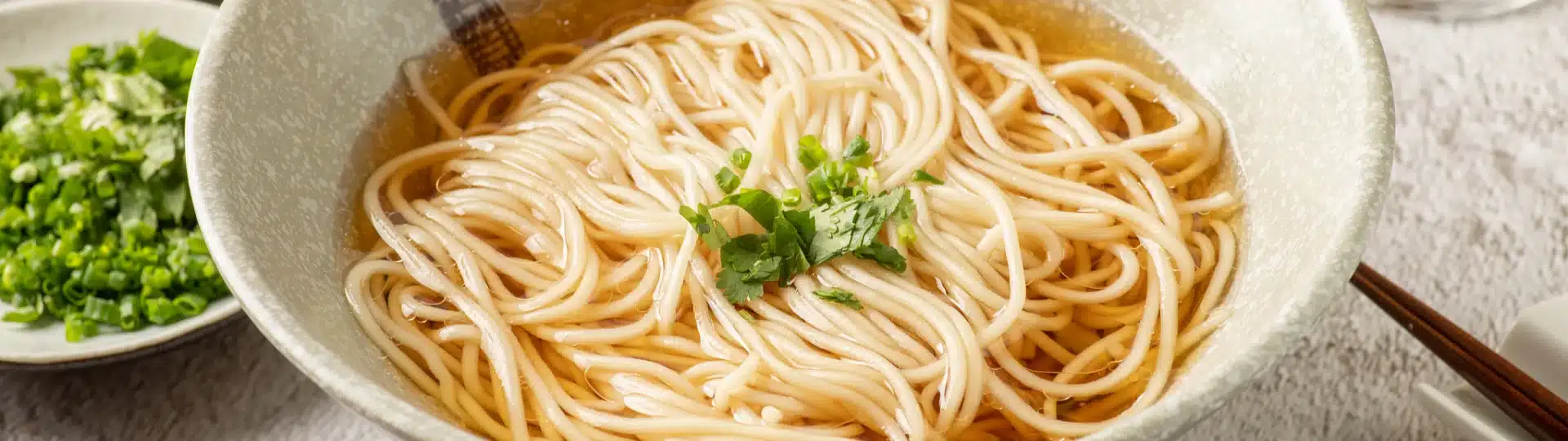
Chinese noodles, as a staple food made from wheat dough, are as early as the Eastern Han Dynasty. It has now become an integral food of Chinese cuisine because it is inexpensive, filling, and affordable. Due to the vast territory, Chinese noodles boast diversified types and salient regional features.
If you travel to China, you can enjoy local noodles to learn about its specialties and cultures wherever you visit. Here is a guide for you to enjoy special Chinese noodles that are worth a try.
Content Preview
- Brief Introduction to Chinese Noodles
- Different Types of Chinese Noodles
- Top 10 Must-Try Chinese Noodle Dishes
- How to Make Chinese Noodles at Home – Easy Recipe
- Where to Eat Chinese Noodles
- FAQs about Chinese Noodles
- Travel with us to Enjoy Different Chinese Noodles
Brief Introduction to Chinese Noodles
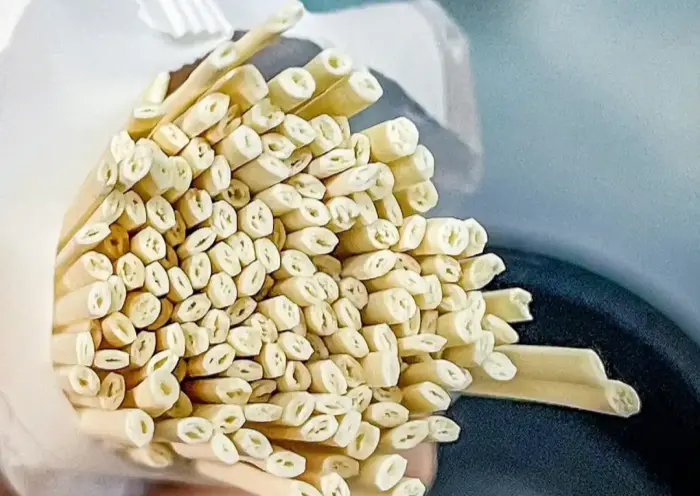
Chinese noodles refer to a traditional food made from wheat flour. The way to make and cook noodles enables them to have various flavors and forms, such as hand-pulled noodles, hollow noodles, fine dried noodles and so on.
What are Chinese Noodles?
Chinese noodles refer to a strip-shaped food made from wheat, rice or miscellaneous grains. It usually makes a good accompaniment to topping.
Noodles and pasta have salient differences in origin and texture. They separately come from Asia and Europe. Noodles taste typically softer and silkier, but pasta, made with durum wheat, has a firmer texture and a wide variety of shapes and sizes. Besides, Pasta is usually complemented by sauces, while noodles often accompany broths or stir-fries.
Regional Diversity
The same Chinese food possesses various forms and tastes due to regional diversity. Chinese noodle is a case in point.
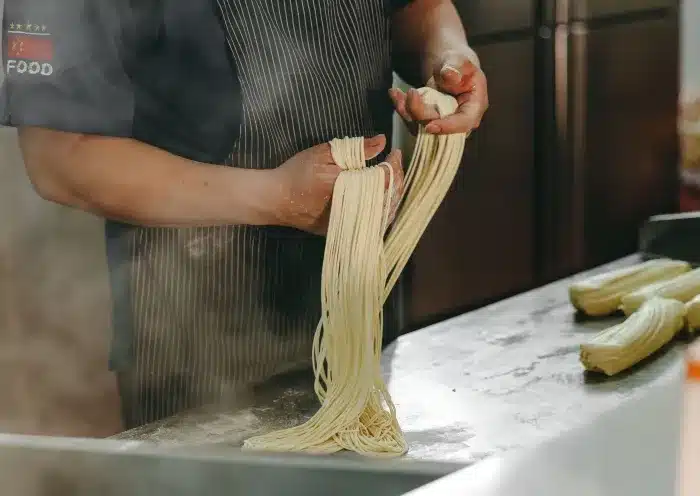
Different way to make noodles produces local delicacies. In northwest China, local people get accustomed to stretching dough into uniform thin strands, such as Lanzhou style hand-pulled noodles. In north China, people will pare dough with a knife into long strips like willow leaf, like Shanxi style knife-shaved noodles. In South China, people prefer to extrude dough with bamboo and cut them into shreds, such as Guangdong style bamboo-pressed noodles.
In addition to that, Chinese noodles are particular about topping. In north China, people prefer various topping, such as Beijing style soy paste noodles. In northwest China, people seemingly don’t like rich stuffing mixed with noodles. Taking the classic Shaanxi style oil-splashed noodles for example, the hot oil is poured over the noodles, which sizzle and splatter, gives the noodles a spicy and savory flavor.
Different Types of Chinese Noodles
Chinese noodles have a great variety of types, which can be classified based on different factors. Here is a brief introduction.
Based on Ingredients of the Noodles
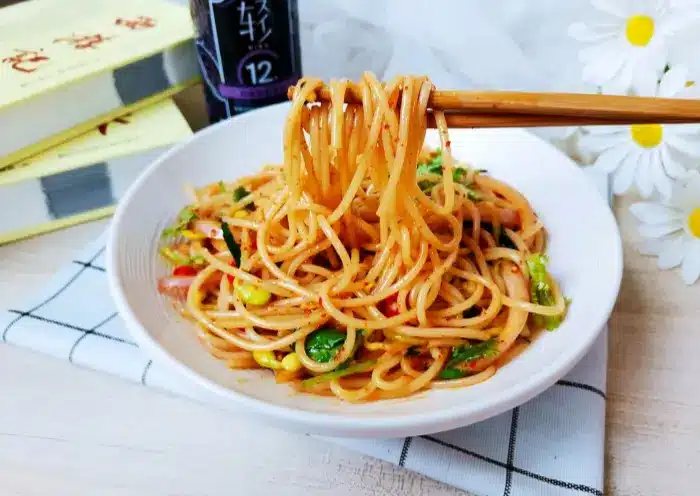
According to ingredients, Chinese noodles can be classified into Chinese wheat noodles, Chinese rice noodles and Chinese glass noodles.
Chinese wheat noodle is a type of food made from a mixture of flour, eggs, and water, and formed into different shapes. Before eating, topping of all kinds will be added to blend with noodles. Due to regional customs and favor preferences, topping with local specialties are created.
Chinese rice noodles are fermented with rice and taste soft. It is a common breakfast in Yunnan, such as the crossing-over bridge rice noodles (guò qiáo mǐ xiàn, 过桥米线). In summer, the cold rice noodles with sauce (liáng bàn mǐ xiàn, 凉拌米线) is a nice dish to relieve summer heat.
Chinese glass noodles are mainly made from starch extracted from green beans, sweet potatoes, pand otatoes. It is often used for side dishes, such as the duck blood and bean-starchy vermicelli soup, and the sautéed vermicelli with spicy minced pork. Also, it amasses much popularity as Chinese breakfast, such as the Chinese glass noodles stewed with clam.
Chinese Noodles Based on Shape and Thickness
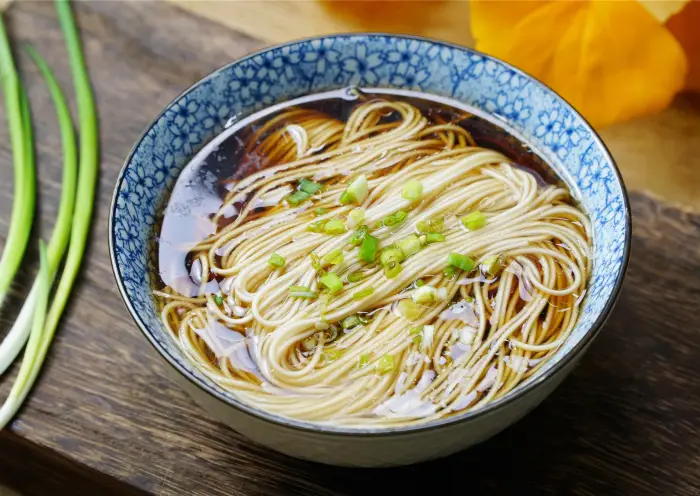
On the basis of shape and thickness, Chinese noodles can be divided into thin noodles, flat noodles, wide noodles and thick noodles.
Thin noodles, such as dragon whisker noodles (long xū miàn, 龙须面) and Yangchun noodles (yang chūn miàn, 阳春面), are less than 1.5mm in diameter, which is as thin as hair. It is widely welcomed in Jiangsu province.
Flat noodles refer to a band-shaped food. It is wider and thicker than ordinary noodles. It is generally fired with bean sprouts and is popular in Guangdong and Guangxi provinces.
Wide noodles, such as belt noodles in Shaanxi province and Dan Dan noodles in Sichuan province, are 3-10mm in width and taste thick and chewy. It creates a distinctive flavor with minced meat and spicy sauce.
Thick noodles, like knife-shaved noodles, are more than 3mm in diameter. It contains more nutrients and germs, but its flavor is not as good as thin noodles.
Special Varieties of Chinese Noodles
Speaking of special varieties of Chinese noodles, Shanxi-style knife-shaved noodles are worth mentioning. It turns out to be distinctive across the country because of unique methods by shaving dough into thin sheets. Noodles behave like flying fish and jump into boiled water.
Also, Lanzhou style hand-pulled noodles are unique because chef skillfully turns dough into thin strands. It tastes smooth and chewy.
Soup noodles are a common cooking method in China, which makes dry noodles peculiar. The case in point is Wuhan style hot dry noodles. It has full-bodied taste and offers a robust and springy mouthfeel.
Top 10 Must-Try Chinese Noodle Dishes
China boasts a wide range of noodles. Here are ten must-try Chinese noodles for recommendation if you have a China tour.
1. Lanzhou Beef Noodles (兰州牛肉拉面)
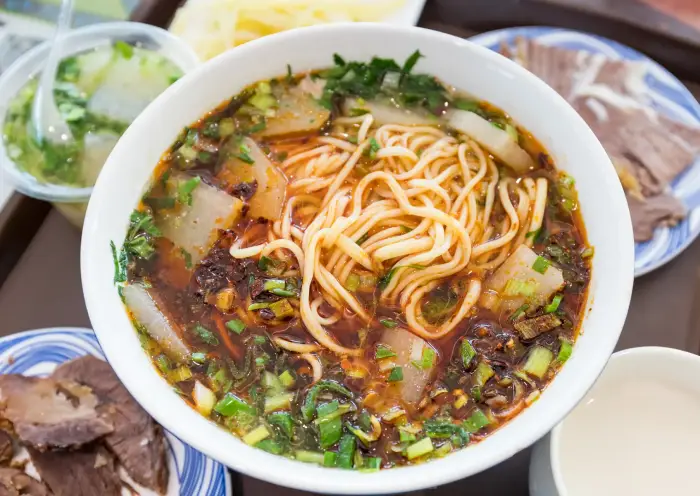
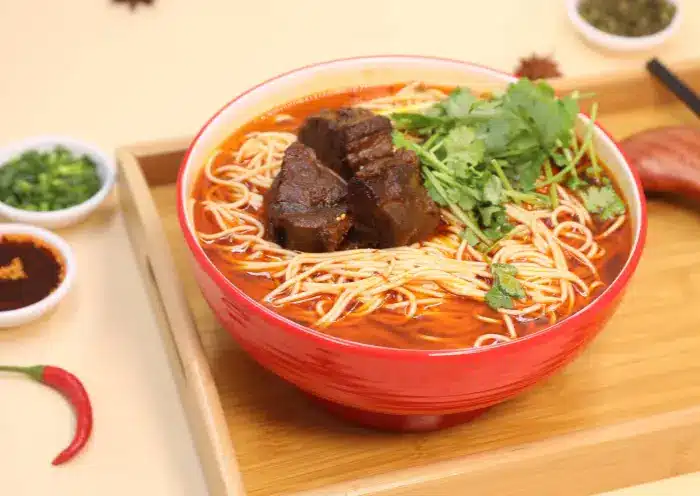
Lanzhou Beef Noodles is the essence of cuisine culture of Northwest China. It is mainly characterized by clear soup, white radish, red chili, green herbs and yellow noodles. Noodles have more than ten forms, which are as thin as hair, chives or others.
Chefs will firstly simmer beef and cow bones for several hours to make heavy broth. Then, they magically pull dough into strands as thin as hair by hand. When noodles are cooked, chefs will put it into soup and add sliced beefs and turnip, coriander and chili oil on the top. It truly lives up to the Chinese cuisine.

2. Chengdu Dan Dan Noodles (成都担担面)
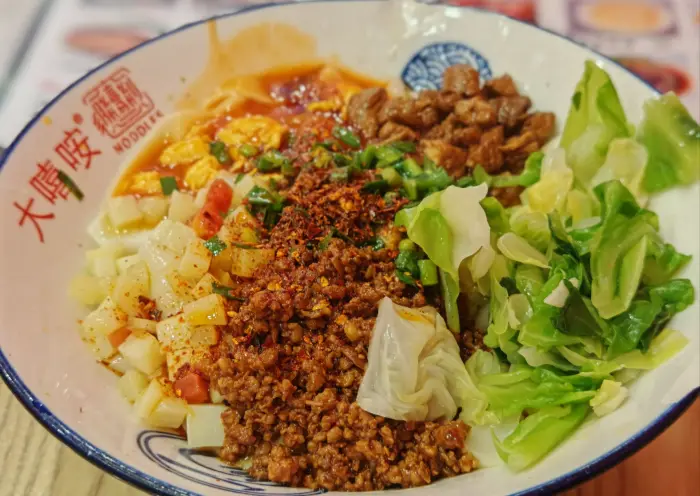
Chengdu Dan Dan Noodles originate from the porter who shoulders a carrying pole to peddle noodles along the street. Don’t forget this well-known snack if you travel to Chengdu.
Its salient feature is special sauce and minced peanut without soup. Each noodle is covered with strong sauce.
3. Chinese Fried Noodles (炒面)
Chinese fried noodles are a renowned street food nationwide and produce three primary favors in central plains, northwest China and Jiangnan.
In central plains, people admire toasted aroma and braised cooking. In northwest China, the fried noodles tend to be spicy and dry-fried. In Jiangnan, people prefer the aroma of soy sauce, such as noodles in Shanghai. You may have a chance to judge where you are in China while eating a portion of fried noodles.
4. Shanxi Knife-shaved Noodles (山西刀削面)
Shanxi style knife-shaved noodles are known for unique cooking method, springy chewiness and full-bodied topping. Chef takes dough in his hand and pares it with an arched knife. Noodles in the shape of willow leaf swiftly fly into the boiled water. It is essentially different from hand-pulled noodles and extruded noodles. It tastes smooth outside and pleasantly chewy inside. Topping that is made of streaky pork is a highlight of Shanxi knife-shaved noodles.
5. Wuhan Hot Dry Noodles (武汉热干面)
Wuhan hot dry noodles center on sesame paste. It prioritizes resilient bite and satisfying chew. Its best mate is absolutely an egg drop soup, which can protect you from choking.
You will find local people enjoy a bowl of Wuhan hot dry noodles while going on way. This is a local custom named Guozao (guò zǎo, 过早). That means having a breakfast in Wuhan. Eating breakfast of hot dry noodles is a unique experience in Wuhan. Don’t miss it.
6. Beijing Zhajiangmian (北京炸酱面)
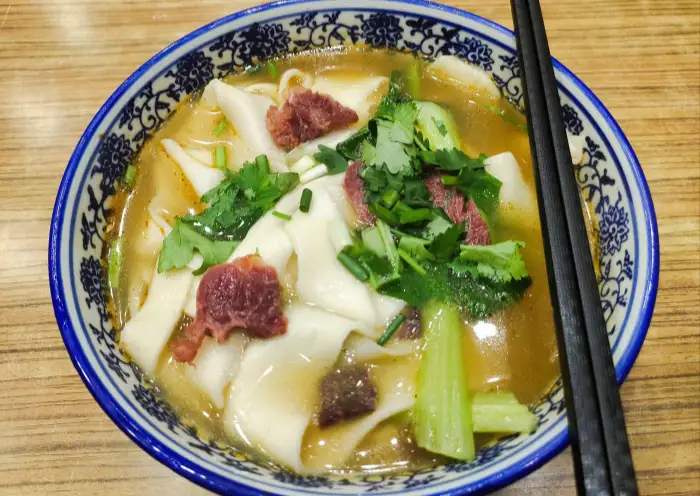
Beijing Zhajiangmian is a combination of handmade noodles, meat sauce and fresh vegetables. Its taste rests with sauce. Sweet soybean sauce, soybean sauce and thick broad-bean sauce are fully mixed with yellow wine, which is braised with diced meats, onion and ginger. You will be served with noodles, sauce and ingredients separately and you need to personally mix sauce, ingredients and noodles together. It tastes refreshing and smooth, with a strong aroma of soy sauce. It is a bite of China on your trip to Beijing.
7. Henan Stewed Noodles (河南烩面)
Henan stewed noodles feature mellow broth of lamb, chewy noodles and abundant side dishes. The flavor can be widely accepted by people. If you are a picky diner, the delicate flavor of Henan Stewed Noodles will be worth trying.
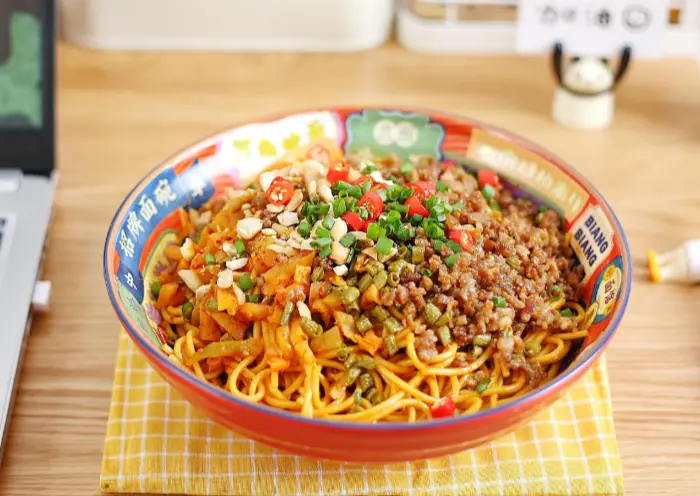
8. Shaanxi Biang Biang Noodles (陕西奤奤面)
Shaanxi Biang Biang noodles are famous for belt-like wide noodles, spicy fragrance while splattering hot oil and unique sound. You can hear the sound of “Biang Biang” while making noodles, so it is thus named. It has a toasted savory, slippery yet firm flavor.
9. Northeastern Cold Noodles (东北冷面)
Northeastern cold noodles are a delicious food relieving summer heat. It has a flavor of sweet and sour, and tastes refreshing and appetizing. Ingredients like cucumber shreds, slices tomatoes, spicy cabbage, boiled egg and spiced beef will turn ordinary noodles into a feast. This is a must-try food in Northeastern China because you cannot have it in other Chinese attractions.
10. Chongqing Spicy Noodles (重庆小面)
Chongqing spicy noodle is among four local specialties. As a branch of Sichuan Cuisine, its salient features are peppery and numbing. The flavor is just as scorching as the climate of Chongqing. Local people get accustomed to starting a day with a bite of peppery noodles at breakfast. If you take fancy to Chongqing, don’t forget to discover its beauty from its peppery food.
How to Make Chinese Noodles at Home – Easy Recipe
Here is an easy recipe of scallion oil noodles (cōng yóu miàn, 葱油面). You can make Chinese noodles at home.
Before cooking, you need to prepare food ingredients: fine dried noodles 100g, a handful of scallions (separate white parts from green parts), four spoonfuls of edible oil, two spoonfuls of thin soy sauce, one spoonful of thick soy sauce, and one spoonful of white sugar.
- Step 1: wash and cut scallions into sections, and pat them thoroughly dry to avoid splattering too much when they hit the hot oil;
- Step 2: heat oil in wok over medium heat, firstly fry white parts and then add green parts. Once scallions turn golden brown, remove the scallions from the oil and set aside;
- Step 3: mix thin soy sauce, thick soy sauce and white sugar together thoroughly while the scallion oil is hot;
- Step 4: soak the noodles in cool water and drain it as soon as it is cooked. Toss noodles in scallion oil and add fried
Where to Eat Chinese Noodles
Wherever you travel to China, you can enjoy a delicious Chinese noodles. But, Beijing Zhajiangmian and Shaanxi Biang Biang noodles are highly recommended considering that you may not visit all places.
We have diversified food tours in different cities of China. They not only guide you to internationally renowned scenic spots but also take you find out attractions hidden in local food. If you don’t want to miss delicious food on your China trip, our food our will be a nice choice.
Related reading: Chinese Restaurant Menus
FAQs about Chinese Noodles
What’s the Difference between Chow Mein and Lo Mein?
The biggest difference of chow mein and lo mein is cooking method.
Chow mein is fried. Chefs will firstly make noodles soft-boiled and then stir-fry them with sauce and vegetables. To make chow mein taste crispier, chefs often select flat noodles with thin edge. It emphasizes crispy and golden-brown edge.
Lo mein is boiled. Chefs generally select round noodles, like udon noodles, because it can be evenly coated with sauce. It has a flavor of smooth and soft. Chefs firstly drain noodles as soon as it is cooked, and then mix it with vegetables, meats and sauce. It highlights the full integration of noodles and sauce.
At last, chicken, beef, bean sprouts and greens or whatever you like can be added.
Are Chinese noodles gluten-free?
The most of Chinese noodles are made from wheat flour and has a pleasantly chewy flavor. That means gluten is contained. Beijing Zhajiangmian, hand-pulled noodles and Henan stewed noodles are highly gluten-contained noodles.
You can also buy gluten-free noodles if you are allergic to gluten and suffer from celiac disease. Noodles that are made from rice and beans will be an alternative option, such as Yunnan style crossing-over bridge rice noodles, Guilin style rice noodle and Guangdong style stir-fried rice noodles.
Related reading: Top 8 Tips for a Gluten-Free Trip to China
How are Chinese Noodles Traditionally Made?
There are basically three traditional methods to make noodles.
The first is to pull dough by hand, such as Lanzhou Beef Noodles. The second is to shave dough with knife, like Shanxi Knife-shaved Noodles. The third is to extrude dough with tools, like Guangdong style bamboo-pressed noodles.
Do Chinese Noodles Contain Eggs?
Most of noodles will add fresh eggs to taste chewy and appetizing, such as egg noodles and hand-pulled noodles. But, some noodles are egg-free. You can tell chef before ordering food if you cannot eat t eggs. Or, you can choose noodles that don’t contain eggs, like Chinese wheat noodles, Chinese rice noodles and Chinese glass noodles.
Travel with us to Enjoy Different Chinese Noodles
Start your China tour, we will be your best choice. We are able to offer a custom travel plan based on your requirements. No matter what Chinese noodles you like, we can bring delicacy together with scenic spots so as to give you an unforgettable journey in China. Choose us, you only need to pamper yourself on the trip.