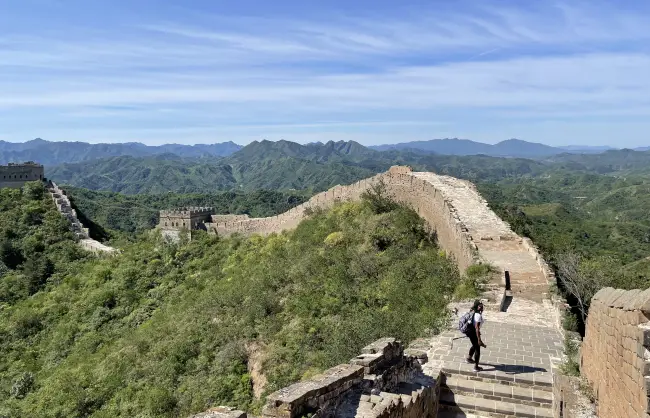

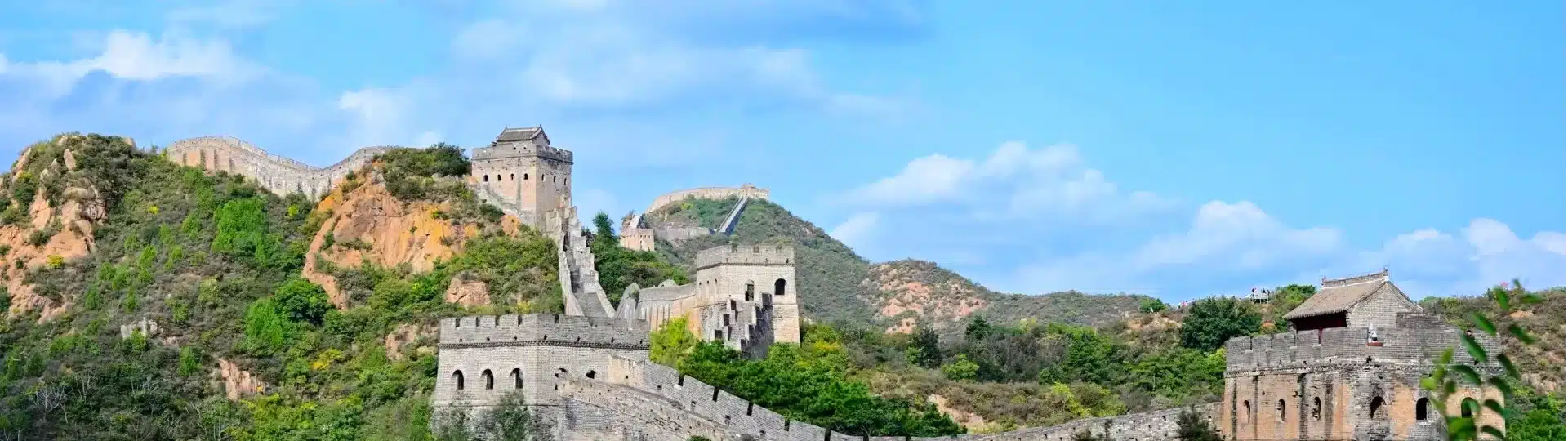
The Great Wall, as the greatest architectural project of mankind and an important symbol of Chinese civilization, attracts numerous people travel to China to witness its majesty. When was the Great Wall of China built? How long did it take to build the Great Wall of China? Let’s travel through time and space to learn about the historical context of the construction of the Great Wall.
Content Preview
- When Was the Great Wall in China Built? – A Two-Millennia Masterpiece
- Construction Timeline of the Great Wall
- How Long Did It Take to Build the Great Wall of China
- How Old Are the Significant Sections of the Great Wall
- How to Plan a China Great Wall Tour
- 10 Basic Facts about the Construction of China’s Great Wall
- Plan Your China Great Wall Tour With Us
When Was the Great Wall in China Built? – A Two-Millennia Masterpiece
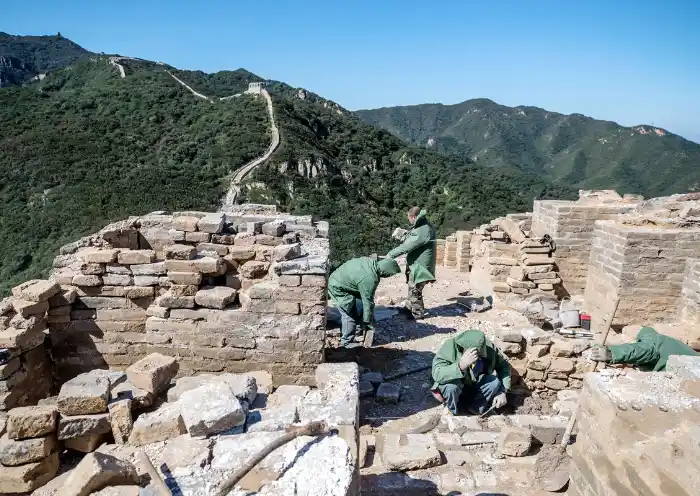
When did the Great Wall of China First Built?
As the longest and largest ancient military defense project in the world, the Great Wall was first built during the Spring and Autumn Period and the Warring States Period (7th century BC). At that time, the state countries built separate city walls on their own borders to defend each other and resist northern nomads. After the unification of China by the Qin Dynasty, various sections were connected to form the renowned Great Wall.
Whe did the Great Wall of China Finished?
Strictly speaking, there is no exact completion time. After the Qing Dynasty, its construction was basically stopped. But the Great Wall that is known to the world now refers to the defense system formed in the Ming Dynasty. Therefore, the construction of China Great Wall lasted for more than two thousand years.
Construction Timeline of the Great Wall
The ancient Chinese dynasties involved in the construction of the Great Wall are:
Pre-Qin Period (770 BC – 221 BC)
According to historical records, the earliest Great Wall was built by the state of Chu during the Spring and Autumn Period and the Warring States Period. It was distributed in the border area between Henan and Hubei provinces today, and has a history of more than 2600 years. Afterwards, due to frequent wars, the states of Qi, Yan, Wei, Zhao, Qin all built the Great Wall along their respective borders.
The Qin Dynasty (221 BC – 207 BC)
After Emperor Qin Shi Huang unified China, in order to prevent the invasion of the northern Xiongnu, he mobilized 300,000 people to build the first true Great Wall in 213 BC, connecting the Great Wall built by various states. It stretches for more than ten thousand miles from Lintao in the west to Liaodong in the east, hence the name “Ten-thousand-mile Great Wall”. Today, there are still some Qin Great Wall ruins in Guyuan (Ningxia), Yulin (Shaanxi), Baotou (Inner Mongolia) and other places.
The Han Dynasty (202 BC – 220 AD)
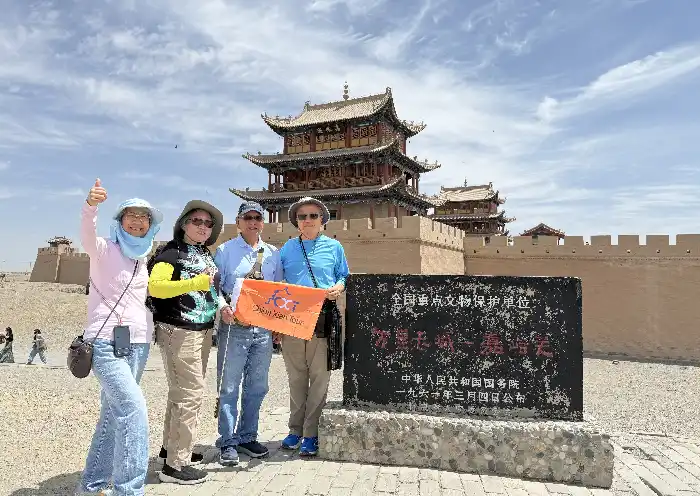
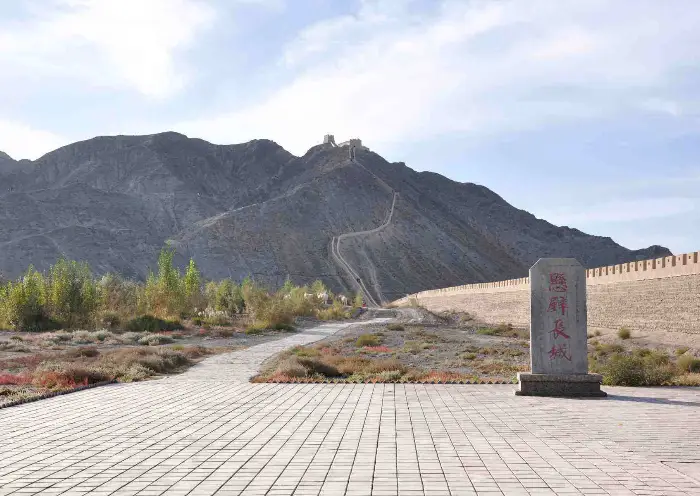
Then, with the territorial expansion of the Han Dynasty, the Great Wall extended westward on the basis of Qin Great Wall, spanning the Hexi Corridor to Lop Nur. Today, there are still some Han Great Wall ruins in the Yumen Pass and Yangguan areas. Most of the ancient Silk Road was along this Great Wall, which was also the longest in history.
The Wei, Jin, Northern and Southern Dynasties (220-589)
From the Wei-Jin dynasties to the Sui-Tang dynasties, in order to resist the northern nomadic invasion, most of them used the old site of the Qin-Han Great Wall and carried out renovation and reconstruction based on the actual situation of this dynasty. Overall, the Great Wall sites of various dynasties have basically fluctuated along the southern boundary of Inner Mongolia and the lines east and west of the Yinshan Mountains.
The Tang Dynasty (618 – 907)
During the Tang Dynasty, the Great Wall mainly extended westward along the transportation routes north and south of the Tianshan Mountains, forming a network of interlocking beacon towers and fortresses scattered throughout the present-day Xinjiang.
The Song, Liao, Jin Dynasties (907 – 1234)
The 10th to 13th century AD was a special period in the history of the construction of China Great Wall. The Liao and Jin dynasties both thrived as northern ethnic regimes, with their national defense focus on the Mongolian Plateau still further. So the Liao Dynasty once built the Great Wall at the southern end of the Liaodong Peninsula, and the Jin Dynasty once built it along the Greater Khingan Mountains.
The Ming Dynasty (1368 – 1644)
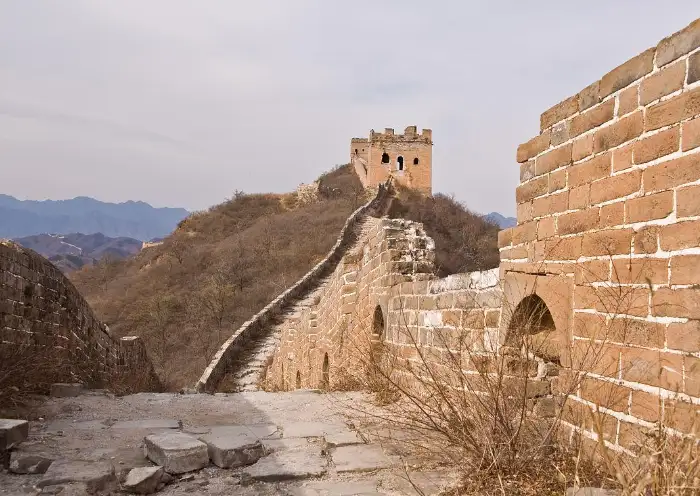
The majority of the Great Wall we see today was built during the Ming Dynasty. The Ming Dynasty was the golden age of the Great Wall’s construction.
In the Ming Dynasty, in order to defend against the invasion of the Tartars and the Oirats tribes, the construction of the Great Wall was never interrupted. From Hongwu era to Wanli era, during a period of over 200 years, there were 20 major renovations with the cost equivalent to several trillion yuan in today’s currency. Thus, a border Great Wall with a total length of nearly 7,000 kilometers was built, west from Jiayuguan in Gansu and east at Hushan in Liaodong. Moreover, the Ming Great Wall has made significant improvements in engineering technology, overall scale, and other aspects.
The Qing Dynasty (1644 – 1912)
Since the Qing Dynasty, both inside and outside the Great Wall have been incorporated into China’s territory, its large-scale construction was halted after the reign of Emperor Kangxi, and the defense role of the Great Wall has gradually faded away.
Time has passed, and today on the Great Wall, there are no longer soldiers guarding the border, only tourists from various countries. This “giant dragon”, which has existed for over two thousand years and winds for more than ten thousand miles, is not only a link between agricultural and nomadic civilizations, a melting pot of cultural collisions, but also an unparalleled historical and cultural landscape.
How Long Did It Take to Build the Great Wall of China
The construction of the Great Wall was not completed in one go. Instead, it was continuously built by multiple Chinese imperial dynasties over a period of more than 2,000 years, starting from 7th century BC and continuing until the Qing Dynasty (1912 AD) when some sections were still renovated. This massive project gathered the wisdom and sweat of millions of workers, which has become a symbol of the enduring Chinese civilization.
Key Dynasty |
Construction Duration |
Primary Contribution |
Spring and Autumn Period – Warring States Period |
Approximately 400 years |
Formed scattered city walls of vassal states |
Qin Dynasty |
Approximately 5-10 years |
First unified into the Great Wall of China |
Han Dynasty |
Approximately 120 years |
Extended to about 20,000 kilometers |
Ming Dynasty |
Nearly 200 years |
Completed the existing main structure |
How Old Are the Significant Sections of the Great Wall
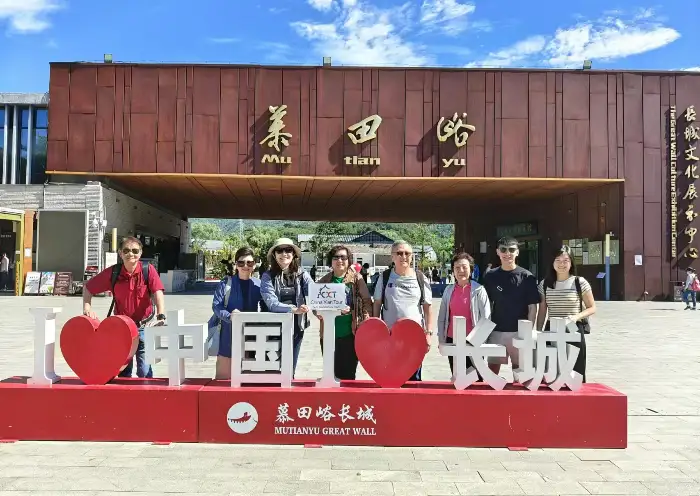
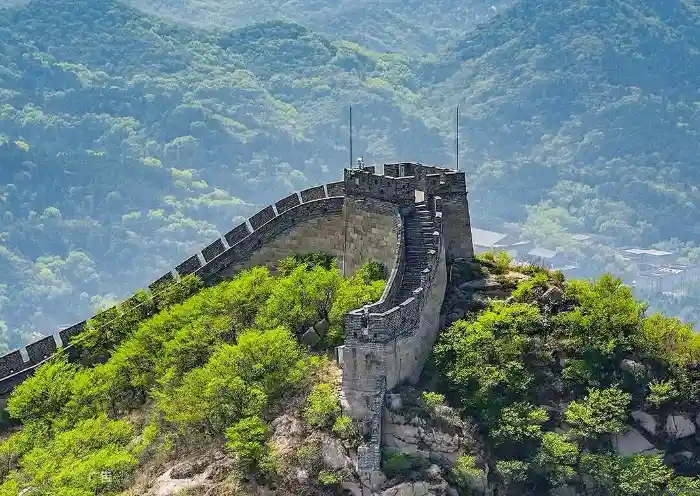
The construction history of China Great Wall can be regarded as an epic spanning over two thousand years. On the 21,000-kilometer-long Great Wall structure, there are tens of thousands of watchtowers, beacon towers, fortresses and passes. Their geographical environments vary greatly, and many of the Great Wall sections have unique features, presenting to the world the resilience and inclusiveness of Chinese civilization. The majority of famous existing sections were all constructed in the Ming Dynasty.
Great Wall Section |
Location |
When Was It Built |
Main Features |
Yanqing, Beijing |
Ming Dynasty (1504) |
Most iconic and well-preserved |
|
Luanping, Chengde, Hebei |
Early Ming Dynasty (1382) |
Most diverse architectural forms |
|
Huairou, Beijing |
Early Ming Dynasty (1404) |
Most rigorous defense system |
|
Huangya Pass |
Jixian, Tianjin |
Northern Qi Dynasty (556) |
Most ingenious layout |
Yanmen Pass |
Daixian, Shanxi |
Early Ming Dynasty (1374) |
Important gateway connecting the Central Plains and the North |
Jiayuguan, Gansu |
Early Ming Dynasty (1372) |
Most frontier-style, the westernmost section of the Great Wall |
|
Shanhai Pass |
Qinhuangdao, Hebei |
Early Ming Dynasty (1381) |
Most strategically important, the eastern most section of the Great Wall |
How to Plan a China Great Wall Tour
The scenic areas of the Great Wall are composed of several sections and each section requires about half a day to one day to explore. So about the time needed to explore the Great Wall, it mainly depends on your interest. If you just want to take a look at this world heritage, then just spend one day exploring Badaling or Mutianyu. In these two scenic areas, you will know why the Great Wall is must-visit.
If you want to experience the different charm of the Great Wall, include the less famous but unique scenic areas. For instance, both Simatai and Jinshanling offer you more primitive landscapes that you can not see in Badaling and Mutianyu. In Simatai, you can even experience a night tour. Or visit the Huanghuacheng Water Great Wall. From its name, you may already know that this section is connected with water. The most special experience is that you can tour it by boat. In this case, about 2 – 3 days is needed.
For most visitors, it is recommended to combine a Great Wall visit with other iconic sites in Beijing, like hutong, Forbiddent City, etc.
Sample Beijing Great Wall Itinerary:
Day 1: Beijing arrival, Temple of Heaven, explore hutong
Day 2: Mutianyu Great Wall, Bird Nest, Summer Palace
Day 3: Tiananmen Square, Forbidden City, departure
Recommended tour
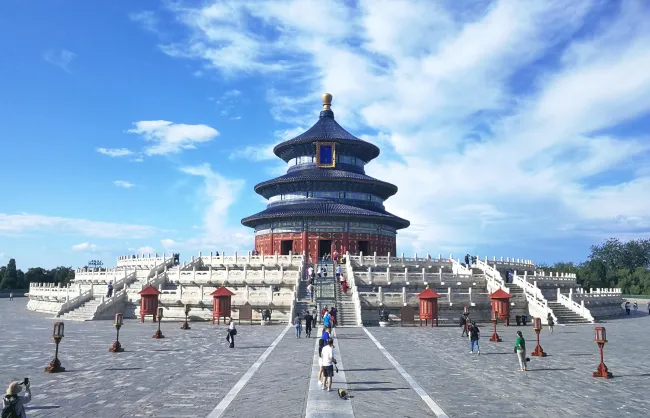
Cover Beijing's top highlights including the Great Wall, Forbidden City, Summer Palace, Temple of Heaven, and Hutong Alley on this efficiently designed three-day private tour.
10 Basic Facts about the Construction of China’s Great Wall
- Its construction lasts for over 2,000 years.
- Its total length is actually more than 10,000 km and reaches 21,196.18 km.
- The Great Wall is not an isolated wall, but a defensive system consisting of passes, enemy towers, beacon towers, etc.
- The Great Wall is a symbol of peace. Its primary purpose is to reduce war by defense.
- It is built by several nationalities in China, including Han, Xianbei, Nvzhen, etc.
- 6. The earliest Great Wall can be dated back to the Spring and Autumn Period and the Warring States Period, instead of the Qin Dynasty.
- In history, a total of 3 Great Walls have a length of over 10,000 km, which are Qin Great Wall, Han Great Wall and Ming Great Wall.
- The constructed materials of the Great Wall are diverse, including rammed earth, brick and stone, red willows, reeds and gravels.
- The Great Wall basically coincides with the 400-millimeter annual isohyet, making it a natural dividing line for semi-humid and semi-arid regions, and agricultural and nomadic civilizations.
- Besides the function of the defense project, many trading places were set along the wall, promoting the economic and cultural exchanges and integration of the nationalities inside and outside the wall.
Plan Your China Great Wall Tour With China Xian Tour
As a “World Cultural Heritage” freed from the ravages of war nowadays, the Great Wall is like a magnificent epic written by the Chinese people over two thousand years. And it has become a popular destination that almost every tourist desires to visit and explore. Welcome to join China Xian Tour to start a fantastic China Great Wall Tour! We have packages including Great Wall attractions, wild Great Wall hiking, Great Wall camping, and can also customize itinerary according to your needs.
Related reading: How Long is the Great Wall of China?