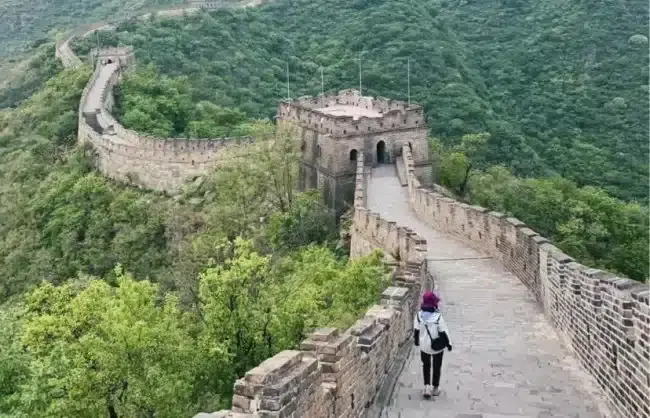


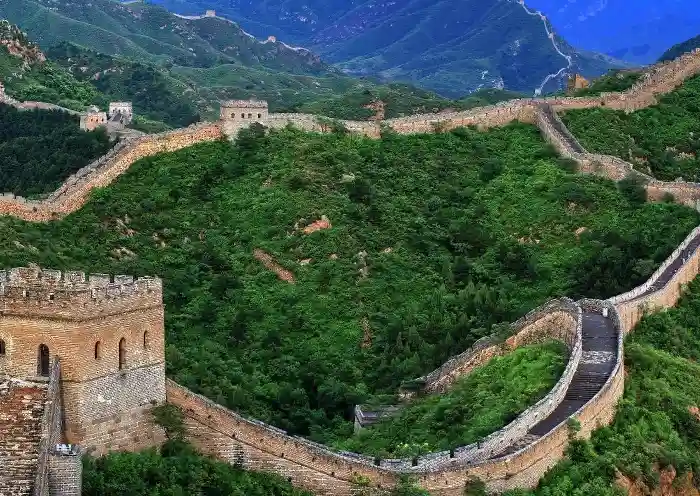
As one of the most famous cultural heritages in world, the Great Wall has been one of the must-visit attractions in China tours. It is a giant military defense project first built in the Spring and Autumn Period and the Warring States Period. Through the repair by plenty of dynasties over more than 2,000 years, it has been a magnificent system spanning northern China.
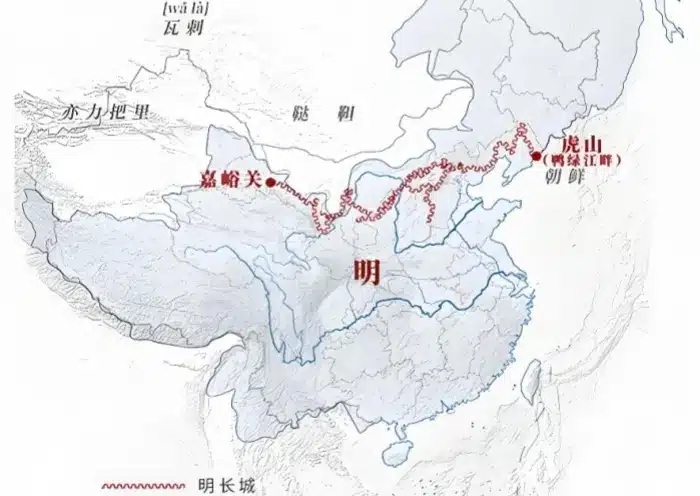
Many tourists is curious about where to see the Great Wall in China? Actually it is not one continuous wall, but made up of many separate sections of walls. Passing through 15 provinces in China, autonomous regions or municipalities, it starts from Shanhaiguan Pass in Hebei Province in east and ends at Jiayuguan port in Gansu Province in west. The Great Wall has a total length of 8,851.8 kilometers. The existing relics are mainly composed of the great wall of Ming Dynasty, accounting 70% of the existing length. Follow this guide to learn where are the Great Walls located.
Content Preview
- The Great Wall’s Geographic Location
- Where Does the Great Wall Start and End?
- Where is the Great Wall of China in Beijing?
- Where is the Great Wall of China Located in Different Dynasties
- Most Visited Great Wall Sections Near Beijing
- Key Non-Beijing Sections
- FAQs About the Location of the Great Wall
- Plan Your Great Wall of China Tour with Us
The Great Wall’s Geographic Location
Since the most famous Badaling Great Wall is located in Beijing, plenty of tourists think that the whole Great Wall is in Beijing. But it is not a truth. The Great Wall was first built in separate sections of various lengths by different states in central China to defense the enemies. Through years of expansion, it has scattered in several provinces and cities like Beijing, Hebei Province, Gansu province, Shaanxi Province, etc. So the location of the Great Wall is not only in Beijing.
What provinces does the Great Wall of China pass through?
The Great Wall spans 15 provinces, autonomous regions or municipality in Northern China, which are Liaoning, Jilin, Heilongjiang, Hebei, Beijing, Tianjin, Shanxi, Shandong, Henan, Shaanxi, Inner Mongolia, Ningxia, Gansu, Qinghai, Xinjiang.
Provinces Passed Through and Length in the Province
Regions |
Province/Municipality/Autonomous Region |
Length |
Northeast Region |
Liaoning Province |
1,220 km |
Northeast Region |
Jilin Province |
360 km |
Northeast Region |
Heilongjiang Province |
429 km |
North China Region |
Hebei Province |
2,400 km |
North China Region |
Beijing Municipality |
520 – 629 km |
North China Region |
Tianjin Municipality |
35 km |
North China Region |
Shanxi Province |
1,240 km |
North China Region |
Inner Mongolia Autonomous Region |
7,300 km |
Northwest Region |
Shaanxi Province |
1,800 km |
Northwest Region |
Gansu Province |
3,600 km |
Northwest Region |
Ningxia Hui Autonomous Region |
965 km |
Northwest Region |
Qinghai Province |
316 km |
Northwest Region |
Xinjiang Uygur Autonomous Region |
no continuous wall, 186 beacon towers remain |
East China/Central Plains Region |
Shandong Province |
640 km |
East China/Central Plains Region |
Henan Province |
390 km |
Where Does the Great Wall Start and End?
The Great Wall starts from Shanhaiguan Pass in Hebei Province in east and ends at Jiayuguan Pass in Gansu Province in west.
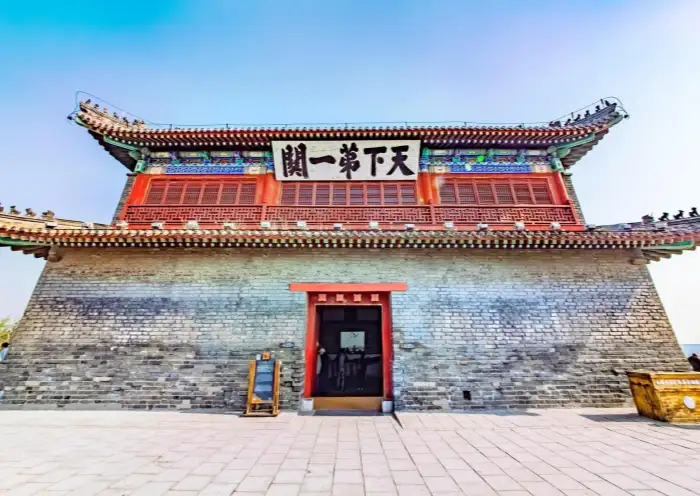
Eastern starting point: Shanhaiguan, Hebei Province
As the eastern starting point of the Great Wall, Shanhaiguan is located in the Qinhuangdao City, northeast of Hebei Province. It got the name because it is backed by the Yanshan Mountains to the north and connected to the Bohai Sea to the south. In Ming Dynasty, Shanhaiguan is an important gateway connecting the east and west of China, as well as an important defense line against foreign invaders.
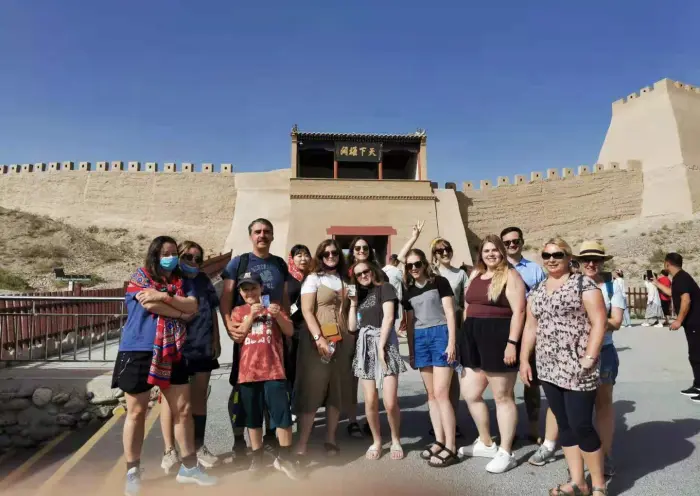
Western end point: Jiayuguan, Gansu Province
Jiayuguan Fort in the Jiayuguan City, Gansu Province is the western end point of the Great Wall. It was built in Ming Dynasty with an existing length of 60 kilometers. As one of the three wonders of the Great Wall, It is renowned as the “Greatest Pass under Heaven”. Jiayuguan is also an important traffic fortress on the ancient Silk Road.
Where is the Great Wall of China in Beijing?
Most Great Wall sections in Beijing are the essence from Ming Dynasty, spanning Pinggu, Miyun, Huairou, Yanqing, Changping, and Mentougou districts with a total length of 520.77 kilometers. It is characterized by historical significance, numerous and diverse architectures and cultural symbolism. Here are information of some main sections of Beijing Great Wall.
Great Wall Section |
Location |
Distance from City Center (Tian’anmen Square) |
Travel Time |
Badaling Great Wall |
Yanqing District, Exit 58, G6 Jingzang Expressway |
70 km |
~ 1.5 hrs |
Mutianyu Great Wall |
Huairou–Huangyao Rd, Bohai Town, Huairou District |
73 km |
~ 1.5 hrs |
Jinshanling Great Wall |
At border of Miyun District / Luanping County, Hebei |
150 km |
~ 2.5 hrs |
Simatai Great Wall |
Gubeikou Town, Miyun District |
140 km |
~ 2.5 hrs |
Xizhazi Village, Yanqi Town, Huairou District |
80 km |
~ 2 hrs |
|
Huanghuacheng Great Wall |
Xishuiyu Village, Jiuduhe Town, Huairou District |
60 km |
~ 1.5 hrs |
Gubeikou Great Wall |
Gubeikou Town, Miyun District |
145 km |
~ 2.5 hrs |
If you are also interested in how to visit the great wall of China, contact with us for more information, we are pleasured to offer help.
Where is the Great Wall of China Located in Different Dynasties
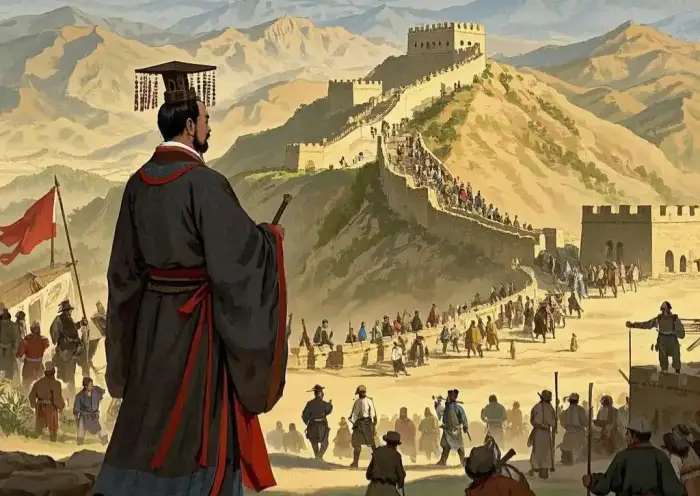
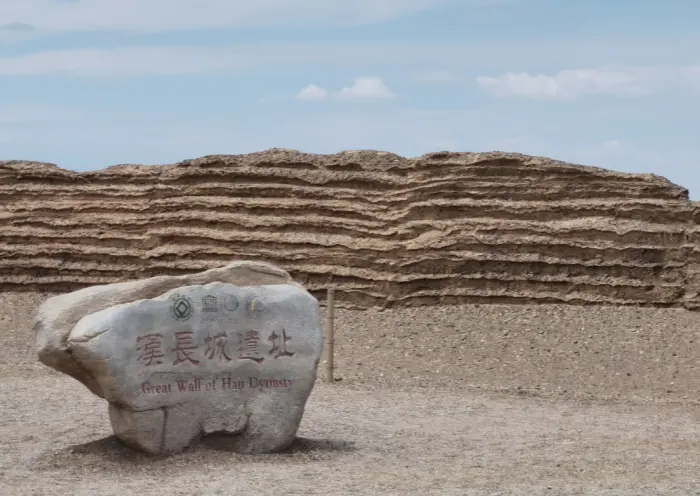
With a history more than 2,000 years, the Great Wall has undergone several time of construction, destruction and repair in many dynasties. The initial shape was formed in the Spring and Autumn Period and the Warring States Period, when the Great Wall was mainly newly built by all states. In Qin Dynasty, Northern Dynasties and Ming Dynasty, it was renovated and expanded in large scale. While in Han Dynasty, the Great Wall was extended westwards for Silk Road. Partial repair was mainly performed in Sui, Tang and Qing dynasties.
Dynasties |
Location |
Key Details |
Former Qin Dynasty |
Lintao County, Gansu Province → Guyuan City, Ningxia Hui Autonomous Region → Yulin City, Shaanxi Province |
The initial shape of the wall forms during this period and most parts are newly built.
It stretches 409 km in Gansu Province, and the remaining wall relics are mainly in Lintao. |
Qin Dynasty |
From Lintao County, Gansu Province in west to Liaodong (now northwest of Pyongyang, North Korea) in east |
The sections built by the states before were unified and connected in Qin Dynasty, creating the first “Ten-Thousand-Li Great Wall”. |
Han Dynasty |
Liaodong → Hexi Corridor → Lop Nor, Xinjiang Uygur Autonomous Region |
The Hexi Corridor was built and the great wall was expanded eastward to Yumen Pass and Yang Pass in Xinjiang for protection of Silk Road. |
Northern Qi Dynasty |
North Line: Datong City, Shanxi Province → Shanhaiguan, Hebei Province
South Line: Fenyang City , Shanxi Province → Laiyuan County, Hebei Province |
“Multi-layered defense” was originated in this dynasty when 24 defense lines were built. This architectural style was later used by Sui and Tang Dynasties. The relics are now in Simatai Great Wall in Beijing.
|
Jin Dynasty |
Gannan County, Gansu Province → Siziwang Banner, Inner Mongolia Autonomous Region → Fengning County, Hebei Province (extending to Mongolia) |
The innovative double-trench + double-wall system was adopted. And the walls were relatively low. |
Ming Dynasty |
From Shanhaiguan in Hehei Province in east to Jiayuguan in Gansu Province in west |
Ming Dynasty was the peak time for construction and rebuilt with Nine Defense Garrisons established. The existing Great Wall are mainly built in Ming Dynasty. |
Most Visited Great Wall Sections Near Beijing
Badaling Great Wall
- Distance from Tiananmen Square:about 70 km
- Condition: Fully restored. Very tourist-friendly.
- Crowds: Extremely busy. And in fact, it receives the most visitors compared to other sections.
- Best for: Basically all types.First-time visitors, families, those wanting the “iconic” Great Wall experience with easy access.
- Entrance fee:Around ¥40 during peak (spring-autumn) and ¥35 off-season.
Mutianyu Great Wall
- Distance from Beijing: ~73 km
- Condition: Well-restored.Large vegetation coverage and many watchtowers.
- Crowds:Less crowded than Badaling. Quieter and better for photos.
- Best for:Families, photographers, those who want a comfortable trip with perfect scenery views.
- Entrance fee:~¥45. Optional cost for cable car/toboggan.
Jinshanling Great Wall
- Distance: About 140 kmfrom Beijing.
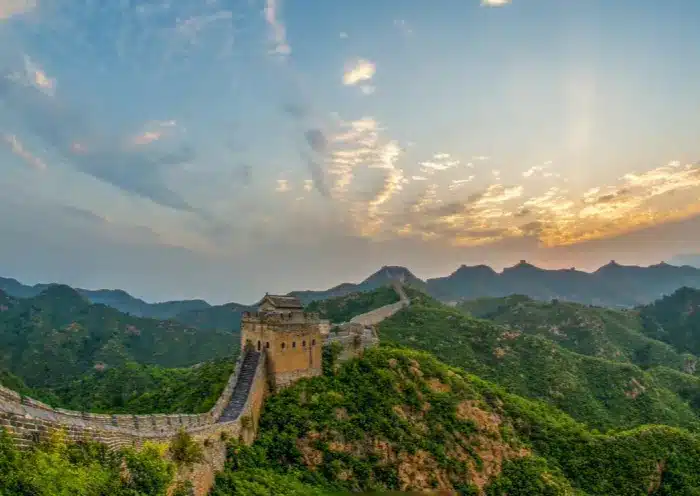
- Condition:Half-restored/half-wild. Offers more original wall structures and dramatic views.
- Crowds:Way less crowded than the major sections near Beijing.
- Best for: Hikers, photography enthusiasts, travelers with extra time.
- Entrance: ~¥65 during peak season.
Jiankou Great Wall
- Distance: Roughly 100 km from Beijing.
- Condition: Wild and unrestored. Very steep and rugged.
- Crowds:Very few. And it’s not well suited for casual tourists.
- Best for: Adventurers, experienced hikers.
Key Non-Beijing Sections
Shanhaiguan Pass (Hebei Province)
- Nearest major city: Qinhuangdao in Hebei Province.
- How to get there: About a 3.5-hour drive from Beijing.
- Key feature: Known as the “First Pass Under Heaven”.Here the Great Wall meets the sea at the Bohai Sea.
- Best time to visit: Spring or autumn.
- Highlights: Its ancient walls make andramatic contrast with the clear and blue water/sea scenery.
Jiayuguan Pass (Gansu Province)
- Nearest major city/airport:Jiayuguan City, Gansu Province. It’s the western endpoint of the Ming Dynasty Great Wall line.
- How to get there: Reachable via train or flight to Jiayuguan.When arrive at Jiayuguan, take local transport to the Pass.
- Key feature:The western terminal of the Ming Great Wall. Symbolic “end of the Wall.”
- Best time: Aprilto October
- Highlights: Desert landscape contrast, fewer tourists, a sense of pilgrimage to the “furthest point”.
FAQs About the Location of the Great Wall
Is the Great Wall visible from space?
This question has been in dispute for a long time. Actually, it is invisible to the naked eye under normal conditions. Because the average width of the Great Wall is only 7 – 10 meters, while the orbital altitude of the International Space Station is approximately 319 to 346 kilometers, so it can not be distinguished by human eyes. But in assistance of technology, both the remote sensing satellite and Chinese astronaut capture the picture of the Great Wall from space.
Is the Great Wall of China a single, continuous wall?
The answer is No. The Great Wall is a vast defense system composed of various sections and multi-functional facilities built in multiple eras. In the Spring and Autumn Period and the Warring States Period, the great wall were built in separate sections of different lengths by different states. Though it has been expanded and repaired on the basis of the former walls by many later dynasties, the Great Wall remains as the isolate sections due to geographical terrain and destruction in wars.
Can you walk the entire Great Wall?
There are some unopened wild great walls and sections in protection area which are not permitted to climb, so walking the entire Great Wall is not possible. Besides, some sections are not suitable for visiting due to the harsh climate and environment which may pose danger to your safety. But here are some alternative schemes of hiking for you to choose.
1. Badaling Great Wall North Line (Suitable for families and beginners)
Distance: 4 kilometers
Time: 2.5 – 3 hours
2. Jinshanling Great Wall Dongwuyan Tower Line (Suitable for photographers)
Distance: 5 kilometers
Time: 3 – 4 hours
3. Essence Great Wall in Beijing
Route: Jiankou – Mutianyu – Huanghuacheng
Distance: 50 kilometers
Time: 3 days
4. Hexi Corridor Beacon Tower Line
Route: Jiayuguan – the great wall of hanging walls – Yumenguan
Distance: 120 kilometers
Time: 7 days
Which section should I visit first-time?
For first-comers, Badaling Great Wall is the most recommended section in all great wall of China tours. With years of improvement, Badaling has been a well-developed tourist attractions. The transportation is quite convenient, you can take high-speed train to get there from Beijing North Station or Qinghe Station with a duration of 30 minutes and ticket price of CNY 25 per person. Inside the scenic area, there are well-equipped facilities like cableway, restaurants, luggage depository, museums and cinemas.
If you prefer to natural scenery, Mutianyu Great Wall is also a good choice. The vegetation coverage rate in Mutianyu is 96% with flowers and red leaves all over the mountain in spring and autumn and luxuriant trees in summer. And there are less crowds. So you can enjoy a leisure time to go sightseeing and take pictures.
Does any part of the Great Wall go into the sea?
The only part of the Great Wall go into the sea is the Laolongtou Great Wall in Shanhaiguan District, Qinhuangdao City, Hebei Province. It is on the coast of Bohai Sea, with the east end stretching 22.4 meters into the sea, looking like a giant dragon probing the sea. The core structure is the stone city built in Ming Dynasty to block the enemies from invading along the beach.
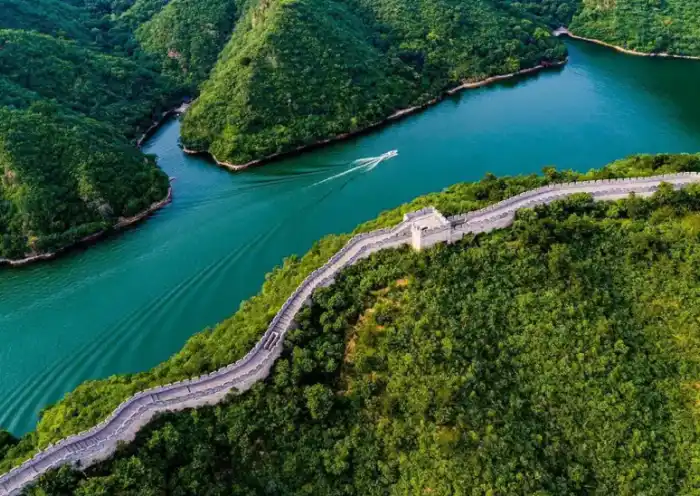
Huanghuacheng Great Wall located in Huairou District in Beijing also has three sections submerged in water due to the rise of water level after construction of Xishuiyu Reservoir. Though it does not extend into the sea, but it is the only great wall in water in Beijing. Tourists can take a boat to observe the wall closely.
Plan Your Great Wall of China Tour with China Xian Tour
As one of the world’s cultural heritage, the Great Wall is attractive to both domestic and foreign travelers. And our travel agency has planned a number of routes to explore the wall, including both restored and wild sections. If you are looking for a China Great Wall tour, we are pleased to recommend our routes for you or help you make a plan according to your needs. So do not hesitate to contact with China Xian Tour.