

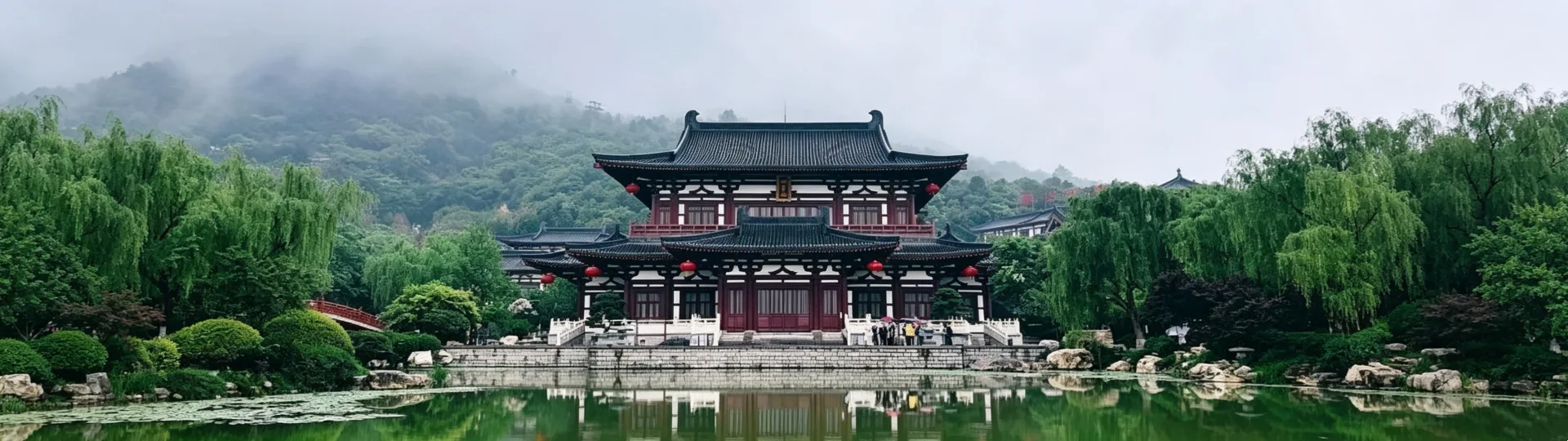
Hello, I’m a senior travel consultant with years of experience, and in this article, I’ll introduce a unique attraction in China to you: Huaqing Palace. Like many people, I used to think Huaqing Palace was more of a historical site, a renowned royal bath that is just for sight-seeing. However, my mind got completely changed after I visited it this year.
Is Huaqing Palace worth going to? The answer is certainly yes!
It is one of the four great royal gardens in China, and it provides experience not just “viewing the ruins” but more of “walking into a piece of history.” Here you can watch performances set against a stunning natural backdrop, bath in a royal-style hot spring, or interact with real-life NPCs. Read on to see my real Huaqing Palace travel experience and itinerary-planning tips.
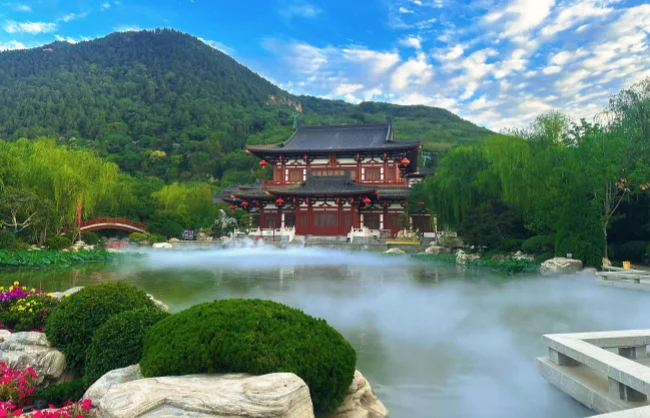
Facts about Huaqing Palace:
- How to get there: Take Metro Line 9 to Huaqingchi Station. Use B/C entrances. Or you can also travel by car, this would take you about 40-50 minutes to start from Xi’an city center.
- Time needed: ~2 hours.
- Entrance fee: 120 RMB. Tickets can be hard to secure during weekends and holidays. Make your booking via official mini-program in advance.
- Opening hours: Peak season (March 1st – November 30th) 07:00 – 18:00; Off season (December 1st – February 28th next year) 07:30 – 18:30.
Content Preview
- Why Do I Recommend You to Visit Huaqing Palace?
- Recommended Routes
- A Must-See Night Show – The Song of Everlasting Sorrow
- Can You Bathe in the Huaqing Hot Spring?
- 2026 New Experience: “Live NPCs” and Immersive History
- Historical Stories of Huaqing Palace
- Plan a Huagqing Palace Trip with China Xian Tour
Why Do I Recommend You to Visit Huaqing Palace?
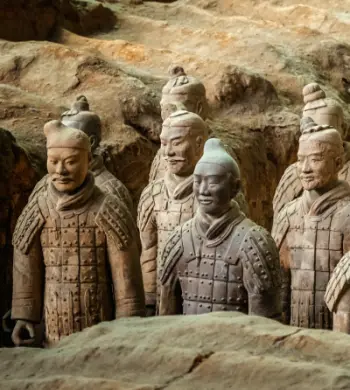
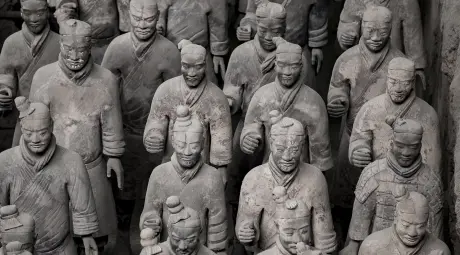
- Huaqing Palace can be easily paired with Terracotta Army for a seamless and classic one-day itinerary. They are just about 10 kilometers away from each other (a 15–20 minute drive).
- The live performance – the Song of “Everlasting Sorrow” is one of its highlights. Set against the backdrop of Lishan Mountain and the Nine Dragons Lake of Huaqing Palace, this show tells the timeless love story between Emperor Xuanzong and Concubine Yang.
Recommended Tour
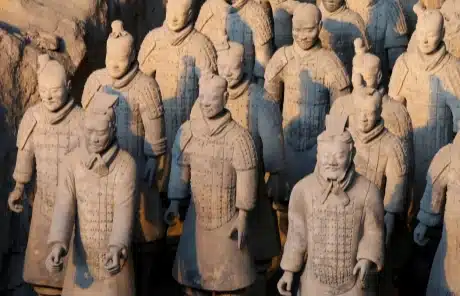
Visit the legendary Terracotta Warriors before witnessing the spectacular Song of Everlasting Sorrow, a live outdoor performance set against the natural backdrop of Lishan Mountain.
Recommended Routes
1. Visit the Palace Only, Enter from the West Gate
Ideal for travelers with limited time!
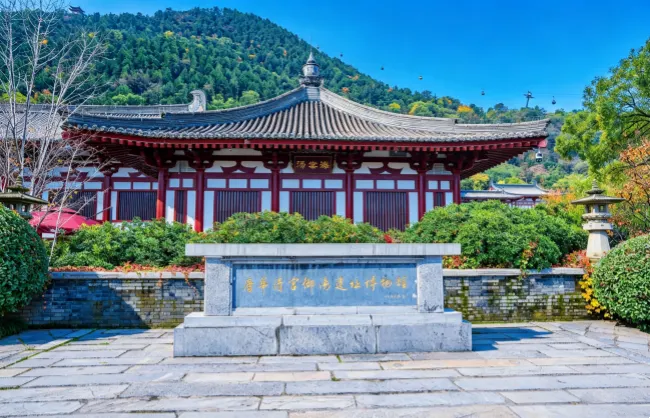
Enter the site through the West Gate (most recommended): This route was the smoothest from my experience. Start by visiting Jiulong Lake and Feishuang Hall, they’ll immediately bring you back to the Tang Dynasty.
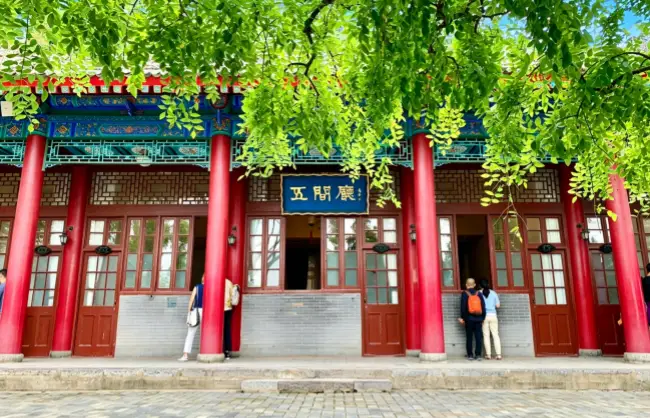
Then, visit the ruins of the Tang Imperial Hot Spring and the Five-room Hall. Follow the way down, and you’ll see the end of the road is exactly the performance stage.
This route efficiently covers all the core attractions and seamlessly connects with the night performance.
2. Huaqing Palace + Lishan Mountain
If you have enough time and can finish visiting Huaqing Palace roughly before 3 p.m., spend the rest of the day on nearby Lishan Mountain. Climbing up to the top is possible; however, with an altitude of 1,302 meters, it can be tiring and time-consuming to conquer this mountain.
The easiest way to reach the mountaintop is to take the cable car up. After reaching the top, it only takes 15 minutes on foot to reach Laomu Hall and the observation deck of Beacon Tower.
From these two points, you can overlook the entire Huaqing Pool and embrace the panoramic view of Lintong. The stunning sunset will be the best backdrop of your photo.

A Must-See Night Show – The Song of Everlasting Sorrow
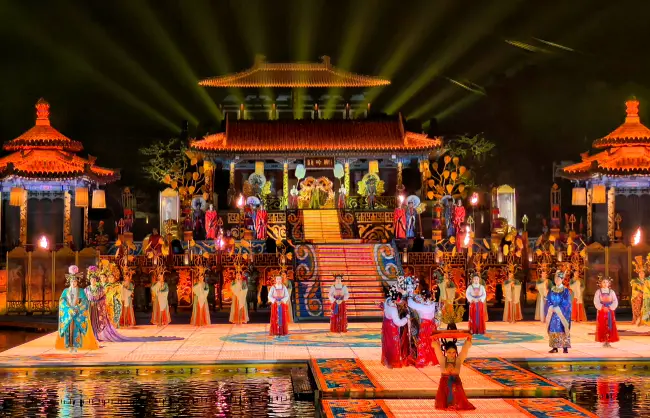
Huaqing Hot Spring offers an even more breathtaking experience after dark! You can see a fusion of Broadway and Hollywood blockbusters in a real-landscape setting.
The real-scene historical show, the Song of Everlasting Sorrow, is something you cannot miss when visiting Huaqing Hot Spring. In 2026, the show has also been upgraded, using the entire Lishan Mountain as its natural stage backdrop.
The show lasts for approximately 70 minutes, while every second of it is immersive. Towards the end of the show, you can see the whole Lishan Mountain lights up gradually, and you may start wondering whether the glorious Tang Dynasty has truly been reborn right before your eyes.
However, still have no idea what it’ll be like. Picture it in this way: the grand scale of The Lion King musical plus the visual spectacle of Avatar and the immersive real-scene charm of Venice.
Tips for Watching the Song of Everlasting Sorrow
- 4 shows daily during peak season: 20:10, 21:35, 23:00 and 00:25.
- Shows normally last for 70 minutes
- Ticket prices range from ¥209 to ¥988. For most visitors, the first show in the Middle Zone (¥409) is the top pick, which offers the best value and viewing experience.
- Enter the scenic area around 16:30. Tour the sites and also avoid long waits before the performance.
- It is advised to avoid the first 3 rows of Middle Zone A and B, where the fire and water special effects are at their strongest. If you happen to get these seats, it would be a good idea to bring a raincoat.
- Rows 25–28 in Middle Zone B are the most recommended, where you can enjoy the full water-screen effects without getting splashed.
Can You Bathe in the Huaqing Hot Spring?
Many visitors are curious about whether hot spring bathing services are available at Huaqing Hot Spring. Well, here’s the answer:
In the scenic area, only the source of the thousand-year-old royal hot spring is open to visitors, and you can only experience foot soaking here. Full-body hot spring bathing is not provided.
If you want an authentic, immersive royal hot spring experience, consider the hot spring hotels. There are some excellent ones in the surrounding area, such as Huaqing Yutang Hotel and Aegean International Hot Spring Hotel.
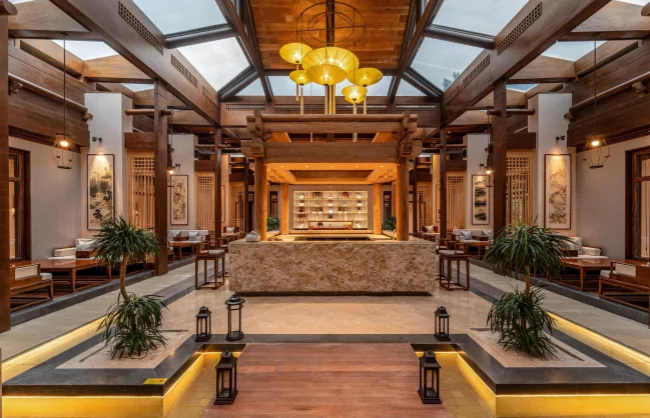
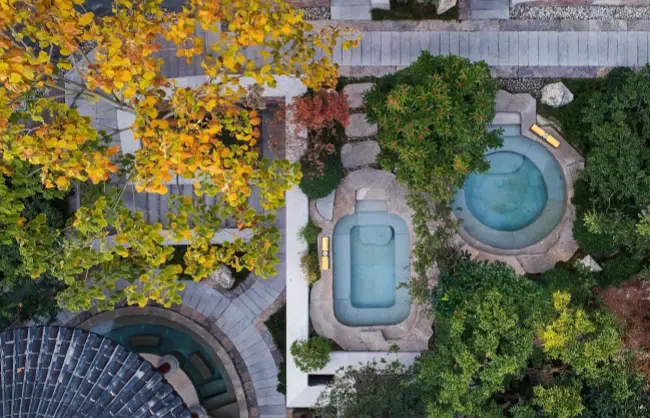
The price for a single hot spring experience (excluding accommodation) usually ranges from ¥200 to ¥500.
Therefore, an ideal itinerary would be:
- Explore the historical relics during the day (also enjoy the on-site interactions).
- Then watch the real-scene performance Song of Everlasting Regret at night.
- After the show, stay in a hot spring hotel to fully relax.
Recommended Tour
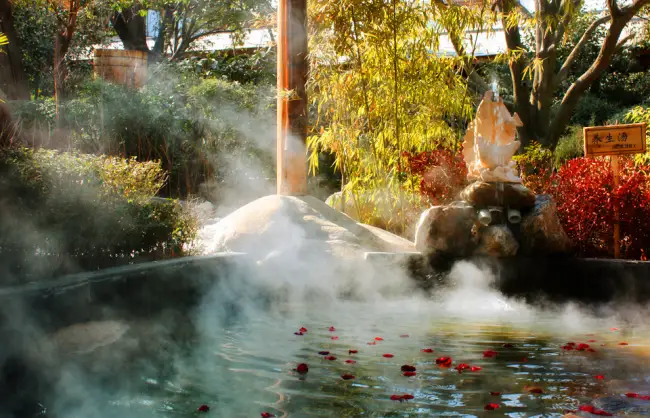
Combine the world-famous Terracotta Warriors with a two-hour outdoor hot spring spa at Huaqing Aegean International Resort in one day.
2026 New Experience: “Live NPCs” and Immersive History
Huaqing Hot Spring has evolved far beyond traditional sightseeing. Now, it’s more lively with various kinds of interactive activities. Once you step into the site, you may exclaim, “Alright, I’m now in the history.”
At Kowloon Lake, I met Li Bai, the most celebrated poet of China’s Tang Dynasty. If you’re not familiar with him, recognize him as China’s Shakespeare with a rock star’s character.
He invited me to join a poetry game, taught me how to bring the thousand-year-old literary tradition to life.
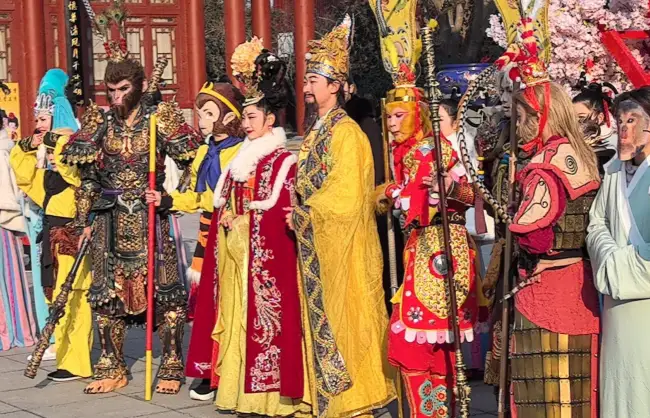
I also met the “chief steward” of Concubine Yang.
He used his authentic Shaanxi dialect to introduce the amusing anecdotes about transporting lychees for Concubine Yang. Every word engaged visitors in witty conversations that made historical figures feel warm and relatable.
The highlight of the evening: the arrival of Concubine Yang in person.
As dusk fell, Concubine Yang appeared elegantly a magnificent gesture, behind were her ladies-in-waiting. Her beautiful interactions with visitors brought the whole experience to a breathtaking climax.
After an immersive tour of Huaqing Hot Spring, don’t stop, it’s time to hunt for the authentic local flavors of Chang’an!
If you are interested in China’s food culture, join our 3-day Xi’an Food Adventure to taste all the classic street food and local specialties in one go.
Recommended Tour

Dive into 3,000 years of history on this 3-day Xian group tour combining the legendary Terracotta Warriors with the city's vibrant Muslim Quarter food scene.
Historical Stories of Huaqing Palace
Huaqing Hot Spring has witnessed thousands of years of history. But to many people’s surprise, they are not cold and full but tangible and can still resonate with people’s heartbeats.
Lishan Mountain, standing behind the scenic area, still recalls the story of King You of Zhou “lighting beacon fires to fool the feudal lords” around 2,700 years ago. Just to amuse his favorite concubine, he’d rather misuse the beacon fire—a military alert system—and eventually brought about the decline of his dynasty.
To put it simply: it was like someone pulling the city’s fire alarm just to make his girlfriend happy. When real enemies arrived, no one came to the rescue, and the dynasty soon collapsed for a ridiculous reason.
At the Tang Imperial Hot Spring Ruins, the deep affection between Emperor Xuanzong and Concubine Yang can still be traced. Secrets live in the five major Tang Dynasty royal bathing pools being preserved here, including the Lotus Pond for Emperor Xuanzong and the Begonia Pond for Concubine Yang.
The five-room hall, located in the garden, was built in the late Qing Dynasty. Its walls still bear real bullet holes left from the wars. In 1936, a key figure climbed over the wall here late at night to seek refuge. And this incident eventually promoted national unity and became a turning point in the nation’s destiny.
Plan a Huaqing Palace Trip with China Xian Tour
For the best trip to Xi’an, we highly recommend including Huaqing Hot Spring in your itinerary. You don’t need to set aside a full day—with smart planning, it works perfectly.
Explore the thousand-year-old historical sites and enjoy lively interactive experiences by day, then watch the real-scene performance Song of Everlasting Sorrow at night.
This will likely become one of the most unforgettable days of your entire journey in China. Contact China Xian Tour, and we’ll handle everything for you to make this journey even smoother and easier.


