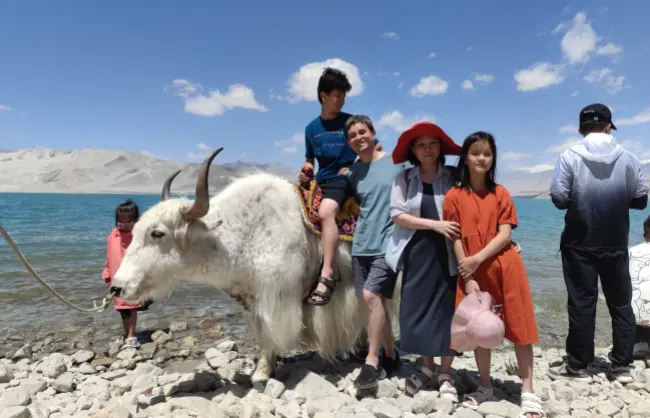
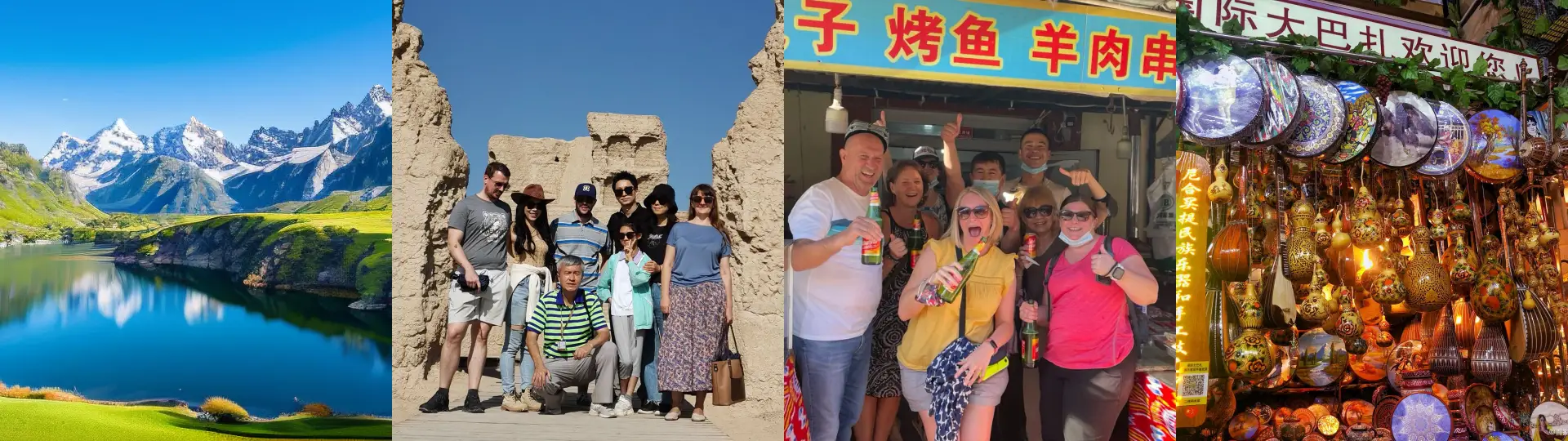
Xinjiang is a three-dimensional geographical encyclopedia and a living cultural museum. So the tourist attractions in Xinjiang will be great surprises for almost all tourists. Its unique landform of “Three mountains enclosing two basins” has created incredible geographic diversities, where tourists can see alpine lakes, deserts, prairies and glaciers in one Xinjiang tour.
As the crossroads of the ancient Silk Road, Xinjiang is also the convergence point of Eastern and Western civilizations. Here, the rich cultural tapestry will leave a deep impression on you. The most representative are the Uyghur Culture and the Kazakh Culture. For most travelers, Xinjiang is a perfect destination for adventure, culture, and photography.
Content Preview
- The Ultimate List of Top Xinjiang attractions
- Top 15 Must-See Xinjiang Attractions
- Best Things to Do in Xinjiang: Experiences for Every Traveler
- FAQs about Xinjiang Travel and Attractions
- Explore Top Attractions and Hidden Gems in Xinjiang with China Xian Tour
The Ultimate List of Top Xinjiang attractions
Type |
Attraction |
Breathtaking Natural Wonders & Landscapes |
Kanas Lake |
Breathtaking Natural Wonders & Landscapes |
Heavenly Lake |
Breathtaking Natural Wonders & Landscapes |
Sayram Lake |
Breathtaking Natural Wonders & Landscapes |
Flaming Mountains |
Breathtaking Natural Wonders & Landscapes |
Koktokay Scenic Area |
Breathtaking Natural Wonders & Landscapes |
Ghost City of Urho |
Historical & Cultural Gems |
Stone City in Tashkurgan |
Historical & Cultural Gems |
Kashgar Old City |
Historical Site |
Jiaohe Ruins |
Historical & Cultural Gems |
Kizil & Bezeklik Thousand Buddha Cave |
Unique Local Experiences |
Enjoy a self-driving to cross the Taklimakan Desert |
Unique Local Experiences |
Taste the delicious grapes in the oasis in the Flaming Mountains – Grape Valley |
Unique Local Experiences |
Explore underground water conservancy projects in Karez Wells |
Unique Local Experiences |
Experience horseback riding in Nalati Grassland and Bayanbulak Grassland |
Top 15 Must-See Xinjiang Attractions
1. Kanas Lake – The Emerald of the Altai Mountains
- Key Features: Pristine alpine lake, legendary “lake monster”, Tuva ethnic villages.
- Best Things to Do: Boat cruise, hike to Guanyu Pavilion (Fish Watching Tower) for panoramic views, visit Hemu Village.
- Best Time to Visit: June for greenery; September-October for golden autumn colors.
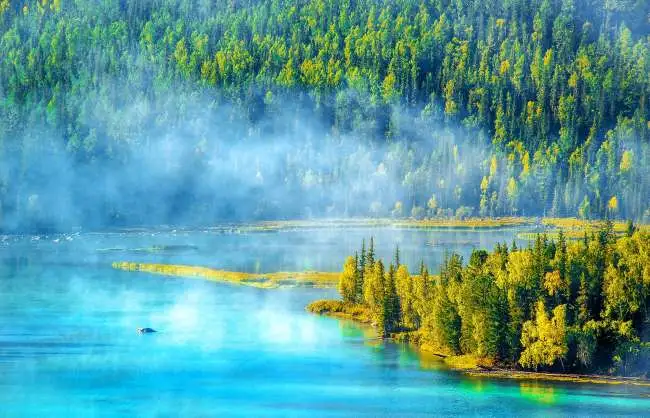
Renowned as “the fairyland on earth and the garden of the gods”, Kanas Lake is an alpine lake in the dense forests of Altay. The most mysterious and attractive aspect of Kanas Lake is its changing colors due to seasons and weather. It is steel gray in May, dark blue in June, milk white in July, black green in August and dark green in September and October.
Another mystery about the lake is the legend of the lake monster, which has been prevalent for many years. Usually, it is described as a mysterious creature that drags horses drinking water by the lake into the water. But no one knows what it is in fact till now.
Inside the scenic area, you can not miss Guanyu Pavilion. Though the over 1,000 steps may make you feel tired, the best panoramic view of the whole lake will heal you. Tourists can also take a boat to appreciate the lake from a different perspective.
After this one-hour boat ride, tour the most famous Fairy Bay, Moon Bay and Wolong bays by car or hiking. Another highlight is the unique Tuva culture, and you can experience it in the primitive villages, Hemu Village and Baihaba Village. The abundant experience make it a top tourist attraction in Xinjiang.

2. Heavenly Lake (Tianchi) – A Jewel Near Urumqi
- Key Features: Stunning blue lake set against Bogda Peak, easy access from Urumqi.
- Best Things to Do: Lakeside hiking, boat ride, and
- Best Time to Visit: May to October.
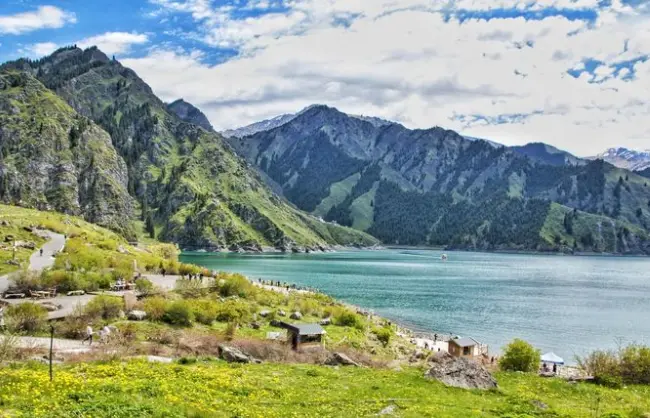
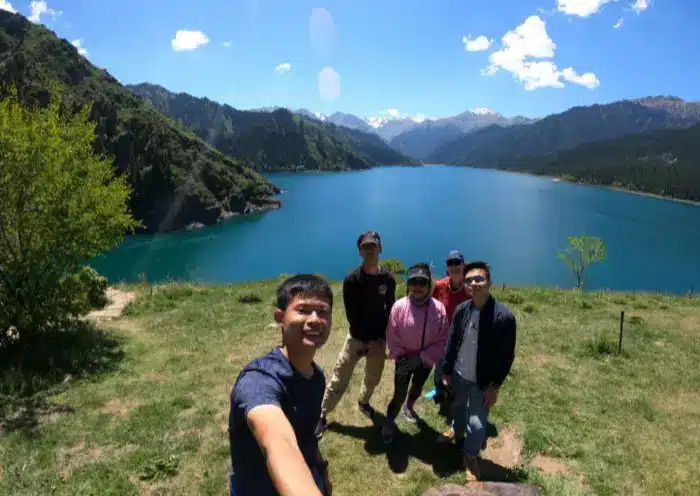
Heavenly Lake is a charming alpine lake under Bogda Peak. In 2013, it was included in the UNESCO World Heritage List. In ancient China, the Heavenly Lake was called Yaochi Lake. There is a legend saying that in the Warring States Period, King Mu of Zhou and the West Queen had a joyous feast and sang together here, adding a rich mythological charm to the lake.
Besides, the beautiful natural scenery of the lake has a great appeal to many tourists. The scenic area is centered on this blue lake. With the increase in height, the surrounding mountains form four different natural landscapes: the glacier and snow belt, the alpine and sub-alpine belt, the mountain coniferous forest belt, and the low mountain belt. Standing by the Heavenly Lake, you will see the reflection of the snow peak of the Bogda Peak. It is highly recommended to go sightseeing by hiking or by boat to immerse yourself in the beautiful scenery.
3. Sayram Lake – Xinjiang’s Largest Alpine Lake
- Key Features: Vast, crystal-clear lake surrounded by grasslands and wildflowers.
- Best Things to Do: Photography, scenic drive around the lake, and experience Kazakh nomadic culture.
- Best Time to Visit: July and August for the best weather and blooms.
At a height of 2073 meters and with an area of 458 kilometers, Sayram Lake is the highest and largest alpine lake in Xinjiang. The water of the Lake is crystal clear, with a transparency of up to 10 to 12 meters. With the change of seasons, weather and lights, the lake presents different blue colors, ranging from deep blue to emerald green.
In four seasons, the scenery of Sayram Lake varies a lot. In spring, you can see the special blue ice of the lake melting. Summer is the most beautiful season with green grass and blooming wildflowers around the lake. In autumn, the spectacular scroll of golden grass and snow mountain unfolds before you. And in winter, the lake is covered by white snow, forming a magnificent ice and snow world.
The most popular way to go sightseeing is a loop trip along the lake by self-driving or sightseeing bus. If interested, you can also live in the yurts for one night to experience the Kazakh nomadic culture.

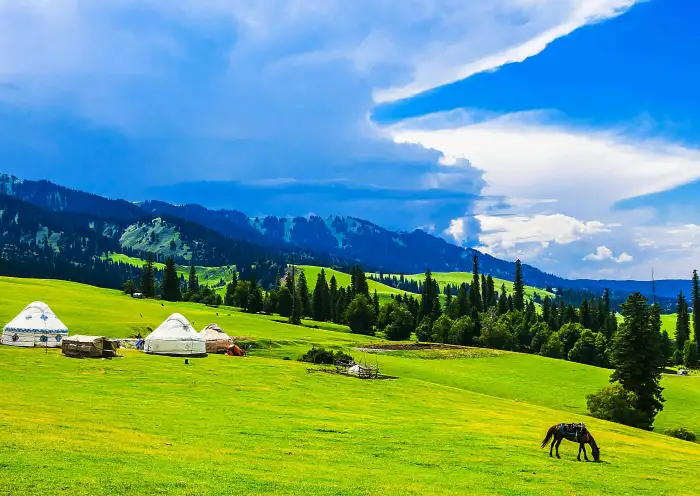
4. Nalati Grassland – A Classic Kazakh Prairie
- Key Features: Rolling grasslands, grazing livestock, and nomadic yurts.
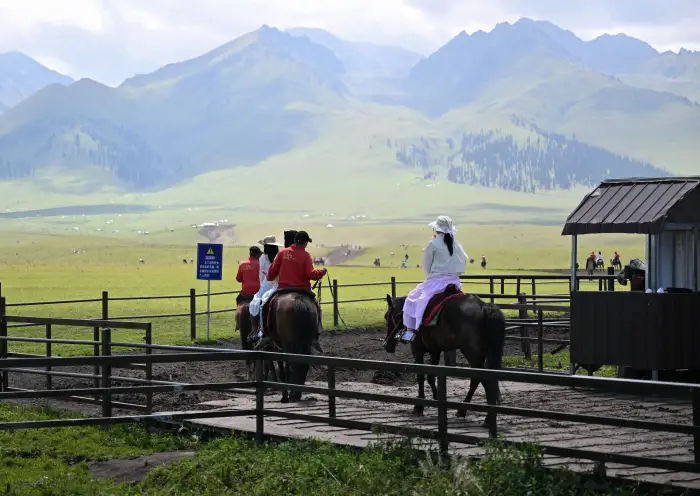
- Best Things to Do: Horseback riding, stay overnight in a yurt, and enjoy local dairy products.
- Best Time to Visit: July to September.
Nalati Grassland is renowned as “the world’s most beautiful alpine meadow”. Different from the common endless grassland, Nalati Grassland also combines river valleys, mountains, forests and snow-capped peaks. It is also the grassland with the densest Kazakh population in China. So you can experience the most authentic nomadic culture here.
The most recommended is to stay overnight in a yurt to feel the serenity of the grassland and appreciate the beautiful starry sky in the evening. At daytime, pay a visit to a local family to experience the daily life of the Kazakh people, such as tasting a bowl of freshly cooked milk tea and riding a horse on the grassland.
5. Kashgar Old City – The Soul of the Silk Road
- Key Features: World’s largest earth architectural complex, vibrant Uyghur culture and bazaars.
- Best Things to Do: Get lost in the alleys, visit Id Kah Mosque, and shop at the Sunday Livestock Market.
- Best Time to Visit: Spring and Autumn.
Kashgar Old City is the largest earth architectural complex in the world that is still in use now. As an important city on the Silk Road since ancient China, it has been a cultural and folk museum that integrates the civilizations of the East and the West for two thousand years. After such a long time of development, the layout of streets and alleys inside Kashgar Old City is like a maze. Inside the city, nearly 130,000 Uyghur residents live.
So you will find it is a complete traditional living space with schools, bazaars, handicraft workshops, mosques and residential houses, making it the best place to experience the real local life.
The landmark of Kashgar Old City is Id Kah Mosque, one of China’s largest mosques. And the Sunday Livestock Market is the most famous bazaar in Xinjiang, where tourists can feel the most primitive market atmosphere. So if you want to experience the authentic local life, Kashgar Old City is the most recommended Xinjiang attraction.

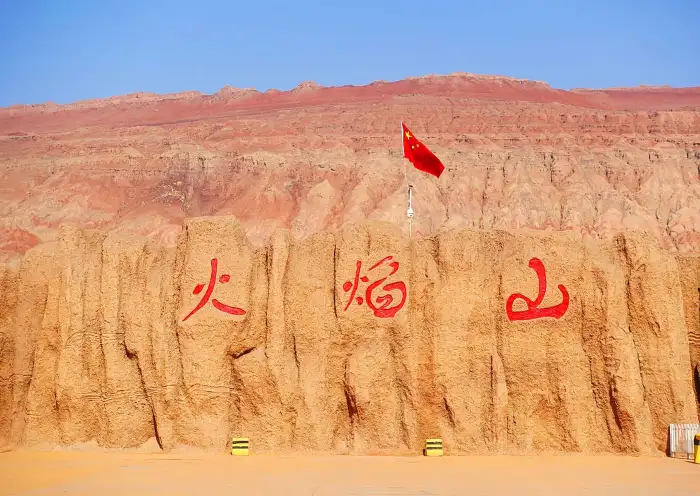
6. Flaming Mountains (Huoyan Shan) – China’s Hottest Place
- Key Features: Striking red sandstone mountains, famous from Journey to the West.
- Best Things to Do: Photography, visit the nearby Bezeklik Thousand Buddha Caves.
- Best Time to Visit: Early morning or evening to avoid extreme heat.
If you know The Journey to the West, then you must have heard of the Flaming Mountains. Inside the scenic area, there is a golden cudgel (a giant thermometer), cultural corridors, an underground palace and a cultural exhibition hall with the theme of the Journey to the West.
The Flaming Mountains is the hottest place in China, and its temperature is up to about 48℃ in summer. The surface temperature is even over 70℃, and eggs can be roasted in the sandpit.
The entire mountain is about 100 kilometers long and composed of red sandstone and mudstone, making it like a giant red dragon stretching across the Turpan Basin. It is highly recommended to visit the nearby Grape Valley and the Bezeklik Thousand Buddha Caves in one tour.
7. Bayanbulak Grassland – Swan Lake of China
- Key Features: Vast wetland grassland, home to countless swans and other birds.
- Best Things to Do: Bird watching, photography, and experience Mongolian culture.
- Best Time to Visit: April to June for bird migration.
Grassland is like a vast green carpet surrounded by snow mountains. It is not only the second largest grassland in China, but also the largest alpine grassland in China. Kaidu River winds its way through the flat grassland. During sunset, you may see the wonders of nine suns’ reflections on the river. Taking the photo is one of the top things to do in Xinjiang for photographers.
Besides, the Swan Lake here is home to nearly 10,000 rare birds, including various kinds of swans. These birds inhabit and multiply here for about 8 months, thus it is renowned as a paradise for birds. Here, tourists can also experience the traditional lifestyle of Mongolian people in the Torghut folk culture village.

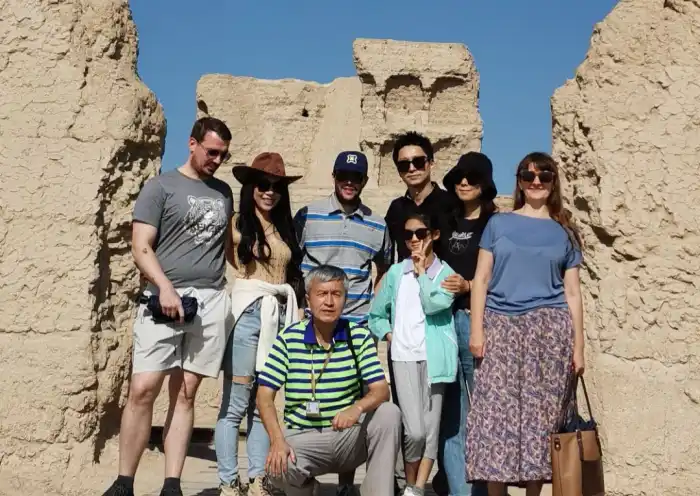
8. Jiaohe Ruins – An Ancient Earthen City
- Key Features: Well-preserved ruins of a 2,000-year-old city built on a cliff.
- Best Things to Do: Explore the ancient streets and temples, learn about Silk Road history.
- Best Time to Visit: Spring or Autumn.
With a history of 2,000 years, Jiaohe Ruins is an ancient city carved from the natural yellow earth. It is the world’s largest and oldest earthen architecture city. And the city is constructed in a willow-leaf-shaped peninsula. The most stunning is that the buildings are not built on the ground but are excavated downward from elevated land, so the city is encircled by steep cliffs. This unique architectural style is rarely seen even in the world.
Used to the ancient capital of the Former Kingdom of Jushi and the seat of the Anxi Protectorate during the Tang Dynasty, it also witnessed the history of the Silk Road. When wandering along the streets to explore the temples, government offices, and residential quarters, you can imagine the life scenes of the ancient people.
9. Taklimakan Desert – Ride Through the Desert Sea
- Key Features: China’s largest desert, famous for its shifting sand dunes.
- Best Time to Visit: October to November.
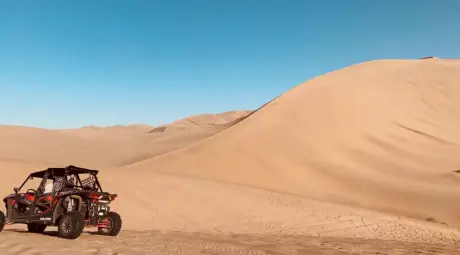
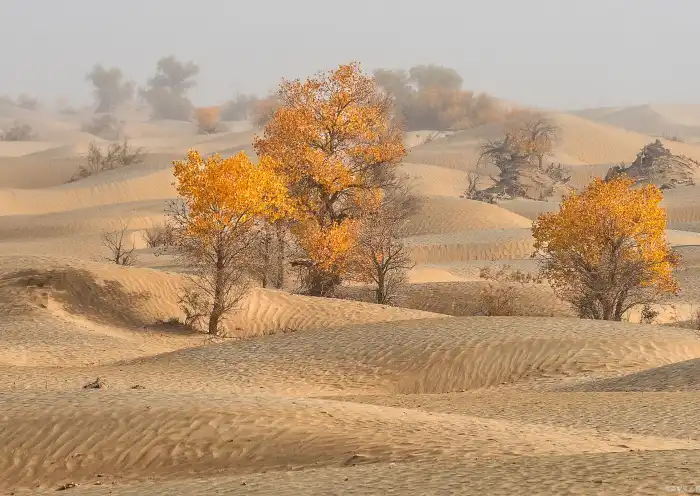
In the Uyghur language, “Taklamakan” means “once you enter, you never come out”, so the Taklimakan Desert is known as the “Sea of Death”. But now, there are four roads built crossing the desert, so self-driving has been a popular way to tour. Covering an area of 33.76 square meters, it is the largest desert in China. The unmissable spectacle of the desert is the various types of dunes, such as the pyramid shape, the feather shape, the fish-scale shape, etc. The highest dune is up to 300 meters, which is about 100-storey high. There is also a miracle of life in the Taklimakan Desert, the green corridor. Poplar forests and tamarisk shrubs form a green island in the sea of sand.
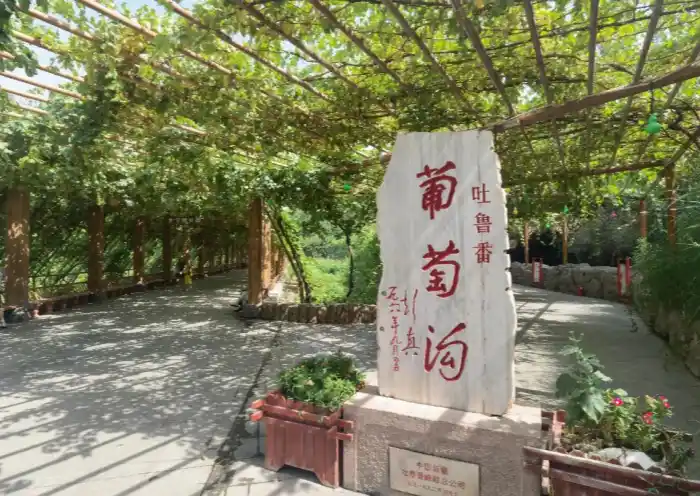
10. Grape Valley (Turpan) – An Oasis in the Desert
- Key Features: Lush vineyard oasis known for its sweet grapes and Uyghur hospitality.
- Best Things to Do: Taste fresh grapes and raisins, enjoy traditional song and dance performances.
- Best Time to Visit: August to October for the grape harvest.
Located in the western valley in the Flaming Mountains, Grape Valley boasts streams and luxuriant green trees, forming a great contrast with the scorching Gobi desert outside. In Summer, the temperature difference is over 10 ℃, making it a natural air-conditioned room. So Grape Valley is renowned as a unique cool oasis in the desert. And it has been a must-visit attraction in Xinjiang. From the name, it is not hard to know that the valley is famous for grapes. Its history of planting grapes has been over 3,000 years. Till now, it has been a kingdom of grapes, where you can find 52 species of grapes.
Besides, there are nearly ten thousand residents from ethnic groups including Uyghur, Hui, and Han. So tourists can not only taste the delicious food there, but also enjoy the traditional ethnic performances of song, dance and high-wire walking, etc.
11. Karez Wells – Ingenious Ancient Irrigation System
- Key Features: World Irrigation Engineering Heritage
- Recommended visiting time: 2 – 3 hours
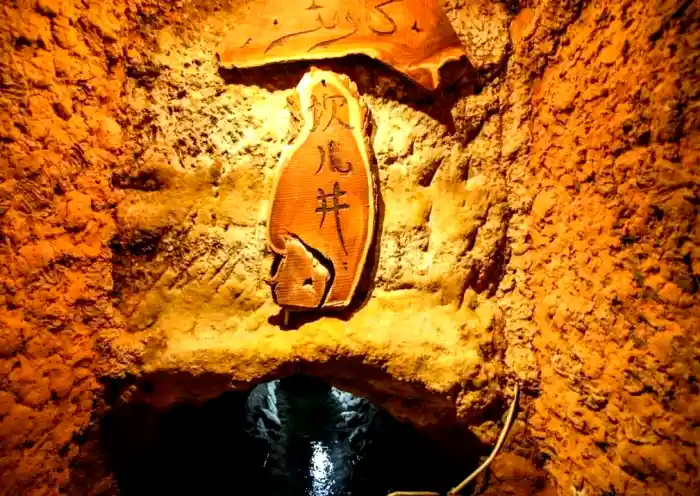
Karez Wells, together with the Great Wall and the Grand Canal, is renowned as one of the Three Great Engineering Wonders of ancient China. It is composed of over 1,000 wells and about 5,000 kilometers long. The wells are mainly distributed in the Turpan and Hami Basins. The climate in the region is extremely dry, but it is near Tianshan Mountain.
Through construction and connection of vertical shafts, underground channels, open channels, and floodgates, a unique underground water system is formed. It can guide the water from the Tianshan Mountain to the oases thanks to the natural slopes of terrain. So the system fully reflects the wisdom of Xinjiang’s ancient laborers. Tourists can witness and explore it by themselves in the Karez Folk Culture Park or learn about its structure, layout, and function in the Karez Museum.
12. Koktokay Scenic Area – Glaciers, Canyons, and Mineral Riches
- Key features: Natural mineral exhibition hall, Irtysh Grand Canyon
- Best things to do: Hike along the Irtysh Canyon, marvel at granite peak forests
- Best time to visit: June – October
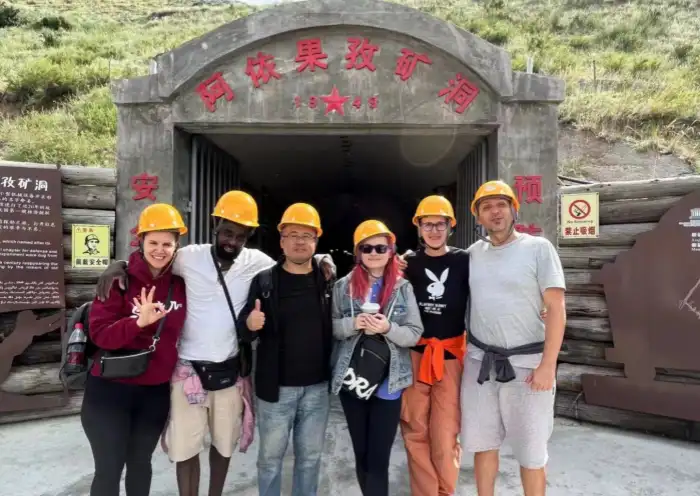
Koktokay Scenic Area is a popular Xinjiang attraction, which is famous for the unique granite landform and abundant mineral resources. It is China’s first world geopark and national mine park with typical ore deposits and mine ruins as its main landscapes. The most famous is the III pit, where 80 kinds of minerals are found, including almost all the minerals of rare metals.
The essence of the scenic area is the Irtysh Grand Canyon with a giant granite peak forest. The most representative landmark is the Shenzhong Mountain, a single granite peak shaped like an upside-down giant clock. When hiking along the Irtysh River in the Irtysh Grand Canyon, you can appreciate the wonders of Waterfall Fossil, Elephant Trunk Peak, and Camel Peak. In addition, it is also the second coldest place in China, this cold climate leads to characteristic ice and snow wonders.
13. Ghost City of Urho – Yardang landform
- Key features: Various types of rocks formed by strong winds
- Best time to visit: August- October
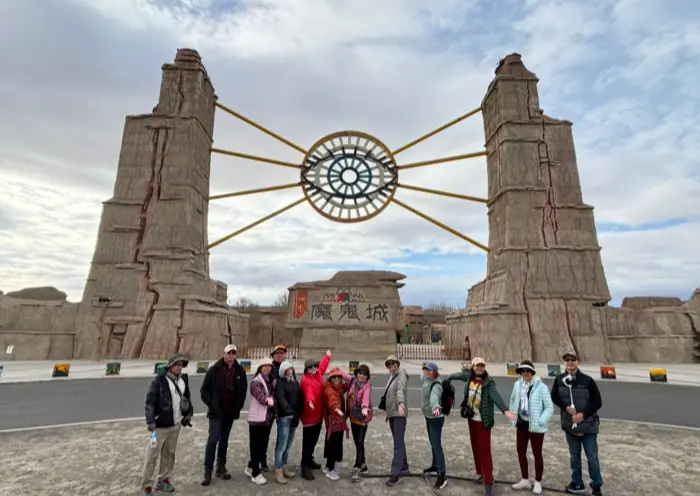
Ghost City is a geological wonder that allows you to experience the wonders of nature firsthand. It is not an artificial city but was naturally formed by the erosion of wind and sand over hundreds of millions of years. It is hailed as the top of the “Three Most Beautiful Yardang Landform in China”.
You will marvel at various types of rocks here, such as the pyramid, pagoda, eagle, etc. Then why is it called a ghost city? The scenic area is in a windy area, strong winds occur all year round, with the maximum wind force reaching 10 – 12 scale. When the wind passes through the strange rocks, it makes a shrill sound, like the wailing of ghosts. Especially in the evening, it is more mysterious.
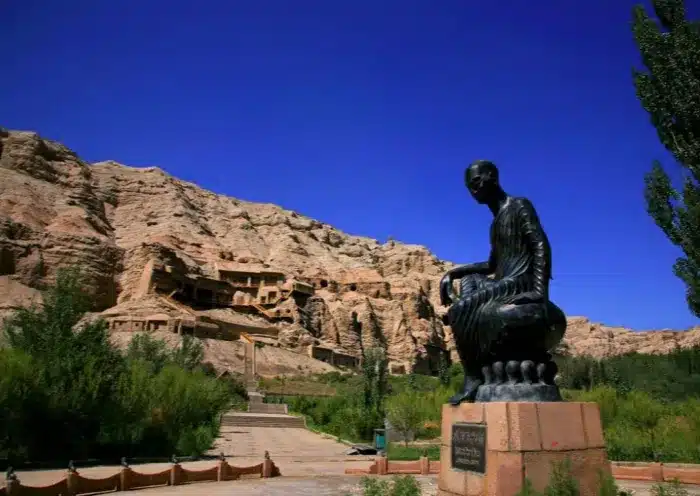
14. Buddhist Grottoes: Kizil & Bezeklik
- Key features: A large scale of Buddhist figures and murals
- Best time to visit: April – May, September – October
- Travel tips: Do not take photos inside the grottoes, and do not touch the murals.
Buddhist Grottoes are a cultural treasure on the Silk Road, and Kizil and Bezeklik Thousand Buddha Caves are the most outstanding masterpieces. Both are the tellers of Buddhist arts, but they have distinctive and unique charms. Kizil Thousand Buddha Cave is the Buddhist Center of the Ancient Kingdom of Kucha. It is the largest and earliest grotto complex in Xinjiang. Its style combines several cultures, such as Kucha, India and Greece. The murals depict a large number of Buddhist stories and secular life scenes.
While Bezeklil used to be an imperial temple in ancient times. Its Uyghur style is deeply influenced by the painting styles of the Tang and Song Dynasties in the Central Plains. So the figures are elegant and noble, with bright colors and a strong royal atmosphere. Its content is more related to the figures of the royal family and Buddhist stories, making it a vivid historical material of the social life.
15. Stone City in Tashkurgan
- Key features: An ancient city made of stone and soil
- Best time to visit: May – June, September – October
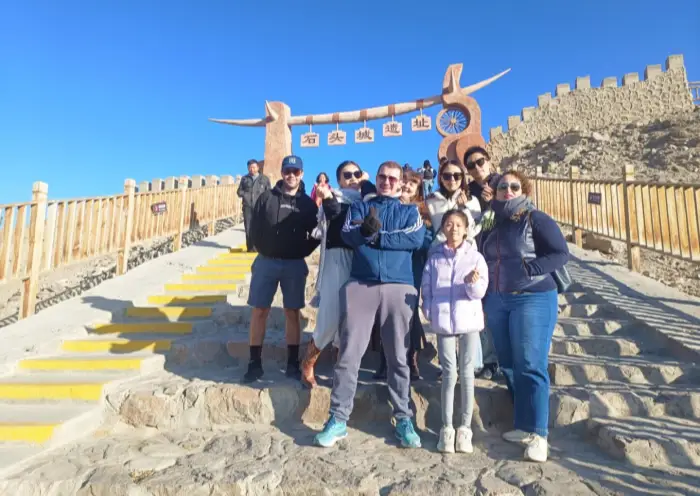
With a history of more than 2,000 years, Stone City in Tashkurgan was initially built in the Han Dynasty, and was the capital of the State of Puli. Its building craft is very unique. The city wall is built with large stones interwoven with soil, and no adhesive was even used between the stones. But it has stood firm till now. And the whole castle is built on a solitary hill about 20 meters high, with an extremely perilous terrain, demonstrating it was an important military fortress on the ancient Silk Road.
Related reading: Xinjiang Travel Permit
Best Things to Do in Xinjiang: Experiences for Every Traveler
Adventure & Outdoor Activities
The vast area and diversity of Xinjiang provide various adventures and outdoor activities for tourists. Below are the top things to do in Xinjiang.
- Hiking & Trekking: It is highly recommended to hike through the Kanas Nature Reserve, where you can appreciate the mysterious lake, the golden poplar forests and the magnificent glaciers. Another popular place is the Tianshan Mountains. Wander along the trails to explore the alpine lakes like Sayram Lake. Or pay a visit to Hemu Village to feel the tranquility and peace of this Tuva Village.
- Horseback Riding: This is the quintessential grassland experience on Nalati or Bayanbulak. Both are ideal places to experience the Mongolian nomadic life. Nalati is famous for the breathtaking scenery of the river valley grassland, and Bayanbulak is known for the vast wetland grasslands and the meandering Kaidu River.
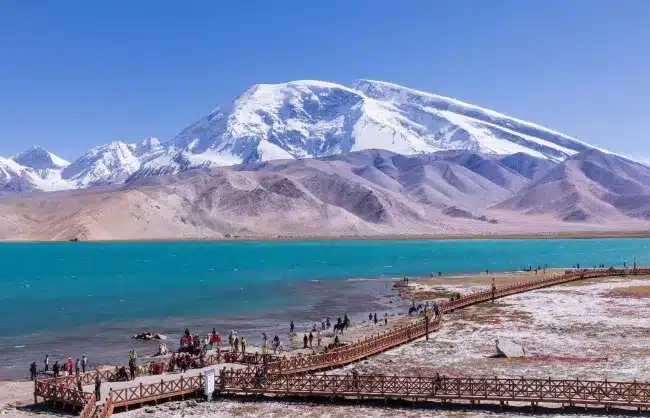
- Road Tripping: The Karakoram Highway is a legendary road. Along the way, tourists will be amazed by the magnificence of the Pamir Plateau and the grandeur of Mount Muztagata. Another special thing to do in Xinjiang is to cross the Taklimakan Desert by self-driving to feel the vastness of the “Sea of Death” and the strong vitality of poplar forests.
Cultural Immersion & Photography
Xinjiang is also a living picture scroll and boasts various culture, it is very worthy of being recorded and felt with the cameras and the heart.
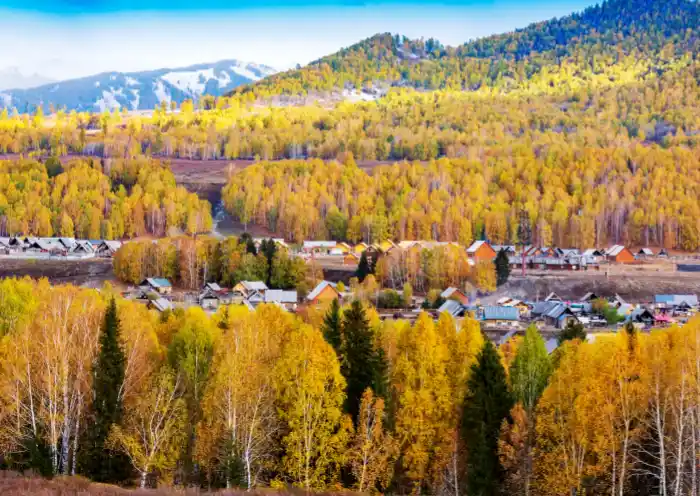
- Photography: To take unforgettable special photos of Xinjiang, you can not miss Kanas, especially the colorful leaves in autumn. Sayram Lake is also the top place. The changing blue colors, the sea of flowers in summer and the reflection of snow mountains are pretty charming. Besides, the red sandstone mountain of the Flaming Mountains, the strong living atmosphere in Kashgar’s livestock market, and the green grasslands are also incomparable.
- Cultural Experiences: If you want to experience the local life, visit a Sunday livestock market in Kashgar. It is not only a trade market, but the best place to observe the traditional lifestyle of the Uyghur people. And choose to stay one night in a yurt on the grassland, the peaceful atmosphere and tranquil night will soothe you. Also, do not forget to taste Uyghur food at a local bazaar. The grilled mutton kebabs, pilaf, baked buns, and hand-pulled noodles are unmissable Xinjiang food.
Practical Tips for Your Xinjiang Trip
- Best Time to Visit:In spring from May to June and in early autumn from Sept. to Oct., the climate is most pleasant. In spring, travelers can enjoy the apricot blossoms in Turpan and the Ili River Valley. While autumn is the season with the richest colors in places like Kanas and Hemu Village, it is the golden period for photographers.
- How to Get Around: Due to the vast distances between the tourist attractions in Xinjiang, private cars and drivers or domestic flights are the most recommended for long-distance travel.
- Cultural Tips: When touring the religious sites or villages of ethnic minorities, it is very important to respect the local customs. Do not mention, carry or eat pork and its products in front of Muslims. Do not wear overly revealing clothing. Do not speak loudly. And do not take photos or touch the religious items without permission.

FAQs about Xinjiang Travel and Attractions
How many days are needed for Xinjiang?
Xinjiang spans a vast territory and tourist attractions are far from each other. For tourists with limited time, choose the northern loop line or southern loop line, which takes about 7 – 10 days and 10 – 12 days, respectively. If you want to cover all the major highlights of Xinjiang, at least 15 days are needed.
Can foreigners travel freely in Xinjiang? Do I need a special permit or visa to travel to Xinjiang?
Yes. Foreigners can travel freely in Xinjiang with their valid passport. As for the Chinese visa, only tourists from visa-waiver countries do not require it. There are also some restrictions. If your tour includes some border areas like Tashkurghan county, you should apply for a frontier pass via a travel agency. And not all tourist attractions are open to foreigners, please check when planning the itinerary.
What to eat in Xinjiang?
Restaurants in Xinjiang are mainly divided into two categories: “halal” and “Han cuisines”. You can choose based on your preferences. The recommended delicious foods include Dapanji (Saute Spicy Chicken), roasted lamb skewer, hand pilaf and baked buns, etc.
Can a woman travel alone in China?
Of course, the public security situation in Xinjiang is very good, especially in the main tourist cities and attractions. So you will feel safe during the tour. But it is also necessary to maintain safety awareness for a woman traveling alone.
What to do in Xinjiang in summer vs winter?
In summer, tourists can avoid the heat in northern Xinjiang and the Ili River Valley. It is highly recommended to enjoy a horseback ride on the grassland, cycle around Sayram Lake or experience self-driving along Duku highway. In winter, the Altay Prefecture is like an ice and snow fairy wonderland. You can appreciate the spectacular snow scenery and go skiing there.
Explore Top Attractions and Hidden Gems in Xinjiang with China Xian Tour
The unique charm of Xinjiang lies in its perfect combination of ultimate natural wonders, profound historical heritages and vivid multi-ethnic cultures. To explore this vast territory, tourists may wonder how to plan the tour? China Xian Tour can give you some advice and customize an itinerary for you at a reasonable price. Of course, we can arrange a guide and a driver for you so that you do not have to worry about the transfer between the attractions in Xinjiang. So contact our travel consultant now to plan your Xinjiang tour.