


8 Days Yunnan Dali Shaxi Lijiang Food Tour




Tour Overview
This tour lasting for 8 days focused on the food of Yunnan, and it has combined the various aspects of the culture, nature and the sights along with the culinary experiences. The trip is for the foodies who want to experience delicious dishes through hands-on activities. The itinerary includes the baking of flower cakes, a Naxi cooking class, and stimulating visits to local markets full of life, which is then balanced by the heritage towns and beautiful nature.
Start with Dali where you will taste Bai specialties and morning markets will be explored and finally you will make rose-filled pastries followed by Erhai Lake cycling/strolling. Next, the journey takes you to Xizhou and Shaxi, the very places where the legendary Tea Horse Road can be experienced through hotpot made of wild mushrooms and traditional courtyards and dyeing workshops. In Lijiang, walk along the Tiger Leaping Gorge, join a Naxi bonfire night, visit old towns and learn the local cooking, all beneath the snow topped peaks.
Travel destinations: Dali, Shaxi, Lijiang
Suitable for: Food Enthusiasts
Tour type: Private
Highlights of this tour:
- Enjoy authentic Yunnan flavors through guided food walks, morning markets, flower cake making, and a Naxi cooking class with fresh local ingredients.
- Explore Dali, Xizhou, and Shaxi at a slow pace and visit Bai courtyards, try tie-dye craftsmanship, and glimpse the heritage of the ancient Tea Horse Road.
- Try some signature dishes in Yunnan such as Crossing-the-Bridge rice noodles, wild mushroom hotpot, Naxi pork rib hotpot…
- Witness some natural wonders when you cycle or stroll along Erhai Lake and hike the Upper Tiger Leaping Gorge.
- Wander UNESCO-listed Lijiang Old Town and tranquil Shuhe. Do not miss a Naxi bonfire night and capture snow mountain reflections at Black Dragon Pool.
Day-by-day Itinerary
- Day 1: Dali ArrivalEnjoy a Guided Evening Food Walk
Welcome to our 8-day Yunnan food tour departing from Dali. Upon your arrival, your private driver and will pick you up at the airport or train station and transfer you to the hotel in Dali Old Town.
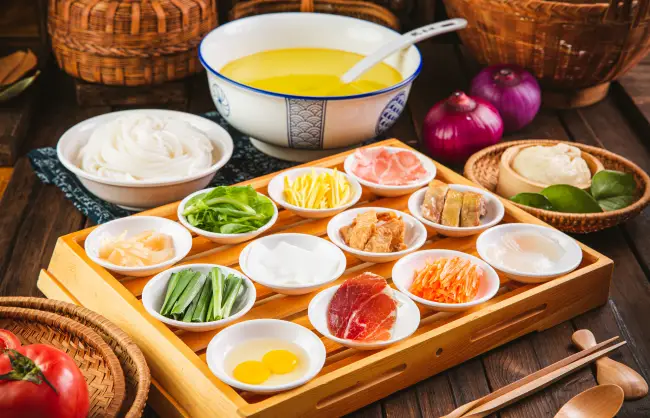
Your guide will arrive at your hotel in the evening and afterward take you on a culinary feast through walking food tour, the first one being Yunnan's delicacy Crossing-the-bridge Rice Noodles. The whole dish is built on a tradition that a scholar's wife maintained her husband's meals hot with boiling chicken soup. Personally slide the ingredients into the hot soup, instantly cooked while preserving utmost tenderness. Then, add the springy rice noodles, which soak up the soup, resulting in an exceptionally delicious dish.

Crossing the Bridge Noodles You'll also be served a large platter of Bai ethnic specialty dishes! These dishes embody the Bai people's millennia-old culinary culture. The eight dishes, a balanced mix of meat and vegetables, symbolize good fortune. Each is prepared through steaming, frying, or stewing, presenting bright colors and rich, layered flavors.
After your tasting, be escorted back to your hotel. Alternatively, you may choose to explore Dali Old Town on your own to digest your meal and enjoy the ancient city's night time.
- Day 2: Dali Local Life ExplorationExplore Local Morning Market, Make Flower Cakes, Stroll along Erhai Lake
After having breakfast at the hotel, your tour guide is going to take you somewhere very different, a market in Dali, where people and goods are all around and the smell of food a mile away. The sellers are very friendly and call out the prices, while some Bai women proudly “show off” their beautiful dresses. If you want to try some breakfast that the locals eat, then we suggest getting bean milk with fried dough sticks. You can see at many stalls huge piles of fresh vegetables like chili peppers, mushrooms, and tomatoes. The fruit stalls are the ones that radiate the most, bringing their retina dazzling colors to the market.
Afterwards, dawdle around Dali Ancient Town, holding your coffee. The rays of the sun fall on the small stones of the old town as it is just coming out of the morning mist. In the narrow streets, you may see the Bai-style houses that are located close to each other, the gray tiles and white walls beautifully contrast with the blue sky. In front of the handicraft shops, you may find various products - tie dye and silver jewelry showing the skill of the craftsmen. Life runs slow in this place.
Make Flower Cakes In the afternoon, be transferred to a rose farm where you can learn how to make flower cakes. These cakes are a representative of Yunnan pastry, filled with rose petals preserved in honey and sugar to retain their natural sweet fragrance. You also have the chance to taste fresh rose water, renowned for its beauty-enhancing properties.
Later, head to Erhai Lake for a lakeside stroll or bike ride, enjoying the gentle breeze. For dinner, we recommend a lakeside restaurant featuring local shrimp, fish, and regional specialties (not included in our itinerary, allowing you to choose your preferred dining experience).
- Day 3: Xizhou and Shaxi Towns from DaliDiscover Bai Courtyards, Taste Local Snacks, Learn Tie-dye
After a roughly 30-minute drive from Dali, you'll arrive in Xizhou. Upon entering the ancient town, you'll immediately notice the cobblestone paths connecting the exquisite courtyards of Bai ethnic dwellings. Your guide will take you to explore several distinctive courtyards featuring carved floors and unique marble artifacts. As the highlight of this journey, Xizhou Baba (a kind of bread) can be a "surprise on the tip of your tongue". The savory version features scallion and ham filling encased in a crispy, caramelized crust, while the sweet variety wraps brown sugar and rose petals in a pastry that's sweet without cloying.
Xizhou Baba Snack Lunch features freshly caught fish, chicken, fried eggs, and more. In the afternoon, be guided through learning tie-dyeing techniques. It’s a nationally recognized intangible cultural heritage, uses indigo plant dye. Key steps include pattern drawing, binding, soaking, dyeing, steaming, sun-drying, untying, and rinsing. Binding and soaking are the most critical. Professional artisans will guide you through the process. Take home your handmade piece as a keepsake.
In the evening, head to Shaxi Ancient Town for a courtyard-style dinner.
- Day 4: Relaxing Time in ShaxiSlow down in Shaxi with Wild Mushroom Hotpot & Tea Horse Road Heritage
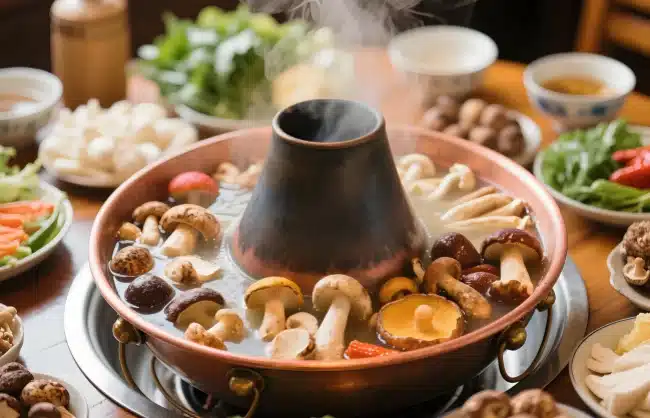
This is a slow-paced food tour. In the morning, enjoy a leisurely start at a local café. Our lunch is a highlight—Yunnan wild mushroom hotpot. Each rainy season, Yunnan's forests yield over 250 varieties of wild mushrooms. Treasures like matsutake, chicken-of-the-woods, and porcini simmer in a rich, amber broth made from free-range chicken stock. You have to patiently wait 20 minutes for it to boil, ensuring safety.
Food tours like these are more on the slow side. Morning gives you a chance to slow down and start at a local café with a nice and leisurely breakfast. We have the lunch, which is a real delight - Yunnan wild mushroom hotpot. The Yunnan's forests produce more than 250 species of fungi during each rainy season. Incredibly, the rare ones such as matsutake, chicken-of-the-woods, and porcini produce a great deal of flavor when they are put together with an already flavorsome free-range chicken stock where the broth becomes rich and amber-tinted. You have to wait patiently for it to boil for 20 minutes, which is the best to get a safe dish.
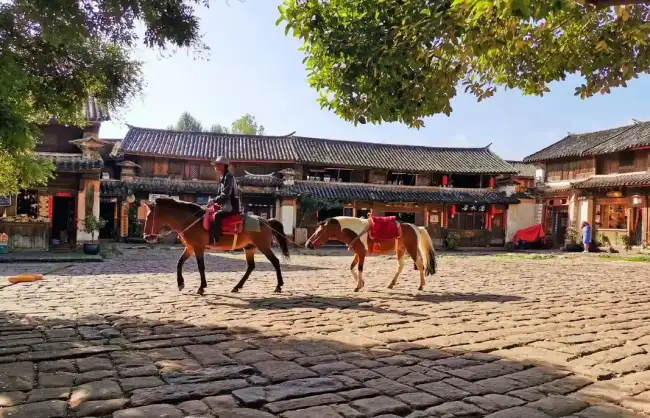
Wild Mushroom Hotpot We take the whole afternoon to explore the different villages within Shaxi Ancient Town. The only surviving market along the ancient Tea Horse Road is here. The heart of the old town, Sifang Street, was buzzing with caravans once and still keeps its original allure today. On the way, do not miss a stop at a hills café. There, you can have a cup of coffee while taking in the amazing view of the ancient town with rice fields in the background. So, take a nap or do nothing!
Evening continues with Bai ethnic specialties, such as lemongrass-grilled pork ribs and dairy fan. This traditional cheese is made from fresh local cow or goat milk, naturally fermented and curdled into flat sheets resembling folding fans. Rich in protein and calcium, it boasts a mellow, slightly tangy flavor. You can have it fried till it is golden and crispy, or raw, or at times with ham.
Sideng Street in Shaxi Ancient Town - Day 5: Shaxi to LijiangHike the Upper Tiger Leaping Gorge and Enjoy a Naxi Bonfire Night
After breakfast, we drive to admire the beauty of one of the world's deepest gorges. Tiger Leaping Gorge, located at the border of Shangri-La and Lijiang, is a magnificent canyon formed by the Jinsha River as it surges through the Yulong Snow Mountain and Haba Snow Mountain. The gorge is divided into 3 sections, and today we have an easy hike to the Upper Tiger Leaping Gorge.
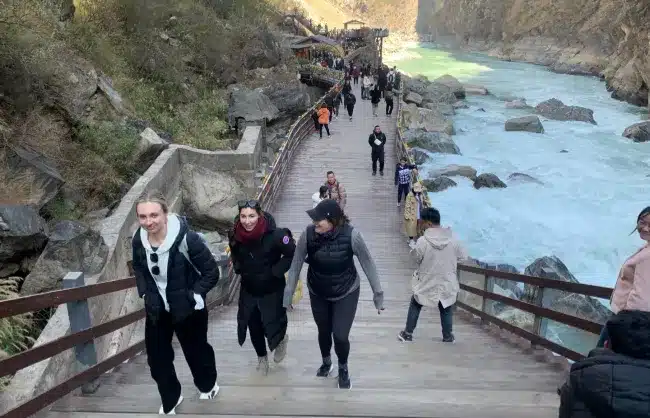
Descending along winding paths, we gradually approach the surging Jinsha River. Initially calm, the river grew increasingly turbulent as we advance, its roar becoming deafening. Upper Tiger Leaping Gorge is renowned for its perilous narrows, measuring a mere 20 meters at its narrowest point. Here, the river rages through the confines of the gorge, resembling a thousand horses galloping. A 13-meter-tall rock stands in the river's center, named Tiger Leaping Rock, said to bear witness to a tiger's legendary leap across the river.
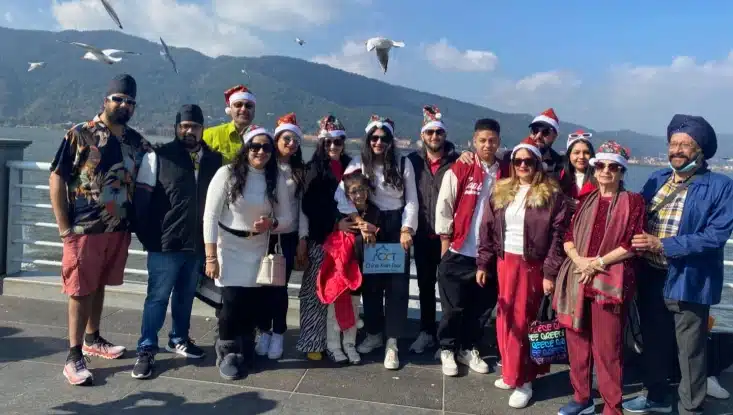
Our Customers at Tiger Leaping Gorge After the hike, we continue by car for 1.5 hours to Lijiang. After checking into the hotel, you may explore Lijiang Old Town at your leisure. Dinner is on your own today. In the evening, join a bonfire party with local residents. People dressed in traditional Naxi attire sing and dance together.
- Day 6: Lijiang to ShuheExplore Lijiang and Shuhe Ancient Towns, Taste Naxi Rib Hotpot
In the morning, your guide will take you to visit the Old Town of Lijiang more closely. This 800-year-old town on the Tea Horse Ancient Road is a living museum of Naxi culture. The visit starts with Sifang Street, which is the central square of the old town. It has been the meeting place for merchants since the Ming and Qing Dynasties and the Naxi, Han, Tibetan, and other cultures have all contributed to and thrived on Lijiang's economic and cultural life making it the main center for trading and cultural exchanges in Lijiang. In the narrow lanes, you might find some relaxed and easy-going daily activities of the elder Naxi people.
Lijiang Old Town In the afternoon, continue to Shuhe Ancient Town which is more than a thousand years old. It used to be an important center for trade between Yunnan, Sichuan, and Tibet and thus enormous wealth created by trade flows and prospered in the town. Today, the main historical artifact is the Qinglong Bridge. While walking around the town you will see the water from Longquan Pond so clear that it is as if the snowtopped mountains are mirrored in it and you will be taught about the Naxi agricultural culture. The Tea Horse Road Museum with its 13 halls of exhibitors and more than 800 pieces of artifacts is China's only privately-run museum dedicated to tea-horse culture. History lovers will definitely want to come here.
For dinner, taste a Naxi pork rib hotpot. When cooking, soak the pork ribs in water and stew them with ginger, Sichuan peppercorns, and other ingredients in a clay pot. Add potato, vermicelli, and wild mushrooms to the vegetables. When consumed, pair it with Naxi style dipping water and rice wine. In the evening, stay overnight in the hotel in the Lijiang Old Town.
Pork Rib Hotpot in Lijiang - Day 7: Lijiang Cooking ClassesJoin a Naxi Cooking Class and Capture Snow Mountain Reflection
In the first part of the day, the activity will be a visit to the oldest market in Lijiang, where they sell fresh vegetables, fruits, and a variety of meats. Then, a private cooking class where three specialty dishes for lunch will be prepared. The entire process is enjoyable and at the same time highly informative as Naxi culture is brought in through the explanations, this way you will get to know the stories that are behind each dish.
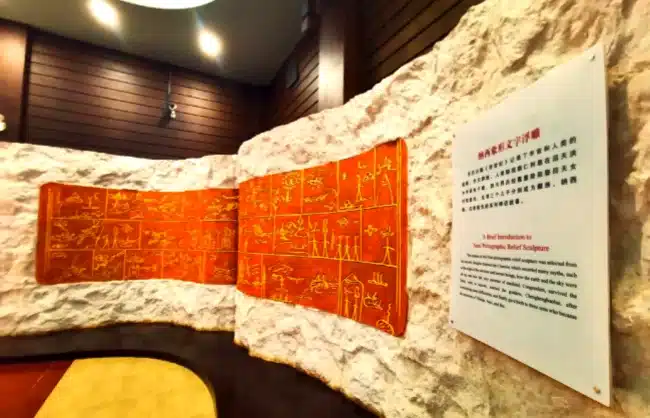
Dongba Culture Museum In the second part of the day, we will visit Dongba Museum where we will uncover the ancient knowledge of Naxi people. Besides the large collection of Dongba scriptures and cultural artifacts, the museum also tells the history, religion, and customs of the Naxi people through their artifacts. The pictographic script of Dongba is the only primitive pictographic script that is still in use today in the whole world. If you are curious, you might even get the chance to learn how to write simple symbols and see how the Naxi ancestors were able to use images as a means of communication and documenting their lives through record.
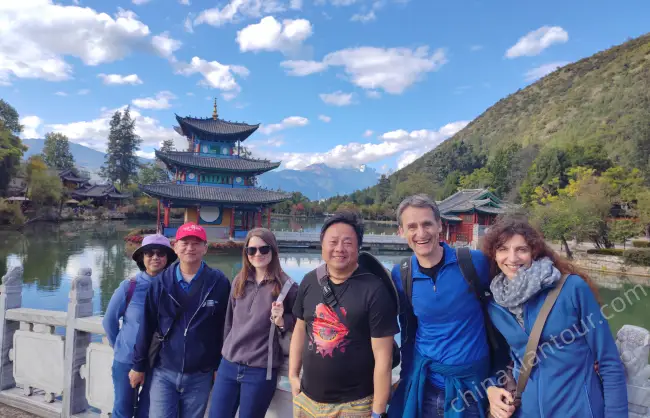
Next, head to Black Dragon Pool Park. Ancient trees tower over the park, and the crystal-clear waters of the pool create Eight Great Views, including the “Dragon Pool Reflection.” This is a paradise for photography enthusiasts, especially at sunset when it's particularly beautiful. Winter (December–February): Sunset is around 5:30–6:30 PM. Summer (June–August): Sunset is around 7:30–8:00 PM.
Following the tour, our final meal will be a substantial set menu of local Naxi specialties, including spicy fish and herb-roasted pork belly.
Black Dragon Pool Park - Day 8: Lijiang Departure
Good morning, you have the last leisure time to relax. Your driver will pick you up at your hotel lobby and then send you to the airport for your departure. Hope this journey be a feast for your palate. Thank you for choosing China Xian Tour.




Tour Price Per Person
The price varies depending on the activity, number of people, travel date, and selected hotel. Please contact us for a specific price.
Accommodation For This Yunnan Food Tour



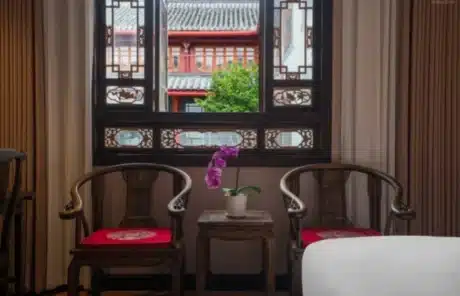
For your China private tour, the choice is in your hands: you can select luxury 5-star hotels for unparalleled comfort, cozy 4-star accommodations, or value-for-money 3-star options.
All our partner hotels are handpicked for their prime locations, conveniently situated near bustling commercial areas. Every room is equipped with standard amenities like air conditioning, hot water, 24-hour showers, reliable Wi-Fi, and windows for natural light.
In some hotels, there are English-speaking staff who are committed to providing attentive service. Should you have any special requests, feel free to ask - they are always ready to assist.


