



The three-dimensional climate and complex landforms of Yunnan have nurtured a rich and diverse natural food treasure-house, combined with the fusion of 25 ethnic dietary cultures, forming a taste universe interwoven with “freshness, sourness, spiciness, fragrance, and wildness”. What is Yunnan famous for food? From the ceremonial sense of crossing-the-bridge rice noodles to the soul nourishing of steam pot chicken, from the umami carnival of wild mushroom hot pot to the romantic sweetness of flower cakes, every Yunnan food depicts the magic and diversity of “South of Clouds”. Now let’s follow this food guide and learn what to eat in Yunnan.
Content Preview
- Must-Try Yunnan Dishes
- Regional Yunnan Food Specialties
- Best Drinks of Yunnan
- Where to Eat in Yunnan
- Yunnan Food Souvenirs to Bring Home
- FAQs about Yunnan Food
- Plan Your Yunnan Food Tour with China Xian Tour
Must-Try Yunnan Dishes
First we’ll take you to unlock the 7 most worth-tasting food in Yunnan. Friends who are going to travel to Yunnan mustn’t miss it.
Crossing-the-Bridge Rice Noodles: Top Culinary Rituals in Southwest China
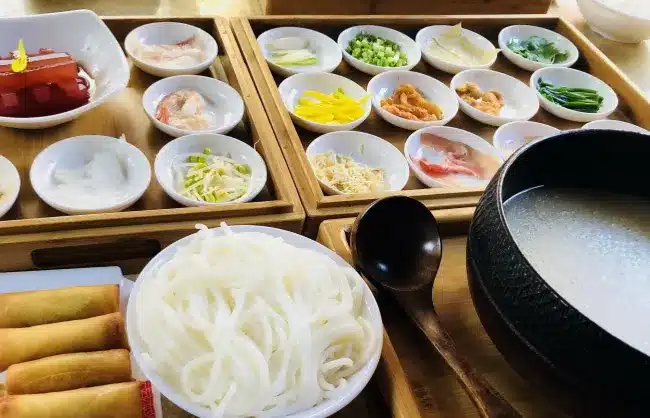
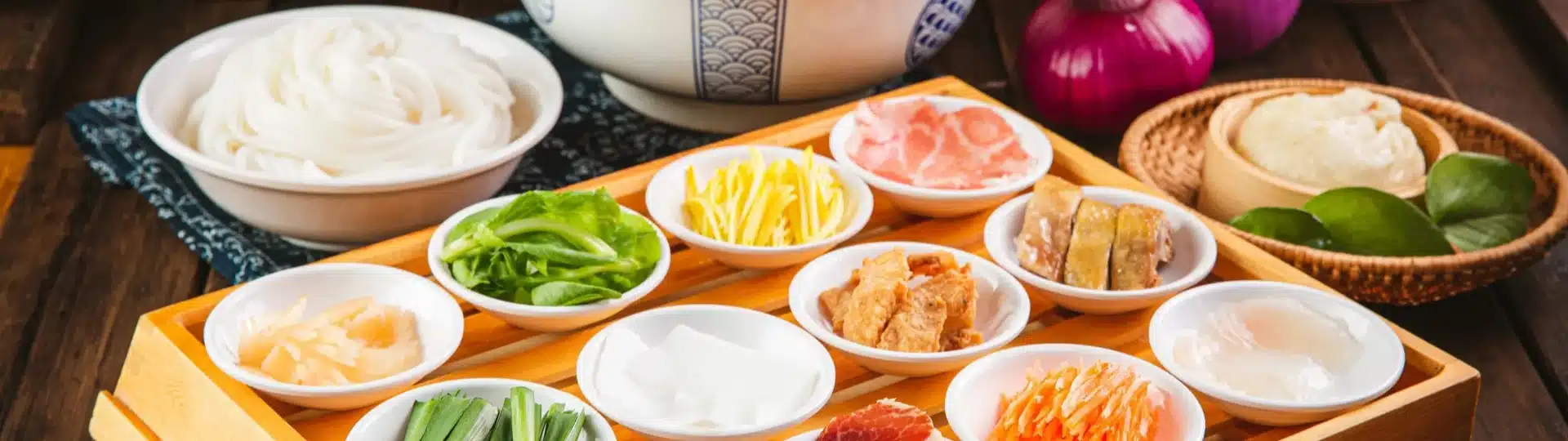
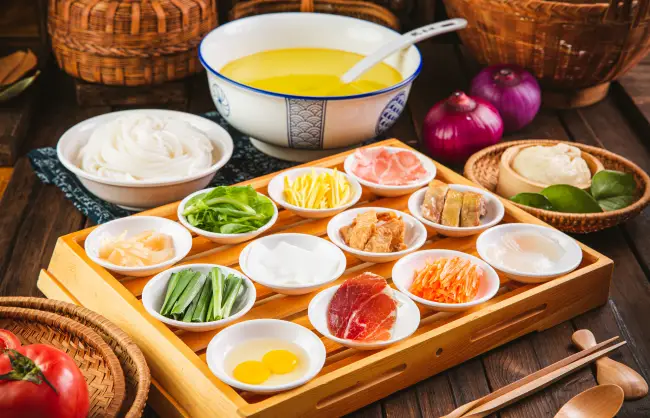
Crossing-the-bridge rice noodles, the most representative Yunnan food, originated from the legend of the Qing Dynasty scholar’s wife who sent rice noodles across the bridge every day. Authentic crossing-the-bridge rice noodles emphasize “hot soup, thick oil and rich ingredients”. The golden and hot chicken soup is coated with a thick layer of chicken oil, which has excellent insulation effect.
When eating, pour various fresh meat slices, vegetables, and rice noodles into the soup successively and heat them until cooked, instantly activating all the flavors! As one of top Chinese food, crossing-the-bridge rice noodles can be served with more than 20 kinds of side dishes, not only conveying the warmth and delicacy, but also the ceremonial slow life of Yunnanese.
Steam Pot Chicken: Steam Magic Without Adding a Drop of Water
Steam pot chicken is one of the most delicious Yunnan dishes, which was spread more than 200 years ago. It is named after steaming with a purple clay pot. Chicken, pseudo-ginseng, gastrodia, matsutake, cordyceps flowers and other ingredients are cooked in a pot without a drop of water, and condensed into soup through steam circulation.
The original flavor is fully locked in the pottery pot, and every drop of soup is the crystallization of time and craftsmanship. At the moment the lid is lifted, the chicken soup is clear and fragrant, chicken meat tender enough to melt in the mouth, with first-class nourishing effects, and the whole body feels comfortable after drinking.
Wild Mushroom Hot Pot: Gifts of Delicacies From the Mountain Forests
Wild mushroom hot pot is a hymn offered by Yunnan people to the rainy season. Every July, when the termitomyces pierces the red soil and the matsutake breaks through pine needles, a three-month taste carnival begins. Using three-year-old hams or native chickens to make soup, adding original ecological ingredients such as boletus edulis, russula virescens, chanterelle, bamboo fungus to the copper pot maintained at a constant temperature of 85 ℃, the freshness of the mountain delicacies erupts geometrically.
How to eat this Yunnan food? Remember that wild mushrooms must be cooked thoroughly before consumption to prevent poisoning. First drink the soup, then eat the mushrooms. As a great Yunnan vegetarian cuisine, every bite is a generous gift from nature.

Dai Ethnic Hand-Grabbed Rice: A Wild and Exciting Feast
Dai-style hand-grabbed rice is the most representative Dai food in Yunnan’s Xishuangbanna. On the banana leaves are full of lemongrass roast fish, ghost chicken, pineapple rice, fried meat with sour bamboo shoots, and a purple rice ball squatting in the middle, like a peacock spreads its tail. Without the need for chopsticks, one can eat directly by hand. The sour, spicy, fragrant, and soft flavors are constantly bombarded in the mouth, and eating until one’s hands are full of oil is the highest respect for Dai cuisine! Wrapped in banana leaves is not only fresh and tender tilapia, but also a gift from the entire ecosystem. Paired with sweet pineapple rice, just enjoy the carnival of rainforest fruit aroma!
Cured Pork Ribs Hot Pot: Naxi-style Warm Dish in Winter
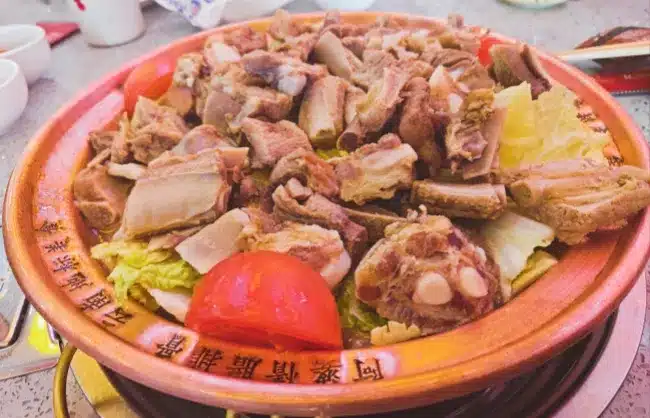
It is a unique delicacy in Lijiang. Cured pork ribs are stewed with wild mushrooms, arrowheads, potatoes, and other ingredients to produce a creamy white soup. The ribs are salty, fragrant, and delicious, with a tight and firm meat texture. A group of people sit around the copper pot, eat from steaming hot pot, dip in the local fermented bean curd chili sauce, the taste is absolutely amazing! When the thick soup made from aged ham bones meets the highland air-dried pork ribs, it can trigger a long aftertaste that crosses the ancient Tea Horse Road. The Naxi boss will mysteriously tell you, “Our pork ribs are cured in the moonlight of the Jade Dragon Snow Mountain.”
Stone Pot Fish: Original Ecological, Healthy Delicacy in Yunnan
Stone pot fish (or steam pot fish) is a famous Yunnanese food. Its soup base is divided into three flavors: white, spicy, and sour. The processed fresh fish is cooked in a stone pot with steam for just a few minutes until cooked. The high temperature locks the freshness, and the fish meat is tender. The soup base is rich in layers due to mineral penetration of the stone pot. First taste the fish soup, then add mushrooms, tofu and other wild vegetables, and finally dip in secret sauce. Yunnan stonepot fish not only embodies the heroic concept of “cooking all the mountain and sea flavors in one pot”, but also carries the health concept of “medicine and food homology”.
Flower Cake: The Unique Edible Romance of Yunnan
Flowers bloom throughout four seasons in Yunnan, making them a unique feature in cuisine. As the “gourmet card” of Kunming, Flower Cake is the “passionate love between roses and puff pastry”! Carefully selected fresh rose petals mixed with honey and lard, wrapped in layers of puff pastry, and baked until golden crispy. With a gentle bite, the fragrance of rose mixed with wheat fills the nose, the petals are clearly visible, the outer skin is crispy and flaky, and the inner layer is soft and sweet, sweet but not greasy. As a dim sum praised by the Emperor Qianlong, flower cake is a gift that visitors on Yunnan tours must take with them.

Regional Yunnan Food Specialties
Yunnan food is rich in variety and exquisite in craftsmanship. From the sour and spicy appetizing Dai food to the fresh and fragrant Yunnan cuisine, the delicacies in central, southern and western Yunnan each have their own characteristics:
Regions |
Major Cities |
Most Typical Food |
Central Yunnan |
Kunming |
Crossing-the-bridge rice noodles, flower cake, toufu pudding rice noodles, small pot rice noodles, steam pot chicken, roasted rice cake, Yunnan ham pastry, pea jelly, Guandu baba (glutinous rice cake), Yiliang roast duck, braised termitomyces |
Central Yunnan |
Qujing |
Xuanwei ham, Zhanyi spicy chicken |
Central Yunnan |
Chuxiong |
wild mushroom hot pot, Mouding fermented bean curd |
Central Yunnan |
Yuxi |
Stone pot fish, chilled rice porridge |
Western Yunnan |
Hot and sour fish, chilled chicken rice noodles, milk fan, three-course tea, Er Kuai (rice cake), Nuodeng ham, Xizhou baba |
|
Western Yunnan |
Baoshan |
Tengchong fried rice cake |
Western Yunnan |
Dehong |
Hundred-insect feast, Paoluoda, pickled bamboo shoots chicken |
Northwest Yunnan |
Lijiang |
Cured pork ribs hot pot, chicken-eyed bean jelly, Lijiang baba, Naxi roast fish, butter tea |
Northwest Yunnan |
Yak meat hot pot, zanba, highland barley wine |
|
Southwest Yunnan |
Xishuangbanna |
Dai-style barbecue (lemongrass roast chicken / tilapia), pineapple purple rice, sticky rice in bamboo, pounded chicken feet, Paoluoda |
Southwest Yunnan |
Pu’er |
Tea banquet, three-cornered rice cake, Mojiang purple rice chicken |
Southwest Yunnan |
Lincang |
Chicken and rice porridge, baba rolls |
Southeast Yunnan |
Honghe |
|
Southeast Yunnan |
Wenshan |
Pseudo-ginseng steam pot chicken |
Must-Try Yunnan Food in Kunming (Central Yunnan)
The central Yunnan region, represented by Kunming, is characterized by its fresh, mellow, and harmonious cuisine. The small pot rice noodles are also classic on the streets of Kunming. Pork bone soup is paired with minced pork, leeks, pickles, and chewy thick rice noodles. Tofu pudding rice noodles combine the multi-layer taste of rice noodles, bean curd jelly served with sauce, winter vegetables, leeks and peppers. Qujing Zhanyi spicy chicken has become a traditional Yunnan food with its unique blend of freshness and spiciness. The stone pot fish from Fuxian Lake in Yuxi is mainly made from schizothorax taliensis, steamed, and has a fresh soup and tender meat. Guandu baba is filled with rose sugar and bean paste, with a crispy outer layer and a sticky inner layer.
Popular Food in Dali, Lijiang, Shangri-La (Western Yunnan)
The food in western Yunnan has the characteristics of multi-ethnic integration and highland ingredients. The most iconic Dali food – fish casserole, also known as sour and spicy fish, is made by slowly stewing Erhai (Yunnan) fish and various side dishes in a pottery clay pot, which is delicious and fragrant. Milk fan is a traditional dairy product of the Bai ethnic group in Dali. The milk is boiled and then made into thin slices, which can be grilled, fried, or pan fried, with a strong milk aroma. Chicken-eyed bean jelly is made from unique beans in Lijiang. After cutting, it is cold mixed or fried, sprinkled with crushed peanuts and chopped green onions, and has a unique taste. Located in the northwest of Yunnan, Diqing Shangri-La has yak meat hot pot, butter tea, zanba, matsutake cuisine, and other Tibetan Plateau specialties.
Top Dishes in Xishuangbanna (Southern Yunnan)
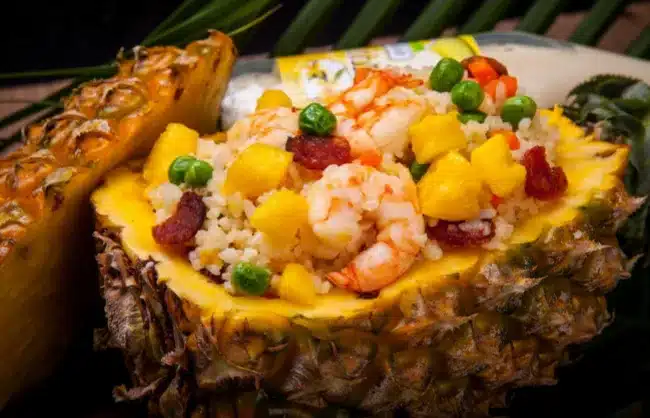
The cuisine of Xishuangbanna in southern Yunnan is centered around traditional Dai cooking techniques, blending the wildness of tropical rainforests with South Asian flavors, with a main theme of sour, spicy, and fresh flavors. What must be tasted is Dai-style barbecue – lemongrass roast fish. It is mainly made of Lancang River tilapia, marinated with natural spices, and then wrapped with lemongrass for roasting. Pineapple purple rice is a must-have dish for Dai ethnic festivals. It is made by steaming hollowed-out pineapples filled with purple glutinous rice, which blends fruity and glutinous flavors. There is also the unique hundred-insect feast with high protein insects such as fried bamboo worms, bee pupae, and grasshoppers which are crispy and delicious, posing a taste challenge for the brave.
Recommended Yunnan Tours
- 7 Days Best Yunnan Tour to Dali Lijiang Shangri-La
- 8 Days Classic Yunnan Minority Tour of Kunming-Dali-Lijiang-Shangri-La
Best Drinks of Yunnan
In addition to the above-mentioned delicacies, Yunnan also hides the following stunning specialty drinks:
- Pu’er Tea: Pu’er is home to ancient tea trees and wild tea trees from around the world. Pu’er tea, a premium black tea, has a rich orange yellow soup, a sharp and long-lasting aroma, a unique fragrance, a rich and mellow taste, and is long-lasting and durable.
- Paoluoda: a summer drink originating from Myanmar, also popular in Yunnan. Coconut juice mixed with condensed milk is made into a rich and sweet soup. The glutinous purple rice and elastic sago are used as the base, and then topped with shredded coconut and crispy bread. Both the ingredients and taste are rich.
- Tamarind Seed Jelly: the most familiar summer cooling dessert among Yunnan people. The jelly is transparent and bouncy, mixed with brown sugar water, rose sugar, ripe sesame seeds, and crushed ice, sweet and refreshing.
- Tamarind Juice: As Yunnan’s most representative fruit juice beverage, it uses tamarind fruit as raw material, forming a sweet, sour, and refreshing taste. Tamarind Juice can help relieve spiciness, digest food, remove greasiness, and sober up.
- Rose Tea: This magical beverage originating from Yunnan can nourish the heart, liver, and blood, while also promoting beauty.
- Cafe: The small grain coffee produced in Baoshan has successfully conquered the taste buds of coffee enthusiasts around the world with its unique flavor of “strong but not bitter, fragrant but not strong, and slightly fruity”.
Related reading: What Is Yunnan Tea – Types, History, Benefits & More You Need to Know
Where to Eat in Yunnan
Major Yunnan Destinations |
Yunnan Street for Food |
Kunming |
Nanqiang Street, Xiangyun Street, Yuanxi Road, Guanshang Mushroom Street, Chamahua Street, Shuangqiao Night Market, Guandu Ancient Town |
Dali |
Renmin Road, Sanyue Street, Fuxing Road and the South Gate of Daili Old City |
Lijiang |
Zhongyi Market, Square Street, Qiyi Street, Huama Street, Xiangshan Market, Shuhe Ancient Town |
Xishuangbanna |
Gaozhuang Starlight Night Market, Manting Road, Jiangbian Night Market |
Authentic Yunnan Restaurants:
- Crossing-the-bridge rice noodles – Kunming Jianxinyuan (建新园), Qiaoxiangyuan (桥香园)
- Flower cake – Brand Jiahua (嘉华)
- Steam pot chicken – Fuzhaolou (福照楼)
- Dai-style barbecue – Manfeilong Roast Chicken (曼飞龙烤鸡)
- Stone pot fish – Zai Hui Shou (再回首)
- Cured pork ribs hot pot – Ama’s Ribs (阿妈腊排骨)
Yunnan Food Souvenirs to Bring Home
Be sure to purchase the following “rare” souvenirs food on Yunnan travel:
- Flower Cake: a classic dim sum made of edible roses unique to Yunnan, sweet and delicious
- Xuanwei Ham: a famous specialty of Yunnan, known for its pipa-like shape, thin skin, thick flesh, moderate fat and thinness, and rich aroma
- Dried Wild Mushrooms: growing in primitive mountain forests, with a wide variety of species, delicious taste, and rich nutrition, which are Yunnan food treasures
- Pu’er Tea: having the effects of lowering blood lipid, aiding digestion and antioxidation, which becomes more fragrant with age and is known as a “drinkable antique”
Related reading: Yunnan Itineraries – How to Plan 5-14 Days Yunnan Tours
FAQs about Yunnan Food
What desserts are popular in Yunnan?
Xian Hua Bing (flower cake) is the most classic dessert in Yunnan. Most are made of rose. You can also try Pao Lu Da (crushed ice and condensed milk with various kinds of toppings), Dou Mian Tang Yuan (sweet soup balls coated with soybean powder and sugar syrup), Tian Bai Jiu (sweet wine made of rice), Suan Jiao Gao (a cake-shaped snack made from tamarind) and Dong Gua Mi Jian (candied winter melon).
Recommended Tour: One Day Lijiang Naxi Food Cooking Class Tour
What ingredients are most commonly used in Yunnan cooking?
The charm of Yunnan Food lies in various kinds of characteristic ingredients, including flowers, wild mushroom, wild vegetables and fruits, rice made products, dairy products, hams, etc. There are also some widely used special condiments and seasonings, such as lemon grass and litsea, they form the unique flavor of Yunnan cuisines.
Is Yunnan food suitable for vegetarians?
Yes, it is very friendly for vegetarians. With varieties of plants, Yunnan boasts numerous wild vegetables, wild mushrooms, beans and fruits. And plenty of foods are made of rice and flour. Many traditional dishes and snacks there are vegetarian. In the tourist cities like Kunming, Lijiang and Dali, you can even find the vegetarian restaurant.
What are the regional differences in Yunnan food (Kunming, Dali, Lijiang, Xishuangbanna)?
In different regions of Yunnan Province, the ethnic minorities living there influence the food culture and flavor greatly. Kunming food integrates the flavors across the province, so the taste is relatively balanced. Cuisines in Dali are mostly Bai ethnic cuisines. The main feature is the use of dairy products and sour and spicy condiments. Lijiang is characterized by Naxi ethnic flavors. Due to the influence of Tibetan culture, butter tea is a popular food. And Xishuangbanna is dominated by Dai ethnic cuisines, which are rich in tropical characteristics and spices are commonly used.
Is it safe to try street food in Yunnan?
Generally, it is safe to taste street food in the formal night markets and snack bars. If you worry about it, choose clean stalls or those have more customers. But if you want to try wild mushroom, it is a must to choose a reputable and experienced restaurant in case you get poisoned.
What makes Yunnan cuisine so unique?
- Incomparable biological resources: The ingredients used range from wild mushroom, insects and various flowers and wild vegetables.
- Blend of multi-ethnic cultures:plenty of ethnic groups inhabit in Yunnan Province, and each has their own food culture and cooking skills. After influenced by and blending with each other, it has formed diverse and inclusive Yunnan cuisines.
- Distinct flavor: Yunnan cuisines use more natural spices instead of condiments and seek for the original taste and tenderness of the ingredients.
- Culture of eating flowers: Edible flowers are made into dishes or desserts in Yunnan, which is rare in China.
Plan Your Yunnan Food Tour with China Xian Tour
In Yunnan, food and scenery coexist. It is recommended to start from Kunming and connect Dali, Lijiang, Shangri-La (circling western Yunnan), and Xishuangbanna (extending to southern Yunnan), which usually takes about 7-8 days. If there is enough time, you can also visit Pu’er or Yuanyang. From snow-capped mountains to rainforests, let’s freely explore the tasty Yunnan!
Characteristic Yunnan cuisines have a great appeal to many tourists. During your Yunnan tour, do not forget to taste it. If you have the plan, China Xian Tour is pleased to tailor an itinerary based on your preferences. Of course, we can combine the famous scenic spots in Yunnan with the delicious food. So, you can completely immerse yourself in the charming culture. Just contact us right now to talk about your Yunnan trip.