

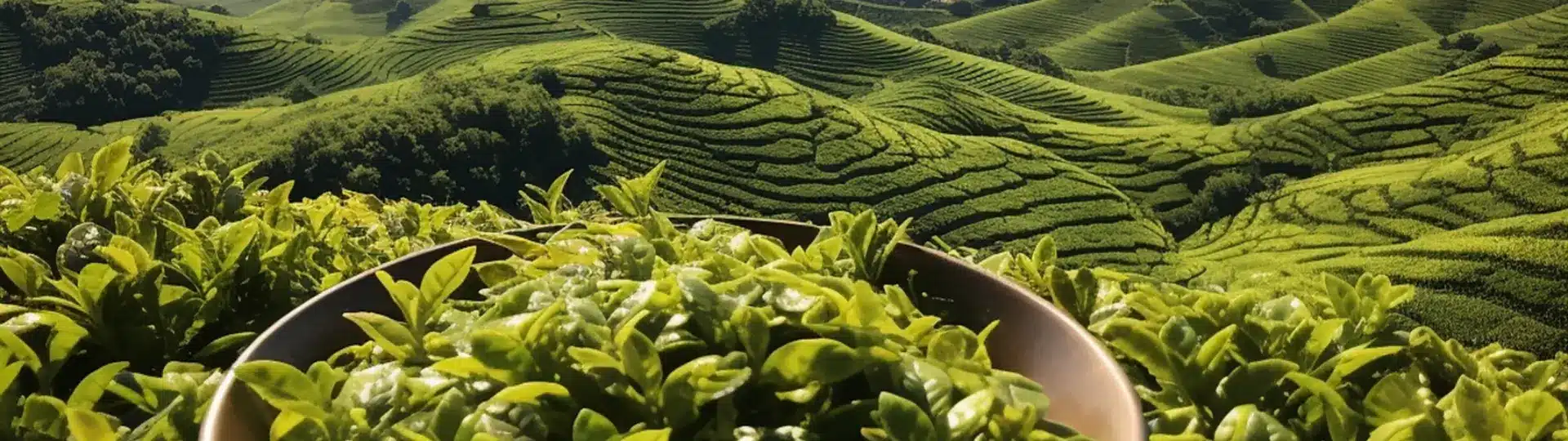
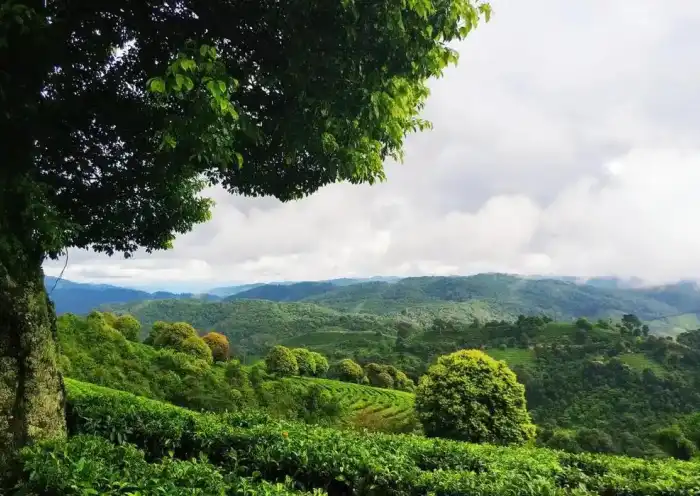
As a popular destination in China, Yunnan is know for its rich ethnic culture and stunning natural beauties, given its diverse ethnic minorities and geography. Little you may know that this magic land is also home to many high-quality tea types in China and the cornerstone of Chinese tea culture. Thanks to its unique geography, relatively high altitudes, fertile soil, and subtropical climate, Yunnan boasts many tea plantation areas that provide perfect environment for tea cultivation.
What’s more, the deep history of Yunnan tea furtherly enhances its outstanding position. In Yunnan, you can encounter some of the most ancient tea trees, some even over 1,700 years old. When you sip a tea from these ancient trees, you can feel the rich taste, like the deep history.
So, to complete your Yunnan tour, we highly recommend to pay a visit to the region’s tea plantations to discover another facet of its exclusive charm. Before traveling there, it’s better to have a quick glance at the types, taste, history, and benefits of Yunnan tea.
Content Preview
- Main Types of Yunnan Tea
- Yunnan Pu’er Tea
- Yunnan Dian Hong
- Yunnan Green Tea
- Yunnan White Tea
- History of Yunnan Tea
- How to Choose Authentic Yunnan Tea?
- How to Brew Yunnan Tea?
- Famous Yunnan Tea Plantations and Tea Tours
- What to Do on a Yunnan Tea Tour?
- FAQs About Yunnan Tea
- Plan Your Yunnan Tea Tour with Us
Main Types of Yunnan Tea
Yunnan teas are categorized into four main types according to the different production methods, including Pu’er Tea, Dian Hong, Green Tea, and White Tea. Each type shows its uniqueness.
Type of Tea |
Key Producing Areas |
Characteristics |
Pu’er Tea (Sheng / Raw) |
Xishuangbanna (Yiwu, Lao Banzhang), Lincang, Pu’er City |
Often compressed.
Green to dark green leaves. The young leaves are often bitter. The aged are mellow and smooth. |
Pu’er Tea (Shou / Ripe) |
Menghai, Pu’er City |
Dark brown to black leaves.
The flavor is mellow and smooth. A taste of sweet dates. |
Dian Hong |
Lincang, Baoshan, Fengqing |
The taste is rich with honey and fruity aroma.
The soup is bright and red. |
Green Tea |
Kunming, Wenshan, Lincang |
The taste is fresh.
The soup is clear and bright. |
White Tea |
Lincang, Baoshan |
It has floral and honey taste. |
Yunnan Pu’er Tea
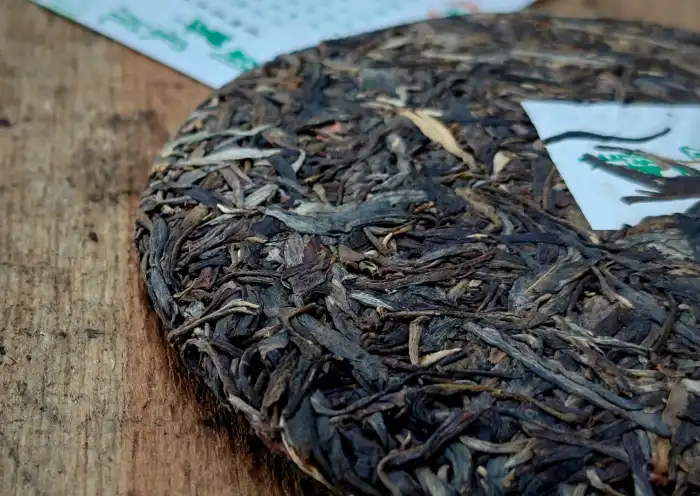
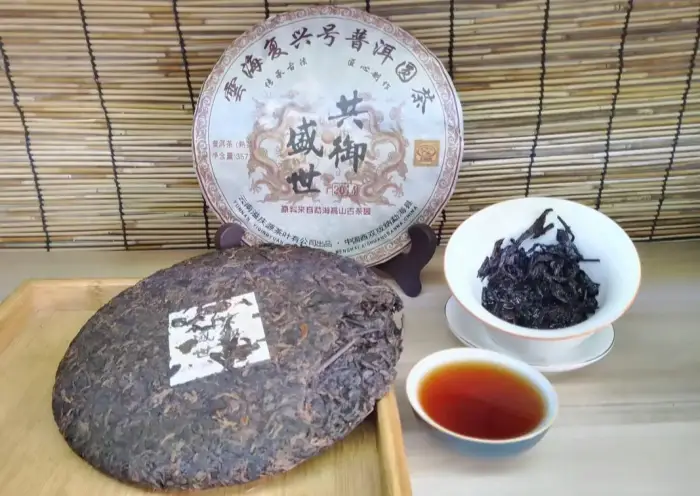
Yunnan Pu’er Tea is a unique fermented tea, famous for its high quality. It is much like a fine wine, evolving and improving with age. While some teas are best for fresh drinking, the taste of Yunnan Pu’er Tea develops profound complexity and a smoother character with its maturation over decades.
It is often compressed into cakes or bricks. Some reliable brands include Dayi and Xiaguan. In modern times, Yunnan pu’er milk tea is the most sought-after beverage among young people for the less astringent taste.
Raw vs. Ripe Pu’er
The two fundamental types of Yunnan Pu’er Tea are Sheng (Raw) and Shou (Ripe). The following table compares the two types.
Feature |
Sheng (Raw) Pu’er |
Shou (Ripe) Pu’er |
Processing |
Sun-dried, compressed, and naturally aged over time. |
Sun-dried and pile fermentation |
Fermentation Time |
Several years or even more than ten years |
Several dozen days (usually around 45 days) |
Dry Leaf Color |
Green, dark green, to silvery. |
Dark brown, black, with occasional golden buds. |
Liquor Color |
Yellow, amber, to dark orange-red when aged. |
Deep ruby, dark amber, to almost opaque brown-red. |
Aroma |
Fresh, floral, fruity and honey-like aroma |
Ripe, sweet dates, wood, and glutinous rice aroma |
Taste |
The young tea is bitter and strong, but it turns sweet and mellow with age. |
Rich, smooth, low-bitter and soft taste. |
Best for |
Those who pursue a sense of depth and collection. |
Those who prefer a mild taste. |
Best Before |
It can be stored for 5-10 years. |
Immediate drinking or storing for a longer time. |
Storage |
Well-ventilated, dry, away from light and odorless |
Well-ventilated, dry, away from light and odorless |
What Does Pu’er Tea Taste Like?
- Young Raw (Sheng) Pu’er is a little challenging. It is often boldly bitter and astringent with strong notes of fresh grass, green apricot, and wild honey. You can feel the lingering floral aroma.
- Aged Raw (Sheng) Pu’er becomes softer with decades of storage. The bitterness diminishes and you can feel a taste of dried dates, brown spices, and dark honey.
- Ripe (Shou) Pu’er is often mellow, smooth, and comforting. The earthy, woody, and sweet tastes come into your mouth. High-quality ripe Pu’erenjoys a clean finish.
What Are The Health Benefits of Pu’er Tea?
- Aids digestion and cuts grease: best for people who consume an oily meal.
- Supports weight management: best for people who want to lose weight.
- Promotes cardiovascular health: best for people who care for their cholesterol and heart health.
Where to Experience Authentic Pu’er Tea Culture?
- A Yunnan tea tour should focus on the southern and southwestern areas of Yunnan.
- Xishuangbanna: Yiwu, Lao Banzhang, Bulang Mountain
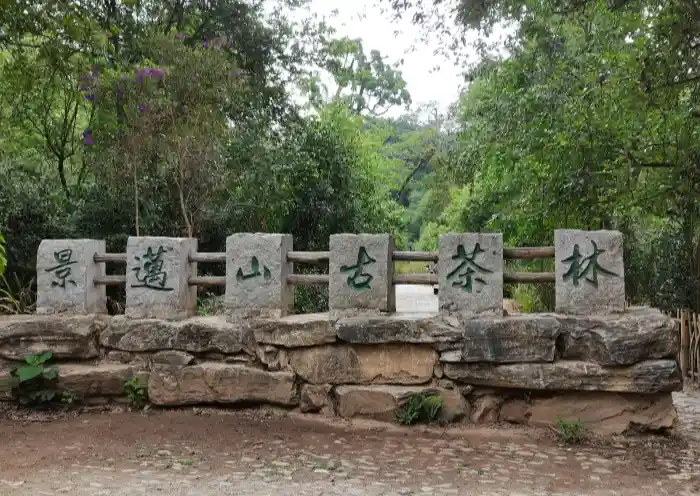
- Pu’er City: Jingmai Mountain
- Lincang: Bingdao
Recommended Yunnan tours with Pu’er tea experience:
8 Days Yunnan Pu’er Tour with Kunming & Xishuangbanna
6 Days Xishuangbanna Tour with Coffee & Pu’er Tea Culture
Yunnan Dian Hong
Yunnan Dian Hong is exclusively produced in Yunnan Province. It is famous for its malty character and beautiful appearance, covered with striking golden-orange buds. Different from Pu’er, the tea is fully oxidized. Some famous brands include Fengqing Dian Hong and Yunnan Gold.
What Does Dian Hong Taste Like?
It features a flavor of sweetness, fragrance, and smoothness. Most Dian Hong has a honey, floral, and fruity taste. The soup is bright and clear.
What Are The Health Benefits of Dian Hong?
- Rich in antioxidants: best for people who care about cellular health and want to reduce inflammation.
- Boosts energy: the moderate caffeine content is best for work and study.
- Supports digestion: best for people with poor digestion.
Main Dian Hong Plantation Areas in Yunnan
- Fengqing County: home of Dian Hong
- Lancang
- Baoshan
Yunnan Green Tea
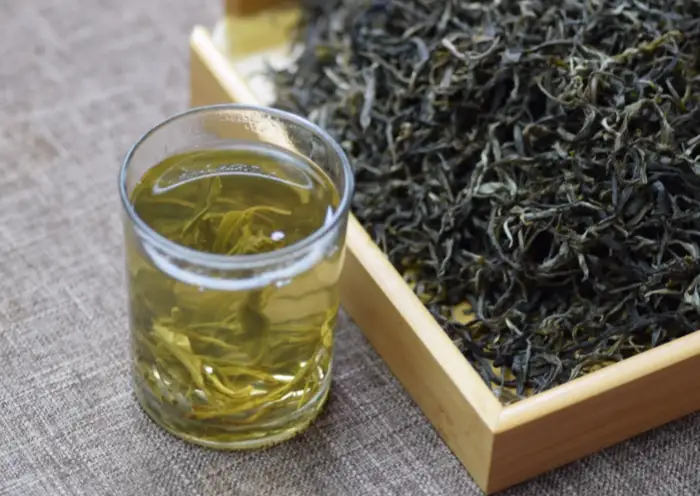
Yunnan Green Tea is made from the large-leaf tea variety, offering a bold and pungent character. This tea is unfermented, going through the processes of pan-frying, rolling, and drying. Different from other teas, it maintains more tea polyphenols and a fresh flavor.
The most representative brand is Yunnan Mao Feng with the appearance of curly and dark green leaves.
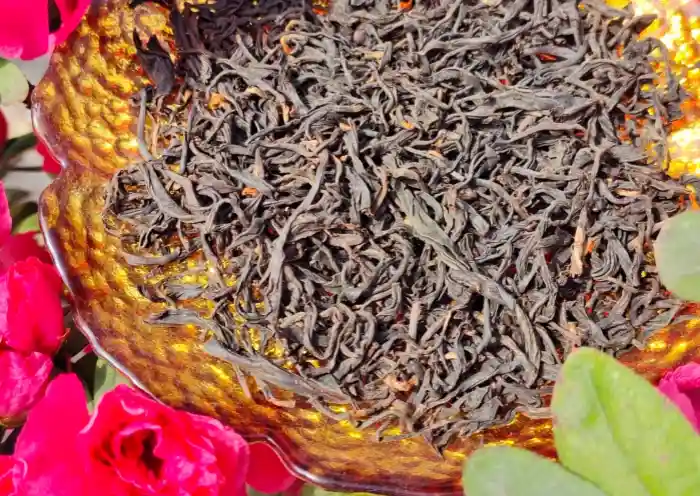
What Does Yunnan Green Tea Taste Like?
You can feel a fresh, floral, and fruity taste when sipping the Yunnan Green Tea. It is richer than other green teas. The soup is tender green, clear and bright.
What Are The Health Benefits of Yunnan Green Tea?
- Rich in antioxidants: best for people who seek anti-aging benefits.
- Helps weight management: best for people who plan a healthy diet.
- Aids in staying focused: best for work and study.
Main Yunnan Green Tea Plantation Areas in Yunnan
- Baoshan
- Lincang
- Xishuangbanna
- Puer City
Recommended tours including these plantation areas:
6 Days Yunnan Xishuangbanna Tour with Jingmai Mountain
5 Days Xishuangbanna Rainforest Hike & Culture Experience
Yunnan White Tea
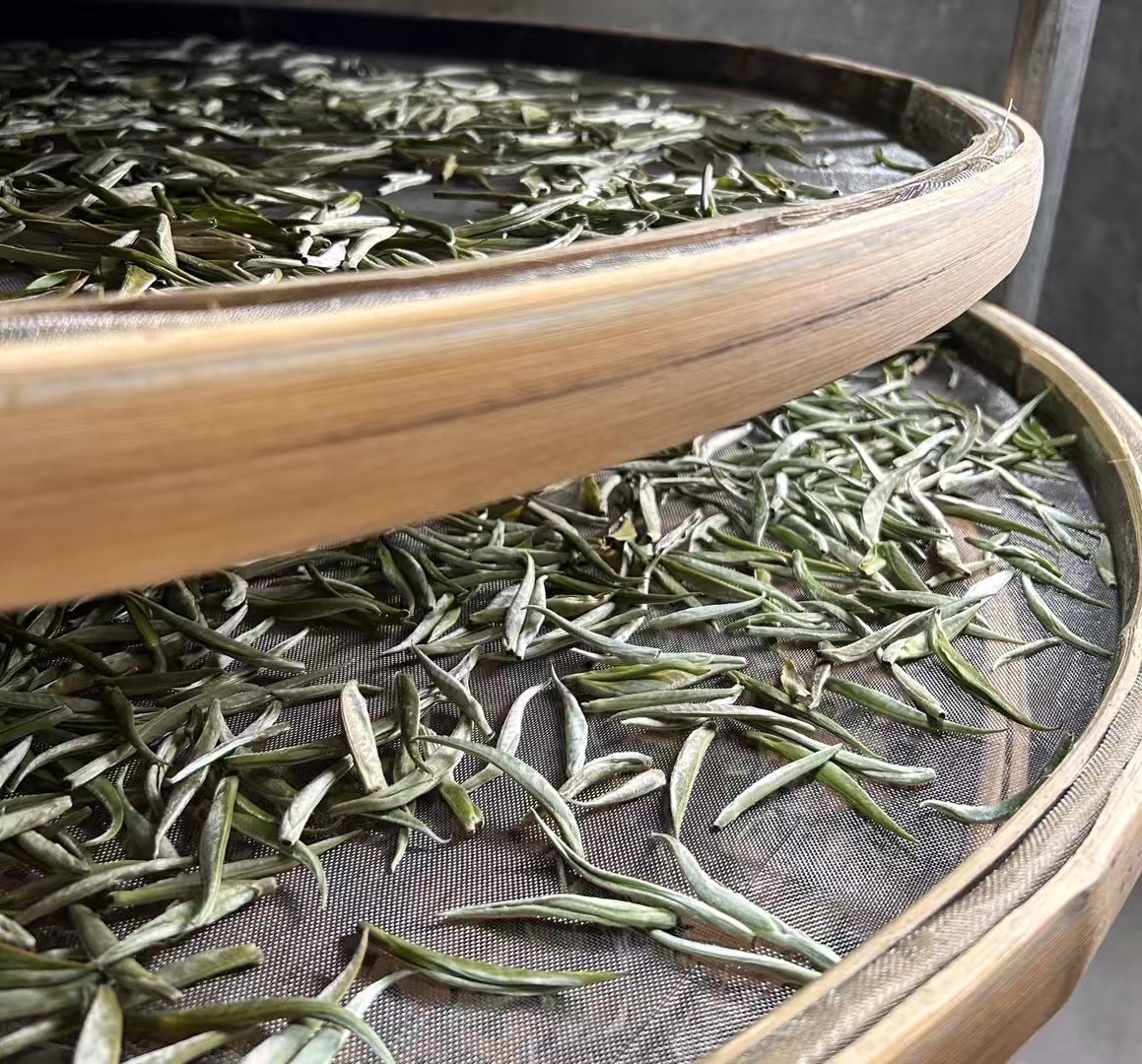
While Fujian Province is the home of Chinese white tea, Yunnan white tea has a unique and robust character, although lesser-known. It is slightly fermented and made from Yunnan large-leaf variety.
The most famous is Yue Guang Bai (Moonlight White), a poetic name. The name comes from a distinctive color contrast. The leaf is dark and the bud is silver white, just like the moonlight.
What Does Yunnan White Tea Taste Like?
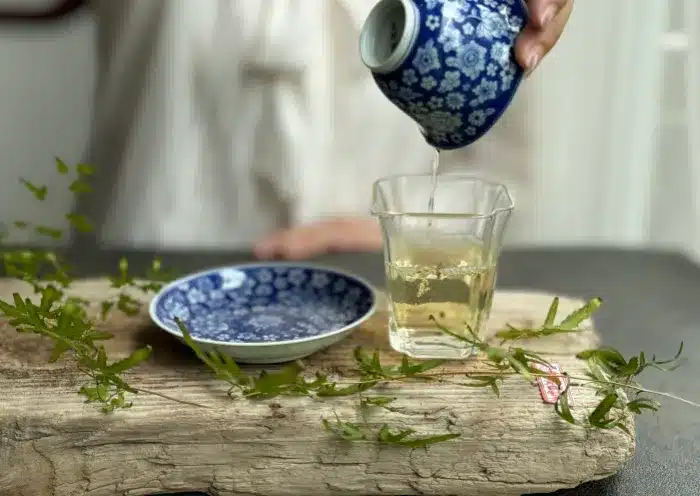
The taste is often floral, honey, and fruity. Like Pu’er, it develops a deeper and more complex flavor as time goes by. The soup of the young tea is light yellow and bright and the aged tea becomes golden and amber.
What Are The Health Benefits of Yunnan White Tea?
- High in antioxidants: best for people who want anti-aging.
- Improves skin health: the antioxidants can help with
- Helps stay calm: the low caffeine can provide sensitive people with a soothing and comforting environment.
Main Yunnan White Tea Plantation Areas in Yunnan
- Lincang
- Xishuangbanna
History of Yunnan Tea
The Ancient Origins
Most botanists and historians consider Yunnan as the cradle of tea plant. You can find evidence of the ancient tea plants in books and the trade route of Ancient Tea Horse Road. The most compelling proof is the over 1700-year-old wild tea plants found in the jungles of Xishuangbanna and Lincang.
For centuries, the Bulang, Dai, and Hani peoples of Yunnan have been collecting and processing tea leaves. They are believed to be the earliest cultivators, devising the method of drying and roasting leaves.
The Impact of Yunnan’s Unique Geography
The flavor of Yunnan tea is apparently different from other regions because of the special geography and climate in Yunnan. The tea plantations of Yunnan usually sit in high altitudes, between 1,000 and 2,500 meters.
The tea plants are exposed to strong sunlight during the day and to a cool, misty environment at night. This slows the growth of the leaves and enables the formation of complex sugars and aromatic compounds.
Tea plants grow with camphor and fir trees, offering a unique minerality. The local large-leaf variety develops under the environment of acidic red soil, abundant rainfall, and biodiversity. Therefore, you can have a strong, mellow, and sweet taste when enjoying it. Yunnan tea has a lingering aftertaste known as ”huigan” (回甘, meaning sweet aftertaste) due to the special environment.
The Popularity of Yunnan Tea Around the World
It starts with the Pu’er tea. Tourists are drawn by its collectible character. The investment craze from Hong Kong, Taiwan, and later the mainland of China pushed Pu’er to the world stage.
With the popularity of Chinese tea, people began to seek tea with a clear origin story and unique characteristics. Yunnan tea perfectly satisfies this demand.
Now, Yunnan tea has been successfully integrated into the modern food and drink culture. Most tea lattes and milk tea employ Yunnan tea. The ripe Pu’er can be seen in tea houses worldwide.
How to Choose Authentic Yunnan Tea?
High-Quality Pu’er Tea
Appearance
- Sheng (Raw): Leaves are whole and the color ranges from silver-green to dark green.
- Shou (Ripe): The color is dark brown to black.
Aroma
- Sheng (Young): Fresh and grassy.
- Sheng (Aged): Deep and complex.
- Shou: Deep, earthy, and woody.
Taste
- Sheng: A complex taste of bitterness, sweetness, and huigan(sweet aftertaste).
- Shou: The taste is smooth and clean.
High-Quality Dian Hong
Appearance
- The leaves are fine with golden-orange buds. The dry leaves should have subtle gloss.
Aroma
- The aroma is pure, strong, and malty.
Taste
- The taste is rich, malty, and honey.
- It should have a sweet, lingering finish.
Tips to Avoid Fake or Low-Quality Tea
- Be aware of too low price: The minimum price of authentic Yunnan Dian Hong is around 100 CNY for 500 g.
- Stay focused on the mountain of origin and harvest year rather than storytelling.
- Taste before you
- Research the tea information online in advance.
How to Brew Yunnan Tea?
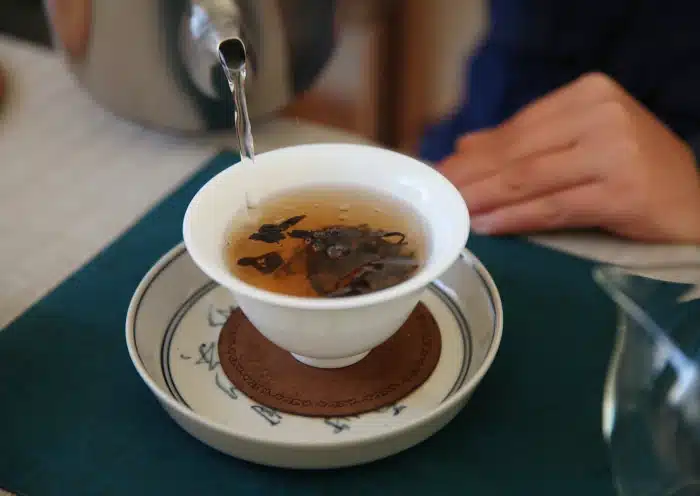
The recommended method of brewing tea is the Gongfu Tea Ceremony. The hot water is poured over the leaves and you should discard the first soup to awaken the leaves. Then you can infuse the tea leaves several times in a small teapot or gaiwan (a lidded bowl).
Tea Type |
Water Temp. |
Leaf Amount |
Steeping Time |
Pairing Snacks |
Pu-erh (Sheng / Raw) |
90-95°C |
5-8g / 100ml |
10-15s |
Dried fruits |
Pu-erh (Shou / Ripe) |
100°C |
5-8g / 100ml |
10-15s |
Dark chocolate, nuts |
Dian Hong |
90-95°C |
4-5g / 100ml |
10s |
Chocolate, cake |
Yunnan Green Tea |
80-85°C |
3-4g / 100ml |
20-30s |
Nuts, biscuits |
Yunnan White Tea |
85-90°C |
4-5g / 100ml |
15-20s |
Fresh fruits |
Famous Yunnan Tea Plantations and Tea Tours
Recommended Tea Plantations to Visit in Yunnan
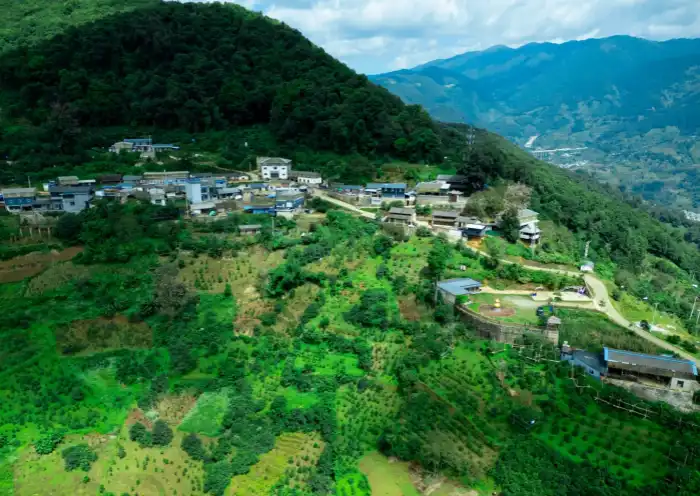
Jingmai Mountain – Ancient Cultivated Tea Plantations
- Location: Pu’er City
- Distance from Kunming: 5-6 hours by car.
Mengku Tea Area – Bingdao
- Location: Lincang
- Distance from Lincang City: 3-4 hours by car.
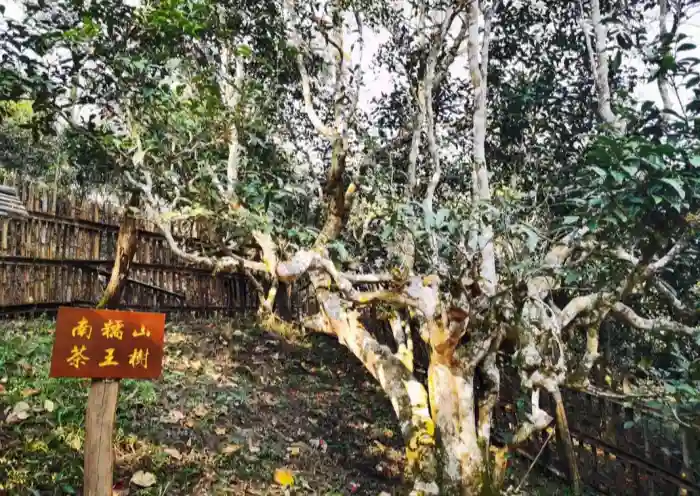
Nannuo Mountain – 800-year-old Tea Tree King
- Location: Xishuangbanna
- Distance from Jinghong: 1 hour by car.
Fengqing County – Dian Hong
- Location: Lincang
- Distance from Lincang City: 2.5 hours by car.
What to Do on a Yunnan Tea Tour?
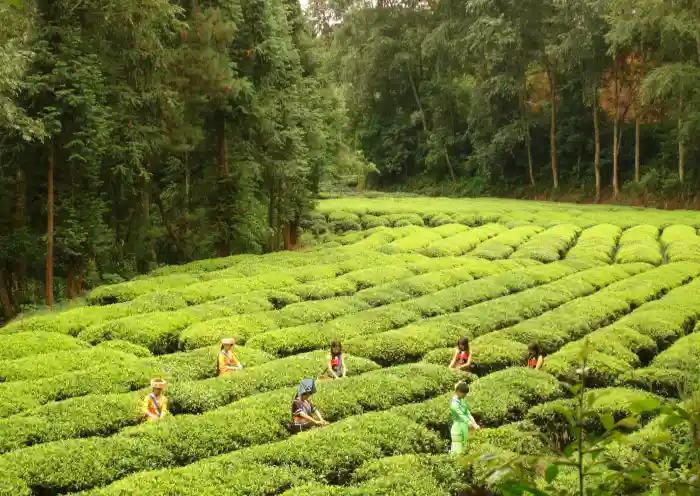
- Visit Ancient Tea Plantations: Jingmai Mountain, Nannuo Mountain and so on.
- Have hands-on Tea Making Experience
- Taste Traditional Tea (Gongfu Cha)
- Stay with Local Ethnic Families in Bulang, Dai, and Hani villages.
Recommended Tour:
3 Days Best Yunnan Tour to Jingmai Mountain
FAQs About Yunnan Tea
What is Yunnan tea good for?
It is good for anti-aging, digestion, weight management, and skincare.
What tea is famous in Yunnan?
The most famous is Pu’er Tea and the second is Dian Hong.
What does Yunnan tea taste like?
- Pu’er (Raw): The young is bitter and the aged is complexand
- Pu’er (Ripe): It tastes earthyand
- Dian Hong: It is malty, sweet, and rich.
- Yunnan White Tea: It is sweetand tastes like
- Yunnan Green Tea: It is fresh, floral,and
What does Yunnan Tuocha tea taste like?
It is a type of compressed Pu’er tea. The taste is strong and earthy.
Does Yunnan tea have caffeine?
Yes. Young raw Pu’er and Dian Hong have the highest caffeine. Ripe (Shou) Pu-erh and Yunnan Green Tea have a moderate content. Yunnan White Tea has the least.
Plan Your Yunnan Tea Tour with Us
Can’t wait to travel to Yunnan to sip the fresh tea and encounter the 1000-year-old tea trees? Please feel free to contact China Xian Tour. With over 20 years of experience, we are supported by tour experts from different destinations of China, including Yunnan. You can either get inspiration from our best-selling Yunnan tours or contact our travel consultants for 1-on-1 support to create your personalized tours with tea experience and more other immersive activities included. We will tailor-make your trip based on your travel ideas and preferences and offer insider tips and advice.