
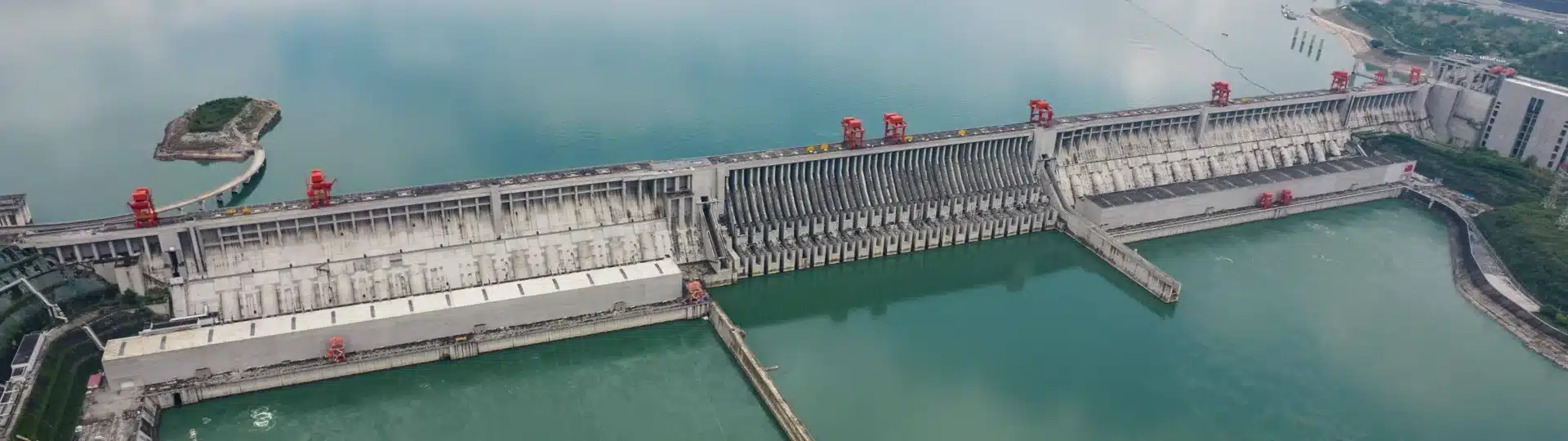
The Three Gorges Dam on the Yangtze River is known as the world’s largest hydropower station and an impressive landmark of modern engineering. Being first built in 1994 in Yichang, Hubei Province, this grand site shockingly stretches over two kilometers and rises nearly 200 meters.
For decades, the construction of Three Gorges Dam has transformed the Yangtze and the lives of millions in various ways. And now, it is holding back a massive reservoir and taking the responsibility of generating clean energy, controlling floods, and improving navigation. The excellent job it has done showcases the unparalleled human ingenuity and Chinese people’s ambition in environmental management.
This article will introduce Three Gorges Dam in China from a comprehensive perspective, so that you can find all kinds of information here including the Dam’s location, significance, engineering feats, and tips for visiting. After a few minutes reading, you’ll understand why it is one of the most remarkable projects in human history.
Content Preview
- Where Is the Three Gorges Dam Located?
- Why Was the Three Gorges Dam Built? – Purpose & History
- From Dream to Reality: Three Gorges Dam Construction Timeline
- Key Facts and Figures about the Three Gorges Dam
- The Five-Tier Ship Locks and Ship Lift of the Three Gorges Dam
- Best Viewpoints to Admire the Three Gorges Dam
- Pros and Cons of the Three Gorges Dam
- Visit Three Gorges Dam with a Yangtze River Cruise
- How to Get from Yichang City to the Three Gorges Dam
- Best Time to Visit the Three Gorges Dam
- Attractions Nearby the Three Gorges Dam
- Plan Your Yangtze River Cruise Tour with Us
Where Is the Three Gorges Dam Located?
The Three Gorges Dam is situated in Sandouping Town, Yiling District, Yichang City, Hubei Province. It lies in the middle section of the Xiling Gorge, the easternmost of the famous Three Gorges.
To be more specific, the dam is about 40 km from downtown Yichang, 46 km from Yichang East Railway Station, and 55 km from Yichang Sanxia Airport. And to visit the dam from Yangtze cruise dock, you can go to the nearest Maoping Port and Taohuacun Port.
How to get there:
- Public Bus – Several city bus routes(like route 3, 4, 9, 21) can take you to the transfer points where you can board tourist shuttle buses directly to the dam area.
- From Yichang East Railway Station – Take an intercity bus or transfer to the designated dam shuttle via Zigui County’s transfer center.
- Self-Drive– Follow the Three Gorges Special Highway to the dam’s visitor center, and there you can switch to scenic area buses to go inside the site (private car has to be parked outside).
- Guided Tour– Joining the local guided tours is also a good choice as there will be travel experts to help provide everything you need so that you’ll get a hassle-free visit.
Why Was the Three Gorges Dam Built? – Purpose & History
Key Objectives: Flood Control, Clean Energy, and Navigation
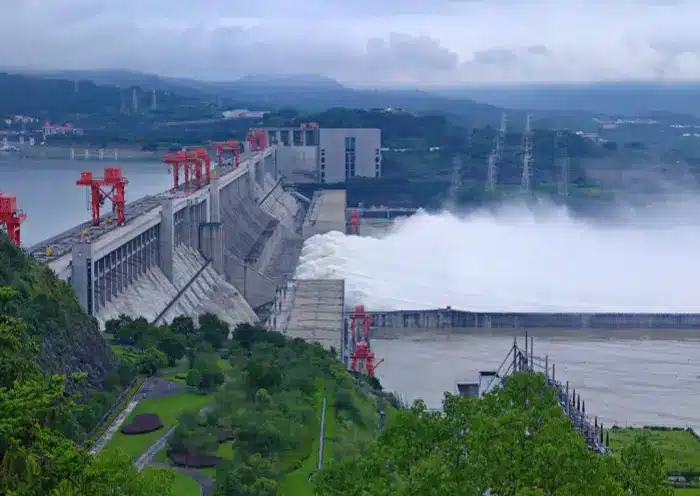
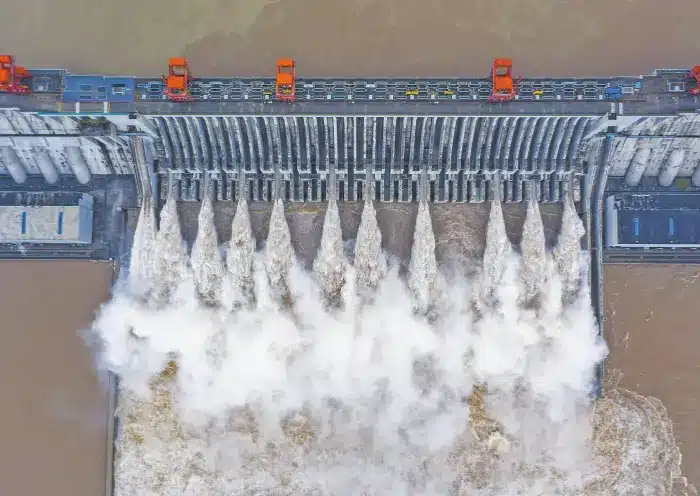
The Three Gorges Dam was built on a great practical significance to address three major challenges that people live along the Yangtze River have long suffered: 1) catastrophic seasonal flooding 2) the need for a reliable source of clean hydroelectric power 3) the willingness to improve river’s navigation for trade and transportation. As it successfully shows the capability of controlling water levels after the construction completed, you can see how it actually protects millions of people living downstream year after year, while also generates massive amounts of renewable energy, and allows large vessels to travel further inland.
From Dream to Reality: Three Gorges Dam Construction Timeline
In fact, proposals related to the Three Gorges Dam project can even date back to the early 20th century. Experts had long discussed the feasibility of building a huge dam on the Yangtze river and it wasn’t until the 1980s that this vision finally gained serious promotion. In 1992, the National People’s Congress officially approved the Three Gorges Dam project. And this decision allowed people to expect the commencement of construction which would be started in 1994.
After decades of hard work, the dam’s main structure was completed in 2006. And it was by 2012 that all facilities were tested to be operational, solidifying the dam’s status as the world’s largest hydroelectric power station.
- 1992:The Three Gorges Dam project officially got
- 1994:Construction commenced on December 14, which marks the beginning of the dam’s physical development.
- 2003: The reservoir began filling in June, first reaching a water level of 145 meters.
- 2006:The main dam structure was completed, and the first generators began producing electricity.
- 2009:The dam’s construction was officially completed, with all major components finished and being ready to get to work.
- 2012:All facilities became fully operational (including power units and ship locks).
- 2015:The building process of ship lift, a significant addition to the dam’s infrastructure, was also completed.
Visitors can visit the Three Gorges Museum in Chongqing to better understand the original scene and relics along Yangtze River.
Key Facts and Figures about the Three Gorges Dam
Three Gorges Dam Dimensions and Capacity
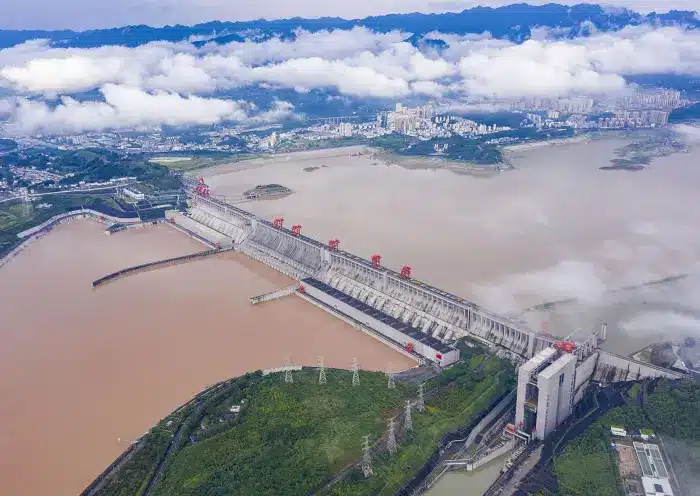
In order to fully address the issues listed above, one of the most important standards that the dam needs to meet is: it must provide the maximum flood-control capacity. Moving towards such a goal, the largest hydroelectric dam in the world is eventually built, strikingly stretches about 2,335 meters in length and 185 meters in height. It is enabled to hold a reservoir capacity of 39.3 billion cubic meters, with a concrete volume exceeding 27 million cubic meters.
Power Output and Performance
The dam is able to boast a total installed capacity of 22,500 megawatts, since it is equipped with 32 main turbines and 2 smaller units. Its average annual electricity output reaches around 88 terawatt-hours, which is enough to power millions of homes across China. In fact, despite other contributions, this project has also significantly reduced coal consumption and greenhouse gas emissions, and it is an indispensable part of the process of achieving China’s clean energy goals.
Cost and Construction Timeline
Construction of the Three Gorges Dam began in 1994 and was completed in 2012, which is a process spanning nearly two decades. The total cost actually exceeded $30 billion USD, which covers dam building, turbine installation, and extensive relocation efforts. In fact, which such construction scale, it stands as one of the most ambitious infrastructure projects in modern engineering history.

Three Gorges Dam vs Hoover Dam – Size Comparison
The Three Gorges Dam is, in fact, much larger than the Hoover Dam in every dimension. While the Hoover Dam is 221 meters high and 379 meters long, the Three Gorges Dam is 185 meters high but over 2,335 meters long. In terms of capacity and power generation, the Three Gorges dam, again, far surpasses its counterpart. Its large-scale construction symbolize that human have entered a different era of engineering ambition.
Water Level Management
The dam’s water levels are carefully managed to balance flood control, shipping, and power generation. For example, during the rainy season, excess water will be discharged to prevent flooding downstream. And in dry months, with its stored water inside, it will still be able to maintain stable power output and navigable river depths of the river. This efficient working pattern, indeed, ensures year-round operation of the Dam while also carries on the responsibility of protecting millions living along the Yangtze.
Related reading: 20 Must-Know Facts About the Yangtze River
The Five-Tier Ship Locks and Ship Lift of the Three Gorges Dam
How the Massive Five-Tier Ship Locks Operate
The dam’s five-tier ship locks function like a giant aquatic staircase; this design allows vessels to ascend or descend a total height difference of about 113 meters level by level. When operating, each lock chamber will fill or drain in sequence, so that ships—often more than 3,000 tons—can move safely and efficiently through the dam, and this has greatly reduced transit times compared to older routes.
The Ship Lift (Shiplift): An Engineering Breakthrough
The ship lift applied in the Three Gorges Dam is the largest of its kind, which is even capable of hoisting vessels weighing up to 3,000 tons in a single vertical movement of 113 meters, so that the passage time will be shortened to about 40 minutes.
Impact on Yangtze River Shipping & Trade
By improving navigation, the ship locks and ship lift have turned the Yangtze into a high-capacity transport artery which is quite different than before. Larger cargo ships can now reach a farther inland destination, improving regional trade while cutting down shipping costs. Moreover, even tourism and economic links between China’s coastal and inland regions will get benefits.
Best Viewpoints to Admire the Three Gorges Dam
Tanziling Park
If you expect a panoramic, bird’s-eye view of the Three Gorges Dam, the best place that you must go would be Tanziling Park, which is perched at about 262 meters above sea level. The park is fully equipped with all kinds of observation facilities, and there’s also interpretive displays that explain the dam’s engineering and environmental significance.
If you want to enjoy sweeping vistas of the river, surrounding hills, and nearby towns, and Tanziling Park would definitely be a perfect spot for you, especially on clear days when the scenery is at its most striking.

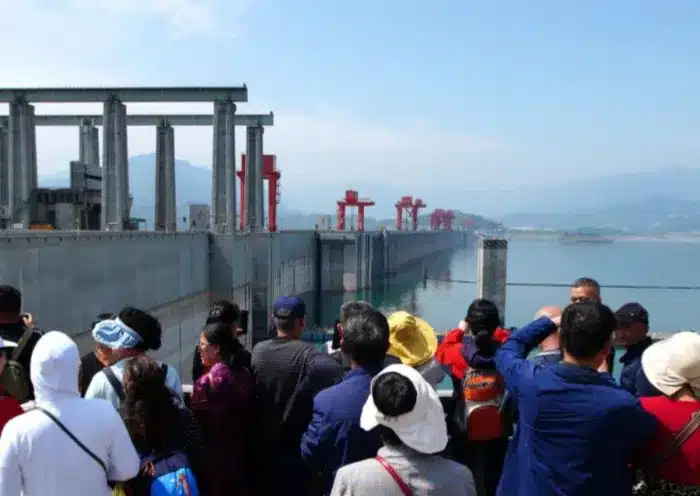
185 Observation Deck
The 185 Observation Deck aligns with the height of the dam crest at 185 meters above sea level, providing close-up views of the reservoir, spillways, ship lift, and dam wall. Just a short, scenic walk from Tanziling Park, this deck will allow visitors to take a close-range observation of the dam’s operations, including ships moving through the locks or lift. It’s an ideal place for visitors to capture dramatic photos while also gain a tangible sense of the dam’s massive scale and engineering complexity.
Three Gorges Dam Jieliu Memorial Park
Three Gorges Dam Jieliu Memorial Park is another attraction that you cannot miss. Since it’s situated on the downstream side of the dam, it’ll be rather easy and rewarding to include it in your Three Gorges Dam visit. While going through its reflective outdoor space and educational exhibits, you’ll actually see the dam’s construction process, history, and impact on local communities through pictures or presentations rather than just reading. And it has to a great extent, making the visit interesting and immersive.
This park offers a deeper insight into the human, cultural, and technical stories behind the project, so that many travelers find it an ideal place to get to know more about the dam’s monumental engineering achievement and its broader significance.
Pros and Cons of the Three Gorges Dam
Benefits of the Three Gorges Dam
The Three Gorges Dam has benefited people in all different dimension. It contributes to the effective flood control along the Yangtze, large-scale clean hydroelectric power generation, and improved navigation for large vessels. It also significantly boosts regional trade, tourism, energy security and it helps regulate water supply for agriculture and urban use, a major force in maintaining stability in economy and safety for communities living downstream.
Controversies
Despite the fact that it has made multiple advantages, the dam has also unavoidably brought people environmental and social challenges, such as animal habitat changes, sediment buildup, and relocation of local communities. However, such issues are being managed step by step throughout these years, countless efforts are put into reforestation, ecological monitoring, and careful resettlement programs that are designed to provide people with new housing, infrastructure, and livelihood support.
The ultimate goal is to ensure affected residents and animals will be well accommodated to their new homes with the dam’s long-term benefits maintained and sustained.
Visit Three Gorges Dam with a Yangtze River Cruise
Three Gorges Dam is basically a must-visit spot in a Yangtze River cruise, since it offers a unique exploration of both natural beauty and engineering marvels. Different from taking views on the land, during a cruise, visitors can admire the massive dam and enjoy the scenery of the riverbanks at the same time. Many cruises will allow time to go to stops at some nearby cultural and historic attractions, so that you can get both better understanding of the Yangtze’s ecological and also cultural significance.
Downstream Cruise from Chongqing to Yichang
This popular route starts in Chongqing and travels downstream through the dramatic Qutang, Wu, and Xiling Gorges. It will allow passengers to enjoy the view of stunning cliffs, river bends, and picturesque towns along the way. This cruise typically lasts 3–4 nights, and you’ll get a comfortable onboard accommodation with sightseeing excursions. The Three Gorges Dam is definitely a highlight stop in your schedule, where visitors can disembark to explore the sites’ observation decks, ship lifts, and also the scenic dam area.
Related reading: Chongqing to Yichang Yangtze River Cruise
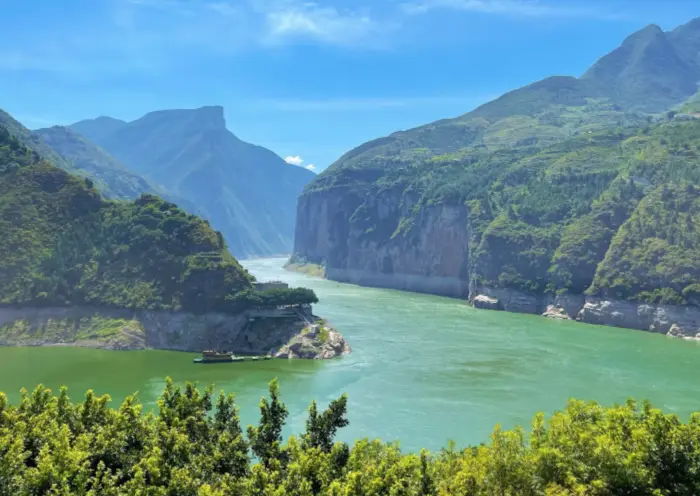

Upstream Cruise from Yichang to Chongqing
Upstream cruises begin in Yichang, a city quite near the Three Gorges Dam, giving travelers a first-hand experience of the dam’s massive scale at the beginning of this journey. The cruise will then continue, following the Yangtze river through the famous gorges, and also stops at scenic and cultural highlights such as historic towns, temples, and riverside landscapes.
Read more: Top Things to Do on Yangtze – Best Activities & Attractions
How to Get from Yichang City to the Three Gorges Dam
The Three Gorges Dam is about 40 kilometers far from Yichang city center, so that there are plenty of way for you to reach there, for example, bus, shuttle, taxi, or private car.
By Public Bus or Shuttle
From downtown Yichang, travelers can take city buses to key transfer points for the dam:
- Route 4 Bus:Get off at Three Gorges Tea City or 22 Company Stop. From there, you can take a dedicated bus from Yiling Bus Station to the Three Gorges Scenic Area, which runs every hour from 7:00 AM to 5:00 PM.
- Routes 3, 4, 9, 21, 100 Buses:Get off at 80 Dongshan Avenue (opposite Pinghu Hotel) and you’ll need to transfer to a comfortable tourism shuttle that goes directly to the dam.
- Routes 4, 10, 21, 100, 101 Buses:Get off at the Ye Mingzhu Roundabout and transfer to Dam Area Route 8 to the Liuzhashou Visitor Center. Once arrived, you can get on the scenic shuttle buses that circulate through the dam area.
From Yichang East Railway Station
- Take the dedicated Three Gorges Highway to the dam’s transfer center. Vehicles need a free access permit, which requires some waiting time at the checkpoint.
- Travel via the Fanba Expressway to Ziguo County transfer station. From the station, board a dedicated shuttle that crosses the Xiling Yangtze Bridgeto directly reach the dam area. Intercity bus 809 would connect Yichang East Station to Ziguo County in about 1 hour 15 minutes (fare 15 RMB).
By Private Car or Self-Drive
If you’re driving from Yichang city, you should first enter the Three Gorges Highway via Ye Mingzhu or the Development Zone. After you arrive at the Three Gorges Dam Visitor Center, all visitors will have to transfer to scenic shuttle buses for sightseeing and photography stops around the dam (no private car entrance allowed).
Best Time to Visit the Three Gorges Dam
The best time to visit the Three Gorges Dam in a year would be spring (April–June) and autumn (September–November). In spring, the weather is pleasantly warm and basically with sign of bad weather. Riverside greenery comes alive, and flowers bloom along the reservoir, together they’ll show you a picturesque setting. Similarly, autumn offers cooler temperatures, crisp air, and clear skies, making it a perfect time for both photography and sightseeing.
Related reading: Best Time for a Yangtze River Cruise
Attractions Nearby the Three Gorges Dam
Three Gorges Tribe (三峡人家)
The Three Gorges Tribe is actually a cultural village with the best presentations of the traditional lifestyle, architecture, and customs of people living along the Yangtze River for generations. If you decide to stop here for a while, here are some experiences that you cannot miss: exploring local homes, enjoying folk performances, and experiencing riverside scenery.


Qu Yuan’s Hometown Scenic Area (屈原故里景区)
Dedicated to the famous Chinese poet Qu Yuan, this site is built to introduce the history, culture, and also natural beauty of the poet’s hometown. Don’t miss the highlight here: traditional temples, cultural exhibits, and scenic river views.
Three Gorges Waterfall (三峡大瀑布)
The waterfall is a spectacular natural attraction, and its dramatic views look perfect when being recorded in photos. There are trails built around the falls, so that people can safely enjoy the visit from the close-up and panoramic perspective.
Three Gorges Migrant Museum (三峡移民博物馆)
This museum chronicles the massive resettlement program prompted by the construction of the Three Gorges Dam’s reservoir. Instead of focusing on the project itself, The photographs, artifacts, and well-curated exhibits tell more about personal stories of families who left their home and relocated. From an intimate perspective, you’ll also see the traditions they carried along the way, and the changes they faced.
Plan Your Yangtze River Cruise Tour with Us
Expecting an unforgettable journey along the Yangtze River in your China tour? Our carefully crafted cruise packages will give everything you want. We’ll make sure a wonderful exploration of Yangtze’s breathtaking landscapes, rich cultural heritage and modern engineering marvels.
With flexible itineraries, experienced local guides, and all your schedules being taken care of, you can fully enjoy the trip without worrying about any trivial matters.