




For most first-time visitors, 2–3 days is a good amount of time to explore the city’s most famous sights without having to rush from one stop to the next.
This ancient capital is home to the Terracotta Warriors, the old City Wall, and the Giant Wild Goose Pagoda, but there’s more to Xi’an than its historical sights. To experience another side of the city, grab a roujiamo, try a bowl of liangpi, or wander through the old streets and see how the city’s past fits into everyday life.
Xi’an is also a convenient base for a day trip to Mount Hua, known for its steep peaks and dramatic mountain trails. Its convenient high-speed rail and flight connections to Beijing, Shanghai, Chengdu, and other major cities also make Xi’an easy to include in a longer China trip.
This Xi’an travel guide covers the essentials for planning your trip, from what to see and how many days to stay to where to stay, what to eat, and where to head next.
Xi’an Travel at a Glance
Item |
Recommendation |
Recommended Stay |
2–3 days; 3–4 days if adding Mount Hua |
Must-See Attractions |
Terracotta Warriors, Xi’an City Wall, Giant Wild Goose Pagoda |
Best Time to Visit |
March–May, September–November |
Best For |
History and culture, food, and first-time visitors to Xi’an |
Main Airport |
Xi’an Xianyang International Airport (XIY) |
Main High-Speed Rail Stations |
Xi’an North Railway Station; some trains stop at Xi’an East Railway Station |
Getting Around |
Metro + walking + taxi / ride-hailing |
Around the Bell Tower, South Gate, or Giant Wild Goose Pagoda |

Content Preview
- Is Xi’an Worth Visiting?
- Best Things to Do
- How to Plan
- Useful Information
- Where to Go After Xi’an
- Know Before Visiting Xi’an
- Start Planning Your Xi’an Trip
Is Xi’an Worth Visiting?
What makes Xi’an special is how easily its 2,000-year-old history comes to life.
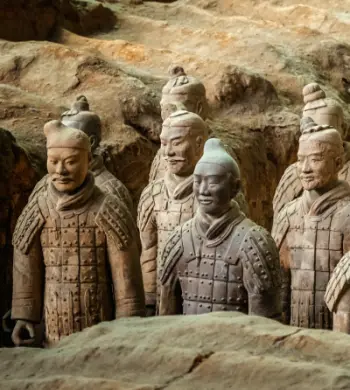
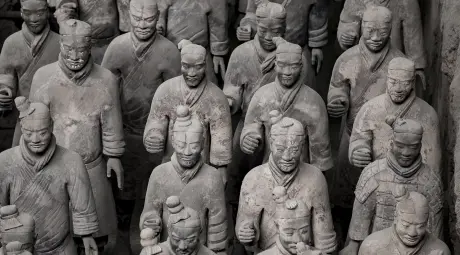
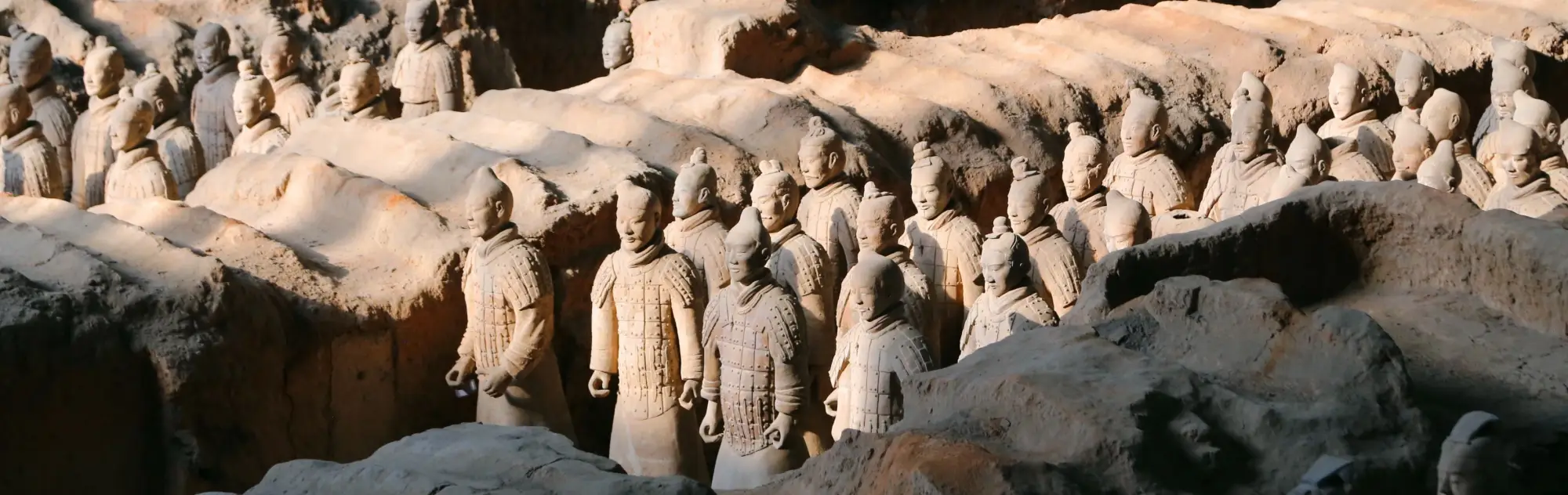
At the Terracotta Warriors, you can stand just a few steps from rows of clay soldiers and horses created over 2200 years ago.
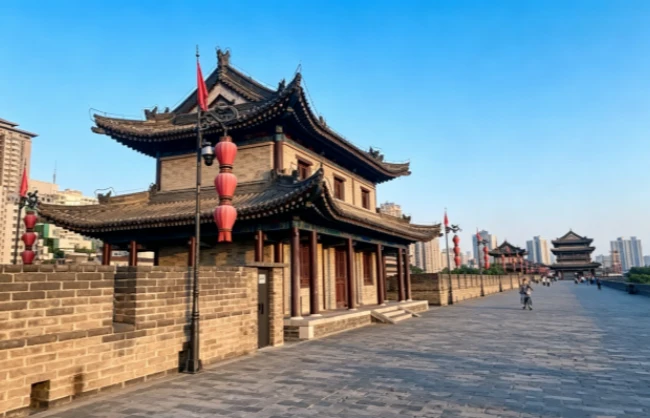
Walk or cycle along the Xi’an City Wall, and you’ll see the old city from above, with modern Xi’an stretching beyond it. At the Giant Wild Goose Pagoda, the story turns to Xuanzang, Tang-era Chang’an, and the ancient Silk Road.
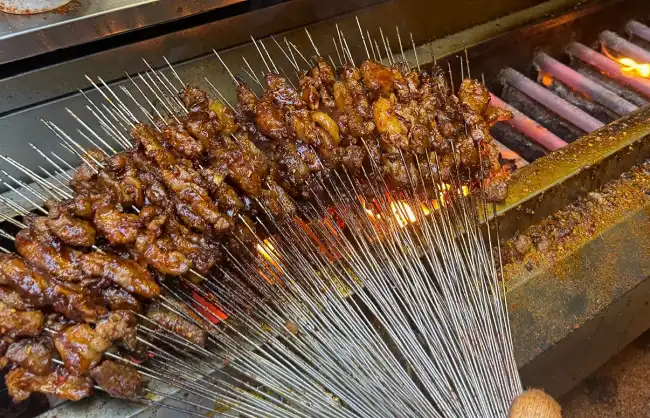
And then there’s everyday Xi’an: beef or lamb paomo, Biangbiang noodles, and sizzling skewers are easy to find around the old city. For many travelers, that mix of ancient history, Silk Road culture and local life is exactly what makes Xi’an worth visiting.

Savor Xi'an's legendary food scene from Hai Di Lao Hot Pot to dumpling-making lessons, combined with Terracotta Warriors and Big Wild Goose Pagoda visits.
6 Best Things to Do in Xi’an
1. See the Terracotta Warriors Up Close
Exploring the Terracotta Warriors is usually the top thing to do in Xi’an for first-time visitors. The site is made up of three main pits—Pit 1, Pit 2, and Pit 3—with Pit 1 being the largest and most impressive.
From the viewing area above the excavation site, you can look down on rows of clay soldiers and horses and finally get a sense of just how enormous the site is.
Don’t just count the figures, though, take a closer look as well. Their hairstyles, clothing, poses, and facial features vary from one to another, reflecting different ranks and military roles.
Want to make the visit a little more hands-on? You can also try a cultural activity such as making a miniature terracotta warrior.
The Terracotta Warriors are about 40 km from central Xi’an, and the drive usually takes around 1 hour. Set aside half a day rather than trying to squeeze too many city sights into the same morning.
- Suggested Time: 5–3 hours
- Good Pairing: Giant Wild Goose Pagoda, Grand Tang Mall

2. Cycle Along the Xi’an City Wall
The Xi’an City Wall stretches for about 13.7 km around the old city. On a clear day, renting a bike and riding part of the way is quite a rewarding thing to do in Xi’an. Along the way, take in the contrast between the historic neighborhoods within the walls and modern Xi’an beyond them.
You don’t have to ride the entire loop. The South Gate (Yongning Gate) is a convenient place to go up the wall. If you’d rather take it easy, walking works just as well.
After coming down, take a short walk through Shuyuanmen, a nearby historic street lined with shops selling calligraphy, paintings, seals, and traditional crafts.
In summer, avoid cycling around noon. Spring and autumn afternoons or early evenings are much more pleasant for being outdoors.
- Suggested Time: 5–2 hours
- Recommended Experience: City Wall cycling + Shuyuanmen walk
- Best Time: Afternoon or early evening

3. Step into Tang Dynasty Chang’an at the Giant Wild Goose Pagoda
The Giant Wild Goose Pagoda is closely connected with Xuanzang and the spread of Buddhism. Start at Da Ci’en Temple, where you can walk around the temple grounds and see the ancient pagoda up close. If you’re interested, you can also go inside and climb the pagoda.
It’s best to come in the afternoon. After seeing the pagoda, stick around until evening and head over to nearby Datang Everbright City. Once the lights come on, the area gets lively, with Tang-style buildings, street performances, and plenty of people out enjoying the evening.
This arrangement offers a nice way to see both sides of Xi’an’s story: the Tang-era sites that remain today and the way Xi’an brings that history into modern city life.
- Suggested Time:1–1.5 hours
- Good Pairing: Grand Tang Mall
- Best Time: Afternoon into evening

4. Slow Down at the Small Wild Goose Pagoda
For a slower, quieter visit in Xi’an, spend some time around the Small Wild Goose Pagoda and Xi’an Museum.
Built during the Tang dynasty, the pagoda stands in the same area as Jianfu Temple and the museum. It’s not as grand as the Terracotta Warriors, but you can take your time here—walk around the old pagoda and gardens, then head into the museum to see artifacts from different periods of Xi’an’s history.
The location also makes it easy to fit into a day around the city. After your visit, you can head straight to South Gate and the Xi’an City Wall, without having to make a long detour.
- Suggested Time: 5–2.5 hours
- Good Pairing: South Gate, Xi’an City Wall
- Best For: A quieter and more relaxed side of Xi’an

5. Eat Your Way Through the Bell Tower and Muslim Quarter
The Bell Tower and Drum Tower are right in the middle of Xi’an’s old city, and the area is a fun place to wander around in the evening.
If you want to see the area at its liveliest, start around the Bell and Drum Towers and head into the Muslim Quarter. Beiyuanmen, the main street, often gets pretty crowded with tourists, so it’s worth a walk if it’s your first time visiting Xi’an.
But if you’re here mainly for the food, keep going toward Xiyangshi, Dapiyuan, and the nearby side streets. Just a few minutes away from the busiest stretch, you’ll usually find more places to choose from.
Don’t worry about finding one restaurant and ordering everything at once. This is more of a walk-and-snack kind of place. Grab whatever catches your eye, eat a little, then keep going. This is a more local way to enjoy Xi’an’s foods.
Roujiamo, beef or lamb paomo, barbecue, and zenggao are all good options. And you really don’t need to tick every dish off a “must-eat” list.
- Suggested Time: 5–2 hours
- Best Time: Late afternoon to evening

6. Try Hanfu and Catch a Local Show
Want to make the experience a little more fun? Try renting Hanfu or Tang-style outfits around the Giant Wild Goose Pagoda and Datang Everbright City. It’s a rather special thing to do in Xi’an and once you’re dressed up, you can wander among the Tang-style buildings and night lights and take some photos along the way.
Later in the evening, there’s also an opportunity to see one of Xi’an’s signature shows, such as The Song of Everlasting Sorrow or The Camel Bell Legend.
- Good Pairing: Giant Wild Goose Pagoda, Grand Tang Mall
- Best Time: Afternoon to evening

How to Plan Your Xi’an Itinerary
How to Plan Your Xi’an Attractions by Area
Xi’an’s main attractions are fairly close together, so the metro, walking, and the occasional taxi or ride-hailing trip are usually all you need. The trick is to group sights by area instead of crossing the city several times in one day.
- Small Wild Goose Pagoda, Xi’an Museum, South Gate, Xi’an City Wall, and Shuyuanmen work well as one route.
- Bell Tower, Drum Tower, and the Muslim Quarter are best saved for the afternoon and evening.
- Giant Wild Goose Pagoda and Datang Everbright City naturally fit into an afternoon-to-evening outing.
- The Terracotta Warriors are a different story. Allow at least half a day for the visit and round-trip travel from central Xi’an, then keep the rest of that day fairly light and add just one or two city-center sights.
For an easier-going trip, China Xian Tour also offers transfers based on your hotel and daily sightseeing plans, to cut down on time spent getting around.
Use the Xi’an map to get a clear picture of the city’s main attractions, key areas, transportation hubs, and metro lines before planning your itinerary.
How Many Days Do You Need in Xi’an?
If it’s your first time visiting Xi’an, 2–3 days is an ideal period to see the city without rushing from one sight to the next.
1 Day: See Xi’an’s Highlights
If you only have one day, stick to the essentials:
Terracotta Warriors → Xi’an City Wall → Bell and Drum Towers / Muslim Quarter
It’s enough to see some of the city’s best-known sights, but the schedule will be a little tight.
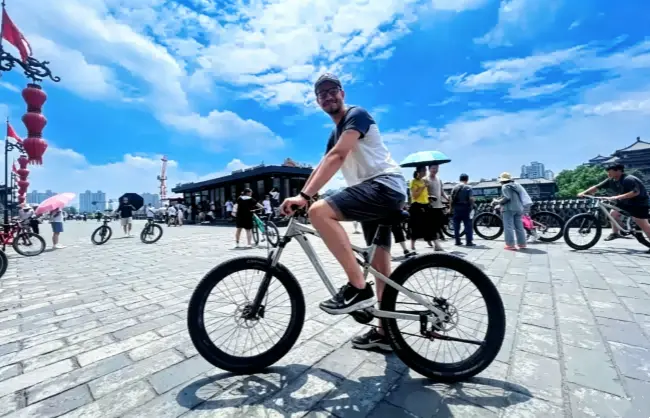
Hit Xi'an's holy trinity in one perfect day — the awe-inspiring Terracotta Warriors, a bicycle ride atop the ancient City Wall, and a food crawl through the Muslim Quarter.
2 Days: A Classic First-Time Xi’an Itinerary
Day 1: Terracotta Warriors → Giant Wild Goose Pagoda → Grand Tang Mall
Focus on the Terracotta Warriors and Tang Dynasty culture, then stay out for Xi’an’s evening atmosphere.
Day 2: Small Wild Goose Pagoda and Xi’an Museum → Xi’an City Wall → Shuyuanmen → Bell and Drum Towers → Muslim Quarter
Keep the second day exploring Xi’an city center. The route flows naturally, so there’s less running back and forth.

Discover Xi'an's essential treasures across two days — marvel at the ancient Terracotta Army, explore Shaanxi History Museum's priceless relics, and cycle atop the ancient City Wall.
3 Days: Add One More Experience
If you have an extra day, choose one destination below:
Day 3: Mount Hua / Hanyangling / Deep City Walk
- Mount Hua: A good pick for nature lovers and hikers. However, expect an early start.
- Hanyangling: An ideal choice for anyone into archaeology who’d rather skip the particularly popular sites that can be crowded all the time. The underground museum lets you see terracotta figures and other archaeological remains, with a very different setup from the Terracotta Warriors.
- Deep City Walk: Slow things down with the old city, local markets, and neighborhood restaurants.
Dealing with attraction reservations, train tickets, hotel transfers, and daily transportation can take quite a bit of time. A well-organized private tour takes those logistics off your plate, while still leaving room to adjust the schedule around your trip.
China Xian Tour offers private trips built around your interests. History lovers might add Hanyangling or Luoyang to the itinerary, while Mount Hua is an easy addition for some time in nature. Traveling with kids—or simply not in a rush—calls for fewer stops and a more relaxed pace.

Combine Xi'an's ancient wonders with Mount Huashan's breathtaking trails — stand before the Terracotta Army, cycle the City Wall, and hike the world's most precipitous sacred mountain.
Useful Information to Know Before Traveling to Xi’an
When Is the Best Time to Visit Xi’an?
Fall is the best time to visit Xi’an (September–November, especially September and October), followed by spring (March–May). If you’re picking just one season, go in fall. The weather is cooler and more settled, rain is less of a concern, and clear skies make it especially pleasant for walking around the city, biking the City Wall, or heading up Mount Hua.
Season |
Time |
Xi’an Weather & Temperature |
Highlights |
Things to Note |
Autumn (Best) |
September–November |
Cool and comfortable, with less rain |
Great for outdoor sightseeing across the city and especially good for Mount Hua |
Avoid October 1–7, when the National Day holiday brings huge crowds |
Spring (Second Best) |
March–May |
Warming up, with big differences between morning and evening |
Good for City Wall cycling, walking, and enjoying gardens in bloom |
Spring rain is possible in April, so bring a light jacket |
Summer |
June–August |
Hot, with temperatures sometimes above 38°C |
Plan outdoor activities for the morning or evening |
Summer vacation makes popular sights such as the Terracotta Warriors especially crowded |
Winter |
December–February |
Cold, with temperatures sometimes below 0°C |
Fewer tourists and more affordable accommodation |
Dress warmly, as the outdoor sightseeing experience can feel cold |
Where to Stay in Xi’an
For a first trip to Xi’an, staying in the city center usually makes more sense than booking a hotel near the Terracotta Warriors. You’ll have an easier time getting around, finding places to eat, and heading out for an evening walk.
- Bell Tower / Drum Tower: The most convenient area for first-time visitors, with the old city, Muslim Quarter, and metro all close by. Restaurants and places to walk around are easy to find at night.
- South Gate: A good base for visiting the City Wall and having a deeper city walk. Shuyuanmen is just nearby, along with plenty of restaurants, cafés, and bars.
- Giant Wild Goose Pagoda: This is a more open and relaxed place to go, and Datang Everbright City also sits close by. A nice choice for evening strolls or family trips.
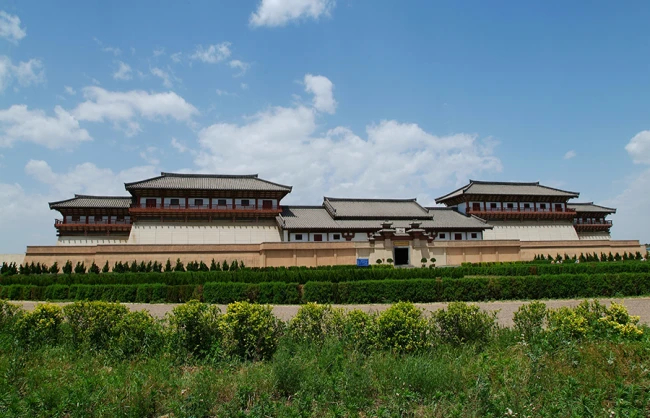
Xi’an Transportation: How to Get to & Travel Around
How to Get to Xi’an
By High-Speed Train
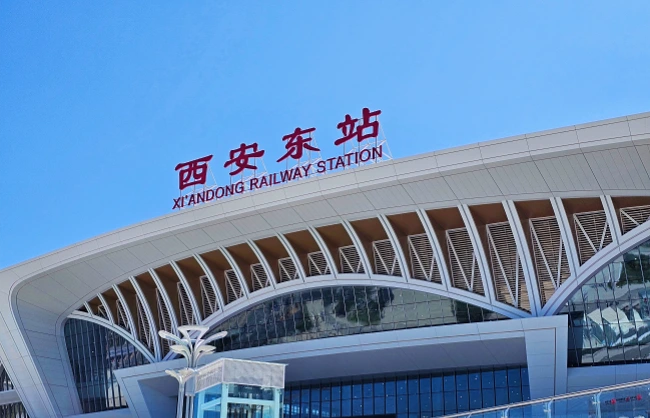
Xi’an has two main railway stations: Xi’an North Railway Station and Xi’an East Railway Station. For most international visitors, Xi’an North is the easier one to use. It has more high-speed services and is generally more convenient for getting into the city.
A high-speed train from Beijing takes about 4–5 hours, while the trip from Luoyang takes around 1–1.5 hours. Chengdu, Shanghai, and other major cities are also well connected to Xi’an by rail.
One thing to keep in mind when booking: Xi’an East Railway Station just opened in 2026 and is not the same station as Xi’an North. Check the station name before you book. If both stations have trains that work for your schedule, Xi’an North is usually the better bet when your hotel is in central Xi’an.
By Plane
Xi’an Xianyang International Airport is the city’s main airport, with direct flights from major cities including Shanghai, Guangzhou, Shenzhen, and Chengdu.
From the airport, the metro, a taxi, or a pre-arranged hotel transfer are all feasible ways to get to the city. Which one makes the most sense largely comes down to where your hotel is.

How to Travel Around Xi’an
Xi’an’s main attractions are kind of concentrated, and the metro network covers most of the city, so Metro + DiDi is basically all you need. However, there are also exceptions, such as the Terracotta Army and Huaqing Palace. They are both located in Lintong, which is about 40 km from the city center and you’ll need a dedicated transfer to reach these places.
Metro: The Main Way to Get Around the City
Xi’an currently has 12 metro lines covering most major attractions. Fares are cheap, ranging from RMB 2 (about US$0.28) to RMB 8 (about US$1.12), and trains run frequently and reliably. Below are the lines visitors are most likely to use:
Line |
Main Stops / Attractions |
Line 2 |
Bell Tower, Yongning Gate (South Gate of the City Wall), Xiaozhai (Shaanxi History Museum), Xi’an North Railway Station |
Line 3 |
Giant Wild Goose Pagoda, Datang Everbright City, Qinglong Temple |
Line 4 |
Xi’an North Railway Station → Giant Wild Goose Pagoda, Datang Furong Garden, Qujiang |
Line 9 |
Huaqingchi Station (transfer here for the Terracotta Army) |
Line 14 |
Airport (Airport West Station) → Xi’an North Railway Station |
Taxi / Ride-Hailing (DiDi)
Taxis and DiDi are cheap and easy for short trips around Xi’an. A ride within the city walls is usually RMB 10–20 (about US$1.40–2.80). From the airport to central Xi’an, expect around 40–60 minutes and RMB 100–180 (about US$14–25).
Be careful around railway stations and major attractions. Sometimes there will be unofficial cabbies approaching you with offers for rides or day tours. It’s safer to have these services through DiDi or travel with a licensed taxi.
Bus
Regular buses start at RMB 2 (about US$0.28). They’re worth considering when you have more time and don’t mind a slower trip.
One route is particularly useful in 2026. Since late August, Tourist Bus 5 (Route 306) has been adjusted to depart from Xi’an East Railway Station, which runs directly to the Terracotta Warriors and Huaqing Palace, with no transfer.
The fare is RMB 7 (about US$1), with the first bus at 7:00 AM and the last at 7:00 PM. For travelers arriving at Xi’an East by high-speed train. You can take this bus directly to Lintong without another transfer.

Cycling & Walking
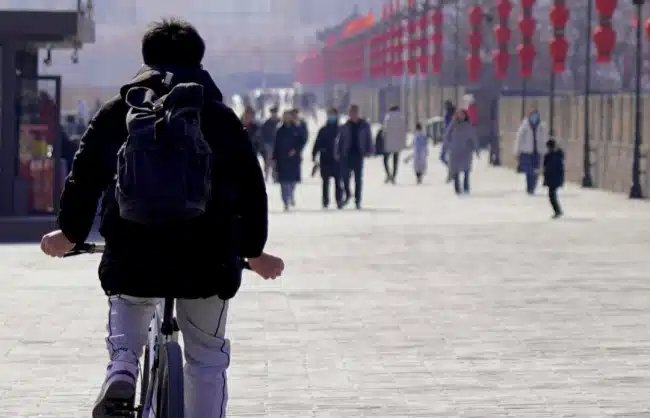
The old city inside the city wall is compact, especially around the Bell Tower, Muslim Quarter, and Beilin area, so many places are easier to explore on foot. If you’re staying nearby, walking is often the simplest way to take in the old streets and see the area at your own pace.
What to Eat in Xi’an: Local Foods You Should Try
Xi’an is especially known for its noodles and local snacks, and many of the city’s everyday dishes are easy to find while you’re out sightseeing.
Roujiamo: Xi’an’s Go-To Street Food
You’ll see stalls and restaurants serving roujiamo all over Xi’an. It’s a baked flatbread filled with chopped meat, and plenty of locals like to grab one for breakfast or a quick lunch.

Beef or Lamb Paomo
Beef or lamb paomo is one of Xi’an’s signature foods. A piece of flatbread is torn into small pieces and then cooked in a rich beef or lamb broth. At some traditional shops, you’ll break up the bread yourself and hand it back to the staff to finish the dish.

Liangpi: Cool, Tangy & Spicy
Cool, chewy, and refreshing, liangpi usually comes with a tangy, spicy, and slightly nutty sesame flavor. It goes especially well with roujiamo.

Biangbiang Noodles
Biangbiang noodles are wide, thick, and chewy, usually served with chili, vegetables, and other toppings. This tasty and filling noodle is one of the most recognizable noodle dishes in Shaanxi.

Barbecue: A Popular Nighttime Bite
Barbecue comes by the skewer, with plenty of different things to choose from. Pick a few you’re interested in, share them with your friends, and keep moving to the next stall.
- With two or three nights in Xi’an, set aside one morning to skip the hotel breakfast and try a local breakfast instead. Meatball spicy soup with flatbread is a simple local breakfast enjoyed by locals, and the morning streets offer a very different atmosphere from the food stalls at night.
- Xi’an’s noodle portions are often quite large. For two people, order a little less to start and add more later. That leaves room to try a few different dishes.
Where to Go After Xi’an: Easy Next Stops
Xi’an is also a great stop to build into a multi-city China trip.
Luoyang: Grottoes, Ancient Temples & Shaolin Kung Fu
- High-speed train: about 1–1.5 hours
If Chinese history is your thing, Luoyang can be a natural next stop after Xi’an. Visit the Longmen Grottoes and White Horse Temple, or head to Dengfeng to see Shaolin Temple. Xi’an and Luoyang work especially well together for travelers interested in ancient Chinese culture.

A 6-day historical journey through Xi'an and Luoyang, two ancient Chinese capitals, featuring Terracotta Warriors, Shaolin Temple Kung Fu, and Longmen Grottoes art.
Beijing: Imperial Palaces, the Great Wall & More
- High-speed train: about 4–5 hours
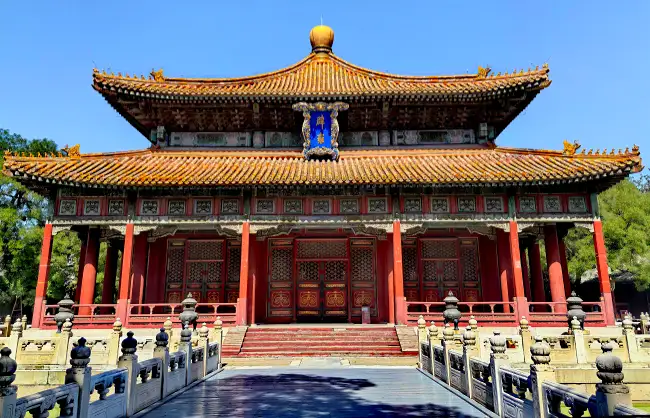
Continue from Xi’an to Beijing for the Forbidden City, Great Wall, and Temple of Heaven. The combination brings together landmarks from different periods of Chinese history, from Xi’an’s Tang dynasty legacy to Beijing’s Ming and Qing imperial architecture and heritage.
Chengdu: Pandas, Sichuan Food & Slow-Paced Days
- High-speed train: about 3–4 hours
After several days focused on history, Chengdu makes a nice change of pace. Seeing giant pandas, sitting down for tea, and digging into Sichuan food give you a much more relaxing experience. If you have more time, consider adding Leshan and Mount Emei to your itinerary.

Shanghai: The Bund, Skyscrapers & Modern China
- High-speed train: about 6–8 hours; direct flight: about 2–2.5 hours
Xi’an and Shanghai make a striking contrast in the same trip. Xi’an is about ancient sites and history, while Shanghai features the Bund, skyscrapers, and modern city life.
There are plenty of direct flights between the two cities each day, and flying is the better choice when time is limited. With a few extra days, continue your journey to Suzhou or Hangzhou from Shanghai.

Visit China's golden triangle of Beijing, Xi'an and Shanghai, covering imperial palaces, ancient terracotta warriors, and futuristic skylines in just eight unforgettable days.
What International Travelers Should Know Before Visiting Xi’an
- Carry Your Passport Every Day: Keep your passport with you each day. You may need it for attraction entry, high-speed trains, or hotel check-in. Even with an electronic ticket, the original passport will still be required.
- Set Up Alipay or WeChat Pay: Most everyday payments are made by phone. Set up Alipay or WeChat Pay and link your international bank card to the account before you arrive. However, keeping some RMB cash is still a good idea
- Prepare Essential Apps: Have a map, translation app, and payment app ready before the trip. Metro stations and major sights usually have English signs, but a map and translation app will come in handy once you leave the main tourist areas.
- Wear Comfortable Shoes: There’s plenty of walking during this Xi’an trip, especially at the Terracotta Warriors and on the City Wall. A good pair of shoes is really necessary.
- Book the Terracotta Warriors Early: The site requires online reservations. For a smooth trip, book ahead during peak season and public holidays, and bring the passport used for the booking.
- Save Chinese Names and Addresses: Keep your hotel and attraction names and addresses in Chinese on your phone. Showing the Chinese name to a taxi driver or at a small restaurant is often much easier than trying to explain it. For example, save 兵马俑 alongside “Terracotta Warriors.”
- Leave Some Breathing Room: Security checks, queues, walking, and transportation all take time. For a first visit, 2–3 main sights a day can be quite pleasant while leaving enough room for meals, wandering, and a change of plans.
Related reading: Xi’an One-week Itinerary from Singapore
Start Planning Your Xi’an Trip
If this is your first time traveling to Xi’an, 2–3 days will be enough to cover the main attractions without rushing. Have more time? We recommend you adding Luoyang, Beijing, Chengdu, or Shanghai and making Xi’an part of a longer China trip.
For help with bookings, transportation, and day-to-day routing, China Xian Tour offers private itineraries tailored to your time and interests, including travel between Xi’an and other cities.


