




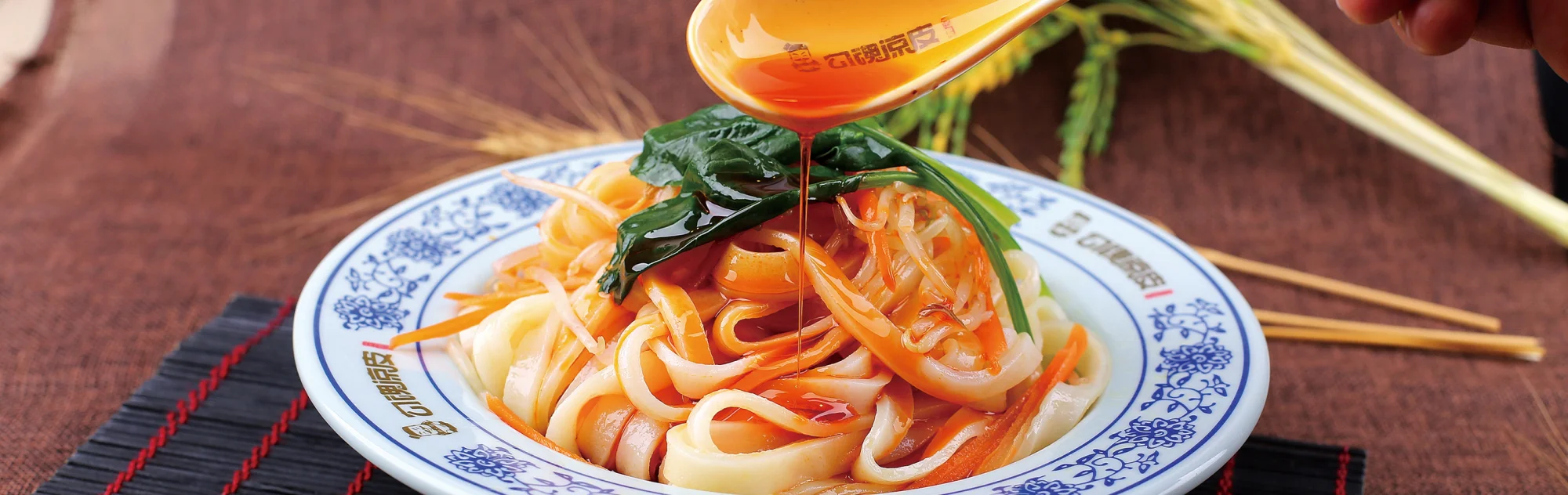
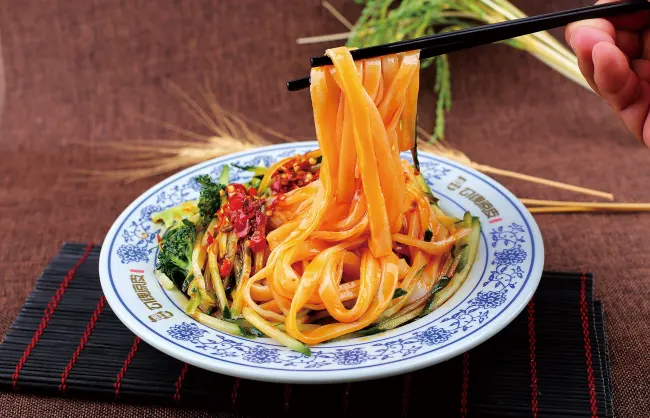
Liangpi (cold skin noodles), together with Yangrou Paomo (Crumbled Flatbread in Mutton Stew) and Rou Jia Mo (Chinese Hamburger), are Xian famous food. The noodles are chewy and smooth, and the special saucer can be the soul of cold skin noodles, which adds a refreshing taste mixed with sour and spicy flavors. No matter if you are a foodie or not, you should never miss Liangpi when you travel in Xi’an.
Content Preview
- A Traditional Dish with Over 2,000 Years of History
- Different Types of Shaanxi Liangpi
- How to Eat Taste?
- Famous Liangpi Restaurants in Xi’an
- How to Make Liangpi at Home
- Fun Facts about Xi’an Liangpi
- When to Eat?
- How to Order?
- F&A about Liangpi:
- Eat Through Xian with China Xian Tour
A Traditional Dish with Over 2,000 Years of History
Liangpi has a long history tracing back to the reign of Emperor Qin Shi Huang, that is more than 2,000 years ago. It was a year of drought and the poor harvest made it impossible to deliver enough crops to the court. To avoid punishment, peasants came up with a great idea. They ground rice into rice milk and then steamed the rice milk in boiling water to get the cold skin noodles. Emperor Qin Shi Huang greatly applauded the taste of Liangpi and then appointed it as a royal tribute.
Different Types of Shaanxi Liangpi
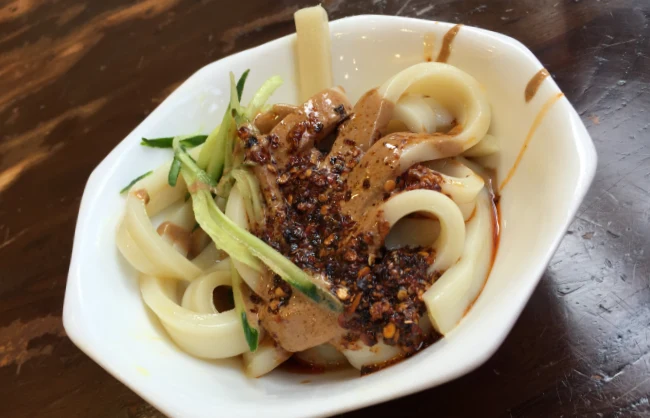
Majiang Liangpi (Cold Skin Noodles with Sesame Sauce)
Majiang Liangpi is a traditional dish in Xi’an City and is available in a lot of restaurants in the Muslim Quarter. As its name implies, this kind of cold skin noodle uses sesame sauce as the major seasoning accompanied by vinegar, chili oil sauce, and sliced cucumbers. Its rich texture really hits the spot.
Gan Mianpi (Wheat Noodles)
Gan Mianpi is a traditional snack unique to the heart area of Shaanxi Province, especially in Baoji. The way to make Gan Mianpi is quite different from other kinds of Liangpi which require cooks to grind wheat or rice into a paste first and then put the paste on the steamer. The preparation of Gan Mianpi is to roll the dough into thin and round pieces and then get these pieces steamed. This unique culinary skill makes Gan Mianpi more pliable and chewier.
Mipi (Steamed Rice Noodles)
Mipi is a popular snack that is specialized in Hanzhong, providing a softer taste to customers. Unlike other kinds of Liangpi only offer cold taste, Hanzhong Mipi also has a heated version with more sauce over more than half of the rice noodles. Mipi is a popular breakfast food for people in Hanzhong and they usually order another local snack – Cai Doufu (porridge of tofu with chopped vegetables) to go with Mipi.
How to Eat Taste?
Cold Liangpi – In the spring, summer, and fall, cold liangpi—literally, “cold noodles”- is the most popular way of eating.
Hot Liangpi – To ensure that the skin noodles are always hot, the Liangpi are steamed, chopped, and set on the drawer that is heated by a fire underneath. Winter is when this type of Liangpi is typically consumed. Nonetheless, there are still some people who prefer eating cold Liangpi in the winter.
Sesame sauce cold skin noodles – A typical traditional way to eat, the method is relatively simple. After being combined into a paste, the flour is placed in a specialised metal basket made of cold leather. The noodles in the bottom of the basket should be smooth after shaking the cold leather pot. After that, let it mature in a kettle of boiling water. To eat, cut the dough into half centimeter wide strips, add cucumber shreds, and mix in salt, vinegar, sauce, sesame paste, chili oil and other ingredients.
The Popular Way to Eat Liangpi – Sanqin Set Meal
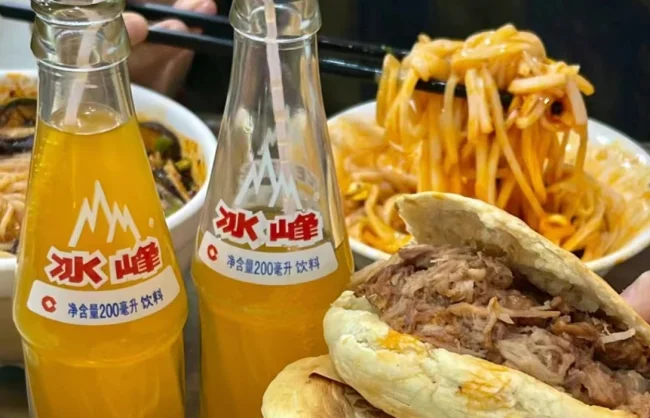
Liangpi, Rou Jia Mo, and Bingfeng (bottled beverage like Fanta) make up the famous “Sanqin Set Meal” (Sanqin is a nickname for Shaanxi), which is served in almost all the fast-food restaurants in Xi’an.
The cold skin noodles provide a refreshing taste mingled with sour and spicy flavors, while diners can enjoy the crispy crust of Ruo Jia Mo as well as the tender and juicy meat with every bite. Besides, a sip of the iced Bingfeng can neutralize the greasy and spicy sense after the taste of Liangpi and Ruo Jia Mo. Therefore, for Xi’an natives, ordering a set meal can be a great enjoyment, especially in summer.
It is highly recommended you have a try and this could be a special culinary experience during your Xi’an food tour.
Famous Liangpi Restaurants in Xi’an
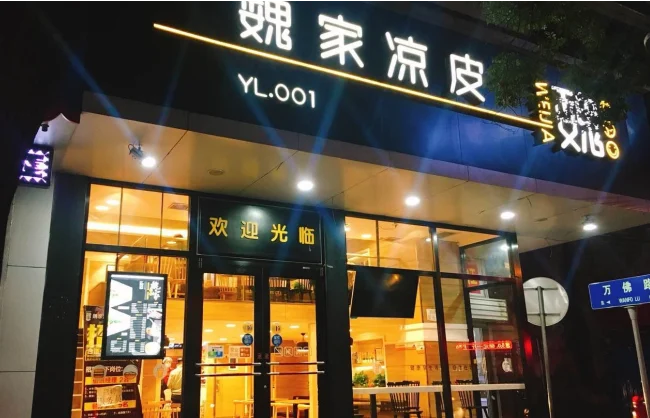
1. Wei Jia Liangpi 魏家凉皮
Big Wild Goose Pagoda Branch 大雁塔南广场分店
Location: Southeast corner of the South Square of Big Wild Goose Pagoda
South Street Branch 南大街分店
Location: No.3, South Street, Beilin District (100m north of Yongning Gate)
2. Yun Lao Si Liangpi 云老四凉皮
Location: Changle Middle Road, Xincheng District (near Exit C of Tong Hua Men Metro Station)
3. Xue Changli 薛昌利
Nanguan Zhengjie Street Branch 南关正街分店
Location: No.58, Nanguan Zhengjie Street, Beilin District (600m south of Yongning Gate)
Dongmutoushi Alley Branch 东木头市分店
Location: No. 176, Dongmutoushi Alley, Beilin District
4. Zhu Xuanmin 朱选民
Location: No.17, Ximutoushi Alley, Beilin District
5. Ziwu Lu Zhang Ji 子午路张记
Fenxiang Alley Branch 粉巷分店
Location: No.46, South Street, Beilin District (400m south of the Bell Tower)
Cuihua Road Branch 翠华路分店
Location: No.227, Cuihua Road, Yanta District
6. Qinzhen Shi Yu Lin 秦镇史玉林
Location: B1, West City Shopping Mall, No.118, Laodong South Road, Lianhu District
7. Shuan Ma Zhuang 拴马桩
Location: No.50, Caochangpo Road, Beilin District
How to Make Liangpi at Home
Prepare the noodles
- Pour flour, water, and salt into a big bowl and a quick stir will mix them thoroughly;
- Brush a thin layer of oil on a baking tray and pour a large spoon of paste to cover the tray;
- 3. Place the baking tray on boiling water and steam for 3-5 minutes until bubbles come out;
- Remove the noodle until it cools down and chop it into strips.
What is in the Sauce
Chili oil, black vinegar, salt, garlic, spices, MSG (monosodium glutamate), soy sauce, sugar
As people can see, Liangpi ingredients are simple and common, yet the production method is not as simple as much. Therefore, if you are planning your Xi’an tour and have great interest in Xi’an cuisines, make sure to put “Xi’an Liangpi” on your must-do list.
Fun Facts about Xi’an Liangpi
- According to data released by Ele. me, one of China’s most popular food delivery apps, Xi ‘an residents order 60,000 Liangpi a month on Ele. me’s app, which works out to 2,000 a day and 20,000 a month at . In addition, thousands of Liangpi stalls in Xi’an together can sell nearly 2 million bowls of cold noodles a day.
- Ordinary cold skin costs between 8 and 15 yuan, while luxury brands might cost up to 30 yuan.
- The sales of Liiangpiin summer accounted for more than 60%.
- Founded in 1932, Zhoujia Liangpi, as one of the most famous brands in Shaanxi, has 37 generations of descendants.
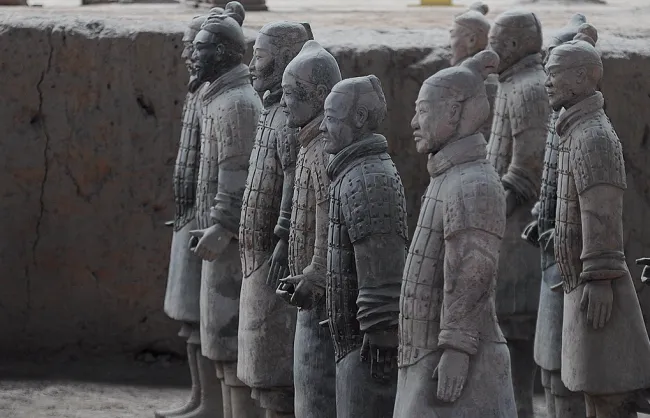
- At the 2023 Asian Games in Hangzhou, the “Terracotta Warriors and horses shaped Liangpi” were presented to each athlete as a national gift.
- According to the New York Times, Liangpi is among the “TOP10 Oriental street foods worth trying.”
- The annual growth rate of instant Liangpiis 90%, and the market size is expected to reach 5 billion yuan in 2025.
Related reading: Most Popular Chinese Breakfast Foods
When to Eat?
Usually, it depends on the type of liangpi. For cold liangpi and sesame sauce cold skin noodles, people prefer to eat as a lunch or dinner. And it is not advised to eat it for breakfast, because its cold and spicy flavor may result in discomfort. And summer is the most popular season for eating cold noodles. The cool taste can effectively help relieve summer heat, and the sour and spicy flavor also helps to stimulate appetite. While hot liangpi is usually enjoyed as a breakfast. Made of rice, it can provide enough energy for your day. And hot liangpi is popular for all seasons.
How to Order?
You can order according to your taste. Choose cold or hot liangpi, then ask the clerk to add the condiments based on your likes, such as less chili oil, more vinegar, less garlic water, more vegetables, etc. The most important thing is to select a store with good sanitary condition and a good reputation.
Other Recommended Xian Local Food to Taste:
FAQs about Liangpi:
Can vegans enjoy Liangpi?
Yes. Most Liangpi are made of sesame sauce and vinegar, so vegans can eat it. However, ensure the broth is meat-free.
Is Liangpi healthy?
Rich in vitamins, protein, and carbohydrates, cold skin noodles can help the body meet its glucose needs. Moderate eating of these noodles is beneficial to health. It’s cold, so you shouldn’t consume anything that makes your stomach weak. Eating too much cold food can cause indigestion and stomach illness.
What are the main ingredients of Liangpi?
The main ingredients vary according to the type of Liangpi. Cold liangpi and sesame sauce cold skin noodles are mainly made of wheat flour. While the main ingredient of hot liangpi is rice. And sometimes, wheat starch is added to the flour during the production.
How is Liangpi different from other noodles in China?
Feature |
Liangpi (Cold Skin Noodles) |
Other Common Chinese Noodles |
Main Ingredient |
Wheat flour or rice |
Mainly wheat flour |
Key Process |
Steamed after washing and settling the dough (wheat-based) or directly steamed (rice-based) |
Kneaded, then pulled, rolled, or cut into strips |
Typical Texture |
Smooth, chewy, or soft |
Varies from soft to firm (e.g. chewy, tender) |
Common Serving Style |
Mostly cold dishes, but some are served hot (e.g. hot liangpi) |
Mostly hot dishes (e.g. soup noodles, stir-fried, or mixed noodles), but some are served cold (e.g. cold noodles) |
Common Flavors |
Sour, spicy, salty, and savory; often includes chili oil, vinegar, garlic water |
Highly varied, such as beef broth, fried bean sauce, sesame paste, etc. |
Nutritional Characteristics |
Relatively low protein content (around 3%) |
Relatively high protein content (around 8–12%) |
Is Liangpi a common street food or a restaurant dish?
As a beloved food by locals in Xian, Liangpi is commonly sold in street stalls, night markets and local eateries. But you can also find it on the menus of some high-end restaurants.
Is Liangpi gluten-free?
Whether it is gluten-free or not mainly depends on the raw materials of liangpi. Hot liangpi is made of rice, so it is gluten free. While cold liangpi is usually made of wheat flour. But the gluten is separated during the dough washing process, so its content is significantly reduced. Another important thing is that it can not be guaranteed there is no cross-contamination during the production process, so it would be better to ask the merchants before you order.
How much does a bowl of Liangpi usually cost in Xi’an?
In most street stalls, the price is about CNY 8 – 12. In the scenic area and some restaurants, it may be higher.
Eat Through Xian with China Xian Tour
Xian is famous for various kinds of delicious food, so tasting the local food has been a must-try thing for tourists during the tour. If you also have the plan, it is highly recommended to travel with China Xian Tour. We are a travel agency based in Xian, so we are quite familiar with how to arrange a food tour in Xian. We can plan an itinerary to cover the authentic food based on your preferences. So contact us right now!