




Among the three meals of a day, breakfast is widely recognized as the most important one which provides the body with rich energy and nutrients and sets the stage for a productive day. With a long history and a vast territory, China boasts a rich and diverse culinary culture that reflects its regional and ethnic diversity. Chinese breakfast tradition is precisely a testament to the country’s profound culinary culture.
The variety of breakfast foods is one of the interesting aspects of Chinese food culture. In this article, we will introduce 12 popular breakfast foods in China that have been passed down for centuries. Each of them is not only delicious, but also reflects the culture, geography, and philosophy of the people in different regions. It’s highly recommended to try some of them when you travel to China.
Content Preview
- Top 12 Traditional Chinese Breakfast
- Easy Chinese Breakfast Recipes to Try at Home
- Breakfast for different regions
- Serving and Eating Etiquette
- FAQs about Chinese Breakfast Foods
- Plan Your China Food Tour with China Xian Tour
Top 12 Traditional Chinese Breakfast
What do Chinese people eat for breakfast? The breakfast options are varied in China. Below are the 12 popular traditional foods that Chinese people usually eat for breakfast. They are all commonly found at street stalls, breakfast shops and hotels.
1. Soybean milk (Doujiang) and deep-fried dough sticks (Youtiao)
In Chinese: 豆浆和油条
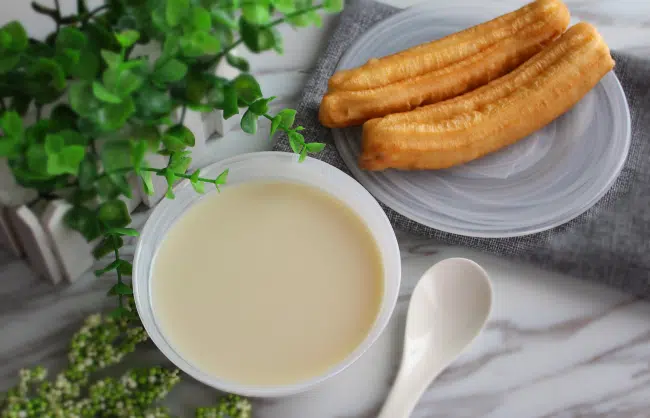
Soybean milk and deep-fried dough sticks (dòujiāng and yóutiáo in Mandarin) are a classic combo in traditional Chinese breakfasts. Both of them can be found at almost every street-side stall or breakfast eatery.
Making soybean milk has three major procedures: soaking, grinding, and boiling soybeans. You can make it at home with soybean milk machine and have either hot or cold version. It’s liked for the smooth texture and nutritional benefits, indeed, it is a good source of protein, calcium, and antioxidants.
Yóutiáo are long, golden strips of dough that are deep-fried until crisp on the outside, airy in the center, and slightly chewy inside. It tastes perfect when dipping into the warm, savory soybean milk.
How to eat Soybean milk (Doujiang) and deep-fried dough sticks?
Nothing beats the crunch of fresh youtiao (deep-fried dough sticks) paired with warm soy milk. Many locals would dunk the entire youtiao directly into their soy milk, letting them soften slightly while keeping their crispy exterior. You can also tear the sticks into smaller pieces and add them to the soybean milk like cereal.
2. Steamed buns (Baozi)
In Chinese: 包子
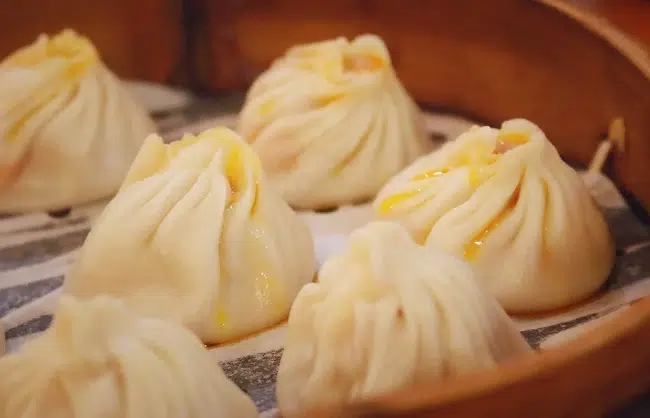
Steamed buns or Baozi are a traditional Chinese food known for the satisfying quality and taste. They are, indeed, an integral part of people’s daily life and one of the most popular morning favorites throughout China. Nowadays, almost every region have their typically favored buns, but still, most of the buns are made from lightly sweetened yeast dough and filled with a range of ingredients.
Putting them in bamboo baskets over bubbling pots, after 10-20 minutes, they will be puffed up beautifully in the moist heat. With just one bite, you’ll sure be captured by both soft and fluffy texture and fresh and juicy fillings. Buns is easy to be tailored to individual tastes, with sweet and savory, vegan and non-vegan fillings available to suit your liking.
- Savory options: Minced pork with spring onions, earthy mushroom mixes, or scrambled egg with chives
- Vegetarian choices: Spiced cabbage, wood ear mushrooms, or pickled vegetables
- Sweet versions: Smooth red bean paste or fragrant lotus seed filling
- You can enjoy the steamed buns fresh at street stalls, often paired with a bowl of porridge or tofu pudding, or take them to go — for home, the office, or even a picnic.
Best places to enjoy the steamed buns:
- Tianjin: Famous for its Goubuli Baozi which is named after a local century-old restaurant brand.
- Xinjiang: Known for the baked steamed buns featuring crispy outside and soft inside.
- Shanghai: With two famous steamed buns – Nanxiang xiaolongbao and shengjian mantou.
- Guangdong: Guangdong people like to eat char siu bao, a kind of fluffy bun with sweet and savory barbecue pork fillings.
- Beijing: Qingfeng baozi is a must-try when traveling in Beijing, with various fillings, such as pork, vegetables, or sweet bean paste. Read more about The Most Popular Beijing Food
- Xian: Recommend to try the Guan Tang Baozi, with pork, beef, or vegetable and hot gravy filling.
3. Rice Porridge or Congee
In Chinese: 粥/稀饭
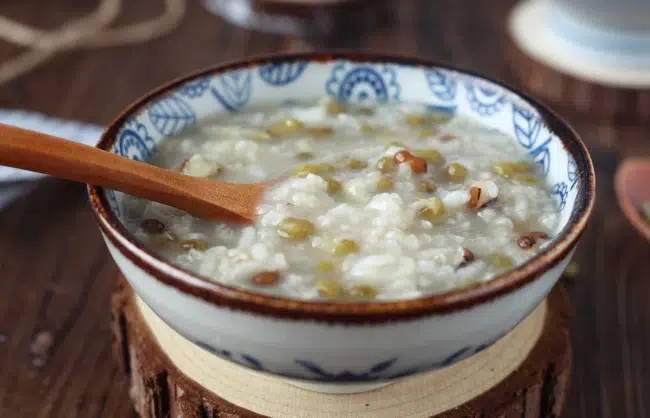
Congee or rice porridge is called zhou in Chinese. Making zhou requires patience. You need to simmer rice very slowly in water or broth until every grain breaks down into a velvety, nourishing dish. It can be served plain or topped with other ingredients such as eggs, pickled vegetables, or seafood to enhance both its nutritional value and flavor.
Since it has a gentle texture and light taste, zhou is easy to digest. So it’s incredibly good for patients in recovery and it’s especially loved by kids and elders, who cannot have hard things to eat. People would usually enjoy it with other traditional Chinese breakfast food, for example, pancakes, deep-fried dough sticks, and steamed buns.
4. Wontons
In Chinese: 馄饨/云吞
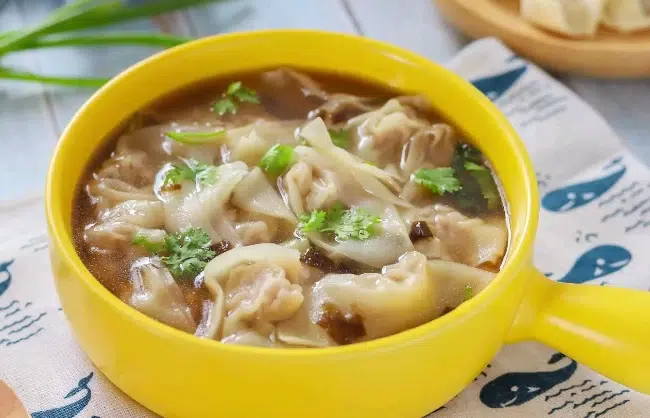
Wontons can be seen as a type of dumpling, but unlike their thicker-wrapped dumpling cousins, wontons feature a delicate wrapper that will melt in your mouth. The magic lies in their flavorful fillings – a savory mix of minced pork and shrimp, though chicken and vegetable versions are equally delicious.
They are most commonly served in a light broth, but you can also find some dry-mixing versions in areas like Sichuan. Originating from northern China, wontons are now popular throughout the country, with each region developing its own variations in taste and preparation methods. Some of the top types of wontons in China are:
- Sichuan red oil wontons in Chengdu: Dipped in sauces mixed by chili oil, vinegar, soy sauce, garlic, and sugar, these Sichuan wonton, locally called “Chaoshou” have a captivating spicy taste. They will be served with sesame seeds and spring onion on top of them.
- Cantonese shrimp wontons: These wontons are filled with shrimp and minced pork, served in broth and seasoned with salt, pepper, ginger, and scallions. The highlight would be the perfect match between broth and fillings.
- Shanghai wontons: Filled with minced pork and bok choy, flavored with soy sauce, rice wine, and sugar. Also served in chicken broth and topped with chopped cilantro when serving.
Recommended tour: 13 Days China Food Tour: Beijing Xian Chengdu Guilin Hong Kong
5. Rice Noodles
In Chinese: 米粉
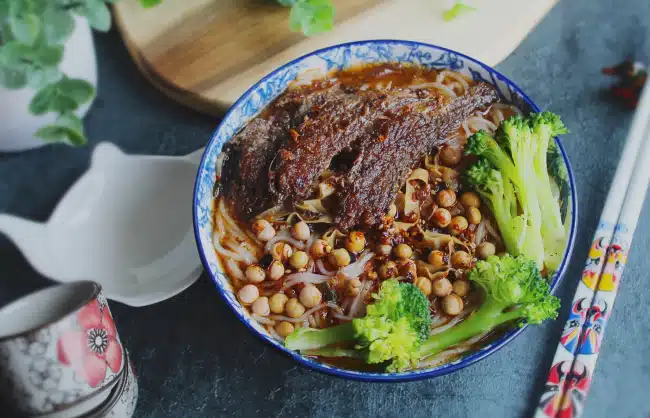
In southern China, where rice is the dominant crop, rice noodles have naturally become one of the most popular breakfast choices. Made from rice and water, these noodles vary dramatically from: shape, size, and texture. Moreover, they can also be prepared in multiple ways — stir-fried, boiled, steamed, or deep-fried and so on.
For breakfast, the most common choice is boiled rice noodle, tossed with a special-made sauces, vegetables, meats, and spices in response to some local taste. However, boiled rice noodle served just in a bowl of richly seasoned soup are also widely recommended.
Guilin rice noodles and Yunnan “crossing-the-bridge noodles” are two of the two most famous rice noodles in China. Guilin rice noodles are usually served in a spicy broth, with pickled vegetables, peanuts, and meat. In the contrast, the “crossing-the-bridge noodles” in Kunming, are served with in extremely hot pot of chicken broth, and with various ingredients such as sliced meat, eggs, vegetables, and tofu.
Recommended Guilin Yunnan Tour: 9 Days Guilin and Yunnan Tour with Nature & Minority Culture
6. Pancake with eggs
In Chinese: 鸡蛋饼
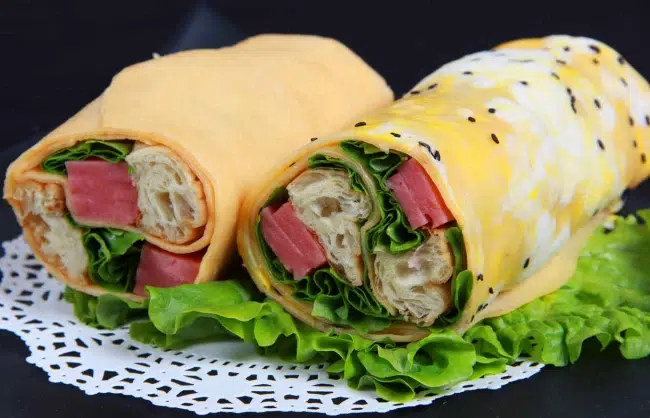
Another easy to carry Chinese breakfast, pancake with eggs is a kind of very thin pancake that topped with eggs and herbs. The pancake with eggs stalls are a common sight in various streets and alleys. Watching the process of making pancake with eggs is quite fascinating. You will see the stall keeper skillfully spread a batter consisting of flour, water, and salt on a hot griddle with spatula until achieving a golden, crispy perfection. After that, an egg will be cracked on to the pancake and be evenly distributed with the spatula. Following this, flip the pancake and continue cooking until the egg sets just right. Before serving, you can ask to sprinkle some chopped scallions and cilantro on top to enhance the flavor and texture.
7. Tofu Pudding
In Chinese: 豆腐脑
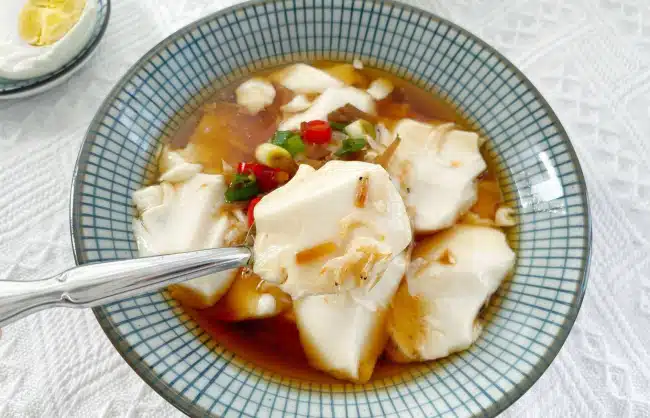
Tofu pudding, aka douhua or tofu brains in different regions across China, is a beloved snack that can be enjoyed either as a sweet dessert or a savery dish. It is actually a kind of fresh, uncurdled tofu with a smooth and delicate texture. For breakfast, people usually eat it along with fried dough sticks, steamed buns, or pancakes with eggs.
Depending on your preference, tofu pudding can be served with toppings of different flavors. For people who like sweet flavor, you can order the tofu pudding be topped with sugar to sweeten it. Also, you can order a savory flavor with soy sauce and add vinegar, sesame oil, or scallions for extra flavor.
8. Tea Egg
In Chinese: 茶叶蛋
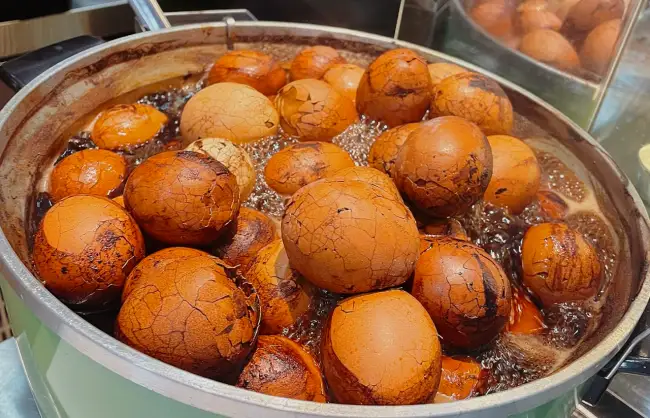
Tea eggs are a popular but common snack you can often see everywhere in China— convenience stores, street stalls, restaurants, and tea houses. Known for their rich aroma and savory flavor, they’re actually cooked by a really simple yet satisfying way.
Cooking tea eggs starts by boiling the eggs until they’re hard-cooked . Then, slightly crack the shell and soak the eggs in a spiced soup, a mixture of black tea, soy sauce, and seasonings, including star anise, cinnamon, bay leaves, and Sichuan peppercorns. After the soup infuses the eggs through the little cracks for hours, the eggs will get a slightly salty taste with an aroma of tea. The egg whites will also be colored into marbled brown, which is why they’re sometimes called marble eggs.
Easy to carry and eat on the go, tea eggs can be enjoyed whenever and wherever you want. They also pair well with dishes like noodles, rice, or even salads for an extra layer of flavor.
9. Cheong Fun (Steamed Vermicelli Roll)
In Chinese: 肠粉
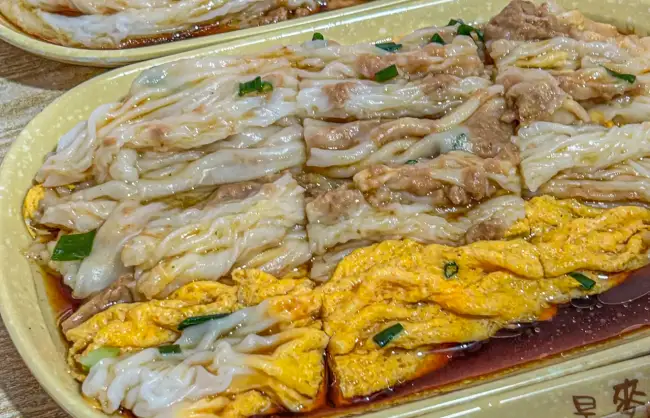
Cheong Fun or rice noodle rolls is a kind of dim sam item featuring delicate and silky texture. It is readily available on the street stalls, restaurants across the country, with particular popularity in Guangdong and Hong Kong.
Steam the Cheong Fan
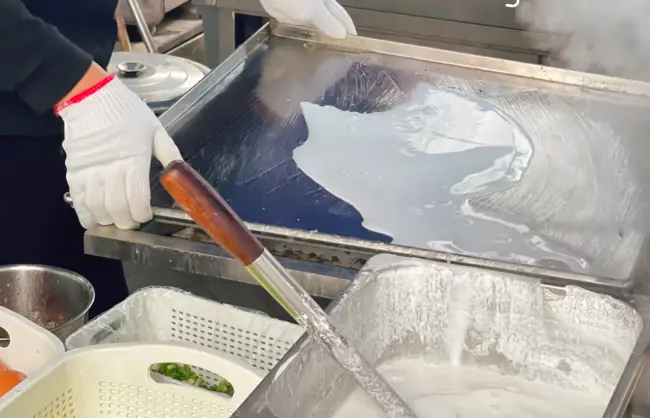
The stall owners of cheong fan usually prepare a smooth and thin batter using rice flour, water, and a bit of cornstarch beforehand. When a diner come to buy, they will pour the batter on to a flat surface and steam it until the batter solidifies into a thin, translucent sheet within few minutes.
Diners can also request a sweet or savory filling popular choices include beef, pork, shrimp, eggs, or vegetables. Once the filling is added, the stall owner will carefully rolls the steamed rice sheet into a neat cylinder. Before serving, the roll is sliced into bite-sized pieces, and drizzled with a flavorful sauce, typically made from soy sauce, sugar, water, and cornstarch. You can also add sesame oil, vinegar, chili oil, or peanut sauce for extra flavor.
Recommended tour: 6 Days Hong Kong-Guangzhou-Macau Cultural Tour
10. Siu Mai
In Chinese: 烧卖
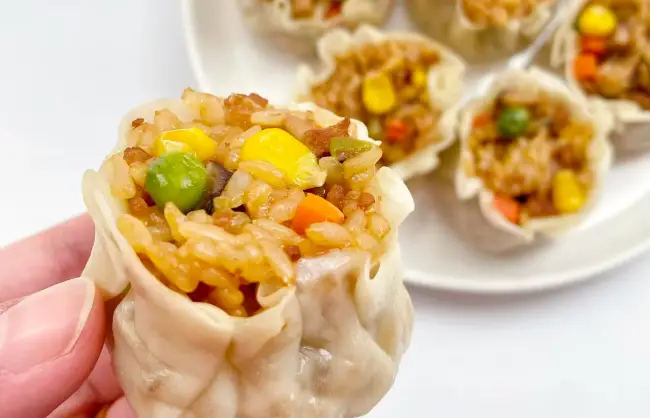
Like Cheong Fan, Siu Mai is also a traditional Cantonese dim sum dish. It has a root tracing back to the Song Dynasty. One thing special about Siu Mai is its thin yellow wrapper – thin enough to show the colorful filling inside, yet sturdy enough to hold its shape and cup the fillings during steaming.
There are so many kinds of fillings suitable for Siu Mai, ranging from seasoned pork mince, shrimp, chicken, fish, mushrooms, to vegetables. Nowadays, Siu Mai is no longer a dish that only exists in Guangzhou province. In different areas of China, you’ll also see different types of Siu Mai. They may differ from the thickness of wrappers, sizes, fillings, seasonings and colors.
Unlike regular dumplings, you’ll tell Sui Mai from its other siblings immediately by the flower-like shape, with the wrapper pleated to form a cup that cradles the filling. This shape is said to be inspired by gold ingot (yuanbao)—long believed to symbolize wealth and prosperity. Once all the preparation finished, Siu Mais will be steamed in bamboo baskets until the wrappers turn slightly translucent and the filling is fully cooked. You can enjoy them either by hand or by chopsticks.
11. Wheat Noodles
In Chinese: 面条
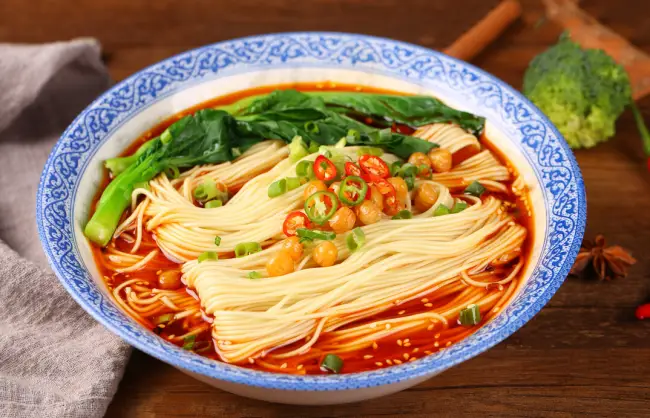
As one of the most widely eaten foods in China, noodles share an irreplaceable place at the breakfast table, particularly in the north. Indeed, noodles hold a bunch of advantages which others cannot copy: easy to cook, versatile in flavor, and pairing well with all kinds of toppings. As a result, they have long become the top choice for people to start a day in many places.
Hot dry noodles (Re Gan Mian) in Wuhan: A local favorite in Wuhan, the hot-and-dry noodles are simple yet delicious. The boiled noodles are firstly blanched, then quickly mixed with sesame paste, pickled green beans and diced radish.
Xiaomian (spicy noodles) in Chongqing: As one of the four signature dishes of Chongqing, Xiaomian is made with firm, elastic alkaline noodles. This type of noodles are always seasoned with chili oil, Sichuan peppercorns, minced garlic, green onions, crushed peanuts, and other seasonings that create its distinctive taste.
Lanzhou hand-pulled noodles (Lanzhou Lamian): This type of noodle highlights both its chewy texture and the depth of its broth. With skillful pulling and stretching practices, the chef will turn the dough magically into long, smooth strands, and remember, thickness can be adjusted to your own preference.
Before serving, noodles will go into fresh broth made from beef bones every morning, and topped with beef slices, green onions, and cilantro. If you like, you can ask for extra chili oil, which will greatly add to its flavor. The whole cooking process only takes few minutes, however, the satisfactory and happiness the noodle provides will last for a day.
12. Steamed Glutinous Rice
In Chinese: 粽子
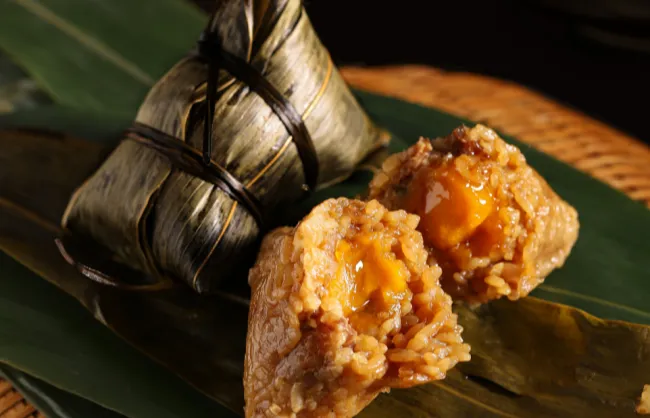
Often called “sticky rice dumplings” in English, zòng zi are made of glutinous rice and various fillings. And they’re be shaped into pyramids or triangles in bamboo or reed leaves. Inside, you’ll find a range of sweet or savory ingredient: red bean paste and sugar add to a sweet touch; pork, salted egg yolk, and ham add to a rich savory flavor.
Legend says that Zong zi was originally made to honor the patriotic poet Qu Yuan. However, as a delicious dish, it has been enjoyed developed by Chinese people for over two millennia. Today, except for being the crucial mark of the Dragon Boat Festival, these rice dumplings have also become a beloved breakfast treat in regions like Hainan, Guangdong, and Jiaxing.
Related reading: Discover Best Cities for Food in China
Easy Chinese Breakfast Recipes to Try at Home
Trying to recreate the comforting flavors of a traditional Chinese breakfast by yourself? Relax, you don’t need to be a master chef to try some simple and satisfying recipes. Below are a few beginner-friendly dishes.
Egg Pancake (Jidan Bing)
Jidan bing has attracted people with its soft texture, savory taste, and most importantly, its easy preparation.
Ingredients:
- 100g all-purpose flour
- 2 eggs
- 20g chopped scallions
- 20g diced ham or carrots
- A pinch of salt
- Water (enough to make a smooth, thin batter)
- Cooking oil
How to Make:
- First beat the eggs in a large bowl, then add in flour, water, scallions, ham (or carrots), salt and mix all of them. Stir the mixture in one direction until the it becomes smooth and lump-free.
- Then heat a lightly oiled non-stick pan over low heat. Pour in a small amount of batter and swirl the pan, this process is to spread it and make it thin.
- Keep cooking it on low heat for 1 minute until the batter is set, then flip it and cook the other side for 30 seconds.
- Repeat the procedure with the rest of the batter, brushing the pan with a little oil each time.
- Enjoy your egg pancake while it’s warm, and you can have it either on its own or with soy milk or tea eggs for a classic Chinese breakfast combo..
Rice Porridge (Zhou)
Rice porridge, is one of the most traditional, comforting, and easily made Chinese breakfasts, and you can have it in basically every family.
Ingredients:
- 100g white rice (about ½ cup)
- 1 liter water
- A pinch of salt
- Optional toppings: pickled vegetables, boiled peanuts, shredded chicken, century egg, scallions
How to Make:
- First, you need to wash the rice thoroughly and soak it in cold water for about 20 minutes, this step is designed to help you cook it faster and more evenly.
- Boil the water in a pot, then put in the soaked rice and keep boiling it over low heat. Stir occasionally to prevent sticking.
- Let it simmer gently for 40–60 minutes until the rice breaks down and the texture turns creamy. And now you can choose to add a pinch of salt to rich its taste (optional).
- Once your seasoning process is done, pour the porridge into bowls and put your favorite toppings like pickles, scallions, or eggs.
- Serve it while its hot. Zhou pairs well with a lot of side dishes like steamed buns or fried dough sticks, and these combinations make for a hearty Chinese-style breakfast.
Tea Eggs
Tea eggs are a popular Chinese breakfast partner, which is known for the marbled appearance and rich, savory flavor.
Ingredients:
- 6 eggs
- 2 black tea bags (or 2 tbsp loose black tea)
- 2–3 star anise
- 1 small cinnamon stick
- 2 tbsp light soy sauce
- 1 tbsp dark soy sauce
- 1 tsp sugar
- 1 tsp Sichuan peppercorns (optional)
- 800ml water
How to Make:
- First you need to boil the eggs for 7–8 minutes until they are fully cooked.
- Takes the eggs out and gently crack their shell—this later helps create the signature marbled look. Do not peel the shells off.
- In the same pot, add 800ml fresh water, black tea, soy sauces, sugar, star anise, cinnamon, and optional peppercorns, then boil the soup.
- Put the cracked eggs back into the pot, lower the heat, and simmer for at least 1 hour. For deeper flavor, soak the eggs in the spiced tea overnight.
- Serve warm or chilled. Tea eggs are often enjoyed with porridge or steamed buns, and this create a complete Chinese breakfast experience.
Breakfast for different regions
Province/cities |
popular breakfasts |
unique culture/feature |
top breakfast streets |
Beijing |
Fermented mung bean juice with fried dough rings, stir-fried liver, sugar oil cakes, steamed buns, pancake rolled with crisp fritter. |
old Beijing flavor, enjoyed in a relaxed, slow-paced atmosphere in the city’s historic hutongs |
Huguosi Street, Niu Street, Xianyukou Food Street |
Shanghai |
Sesame flatbread, deep-fried dough sticks, glutinous rice rolls, soy milk, pan-fried pork buns, steamed buns. |
A blend of local and Western influences, enjoyed in the city’s traditional longtangs with an emphasis on refined flavors. |
Wanhangdu Road, South Yunnan Road, area around the City God Temple. |
Sichuan Province |
Rice noodles with pork intestines, wontons in red chili oil, noodles with spicy sauce, tofu pudding, leaf-wrapped sticky rice cake. |
Spicy and savory, abundant and vibrant food culture, full of marketplace atmosphere |
Huaxing Street, Kuanzhai Alley, and Jinli Street in Chengdu |
Xian |
Spicy soup with meatballs, roujiamo, sweet steamed rice cake, and oil tea with fried dough twist. |
City of carbohydrates, hearty and substantial, influenced by Muslim |
Muslim Quarter and Sajinqiao Food Street |
Cantonese |
Shrimp dumplings, siu mai, cha siu bao, egg tarts, cheong fun, sticky rice in lotus leaves, chicken feet. |
Enjoying morning tea is a core social activity, taste a pot of tea with a variety of small dishes. |
Panxi Restaurant, Dian Dou De Restaurant, and Tao Tao Ju Restaurant. |
Yunnan Province |
Crossing-the-Bridge Noodles, ersi (a rice noodle dish), rice pulp cakes, bean curd rice noodles. |
A mix of ethnic flavors, balance of sour, spicy, and fresh flavors, natural ingredients |
Xiangyun Food Street in Kunming, Renmin Road in Dali Old Town, and Zhongyi Market in Lijiang. |
Serving and Eating Etiquette
With profound food culture and abundant food, the dining etiquette is also important in China. And how to enjoy breakfast in China? Follow the below tips.
- Mind the Temperature: Many breakfast are hot like soup dumplings, hot porridge, youtiao and sugar oil cakes. So blow on your food and take small bites to check the temperature and avoid burning your mouth. For example, when eating Xiaolongbao, bite through the top of the dough, let it cool down, then take small sips of the soup and dip it in vinegar to enjoy the filling.
- Pair Foods Cleverly: Pair greasy food with sweet food, and dry food with moist food, such as fried dough sticks with soy milk, a sesame flatbread with tofu pudding, or a heavy-flavored dish with some light porridge and pickled vegetables.
- Follow the Right Order: Drink a soup or porridge first to warm your stomach and then eat solid foods, which help with digestion and prevent you from feeling too full too quickly after eating dry food.
- Add Appropriate Condiments: Taste the original flavor of the dishes first, then add the condiments like vinegar, chili oil, garlic paste, or cilantro based on your liking, this method is suitable for tofu pudding, noodles, or spicy soup.
FAQs about Chinese Breakfast Foods
What are some common ingredients in Chinese breakfast foods?
- Rice is most often transformed into creamy congee or ground into rice mick which can be processed to be rice noodles.
- Wheat flour forms the basis of a wide range of breakfast treats, including steamed buns (baozi), mantou, dumplings, wontons, and savory pancakes like jianbing.
- Eggs usually appear scrambled or boiled, can alse be soaked in spiced tea and becoming tea eggs, or cracked into batter to enrich pancakes.
- Soybean products such as soy milk, fermented bean curd, and silky tofu pudding (douhua) add both protein and a subtly sweet.
- Vegetables—from scallions and cabbage to mushrooms and spinach— all kinds of commonly-seen vegetables can be mixed into batters or tucked into dumplings and buns.
- Meats like pork, beef, or chicken often turn up stir-fried with veggies or tucked into fillings for extra savor.
Is Chinese Breakfast healthy?
Yes, of course. As Chinese people always say breakfast is the most important meal in a day, we had paid extra attention on it. Traditional Chinese breakfasts tend to be nourishing rather than heavy. In stead of loading up on grease or sugar, Chinese breakfast focus on whole grains, legumes, fresh vegetables, and just the right amount of protein. With a rich farming products, Chinese people naturally get a wide range of ingredient choices for cooking, so that we can create numerous balanced recipes for all the meals. This balance not only supplies essential nutrients—vitamins, fiber, and proteins—but also is gentle on the digestive system, helping you start the day feeling energized and comfortable.
What are some regional differences in Chinese breakfast foods?
Because of the significant climate variations and the diverse culture influences, the main grain crops and foods vary significantly from one place to another in China. For example, in northern China, wheat-based foods, such as mantou, steamed buns, dumplings, noodles, and pancakes are more popular since wheat is its staple crop. By contrast, people in the south—home to abundant rice paddies—show stronger preference of rice products like congee (rice porridge) and a variety of rice noodles.
Beyond this broad divide, there are more local twists waiting for you to discover: in Chongqing, mornings are spiced up by the fiery xiaomian; however, Shanghai residents might opt for delicate xialongbao (soup dumplings) alongside sweet soy milk; and in Guangdong, dim sum favorites like har gow and char siu bao will fill teahouse tables from 7am everyday. Each region’s breakfast tells a story of its land and people—inviting travelers to taste China’s rich geographic diversity one bite at a time.
What are the common breakfast options in Chinese hotels?
In Chinese hotels you’ll often find a blend of local classics and familiar western-style buffet classics. Offerings vary by region and hotel tier, but the most common ones are: soybean milk & yóutiáo (fried dough sticks), congee, steamed buns & mantour, dim sum & dumplings, noodle dishes, savory pancakes, boiled or scrambled eggs, cold cuts & sausages, vegetable sides & pickles, fruit, cereal & pastries, etc.
What does a traditional Chinese breakfast look like?
A traditional Chinese breakfast is a warm, freshly made that balances nutrition with local flavors. Although breakfast customs vary widely by regions,still, for most Chinese people no matter where they are, breakfast takes a special place in their daily life, and it is often considered the most important meal in a day. So that despite a variety of options, fresh and piping-hot are two basic standard applied by all —whether you’re standing at a street stall or grabbing a takeaway on your commute.
Hearty dishes, such as soy milk with fried dough sticks and savory pancakes are more popular in northern China, while people in southern regions usually prefer congee, rice noodles, and delicate dim sum.
To cater to the fast-paced urban lifestyle, most breakfast options can be quickly prepared or are suitable for eating on the go while maintaining ancient cooking techniques.
Plan Your China Food Tour with China Xian Tour
China is famous for varieties of delicious and characteristic food in different regions. So tourists can not miss the abundant food culture during a China tour. If you want to taste the authentic Chinese food, China Xian Tour can plan a food tour based on your dining preference. Also, we can arrange a family visit for you to learn how to make popular Chinese food like dumplings. So contact us now for more details.