
• Home
  • Xian Tours
  • Customize
Guizhou Festivals head

Guizhou Travel Guide

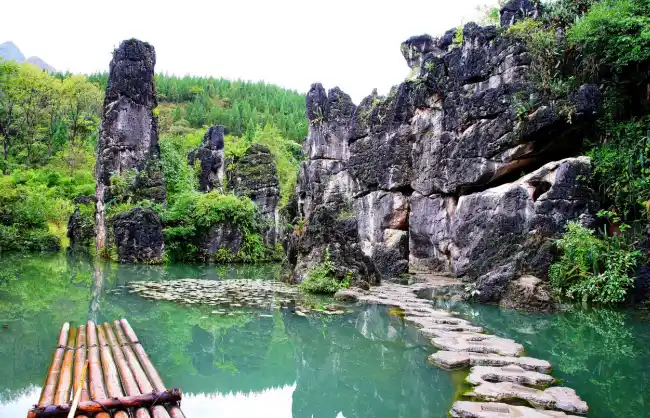
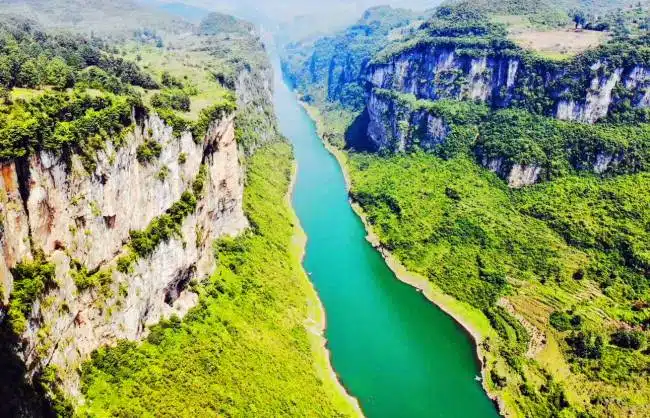
A part of the Yun-Gui Plateau, Guizhou borders the plateau areas of Yunnan to the southwest, the hilly regions of Hunan and Guangxi to the east and south, and Chongqing to the north. It is a recommended mountainous destination by both Lonely Planet and CNN, boasting splendid and diverse ethnic culture, breathtaking natural landscapes, and profound history.

The entire of Guizhou is dominated by its mountainous terrain, with the altitude increasing from about 700 meters in the east to over 2,000 meters in the west. Natural lovers and outdoor adventures will be enchanted by its stunning karst formations, lush greenery, meandering rivers, spectacular waterfalls, majestic caves, mysterious underground rivers, etc.

Living in this mountain region are people of over 15 ethnic minorities, such as Miao, Buyei, Dong, Tujia, Yi, and Gelao. They have inhabited here for centuries, and still practicing and preserving their ancient cultures, costumes, unique languages, costumes, joyous festivals, folkloric dances and songs, and traditional craft arts. That’s why the many hidden ethnic villages here are always among the top choices for people who are keen on authentic ethnic culture experiences in China.

If you don’t know how to plan a trip to Guizhou, the following Guizhou Travel Guide will be a good place to start. We have covered all the details and Guizhou travel tips, includingĀ reasons to go, top destinations and top attractions in each destination, weather, transportation, and theĀ most popular Guizhou tours.

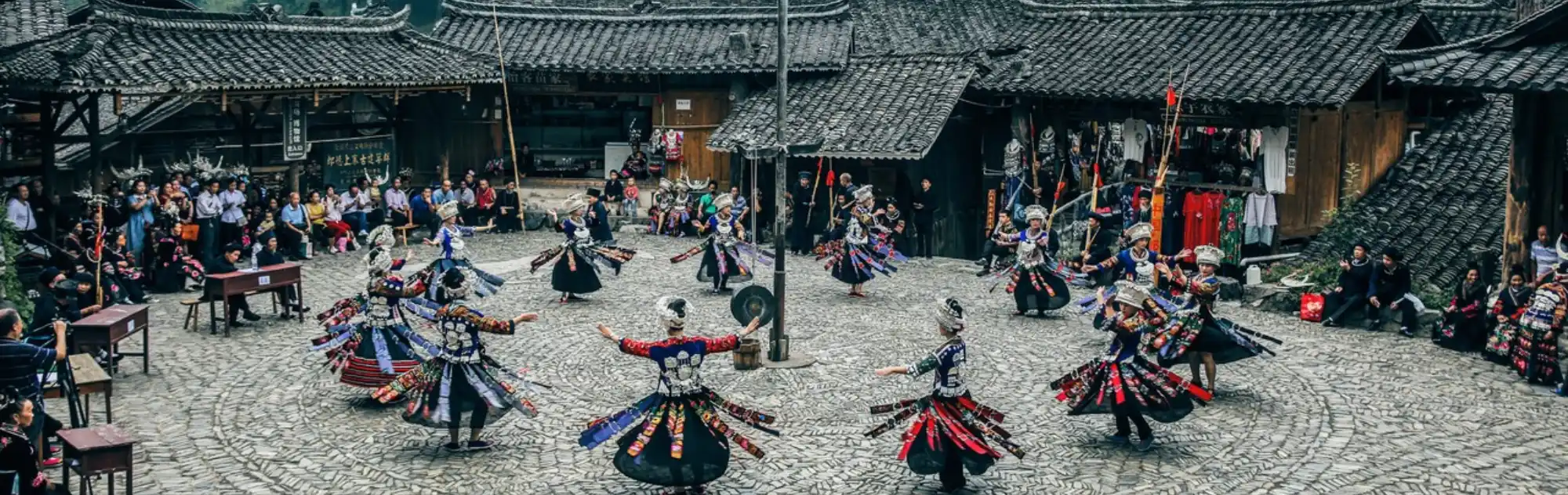
Guizhou Qianhu Miao Village

Chinese: č“µå·ž guƬ zhōu

Location: Southwest China

Population (urban area): 38,520,000

Why Visit Guizhou?

  • Guizhou is inhabited by over 15 ethnic minority groups, offering a glimpse into diverse cultures, customs, festivals, traditions, etc.
  • Guizhou is a popular mountain travel destination, boasting stunning karst formations, waterfalls, cave systems, rivers, etc.
  • Guizhou’s history dates back to the ancient Dian Kingdom and is a frontier area for many ancient dynasties, leaving the region a variety of historic sites and museums.
  • Guizhou is home to many UNESCO cultural and natural heritages, such as Fanjing Mountain, Xiaoqikong Scenic Area, Yuntai Mountain, etc.
  • Guizhou offers great chances to experience various intangible cultural heritages, such as batik, paper-making, and embroidery in Miao villages, and paper-cutting, weaving, and bamboo carving in Dong villages.

Read more:

Top 10 Things to Do in Guizhou

How to Plan a Guizhou Tour?

Top Travel Destinations in Guizhou

Thanks to its vast expanse and diverse geography, Guizhou is endowed with a variety of natural and cultural wonders. Its immense size encompasses a spectrum of landscapes, ranging from spectacular waterfalls and lush valleys to majestic mountains and cave networks. Amidst these natural wonders is the rich cultural tapestry that is contributed by the diverse ethnic groups inhabiting the region. Below are some of the best places to visit in Guizhou as well as the must-visit attractions in each destination.

Guiyang

The capital as well as the largest city in Guizhou Province, Guiyang is the cultural and transportation center of Guizhou. Its location and well-connected transportation network make it the first gateway city to the Huangguoshu Waterfall, minority villages, etc. Though the city is unpretentious when it comes to tourism, it will impress you with its comfortable climate, stunning historical heritages, and tasty food.
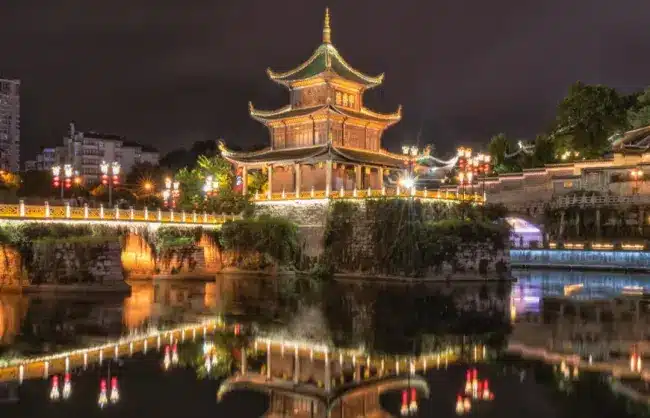
Guiyang Jiaxiu Pavilion
Jiaxiu Pavilion

Top Attractions in Guiyang

  • Qingyan Ancient Town: Located on the outskirts of Guiyang, Qingyan Ancient Town is a well-preserved ancient town that dates back over 600 years, featuring traditional architecture, stone streets, and temples, making it a popular destination for history and culture enthusiasts.
  • Jiaxiu Tower: A landmark of Guiyang, Jiaxiu Tower is a three-story wooden tower built on a rocky island in the middle of the Nanming River, dating back to the Ming Dynasty. Visitors can climb the tower and enjoy the panoramic view of the city and the river.
  • Guizhou Provincial Museum: A comprehensive museum showcasingĀ the rich cultural and natural heritage of Guizhou Province, Guizhou Provincial Museum housesĀ over 80,000 artifacts, including ancient biological fossils, relics from the Paleolithic Age, bronze weapons and chariots, ethnic costumes and handicrafts, etc. The Chinese Miao Costume Library and the Chinese Miao Silver Ornament Library are two highlights of the museum, providing an insight into local splendid ethnic culture.

Anshun

Located in the mid-western part of Guizhou, Anshun is one of the most visited cities in Guizhou which is about 90 km away from the capital city Guiyang. It is home to some of the province’s star attractions, such as Huangguoshu Waterfall – the largest waterfall in Asia, and the Dragon Palace Cave, where you can take a boat to sail along the underground river to discover various stalactites and stalagmites. It is also the place where you can experience the unique Tunpu culture of ancient Han ethnic people.
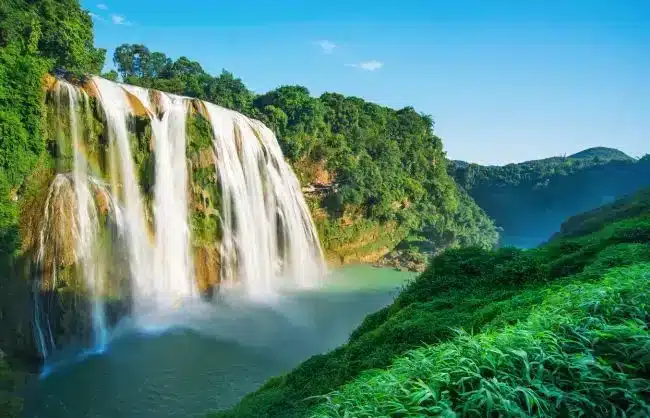
Huangguoshu Waterfall Guizhou
Huangguoshu Waterfall

Top Attractions in Anshun

  • Huangguoshu Waterfall: A symbol of Guizhou’s natural beauty, Huangguoshu Waterfall, the largest waterfall in Asia, is the most important part of Huangguoshu Waterfall National Park which houses 18 other waterfalls of various sizes and shapes, and mysterious karst caves and lush forests. There is a 134-meter-long Water-Curtain Cave behind the waterfall, allowing visitors to appreciate and even touch the waterfall from behind.
  • Dragon Palace Scenic Area: Featuring mysterious karst caves, underground rivers, and in-cave waterfalls, the Dragon Palace Scenic Area resembles the palace of the Dragon King in China’s fairy tale. Visitors can take a boat to appreciate the various stalactites, stalagmites, and columns in the karst caves and marvel at the spectacular in-cave waterfalls.
  • Tianlong Tunpu: Tianlong Tunpu is a fortified village inhabited by the ancient Han ethnic people whose ancestors were Han soldiers in the Ming Dynasty and settled in this area to guard the frontier region. Nowadays, the local Tunpun people still preserve their unique stone houses, stone walls and watchtowers, distinctive hairstyles and costumes, and ancient theater and opera.
  • Getu River Scenic Area: An outstanding karst natural park, the Gutu River Scenic Area is known for its stunning karst landscape, including towering cliffs, majestic caves, Ā and crystal-clear rivers. Here you can also have a chance to experience the ethnic life and customs of the Miao people and witness local Miao people perform freehand rock climbing without any protective measures.

Xingyi

Xingyi is the capital of the Qianxinan Bouyei and Miao Autonomous Prefecture,Ā offering unforgettable Buyei and Miao ethnic culture experiences and glimpses into various ancient villages, bridges, and temples. The city is also known for its gorgeous karst landform, housing several stunning natural beauties, such as theĀ Wangfenlin (the Forest of Ten Thousand Peaks) and Maling River Canyon.
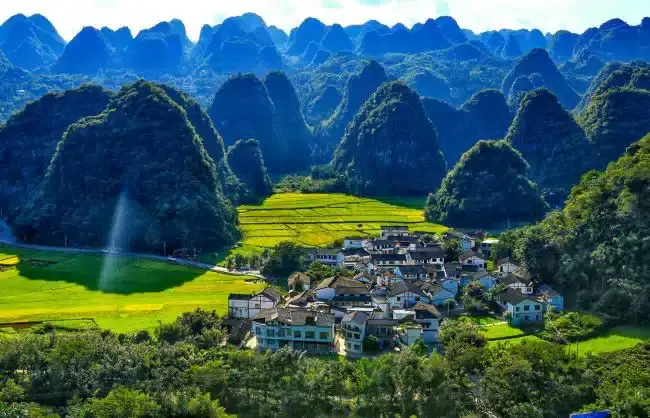
Guizhou Wanfenglin
Wanfenglin aka Forest of Ten Thousand Peaks

Top Attractions in Xingyi

  • Maling River Canyon: A deep canyon cut by the Maling River and the underground water, Maling River Canyon features over 100 spectacular waterfalls, karst caves, towering cliffs, and lush forests. It offers a thrilling drift experience along the turbulent Maling River at the bottom of the canyon. Hiking along the plank trail at the canyon bottom is also rewarding thanks to the surrounding breathtaking scenery.
  • Forest of Ten Thousand Peaks (Wanfenglin): Wanfenglin is a representative karst peak forest in China, featuring a spectacular scene of nearly 20,000 cone-shaped karst hills. There are also several ethnic villages scattered in this area, offering a chance to enjoy the customs and culture of the Buyei and Miao people.

Kaili

Located in the southeast of Guizhou Province, Kaili is the capital of Qiandongnan Miao and Dong Autonomous Prefecture which is home to over 30 ethnic groups. It is the place where some of Guizhou’s top ethnic villages are located, making it a cultural hub to look into various ethnic architecture, craft arts, festivals, clothing, and music and dances.
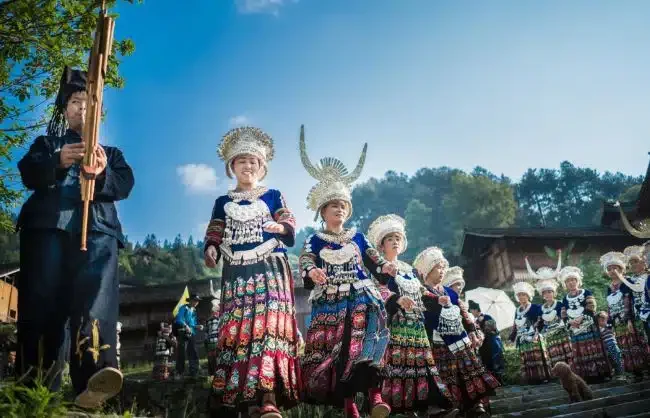
Guizhou Langde Miao Village
Local Miao Dance Performances

Top Attractions in Kaili

  • Xijiang Miao Village: One of the largest Miao villages in China, Xijiang Miao Village is home to over 1,000 wooden stilt houses, winding alleys, and traditional costumes.
  • Upper Langde Miao Village: Located along the Danjiang River at the foot of Leigong Mountain, Upper Langde Miao Village is home to the Long Skirt Miao ethnic group, known for their unique Diaojiaolou (wooden stilted houses), hospitable welcoming ceremony and the Lusheng Festival celebrations.
  • Matang Gejia Village: This is a village to experience the unique culture and life of Gejia people who are a subgroup of the Miao minority people. Different from the other Miao ethnic groups, the Gejia people preserved their language, costumes, and totems. They are especially known for their Gejia Batik.
  • Zhenyuan Ancient Town: An over 2,200-year-old town inhabited by Miao and Dong, and several other ethnic groups, Zhenyuan Ancient Town is a gathering place of diverse architectural styles, including folk houses, temples, bridges, and ancient alleys. Also, you can expect to experience some folk traditional festivals here, such as the Dragon Boat Festival, the March 3rdĀ Festival,Ā and September 9th.
  • Kaili Ethnic Minority Museum: This is a relatively new museum that was opened to the public in 2010. It has 12 exhibition halls showcasing the distinctive aspects of each ethnic group in southeast Guizhou Province, such as clothing, architecture, folklore, handicrafts, and dragon boat culture.

Tongren

Tongren’s location between Central China and the southwest frontierĀ endowed the city with the title of ā€˜Gateway of the Guizhou Eastern Area’. Most travelers visit Tongren for its star attraction – Fanjing Mountain, which is one of the five sacred Buddhist mountains in China, featuring rich biodiversity and picturesque scenery. It’s also a culturally rich city of diverse ethnic groups, such as Dong, Miao, Tujia, and Buyi.
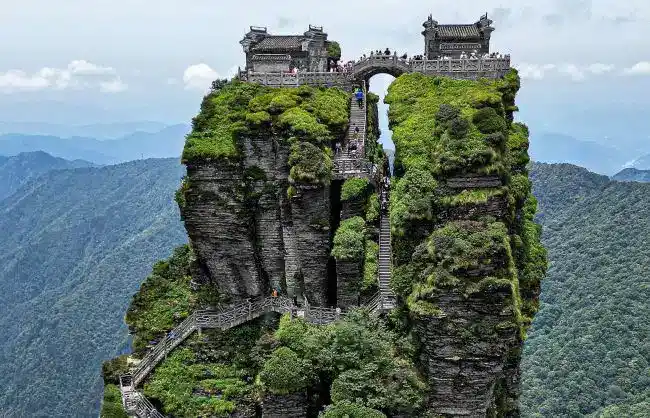
Guizhou Fanjing Mountain

Top Attractions in Tongren

  • Fanjing Mountain: Fanjing Mountain is a UNESCO World Heritage Site and one of the five sacred Buddhist mountains in China which is known for its stunning natural scenery, unique biodiversity, and cultural significance, featuring rare plant and animal species and ancient Buddhist temples.
  • Nine-dragon Cave Scenic Spot: Nine-dragon Cave Scenic Spot is a natural karst landform park that stands out for its spectacular cave system. Nine-dragon Cave is the highlight of the park, with 7 mysterious caves housing various sparkling stalactites and stalagmites of different shapes, such as animals, clouds, waterfalls, flowers, and pillars.

Libo

Libo County is the place where you can marvel at some of the most spectacular karst landscapes in China, which has been inscribed as part of the South China Karst UNESCO World HeritageĀ Site in 2007. Xiaoqikoing Scenic Area is the top reason most travelers visit Libo, while the county also boasts many other scenic spots, ancient architecture, and rich ethnic culture.
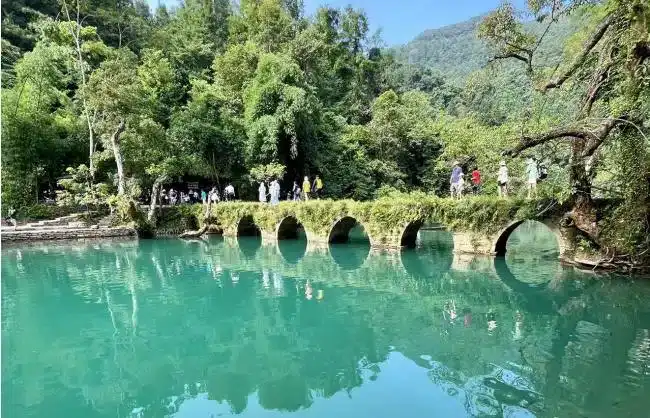
Xiaoqikong Scenic Area Guizhou
Xiaoqikong Scenic Area

Top Attractions in Libo

  • Libo Seven Small Arches Scenic Area: The best highlight in this scenic area is the Xiaoqikong Bridge, an ancient stone bridge of seven arches, which was built in 1834, showcasing the harmony between the karst landscape and local ethnic culture. Besides, the scenic area will also delight you with turquoise waters, cascading waterfalls, mysterious caves, and lush forests.
  • Daqikong Scenic Area: The name Daqikong (means large seven arches) comes from the ancient bridge at its entrance which is bigger than the bridge in the Xiaoqikong area. In this area, you will enjoy a world of primitive forests, canyons, underground streams, and underground lakes. Both Xiaoqikong and Daqikong Scenic Areas are important parts of the grand Zhangjiang Scenic Area. Ā 
  • Libo Ancient Town: Though a newly built town on the original site of Libo Stone City, the Libo Ancient Town is still worth your visit due to the many ancient style architecture, and various intangible cultural heritage performances in this area.
Top Things to Do in Guizhou

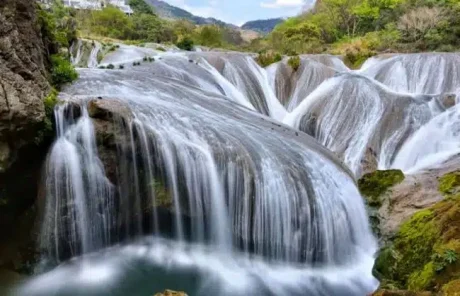
Visit Karst Landscapes & Waterfalls

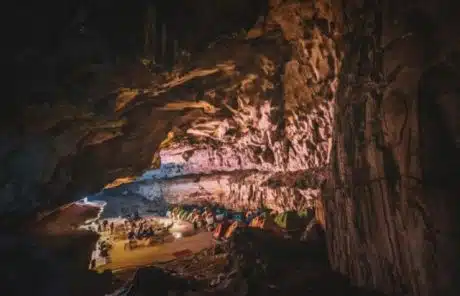
Guizhou’s mountainous terrain and karst geology yield stunning scenery: towering peaks, deep gorges, vast caves and dramatic waterfalls.

Tips:

  • Bring good walking shoes—many trails are uneven and humid.
  • In wet season (June-August) the waterfalls are at their fullest.
  • For large crowds, aim for early morning visits and avoid Chinese national holidays.
  • Don’t rely totally on signage in English—have Chinese names of scenic spots ready.
  • Consider staying overnight near major scenic sites to view them in more peaceful light-hours.

Explore Ethnic Villages & Cultural Immersion

Minority villages are like a wonderland which gives an authentic look at traditions, costumes, handicrafts and local life away from big cities.

Tips:

  • Hire a local guide or driver who’s familiar with minority villages. As you may wanteasier access and interpretationĀ along your way.
  • Respect local customs: ask permission before photographing people, avoid entering private homes uninvited.
  • Participate in handicraft workshops (e.g., batik, silver-making) — some wouldoften cost a small fee but it’s more of a way to support the local community.
  • Try to catch a local festival if yourtime allows. And this would probably become the mostĀ unforgettable part of your journey

Outdoor Adventures — Caves, Rivers, Hiking

For nature-lovers and adventure seekers, Guizhou’s caves, underground rivers and drift/riverside trails are highlights.

Tips:

  • Bring a waterproof jacket and non-slip shoes—caves and riverside trails can be slippery.
  • Some activities (e.g., river drift) depend on water levels—check locally for safety and schedule.
  • If you’re prone to vertigo, check trail difficulty ahead of time (some plank paths go high).
  • Hire local guides when venturing into less developed areas, as theycan lead you to have an in-depth exploration on theĀ safe routes.
  • Be mindful of weather: heavy rain can cause slippery conditions or trail closures.

Guizhou’s Cuisine

Simple introduction

Guizhou cuisineĀ possesses a uniqueĀ flavor which is quite distinct from many other Chinese provincial cuisines: it places a strong emphasis on the touch of bold sour and spicy, and many of the dishes apply fermentation techniques, and minority-heritage cooking traditions.

Signature Dishes to Try

  • Sour Soup Fish (酸汤鱼): Fresh fish cooked in a tangy broth fermented from glutinous rice and local tomatoes. This stands as one of the most beloved among the Miao.
  • Huaxi Beef Rice Noodles: Originating in Guiyang, these rice noodles are served with rich beef broth, pickled vegetable toppings and chilli oil.
  • Si Wawa (ā€œSilk Dollā€ wraps): Thin rice-pancake wraps filled with shredded vegetables, pickles, herbs and served with a spicy-sour sauce.
  • Changwang Noodles (č‚ ę—ŗé¢): A hearty comfort dish combining noodles with pig intestines and blood curd in a chilli oil broth.
  • Spicy Chicken (辣子鸔-Guizhou style): While similar in name to Sichuan’s version, the Guizhou variant emphasises a sticky, aromatic chilli-paste flavour

Guizhou Weather and Best Time to Visit

Guizhou enjoys a subtropical humid monsoon climate, with warm winters and cool summers. Its coldest month usually falls in January when the average temperatures hover around 3°C to 6°C, and the hottest month is generally in July when the average temperatures range from 22°C to 25°C.

  • Spring (March to May) in Guizhou is the sowing time when many local festivals are celebrated, and the warm weather makes it a great time for outdoor adventures.
  • In Summer (June to August), Guizhou sees the most rainfalls, making it the best time to admire the Huangguoshu Waterfall when the water is abundant. Summer is also a great time to visit Mount Fanjingshan when the temperature is not too hot, and the scenery is at its most vibrant.
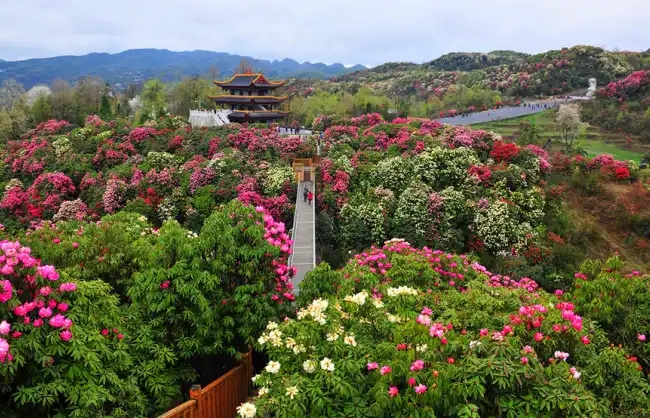
  • Visit Guizhou in autumn (September to November), you will encounter less rainfall and more sunny days, and the lush leaves and crop fields all change into golden color in this season. Some recommended places to enjoy autumn color in Guizhou include the Wanfenglin Scenic Area in Xingyi, Fanjiang Mountain, Jiabang Rice Terraces, etc.
  • Guizhou’s winter (December to February) is cold but not freezing, with the average temperature being around 5 °C. It is a great time to visit some ethnic villages in this area thanks to the strong festival atmosphere.

Read more details at Guizhou Weather & Best Time to Visit.

Guizhou Huangguoshu Tianxing Bridge Scenic Spot
Tianxing Bridge Scenic Spot

Top Ethnic Groups in Guizhou

There are more than 15 officially recognized ethnic minorities and their sub-groups living in Guizhou. And if you look closer, you’[ll get to exploreĀ each of theirĀ rich culture, unique customs, festivals, craft arts and traditional dress. Below are five of the most prominent groups.

1. Miao people

  • Main distribution:Predominantly in southeast Guizhou (for example around Kaili/ Qiandongnan Miao & Dong Autonomous Prefecture).
  • Culture & crafts: The Miao are famed for their colourful embroidered costumes, which often paired heavy silver jewellery, bamboo weaving, and tradition of indigo batik.Ā 
  • Highlights / villages / experiences:

Xijiang Miao Village — the largest Miao village, with over 1,000 wooden stilt houses.

Langde Miao Village (Upper Langde) — known for ā€œLong Skirt Miaoā€, and many people are captivated by its wooden stilt houses (Diaojiaolou) and welcoming ceremonies.

Learning batik in Matang Gejia Village is also rewarding.

  • Festival to note:The Lusheng Festival and Miao New Year.

2. Dong people

  • Main distribution:Southeast Guizhou as well, especially along the Rongjiang-Congjiang-Zhaoxing line.
  • Culture & crafts:The Dong have remarkable wooden architecture such asĀ multi-storied drum towers, Wind & Rain bridges. And you can also explore their uniqueĀ ā€œGrand Songā€Ā (polyphonic singing) tradition.
  • Highlights / villages / experiences:

Zhaoxing Dong Village –Ā one of the largest Dong villages (1,200+ households).

Huanggang Dong Village – with aĀ primitiveĀ sense of charm, where you can see Wind & Rain bridge and drum tower features.

  • Festival to note:Sama Festival (Dong traditional festival).

3. Buyi people

  • Main distribution: One of Guizhou’s larger minorities; for example in southwestern and central parts of the province.
  • Culture & crafts: Traditional Buyi architecture, weaving, silver ornaments; distinctive festivals that often involve singing and dance.
  • Highlights / villages / experiences: Seek out Buyi-autonomous areas (e.g., in Qianxinan Bouyei & Miao Prefecture) and experience local rice-terraced landscapes and village life.
  • Festival to note:The Buyi Harvest Festival and other communal celebrations of farming and minority culture.

4. Tujia people

  • Main distribution: Scattered in Guizhou (and neighbouring provinces) including in eastern Guizhou.
  • Culture & crafts:Known for their brocade weaving, silver jewellery, and traditional Tujia dance and music forms.
  • Highlights / villages / experiences:Visiting Tujia villages offers insight into terrace-farming, weaving workshops, and folk theatre.
  • Festival to note:Tujia’s ā€œPush Car Festivalā€Ā (in other provinces) has equivalents locally — communal celebrations, special food, dances.

5. Gejia people

  • Main distribution: Considered a subgroup of the Miao people, concentrated around Kaili, Huangping and nearby counties.
  • Culture & crafts:Notable for their batik art—women start learning batik young; distinctive ā€œarmor-styleā€Ā costumes with batik patterns.
  • Highlights / villages / experiences:Matang Gejia Village — you can try your hand at batik and experience the Gejia culture.
  • Festival to note: Gejia folk songs, antiphonal singing, totem-related dance, and batik exhibitions.

Guizhou Transportation

How to Get to Guizhou

It’s convenient to get to Guizhou by either flights or high-speed trains.

By air

As the top 1 gateway of Guizhou, Guiyang Longdongbao International Airport is the largest airport in Guizhou, offering frequent flights to/off most domestic cities, including Beijing, Chengdu, Hangzhou, Shanghai, Xi’an, Hong Kong, etc., and international flights to/off Singapore, Melbourne, Kuala Lumpur, Charles de Gaulle, etc.

Also, you can use other smaller airports to reach Guizhou, including Tongren Fenghuang Airport, Zunyi Xinzhou Airport, Kaili Huangping Airport, etc.

By high-speed train

Guiyang North Railway Station is the most important train station among the 10 high-speed train stations in Guizhou, operating daily high-speed trains to most cities along Shanghai-Kunming, Guizhou-Guangzhou, Chengdu-Guizhou, and Sichuan-Guizhou high-speed railway lines.

Important cities that can be connected with Guiyang by high-speed trains include Beijing, Shanghai, Chengdu, Kunming, Guangzhou, Guilin, etc.

How to Travel around Guizhou?

Guizhou’s well-delveloped high-speed railway network makes it convenient to transfer between many destinations by bullet trains, including Kaili, Tongren, Zunyi, Liupanshui, Congjiang, etc.

To travel with the most conveniences, private car service is our most recommended transportation option to travel around Guizhou, especially when you plan to visit some remote or off-the-beaten-path destinations. In this way, you just need to sit back into the car and enjoy scenery along the way, and your driver and guide will take care of the navigation, and parking, and customize the itinerary according to your preferences and requirements. Feel free to contact our travel consultantĀ for our private car service or to customize your Guizhou trip your way.

See more detailed information onĀ GuizhouĀ Transportation.

Where to Stay in Guizhou

Where to stay in Guiyang

Recommended area: If you prefer a stay with more convenience, then consider downtown Guiyang (Nanming District near the Nanming River) or near the railway station. It’s best to stayĀ here for one night at the start or end of your trip.

Hotel choices:Ā Holiday Inn Guiyang City Center/ Novotel Guiyang Downtown/Sheraton Guiyang Hotel.

Where to stay in Kaili

Recommended area:Ā Kaili city centre or nearby village guesthouse are both good choices, and the latter one can even provideĀ ethnic-village experience. However, expect the hotels in Kaili to be moreĀ basic compared to big cities. Book early if you’re travelingĀ toĀ popular villages.

Hotel choices:Ā Hampton by Hilton Kaili, Zongheng Hotel Kaili, Langde Miao Village Guesthouse.

Where to Stay in Anshun

Recommended area:Ā Most would choose stays near the Huangguoshu Waterfall scenic area or in Anshun city, which hasĀ easy access to major natural attractions.

Recommended hotels: Four Points by Sheraton Anshun Huangguoshu, Huangguoshu Hotel, Anshun Wanda Realm Hotel.

How Many Days Needed

A 7-day trip isĀ ideal for most visitors. During these days, you can explore GuizhouĀ comprehensively (Guiyang, Anshun, Kaili) without rushing. Balance your destinations with nature, culture, and relaxation.

Day-by-day sample itinerary

  • Day 1: Arrive in Guiyang.Take a restĀ at hotel orĀ explore city centre. Don’t forget to sample local cuisine.
  • Day 2: Travel to Anshun. Pay a visit toHuangguoshu WaterfallĀ andĀ nearby caves.
  • Day 3: Continue around Anshun or head to Libo (where you can see karst forests) or Tongren.
  • Day 4: Travel to Kaili. Settle into a Miao villagewhich would hold evening folk performance.
  • Day 5: Explore villages around Kaili (e.g., Xijiang, Langde, Matang).
  • Day 6: Outdoor adventure day. Hikingor exploring cavesĀ and rivers in the broader region (for example around Xingyi or southwestern Guizhou) or continue strolling inĀ minority towns.
  • Day 7: Return to Guiyang (or fly out).Last-minute shopping, rest and prepare for your

Extension options

If you have more time (10–14 days), you could addĀ some of these activities:

  • A deep dive into western Guizhou (e.g., Xingyi’s Wanfenglin, Maling River) or the north-eastern part(Fanjing Mountain in Tongren).
  • Longer stays in remote minority villages, and enjoy multi-day trekking routes.

Recommended tour:Ā 7 Days Guizhou Tour to Guiyang, Kaili, Libo

Short-trip concentrate

If you have only 3–4 daysĀ on this journey, don’t worry, there are still many highlights you can explore within these days:

Choose one base (e.g., Guiyang + Anshun or Kaili) and try to stay in localĀ villages, where you can best explore Guizhou’s soul.

Focus on one theme: nature (waterfall + cave) or culture (villages + craft) to avoid travel fatigue.

FAQs about Guizhou

What makes Guizhou different from other Chinese provinces?

The first thing is Guizhou’s natural resources. Visitors can seeĀ spectacular karst scenery, rich ethnic diversity, and authentic rural charmĀ everywhere in this province. Besides, it’s less commercialized than Guilin or YunnanĀ (which also have rich ethnic cultural highlights), so usually the trip will be quieterĀ with a more immersive experience.

Is Guizhou suitable for solo travelers?

Yes, if you’re well-prepared. One of the most difficult thing you need to address is language, and this can be achieved by the use of translation app or some Chinese notes which are written in advance. Major towns are easy to navigateĀ , while rural areas are best explored with local guides or organized tours.

How touristy is Guizhou compared to Guilin or Yunnan?

Guizhou is much less crowded. You’ll be able to find outĀ more about genuine village lifeĀ without traveling with large crowds. However, this also means thatĀ there are fewer English signs and modern facilities in remote spots.

What are the travel times between Guiyang, Kaili, and Libo?

  • Guiyang → Kaili: 1.5–2 hrs by high-speed train
  • Guiyang → Libo: about 3–4 hrs by car or bus

If you’re traveling toĀ mountain areas, allow yourself much more transfer time.

What should I avoid doing in ethnic villages?

  • Don’t takephotos of people or ritualsĀ without asking for permission
  • Avoid entering private homes uninvited.
  • Never make loud noises during festivals and ceremonies.

Discover Guizhou’s Treasures with China Xian Tour

Guizhou is a treasured land with all sorts of highlights but less tourist crowds. Walking trough its incredible natural and cultural heritage, and you’ll discover a mysterious and beautiful side of China which you may not be able to find in anywhere else. To make the most of this journey, you can join a customized tour with China Xian Tour. We’ll take you to smoothly and comfortably travel through major highlights and minority village life, while also taking care of everything along the way. Contact us now and start preparing for an unforgettable Guizhou memory.

Best China Tours including Guizhou

Send us a quick inquiry

    * Tell us your travel requirements/questions here.

    I prefer to be contacted via:

    Your travel consultant will reply within 24 hours.

    A TripAdvisor award-winning China travel agency organizing diverse private and mini-group China tours. We offer in-depth experience, free cancellation, flexible & safe trips.

    Email

    WeChat/Whatsapp

    Call

    (+86)18792910029
    (08:00-21:00 Beijing Time)