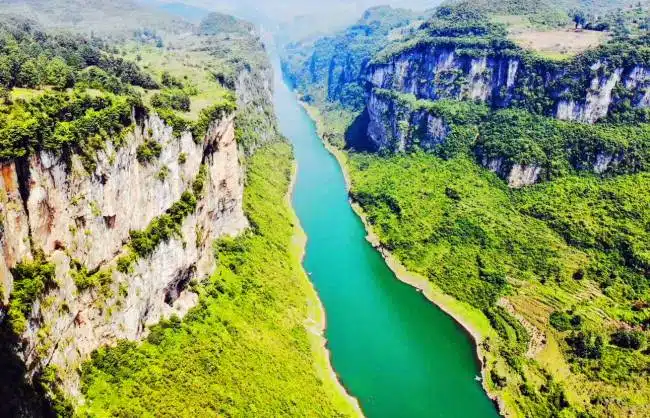

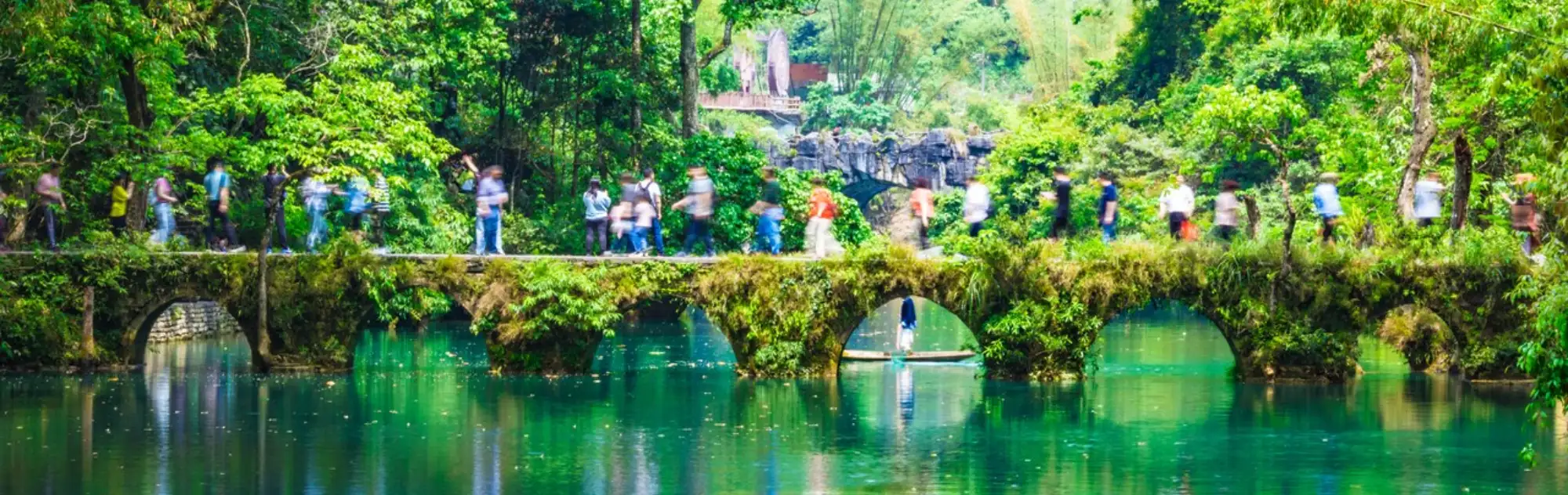
Looking to explore Guizhou’s dramatic karst landscapes and rich ethnic culture? This quick guide is just designed for you. And we’re here to help you plan your trip with ease. Guizhou sits in southwest China, and it amazes the world with its unique karst scenery and other incredible natural wonders. Inhabiting the mountainous areas of Guizhou are various minority ethnic groups. Their ethnic culture makes this area even more colorful and energetic.
This Guizhou travel guide covers the essentials for a perfect trip, including what to see, when to visit, how to get there, where to stay, and how long to spend. The purpose of our Guizhou Travel Guide is to answer these frequently asked questions.
Content Preview
- Guizhou Weather & Best Time to Visit
- Top Cities/Regions to Visit in Guizhou
- Top Travel Experiences and Activities in Guizhou
- Top Natural Attractions in Guizhou
- Top Cultural Attractions in Guizhou
- How to Get to and Travel Around Guizhou
- Where to Stay in Guizhou
- Important Festivals and Celebrations in Guizhou
- Top Recommended Guizhou Food
- How Many Days to Spend in Guizhou?
- FAQs about Guizhou Travel
- Explore Guizhou with Us
Guizhou Weather & Best Time to Visit
Guizhou enjoys a subtropical humid monsoon climate, seeing distinct seasons, with neither too harsh winters nor too hot summers. The mild climate makes most areas here are suitable for visiting all year round.
Generally, the best time to visit Guizhou falls in March to October when pleasant climates prevail across this region, it becomes agreeable for outdoor and cultural activities in most areas.
Annually, the average temperature in most areas of the province hovers around 14 to 16°C. July is the hottest month, with an average temperature of 22-25°C. January is usually the coldest month, undergoing an average temperature of 4 to 6°C.
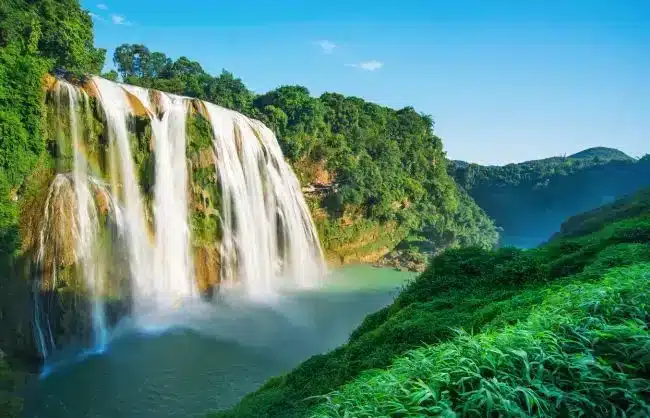
Due to the year-round abundant rainfall and the low sunlight exposure in this region, you may experience moist and humid conditions when traveling to Guizhou. In most areas, the average annual precipitation ranges from 1100-1300 mm. May to October is the time seeing 80% of rainfall in a year, making it the great time to visit Huangguoshu Waterfall, when the abundant water flow adds to its majestic grandeur.
Clothing Tips for A Trip to Guizhou
Spring (March – May): Long-sleeved T-shirts, sweaters, cotton or woolen layers, a windbreaker, or light down jacket.
Summer (June – August): Short-sleeved T-shirts, shorts, or skirts, a lightweight long-sleeve shirt or sun protection layer, a thin sweater, or a light jacket.
Autumn (September – November): Long-sleeved T-shirts, sweaters, hoodies, jeans, long skirts, a thicker jacket, and a lightweight down jacket.
Winter (December to February): Insulating base layers, sweaters, down jackets or padded coats, hats, gloves, and scarves.
Climate & Best Time to Visit in Guizhou (By Destination)
Destination |
Avg. Annual Temp |
Best Time to Visit |
Notes |
Guiyang |
14–15°C (57–59°F) |
Mar–May, Sep–Oct |
Mild year-round. Ideal summer retreat |
Kaili |
~16°C (61°F) |
Apr–Oct (festivals: Apr–May, Oct) |
Best for Miao culture & festivals |
Anshun |
~14°C (57°F) |
May–Oct (peak: Jun–Aug) |
Best waterfall views in summer |
Xingyi |
~16°C (61°F) |
Mar–Jun, Sep–Oct |
Pleasant climate. Great karst scenery |
Tongren |
15–17°C (59–63°F) |
Apr–Jun, Sep–Nov |
Ideal for Fanjing Mountain hiking |
Congjiang County |
17–18°C (63–64°F) |
May–Jun, Sep–Oct |
Best for rice terraces & ethnic villages |
Libo |
~17°C (63°F) |
May–Sep |
Lush scenery & emerald waters at their best |
Top Cities/Regions to Visit in Guizhou
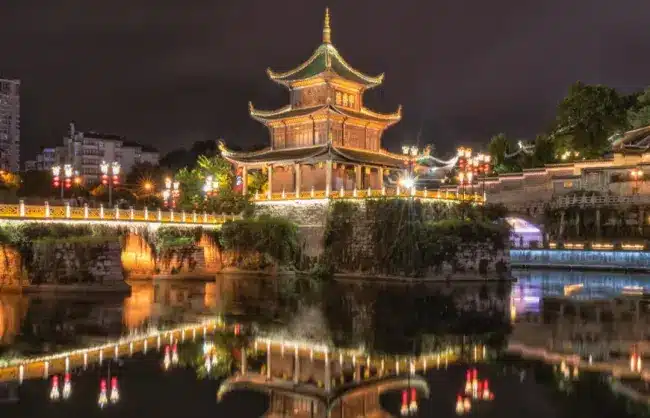
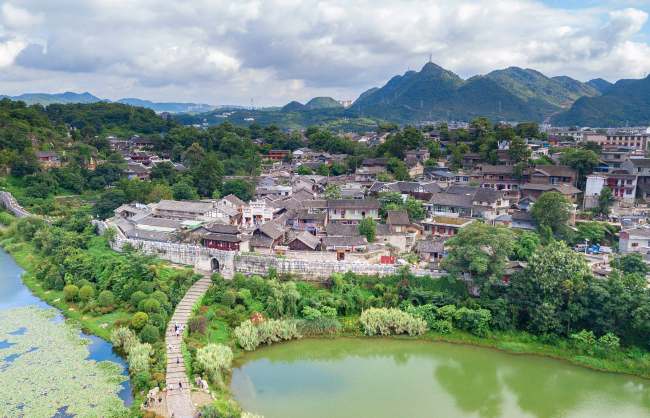
- Guiyang: The capital city of Guizhou, and its gateway city which is most tourists’ first stop in Guizhou. Known for its refreshing climate and delicious cuisine. Qingyan Ancient Town and Jiaxiu Tower are some of its top attractions.
- Kaili: Home to various ethnic villages, including Xijiang Qianhu Miao Village, Matang Gejia Village, Langde Miao Village, etc.
- Anshun: Besides its first highlight Huangguoshu Waterfall, Anshun also impresses visitors with its underground Dragon Palace Cave and Tianlong Tunpu Fort.
- Xingyi: Located in southwestern Guizhou, Xingyi is known for its natural karst wonders: Wanfenglin and Malinghe Canyon. Consider escaping the summer heat here thanks to its serene surroundings and agreeable climate.
- Tongren: Home to the Natural World Heritage site of Fanjing Mountain. Moreover, it has no shortage of ethnic culture and historical relics. Local cuisine is also worth a try.
- Congjiang: Located in the Qiandongnan Miao and Dong Autonomous Prefecture, Congjiang County stands out for its blend of ethnic cultures and pristine natural scenery. Known for Basha Miao Village, Jiabang Rice Terraces, and the nationally protected Drum Tower.
- Libo: Located in Qiannan Prefecture, it is known for the Big and Small Seven-hole Scenic Areas, featuring emerald-green waters and bizarre peaks and rocks.
Where to Start and End Your Guizhou Trip
Guiyang is both the starting and ending point for most travelers, as it is the province’s main transportation hub with the largest airport and high-speed rail connections.
A typical route is:
- Start in Guiyang → travel east to Kaili / Congjiang (ethnic culture)
- Then head south to Libo (karst landscapes)
- Or west to Anshun / Xingyi (waterfalls and canyons)
- Optionally extend to Tongren for Fanjing Mountain
Best Guizhou Tours:
- 6 Days Guizhou Tour of Guiyang Kaili Fanjingshan
- 7 Days Guizhou Tour to Guiyang, Kaili, Libo
- 7 Days Guizhou In-depth Tour
Top Travel Experiences and Activities in Guizhou
During a Guizhou tour, you will be amazed by its magnificent scenery and colorful ethnic culture. Continue reading to see what you can experience in Guizhou.
Marvel at the natural wonders: The Huangguoshu Waterfall is Asia’s largest waterfall. Do not forget to take a look at the Water Curtain Cave, the shooting place for the famous Chinese TV, The Journey to the West. Or visit the world natural heritage, Fanjing Mountain, where the cloud sea, strange peaks and rare animals and plants will be your tour highlights.
Experience colorful ethnic cultures: In Xijiang Qianhu Miao Village, the thousands of stilted houses are built along mountains, forming a magnificent scene. You can also watch the Miao ethnic group’s songs and dances and appreciate their special costumes. In Zhaoping Dong Village, listen to the breathtaking Grand Song, an intangible cultural heritage.
Taste characteristic local foods: Guizhou food has a distinctive flavor: sour and spicy. Sour soup fish is a representative Miao Cuisine, that is favored by foreign tourists. You can also try Doudoufen Hot Pot, its soup is the unique local sour soup. You will like it. Bingjiang is a local dessert made of fruits, glutinous rice and crushed ice.
Special experience in Maotai Town: As the hometown of China’s national liquor (Maotai White Wine), it is the best place to learn about China’s wine-making culture. As soon as you step into the town, you will be surrounded by the slightly sweet aroma of distillers’ grains.
Top Natural Attractions in Guizhou
Huangguoshu Waterfall
The largest waterfall in Aisa, and the third largest in the world, Huangguoshu Waterfall is impressive for its majestic scale of 77.8 meters high and 101 meters wide. It boasts an expansive curtain of water and dramatic drop.
There is a Water Curtain Cave hidden behind the waterfall, allowing a rare chance to get up close to the waterfall and appreciate it from the back. This makes the waterfall the only one in the world that can be admired from six different directions: front, back, top, bottom, and both sides.
Small Seven-hole Scenic Area
A representative of Guizhou’s karst landscapes, the Small Seven-hole Scenic Area is a natural marvel of karst mountains, clear rivers, lush forests, magnificent caves, mirror-like lakes, and cascading waterfalls.
The elegant Seven-arch Stone Bridge, constructed from greenish-blue stones, is the top highlight in the scenic area, spanning 40 meters long across the Xiangshui River. Its construction dates back to 1835 in the Qing Dynasty.
Beyond that, the scenic area is blessed with 21 other natural wonders, including Laya Waterfall, Level-68 Waterfall, Rock Forest, Tianzhong Cave, Mandarin Duck Lake, etc.
Fanjing Mountain
Fanjing Mountain is the main peak of the Wuling Mountains, with an elevation of 2572 meters. This famous Buddhist Mountain dates back to the Spring and Autumn period, with Buddhism flourishing here during the Tang Dynasty. That’s why it is endowed with many ancient Buddhist temples.
The mountain also impresses visitors with its spectacular natural landscapes. Hongyun Golden Summit is the most iconic one, which looks like a colossal stone pillar piercing the sky. What makes it more remarkable is the massive crevice in the middle of the peak, splitting the mountain summit in two. Other natural wonders include the Mushroom Stone and the Ten Thousand Scrolls of Scripture.
Besides its cultural and natural highlights, Fanjing Mountain is also a World Natural Heritage Site, preserving ancient and rare species dating back millions of years. It is the only place where the rare Guizhou golden snub-nosed monkeys are inhabited.
Chishui Danxia Landform
Located on the southern edge of the Sichuan Basin, Chishui Danxia in Chishui City is renowned as one of China’s most beautiful Danxia Landforms by National Geographic China. It features various typical Danxia formations, like cliffs, mesas, stone columns, grooves, etc. A visit here will reward you with diverse stunning landscapes of mountains, waterfalls, rivers, lakes, valleys, and rare flora and fauna.
Wanfenglin ( Forest of Ten Thousands Peaks)
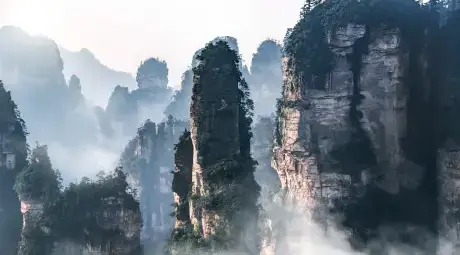
Another stunning karst landscape in Guizhou, Wanfenglin Scenic Area in Xingyi boasts a cluster of about 20,000 independent peak formations in different shapes. It was hailed as the “Cone-shaped Karst Museum in China” given its various peak shapes and vast area (which accounts for over two-thirds of Xingyi’s land). Based on the shapes of the peak formations, the entire scenic area was divided into different peak forest types, including Arrayed Peaks, Sword Peaks, Dragon Peaks, Arhat Peaks, and Overlapping Hat Peaks.
The East Peak Forest section features the harmonious interplay of peaks and rice fields, while in the West section, visitors can enjoy a labyrinth of peak clusters intertwined with captivating water systems. Currently, the West Peak Forest is the main section open to the public.
Malinghe River Canyon
Stretching about 74.8 kilometers long, the Maling River Canyon is a steep-sided canyon carved by orogenic movements. It is about 50-150 meters in width and 120-280 meters in depth. As a spectacular example of multi-level karst landform, the canyon boasts over 100 waterfalls cascading in abundance.
Since river water here is rich in calcium carbonate, unique calcified wall hangings and tufa pools were created alongside the waterfalsl. These colorful and varied calcified landscapes is rare to see elsewhere.
Also, thanks to its many beaches, rapid waters, and winding course, the Maling River has a title of “the best rafting in the Southwest”.
Top Cultural Attractions in Guizhou
Many Minority Villages in Guizhou
The ethnic minority population of Guizhou ranks fourth in China. Scattered across the mountainous areas of Guizhou are numerous ethnic villages, each of which maintianed their own traditional lifestyles and intangible cultural heritage. Visiting the ethnic villages in Guizhou will offer you a glimpse into the diverse and authentic ethnic cultures in Guizhou.
- Matang Gejia Village: The 400-500 residents in the village identify themselves as “Gejia People“, who are still not officially recognized among the 56 ethnic groups in China. They are actually a branch of the Miao ethnic group, known for their exquisite batik skills. Here, visitors will get a chance to learn to make batik and embroidery and be welcomed by their rich cultural performances.
- Kongbai Miao Village: Home of Chinese Silver Ornament Artistry, Kongbai Miao Village is known for its exceptional skills in exquisite silver ornament making.
- Shiqiao Miao Village: Famous for its millennia-old traditional paper-making skill, which uses tree bark, fir roots, and clear spring water to hand-make paper. Visitors can visit a paper-making workshop here to learn the whole process and try making paper under the guidance of a local master.
- Zhaoxing Dong Village: This village is renowned for its unparalleled drum tower numbers (recognized by the Guinness World Records), and other distinctive Dong ethnic structures, including flower bridges and stilted buildings. Their Grand Dong Song, Cicada Song, and Stomp Hall Song are also impressive.
Qingyan Ancient Town
This historic town once served as a military fortress in the Ming Dynasty. It gradually transforms into a prosperous trading town in the following 600 years. Today, Qingyan Ancient Town is a popular cultural and historical site in Guizhou, offering rich stone and wooden architecture in the Ming and Qing Dynasties styles. As a cultural crossroads for several local minority groups, the town will also entertain you with a wealth of ethnic handicrafts, traditional attire, cultural celebrations, and authentic Guizhou cuisine.
Read on: Get more Top Things to Do in Guizhou.
How to Get to and Travel Around Guizhou
How to Get to Guizhou
By Air:
Guizhou has a number of tourist destinations that offer different charms and experiences. It has 11 airports, including Guiyang, Anshun, Tongren, Qiandongnan, Xingyi, Zongyi, etc., making attractions in and around these cities easily accessible from other major cities in China.
Guiyang is the capital city where most tourists start their Guizhou tour. Guiyang Longdongbao International Airport is the largest and busiest airport in Guizhou, serving frequent flights to/from most domestic cities and international flights to/from Singapore, Angkor Wat in Cambodia, and Koh Samui in Thailand.
Depending on your chosen destinations and preferred attractions, you can also fly to Guizhou from Tongren Fenghuang Airport, Anshun Huangguoshu Airport, Xingyi Wanfenglin Airport, etc.
By High-speed Trains:
You can also consider reaching Guizhou by high-speed train, though it is not as convenient and fast as traveling by air.
The comprehensive high-speed rail network can connect Guizhou with most cities in China, and also make it convenient for traveling around the province.
The main high-speed train stations in Guizhou include Guiyang North Station, Guiyang East Station, Anshun West Station, Zunyi Station, Liupanshui Station, Tongren South Station, Kaili South Station, etc.
How to Travel Around Guizhou
- By air: From Guiyang, you can fly to some major cities in Guizhou, like Zunyi, Tongren, Anshun, and Southeast Guizhou. But, typically, flights are not the first choice given their higher prices, limited flight numbers, and longer travel time (considering airport security checks, check-in, waiting, etc.)
- High-speed trains: The fastest and most comfortable option to transfer between cities like Guiyang, Anshun, Kaili, Duyun, Tongren, Libo, and Xingyi.
- Long-distance buses: To reach remote areas such as Congjiang and Rongjiang that are not yet connected by high-speed trains.
- Direct shuttle bus or tourist buses: Allow visitors to reach some popular attractions or scenic areas in Guizhou directly from the city bus station or train station.
Transportation between major destinations
The high-speed train is the most common way to transfer from Guiyang to Kaili and Anshun. And a tour to Xingyi or Zhaoxing needs a combination of high-speed train and bus. The duration and cost are listed below.
- Guiyang – Kaili: Duration: 0.5 – 1 hour; Cost for a second-class seat: CNY 53 – 58.5
- Guiyang – Anshun: Duration: 20 min – 1 hour; Cost for a second-class seat: CNY 32 – 59
- Guiyang – Zhaoxing: train + bus: about 1 – 2 hours + 20 minutes; Total cost: CNY 110 – 130
- Guiyang – Xingyi: train + city bus + long-distance bus: about 1.5 hours + 1 hour + 1.5 hours; Total cost: about CNY 165
Tips for getting to the remote ethnic minority villages
Xijiang Qianhu Miao Village and Zhaoxing Dong Village have better road conditions. Tourists can get there by bullet train plus bus. For other villages, the road conditions are not so good. Usually, the first step is to take the train or bus to the nearest city or county. Then, take a taxi or hire a car to the destinations. All the villages need a transfer, so how about travelling with us to have a carefree tour?
Where to Stay in Guizhou
Considering the convenience of transportation and the distance to the major scenic spots, Guiyang, Anshun and Kaili are recommended. Another special experience is to live in the ethnic village.
Guiyang: Hotels in Guiyang vary from high-end hotels, chain hotels, to designer hotels and youth hostels. Usually, it is advised to take the center of the old city as your base, that is the area near Dashizi Square and Pengshuichi metro station. Guanshanhu District is the location of new city, so it is more suitable for business travelers. For tourists who like natural scenery, Huaxi District will be better.
Anshun: Hot spring resort hotels, high-end hotels and economic hotels are the main type in Anshun. About the choice of location, Huangguoshu Street and Xixiu District offer more convenient transportation; Gufu Street in the Anshun Ancient Town has more delicious food.
Kaili: The hotels in Kaili are mainly international chain hotels, starred hotels and theme hotels. In Kaili, the downtown area is the best transfer stop to the nearby Xijiang Qianhu Miao Village.
The ethnic villages: Qingyan Ancient Town and Leiyan/Xijiang Qianhu Miao Village and Gaodang Village can offer you a more authentic and immersive living experience. Boutique resort hotels, characteristic homestays and hostels are commonly seen in these villages.
Important Festivals and Celebrations in Guizhou
For your reference, below are some of the main ethnic festivals and celebrations in Guizhou. You can plan your Guizhou travel accordingly if you want to experience the vibrant and colorful festive atmosphere in Guizhou.
Festival Name |
Date (Lunar Calendar) |
Places to Experience |
Festival Highlights |
Miao New Year |
1st to 15th of the Tenth Month |
Southeast Guizhou Miao and Dong Autonomous Prefecture, etc. |
Ancestor worship, long table feast, lusheng dance, bullfighting, horse racing, roaming, etc. |
Dong New Year |
1st to 5th of the Eleventh Month |
Dong-inhabited areas in Southeast Guizhou, such as Liping, Congjiang, Rongjiang, etc. |
Dong New Year, singing in drum towers, Dong opera performances, Dong family hundred-dish banquet, song hall stepping, etc. |
Miao Sisters’ Festival |
8th of the Fourth Month (some areas on the 15th of the Third Month or 25th of the Fifth Month) |
Taijiang County, Shidong, Gedong, etc. in Southeast Guizhou |
Miao youth exchange gifts, sing duets, display embroidery skills, also known as “Oriental Valentine’s Day” |
Dong Sama Festival |
March or September (dates vary by location) |
Dong-inhabited areas in Southeast Guizhou, such as Rongjiang, Liping, Congjiang, etc. |
Worship of the Dong goddess Sama, grand song gatherings, lusheng dance, duoye dance, etc. |
Miao Jumping Flower Festival |
15th to 17th of the First Month |
Miao-inhabited areas in Southwest and South Guizhou |
Miao youth lusheng dance, singing duets, bullfighting, horse racing, displaying silver ornaments, etc. |
Yao Panwang Festival |
1st of the Eleventh Month |
Yao-inhabited areas in South and Southeast Guizhou |
Worship of the Yao ancestor Panwang, Panwang grand song performance, Yao long drum dance, deity procession, etc. |
Tujia Hand-Waving Dance Festival |
Around the Winter Solstice |
Tujia-inhabited areas in Southeast Guizhou, Tongren, Zunyi, etc. |
Singing and dancing, showcasing Tujia hand-waving dance, Maogusi dance, and other traditional dances |
Top Recommended Guizhou Food
Not only is Guizhou magical, Guizhou food is also worth a try. Guizhou cuisine is characterized by sour and spicy flavors, and rich cultural influences of diverse ethnic groups. Many of Guizhou dishes rely on local ingredients, making it difficult to be found outside the province. Below are some Guizhou foods that are recommended to try when travel to Guizhou.
- Sour Soup Fish: One of the most representative dishes of Guizhou, it boasts a tangy and spicy flavor. Prepared by cooking local fresh grass carp or longsnout catfish and a variety of vegetables with sour soup made from fermented wild tomatoes and pickled chili peppers.
- Spicy Chicken: Also a spicy flavored dish that is particularly popular in Guiyang. The chicken used in Guiyang Spicy Chicken is local high-quality free-range chicken, fried with Guizhou’s unique “Ciba chili”, ginger, and garlic. This gives the dish a unique spicy flavor.
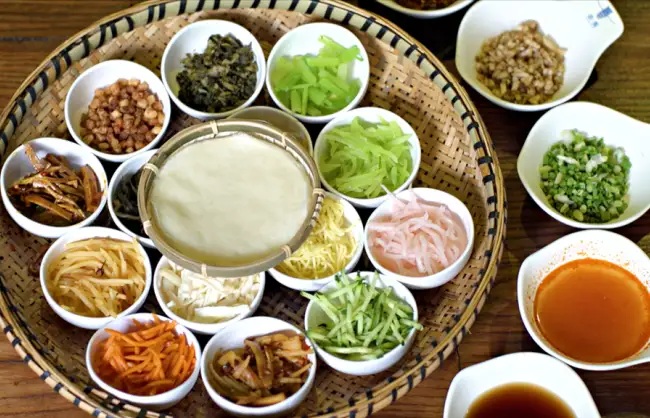
- Si Wa Wa: Si Wa Wa is a simple Guiyang snack that looks like a swaddled infant. It has a thin and elastic skin made from flour, and is filled with over 10 types of julienned vegetables, and served with a special sauce.
How Many Days to Spend in Guizhou?
We recommend covering the highlighted natural beauties, ethnic cultures, and cultural heritages when planning a trip to Guizhou. The exact duration of your Guizhou trip depends on the travel style you like.
If with limited time, you can experience some of its highlights like ethnic villages, Huangguoshu Waterfall, and Fanjingshan in just a few days. Typically, the ideal timeframe is about 5-10 days to immerse yourself into its highlights at a relatively leisure pace. See below the suggested time and itinerary for different destinations in Guizhou.
Guiyang: 1-2 days
Spend half a day for arrival by flight or train. The rest time is for you to rest and explore its landmarks like Jiaxiu Tower, Qianling Mountain Park, and the nearby Qingyan Ancient Town.
Anshun: 1-2 days
Enjoy your time in the Huangguoshu Waterfall Scenic Area, and head to the Longgong Palace to marvel at the underground caves and Tianlong Tunpu to experience ancient Han Chinese culture.
You can arrange these three attractions in one day. Or, thoroughly explore the grand Huangguoshu Waterfall, Doupotang Waterfall, and Tianxingqiao Scenic Area in one day. And visit the underground Longgong Palce Cave and Tianlong Tunpu Village the other day.
Qiandongnan: 2-4 days
It is where the many ethnic villages and Zhenyuan Ancient Town are located.
We suggest to spend 1 day in Xijiang Qianhu Miao Village, 1 day in Langde Miao Village or other nearby Miao Villages. If you have the flexibility, you can also spend 1 day to visit Zhaoxing Dong Village or other Dong villages, and 1 another day at Zhenyuan Ancient Town.
Fanjing Mountain: 1 day
Explore the rich Buddhist culture, ancient temples, and iconic sites like Mushroom Stone, and Hongyun Golden Summit by either hiking or cable car.
Libo: 1 day
Spend one day in the Small Seven-hole Scenic Area.
Xingyi: 1 day
You can appreciate the karst peak forest in the Wanfenglin Scenic Area, enjoy hiking in the Maling River Canyon, and admire the waterfall clusters.
Recommended Guizhou Tour Packages:
- 6 Days Magic Guizhou Hiking Tour with Hidden Tribes
- 7 Days Guizhou In-depth Tour with Rich Experiences
- 7 Days Guizhou Cave Camping, Terrace Hiking & Culture Tour
FAQs about Guizhou Travel
What is Guizhou famous for?
Guizhou is famous for natural wonders, abundant ethnic cultures and characteristic foods..
Which is better as a base: Guiyang, Kaili, or Tongren?
Guiyang is better. Because it is the transportation hub of the whole province.
What are the main ethnic groups in Guizhou?
Apart from the Han people, the main ethnic minorities are Miao, Buyi, Dong, Tujia, Yi, Gelao, etc.
What cultural etiquette should I be aware of when visiting Miao and Dong villages?
When entering the Miao villages, the villager may make a toast to you to show his hospitality. If you can not drink, just explain clearly. The sacrificial sites are sacred places, do not touch or comment. If you want to take photos of the people or residences, ask for permission in advance.
Travel with China Xian Tour to Explore Guizhou’s Natural & Cultural Essences
Every tourist will include at least an ethnic village in his Guizhou tour, but the transportation is always a trouble, because he needs to change the vehicle and the travel time is long. China Xian Tour is willing to solve the problem for you. We can arrange a local driver, then you will have more time for sightseeing. Meanwhile, we can also tailor a trip to cover the nearby scenic spots. So do not hesitate to contact us.