



Guizhou Province in China is best known for two things, magnificent natural landscapes and rich cultural heritages of various Guizhou ethnic groups. It is one of the provinces with the largest number of ethnic minorities in China. People of over 15 ethnic minorities have lived in Guizhou for generations, such as Miao, Buyei, Dong, Tujia, Yi, and Gelao people.
These ethnicities are still practicing their ancient traditions, including costumes, languages, festivals, folk dances and songs, and craft arts. Many people travel to China hoping to experience the most authentic ethnic culture. Guizhou is the ideal destination to do so. Here’re the top 12 ethnic villages in Guizhou for your China ethnic culture tour.
Content Preview
- 1. Xijiang Miao Village
- 2. Langde Miao Village
- 3. Matang Gejia Village
- 4. Basha Miao Village
- 5. Zhaoxing Dong Village
- 6. Huanggang Dong Village
- 7. Shiqiao Miao Village
- 8. Dali Dong Village
- 9. Sanbao Dong Village
- 10. Kongbai Miao Village
- 11. Yaoshan Yao Village
- 12. Gaodang Buyi Village
- How to Plan a Guizhou Tour with Ethnic Villages
- Explore Guizhou with China Xian Tour
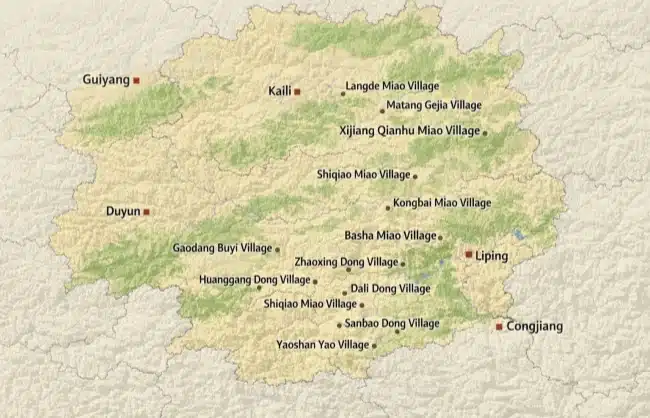
1. Xijiang Miao Village
- Location: About 35 km (1 hour drive) from Kaili. ~200 km (2.5–3 hrs) from Guiyang
- Recommended visiting time: 1–2 days
- Ticket: CNY 90-110 (includes shuttle bus inside scenic area)
- Top things to do:
- Start your exploration with the “Twelve Welcome Drinks” ceremony
- Watch Miao song & dance performances
- Try on traditional Miao costumes
- Nearby attractions/villages:
- Langde Miao Village
- Leishan County

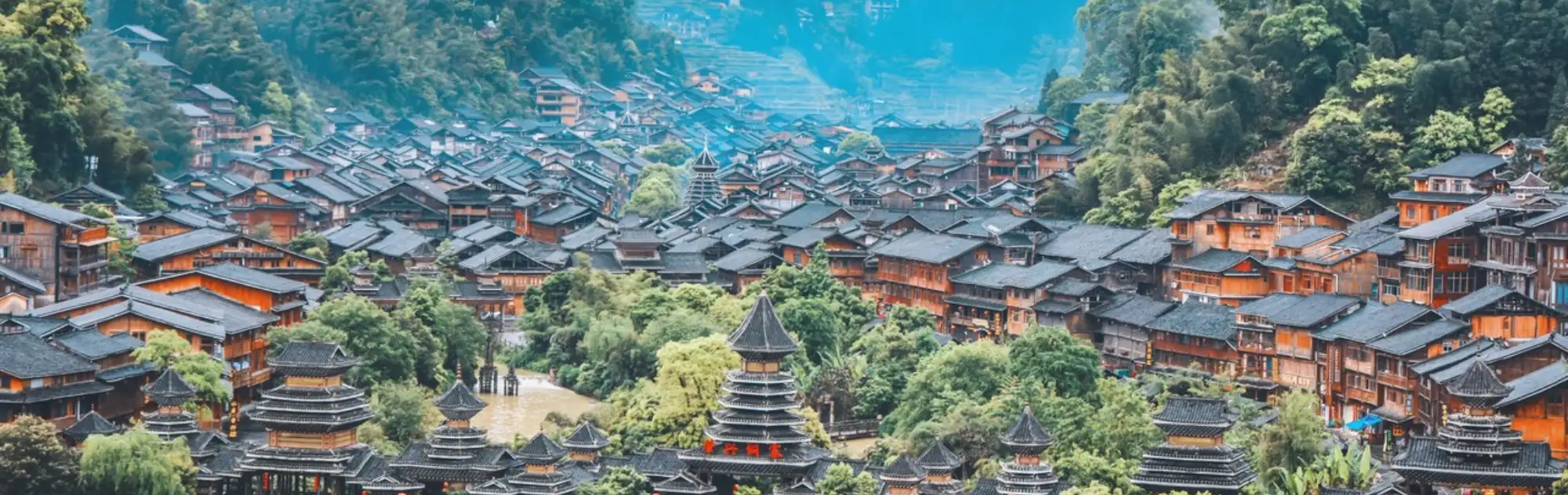
Xijiang Miao Village, or Xijiang Qianhu Miao Village, is the largest and most famous Miao village in China. It includes more than ten small villages which are home to more than 6,000 villagers. It is the most popular ethnic village in Guizhou to visit for its rich local culture.
As soon as you enter Xijiang Miao Village, you’ll be welcomed with Miao traditional custom, Twelve Welcome Drinks, a gesture to welcome visitors with local wine. Villagers dressed in traditional Miao costumes will offer you twelve rounds of drinks to show their hospitality.
As you walk around the village, you’ll see stilted wooden houses layered on top of each other. During local ethnic festivals, especially the Spring Festival, villagers put on all kinds of performances as celebrations. It’s a good idea to plan your Guizhou trip during these festive times.

Experience Guizhou's minority villages and stunning karst landscapes — from paper-making in Shiqiao Miao Village to batik art at Matang Gejia Village, plus Asia's largest waterfall.
2. Langde Miao Village
- Location: About 27 km (40 min) from Kaili. ~190 km from Guiyang
- Recommended visiting time: 3-4 hours
- Ticket: ~CNY 50–60(sightseeing bus included)
- Top things to do:
- Watch Lusheng dance performances after experiencing “road-blocking wine” welcome ritual
- Explore Diaojiaolou (wooden stilt houses without nails)
- Nearby attractions/villages:
- Xijiang Qianhu Miao Village
- Matang Gejia Village
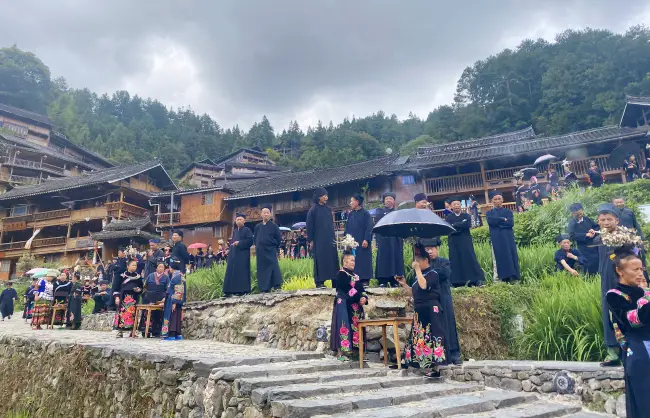
Langde Miao Village in Kaili city of Guizhou is divided into two parts, Upper Langde Miao Village and Lower Langde Miao Village. Upper Langde Miao Village is open to visitors. Compared with Xijiang Miao Village, it is smaller and less developed with only about 500 villagers.
Despite its size, Langde Miao Village is referred to as the “Miao Ethnic Village Museum,” “Hometown of Chinese Folk Song and Dance Art,” and “Hometown of Lusheng.” It stands out among other ethnic villages in Guizhou for its significant cultural value.
The stilted houses, or Diaojiaolou, are amazing to witness, as the constructions involve no nails or rivets. Women in the village wear long skirts, so Langde is called the “Long Skirt Village.” There’s also a traditional welcome ceremony where villagers will “block the road” with rounds of rice wine. After the toast, there’ll be a music and dance performance with Lusheng, a traditional reed instrument.

Discover Guizhou's ethnic Miao culture in Langde and Shiqiao villages, learn Gejia batik art in Matang Village, and witness the thundering Huangguoshu Waterfall, Asia's largest.
3. Matang Gejia Village
- Location: About 18–20 km (around 30 minutes) from Kaili
- Recommended Visiting Time: 2-3hours
- Ticket: Free
- Top Things to Do:
- Join batik-making workshops and enjoy Gejia ethnic costumes and embroidery
- Nearby Attractions/Villages:
- Langde Miao Village
- Xijiang Village
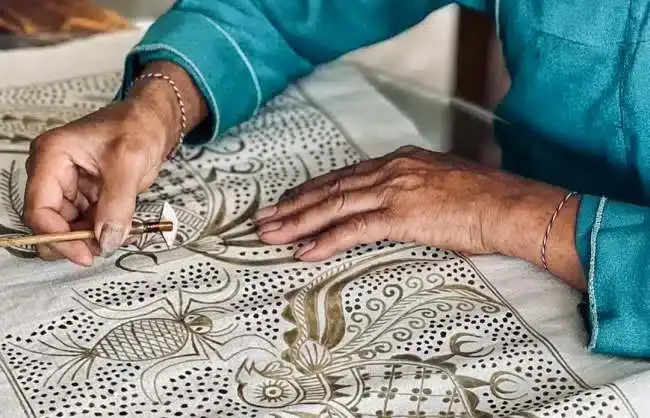
Matang Gejia Village is a village of the Gejia ethnic group, a branch of the Miao ethnic group with its own unique culture and costumes. The colorful and thoughtful design of their outfits will be one of the first things to notice.
Matang Gejia Village is best known for its batik art, a fabric dyeing technique using natural wax to make exquisite patterns. They are colorful and bright, in shapes of flowers, birds, animals, and geometric shapes. On a Guizhou tour to Matang Gejia Village, you’ll have the chance to experience batik art at a local workshop.

Witness Asia's largest waterfall at Huangguoshu, explore Miao ethnic villages, and ascend the sacred Mount Fanjing in Guizhou.
4. Basha Miao Village
- Location: Located in Congjiang County, about 7 km (15 minutes) from Congjiang County. Around 240–260 km from Guiyang
- Recommended Visiting Time: 2–3 hours
- Ticket: Around CNY 40-100 (Entry ticket is CNY 40)
- Top Things to Do:
- Watch gun performances (unique cultural heritage) and see the ceremonial sickle haircut ritual
- Nearby Attractions/Villages:
- Zhaoxing Dong Village
- Congjiang County town
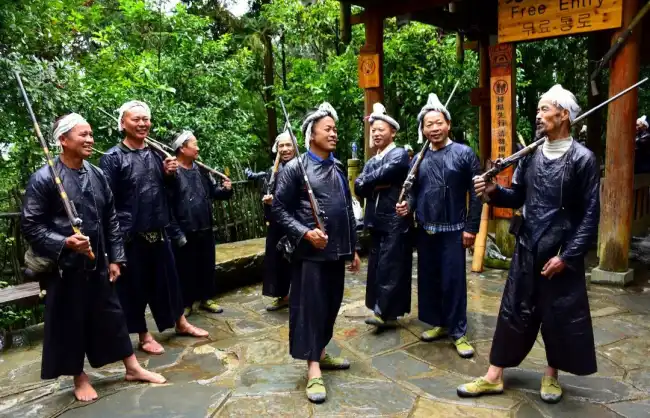
Basha Miao Village is best known as the last gunman tribe in China. Despite the strict firearm regulations in China, men of Basha are allowed to carry and use guns as a means of preserving their traditions. You’ll notice hunting rifles and knives as part of their outfits. They’ll welcome you with a traditional ceremony.
Craft silver jewelry with Miao artisans, learn ancient paper-making, and hike terraced landscapes to hidden minority villages.
5. Zhaoxing Dong Village
- Location: About 5–10 km from Congjiang Railway Station.
- Recommended Visiting Time: 1 day or overnight
- Ticket: CNY 80-100 (Entry is CNY 80)
- Top Things to Do:
- See the Five Drum Towers (key Dong cultural symbols)
- And feel the lively atmosphere lit by the Dong Grand Song
- Nearby Attractions/Villages:
- Tang’an Dong Village
- Basha Miao Village
Zhaoxing Dong Village is one of the largest Dong ethnic villages in Guizhou and China with over 1,200 households and a population exceeding 4,000. It has been ranked “one of the six most beautiful villages in China” by Chinese National Geographic and “one of the 33 most attractive destinations in the world” by National Geographic. It’s an essential stop on your China tour if you’re interested in Guizhou ethnic minorities.
The most famous landmark of Zhaoxing Dong Village is the five drum towers. The area is the village’s social and cultural hub. People like to put on performances and celebrations there, including singing, dancing, playing the Lusheng, and hosting festivals.

6. Huanggang Dong Village
- Location: Located in Liping County, about 40–50 km (around 1 hour) from Liping.
- Recommended Visiting Time: 2-3hours
- Ticket: Free
- Top Things to Do:
- Visit Wind and Rain Bridges at the village entrance
- Explore the five drum towers
- Nearby Attractions/Villages:
- Zhaoxing Dong Village
- Liping
Huanggang Dong Village is one of the most primitive ethnic villages in Guizhou. It is marked by several landmarks, the Wind and Rain Bridges, and the five drum towers. The bridges stand at the entrance to the village, carved with dragons and phoenixes to symbolize good fortune and prosperity. You should join the village’s festival celebrations if you travel to Guizhou during those times.
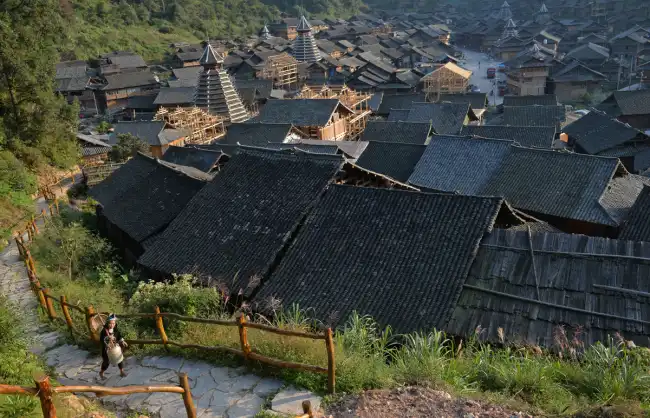
Delve into Guizhou's Miao and Dong minority cultures through traditional welcome ceremonies, wax dyeing, ancient paper making, and visits to the last gun tribe village.
7. Shiqiao Miao Village
- Location: About 15–20 km (around 30 minutes) from Kaili
- Recommended Visiting Time: 1-3 hours
- Ticket: Free
- Top Things to Do:
- Get some hands-on experience of Shiqiao ancient papermaking
- Nearby Attractions/Villages:
- Matang Gejia Village
- Langde Miao Village
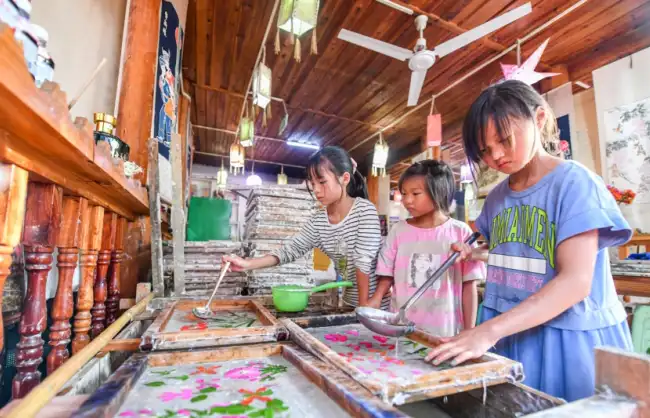
Shiqiao Miao Village, or Stone Bridge Miao Village, is most famous for “Shiqiao Ancient Papermaking.” Its thriving paper industry began as early as Tang Dynasty. The techniques and craftsmanship have been preserved and passed down through generations. Today, there are more than 60 households still practicing their paper-making traditions. You can experience the art yourself on your visit.
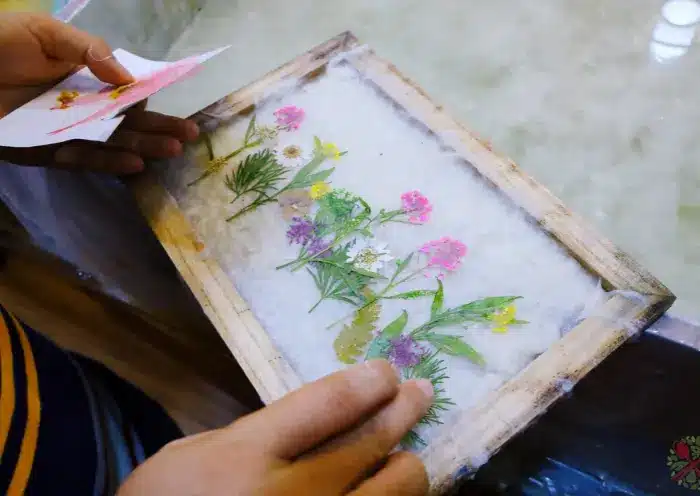
Conquer the sacred peaks of Mount Fanjing and explore Miao paper-making crafts in Shiqiao Village near Kaili.
8. Dali Dong Village
- Location: Located in Liping County, about 25–30 km from Liping
- Recommended Visiting Time: 1-2 hours
- Ticket: CNY 40
- Top Things to Do:
- Explore hundreds of ancient trees and untouched village landscapes
- Or if you’re interested, learn the history of the village’s five legendary bridges
- Nearby Attractions/Villages:
- Huanggang Dong Village
- Zhaoxing Dong Village
Dali Dong Village is a primitive village hidden deep in the mountains of Guizhou. Once you find it, you’ll discover ancient trees, stone-paved alleys with stone carvings, and courtyards that have been home to generations of Dong people. Just travel for another 2 km (1.2 miles), and you’ll reach a three-tiered waterfall available for hiking.
9. Sanbao Dong Village
- Location: Located in Rongjiang County, about 10 km from Rongjiang County. ~130 km from Kaili.
- Recommended Visiting Time: 2-3 hours
- Ticket: Free
- Top Things to Do:
- You can explore the Sanbao Drum Tower, or if time allows, join the Sama Festival (during
- lunar January–February)
- Watch Dong pipa performances
- Nearby Attractions/Villages:
- Rongjiang County
- Zhaoxing Dong Village
Sanbao Dong Village is the largest Dong minority village in China. You can experience the most authentic Dong culture here. Every year, during the first and second month of the lunar calendar, there is the oldest and grandest traditional festival of Dong people, “Sama Festival.” There’ll be a huge celebration including the famous Dong pipa performance.
Sanbao Drum Tower is the most iconic landmark in the village. According to the locals, it was built in Qing Dynasty, has since been the social gathering spot for the entire village. It is recognized by Guinness World Record as the tallest drum tower in the world.
10. Kongbai Miao Village
- Location: Located in Leishan County, within the Kaili–Leishan ethnic tourism region (exact distance varies by route. Generally within 50 km of Kaili)
- Recommended Visiting Time: 2-3 hours
- Ticket: Free
- Top Things to Do:
- You can learn Miao silver-making craftsmanship or pay a visit to local silversmith workshops
- Nearby Attractions/Villages:
- Xijiang Qianhu Miao Village
- Langde Miao Village
Silver making is one of the three treasures of Miao culture. You can observe it from their stunning outfits and accessories. Kongbai Miao Village is known as the “Last Silversmith Miao Village” in China. There has been a thriving silverwork industry in the village since Qing Dynasty.
There’s a silverwork workshop displaying beautiful silver jewelries and traditional accessories, including necklaces, bracelets, and earrings. There’re silversmiths on site demonstrating the production process. You can participate in the process yourself if you’re interested.
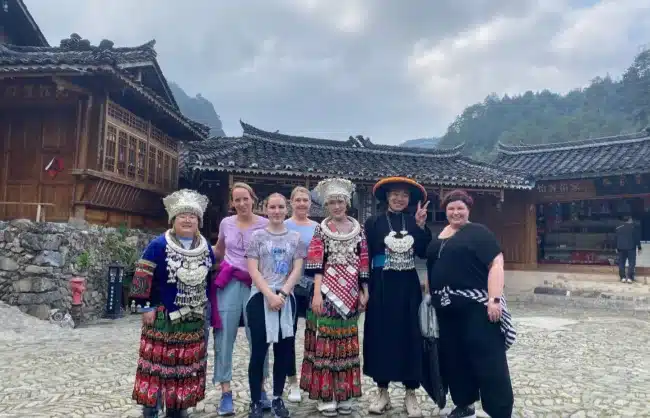
Discover Guizhou's minority cultures hands-on — catch fish, try batik dyeing and silver crafting, cook farm-fresh food, and join a long-table banquet in remote mountain villages.
11. Yaoshan Yao Village
- Location: Located in Libo County, about 30 km from Libo. ~300 km from Guiyang
- Recommended Visiting Time: Half day
- Ticket: Around CNY 80–100 (shuttle included)
- Top Things to Do:
- Hillside village with terrace views are really worth visiting
- Nearby Attractions/Villages:
- Xiaoqikong Scenic Area
- Libo
Yaoshan Yao Village is home to the Yao ethnic group. The Yao villagers here have the best-preserved ancient traditions, from songs and dances, clothing, architecture, to weddings, sacrifices and other cultural practices. Their cultural preservation has been recognized by UNESCO and named “the living fossil of human civilization.”
Yaoshan Yao Village is built on a mountain slope, overlooking a valley with terraced fields. This ethnic village in Guizhou is the only other place where people can legally own firearms. Villagers are dressed in colorful costumes and embroidered shoes.
12. Gaodang Buyi Village
- Location: Located in Duyun, about 130 km from Kaili
- Recommended Visiting Time: 2-3 hours
- Ticket: CNY 25-50
- Top Things to Do:
- You can explore Buyi stone houses and architecture
- Nearby Attractions/Villages:
- Duyun
- Libo Scenic Area
Gaodang Buyi Village is home to one of the oldest Guizhou ethnic groups, Buyi people. This quiet village sits in a valley with lush bamboo forests and clear streams flowing through.
Unlike most other ethnic villages we’ve mentioned here, the resident houses of Buyi people are mostly made of stone. They have a rich and ancient stone culture, including stone carving, grinding, building, and worship. There’s a stone museum where you can see the relationship between Buyi people and stones.
How to Plan a Guizhou Tour with Ethnic Villages
If you want to take a deep exploration of ethnic culture, then you should focus more on Southeast Guizhou, especially the areas around Kaili in the Qiandongnan Miao and Dong Autonomous Prefecture. The large area allows you to meet many different Miao and Dong villages, and you can easily reach to them from Guiyang. Usually, travelers start from Guiyang, then moves east to Kaili for Miao villages. Then continue traveling south to Rongjiang, Congjiang, and Zhaoxing Dong Village for Dong culture.
Suggested Trip Length
- 2–4 Days: For visitors only have 2-4 days, focus on Kaili and nearby Miao villages. Visit Langde Miao Village and Matang Gejia Village, then spend one full day in Xijiang Qianhu Miao Village (day + night views)
- 5–6 Days (Recommended): If you can have 5-6 days exploring Guizhou, try visitboth Miao and Dong villages to feel different charms. Then travel to south to Rongjiang and Congjiang and also visit Zhaoxing Dong Village to see the classic Dong culture. If you have extra time, optionally include Basha Miao Village or Huanggang Dong Village for more authentic experiences
- 6–8 Days: 6-8 days are enough to see not only the ethic culture but also combine villages with top highlights in Guizhou. Add Zhenyuan Ancient Town, Mount Fanjingto your travel list. Don’t forget Huangguoshu Waterfall and Xiaoqikong Scenic Area
Explore Guizhou with China Xian Tour
Guizhou is a treasured place with breathtaking landscapes but also colorful ethnic culture. Having a Guizhou tour allows you to see one of the most lively sides of this province. So pack your bags, lace up your hiking boots, and get ready to explore with China Xian Tour. With over 20 years of expertise, we help countless travelers annually to explore Guizhou and other Chinese cities incredible beauty. Don’t hesitate to reach out and start planning your unforgettable best China tour to Guizhou today.