

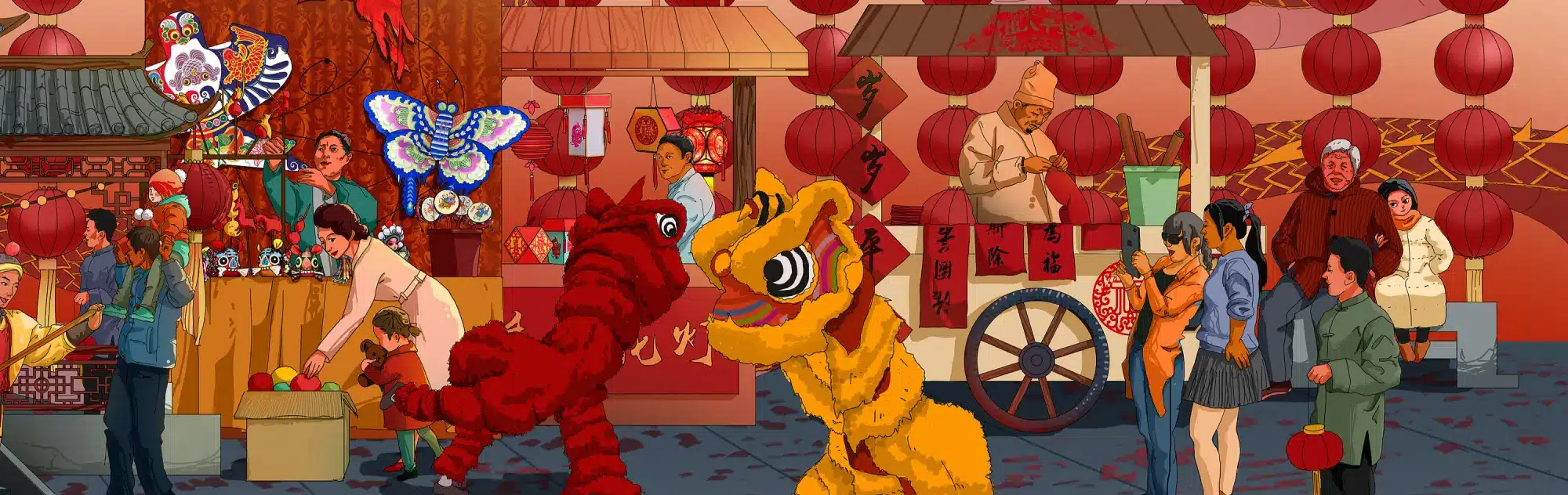
Chinese New Year (also called Spring Festival or Lunar New Year) is the most popular holiday in China and Chinese communities around the world.
As one of the most important and distinctive traditional Chinese folk festivals, Chinese New Year carries rich cultural connotations and profound national emotions. It originated from the ritual activities of praying for good years at the beginning of each lunar year during the ancient Shang Dynasty period.
As time goes by, Chinese New Year has gradually evolved into a grand folk festival that combines worshiping gods and ancestors, praying for blessings and warding off evil spirits, reuniting with family and friends, celebrating, entertainment, and dining. On this festival, people will engage in a series of celebration activities, such as pasting Spring Festival couplets, sweeping dust, setting off firecrackers, having New Year’s Eve dinner, and paying New Year’s call to pray for peace, happiness, and prosperity in the coming year.
In 2006, Spring Festival Folk Customs was included in the first batch of China’s national intangible cultural heritage list. In 2024, the Chinese New Year was included in UNESCO World Cultural Heritage.
Content Preview
- When is Chinese New Year
- Origins of Chinese New Year
- Chinese New Year Traditions & Celebrations
- Chinese New Year Food
- How to Say Happy New Year in Chinese?
- Chinese New Year Gifts
- Transport During Spring Festival
- FAQs about Chinese New Year
- Experience China’s Traditional Festivals with China Xian Tour
When is Chinese New Year
The Spring Festival falls on the first day of the Chinese Lunar New Year, marking the beginning of a new year. Due to the incomplete correspondence between the lunar calendar and the Gregorian calendar, the Gregorian date of the Spring Festival (the first day of the first lunar month) varies every year, ranging from January 21 to February 20.
The Spring Festival of 2026 will arrive on February 17th of the Gregorian calendar. On this day, people from all over China will immerse themselves in a strong festive atmosphere, with every household decorating red and full of joy.
Chinese New Year 2026 Holiday: from February 15th ( one day before Lunar New Year’s Eve, Sunday) to February 23rd (the 7th day of the first lunar month, Monday), for a total of 9 days.
Chinese New Year Calendar
Year |
Chinese New Year Date |
Chinese Zodiac Animal |
2021 |
February 12th |
|
2022 |
February 1st |
|
2023 |
January 22th |
|
2024 |
February 10th |
|
2025 |
January 29th |
|
February 17th |
||
2027 |
February 6th |
|
2028 |
January 26th |
|
2029 |
February 13th |
Rooster |
2030 |
February 3rd |
Note: From 2025 until 2029, the Chinese New Year’s Eve falls on the 29th day of the 12th lunar month for five consecutive years.
In ancient times, Chinese New Year was closely related to astronomical phenomena and agricultural production and life. Nowadays, the Spring Festival is seen more as a crucial moment for family reunion and cultural inheritance.
How Long is Chinese New Year Celebration?
Chinese New Year technically lasts for 15 days. Modern people set the Spring Festival on the first day of the first lunar month, ending on the 15th day of the first lunar month (Lantern Festival), with New Year’s Eve and the first day of the first lunar month as the climax.
However, in the folk traditional sense, Chinese New Year starts from the Kitchen God Worshiping on the 23rd of the 12th lunar month (or even the Laba Festival), until the 19th of the first lunar month.
Origins of Chinese New Year
Naming Origin
The name “Spring Festival” literally means a festival celebrating the arrival of spring. Because it marks the beginning of the Lunar New Year and coincides with the return of spring and the revival of all things, people name it “Spring Festival”. It is not only a special moment symbolizing rebirth, hope, and reunion, but also reflects the reverence and respect for time and nature in traditional Chinese culture.
All things are based on the heaven, and humans are based on their ancestors. Praying for good years and worshiping heaven and ancestors, which is like starting anew. The origin of Chinese New Year contains profound cultural connotations of China.
Legend of Nian Monster
There is a legend about the origin of Chinese New Year. In ancient China, there was a monster called “Nian”, which had long antennae on its head and was extremely fierce. Nian lived deep underwater all year round and only climbed ashore on New Year’s Eve, devouring livestock and harming human lives. Therefore, on New Year’s Eve, people fled to the deep mountains to avoid the harm of the Nian monster.
Later one New Year’s Eve, an elderly beggar came from outside the village and told people the methods to drive away the Nian monster. Nian was most afraid of red, flames, and explosions. From then on, every New Year’s Eve, every household would stick red couplets and set off firecrackers; make candles burning brightly all night and keep watch for the New Year. Early in the morning of the first day of the lunar new year, people also have to visit and greet each other with family and friends. This custom of Chinese New Year has become increasingly popular with time.
Chinese New Year Traditions & Celebrations
Although the Spring Festival is scheduled on the first day of the first lunar month, the activities during Chinese New Year are not limited to just that day. From the 23rd day of the 12th lunar month at year end, people start to be busy with the Lunar New Year, and all activities have a common theme – bidding farewell to the old and welcoming the new.
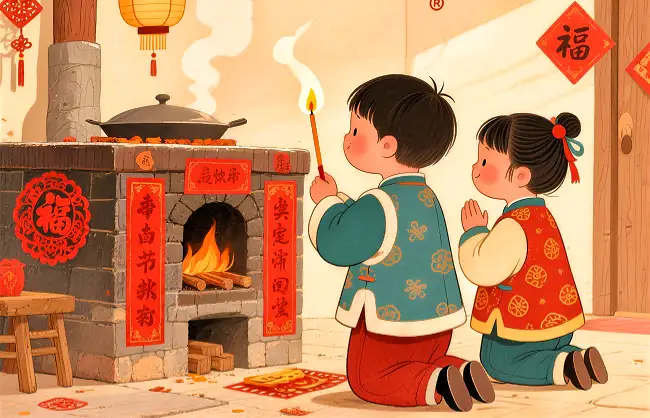
Kitchen God Worshiping (祭灶)
Chinese New Year usually begins with the ceremony of offering sacrifices to the Kitchen God. It is a traditional custom that has a great influence and is widely spread among Chinese people.
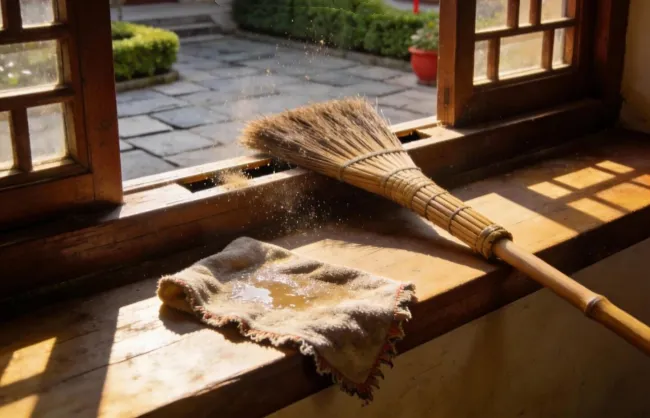
Sweeping Dust (扫尘)
On the 24th day of the 12th lunar month, there is a custom of sweeping dust (aka sweeping houses). It is the year-end household cleaning, symbolizing the elimination of bad luck of the past year.
Spring Festival Shopping (办年货)
It is an important activity before Chinese New Year. The process of purchasing all Chinese New Year’s goods, including food, wearing, using, pasting (New Year’s red), gifts, etc., is collectively referred to as Spring Festival shopping.
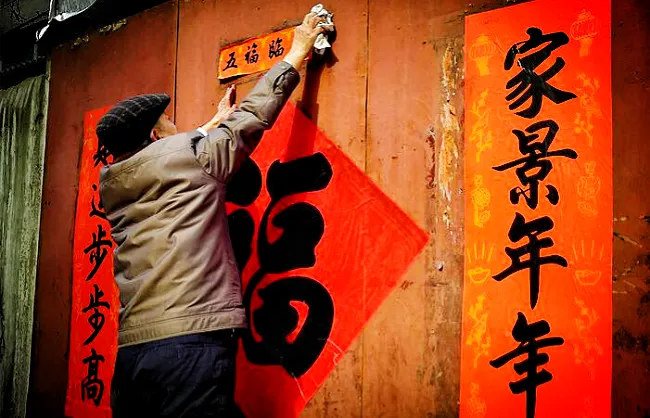
Putting up New Year Decorations (贴年红)
On the 29th or 30th day of the 12th lunar month, every household pastes “New Year’s red” referring to Spring Festival Couplets, Door Gods, New Year Painting, Fortune characters, Paper-cutting window decorations, and others, which are red festive elements posted during Spring festival, so they are collectively called “New Year’s red”.
Ancestral Worshiping (祭祖)
It is one of the oldest customs during the Spring Festival. Ancestral worshiping usually takes place on the last day of the 12th lunar month, and varies in different regions due to different traditions. Worshiping ancestors during Lunar New Year is not only a way of mourning for our ancestors, but also praying for the ancestors to bless the peace of the coming year.
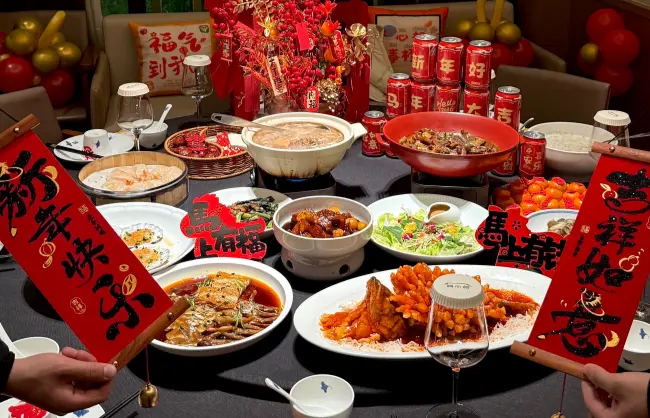
Having Family Reunion Dinner (年夜饭)
On New Year’s Eve, all family members gather together to enjoy a sumptuous dinner. This is an important part of Chinese New Year Celebration, where people prepare various delicacies such as fish, meat, vegetables, etc., symbolizing “surplus every year” and “steady progress”.
Staying-up (守岁)
The custom of staying-up on Chinese New Year’s Eve has a long history. On New Year’s Eve, all houses are lit up, and families gather together. The lights stay on all night, waiting for the time to bid farewell to the old and welcome the new.
Learn more about Chinese festivals on fantastic China culture tours.
Watching Spring Festival Gala (春晚)
Since 1983, the Spring Festival Gala held by CCTV has become a “new custom” for Chinese people and an unmissable feast on New Year’s Eve every year. It embodies the affection and nostalgia of more than one billion Chinese people.
Setting off Firecrackers (爆竹)
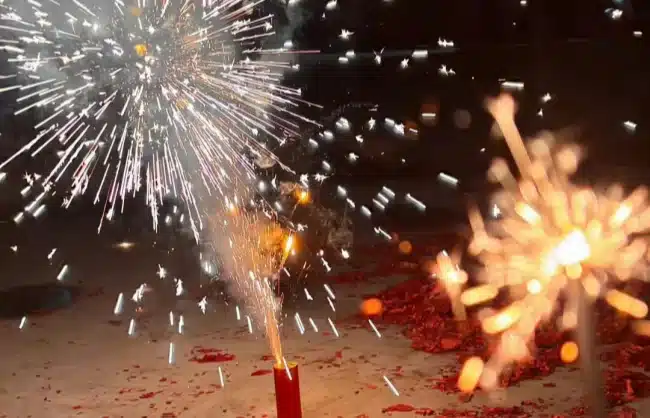
During Chinese New Year, people will set off firecrackers on New Year’s Eve and the first day of the first lunar month. Use the sound of firecrackers to dispel the old and welcome the new, creating a festive and lively atmosphere.
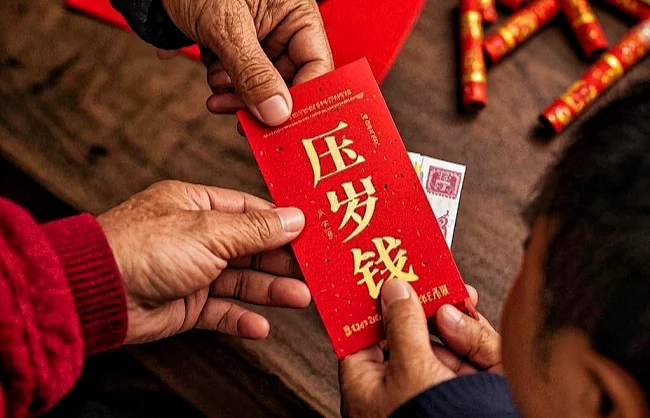
Giving Chinese New Year Red Envelope (红包)
During Spring Festival, elders should distribute pre-prepared lucky money to younger generations as a Lunar New Year gift. The New Year Red Envelope symbolizes warding off evil spirits and blessing peace in Chinese folk culture.
Wearing New Clothes (穿新衣)
On the first day of the first lunar month, people wear new clothes, symbolizing the departure of the old and the arrival of the new, the removal of bad luck, and the blessing of good health and good fortune for the coming year.
Wearing new clothes to welcome the Lunar New Year has a sense of ceremony. It is best to choose bright, colorful, and warm Chinese New Year clothes, especially red clothes, because red symbolizes auspiciousness and festivity. Not only can it make you look more energetic and confident, but it can also bring good luck and a good mood to you and your family.
Paying New Year Visits (拜年)
Visiting relatives and friends is a way to celebrate Chinese New Year, expressing care for each other and wishing for a better life in the coming year. It is customary for the younger generation to visit their elders, show respect, and wish them health and longevity. People also go to temples to burn incense, worship Buddha, and pray for blessings.
Going to the Temple Fair (逛庙会)
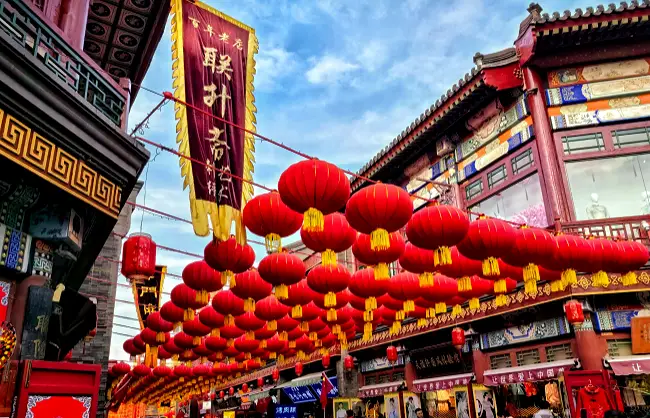
Going to the temple fair in Beijing, Shanghai, Foshan, Taiyuan, and some other cities, is one of the important folk activities during Chinese New Year. In north China, temple fairs are usually held from the end of the 12th lunar month to the 15th day of the first lunar month, creating a festive and lively atmosphere; while in south China, dragon and lion dances are usually held, symbolizing praying for good weather, peace, and health.
Welcoming the God of Wealth (迎财神)
The fifth day of the first lunar month, according to Chinese folk customs, is the birthday of the five Gods of Wealth. Therefore, it is customary to welcome the God of Wealth into one’s home and bless the family with abundant financial resources on this day.
This day is also commonly known as “Break Five” (破五), which means taboos of the previous few days (such as do not break ceramics or glass, do not clean or sweep, do not demand debt repayment, do not say negative words, avoid fighting and crying) are now over.
Concluding on the Lantern Festival (元宵节)
The Lunar New Year celebrations conclude with the Lantern Festival, falling on March 3rd, 2026, which marks the first full moon of the lunar year.
Lantern Festival is famous for its Yuan Xiao (sweet rice balls), whose round shape symbolizes family unity and togetherness. Cities are illuminated with spectacular lantern displays, bringing a joyful end to the new year festivities and ushering in hopes for a prosperous year ahead.
Related reading: Chinese New Year Taboos and Superstitions
Chinese New Year Food
New Year’s Eve Dinner
On the New Year’s Eve dinner table, generally there are chicken (meaning good luck), fish (meaning surplus every year), oyster sauce (meaning good market), hair weeds (meaning rich), dried beancurd sticks (meaning abundance), lotus root (meaning smart), lettuce (meaning money-making), sausage (meaning permanence) for good luck.
The amount of New Year’s Eve dishes in north China is relatively large, and the taste is mainly braised in soy sauce; the taste in south China is light; while China’s southwest and other regions have a spicy taste and distinct local characteristics.
Read More: The 15 Most Popular Chinese Dishes
Dumplings (Jiao Zi)
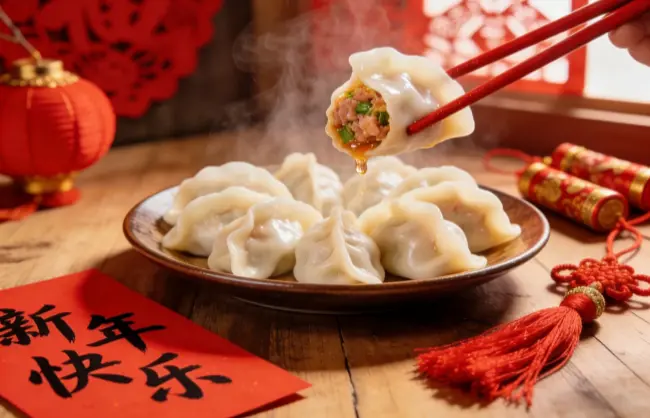
There is a tradition of eating dumplings during the Chinese New Year in north China, but dumplings are eaten on New Year’s Eve in some regions and on the first day of the lunar new year in other regions. Eating dumplings is a unique way to express people’s wishes for blessings and good fortune during the end of the old year and the beginning of new year.
Chinese New Year Cake (Nian Gao)
New Year cake belongs to the seasonal food of the Chinese New Year. It is a kind of cake steamed with glutinous rice flours. There are three colors: red, yellow, and white, symbolizing gold and silver. Eating rice cake during the Spring Festival symbolizes good luck, sweet life, and high prosperity every year.
Yuan Xiao (Rice Glue Ball)
The festival food in south China is called Yuan Xiao or rice sweet dumpling. It is one of the representatives of traditional Chinese snacks and is a spherical food made of glutinous rice flour. In Jiangsu, Shanghai and other places, it is customary to eat Yuan Xiao on the morning of the Lunar New Year’s Day.
How to Say Happy New Year in Chinese?
Here are some popular Chinese New Year Greetings:
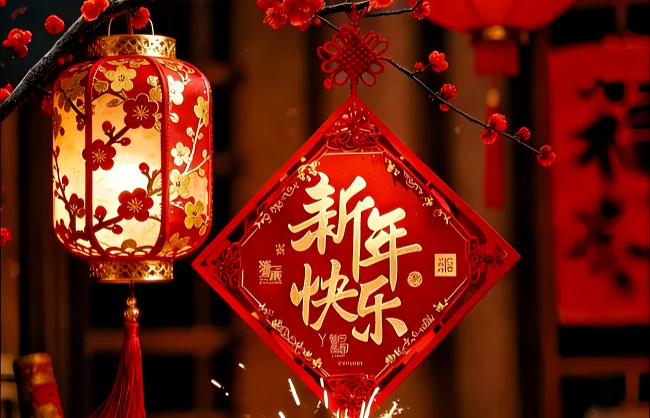
新年快乐 (xīn nián kuài lè) — Happy New Year!
恭喜发财 (gōng xǐ fā cái) — Wishing you prosperity!
新年好 — Good New Year!
万事如意 — May all go well with you!
大吉大利 — Lots of luck and profits!
幸福安康 — Happiness, Peace and Health!
阖家欢乐 — Wishing you a happy family!
生意兴隆 — Prosperous business!
步步高升 — Promotions at every step!
Happy Chinese New Year 2025!
祝你新年快乐,大吉大利,万事如意!—Wishing you a happy new year, good luck, and all the best!
Chinese New Year Gifts
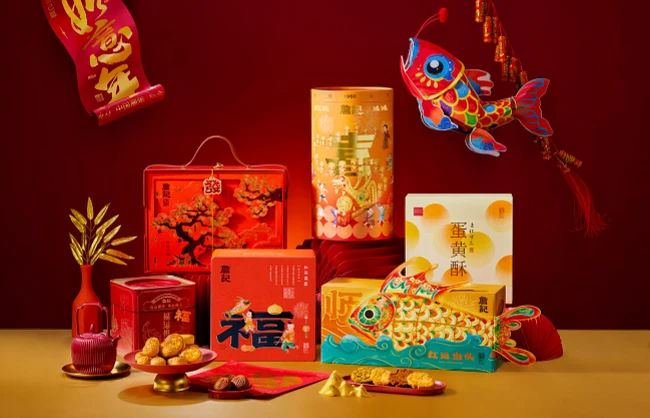
Giving gifts during the Chinese New Year is an opportunity to express blessings and heartfelt wishes. When choosing gifts, attention should be paid to practicality and the preferences of the recipient, as well as the festival cultural connotations and social etiquette. Here are some recommendations for Chinese New Year gifts:
- Food gift box: such as a box of exquisite candies, chocolates, or special pastries, snacks, or drinks.
- Home goods: such as a set of exquisite tableware, a warm desk lamp, a set of high-quality bedding, or a pot of green plants and flowers.
- Health care products: such as edible bird’s nest, Ejiao, etc. which have the effect of nourishing and keeping in good health.
- Electronic products: such as smart speakers, smart floor cleaning robots.
- Others: tea and alcohol, books, boutiques, red envelopes, jewelry, customized gifts
Transport During Spring Festival
China’s Spring Festival travel rush is the world’s largest population migration.
Transportation during Chinese New Year, abbreviated as “Spring Festival travel rush”, is divided by the Spring Festival, with 15 days before the festival and 25 days after, for a total of 40 days. In this time period, there will be over 2 billion population movements, accounting for nearly one-third of the world’s population.
The reason is that China has a large population, and Chinese New Year is a traditional reunion festival. People need to go home to celebrate the Festival. There are too many people on the way, so the transportation department needs to make every effort to ensure that passengers can go home and come back safely.
Welcome to start your China tours to experience traditional Chinese culture more deeply!
FAQs about Chinese New Year
How do families typically celebrate the reunion dinner?
The reunion dinner is usually on New Year’s Eve. All the family members gather together to enjoy a fancy dinner, which symbolizes family harmony, reunion and happiness.
When does the Chinese New Year begin each year?
It begins from January 1st in the lunar calendar. In solar calendar, it is usually between January 20th – February 20th.
Why are red decorations commonly used during the celebration?
Because in Chinese culture, red is the symbol of auspiciousness, joy and prosperity and it can drive out evil spirits and bring good lucks.
What foods are traditionally eaten during the Chinese New Year?
Traditionally, dumplings, rice cakes, fish, tangyuan and more foods are eaten because of their auspicious meaning.
What is the meaning behind giving red envelopes (hongbao)?
Giving red envelope is a tradition in China. The elders usually hope their kids will be healthy, happy and make progress in the coming year, so they will give red envelopes to them to pass blessings and good luck.
What are some common taboos or things to avoid doing during the New Year period to prevent bad luck?
The common things to avoid are that do not speak bad words, break things or sweep the floor (in case you sweep out the good luck).
Experience China’s Traditional Festivals with China Xian Tour
Besides Chinese New Year, the Lantern Festival, Mid-Autumn Festival, Dragon Boat Festival are also representative traditional festivals in China. If you are interested in any one of the festivals, China Xian Tour can recommend you the cities with strong festival atmosphere and then tailor a trip to include more unique experiences of the festival. We will also book the tickets for the train and scenic spots for you in advance, considering the short supply of tickets due to the vacation. So you will enjoy a more immersive and carefree tour with us. Just contact us right now.