

Chinese New Year, also known as the Spring Festival, is one of the most important and celebrated festivals in Chinese culture. Whether you’re planning a China tour or just curious about the traditions, there are some interesting and fun facts about Chinese New Year that you have to know to fully understand the rich customs, history, and fun behind this iconic celebration. From the world’s largest annual migration to why red would color everything in your eyes, let’s delve deeper into Chinese New Year.
Content Preview
- Essential Chinese New Year Celebration Facts
- Fun Chinese New Year Facts
- Chinese New Year Facts for Kids
- Historical & Cultural Facts
- FAQs about Chinese New Year
- Experience Chinese New Year with China Xian Tour
Essential Chinese New Year Celebration Facts
1. It’s Actually Called “Spring Festival” in China
When discussing Chinese New Year facts, one of the most important things you need to understand is that it’s actually called Chūn Jié (春节), or “Spring Festival” in China. Although the celebration usually takes place in the end of winter while it’s still cold and even freezing, the term “Spring Festival” already calls out people’s hope for new beginnings and the arrival of spring according to the traditional lunar calendar.
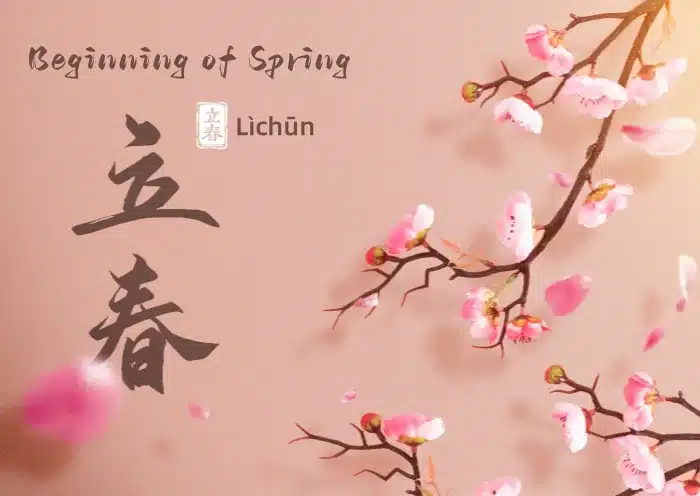
In Chinese culture, spring has a deep and profound meaning. Marked by Lìchūn (立春)(“Start of Spring”, one of the 24 solar terms), this season symbolizes renewal, hope, and the start of a new cycle, both in nature and in life. And that’s why the term “Spring Festival” is more meaningful to locals than the globally used “Chinese New Year.”
2. It’s the Most Important Festival in China
Among all traditional Chinese festivals, the Spring Festival is always valued as the most significant. It surpasses other major holidays like the Mid-Autumn Festival, Qingming Festival, and Dragon Boat Festival in terms of scale, meaning, and family involvement. And for many Chinese families, it would be the only time of year when everyone comes together for an extended holiday. Indeed, for Chinese people, the term “family reunion” is in many sense closely tied with Spring Festival.
3. Chinese New Year Dates Change Every Year
A key fact about the Chinese New Year is that it doesn’t fall on a fixed Gregorian calendar date. Instead, it’s based on the Chinese lunar calendar, which typically lands between January 21 and February 20. In 2026, it will fall on February 17.
This shifting schedule is one of the most interesting facts about Spring Festival, as it will be necessary for people to check the Chinese New Year calendar each year when planning travels.
4. Celebrations Last for 16 Days
The Chinese New Year festival isn’t just a one-day event. It stretches over 16 days, beginning on Chinese New Year’s Eve and ending with the Lantern Festival. Each day has unique traditions, and the 16 days will be separately arranged for events from family banquets to ancestor worship and lantern displays. Moreover, there are even some food that should be eaten on specific dates, such as tangyuan (sweet rice balls) on the first day of Chinese New Year.
5. Vibrant temple fairs are an important Chinese New Year tradition
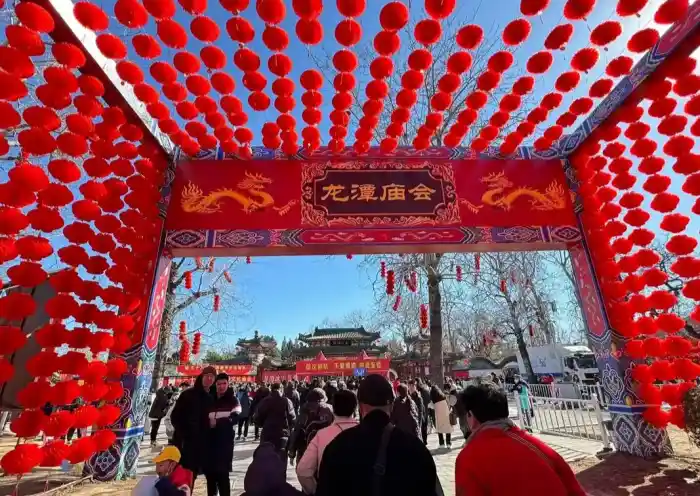
Around Chinese New Year, usually between the first day to the fifteenth day of the first lunar month, many cities in China, like Beijing, Chengdu, Xian, and Shanghai, will hold temple fairs in or around local famous temples. This is a lively part of the traditional Spring Festival celebration.
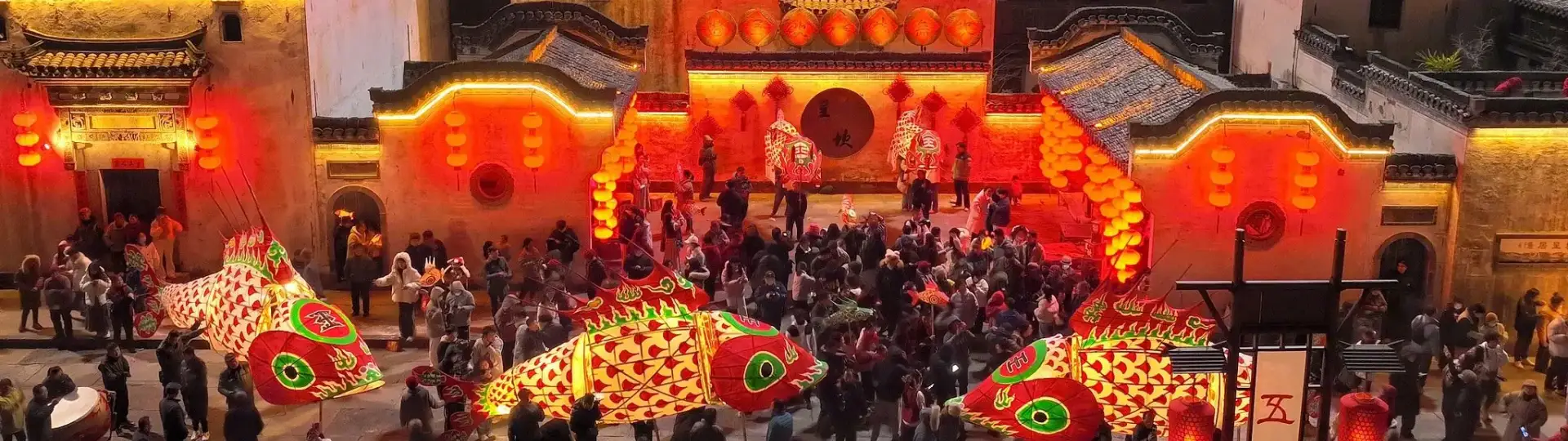
People attend these temple fairs to pray for good fortune in the next year. It is also a good opportunity to experience traditional culture and community vibes, as a lot of traditional performances and folk arts, such as dragon and lion dances, shadow puppetry, local snacks, handicrafts, and folk games will be showcased by then.
The temple fairs are traditionally popular among elder people, but gaining more and more popularity among young people in recent years.
6. It is customary to spring clean the home before the Chinese New Year celebration
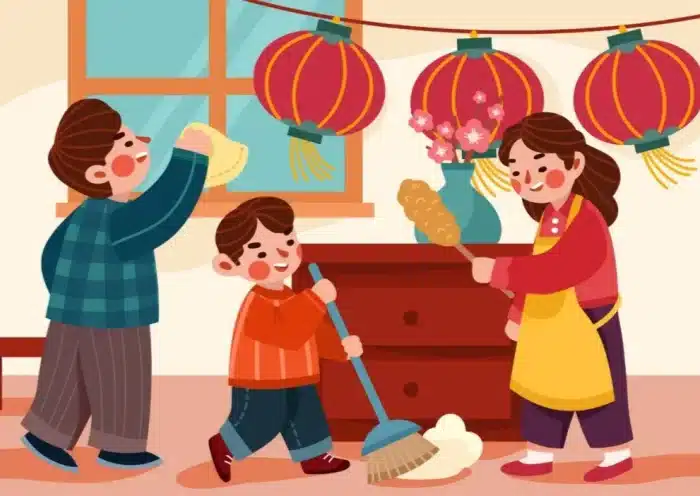
In the days leading up to the Spring Festival, families would thoroughly clean their homes in a tradition known as “sweeping away the dust” (扫尘). This practice symbolizes getting rid of last year’s bad luck, misfortune, and stagnant energy and to make room for good luck in the new beginning. However, cleaning is strictly avoided on the first day of the new year, as it is believed as an action of sweeping away the incoming good fortune.
7. Chinese New Year is celebrated in many other countries
Although it is called Chinese New Year in China, this celebration can be widely observed across other countries and regions with Chinese or East Asian communities, including Vietnam (Tết), South Korea (Seollal), Malaysia, Singapore, Indonesia, the Philippines, and Chinatowns around the world (such as in the U.S., Canada, Australia, and the UK).
In recent years, there’s been an ongoing discussion about the name of this festival: while Chinese New Year emphasizes its origin, Lunar New Year is considered a more inclusive term that acknowledges other cultures celebrating the same festival around the lunar calendar.
8. Chinese New Year causes the world’s largest annual migration
Known as Chunyun (春运), the Spring Festival travel rush is the largest annual human migration in the world. Hundreds of millions of people return to their hometowns to reunite with family. It typically begins 15 days before the New Year and lasts about 40 days.
During this time, trains, planes, and buses are packed, and major cities temporarily empty out as workers travel home. With the longer holiday, many also take the opportunity to travel domestically or abroad, making it a peak tourism period in China.
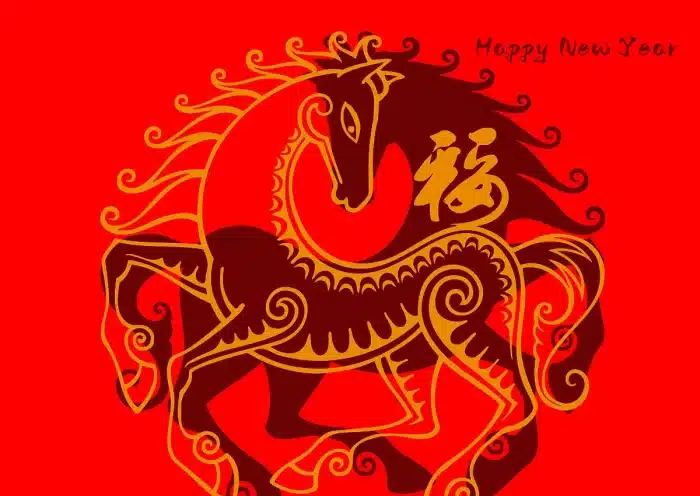
9. Each year is linked with a different animal sign of the zodiac — 2026 is the Horse Year
There are 12 Chinese zodiac in total. With each year associated with a special animal sign, 12 years then becomes a circle: Rat, Ox, Tiger, Rabbit, Dragon, Snake, Horse, Goat, Monkey, Rooster, Dog, and Pig.
These zodiac signs are deeply rooted in traditional beliefs and are said to influence people’s personality and their fortune for the year.
2025 is the Year of the Snake and 2026 will be the Year of the Horse. It’s a year for people with traits like energy, independence, and confidence.
10. People actively exchange greetings and wishes during the festival, especially on New Year’s Eve
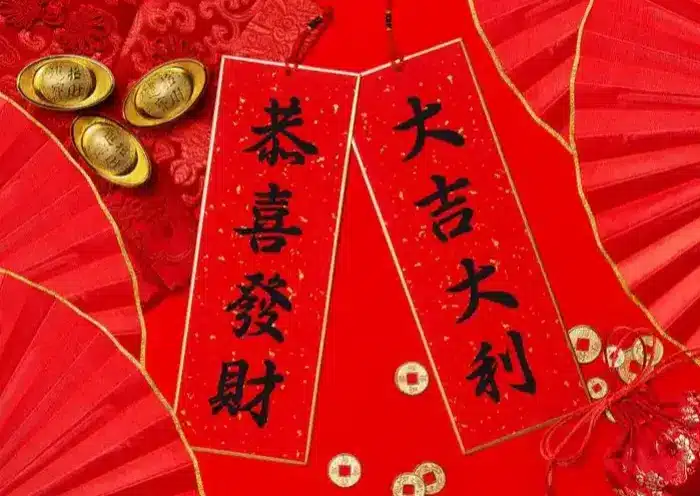
From written couplets on red banners to phone calls, video chats, and social media messages, exchanging typical Chinese New Year greetings is an important custom during the festival. Common phrases include:
- “Gong Xi Fa Cai” (恭喜发财 – Wishing you wealth)
- “Xin Nian Kuai Le” (新年快乐 – Happy New Year)
- “Shenti Jiankang” (身体健康 – Wishing you good health)
Chinese New Year’s Eve is especially significant, as it’s the time for family gatherings and the reunion dinner. In the night, people would often stay up late or even to the whole-night to welcome the new year. Thus, 12am becomes the peak moment for sending out heartfelt wishes and blessings.
Fun Chinese New Year Facts
11. Red Is the Luckiest Color
In Chinese culture, red carries the meaning of happiness, vitality, luck and prosperity. That’s why you’ll see many streets, homes, and businesses (basically everywhere) being decorated in red during Chinese New Year. Common red decorations include lanterns, paper cuttings, and door couplets with auspicious phrases. Some people also wear red clothes (especially young kids) to ward off evil spirits and invite good fortune.
12. Special Chinese New Year Foods with Lucky Meanings Are Popular
Food always plays a central role in Chinese culture, and definitely in Chinese New Year as well. Many typical festival dishes are chosen for their symbolic meanings, which are often tied to the food’s pronunciation or appearance. There are some typical traditional dishes which are served in almost every family’s new year meal in a good wish for luck and blessings.
Must-eats include:
- Fish (鱼 yú): Fish in Chinese culture is a symbolization of abundance (often in wealth and fortune), as the word sounds exactly the same as “surplus” in Chinese.
- Dumplings (饺子 jiǎozi): Shaped like ancient gold ingots, duplings has long represented wealth.
- Niangao (年糕): A sticky rice cake meaning “higher year” (which can be further understood as better year) in Chinese pronunciation, symbolizing growth and success.
For more information about Chinese New Year food, please see: 13 Lucky Foods for Chinese New Year
13. The Spring Festival Gala Attracts the World’s Largest Annual TV Audience
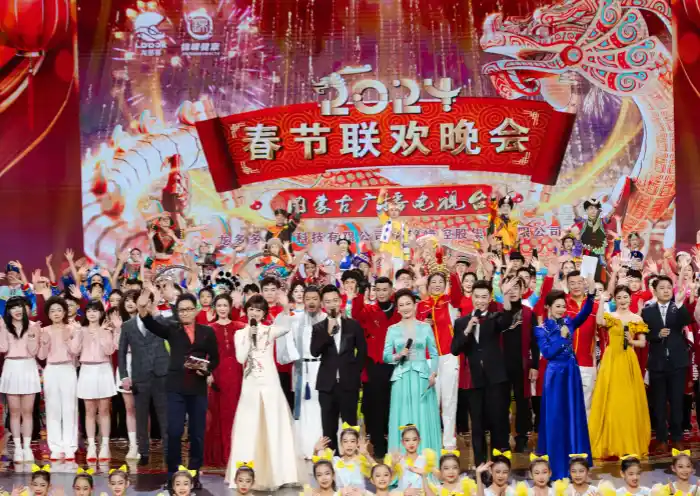
CCTV’s Spring Festival Gala (春节联欢晚会) is a massive variety show which will be broadcast live on every New Year’s Eve. It has music and dance shows, comedy skits, acrobatics, and celebrity performances. With over 1 billion viewers annually, it still holds the record as the world’s most-watched television program, and it has long become a key part of modern Chinese New Year traditions for Chinese people both in China and overseas.
14. Chinese New Year Has Been Listed as a UNESCO Intangible Cultural Heritage
On December 4th, 2024, China’s Spring Festival has been officially inscribed as a UNESCO Intangible Cultural Heritage of Humanity thanks to its profound historical accumulation, global cultural influence, and diverse traditional practices and celebrations. The history of Spring Festival (aka Chinese New Year) has spanned several millennia. It carries the core Chinese values of bidding farewell to the old and ushering in the new. Its ancient practices such as family reunion, ancestor worship, staying up late on New Year’s Eve (Shou Sui), giving lucky money, and New Year Greetings form a complete cultural system. Not to mention its diverse festive events, such as temple fairs, folk performances (She Huo, lion and dragon dances). All these elements boost its national and global popularity and influence, making it an iconic cultural landmark of China.
15. The Reunion Dinner Is a Must
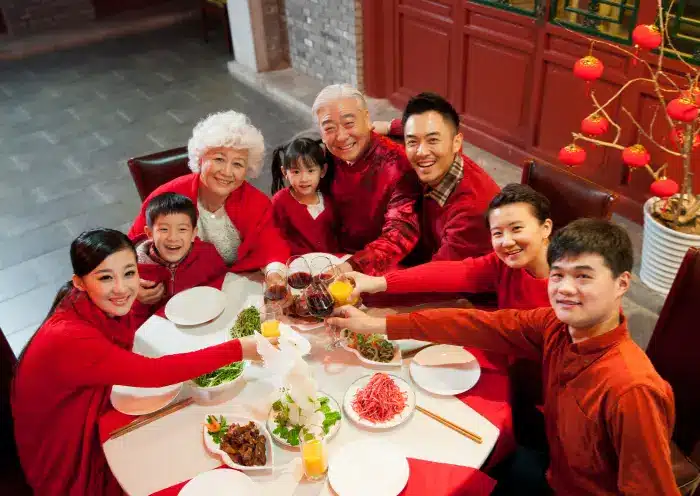
On Chinese New Year’s Eve, families would gather mo matter how far they’re from home to have the most important meal of the year — the reunion dinner (年夜饭). This feast is a happy time to honor ancestors and reconnect with loved ones, so there would often include a variety of lucky foods.
16. Odd Customs and Taboos During the Festival
While many traditions aim to bring luck, there are also Chinese New Year taboos to avoid misfortune:
- No haircuts: Cutting hair during the holiday period is believed to cut off good fortune. So that many people will get their hair trimmed before the New Year begins.
- No sweeping or taking out the trash on the first day: Doing so may symbolically sweep away the wealth and good luck coming to your house on the first day of the new year.
- Avoid breaking things: Dropping and breaking objects like bowls or plates is seen as a sign of bad luck. If something does break, people often quickly say auspicious phrases to counter the omen.
- Avoid unlucky words: Negative or ominous words such as “death,” “ghost,” or “sickness” are avoided in conversations, greetings, and even written form. People speak only of good fortune, health, and happiness.
Chinese New Year Facts for Kids
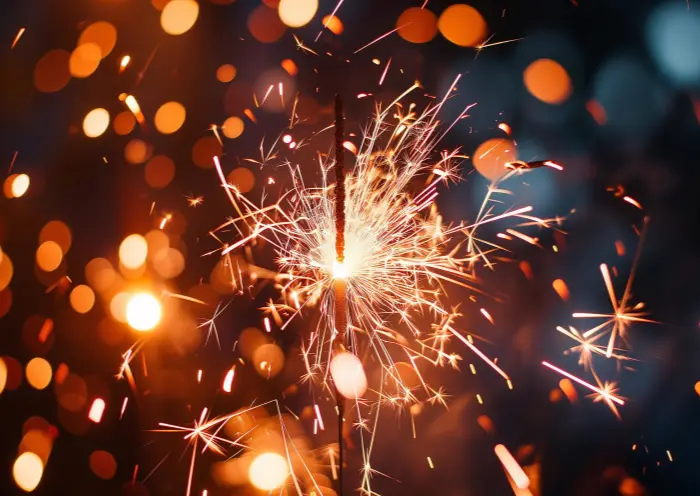
17. Firecrackers Are for Scaring Away Monsters
Firecrackers have a long story in Chinese history and it is rooted in the Legend of Nian (年兽), a fierce beast that terrorized villagers every New Year’s Eve. However, the monster was said to be afraid of loud noises, bright lights, and the color red. To scare it away, people managed to light firecrackers, hung red decorations, and lit lanterns on that day. These traditions continue today to protect households from evil and welcome good fortune.
18. Children Receive Red Envelopes with Money
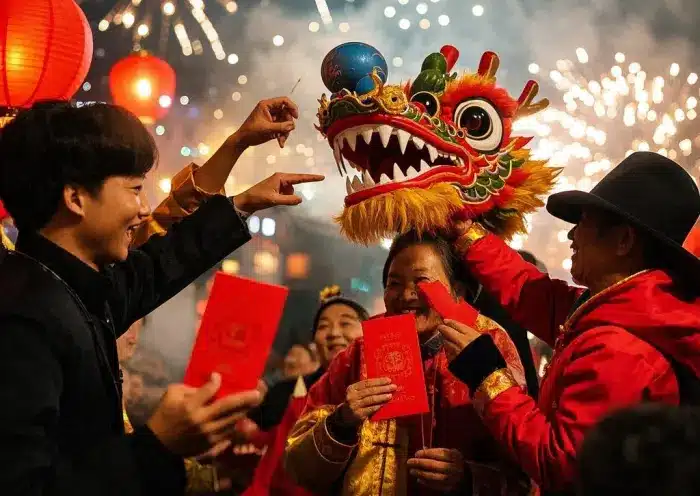
One of the most anticipated New Year traditions for Chinese kids is to receive red envelopes (红包 hóngbāo), which will be filled with money, from elders. The money is known as yasui qian (压岁钱), meaning “money to suppress evil spirits.” The practice also originates from a legend in which coins were used to keep demons away from children.
Children often stay up late on Chinese New Year’s Eve to show their love and respect for elders and receive their envelopes. The amount of money varies by regions and different families: in some places, it’s a token sum like CNY100, while in others it can be hundreds or even more. Lucky numbers like 6 (liù) and 8 (bā) are preferred.
19. Dragon Dances Bring Good Luck
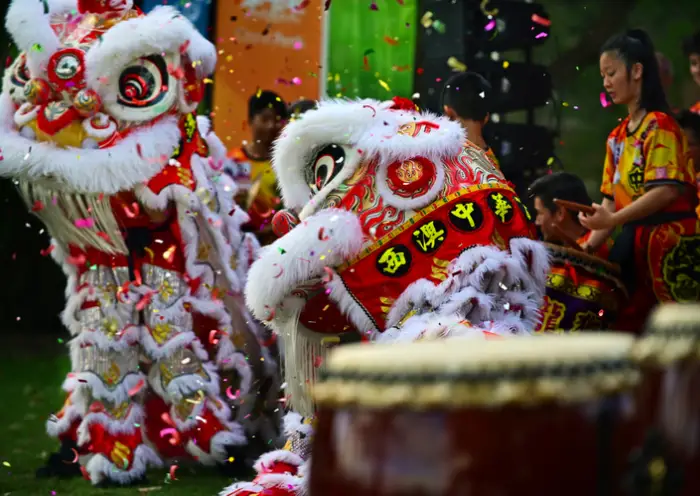
The dragon dance is one of the most spectacular Chinese New Year traditions that widely liked by kids. Teams of dancers will together operate massive dragon puppets, which would sometimes be over 25 meters (82 feet) long. Accompanied by the sound of drums and cymbals, the dragon will wind its way through streets and squares.
An interesting fact about Chinese culture is that dragons are benevolent creatures that bring rain, good harvests, and prosperity. As a result, the lively dragon dance is meant to sweep away evil spirits and bring blessings for the new year.
20. People Wear New Clothes from Head to Toe
Wearing new clothes during the festival represents a fresh start and symbolizes leaving the old year behind. Outfits are often in bright red or festive colors, which are believed to bring good luck to people. Parents always like to buy kids new clothes during this time, as it expresses the very best wishes for them.
Spring festival brings all the new and happy sense to the whole nation, and it would be a good time for you to have a China family tour with your loved ones. Here are some recommended family tour packages:
- 8 Days Beijing & Xian Family Tour by Bullet Train
- 10 Days China Family Tour with Kids
- 10 Days Beijing Xian Chengdu Shanghai Family Tour
Historical & Cultural Facts
21. It is the oldest continuously celebrated festival in the world
The Spring Festival (Chinese New Year) has been existed in Chinese history for more than 3,000 years. It is said to be deriving from sacrificial rituals in the Shang Dynasty (c. 1600–1046 BC) and the early Zhou era. While it would be rather hard to find abundant evidence to absolutely prove it’s the “oldest continuously celebrated”, many historians still believe that this festival as among the world’s most ancient still-living annual traditions.
22. Each dish for the reunion dinner has a symbolic meaning
Food is one of the most important part of the festival, and there are many dishes which most families would serve on their new year table. And they are mainly chosen for their auspicious symbolism:
- Fish (鱼 yú): Because the word “鱼yú”(fish) sounds like “surplus/abundance” (余 yú) in Chinese, serving fish dishes delivers a wish for“year-after-year abundance”.
- Dumplings (饺子 jiǎozi): Dumplings are shaped like ancient gold or silver ingots, sothey have always be linked to wealth and prosperity.
- Glutinous rice cake (年糕 niángāo): The pronunciation echoes “higher year”(年高 nián gāo). Thus people would eat it in hope that progress and improvement can show up in the coming year.
- Sweet rice balls (汤圆 tāngyuán / 元宵 yuánxiāo): They have a round and smoothshape, so naturally they served to evoke a willingness for family reunion and togetherness.
23. Food customs in Northern and Southern China are different
While many core themes are shared nationwide, there are regional differences in festival-foods and their preparation:
- In northern China, dumplings are especially dominant at the New Year’s Eve meal and while-night staying (守岁 shǒu suì) is emphasized.
- In southern China, it would be a little different that sticky rice cakes (niángāo) would come the first, and people here would eat sweet rice balls (tāngyuán) earlier in the festival period.
- Ingredients, flavors and even symbolic foods can differ, as different region would have use different dishes to represent luck and happiness. Thus, it’ll be quite interesting of you can pay attention to these subtle but meaningful variations when you travel across China during the Spring Festival.
24. Everything Is Decorated in Red
Red is the dominant colour of the Spring Festival, and you’ll see it basically everywhere during these days: door couplets, lanterns, paper cuts, clothing accents and envelopes are all in red. The reason is two-fold: traditionally, red is praised as the color which can drive away evil spirits (in the legend of the beast Nian) and for thousands of years, red has always symbolizes joy, good fortune and vitality. So that for Chinese people, putting up red decorations, lighting red lanterns and wearing red clothes during the holiday can all convey a wish for good luck and renewed beginnings.
FAQs about Chinese New Year
What is the origin of Chinese New Year?
The festival’s origin lies in ancient Chinese agrarian society and ritual practices. People would mark the end of a farming year and honor their ancestors and deities, and prepar for the year ahead.
Why is Chinese New Year also called the Spring Festival?
In China the holiday is known as 春节 (Chūn Jié) meaning “Spring Festival”. Although it normally it falls in winter, it’s also a time symbolically heralds the arrival of spring, and in other words, it’s a festival of renewal and new beginnings.
What calendar does Chinese New Year follow?
It follows the traditional Chinese lunisolar calendar. And it falls between January 21 and February 20 on the Gregorian calendar.
What are the most important days of the Chinese New Year period?
New Year’s Eve (除夕 chú xī): Time to hold the reunion dinner and stay up late with families.
New Year’s Day (正月初一): the first day of the lunar year, when many customs and taboos apply.
Lantern Festival (元宵节 Yuánxiāo Jié): the 15th day of the first lunar month, marking the end of the major festival period.
How did the Chinese zodiac become associated with the New Year?
The twelve-animal cycle of the zodiac (Rat, Ox, Tiger, Rabbit, Dragon, Snake, Horse, Goat, Monkey, Rooster, Dog, Pig) is deeply embedded in Chinese calendar tradition and folk belief. Each year of the cycle is associated with a particular animal, and people believe these animal signs all have the power to influence personality, fortune or year-qualities of the person born in the aligned year. And Spring Festival marks the shift of the zodiac of the year.
Experience Chinese New Year with China Xian Tour
Chinese New Year is the most important holiday in China — and also the most crowded. But with the right planning, it will become one of the most unique and meaningful times to visit. During this period, you can see streets glow with lanterns, fireworks light up the skies, and centuries-old traditions come alive in every town and village.
As a trusted China-based travel agency, we specialize in helping travelers enjoy a China tour with comfort and cultural depth even in Spring Festival. China Xian Tour‘s team are built with experts knowing how to navigate the holiday rush, such as securing accommodations early, arranging smooth transportation, and offering flexible itineraries that avoid peak crowds while still immersing you in the holiday spirit.
If you’re ready for a lively, festive, and truly local experience, celebrating Chinese New Year with us can be the highlight of your trip to China.