







If you’re planning on visiting China during Chinese New Year, there are some cultural taboos that you should be aware of. However, they are not rules that you must follow. Most Chinese New Year taboos are traditional customs and folk beliefs. The extent to which they are observed differs across regions, families, and age groups.
For foreign visitors, if you’re visiting the home of a Chinese person, planning on bringing gifts, preparing red envelopes, or paying a New Year visit to elders, you should definitely respect the local traditions. But if you’re just going on a trip to see the iconic attractions and staying at hotels, many of the taboos probably won’t be relevant.
Content Preview
- Do Foreign Tourists Need to Follow?
- Important Chinese New Year Taboos
- Can You Wash Hair, Shower, or Cut Hair?
- Chinese New Year Food Taboos
- Chinese New Year Gift Taboos
- What If Accidentally Break a Taboo?
- Etiquette When Visiting a Local Family
- Travel Tips Beyond the Taboos
- Plan Your Chinese New Year Visit Now
Do Foreign Tourists Need to Follow Chinese New Year Taboos?
No, foreign visitors usually don’t have to follow all of the Chinese New Year taboos.
The basic idea behind all the taboos is that at the beginning of the new year, people wish to start it off with things that bring good fortune, whether in what they say or do. Some things that are traditionally considered to bring bad luck, associated with loss or harm, are generally avoided.
Generally, the more traditional the occasion, the more important these customs are. Here are some common scenarios that foreign visitors may encounter in China.
- Visiting attractions and staying at hotels: no need to worry about most taboos
- Spending Chinese New Year at a local’s house: best to respect their traditions
- Attending a traditional family gathering: pay attention to what you say and give, and the etiquette around red envelopes
- Taking prescriptions or in need of medical attention: do not overlook your health condition just because of certain taboos
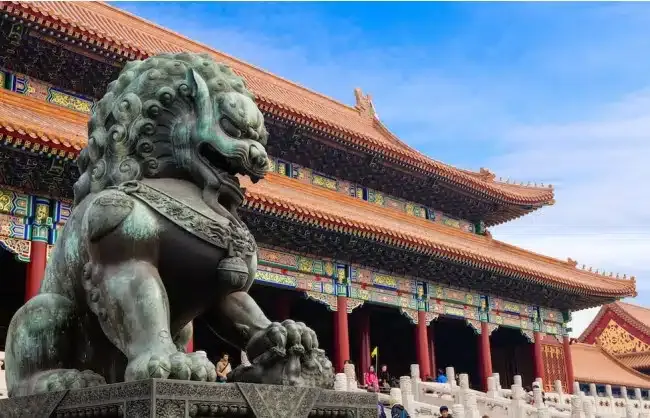
Discover Beijing's Forbidden City, Xi'an's warriors, Harbin's ice festival, and Shanghai's skyline on this classic winter circuit.
The Most Important Chinese New Year Taboos to Know
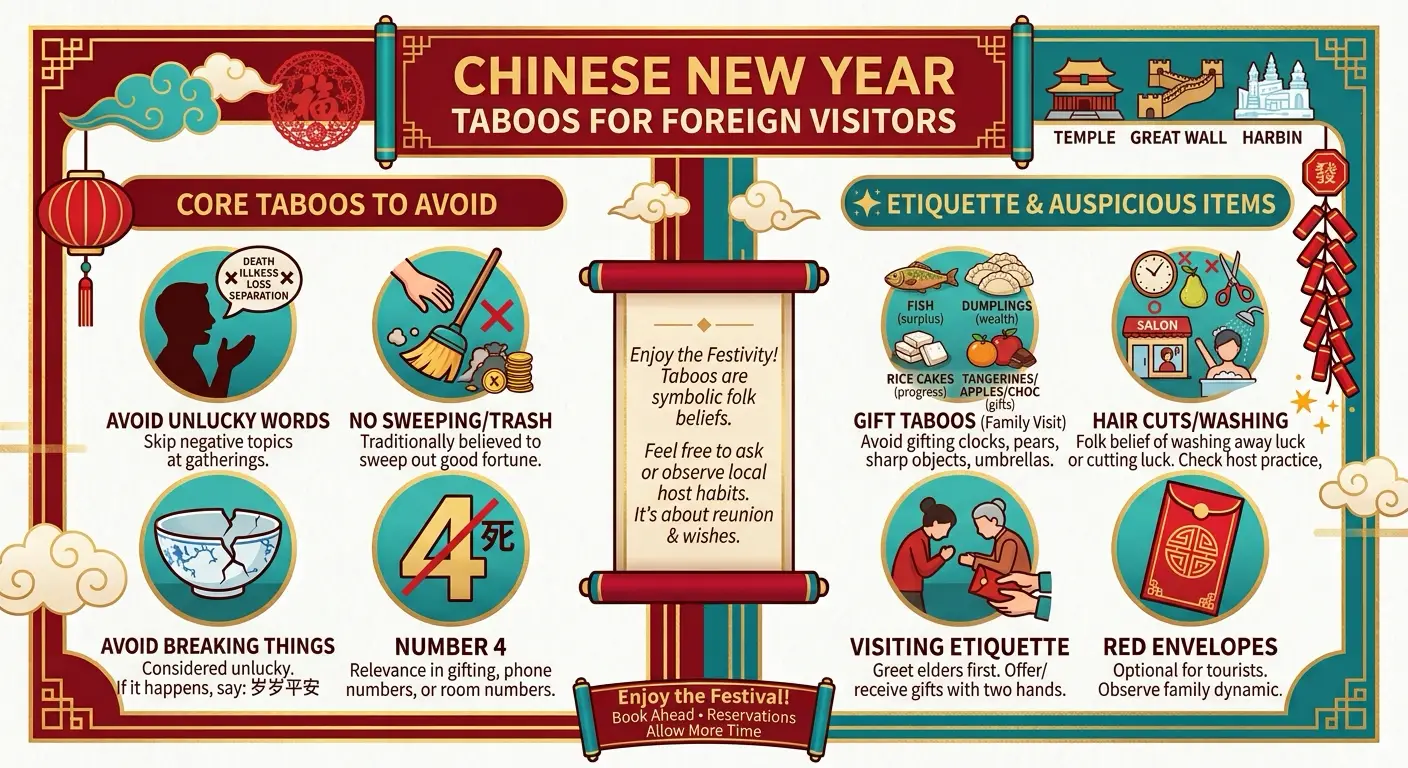
1. Avoid Unlucky Topics or Phrases
During Chinese New Year, some families may intentionally avoid topics that are considered unlucky, such as death, illness, financial loss, or separation. People hope their words will bring good fortune in the new year.
For foreign visitors, there is no need to memorize a long list of things that you should not say. When you’re paying a New Year’s visit or attending a family gathering, just make sure you don’t bring up topics that may be considered unlucky.
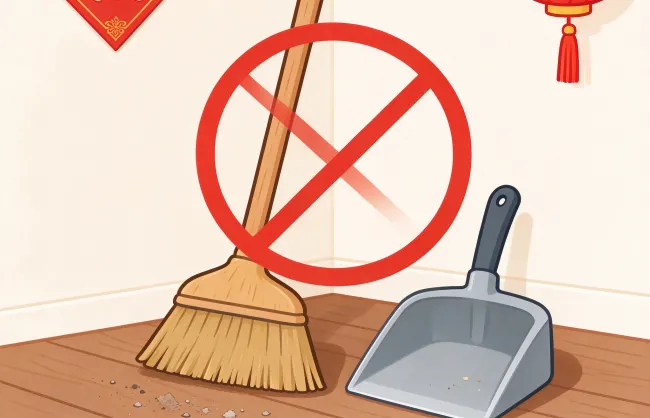
2. Don’t Sweep or Take Out Trash on New Year’s Day
Traditionally, Chinese people don’t sweep the floor or take out the trash on the first day of the new year, because it is believed that one may sweep out the good fortune and financial luck of the coming year.
However, an interesting Chinese New Year fact is that cleaning the house is an important part of getting ready for the festival. People tidy up their house, prepare food, and make all kinds of festival purchases before the new year.
That doesn’t mean you can’t sweep the floor for the entire holiday. It is only a traditional practice on the first day of the new year for some families.
3. Be Careful Not to Break Things
It is traditionally considered unlucky to break things like bowls or glasses during Chinese New Year.
If you do break something by accident, don’t panic. Just say 岁岁平安 (suì suì píng ān) immediately, because 碎 (suì), meaning broken, is a homophone of the word for year, 岁 (suì), in Chinese. The phrase is said to counteract the unlucky associations of breaking things.
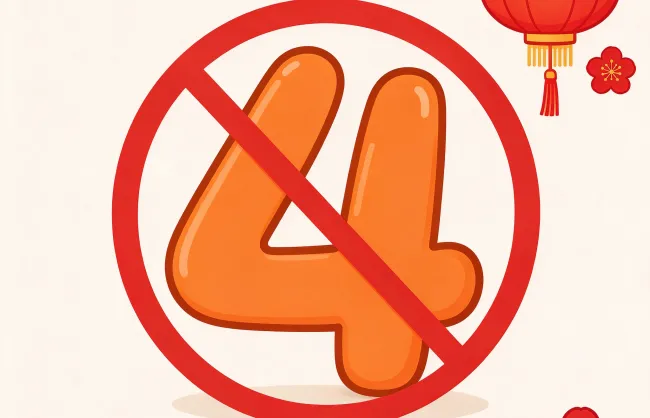
4. Be Careful with the Number 4
The number 4 (sì) is considered an unlucky number because of its similar pronunciation to the word for death (sǐ). For most visitors, there is no need to be particularly careful with the number. It is more relevant in symbolic scenarios like gift-giving, phone numbers, or room numbers.
5. Avoid Lending or Asking for Money During the New Year
Some people hold the traditional belief that borrowing, lending money, or collecting debts during Chinese New Year, especially on the first day, will bring financial challenges for the coming year.
This is only a folk custom, not a common social practice in modern-day China. Don’t worry about daily spending, exchanging money, or paying with your bank cards during your China tour.

Discover Beijing, Xi'an, Shanghai, and Guilin on a 10-day private tour covering iconic landmarks and stunning karst landscapes from the Li River.
Can You Wash Your Hair, Shower, or Cut Your Hair?
This is one of the most frequently asked questions by foreign travelers.
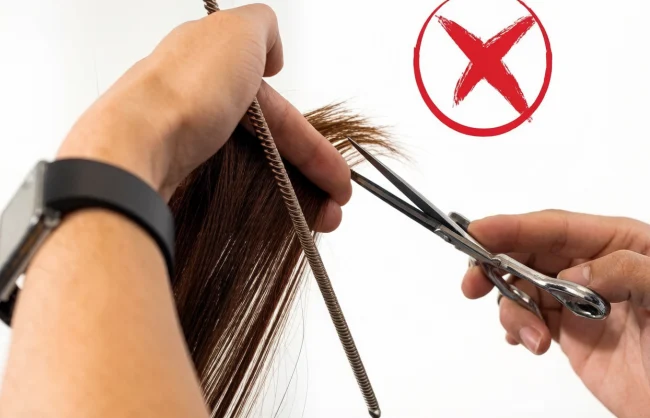
Traditionally, some people avoid washing their hair on the first day of the Chinese New Year calendar. The character for hair, 发 (fà), is the same 发 as in 发财 (fā cái), meaning to get rich, just pronounced with a different tone. Symbolically, some people believe that washing their hair may also wash away their financial luck for the new year.
There is also the folk superstition that you can’t cut your hair during the entire first month of the new year. However, the extent to which people follow this tradition varies greatly across different regions and families.
There’s no need to change your daily routine while traveling because of this belief. Whether to shower or wash your hair is certainly a personal choice, and it is not even a custom that all Chinese families practice. Do not feel concerned about the tradition at the hotel or during your China trip. However, if you’re staying at the home of a local, you should learn about and respect the host’s practice.
Chinese New Year Food Taboos: What to Eat and Avoid
Many Chinese New Year food-related taboos similarly come from language and symbolic meanings.
Some more traditional families avoid eating congee on the first day of the new year because the food used to be associated with poverty. For foreign visitors today, it is only a folk custom, not a dietary rule you need to follow.
On the other hand, there are many Chinese New Year foods associated with good fortune that you should try:
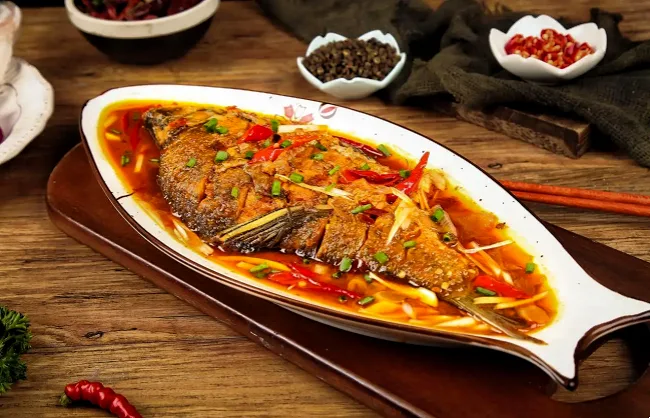
- Fish: Fish (鱼) in Chinese is a homophone of 余, meaning surplus. It is thus associated with a common New Year phrase 年年有余, which means to have surplus and be prosperous for every year ahead.
- Dumplings: Dumplings are traditionally a symbol of wealth because their shape is similar to ancient Chinese sycees.
- Rice cakes: Rice cakes (年糕) are pronounced nián gāo, which sounds like 年年高 (nián nián gāo), meaning becoming better each year. It carries good wishes for prosperity and growth.
- Tangerines or clementines: They are common Chinese New Year fruits and gifts because their color, shape, and name have auspicious associations.
Chinese New Year Gift Taboos for Foreigners
If you’re visiting the house of your Chinese friend or a local during the New Year, there are certain gift-giving taboos that you should know about.
Some traditional families may avoid gifting:
- Clocks: The phrase for giving a clock (送钟, sòng zhōng) sounds the same as 送终 (sòng zhōng), seeing off the deceased.
- Pears: The word for pears (Lí) is a homophone of the word for departure or separation.
- Sharp objects: Objects like knives or scissors symbolize breaking apart or cutting off relationships.
- Umbrellas: The word for umbrellas (Sǎn) is a homophone of the word for falling apart.
Not every family strictly follows the traditions. If you’re not sure what to bring your local friends as gifts, go with specialties from your home country, tangerines, apples, chocolates, or other nicely packaged foods. They usually make good gifts for most families.

Visit China's golden triangle of Beijing, Xi'an and Shanghai, covering imperial palaces, ancient terracotta warriors, and futuristic skylines in just eight unforgettable days.
What If You Accidentally Break a Chinese New Year Taboo?
If you wash your hair, accidentally say something that may evoke negative associations, or break something, do not panic. Chinese New Year taboos are traditional customs, not rules that you must follow. They will not affect your travel experience or actually say anything about the year ahead.
If you are visiting a local at their house, you can just apologize and see how the host takes the situation. If you break something by accident, you can say 岁岁平安 (suì suì píng ān) right after.
Chinese New Year Etiquette When Visiting a Local Family
When you’re invited to the house of a local friend, keep in mind the following etiquette tips, which matter more than simply knowing what not to do.
- Make sure to greet the elders of the family. Say 新年快乐 (xīn nián kuài lè) to wish them a happy new year.
- It’s best to use both hands to receive gifts or red envelopes. It is a natural and simple way of showing respect.
- Don’t be nervous over not knowing the local customs. If the host is particular about certain traditions, just follow what they do.
- Keep in mind that Chinese New Year is not about doing everything right, but reunion, good wishes, and sharing a wonderful time together.
Should Foreigners Give Red Envelopes?
If you’re just traveling in China, there’s no need to prepare red envelopes. If you’re invited to a Chinese friend’s house to spend the new year, whether you should give one depends on your relationship with the family and the occasion. To accept a red envelope, use both hands and say thank you. If you’re not sure whether to give one back, observe what other people do.
Chinese New Year Travel Tips Beyond the Taboos
If you’re visiting China during the new year, what might actually affect your travel is not the traditional taboos, but the tourist volume and opening hours of different services.
The time around the New Year holiday is one of the busiest times of travel in China. Here are some travel tips for international visitors.
- Book your flights, train tickets, and accommodations ahead of time.
- Check whether popular attractions require reservations.
- Shopping centers and chain restaurants usually stay open during the holiday, but smaller family-owned restaurants, markets, and some local shops may have shorter hours or a few days off.
- Allow more time for traveling between cities.
- Do not change your essential travel plan or hesitate to seek necessary medical help due to certain New Year taboos.
In other words, the New Year taboos are part of traditional Chinese culture that mostly affect how you present yourself. The tourist traffic may have a bigger impact on your travel plan.
Plan Your Chinese New Year Visit Now
Enjoy the festivity and celebrations of Chinese New Year now that you’ve learned about the cultural taboos. China Xian Tour can help you customize a new year trip based on your interests and needs. Contact us for authentic cultural experiences and a smooth journey.