Traditional Chinese festivals are treasures of the long history and culture of the Chinese nation, with diverse forms and rich content. Developed from ancient times and passed down to the present day, it has accumulated profound connotations of Chinese culture. Any traditional festival is not simply a form or ceremony. The customs and legends of these Chinese festivals shape a common historical memory of a nation, serving as a bond to unite and continue tradition.
The major traditional Chinese festivals include: Spring Festival, Chinese Lantern Festival, Tomb-Sweeping Day, Dragon Boat Festival, Qixi Festival, Zhongyuan Festival, Mid-Autumn Festival, Double Ninth Festival, etc. Among them, Spring Festival, Tomb-Sweeping Day, Dragon Boat Festival and Mid-Autumn Festival are called the four traditional Chinese festivals. Welcome to start your China tours to experience the charm of traditional Chinese festivals! These festivals will introduce you to the real life in China.
Content Preview
- Chinese New Year (Spring Festival)
- Lantern Festival
- Tomb-Sweeping Day (Qingming Festival)
- Dragon Boat Festival
- Qixi Festival (Double Seventh Festival)
- Zhongyuan Festival (Ghost Festival)
- Mid-Autumn Festival
- Double Ninth Festival
- Winter Solstice (Dongzhi) Festival
- Chinese Ethnic Minority Festivals
- Other Important Holidays in China
- Read More about Chinese Festivals
Chinese New Year (Spring Festival)
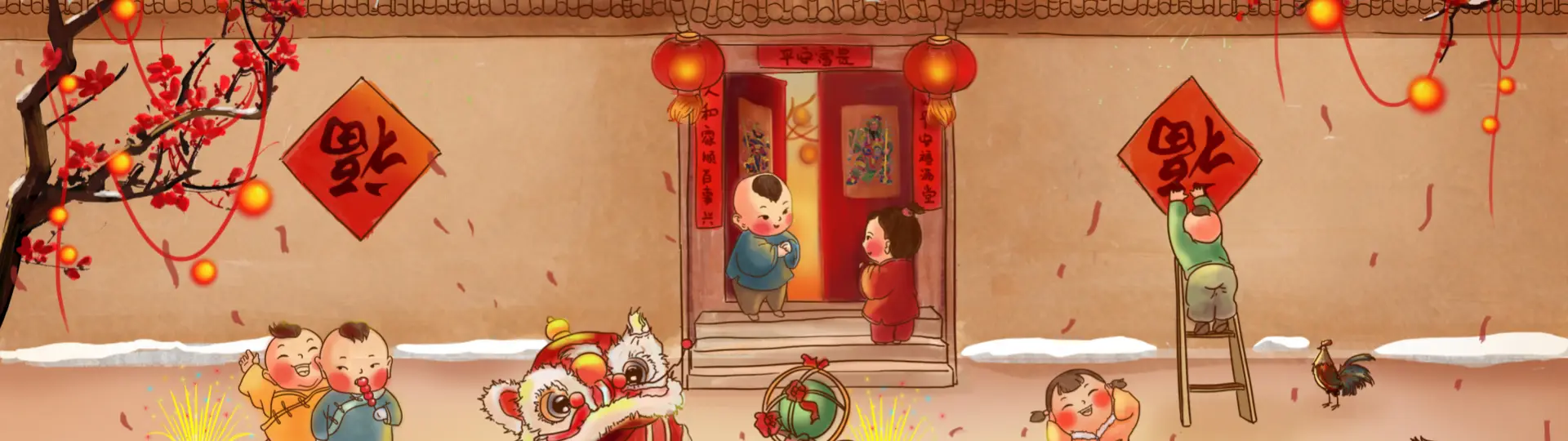
The Spring Festival, also known as the Chinese New Year or Lunar New Year, is the most grand and lively traditional Chinese festival in folk culture. It originated from the worship of gods and ancestors at year’s end and start during Yin-Shang period. In a broad sense, Spring Festival lasts from the first day of the first lunar month to the fifteenth day of the first lunar month.
The Spring Festival is the first Chinese lunar festival of the year. It is celebrated with the themes of removing the old and greeting the new, worshiping gods and ancestors, praying for blessings, etc. During Spring Festival, every household puts up Spring couplets, New Year pictures, and decorates their rooms with red things. The night before the Spring Festival is called “New Year’s Eve”, which is an important time for family reunion. The whole family gathers together and eats a sumptuous “New Year’s Eve dinner”; Many people stay up all night, known as “staying up late”. The next day, everyone began to visit their relatives’ homes to pay New Year’s greetings and wish each other all the best in the new year.
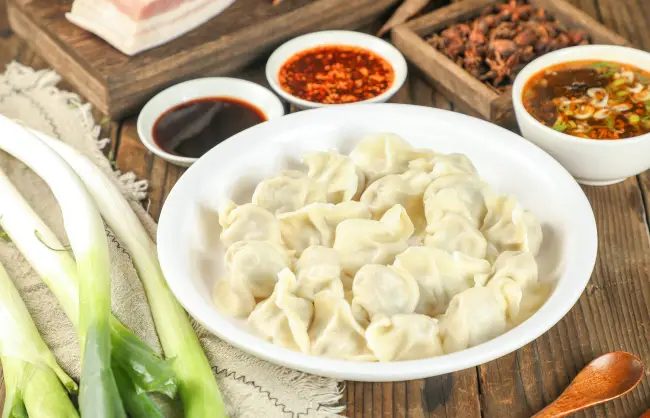
During Chinese New Year Festival, every household prepares delicious food such as dumplings and rice cakes, and also sets off firecrackers. Children will receive New Year’s lucky money and red envelopes. The traditional customs of Spring Festival also include shopping, sweeping dust, offering sacrifices, lion dance, etc.
Get to our Chinese New Year calendar page to see the exact dates for the future years.
Related reading:
Lantern Festival
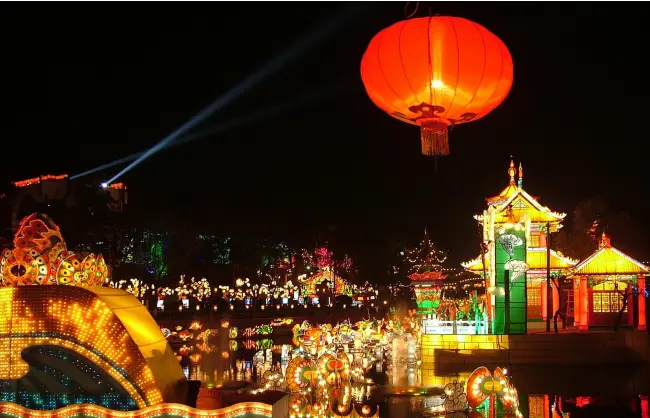
The 15th day of the first lunar month is the Chinese Lantern Festival, also known as Yuanxiao Festival or Shangyuan Festival. This is the first traditional Chinese festival after the Spring Festival. The first lunar month is the “yuan” month, and Chinese ancients called the night “xiao”, so the 15th day of the first lunar month is called Yuanxiao Festival. It is the night of the first full moon of the year. People celebrate this as a continuation of celebrating the Chinese New Year.
According to Chinese folk tradition, it is customary to eat Yuanxiao (Tangyuan) and watch lanterns during the Lantern Festival. Yuanxiao takes glutinous rice flour as its skin, and is filled with black sesame, peanut, red bean and other fillings. It is round, thus a symbol of “reunion”. Watching lanterns on Yuanxiao Festival started in the first century AD, and it is still popular all over China in modern times. On the night of Lantern Festival, many famous Chinese cities, such as Beijing, Xian, Shanghai, Chengdu, hold lantern shows, displaying various colored lanterns with novel shapes, as well as the fun intelligence activity of guessing lantern riddles. In rural areas, cultural and entertainment activities are held, such as setting off fireworks, walking on stilts, playing dragon lanterns, and dancing yangko. Embark on your Chinese Festival tours to feel the vitality of China.
Tomb-Sweeping Day (Qingming Festival)
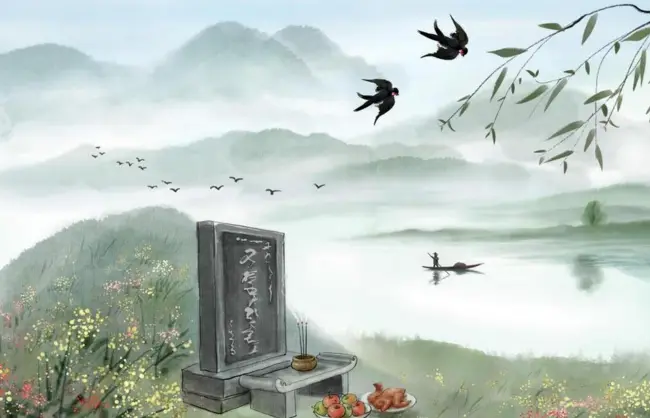
Qingming is one of the twenty-four solar terms in China, usually around April 5th in the Gregorian calendar. With the arrival of Qingming, the temperature rises and the rainfall increases, making it a great season for spring plowing and planting. It can be seen that this solar term is closely related to agricultural production. Qingming Festival is a traditional Chinese festival and also the most important sacrificial festival.
The origin of Qingming Festival is said to have originated from the ancient ritual of “tomb sacrifice” for emperors. Later, people also followed suit and worshiped ancestors and swept tombs on this day. Tomb sweeping, commonly known as going to the grave, is an activity of worshiping the deceased. People will bring food and drinks to worship their ancestors. At the same time, they will also eat traditional food such as Qingming Congee and Qingtuan.
Besides, during the Tomb-Sweeping Day, spring returns to the earth, and the natural world presents a vibrant scene everywhere. People often go to the outskirts together for outings, flying kites, and enjoying the spring scenery, so Chinese Qingming Festival is sometimes called the “Spring Outing Festival”. The Chinese nation has had the custom of going on a Qingming outing since ancient times. There are also customs of swinging and cuju (kickball) during Qingming Festival.
Dragon Boat Festival
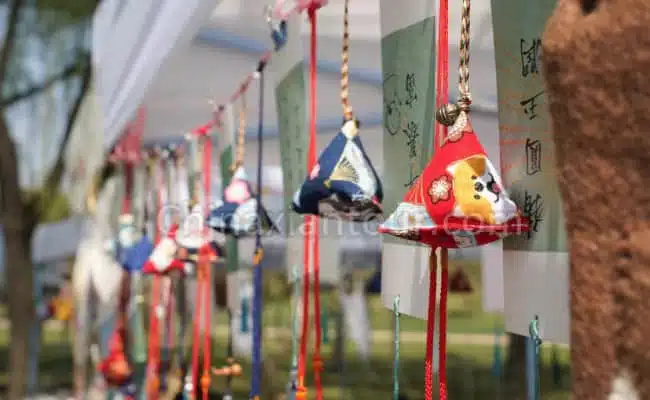
The fifth day of the fifth lunar month is the traditional Chinese festival – Dragon Boat Festival, which is also called the Duanwu Festival or Duanyang Festival because it is the time with the most abundant yang qi. It is generally believed that it was created to commemorate the great patriotic poet Qu Yuan in ancient China. Legend has it that Qu Yuan, a poet of Chu State during the Warring States Period, committed suicide by jumping into the Miluo River on the fifth day of fifth lunar month. Thus, later generations took the Dragon Boat Festival as a Chinese festival to commemorate Qu Yuan.
During Chinese Dragon Boat Festival (Double-Fifth Festival), people have the custom of wearing scent sachets, eating Zongzi, and racing Dragon Boat. The scent sachet represents Qu Yuan’s moral integrity, which will last forever. Zongzi was originally used to prevent fish from eating Qu Yuan’s body, and later became a festival food in China. Zongzi, mainly made of glutinous rice and stuffing, is wrapped with Ruo leaves or Phrynium leaves, with various shapes and tastes. Rowing dragon boat means going to rescue Qu Yuan. This traditional Chinese festival also has the custom of tying wrists with five-colored threads and hanging wormwood.
Qixi Festival (Double Seventh Festival)
The seventh night of the seventh lunar month, called “Qixi”, is the legendary day on which the Cowherd and the Weaver Girl meet each other across the Milky Way on the magpie bridge once a year. In this evening, people place melons and fruits in the courtyard, and girls tie colorful threads and thread seven-hole needles. The one who finishes it first is clever (巧). Qixi Festival (Qiqiao Festival) is also known as the “Girls’ Day” because it is mostly attended by girls. People will eat delicious food such as Qiao Fruit, Qiao Rice, and Qiao Egg.
This day is the most romantic traditional Chinese festival, and it was also the day that girls valued the most in the past. Countless men and women in love will pray to the Weaver Girl for their happy marriage in the night of Qixi. Therefore, Qixi Festival is also called Chinese Valentine’s Day in modern times.
Learn more about Chinese festivals on fantastic China culture tours.
Zhongyuan Festival (Ghost Festival)
Zhongyuan Festival falls on the 15th day of the seventh lunar month, commonly known as “Mid-July”. It is the legendary birthday of the Earth God (地官), so it is also known as the Hungry Ghost Festival. On this day, Buddhists set up the Ullambana, offer food to monks, hold chanting ceremonies, as well as religious activities such as floating river lanterns.
Zhongyuan Festival originated from the Taoism after the Eastern Han Dynasty. Taoism has the concept of “Three Yuan”, which states that the Earth God can forgive sins. In the Tang Dynasty when the rulers worshiped Taoism, Taoism’s Zhongyuan Festival began to flourish, and has continued to this day.
In the past, people not only offered sacrifice to their ancestors, but also prepared some dishes, wine, rice, gold and silver paper clothing to worship ghosts and gods at the crossroads on the night of Zhongyuan Festival. In this evening, people float river lanterns, burn paper money to worship their ancestors, and also eat duck meat and bianshi (wontons) to suppress the fright.
The Zhongyuan Festival (Hungry Ghost Festival), along with the Chinese New Year’s Eve, Qingming Festival and Double Ninth Festival, has become the four major Chinese festivals of ancestor worship.
Mid-Autumn Festival
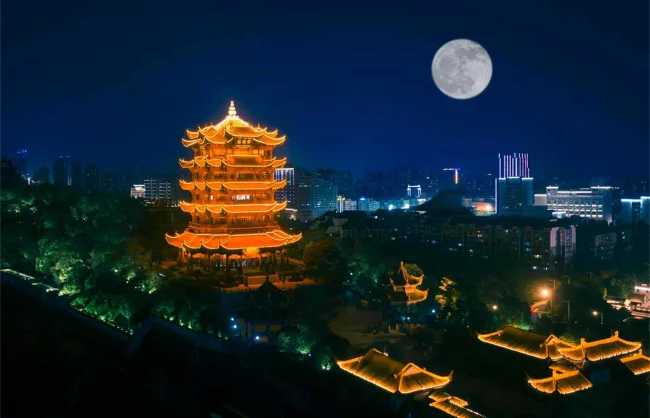
Chinese Mid-Autumn Festival on the 15th day of the eighth lunar month is also called “Reunion Festival”. The moon on this night is rounder and brighter than the full moons in other months, so Mid-Autumn Festival is also called Moon Festival, Moon Worship Festival, etc. This is a Chinese festival celebrating harvest and reunion. Mid-Autumn Festival originated from the ritual system of ancient emperors offering sacrifices to the moon in autumn. Since the Wei, Jin, Tang, and Song dynasties, it has gradually evolved into the custom of admiring the moon.
The term “Mid-Autumn” first appeared in the book “Rites of Zhou”, and it was not until the Tang Dynasty that it truly became a national festival. It is said that the formation of this major tradition Chinese festival is related to the story of “Emperor Ming of Tang’s Moon Journey”. In ancient times, people would offer refined cakes and pastries to the Moon God during the Mid-Autumn Festival; After the sacrifice, the whole family eats them, indicating a reunion and gathering as a family. The custom of eating mooncakes on Mid-Autumn Festival has been passed down to this day.
√Further reading: Top 10 Chinese Mid-Autumn Festival Foods
Double Ninth Festival
The Double Ninth Festival, which falls on the ninth day of the ninth lunar month, was a tradition Chinese festival that emerged after the Wei and Jin dynasties. Because in the book “I Ching”, “nine” is defined as a yang number, and on the ninth day of the ninth month (lunar), the two nines meet, hence it is called Chung Yeung or Double Ninth. Chinese ancients believed it to be a auspicious day and began celebrating this festival from very early on.
Traditional customs of the Double Ninth Festival include:
- Climbing a mountain. At this time, the autumn sky is cool and the scenery is pleasant, which is a good season for travel. It can cultivate taste and be beneficial to health.
- Drinking and enjoying chrysanthemums. The ninth lunar month is the time when chrysanthemums are in full bloom. Admiring variousautumn chrysanthemums and drinking a few cups of chrysanthemum wine are also the joys of Double Ninth Festival.
- EatingChongyang cake. People make tender and delicious rice cakes from grains, which are called Chongyang cakes, and the word “cake”(糕) sounds similar to “high”(高), which means up step by step.
- Carryingout activities to respect the elderly, and the tradition of respecting the elderly on Double Ninth Festival has been ongoing since ancient times.
Winter Solstice (Dongzhi) Festival
The Winter Solstice Festival (冬至), normally celebrated on December 21st or 22nd, marks the year’s shortest day and longest night in the Northern Hemisphere. It originally rooted in ancient farming traditions, symbolizing the return of light and harmony with nature’s cycles. On this day, families gather to honor ancestors, which reflects Confucian values of filial piety.
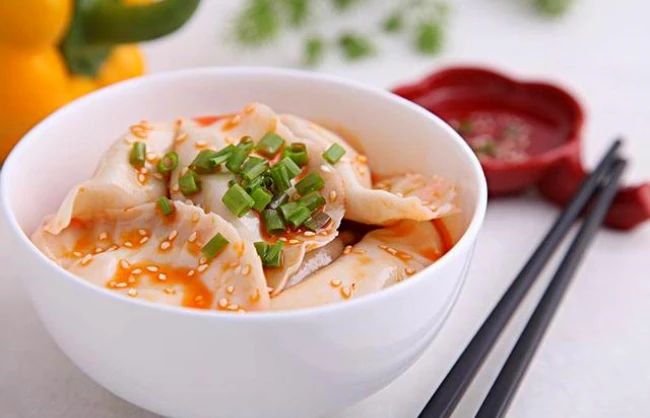
In terms of the symbolic foods people share on this day, people in south would prefer tangyuan (sweet glutinous rice balls) while people in the north often eat dumplings. Both of them can represent unity and prosperity. As a cultural anchor, Dongzhi connects generations through rituals that celebrate resilience and togetherness.
In addition to the above 9 important traditional Chinese festivals, there are also Dragon Head Raising Festival (2nd day of the 2nd lunar month), Shangsi Festival (3rd day of the 3rd lunar month), Laba Festival, Xiaonian, etc., all of which have their unique celebration methods and cultural connotations.
Related reading: Popular Winter Festivals and Events in China
Chinese Ethnic Minority Festivals
Each ethnic minority in China also has its own traditional festivals, such as:
- The Water Splashing Festival is the most solemn festival of the Dai ethnic group in Yunnan, falling in mid-April in the Gregorian calendar, and usually lasts for 3 to 7 days. People splash water on each other, implying blessings and happiness.
- The Nadam Festival is a traditional festival of the Mongolian ethnic group with a long history. Usually held in Inner Mongolia from the fourth to seventh day of the sixth lunar month every year, activities include wrestling, horse racing, archery, etc.
- Torch Festival (Huobajie): The Torch Festival (火把节) is on the 24th day of the 6th lunar month (July/August). It’s usually celebrated by the Yi people living in Yunnan and Sichuan, known as a fiery homage to ancient agrarian traditions. On this day, villagers will together ignite massive amount of torches to symbolize the act of driving away evil spirits and blessing their crops, while dancers in vibrant costumes perform rhythmic leaps around bonfires.
- Knife-Pole Festival (Daodaofestival): The Knife-Pole Festival (刀杆节) is held on the 2nd day of the 2nd lunar month (March) by the Lisu people of Yunnan. They celebrate it bravery through daring feats. Performers will clad in silver jewelry, walking barefoot on smoldering charcoal or scale greased bamboo poles. The crowd will then cheer for their marvelous skill.
Related reading: Top Ethnic Festivals in Yunnan
Other Important Holidays in China
While traditional festivals remain central to Chinese culture, modern China also has important national holidays that celebrate its societal values and contemporary lifestyle. For example, Labor Day (May 1st), which is one of the most important. It is marked by a short break with a 5-day public holiday, during which people enjoy leisure trips and relax themselves.
National Day (October 1st) is a festival that all the Chinese people would expect. To commemorates the founding of the People’s Republic of China, unleashes a 7-day “Golden Week” of festivities. On October 1st, millions of people will gather at Beijing’s Tiananmen Square at dawn for flag-raising ceremonies, while most cities will be dazzled with fireworks lighting up night skies. Some people would stay at home together with families, watching performances and shows on TV. However, some others would immediately go on a trip on the first day of the holiday. Domestic tourism peaks, with iconic destinations overcrowded.