
15 Days China Tour with Ethnic Culture: Guilin, Guizhou, Yunnan, Tibet
Tour Overview
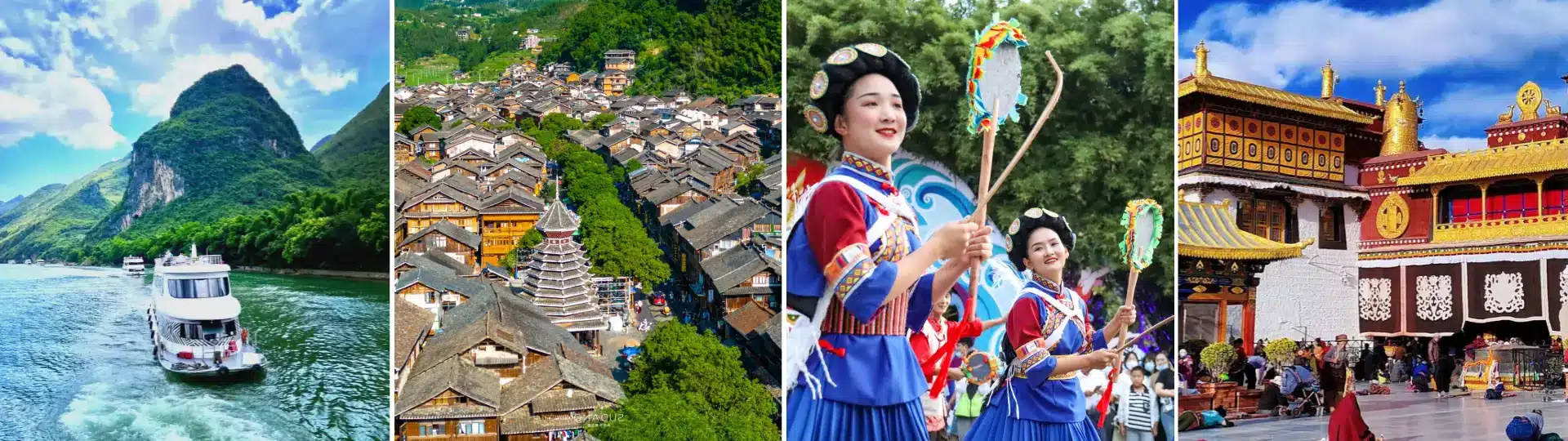
China is a nation with a vibrant culture and it is composed of 56 ethnic groups, of which the 55 minority groups, like the Bai, Tibetan, Naxi, Miao, and Dong, contribute to the country’s cultural diversity in an extraordinary way. The 15-day China minority tour will give you an unforgettable experience of the unique customs, architecture, music, and daily lives of these communities, placed in some of Asia’s most beautiful landscapes. It is an ideal trip for travelers who are interested in getting to know different cultures and the China ethnic tour combines as well the world-famous landscapes with the deepest heritage encounters.
Some of the highlights are the karst mountains of Guilin, the minority villages and rice fields of Guizhou, the historic Tea Horse Road and the Bai & Naxi cultures in Yunnan, and finally the spiritual Tibetan Buddhist traditions of Lhasa. With this journey, one gets to experience the real ethnic mosaic of China.
Travel destinations: Guilin, Yangshuo, Zhaoxing, Anshun, Dali, Lijiang, Lhasa, Shigatse
Suitable for: Culture Lovers, Nature Explorers
Tour type: Private
Highlights of this tour:
- Li River cruise past Guilin’s karst landscape. Cycle through picturesque rural villages and rice paddies of Yangshuo.
- Explore Zhaoxing’s five magnificent drum towers, and glimpse Dong ethnic traditions.
- Be amazed by Asia’s largest waterfall, Huangguoshu Waterfall.
- Explore the UNESCO-listed Lijiang Old Town and discover ancient Naxi Dongba culture. Also explore Bai people’s buildings.
- Experience profound Tibetan Buddhism at Lhasa’s majestic Potala Palace and sacred Jokhang Temple.
- Overlook the stunning Yamdrok Lake and see the closest glacier to the highway in Tibet.
Day-by-day Itinerary
- Day 1: Guilin Arrival
Welcome to the two-week cultural tour of China's ethnic minorities! During this journey, you will be led to experience the unique traditions of the Dong, Miao, Naxi, Bai, Tibetan and other ethnic groups. First, you need to arrive at Guilin Airport by yourself. Your private driver will pick you up at the exit and take you to the hotel in the city center to check in.
You can explore on your own for the rest of the time. We recommend that you visit the iconic building of Guilin - Elephant Trunk Hill, which is named for its resemblance to a huge elephant drinking water from its trunk. Located at the confluence of the Li River and the Taohua River, it is a typical representative of Guilin's landscape and was designated as the Guilin city emblem in 1995. If you are a food lover, don't miss Guilin rice noodles!

Elephant Trunk Hill in Guilin - Day 2: Guilin to Yangshuo by CruiseKarst Landscape along Li River & Countryside Views
After breakfast, meet your tour guide in the hotel lobby. We will take a cruise along the Li River to Yangshuo. An 83-kilometer-long karst landscape scroll slowly unfolds. You will see the strange peaks on both banks lined up like green screens, their reflections in the clear blue water.
"Nine Horses Painting Mountain" is a highlight. Test your eyesight and imagination! Try to find nine divine horses on the vast stone walls. Continue sailing and the scenery before your eyes gradually coincides with the pattern on the back of the 20-yuan note. The peaks and fishing boats are captured as the most classic scene of Chinese landscapes. During the 4-hour journey, you can enjoy the wind and scenery on the deck or have a local specialty buffet lunch in the cabin.
Note: We have arranged a 3-star cruise. If you want to upgrade to a more comfortable 4-star one, please inform your travel consultant in advance.
Li River Cruise in Summer Arrive in Yangshuo at about 1:30 p.m. The driver will take you to the hotel for a short rest first. After that, follow the guide to ride a bicycle through the rural scenery. You will pass by some ancient villages scattered with rice fields. In safe areas, you can stop at any time, even to watch the locals do farm work up close and take pictures of the karst landscape in the distance.
- Day 3: Yangshuo Back to Guilin, To Congjiang by High-speed TrainZhaoxing Dong Village with Amazing Towers
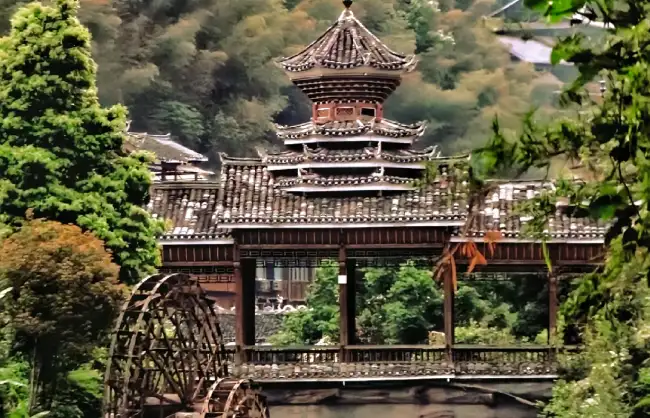
This morning we will drive back to Guilin and take the high-speed rail to Congjiang. After arriving at the station, the local driver will transfer you to Zhaoxing Dong Village. The most famous here is the drum tower group, which has been recorded in the Guinness Book of Records. There are five drum towers in this village, which look like pagodas from the outside. They are already very eye-catching before entering the village.
Strolling through the village under the guidance of your tour guide, you can appreciate their unique architecture - stilted houses and multi storey towers. You can try your luck on the square, maybe you can see local villagers practicing singing and dancing in ethnic costumes. Stay overnight in Zhaoxing.
Wind-rain bridges in Zhaoxing Dong Village - Day 4: Zhaoxing Ethnic Minority VillagesIn depth Exploration of Miao and Dong Cultures
Today you will gain a deeper understanding of the ethnic minority cultures in this region. The Dong people believe that all things have spirits. They think that after a person dies, the soul leaves the body and returns to the place where their ancestors lived. Therefore, they worship their ancestors devoutly. After the visit to the Dong village, the guide will take you to visit several other villages in Zhaoxing.
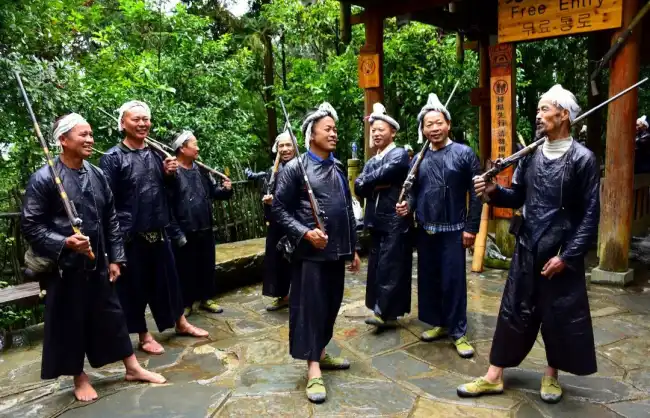
Basha Miao Village is the most distinctive one. This place is called "the last gunner tribe in China". That is to say, men here are permitted to carry firearms. Besides, Zhanli Dong Village is also a rather interesting village. Here lies a very unique birth policy - each couple can have no more than 2 children. Even more astonishingly, if a family has two children, it is usually a boy and a girl. It is said that the well water in the village played a role.
Basha Miao Village Next, head to Xiaohuang Dong Village. The feature here is the Dong Grand Song, a cappella, polyphonic choral tradition. The Dong songs here have been performed in France. Finally, visit the original Huanggang Dong Village hidden in the mountains. There are five drum towers in this village, and in each of them hangs a wooden board inscribed with the 24 solar terms. Each drum tower also has two dragons, vividly lifelike. After the visit, return to the hotel to rest.
- Day 5: Zhaoxing to Congjiang, High-speed Train to GuiyangHike along the Picturesque Terraced Fields
In addition to ethnic cultures, natural scenery is also a major sight. Early in the morning, hike for 2.5 hours along the picturesque terraced fields, and finally arrive at Tang'an Village. After the tour, go to Congjiang Station and take the high-speed train to Guiyang. Upon arrival, the driver will take you to the hotel to rest.
Tips:
- It is recommended that you take sun protection measures during the hike on the terraced fields.
- This hiking route mainly features downhill steps, and it is not recommended for people with poor knees.
In the evening, you can go to admire the Jiaxiu Tower, three storey wooden construction dates back to the Ming Dynasty. This is a landmark of Guiyang, located on a rock by the Nanming River.
- Day 6: Guiyang to AnshunBe Amazed at the Largest Waterfall in Asia
After you have met your Guiyang tour guide, take a drive to Tianlong Tunpu in Anshun. It is situated at the threshold of Yunnan, thus the local people's attire, dialect, architecture, etc. are utterly different from the nearby Guizhou villages. The town is surrounded by ancient stone houses that are well preserved and your guide will tell you how they looked like six centuries ago.
In the afternoon, continue to the largest waterfall in Asia - Huangguoshu Waterfall Scenic Area, including three major attractions: Huangguoshu Waterfall, Tianxing Bridge, and Doupotang Waterfall. Our tour route today: Doupotang Waterfall - Tianxing Bridge - Huangguoshu Waterfall.
Our Guests at Huangguoshu Waterfall The Doupotang Waterfall is the filming location for the ending theme song of the famous TV drama "Journey to the West". The top of the waterfall is 105 meters wide and 21 meters high, making it the widest waterfall in the Huangguoshu Waterfall Group. Continue to Tianxing Bridge, where there are stones on the water, holes in the stones, and trees next to the holes, all of which are masterpieces of nature.
Huangguoshu Waterfall is the third largest waterfall in the world. Before seeing its form, hear its sound - the deep and continuous "thunder", which is an invitation from the largest waterfall in Asia. Following the trails, passing through lush greenery, a silver giant screen with a width of 101 meters and a drop of 77.8 meters will appear before your eyes. If the sunshine is bright, you can see a rainbow over the waterfall. Walk through the mysterious water curtain cave behind and feel the misty mist up close. After the visit, drive back to the Guiyang hotel.
- Day 7: Guiyang to Dali by High-speed TrainFree Time in Dali Old Town
After breakfast, take the high-speed train to Dali, the most popular destination in Yunnan. About 4.5 hours later, the local driver will pick you up and check in at Dali Old Town. You can explore on your own during the remaining time.
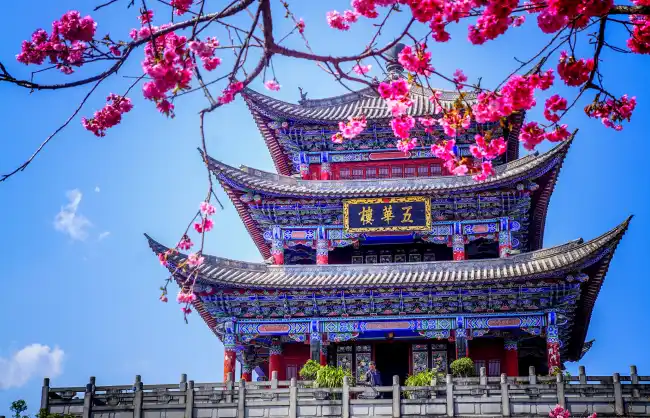
Lying at the foot of Cangshan Mountain and the shore of Erhai Lake, Dali Ancient Town is the capital of the ancient Nanzhao Kingdom (738-902). Its streets follow a classic grid layout - nine main streets and eighteen alleys. Fuxing Road is the busiest commercial street, lined with shops selling ethnic costumes, local specialty foods, and some intriguing handicrafts. You can also walk up to the Wuhua Tower at the city center for a panoramic view of the entire town.
Dali Old Town - Day 8: Cultural Experience of Bai Ethnic MinorityXizhou Ancient Town and a Cruise on Erhai Lake
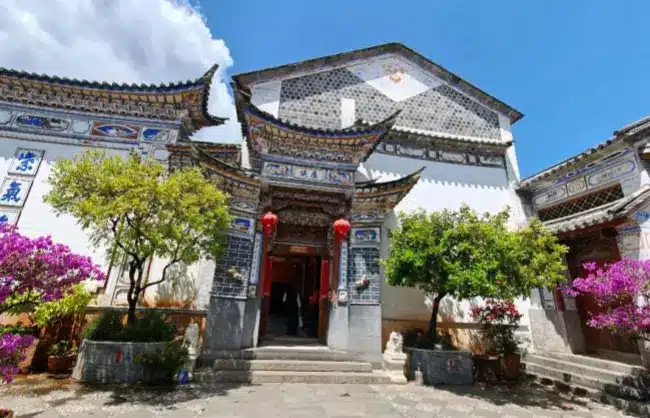
Today we will delve deeply into Bai ethnic culture at Xizhou Ancient Town. Located 20 kilometers north of Dali Ancient City near Erhai Lake, this town preserves the largest and finest collection of Bai residential architecture. The dwellings feature elaborately carved beams and painted rafters, with upturned eaves. Your guide will lead you through several courtyards and explain the architectural design concepts behind each.
In the afternoon, we drive to Haishe Park. This long and narrow piece of land juts out from the northern shore of Erhai Lake, like a tongue gently touching the lake surface. It is not an artificially carved landscape, but the result of the joint nurturing of geological movements and water flow alluvium. The sun bathes the lake surface, marking the moment when the sea tongue is at its most colorful. The lake water changes from light green to deep blue and indigo from near to far.
After that, experience a cruise on Erhai Lake. From the center of the lake, see the white walls and blue tiles of the Bai ethnic village on the shore faintly visible among the green trees. After the trip, we will escort you back to your hotel.
The Bai ethnic architecture in Xizhou Ancient Town - Day 9: Dali to LijiangTrace the History of the Ancient Tea Horse Road
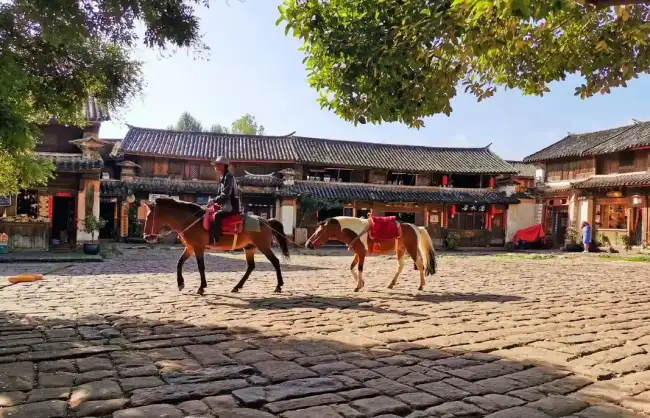
Lijiang is just a 4-hour drive from Dali. After breakfast, we set off for Lijiang by car. Along the way, stop to explore Shaxi Ancient Town. This vital stop on the ancient Tea Horse Road has preserved its original appearance from a thousand years ago. At the heart of the town lies Sideng Street, the only surviving marketplace along the Tea Horse Road. Stroll along the red sandstone paths worn smooth by horse hooves, flanked by ancient adobe walls and wooden shops. Here, there is no hustle - only the afternoon sun, the shadows of old locust trees, and a sense of tranquility.
After the visit, continue driving to Lijiang. In the evening, experience the nightlife of Lijiang Old Town. If you're lucky, you may witness Naxi locals dancing around a bonfire in the square at Sifang Street.
Sideng Street in Shaxi Ancient Town - Day 10: Lijiang City HighlightsImmerse in the Culture of the Naxi People
Today you will immerse yourself in the culture of the Naxi people. First, explore the UNESCO World Heritage site of Lijiang Ancient Town. Founded during the late Song and early Yuan dynasties, the town got its first golden age with the establishment, consolidation, and refinement of the Tusi system (ruler of Yi nationality in China) during the Ming Dynasty. By the Qing Dynasty, Lijiang had evolved into a thriving commercial hub. Today, it still preserves rich local ethnic characteristics, surrounded by breathtaking natural scenery such as pools and snow-capped mountains.
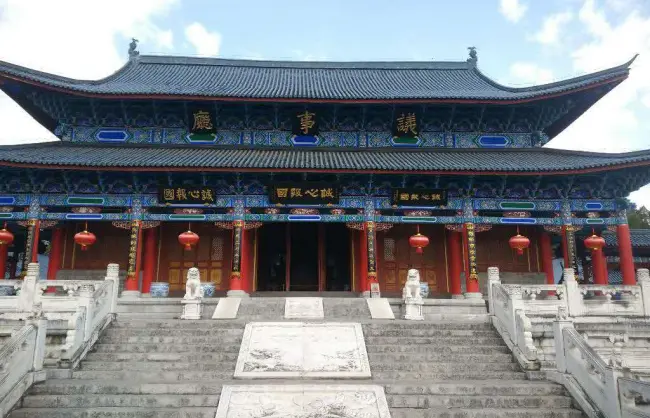
To get the Tusi system details, we will visit the Mufu Mansion, which is nicknamed the "Forbidden City of Lijiang." This building complex served as the headquarters and the home of the Naxi Mu chieftains. Its design consists of a mixture of the imperial gardens and the Suzhou-styled ones. The palace has, with its splendor, and in the mansion's shadowy parts, beautiful gardens with palatial water streams and trees, flowers, etc.
Explore exquisite architecture of Mufu Palace After the visit, we climb Lion Hill at the heart of Lijiang Ancient Town. The hill earned its name for resembling a sleeping lion. From the summit, you can overlook the panoramic view of the entire ancient city.
Then, the Dongba Culture Museum is the place where you will get more unraveling of the past. Dongba culture is a symbol of the traditional heritage of the Naxi people that has been passed on for a millennium. The museum has a collection of more than 12,000 items, among which the "Dongba script," credited for being one of the world's most complete surviving "living pictographic scripts," is the most prominent one. You will also be shown Naxi traditional clothing and tools, and other artifacts of the culture.
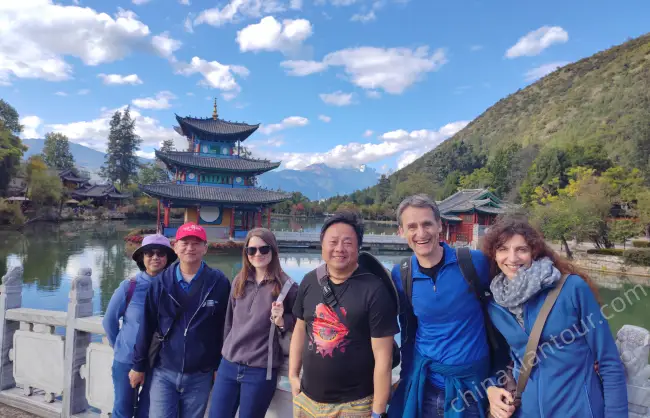
Finally, head to Black Dragon Pool Park next to the museum. This is the source of the Old Town of Lijiang's water system. If you've ever searched for travel pictures of Yunnan, you must have seen this place, which is considered the most popular site in Lijiang. The distant snow capped mountains, the five arch bridge, the three story Deyue Tower, and the clear pond water... they together form a beautiful scenery, especially at sunset. After the tour, we return to the hotel.
Black Dragon Pool Park - Day 11: Lijiang to Lhasa by Flight
After breakfast, take a plane to Lhasa - the best place to experience the rich Tibetan culture in China. After arrival, the local driver will pick you up and take you to the hotel for rest. Lhasa is a high-altitude area (with an average of 3650 meters), and many travelers experience altitude sickness. Therefore, upon your arrival, it is recommended that you rest in the hotel for a whole day to adapt to the high-altitude environment.
Tips:
- Try not to take a shower today to avoid catching a cold.
- Do not drink alcohol and have sufficient sleep.
- Day 12: Lhasa’s EssenceThe City Highlights of Lhasa
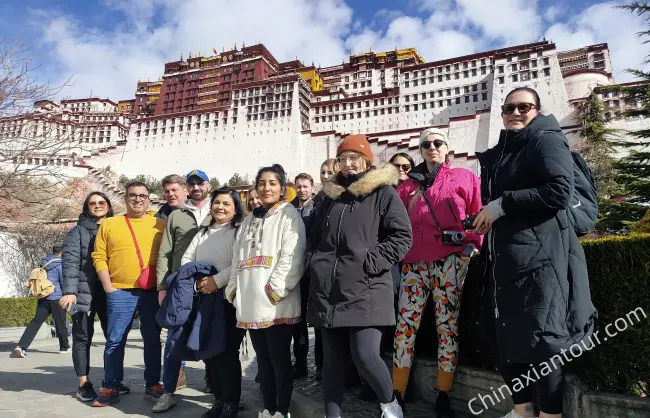
Most Tibetan people believe in Tibetan Buddhism and speak the Tibetan language. Today is a great opportunity to learn about this ethnic minority. The Potala Palace is today's first stop. Located on Red Hill, the Potala Palace was built under the leadership of the 33rd king of Tibet in 631 AD. What we see today is the reconstruction and expansion. The entire palace has 13 floors and is mainly divided into the White House and the Red Palace.
The White Palace was the Dalai Lama's winter palace, and included the administrative offices of the Tibetans' local government. The Red Palace is at the center of Potala Palace and contains over 70,000 cultural relics. These relics include Buddha Statues, Thangkas, Murals, Gold and Silver Artifacts, Enamelware, Jade Items, and Brocade Textile.
Potala Palace In the afternoon, the visit to the Jokhang Monastery, a Tibetan Buddhist temple, is on the schedule. The temple was constructed by Songtsen Gampo to honor Princess Wencheng's arrival in Tibet and has a history of more than 1300 years. The architecture is a blend of Tibetan, Tang, Nepalese, and Indian styles, and it enjoys the highest status in Tibetan Buddhism.
At last, the walk leads to Barkhor Street, which is surrounding the Jokhang Temple. You could observe a lot of devotees walking around the temple as a sign of their faith. This street is the most crowded and lively commercial zone in Lhasa where Tibetan knives, tribal clothing, jewels, and a variety of handicrafts, etc. are sold.
- Day 13: Lhasa to ShigatseTake Amazing Pictures of One of Tibet's Three Sacred Lakes
On the morning after the night in Lhasa, get in the car and drive to the airport expressway into the National Highway 349, then go south for about 2.5 hours to see Yamdrok Lake - one of the three holy lakes of Tibet.
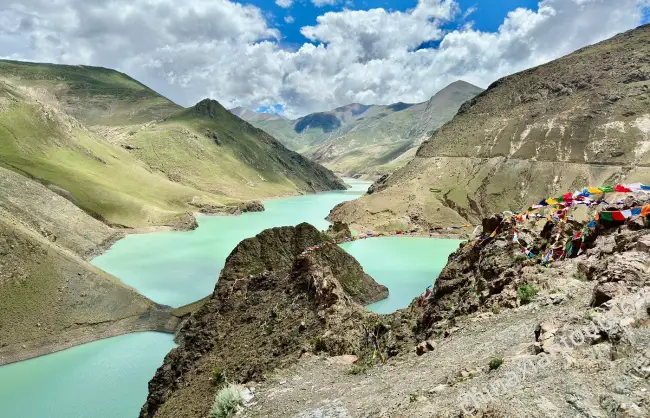
Yamdrok Lake As you ascend the 4,998-meter-high Gangbala Pass, a strikingly large area of bright blue water opens up to you. The lake looks like a giant sapphire band passing through the hills, changing its color from light to deep blue depending on the angle of the sun. Stop at different viewing platforms and lakeshore to enjoy the heavenly landscape. Next, keep on driving on the lakeside road and gaze at the crystal-clear waters of the lakeside up close, with the faraway mountains covered in snow mirrored on the surface, and very few times disturbed by the white egrets flying over.
Yamdrok Lake was formed due to the blockage of river channels by glacial debris flows billions of years ago, and is the largest enclosed inland lake in the southern part of the Qinghai Tibet Plateau. There are year-round insoluble snow capped mountains and ice peaks around it, with the highest reaching an altitude of over 7000 meters. Prepare your camera and capture this calming scenery.
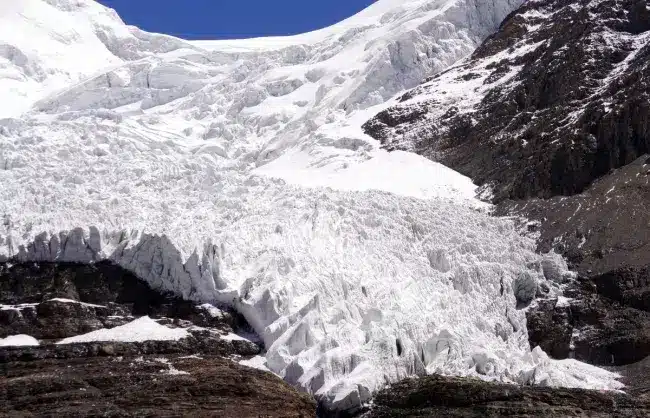
After leaving Yamdrok Lake, we drive about half an hour to Karola Glacier, the closest glacier to the highway in Tibet, just over 300 meters away. It gained fame as filming locations for movies like Red River Valley. Following the visit, drive another 3 hours to Shigatse, considered Tibet's second-largest city. Rest well tonight.
Karola Glacier - Day 14: Shigatse Back to LhasaVisit the Symbol of Shigatse & a Bustling Free Market
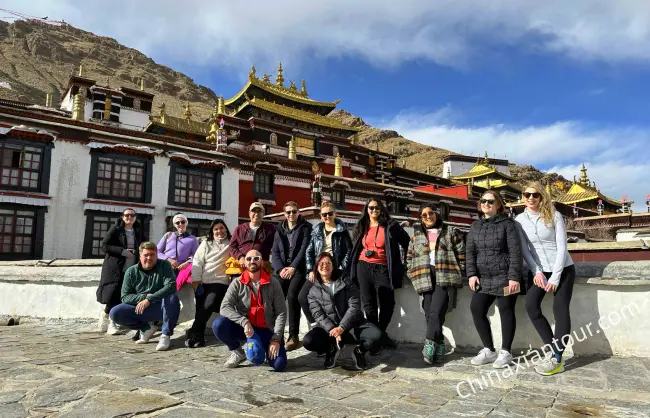
After breakfast, your guide will take you to visit the symbol of Shigatse - Tashilhunpo Monastery. Built against the mountainside, the monastery features over 50 monks' living quarters and 3,600 halls, blending traditional Tibetan architectural elements with Buddhist characteristics. Together with Lhasa's Three Great Monasteries, it forms the "Four Monasteries" of the Gelug School of Tibetan Buddhism.
Inside the temple is a giant statue of Buddha made from copper and is about 30 metres tall. The shoulders of the Buddha measure 11.5 metres wide and the ears are 2.2 metres long. Its brows are set with 32 diamonds as well as more than 1400 pearls, amber and coral materials, and makes for an incredible view. Just outside the monastery is a lively marketplace for you to buy handicrafts as mementos of your time.
After the visit, we drive back to Lhasa, about 6 hours.
Tashilhunpo Monastery - Day 15: Day 15 Lhasa Departure
Today is the last day of your 15-day China ethnic tour. Your driver will pick you up at your hotel and send you to the airport. Through this trip, you will gain some insights into some ethnic minorities in China. Hope you have a great time with us. Safe travels!



Tour Price Per Person
The price varies depending on the activity, number of people, travel date, and selected hotel. Please contact us for a specific price.
Accommodation For This Yunnan Ethnic Minority Tour


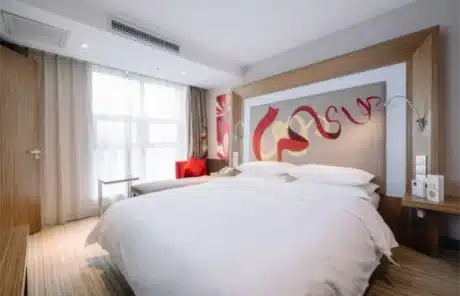




For your China private tour, the choice is in your hands: you can select luxury 5-star hotels for unparalleled comfort, cozy 4-star accommodations, or value-for-money 3-star options.
All our partner hotels are handpicked for their prime locations, conveniently situated near bustling commercial areas. Every room is equipped with standard amenities like air conditioning, hot water, 24-hour showers, reliable Wi-Fi, and windows for natural light.
In some hotels, there are English-speaking staff who are committed to providing attentive service. Should you have any special requests, feel free to ask - they are always ready to assist.


