

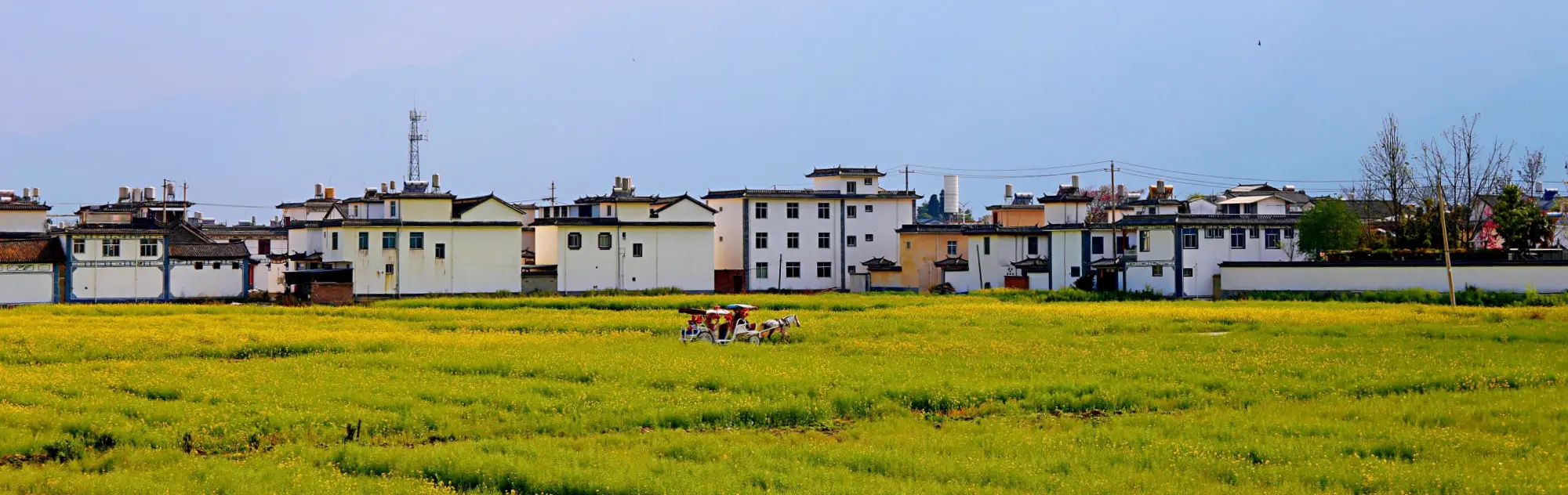
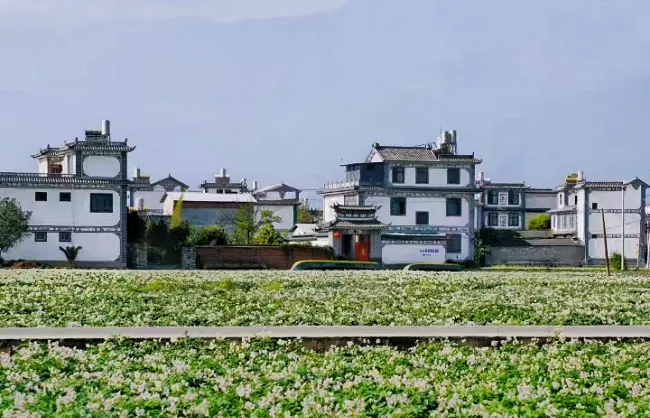
Xizhou Town is a thousand-year-old village in Dali, Yunnan. Because of its well-preserved traditional architecture of the Bai minority, which features a unique blend of Bai and Han Chinese styles, Xizhou is known as the “Museum of Bai Residential Architecture”.
It is also famous for its vibrant traditional markets, where you can find everything from various kinds of local food materials and local delicacies to handmade crafts. You can also meet friendly locals dressed in beautiful traditional Bai costumes.
Read on to discover the top things to do in Xizhou Town and practical information about transportation, dining and accommodation to plan your own trip.
Fast Facts of Dali Xizhou Town:
- Chinese name: 喜洲镇
- Location: Dali Bai Autonomous Prefecture, Yunnan Province, about 35 kilometers away from Dali City or 20 km from Dali Old Town
- Altitude: about 2,000 meters
- Opening hours: The town itself is open all day, the scenic spots usually open from 08:30 – 17:30
- Tickets: free
- Time Needed: half a day
- Highlights: A rare concentration of Bai courtyard residences, living local markets, local foods, and abundant cultural heritages
- Best for: people interested in history, architecture, minority culture, and authentic local experiences

Content Preview
- Top Things to Do and See
- Practical Travel Information
- How to Plan a Dali Trip with Xizhou Town
- History
- Attractions Nearby
- Travel with China Xian Tour
Top Things to Do and See in Xizhou Town of Dali
Admire the Ancient Architecture of the Bai Minority
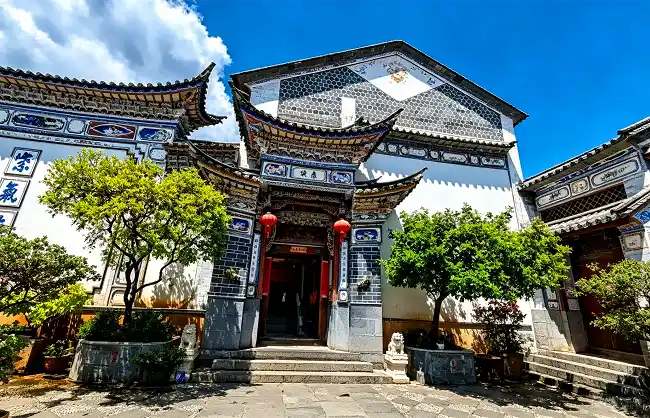
Total number: There are about 1,500 courtyard-style Bai residences, including 101 historic courtyards dating to the Ming, Qing and Republican periods
Representatives: The Seven-Foot Study, Zhao Tingjun’s Compound, Yan Family Compound, Dong Family Compound, Yang Pinxiang’s Courtyard and Yin Clan Courtyard
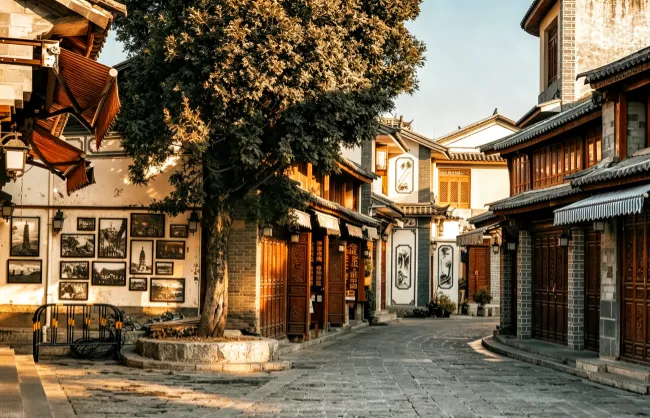
The complete and well-preserved Bai residential complex in Xizhou Town shows the unique architectural aesthetics and wisdom of the Bai people in its layout and orientation. The decoration of the Bai people’s houses is also extremely exquisite, integrating ink painting, colour painting, wood carving, brick carving, clay sculpture, inlay and so on into a cohesive whole.
Carved beams, overlapping arches and flying eaves, as well as the colourful decorative art of screen walls and gable walls, fully reflect the architectural ingenuity and artistic creativity of the Bai people.

Bike around Erhai Lake on scenic lakeside routes, visiting Jin Suo Island, Small Putuo Island, and Xizhou Town to experience Bai architecture, markets, and the Three-Course Tea ceremony.
Take Part in the Bai Three-Course Tea Ceremony
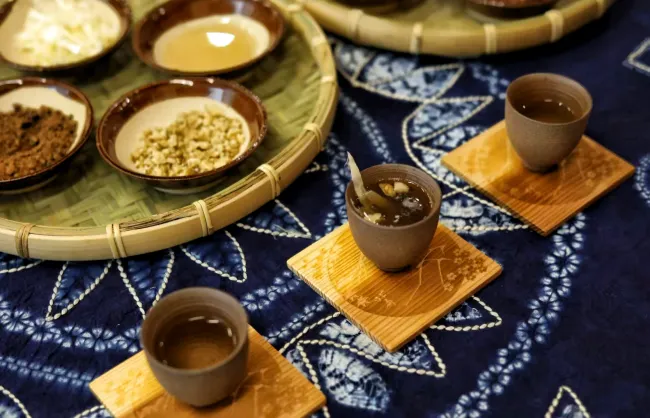
The Three Way Tea Ceremony is a hospitality ritual of the Bai people in Xizhou Town. The first tea is selected from the thicker and more bitter tea leaves, which are put into small sand canisters and roasted over a gentle fire, and then washed with boiling water. This tea, though fragrant, is called “clear and bitter tea”.
The second tea, add brown sugar, milk fan, walnuts, sesame, sweet and delicious, called “sweet tea”. The third tea is mixed with honey and 4 to 6 peppercorns, which is sweet and bitter, with a hint of spicy flavour, and is the “aftertaste tea”.
In Xizhou Ancient Town, you can also experience the unique festivals of the Bai people, such as the “Three Spirits Festival”, the “Lord of the World Festival”, etc.
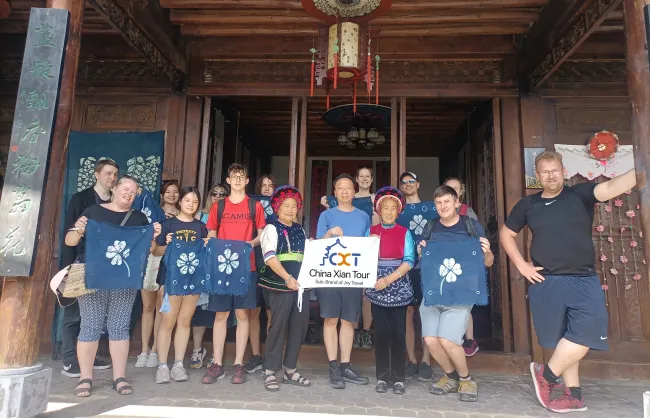
Learn to Make Tie-Dye by Yourself
Xizhou is a center of Bai tie-dye. This unique dyeing technique is a national intangible cultural heritage craft with over 1,000 years of history. Visitors can join workshops in the town, following the guide of local artisans to make their own scarves, bags, or handkerchiefs. In Bai culture, Blue-and-white patterns symbolize purity, and each piece is one of a kind. Experiences last about 1 hour, and it normally costs CNY 30–80/USD 4 – 12. The eventual work can be a memorable souvenir.
Explore Bai Culture and Daily Life at Sifang Street and Local Markets
Sifang Street is the social and market hub of Xizhou, and it still mainly serves locals. In the morning markets, merchants will come to sell fresh produce, dairy, and Bai snacks, while surrounding historic buildings show classic Bai residential styles. Walking through the street, visitors can observe authentic daily routines and local crafts.
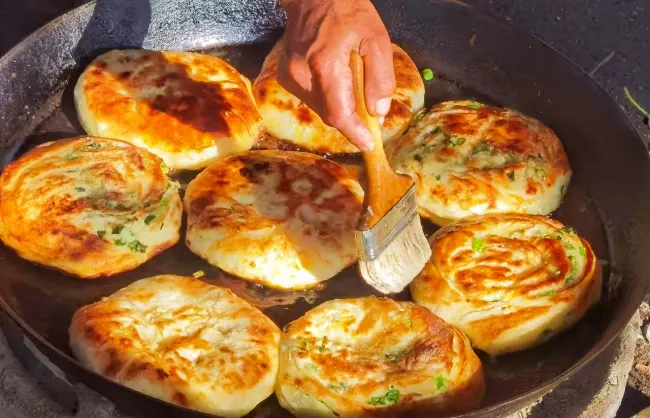
Another great way to learn more about the local lifestyle is the local food markets. Xizhou Morning Market (in town) and the nearby Zhoucheng Village Market are two of the most popular markets. Eat your way through the markets for Xizhou Baba, Milk Fan, Rice Cake Dumpling, Yunnan Rice Noodle, Bai-style Sour-Spicy Fish.
Wear and Understand Traditional Bai Costumes
In Xizhou Town, the Bai people revere the colour white. White men usually wear a white lapel coat, a black collar coat jacket, or several pieces of leather, a satin collar coat, commonly known as “three drops of water”. Bai women wear white blouses and red shoulders, or light-coloured blue blouses, plus black velvet blazers, with short embroidered waistbands, wide blue trousers, and embroidered “hundred-section shoes”.
When taking a trip to Dali, you can learn tie-dye and embroidery from local women.
Take in the Sheer Scenic Beauty
Surrounded by Erhai Lake, Cangshan Mountain, and the Yangbi River, Xizhou Town also features stunning natural landscapes. Travelers are encouraged to take a leisurely walk or bike ride around the town and enjoy the scenic beauty.
Cycle from Dali to Xizhou Town for traditional Bai architecture and Three-Course Tea, then to Zhoucheng for thousand-year-old tie-dye crafts, finishing with a scenic ride along Erhai Lake.

Practical Travel Information about Xizhou Ancient Town
Best Time to Visit Xizhou Old Town
When to travel to Xizhou in Dali? Xizhou Town is at its most beautiful from March to May and September to November when the weather is mild and the temperature is about 20 degrees. Enjoy the blooming flowers, clear blue skies, fresh air, and beautiful rice fields.
For those in the know, Xizhou is beautiful all year round, with local festivals in the summer and winter to be explored with unique experiences.
How to Get to Xizhou Town
For most travelers, the most convenient option is to get to Dali first and then transfer to Xizhou Town.
Step 1: Get to Dali
By Plane: Dali Fengyi Airport now operates direct flights to/from many domestic cities, like Beijing, Shanghai, Xi’an, Hangzhou, Chengdu, Chongqing, etc. If you travel from your home country, it may be more popular to get to Kunming Changshui Airport first, as it operates more international flights. From Kunming to Dali, frequent high-speed trains run daily.
By Train: China’s HSR network has reached Dali. From Guilin, Chengdu, Chongqing, Nanning, and major cities in Yunnan, you can easily take a bullet train to arrive at Dali Railway Station.
Step 2: Get to Xizhou Town from Dali
From Airport:
- Taxi and ride-hailing car: worry-free option, takes less time but costs more, about 1 hour, about CNY 120 – 150/USD 17 – 21, more suitable for a group of 3 – 4 people or travelers with heavy luggage. Remember to confirm with the driver that your destination is the Zhengyi Gate or the south parking lot of Xizhou Town, which are closer to the major attractions.
- Airport shuttle bus to Dali Old Town + take the minibus to Eryuan at Cangshan Gate and get off at Xizhou: economical option, total cost of CNY 35 – 40/USD 5 – 6, total travel time of 2 – 2.5 hours, recommended for budget travelers. Tourists can also store luggage at Dali Old Town.
From Train Station:
- Public bus line 8 to DaliNorth Passenger Station + shuttle bus to Xizhou: most budget-friendly, CNY 10/USD 1, total travel time of about 1.5 hours, best for backpackers and solo travelers.
- Public bus line 8 or 4 to Dali Old Town + take the minibus to Eryuan at Cangshan Gate and get off at Xizhou: about CNY 10 – 15/USD 1 – 2, takes about 1.5 hours
- Taxi and ride-hailing car: CNY 80 – 120/USD 11 – 17, about 1 hour
From Dali Old Town:
- Take the minibus to Eryuan at Cangshan Gate and get off at Xizhou: most economical, CNY 7 – 10/USD 1, about 30 – 40 minutes, recommended for budget travelers
- Taxi and ride-hailing car: most convenient, CNY 40 – 60/USD 6 – 8, about 30 minutes, suitable for families and travelers with heavy luggage.
What and Where to Eat in Xizhou Town
Xizhou cuisine is something that you cannot miss. It reflects Bai agricultural traditions and local ingredients, and it focuses on providing a taste of freshness, balance, and natural flavors. Most authentic food experiences are often found at local markets and small family-run eateries.
- Xizhou Baba: Crispy outside, soft inside. It’s basically a flatbread with savory or sweet fillings.
- Milk Fan (Rushan): It’s a fermented dairy Often being grilled or fried, served with sugar or honey.
- Bai-style Dumplings: This is a kind of lightly seasoned dumplings with meat, vegetables, or herbs.
- Yunnan Rice Noodles: A traditional and one of the most iconic and famous Yunnan food. People usually have it with fresh herbs, broth, and local toppings.
- Lemongrass Grilled Fish: Fresh fish grilled with lemongrass and local spices.
Where to Stay in Xizhou Town
Xizhou Town provides all different accommodation choices, some of the most popular types are the charming guesthouses and boutique inns that blend traditional Bai architectural style with modern comfort. Staying in a traditional Bai courtyard home is highly recommended for an authentic cultural experience. Popular options include family-run guesthouses that offer personalized service and the chance to learn about Bai customs firsthand. However, if you prefer the modern style hotels, there are still plenty of them, which are also attached to a sense of local culture.
Travel by high-speed train between Kunming's Stone Forest and Dali's Erhai Lake, Three Pagodas, and ancient Bai towns.
How to Plan a Dali Trip with Xizhou Town
As Xizhou is only about 3 km from Zhoucheng Village and both are about 20 – 25 km from Dali Old Town, they are always combined to make a perfect one-day trip. To enrich the travel experience, it is also popular to include the nearby Haishe Park. A Dali trip with Xizhou Town basically needs about 2 – 4 days. Below is a 3-day itinerary for your reference.
Day 1: Dali Arrival – Dali Old Town
Day 2: Cangshan Mountain – Three Pagodas of Chongsheng Temple – Erhai Lake
Day 3: Xizhou Town – Zhoucheng Village – a former mansion of Yan’s Family – Departure

A 3-day Dali tour featuring cable car ascent of Cangshan Mountain, Erhai lakeside relaxation, ancient town exploration, and Bai minority traditional houses in Xizhou.
History of Xizhou Town
Xizhou Town has a rich history which can back over a thousand years, and it has served as an important cultural and commercial center in the Dali region.
It was historically a key hub for the Bai people, they settled here, lived here, and also developed their distinctive architectural style and customs in this area.
Over centuries, Xizhou flourished under the Dali Kingdom and it survived the later Ming and Qing dynasties, maintaining its status as a prosperous town with deep cultural roots.
Today, Xizhou stands as a living testament to the Bai people’s long history and their enduring cultural heritage.
Attractions Near Xizhou Town
If you are planning a trip to Dali and wondering what else to add to your Dali tour with Xizhou Town, below are some great recommendations.
- Dali Ancient Town: Located about 19kilometers from Xizhou Town, Dali Old Town is one of the most famous ancient towns in China and one of the best things to do in Yunnan. This charming historic town is home to a wealth of ancient architecture, streets, temples, and markets, and is a UNESCO World Heritage Site.
- Erhai Lake: 20 kilometers from Xizhou Town, Erhai Lake is one of the largest freshwater lakes in China. There are different ways to explore Erhai Lake, from a boat trip and fishing to biking and walking. Don’t miss the nearby Bai ethnic villages.
- Cangshan Mountain: 30 kilometers from Xizhou Town, the 4122-meter Cangshan Mountain is one of the highlight attractions in Dali. Take the cable car or hike to the top of Cangshang Mountain to enjoy a full view of the beautiful and pastoral Dali.
Enjoy a Wonderful Dali Trip with China Xian Tour
A visit to Xizhou Ancient Town feasts the eyes on the traditional Bai architecture and offers you a deep insight of the local life. Are you planning to include it in your Dali tour? China Xian Tour is glad to offer you help.
With years of experience in tailoring China tours, our travel consultants can seamlessly incorporate a visit to Xizhou into your itinerary. For seamless transfers between Xizhou and Dali Old Town, a private car will also be arranged for your transfers. Having gained a 99% customer satisfaction rate, we are confident in offering you a perfect tour. Just contact us now.


