


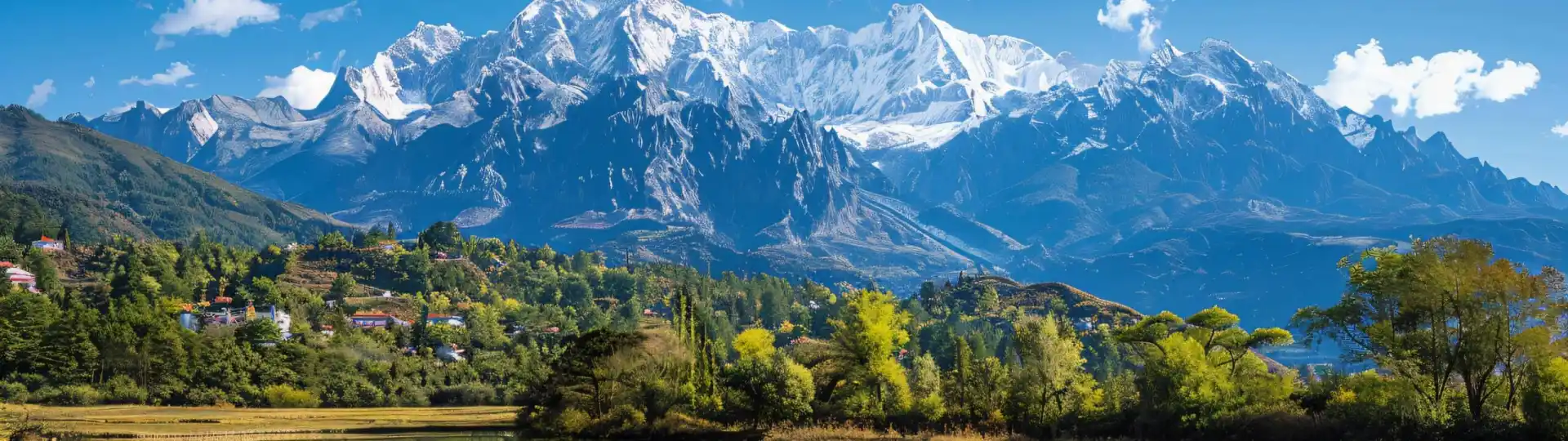
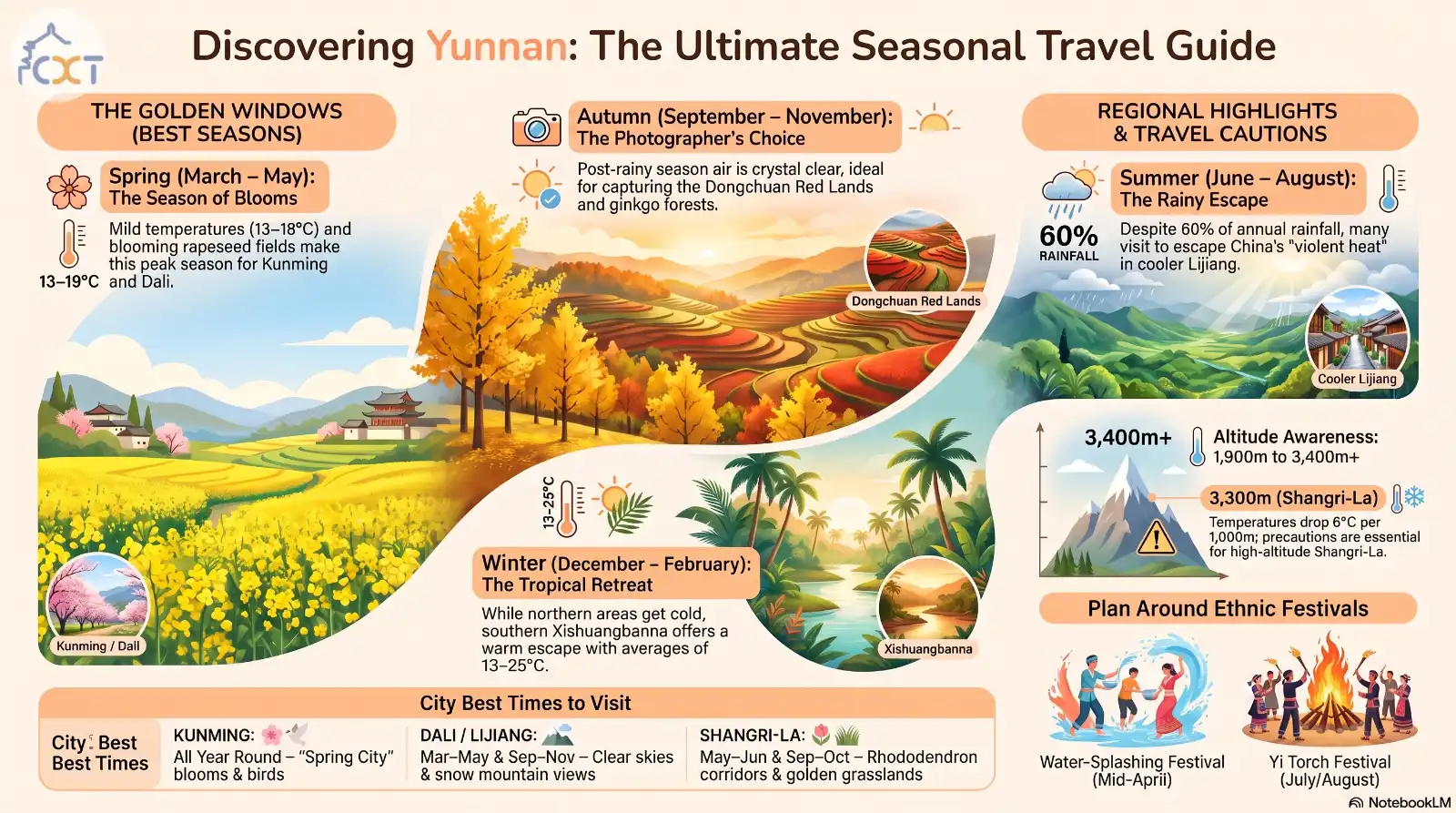
Quick Verdict: The overall best time to visit Yunnan is spring (March to May) and autumn (September to November). However, winter is the prime time for tropical Xishuangbanna.
Yunnan is dominated by a subtropical highland climate, featuring mild temperatures, abundant sunshine, and comfortable humidity levels throughout the year. Its average annual temperature hovers around 15°C (59°F), but the diverse altitudes and complex topography contribute to significant temperature and climate differences in different areas.
From the southern part to the snowy highlands in the north, it ranges from a tropical and subtropical climate to a milder and more temperate one. June to August is the period when Yunnan sees the most frequent rainfall, while November to April is the time when the region is drier and enjoys more sunny days.
Read on to discover the weather in each of the four seasons and popular tourist cities, as well as the best time to visit before you embark on a Yunnan tour.
Content Preview
- Overview
- Yunnan Weather in Different Seasons
- Best Time to Visit
- Times to Avoid
- Weather Variations Across Yunnan’s Cities
- Travel Yunnan with China Xian Tour
- FAQs
Overview of Yunnan Weather
<td”>Weather in Northern Yunnan<td”>Milder and more temperate, subtropical plateau zone, alpine frigid zone, significant vertical climate variation, cold winter and cool summer
Dry Season |
From November to April with the rainfall accounting for only about 15% of the whole year, golden season for outdoor activities and photography. |
Rainy Season |
From June to August with an average of around 90+ rainy days, common heavy rains, and high humidity |
Weather in Southern Yunnan |
A tropical and subtropical climate, lower elevations and altitudes, warm winters, and summer temperatures exceeding 30°C in some southern cities, such as Xishuangbanna |
Temperature |
Small annual temperature difference (10 – 12 ℃) and large daily temperature difference (8 – 16 ℃) |

Average Temperatures in Yunnan by Month
Month |
Average Temperature (°C) |
Highest Temperature (°C) |
Lowest Temperature (°C) |
Jan. |
8 |
15 |
1 |
Feb. |
10 |
18 |
3 |
Mar. |
13 |
21 |
5 |
Apr. |
16 |
24 |
9 |
May |
19 |
26 |
12 |
Jun. |
21 |
25 |
16 |
Jul. |
20 |
24 |
16 |
Aug. |
20 |
24 |
16 |
Sep. |
19 |
24 |
14 |
Oct. |
16 |
22 |
10 |
Nov. |
13 |
19 |
6 |
Dec. |
9 |
16 |
>2 |
Yunnan Weather in Different Seasons
Spring Weather in Yunnan (March – May)
- Average temperature: 13 – 19 ℃
- Recommended places to go: Luoping, Kunming, Dali
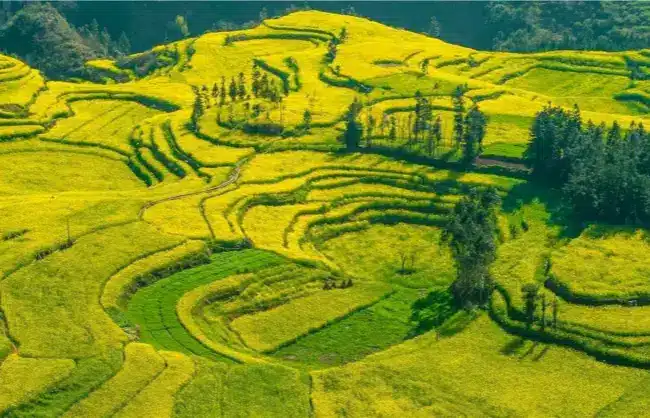
Yunnan’s spring is exceptionally enchanting and pleasant, with mild temperatures between 15–25°C (59–77°F). During this time, flowers burst into color, landscapes turn vibrant green, and nature awakens fully. It is the perfect time for enjoying flowers; don’t miss Luoping’s endless golden rapeseed fields, the delicate cherry blossoms around Kunming, a city also known as “Spring City”, Green Lake Park, and Cangshan Mountain in Dali.
Spring Festivals:
- Water-Splashing Festival (mid-April): Join Dai ethnic celebrations in Xishuangbanna for lively water fights and traditional dances.
- Third Moon Fair (March, lunar calendar): Experience Bai culture at Dali’s ancient trade fair with horse races and folk performances.
Top Things to Do in Spring:
- Wander through Luoping’s rapeseed fields.
- Enjoy the cherry blossom around Erhai Lake and Cangshan Mountain.
- Join ethnic festivals and discover their traditions.
- Go hiking in Tiger Leaping Gorge.
Packing List:
- Clothing: Long-sleeved T-shirt, thin coat and light down vest or fleece jacket
- Protection: Rain gear (umbrella or raincoat), sunscreen (SPF30+), sunglasses and sun hat
- Shoes: Sports shoes or hiking shoes
Summer Weather in Yunnan (June to August)
- Average temperature:20℃ – 21 ℃
- Recommended places to go: Shangri-La, Lijiang
It rains heavily in summer. Over 60% of the yearly downpours arrive from June to August. But staying here, you will have no need to worry about fierce temperatures. Even at the peak of summer, temperatures would be 15–30°C (59–86°F). Because of that, in a lot of Chinese people’s hearts, Yunnan has long become one of the best destinations to escape from summer’s violent heat. For more refreshing air and breathtaking views, head straight to regions like Shangri-La and Lijiang, these places offer the best Yunnan tour experience with cool temperatures and striking landscapes.
Summer Festivals:
- Torch Festival (late July): Witness Yi ethnic bonfires lighting up the night in Chuxiong or Stone Forest.
- Raosanling Festival (May, lunar calendar): Follow Bai farmers’ processions around Erhai Lake with singing and rituals.
Top Things to Do in Summer:
- Explore the cool, green highlands of Shangri-La.
- Visit the vibrant Yuanyang Rice Terraces during the growing season.
- Take a leisurely trip to Lijiang Old Town without the summer heat of other Chinese cities.
- Trek through lush forests in Gaoligong Mountain or Pudacuo National Park.
Packing List:
- Clothing: Cool, breathable and quick-drying summer clothes (short shirts, shorts, skirts), and a thin coat and long pants will be required in the morning and evening.
- Protection: High SPF sunscreen (SPF50+), sun hat, sunglasses, mosquito repellent, rain gear
- Others: Waterproof backpacks or waterproof covers

Autumn Weather in Yunnan (September to November)
- Average temperature:13 – 19 ℃
- Recommended places to go: Kunming, Shangri-La, Tengchong
The most recommended time to visit Yunnan is during autumn, especially if you’re someone looking for outdoor activities and beautiful landscapes. After the summer heat and rain season have left together with summer, temperatures finally return to 14–25°C (57–77°F). During this time, the weather is cooler and fresher than ever. Top recommended destinations in autumn include Dongchuan Red Land, Xiaocaoba Scenic Area, Pudacuo National Park, Baishuitai, Ginkgo Village in Tengchong, Meili Snow Mountain, etc.
Autumn Festivals:
- Hani October Harvest (November, lunar calendar): Feast at Honghe’s mile-long banquet beside terraced fields.
- Sanduo Festival (March, lunar calendar): Attend Naxi ethnic ceremonies under Jade Dragon Snow Mountain.
Top Things to Do in Autumn:
- Take pictures of the golden Ginkgo Village in Tengchong.
- Trek through Meili Snow Mountain.
- Visit Dongchuan Red Land to see its dramatic red-soil landscapes.
- Explore Pudacuo National Park as there is amazing autumn foliage and lakes.
Packing List:
- Clothing: Long-sleeved T-shirts, thin sweaters and windproof coats. Down jackets, sweaters and scarves are needed for a tour in high-plateau areas.
- Protection: Sunscreen, moisturizing cream, lip balm and hydrating mask
- Shoes: hiking shoes
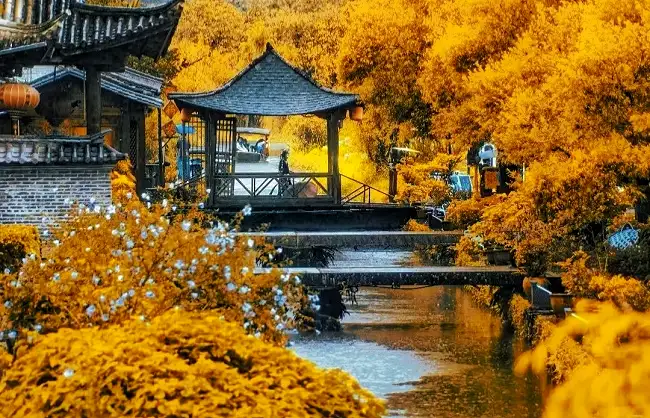
Winter Weather in Yunnan (December to February)
- Average temperature:8 – 10 ℃
- Recommended places to go: Kunming, Lijiang, Dali, Xishuangbanna
Yunnan’s winters are milder and warmer than in most parts of China, and the temperatures are around 6–17°C (43–63°F). Elevation decides weather: tropical Xishuangbanna stays comfortably warm (13–25°C), while Lijiang and Dali see cooler days (3–16°C) dotted with frequent sunshine. In Shangri-La and some mountain areas, the weather is colder and drier, sometimes with snow.
Winter Festivals:
- Kuoshi Festival (December): Brave the “Ladder of Knives” ritual with the Lisu ethnic groups in Nujiang Valley.
- Wa New Rice Festival (September–Oct, lunar calendar): Taste freshly harvested grains and dance to wooden drum beats in Lincang.
Top Things to Do in Winter:
- Enjoy warm weather in Xishuangbanna’s tropical gardens.
- See the breathtaking winter view at Jade Dragon Snow Mountain.
- Relax in Tengchong’s hot springs.
- Explore cultural heritage in Kunming, Dali, or Lijiang
Packing List:
- Clothing: Down jackets, thick sweaters, thermal underwear, hats, scarves and gloves
- Protection: Sunscreen, sunglasses, moisturizing skin care products
- Shoes: Warm ankle boots
- Others: Thermal mug, warm paste
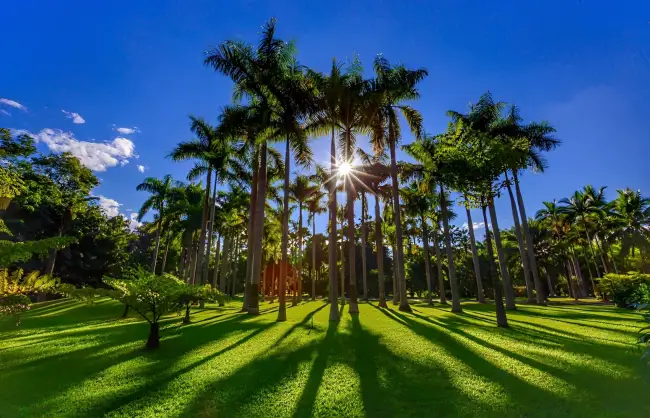
Best Time to Visit Yunnan
Thanks to the mild weather all year round and the diverse landscape, Yunnan is suitable for a visit at any time of the year. But spring and autumn are the best seasons for the most popular tourist cities, as the scenery is at its most beautiful. Xishuangbanna is an ideal winter destination.
Best Time to Visit for Popular Tourist Cities
Kunming
Best time to visit: all year round
Highlights:
- Spring: Varieties of blooming flowers in the city’s parks, the seas of yellow rapeseed flowers in Luoping (day trip)
- Summer and autumn: Stone Forest, Dianchi Lake, vibrant Yuanyang Rice Terraces (day trip)
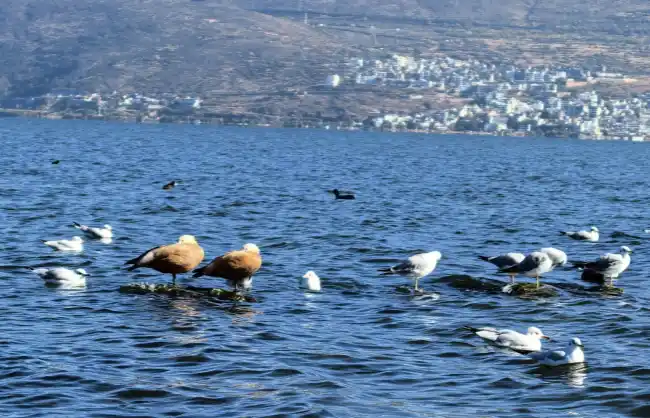
- Winter: Thousands of migratory birds from November to March
Dali
Best time to visit: March – May & September – November
Highlights:
- March – May: Cherry blossoms around Cangshan Mountain and Erhai Lake, green rice fields in Xizhou Ancient Town
- September – November: Best photography season for crystal-clear Erhai Lake and azure blue skies, Shuanglang Town, Panxi S-Bend and golden rice fields in Xizhou Ancient Town
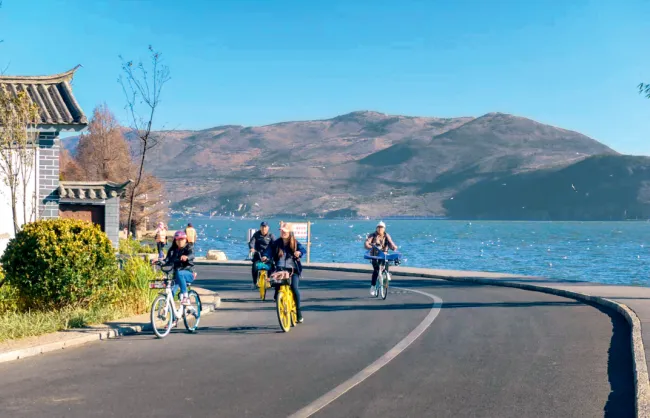
Lijiang
Best time to visit: March – May & September – November
Highlights:
- March – May: Snow-capped Jade Dragon Snow Mountain, abundant water in Blue Moon Valley, and wild peach blossoms in Lugu Lake
- September – November: higher possibility of capturing the spectacular scene of Jade Dragon Snow Mountain bathing in golden sunlight, the blue water color of Blue Moon Valley, and blooming water lilies in Lugu Lake
Shangri-La
Best time to visit: May – June & September – October
Highlights:
- May – June: a rhododendron corridor by Shudu Lake and Bita Lake featuring 28 species of wild rhododendrons in Pudacuo National Park
- September – October: natural wonder of the sun illuminating the golden Meili Snow Mountain, colorful forest in Pudacuo National Park, golden grassland in Napa Lake, the autumn foliage of Songzanlin Monastery, hiking in Tiger Leaping Gorge
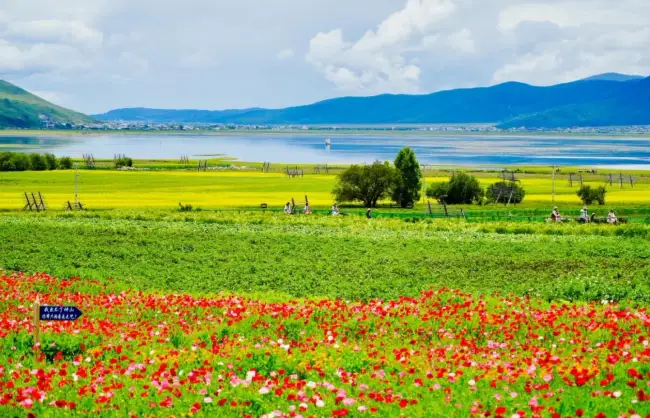
Xishuangbanna
Best time to visit: November – April
Highlights: A warm winter retreat with Wild Elephant Valley, Botanical Garden of the Chinese Academy of Sciences, Gaozhuang Night Market, and Water-splashing Festival in April
When is the Best Time to Visit Yunnan for local festivals?
Yunnan is home to different ethnic groups, boasting rich festivals throughout the year. Arranging your Yunnan tour during one of its festivals will reward you with a unique opportunity to glimpse into its rich ethnic traditions, customs and celebrations. Some of the most popular ones include:
Festival Name |
Approximate Date (Gregorian Calendar) |
Who Celebrate It |
Key Highlights |
Third Month Fair |
15th to 21st day of the 3rd lunar month |
Bai (Dali) |
Horse racing, trade fair, singing and dancing. |
Water Splashing Festival |
Around April 13-15 |
Dai (Xishuangbanna, Dehong) |
Water splashing for blessings, dragon boat racing, launching homemade bamboo rocket. |
Moninai Carnival |
May |
Wa (Cangyuan, Lincang) |
Smearing mud on each other to pass on blessings. |
Torch Festival |
24th day of the 6th lunar month (July-August) |
Yi (Chuxiong, Shilin, etc.) |
Lighting torches, bonfire dancing, bullfighting, wrestling. |
Kuza Festival |
6th lunar month (around July) |
Hani (Honghe, etc.) |
Long-table feast, palm fan dance, praying for a good harvest. |
Painted Face Festival |
July |
Yi (Qiubei, Wenshan) |
Smearing pot ash for blessings and good wishes. |
October New Year |
10th lunar month (around November) |
Hani (Honghe) |
Long-table feast, celebrating the harvest. |
Yi New Year |
Around December |
Yi (Chuxiong, etc.) |
Sacrificial rituals, singing and dancing, clothing displays to celebrate the new year. |
Monao Zongge Festival |
Around the 15th day of the 1st lunar month |
Jingpo (Longchuan, Dehong) |
Large-scale group dance involving tens of thousands of people. |

Best Time for Specific Activities
- Photography: Autumn is the golden shooting time in Yunnan. The rainy season has just passed, so the air is as clear as if it has been washed, and the light is gentle. The 30,000 ginkgo trees in the Ginkgo Village in Tengchong will create a brilliant golden fairy tale world. Exactly in the irrigation season, Yuanyang Terraced Fields reflect rosy clouds at dawn and at dusk, resembling a color palette lying between the sky and land.
- Hiking/trekking: For hiking lovers, the period from autumn to early winter is the best time. During this time, there is less rain in the mountain areas, so the paths are dry and the visibility is extremely high. Besides, the number of mosquitoes has decreased significantly. What a perfect time. You can challenge the perilous Tiger Leaping Gorge or head to Yubeng Village to gaze at Meili Snow Mountain.
- Bird watching: Winter is the best season for bird watching. Every year, many tourists visit Dianchi Lake in Kunming, because thousands of black-headed gull will fly here to spend the winter. The sky seems to be covered by the birds. You can try to put some food in your hand and attract the gull to approach you. Some birds may even stand on your head or shoulders directly. Do not forget to catch the moment with your camera. While Napa Lake Wetland and Huizhenian Lake in Shangri-La will welcome rare migratory birds such as black-necked cranes, which dance gracefully by the water, creating a truly breathtaking scene.
Times to Avoid Visiting Yunnan
June to August should be avoided first, when the rainfall is the most concentrated with frequent showers or heavy rains. Your flights or trains may be delayed and some outdoor scenic spots may be closed due to the rain.
Winter is also not recommended if you plan to visit the high-altitude area, such as Shangri-La. In this area, it is very cold and the heavy snow may block the roads and cause traffic disruptions.
Weather Variations Across Yunnan’s Cities
Covering a large area from tropical rainforests to snow-capped mountains, Yunnan is endowed with complex terrain and varied weather in different regions and cities. Below are the weather and climate in some popular cities in Yunnan:
Regions |
Climate Type |
Average Annual Temperature |
Characteristics |
Peak/Off-peak Seasons |
Kunming |
Subtropical Plateau Monsoon Climate, “spring-like” all year round |
Approximately 16°C |
|
Peak Season: Nov. – May, Jul. – Aug.
Off-peak Season: Jun., Sep. – Oct. |
Lijiang |
Subtropical highland climate, with an altitude of about 2400 meters |
Approximately 13°C |
|
Peak Season: Jul. – Aug., Oct.
Off-peak Season: Dec. – Feb., Jun. |
Dali |
Low-latitude Continental Monsoon Climate |
Approximately 15°C |
|
Peak Season: Jul. – Aug., Oct.
Off-peak Season: Dec. – Feb., Jun. |
Shangri-La |
Plateau Sub-alpine Monsoon Climate, with a high altitude (about 3300 meters) |
Approximately 6°C |
|
Peak Season: May – Jun., Sep. – Oct., Nov. – Feb.
Off-peak Season: Mar. – Apr. |
Xishuangbanna |
Tropical Monsoon Climate |
Approximately 21°C |
|
Peak Season: Nov. – Apr.
Off-peak Season: Jun. – Aug. |
Travel Yunnan with China Xian Tour
Yunnan’s diversity means your trip could be as short as 5–6 days for a highlights tour or be extended to 10–12 days for an in-depth journey that explores both cultural towns and natural wonders.
As a local travel expert, China Xian Tour can help you create a balanced itinerary which is entirely based on your interests, and we’ll ensure you have smooth travel connections across the province. With all logistics handled by us, you’re free to simply enjoy the journey and immerse yourself in Yunnan’s infinite charm.
FAQs about Yunnan Weather and Best Time to Visit
Is Yunnan suitable for summer travel despite the rain?
Yes, the cool weather in Yunnan in summer, especially in its high-altitude areas, makes it a perfect summer gateway. Though summer is the rainy season in Yunnan when it sees more frequent rainfall, the rains are usually short and occur in a few regions. Usually, the rains won’t influence your Yunnan summer trip too much.
Is winter a good time to visit Yunnan?
Yes. Winter is the off-peak season when big deals for hotels and flights are offered, and most cities, except Xishuangbannan, see the fewest tourists. Also, it is the time when the view of Jade Dragon Snow Mountain and Meili Snow Mountains is at its most stunning. Generally, most regions in Yunnan enjoy mild weather in winter months, with average temperatures hovering around 6–17°C.
How does altitude affect weather and travel in Yunnan?
Technically, the temperature drops by about 6°C for every 1000 meters ascending. So it is not surprising to wear a T-shirt at the mountain base and wrap a down jacket at the summit. Due to the thinner air at high-altitude areas, the UV rays are also stronger, and the temperature difference between day and night is also more significant.
A big thing to watch out for when visiting Yunnan’s high-altitude areas is altitude sickness. Get a general idea about elevation in different regions from the following table:
Destination |
Approximate Elevation |
Suggestions |
Kunming |
1900 m |
No worries, can adapt easily. |
Dali |
2000 m |
Most people don’t notice the altitude. |
Lijiang |
2400 m |
Most people are fine, but avoid strenuous activities. |
Lugu Lake |
2700 m |
A small number of people might feel slight symptoms. Try to slow down your pace. |
Shangri-La |
3300 m |
Most people will have symptoms, so be sure to take precautions. |
Meili Snow Mountain |
3400+ m |
Usually a hiking challenge, so proceed at your own pace and know your limits. |
Xishuangbanna |
500-600 m |
Don’t have to worry at all. |


