
Yunnan can be said to be the place with the most festivals in China. It is the home to 25 of China’s 56 officially recognized ethnic groups, like the Yi, Bai, Hani, Dai, and Naxi peoples. This adds to its rich and colourful culture. The festivals to them are not necessarily a celebratory event, but a cultural identity, a sign of gratitude, and connection with the natural environment.
It receives thousands of tourists to celebrate the festivals together. Every festival is a window into the soul of the people. Therefore, Yunnan now is a perfect destination in China for cultural experience.
This guide demonstrates the specifics of Yunnan festivals, including dates, traditions, where to experience and highlight activities, so you can get the actual experience of the breathtaking Yunnan ethnic minority customs easily.
Content Preview
- Why Yunnan Is Known as the “Land of Festivals”
- Top 10 Ethnic Festivals in Yunnan You Shouldn’t Miss
- Other Unique Local Celebrations
- Yunnan Festival Schedule at a Glance: A Month-by-Month Guide (2025-2026)
- How to Experience Yunnan Festivals as a Traveler
- Planning Your Itinerary by Ethnic Group and Location
- FAQs About Yunnan Festivals
- Plan Your Yunnan Festival Adventure with China Xian Tour
Why Yunnan Is Known as the “Land of Festivals”
- Ethnic Diversity: 25 ethnic minorities live in Yunnan, including the Dai, Bai, Naxi, Yi, and Hani. They all have their distinctive traditions and expressions showing through festivals.
- Unique Calendar of Celebration:Thanks to the different ethnic groups, Yunnan celebrates festivals almost every month of the year. There are over 400 Yunnan festivals on record.
- Harmony with Nature: Most Yunnan festivals are connected with agriculture, signing the rich harvest, the spring planting, and prayers for rain. People think highly of the harmony with nature and expressit through the festivals.
- Religion and Ancestors: Yunnan festivals are celebrated for the religious beliefs, like animism, Buddhism, and Daoism and for the ancestor worship.
- Cultural Expression and Identity: Those festivals show the ethnic groups’ unique languages, customs, music, and dance to the young generation and the world.
Top 10 Ethnic Festivals in Yunnan You Shouldn’t Miss
1. Water Splashing Festival (Dai people, Xishuangbanna)
- When: Mid-April (same time as Songkran in Thailand)
- Where to see: Jinghong, Xishuangbanna
- Highlights: Water fights, parades, dragon boat races, Buddhist rituals.
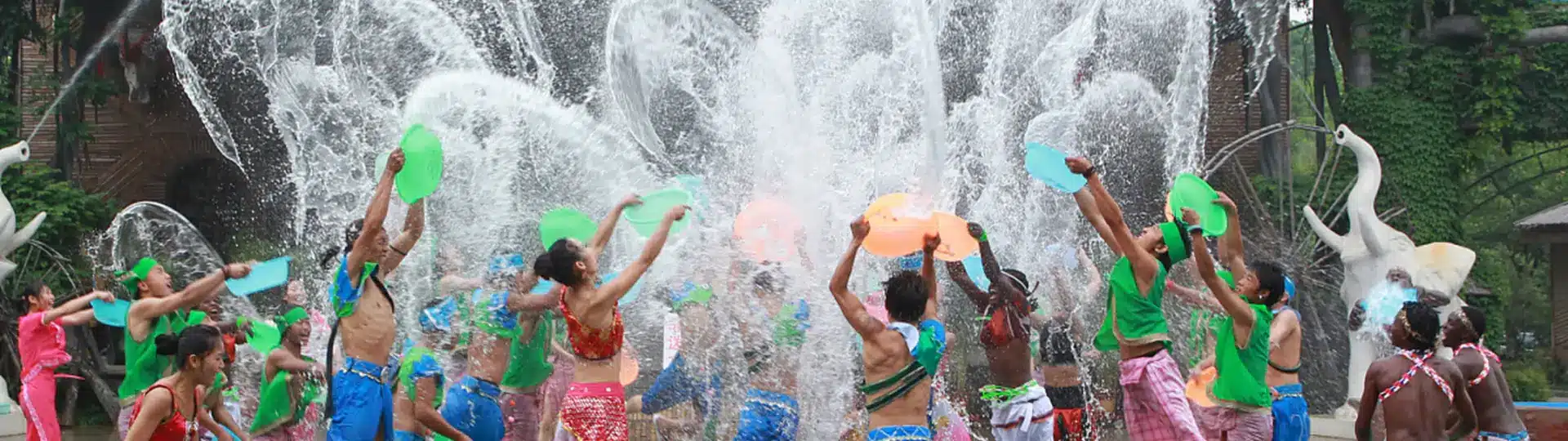
The Yunnan Water Splashing Festival is the most famous and iconic of all Xishuangbanna festivals. It marks the Dai New Year, celebrating the renewal and purification. This festival enjoys deep cultural root of Dai. It makes the use of water to wash away the misfortunes of the past year and to welcome the new year with purity and goodwill.
During the festival, Jinghong, the center of the Yunnan Water Festival, becomes a joyful water playground. People all splash water to send out blessings. The more water in your body, the more blessings you have received. You can also witness the monks chanting prayers and the believers making offerings at local temples.
Suggested tour: 4 Days Xishuangbanna Tour with Water Splashing Festival

2. Torch Festival (Yi people, Chuxiong and Shilin)
- When: Lunar June 24–26
- Where to see: Yi autonomous prefectures of Chuxiong, Kunming
- Activities: Torch parades, wrestling, bullfighting, bonfires at night.
- Cultural meaning: A festival of light and unity, blessing for a good harvest.
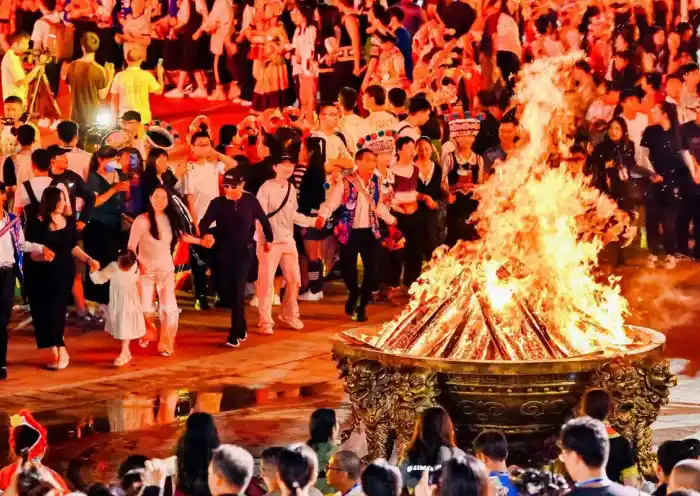
The Yunnan Torch Festival, an ethnic festival in Yunnan, is celebrated among the Yi people. It is a spectacular festival of fire, lighting up the summer nights. This festival has special agricultural meanings, signing a good harvest and a protection from pests and evil spirits. It is also a celebration of unity and the power of fire.
At night, massive torches light up the villages. People carry the torches and walk around in public squares. The torches are piled up together to form the bonfires, around which people are dancing and singing. You can also see traditional performances, wrestling matches, and even local bullfighting.
3. Dali March Fair (Bai people)
- When: Lunar March 15–21
- Where to See: Dali Old Town
- Celebrations: Trade fairs, horse races, folk dances, and Bai handicrafts.
- Highlights: Combines cultural immersion and scenic Erhai Lake views.
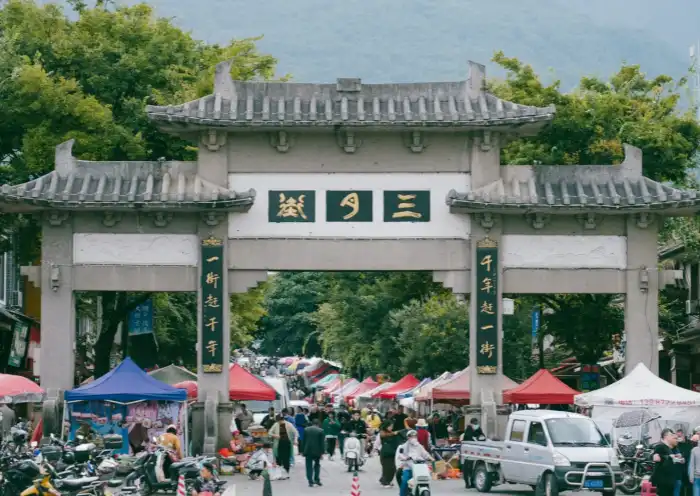
The Dali March Fair, also known as the Third Month Fair, is one of the most important and lively Yunnan cultural experiences. It is the largest traditional gathering of the Bai people. The week-long event is celebrated in the historic Dali Old Town at the foot of the Cangshan Mountains.
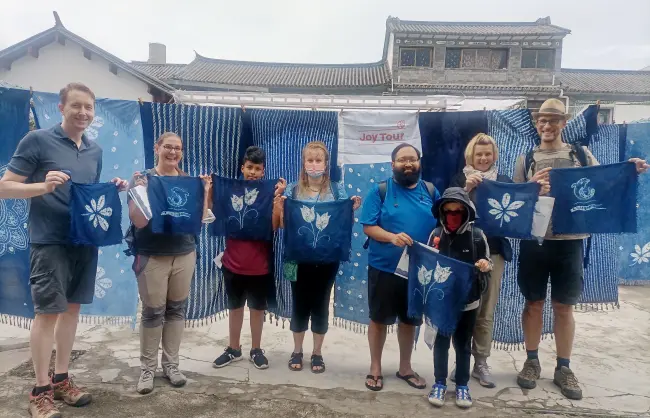
Originating from the temple fair during the Tang Dynasty, it shows the vibrant life of Bai people and their rich cultural heritage. You can find fine Bai tie-dye textiles, exquisite silver handicrafts, and local herbs and tea at this fair. The horse races, folk dances, and singing performances can’t be missed.
Suggested Dali Tours:
4. Sanduo Festival (Naxi people, Lijiang)
- When: Lunar February 8
- Who is Sanduo: Naxi’s mountain god and protector.
- Where to see: Sanduo Temple
- Celebrations: Offerings, music, and dances in Lijiang’s Yulong Snow Mountain area.
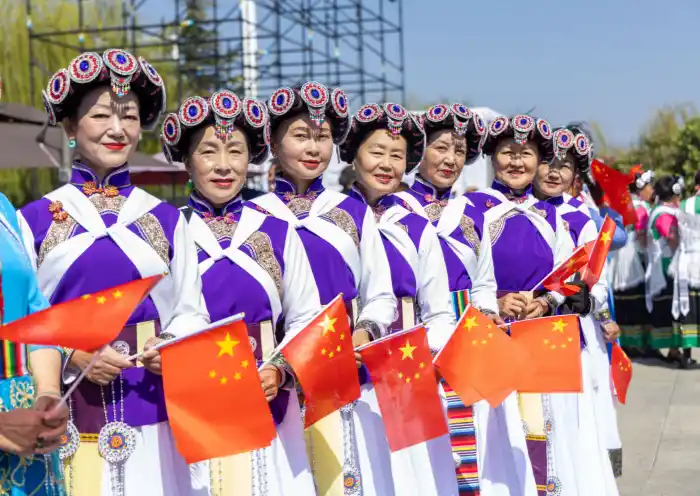
The Sanduo Festival is the most important traditional festival of the Naxi people. It is to honor the revered mountain god and protector of Naxi, Sanduo. As the legend has it, Sanduo has been safeguarding the Naxi people and their homeland for centuries so this festival is a cornerstone of the spiritual identity.
Sanduo Temple is located at the foot of the sacred Yulong Snow Mountain. Thousands of Naxi people, wearing their traditional costumes, make a pilgrimage to the temple and present the offerings of food, wine, and incense.
Recommended Lijiang Tours:
3 Days Lijiang Tour: Cultural & Natural Experiences
5 Days Lijiang Tour with Lugu Lake & Matriarchal Mosuo
5. Horse Race Festival (Tibetan communities in Shangri-La and Deqin)
- When: Summer (June – August)
- Where to see: Shangri-La and Deqin.
- Celebrations: Horse racing, traditional costumes, Tibetan opera, and archery.
- Travel insight: A chance to see Tibetan culture without leaving Yunnan.
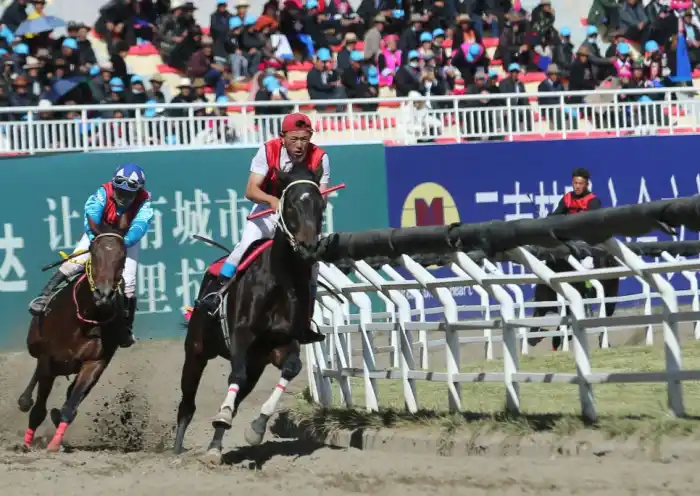
The Horse Race Festival shows the Tibetan culture in Yunnan. You can see the brave Kham man, the excellent equestrian skill, and the galloping horses in this festival. This festival reflects the worship of horses and the awe of heroes by the Tibetan people. The galloping horses symbolize the passion for a new life and people there always maintain an unyielding pace and march forward courageously.
Wearing national costumes, people come far and wide with butter tea, highland barley wine and all kinds of delicious food. They set up tents around the competition venue, cheer for the athletes, and chat with friends. Tourists can experience the most iconic Yunnan ethnic minority traditions in this festival. If possiblle, try to arrange your Shangri-La tour around the festival for an immersive experience. Get inspiration from our sample Shangri-La itineraries below:
5 Days Shangri-La Tour with Meili Snow Mountain
4 Days All-inclusive Shangri-La Highlights Tour
6. Worship Gathering in the Three Temples (Bai People in Dali)
- When: Lunar April 23
- Where to see: At the foot of the Cangshan Mountains
- Why important: Honor guardians and pray for peace, health, and a good harvest
- Celebrations: Religious processions, dragon dances, and markets.
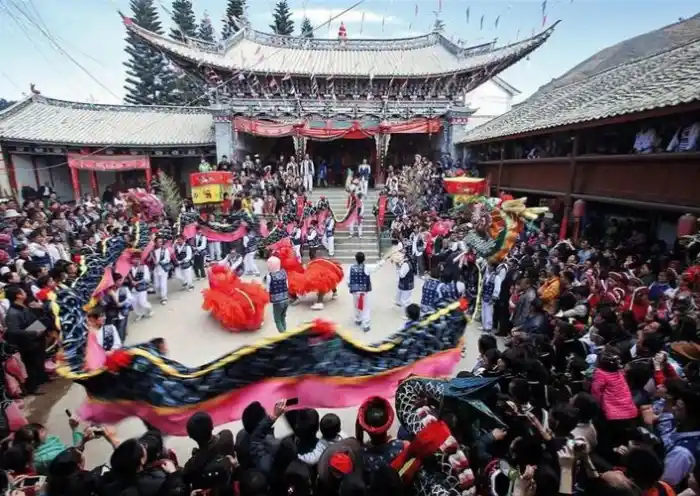
The Worship Gathering in the Three Temples, also known as the Three Temples Festival, is a worship of local gods in Dali. It shows the great spirits of the Bai people, presented in a form of pilgrimage.
During the festival, a grand religious procession will be held around the three revered temples: Shengdu Temple, Shengyuan Temple, and Chaoyang Temple, which are located at the foot of the Cangshan Mountains. The participants will wear traditional attire, carry incense and offerings and move in reverence. What’s more, the addition of vibrant dragon and lion dances transforms the procession into a more awe-inspiring cultural spectacle.
Learn more ideas on things to do in Dali to further enhance your Dali trip plans.
7. Hani October New Year
- When: Around November
- Where to see: Honghe Hani and Yi Autonomous Prefecture
- Celebrations: the beginning of a new agricultural cycle.
Highlight: Honghe Hani Rice Terraces, Long Street Banquet, Hani Villages.
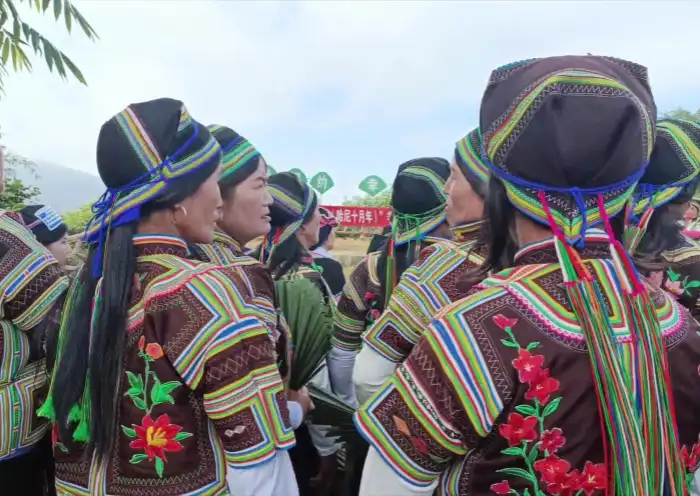
The Hani October New Year is one of the four traditional seasonal festivals of the Hani ethnic group. According to the Hani calendar, the festival symbolizes the end of the old year and the start of the new one. It, rooted in the ancient agricultural tradition, expresses Hani’s pursuit of good health, bountiful harvests and thriving livestock.
The festival is celebrated in the Hani villages, scattered across the terraced hills. During the festival, the villagers share food and wine, providing an atmosphere of hospitality and unity.
Recommended Yunnan tours with Hani Rice Terraces:
8. Sword Festival (Achang people, Dehong)
- When: Lunar February 2
- Where to see: Dehong Prefecture
- Unique tradition: Sword forging demonstrations, martial dances.
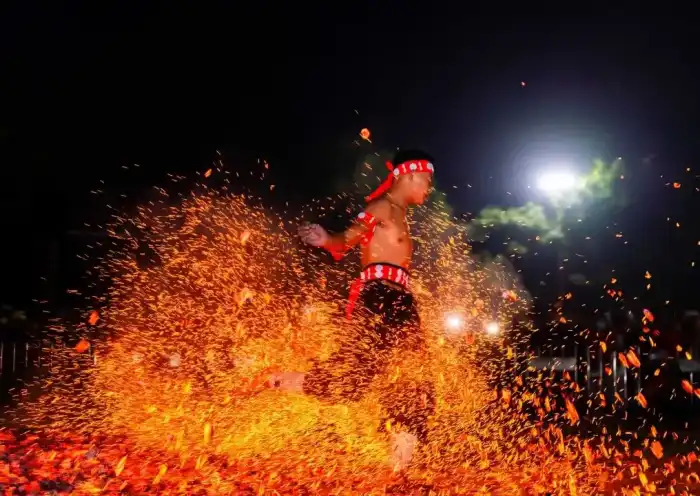
The Sword Festival is celebrated by the Achang people, one small ethnic group in the Dehong Prefecture. It pays tribute to the legendary iron-making and warrior spirit of the Achang people. The festival also ensures that the ancient handicraft of iron-making is passed on.
It is a good opportunity for tourists to witness the impressive sword-forging live.
9. Kuoshi Festival (Lisu people, Nujiang Valley)
- When: December or early January
- Where to see: Nujiang Valley
- Activities: Singing, bamboo pole dances, and communal feasts.
- Significance: Marks the New Year for the Lisu people.
The Kuoshi Festival, meaning the New Year Festival, is the largest and the most important festival of the Lisu people. It is a festival for thanksgiving, family reunion, and prayer for prosperity and good harvest. The Lisu cultural identity and their spirits are fully demonstrated in this festival.
To celebrate the festival, the participants usually move nimbly between clapping poles, singing traditional songs. A joyful public banquet is prepared with food and wine. You can feel the resilient and warm culture of the Lisu people in this Yunnan ethnic festival.
10. Huashan Festival (Miao people, Wenshan)
- When: Lunar March
- Highlight: Climbing “Flower Mountain,” singing competitions, love songs.
- Meaning: Celebrating spring and youth.
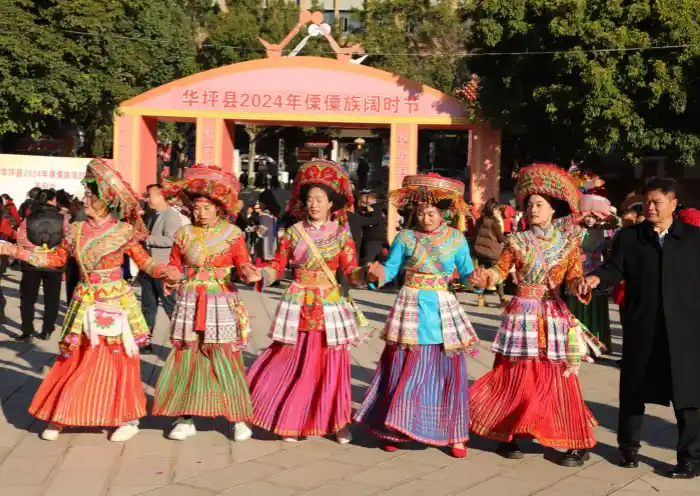
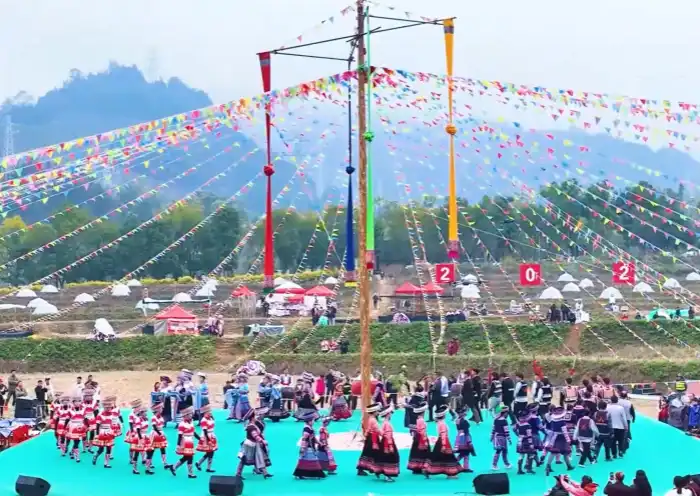
The Huashan Festival is the most representative festival of the Miao people in Yunnan. It is a celebration of spring, fertility, and youthful courtship. In this festival, people will climb a specially erected Flower Mountain Pole, which shows the life and prosperity.
Young Miao men and women dress in magnificent embroidered costumes with silver decorations and participate in intense competitions like crossbow shooting. The couples exchange improvised love songs in public for courtship. As one of the most important Miao culture festivals in Yunnan province, the Huashan Festival provides a unique insight into the culture and romantic customs of Miao people with the form of sound and color.
Other Unique Local Celebrations
Festival Name |
When |
Where |
Ethnic Group |
Activities |
Gedong Festival |
January |
Shangri-La |
Tibetan Ethnic Group |
Cham (masked religious dances).
Thangka unveiling ceremonies. Prayer gatherings at monasteries. |
Wa Wooden Drum Festival (Cangyuan) |
May 1st to 5th |
Cangyuan County |
Wa Ethnic Group |
Wooden drum dancing and singing.
Hair-swinging dances. |
Gatangpa Festival |
Early January |
Xishuangbanna |
Hani Ethnic Group |
Ancestor worship.
Pounding glutinous rice cakes. Cooking rice wine. Playing on the swing. Beating the spinning top. |
Mosuo Zhuanshan Festival |
End of July |
Lugu Lake area, near Lijiang |
Naxi Ethnic Group |
Horse racing.
Making a pilgrimage. Hanging prayer flags. Scattering grains to pray for blessings. Folk song duet. |
Most tourists choose Kunming, Dali, and Lijiang for their destinations in Yunnan. However, if you want to truly immerse yourselves into the magnificent festivals, the ancient villages in Yunnan are the soul. Those villages demonstrate the core of Yunnan ethnic minority traditions. Try the terraced fields of Yuanyang, the deep valleys of Nujiang, and the tropical lands of Xishuangbanna.
Yunnan Festival Schedule at a Glance: A Month-by-Month Guide (2025-2026)
People celebrate the ethnic festivals in Yunnan almost every month. If you are planning a Yunnan travel for festival encounters, this Yunnan Festival Schedule can offer a hand.
Date |
Festival Name |
Ethnic Group |
Primary Location |
January (the 2nd to the 8th day of the first lunar month) |
Huashan Festival |
Miao |
Wenshan |
February (the 1st day to the 15th of the first lunar month) |
Tibetan New Year |
Tibetan |
Shangri-la, Diqing Prefecture |
February ( the 8th day of the second lunar month) |
Flower Planting Festival |
Yi |
Dayao County and Nanhua County of Chuxiong |
February (the 8th day of the second lunar month) |
Sanduo Festival |
Naxi |
At the foot of Yulong Snow Mountain in Lijiang |
February (the 8th day of the second lunar month) |
Sword Festival |
Achang |
Dehong Prefecture |
March (the 17th day to the 29th of the third lunar month) |
Dali March Fair |
Bai |
At the foot of Cangshan Mountain in Dali |
April 14 – 16 |
Water Splashing Festival |
Dai |
Xishuangbanna, Dehong, Pu ‘er |
April (the 23rd to 25th day of the fourth lunar month) |
Worship Gathering in the Three Temples |
Bai |
At the foot of the Cangshan Mountains |
May (the 5th day of the fifth lunar month) |
Horse Race Festival |
Tibetan |
Shangri-La and Deqin. |
Mid Lunar June |
Kuzhazha Festival |
Hani |
Yuanyang Terraced fields and Hani villages in Honghe Prefecture |
June (the 24th to 27th day of the sixth lunar month) |
Torch Festival |
Yi |
Yi ethnic villages in Chuxiong, Lijiang, and Dali. |
October (the 10th of the tenth lunar month) |
Hani October New Year |
Hani |
Honghe Hani and Yi Autonomous Prefecture |
December 15 |
Kaimen Festival |
Dai |
Dai villages in Xishuangbanna and Dehong |
Late December |
Kuoshi Festival |
Lisu |
Nujiang Valley |
How to Experience Yunnan Festivals as a Traveler
Timing for Your Trip
- Plan in advance
- Check the Lunar dates
- If possible, arrive one or two days in advance
Cultural Etiquette and Respect
- First, observe the behavior of the local people. How do they celebrate the festival?
- Always ask before taking a photo.
- Your dress code should be modest when visiting the temples.
- The festivals are full of singing and dancing, so you may consider dressing up.
- You will get wet during the Water Splashing Festival, so use a waterproof bag for your electronics.
- If you plan a local homestay, be polite and say Thank you (Xièxie – 谢谢).
Planning Your Itinerary by Ethnic Group and Location
Given the diverse ethnic groups and festivals, it is hard to experience all of them in one go. For your reference and easy decision, we hand-picked some of the most popular places in Yunnan to encounter its top festivals and celebrations.
The Dai People in Xishuangbanna
The Dai celebrate the Water Splashing Festival in Xishuangbanna, the grandest Yunnan festival. This festival is full of joy and happiness. It is often held in mid-April.
Beyond the festival, you can also visit the Wild Elephant Valley and the rainforests. If you are interested in the religion of Dai, the Mengle Buddhist Temple is a good choice.

The Yi People in Chuxiong
The Yi people hold the Torch Festival in Chuxiong in late July. The flaming torches illuminate the night and people dance and sing around the torches.
You can walk around the Stone Forest National Park for beautiful scenes.The Chuxiong Yi Culture Park can help you get a glimpse of Yi culture. It is interesting to visit local villages to admire traditional Yi embroidery and craftsmanship.
The Bai People in Dali
Dali March Fair is celebrated in late April. Wandering through the stalls, you can buy some local merchandises like Bai tie-dye textiles and silver jewelry. Traditional music, dance, and arts are showing their charm in this fair.
After the festival, you can walk around Erhai Lake with stunning landscapes. You can also visit the traditional quadrangle courtyard of the Bai ethnic group in Xizhou.
The Naxi People in Lijiang
The Naxi people hold the Sanduo Festival in early March. Traditional rituals and offerings are presented at the Sanduo Temple. The families are gathered together to have a feast of meat, wine, and fruits.
The Yulong Snow Mountain is worth visiting, which is a guardian of the Naxi people.
The Hani People in Honghe
Hani October New Year is held in early October. The families conduct solemn ceremonies to worship the ancestors. Long-street banquets, symbolizing harmony and unity, are prepared.
The Honghe Hani Rice Terraces show the ingenuity of the Hani people. It is recommended to have a homestay in a Hani village.
FAQs About Yunnan Festivals
What is the most important festival in Yunnan?
There is no single most important festival in Yunnan, but the Water Splashing Festival and the Torch Festival are the most iconic.
How many ethnic groups celebrate their own festivals?
25.
What should I wear during the Water Splashing Festival?
- Wear quick-drying clothes or the clothes you don’t mind getting wet
- Avoid white clothes because they may become transparent when you get wet.
- Wear sandals or waterproof shoes.
- Bring a waterproof bag for your phone.
- Consider bringing a set of dry clothes if your hotel is too far.
Can tourists participate in ethnic celebrations?
Yes, but always remember to respect their customs.
Plan Your Yunnan Festival Adventure with China Xian Tour
Yunnan is the heart of China’s ethnic diversity. Its mountains, hills, fields, and buildings are telling the story of Yunnan festivals, cultures, and traditions.
Ready to have a Yunnan tour with immersive culture and festival experiences? Please feel free to contact China Xian Tour to customize your personal trip. With 20+ years of experience in tour planning and supported by professional local guides, we will guarantee you an in-depth exploration of the people and their real life and culture.