


Yunnan is a land of mountains and rivers. In ancient times, people referred to this mysterious plateau as the “colorful clouds in the south.” Home to 26 ethnic groups, of which 25 are ethnic minorities, and 15 are unique to Yunnan, Yunnan is the province with the most ethnic minorities in China. When planning Yunnan tours, visitors can experience the rich cultures and traditions of the ethnic minorities in Yunnan, a truly unique travel destination.
Content Preview
- Ethnic Minority Groups in Yunnan
- Yi Ethnic Minority
- Hani Ethnic Minority
- Bai Ethnic Minority
- Dai Ethnic Minority
- Naxi Ethnic Minority
- Zhuang Ethnic Minority
- Ethnic Minority Festivals in Yunnan
- Essential Practical & Ethical Travel Advice for Visitors
- FAQs about Ethnic Minorities in Yunnan
- Discover the Diverse Ethnic Cultures in Yunnan with China Xian Tour
Ethnic Minority Groups in Yunnan
Each of the ethnic minorities in Yunnan possesses its own unique culture, festivals, and customs. Among the ethnic minorities in Yunnan, the Dai, Hani, Bai, Naxi, Wa, Lisu, Lahu, Dulong, Jingpo, Pumi, Jino, Achang, De’ang, Blang, and Nu ethnic minorities are unique to Yunnan. In addition to the above, there are also other ethnic minorities such as the Yi, Buyi, Tibetan, Shui, Hui, Manchu, Miao, Yao, Mongolian, and Zhuang. Each ethnic group has its own unique language, religious beliefs, cultural traditions, and way of life, which adds a rich and colorful dimension to Yunnan tours.
There are six main ethnic minorities in Yunnan, which boast a population of over one million, namely the Yi, Hani, Bai, Dai, Miao, and Zhuang. They account for 76.94% of the total ethnic minority population in Yunnan.
Recommended Tour: 6 Days Yunnan Muslim Tour of Kunming Dali Lijiang
Yi Ethnic Minority
The Yi ethnic minority in Yunnan China highly venerate fire. The Yi people mainly settle in the Chuxiong Yi Autonomous Prefecture, the Honghe Hani and Yi Autonomous Prefecture, Lijiang, and Kunming. They believe that fire not only brings light but also drives away wild beasts and evil spirits. Therefore, fire is of great significance to the Yi people. Every year on June 24th of the lunar calendar, the Yi ethnic group holds a grand and solemn Torch Festival to express their worship and respect for fire and to pray for a bountiful harvest and a happy life in the coming year.
Traditional Architecture of the Yi
Yi people like to build their villages on sunny slopes of hills which will face rivers. This preference reflects their pursuit of harmony between human and nature. Homes are usually made of local stone, wood, and mud bricks, and every one the building has together built low-rise courtyards that blend into the mountain landscape like a living painting.
Distinctive Clothing and Handicrafts of the Yi
Yi attire is vibrant and richly embroidered. Women would normally wear right-lapped robes and bright aprons, and for men, they would favor cross-collared jackets and wool cloaks. Embroidery are always vivid, so you’ll see quite a lot of bright colors in their clothes, which often used to depict tigers or cosmic symbols.
Typical Cuisine of the Yi
Yi cuisine centers on the dreamlike collaboration of roasted meats, buckwheat, and maize. In their culture, fire is both sacred and practical. The way they have meals are is also unique, it often involves open-fire grilling and communal cooking during festivals.
Related Tourist Attractions
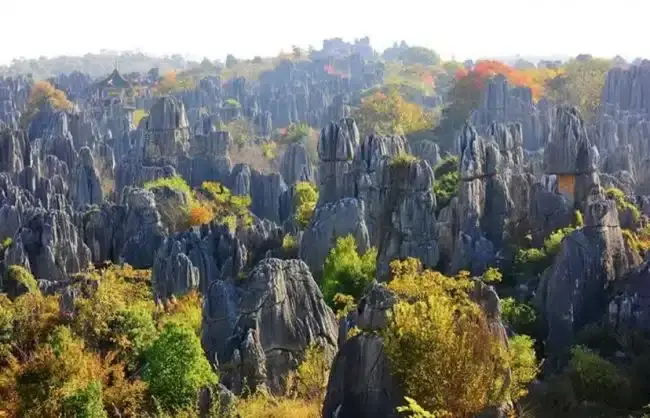
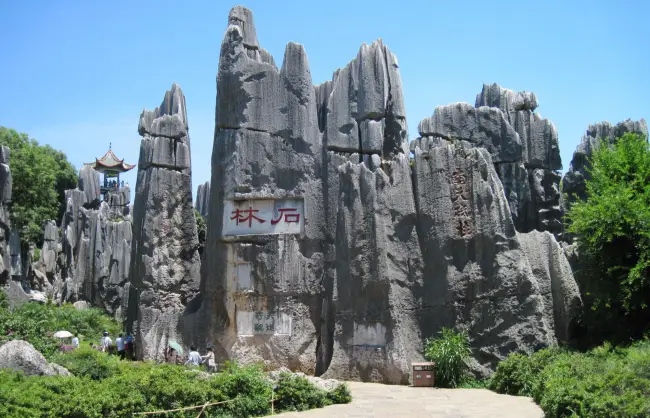
- The Stone Forest: One of the best places to experience Yi culture. Here, you can admire the world’s most unique karst landscape, learn about the legend of Ashima, explore traditional Yi villages, and appreciate the cultural charm of the Yi people.
Recommended Tours
- 3 Days Kunming Tour with Stone Forest & Local Essence
- 4 Days Kunming & Dongchuan Red Land Tour
- 10 Days Ethnic Yunnan Tour to Kunming Chuxiong Dali Lijiang
- 15 Days China Tour with Ethnic Culture: Guilin, Guizhou, Yunnan, Tibet
Hani Ethnic Minority
The Hani ethnic group is unique to Yunnan and is one of the ancient agricultural ethnic groups in China’s southwestern border region. With a population of 1.63 million in Yunnan, the Hani people mainly reside in the Wuliang Mountains and Ailao Mountains along the Red River, Yuanjiang River, and Lancang River basins in Yunnan Province.
Traditional Architecture of the Hani
Hani villages, such as those in Yuanyang, are also built with the love in nature, and they are designed to be able to integrate seamlessly with terraced fields. Their “mushroom houses” (shape) have thick earthen walls and thatched or tiled roofs, which can protect people from mountain rain and humidity.
Distinctive Clothing and Handicrafts of the Hani
Hani clothing is mostly indigo-dyed. Women wear short jackets and pleated skirts, while men wear wide pants. Embroidery are often inspired by scenes that they can see in their everyday life, such as terraces, rivers, and forests. They also deeply cherish their close bond with their land.
Typical Cuisine of the Hani
Rice is central to Hani life. Their meals often include red rice, smoked meats, and plus their home-brewed rice wine. Thy also enjoy the tea from the mountains, it’s part of daily hospitality.
Related Tourist Attractions
- The Honghe Hani Rice Terraces: The Hani Rice Terraces are located in the Honghe Hani and Yi Autonomous Prefecture in Yunnan Province. Yunnan is a mountainous region with numerous terraced fields, and the Ailao Mountain Hani Rice Terraces are representative of Yunnan’s terraced fields, known as “China’s most beautiful mountain carvings.”
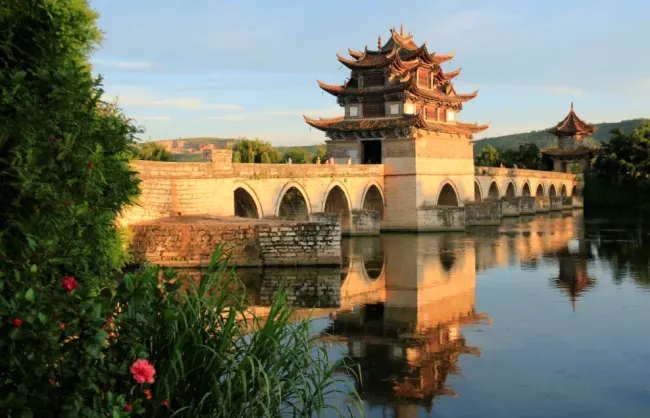
- The ancient town of Jianshui: Acclaimed as a “museum of ancient architecture” and a “museum of traditional dwellings.” With over 50 ancient buildings, beautiful landscapes, and a history spanning 12 centuries, Jianshui Ancient Town boasts many wonderful sights.
Recommended Tours
- 6 days Yunnan In-depth Minority Tour in Kunming – Jianshui – Yuanyang – Kunming
- 4 Days Kunming and Jianshui Ancient Town Tour
Bai Ethnic Minority
The Bai ethnic group is the 15th largest minority in China, mainly distributed in Yunnan, Guizhou, Hunan, and other provinces. The largest population reside in Yunnan Province, particularly in the Dali Bai Autonomous Prefecture. For those planning a winter trip to Yunnan, the Bai culture in Dali Ancient Town is definitely a highlight not to be missed.
Traditional Architecture of the Bai
Bai houses usually form a “three rooms and one screen wall” layout around a courtyard, and they are often built to face Erhai Lake. They share a typical architecture style” whitewashed walls, tiled roofs, and carved gates.
Distinctive Clothing and Handicrafts of the Bai
They like white garments which symbolizes purity. And they make famous crafts like Bai tie-dye (mostly from Zhoucheng), lacquerware, and wood carving.
Typical Cuisine of the Bai
Bai food tastes fresh and slightly sour or spicy. Bai people would usually cured meats and pickled vegetables as part of their meals. They also have their special tea culture. The “Three-Course Tea Ceremony” – bitter, sweet, then aromatic – is a core ritual of Bai hospitality.
Related Tourist Attractions
- Dali Ancient Town:A microcosm of Dali’s historical and cultural heritage. Within the town, a large number of traditional Bai ethnic buildings have been preserved.
- Xizhou Ancient Town: A leisurely and quiet place full of stories and charm. The town is imbued with a literary and peaceful atmosphere. The Bai ethnic residential buildings that have witnessed the vicissitudes of time, and every scene exude the tranquility and the passage of time.
Recommended Tours
Dai Ethnic Minority
Dai ethnic group is perhaps the most well-known among so many ethnic minorities in Yunnan. The beautiful Xishuangbanna is a much-desired tourist destination for many in a Yunnan travel. Despite their relatively small population of only 1.3 million, the Dai are famous for the Water – Splashing Festival, one of the most important festivals in Yunnan.
Traditional Architecture of the Dai
Dai homes are classic stilted bamboo houses (ganlan style), but they are raised above the ground to prevent dampness and flooding. Considering local climate, they have an open design to help ventilation in tropical Xishuangbanna.
Distinctive Clothing and Handicrafts of the Dai
You can see Dai women wear fitted tops and long tube skirts in bright colors. Men would wear simple jackets and long trousers. The Dai are pretty skilled in making handicrafts, they have some of the best silverwork, weaving, and bamboo crafts.
Typical Cuisine of the Dai
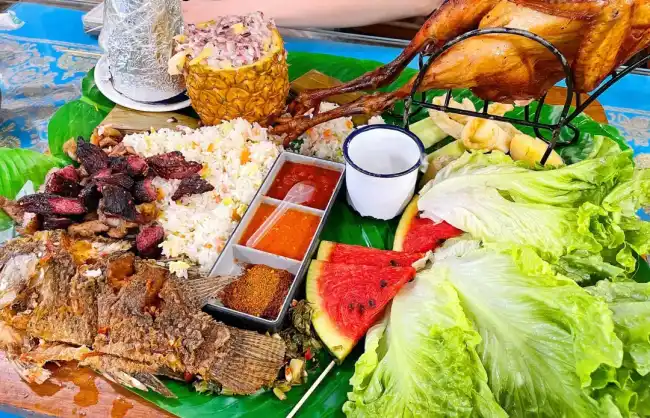
Dai dishes use a lot of tropical herbs and they highlight sour-spicy flavors. Signature foods include roasted fish wrapped in banana leaves and herb pastes like nanpie.
Related Tourist Attractions
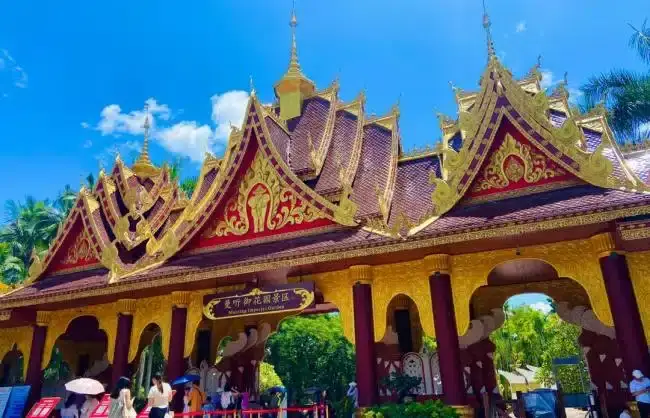
- Manting Park: The oldest park in Xishuangbanna with a history of over a thousand years. It features traditional Dai architecture and dance, as well as a diverse range of plant species and cultural performances.
- Tropical Botanical Garden: The Tropical Botanical Garden boasts a rich variety of plant species and is a comprehensive botanical garden integrating tropical scientific research, species conservation, and popular science education.
Recommended Tours
- 2 Days Xishuangbanna Ethnic Minority Villages Hiking Tour
- 4 Days Xishuangbanna Tour with Water Splashing Festival
- 5 Days Kunming and Xishuangbanna Tour
Naxi Ethnic Minority
The Naxi ethnic group is one of the unique minorities in Yunnan, known for its Dongba culture and murals. The highlight of the Dongba culture is the Dongba script, which has a long history and is the only living pictographic writing system in the world today. Among the murals, the Baisha murals are the most famous.
Traditional Architecture of the Naxi
People can literally see that Naxi architecture keeps influences from Han, Tibetan, and Bai. Houses are sharing a design and layout that specifically made for Lijiang’s mountain climate.
Distinctive Clothing and Handicrafts of the Naxi
For women, they usually wear sheepskin capes embroidered with sun and moon symbols, while men wear short jackets and felt hats. Dongba paintings and wood carvings are some important crafts that can reflect their ancient pictographic culture.
Typical Cuisine of the Naxi
Naxi food includes smoked pork, baba flatbread, and sour soups. They’d like to make there cuisine to have a balance between hearty mountain flavors and mild seasonings.
Related Tourist Attractions
- Lijiang Ancient Town: Lijiang Ancient Town is one of the best-preserved ancient towns in China and was listed as a World Heritage site in 1997. It is an excellent place to explore Naxi culture.
- Dongba Culture Museum: A great place to explore the ancient Dongba culture. The museum houses a large collection of Dongba artifacts and provides a comprehensive display of the Naxi Dongba culture and customs.
Recommended Tours
Zhuang Ethnic Minority
Beneath the towering Nandan Mountain and beside the picturesque Wulu River, the Zhuang people live in harmony with nature, dwelling by the mountains and waters. Skilled in rice cultivation, the Zhuang ethnic group holds sun and elder worship as customary practices.
Traditional Architecture of the Zhuang
Zhuang dwellings are often wooden stilt houses built near rivers or paddy fields, they are also raised to avoid floods and allow ventilation.
Distinctive Clothing and Handicrafts of the Zhuang
Zhuang clothing uses indigo-dyed cotton and colorful brocade. And they are also masters in making silver jewelry and handwoven belts, and these makings are quite commonly shown in their dresses. Their textiles often carry sun and geometric motifs, which is believed to bring everyone vitality and unity.
Typical Cuisine of the Zhuang
Zhuang cuisine features sticky rice, bamboo shoots, and sour dishes. Local rice wine and pickled vegetables are also common in daily meals and festivals.
Related Tourist Attractions
- Puzhehei Scenic Area: A hallmark attraction of the Wenshan Zhuang and Miao Autonomous Prefecture, renowned for its beautiful landscapes and profound cultural heritage. It is a paradise for photography enthusiasts.
- Junlong Lake Water Conservancy Scenic Area: The scenic area boasts beautiful natural scenery and serves as an integrated water conservancy area for tourism and leisure.

Recommended Tours
- 5 Days Dali and Lijiang Family Tour with Boutique Hotels
- 5 Days Puzhehei & Bamei Village Tour with Kunming
Ethnic Minority Festivals in Yunnan
Holiday Name |
Celebrated by |
Celebrated at |
Date |
Activity |
Sanduo Festival |
Naxi |
Lijiang |
the 8th of the second lunar month |
Horse racing, antiphonal singing, picnic |
Jilong (Dragon Worship) Festival |
Zhuang |
Maguan County, Wenshan |
The third day of the third lunar month |
Performing lion dances and dragon play, organizing large-scale song and dance performances, Zhuang operas, and martial arts shows. |
San Yue Jie |
Bai |
Outside the West Gate of Dali Ancient City |
15th to the 20th day of the third lunar month |
Horse racing, dragon boat racing, and swinging |
Calabash (Hulu) Festival |
Lahu |
Lancang County, Puer |
April 8, 9, and 10 |
Swing contests, water carrying, top-spinning, singing and dancing |
Water-Splashing Festival |
Dai |
Xishuangbanna Prefecture, Dehong Prefecture |
In the middle of April (Lasting 3-7 days) |
Artistic performances, economic and trade exchanges |
Sangkang Festival |
Bulang |
Menghai County, XishuangBanna |
late April or early May |
Ritual Ceremonies, rice Wine Blessing, community feasting |
The Torch Festival |
Yi |
Yi regions in Yunnan |
24th-26th day of the 6th lunar month |
Lighting torch, dancing and singing for the night |
Related reading: Yunnan Attractions: The Ultimate Guide to China’s Most Diverse Province
Essential Practical & Ethical Travel Advice for Visitors
- Consider dressmore modestly. Avoid overly revealing or flashy clothes when visiting traditional villages.
- Always ask for permission before taking photos of people or ceremonies.
- Many parts of Yunnan have ratherfragile environments like rice terraces, visitors are suggested to protect them by disposing waste properly.
- Stay on marked pathswhen going around the villages and rural areas, and avoid disturbing farmlands or daily life.
- Maybe learn a few local greetings, as it’s such a good wayto show respect and friendliness.
- Stay open-minded and patient, it is possible for you find localcustoms and daily rhythms going different from your own.
FAQs about Ethnic Minorities in Yunnan
How many ethnic groups are in Yunnan?
There are 26 ethnic groups in Yunnan Province, of which 25 are ethnic minorities (i.e., non-Han).
Related reading: Muslim in Yunnan
Suggested tours:
- 3 Days Kunming Muslim Tour with City Highlights
- 8 Days Yunnan Highlights Tour with Muslim Culture Exploration
Who are the indigenous people of Yunnan?
The indigenous peoples of Yunnan are the various ethnic minorities native to the region, and many of them have been inhabiting the land of Yunnan for centuries.
Which city is the heart of Bai culture?
Dali Ancient Town is widely regarded as the cultural heart of the Bai ethnic group, and it’s sort of the best place for visitors to see preserved Bai-style architecture and traditional residential houses.
What is the Naxi Dongba script?
The Naxi Dongba script is the pictographic writing system used by the Naxi people (“Dongba” priests). It is one of the few living pictographic scripts in the world, and it’s mainly used to record rituals, myths, folklore and cultural texts.
Which ethnic groups are unique or native only to Yunnan Province?
Among all the many ethnic minorities living in Yunnan, some groups are, to some extent, more unique. unique to Yunnan (i.e., they are found only in Yunnan and nowhere else, or primarily there).And some of them are Dai, Hani, Bai and maybe some more.
Discover the Diverse Ethnic Cultures in Yunnan with China Xian Tour
Now you know the key ethnic groups in Yunnan and their special culture and customs. For an in-depth experience of their daily life, architecture and food, please feel free to contact China Xian Tour to customize your personalized Yunnan tour. Based on your preferences and schedule, our experienced travel consultants will offer profession advice and organize your day-by-day itinerary totally according to your requirements. Our passionate local guides will bring all these ideas to life with their expertise.