

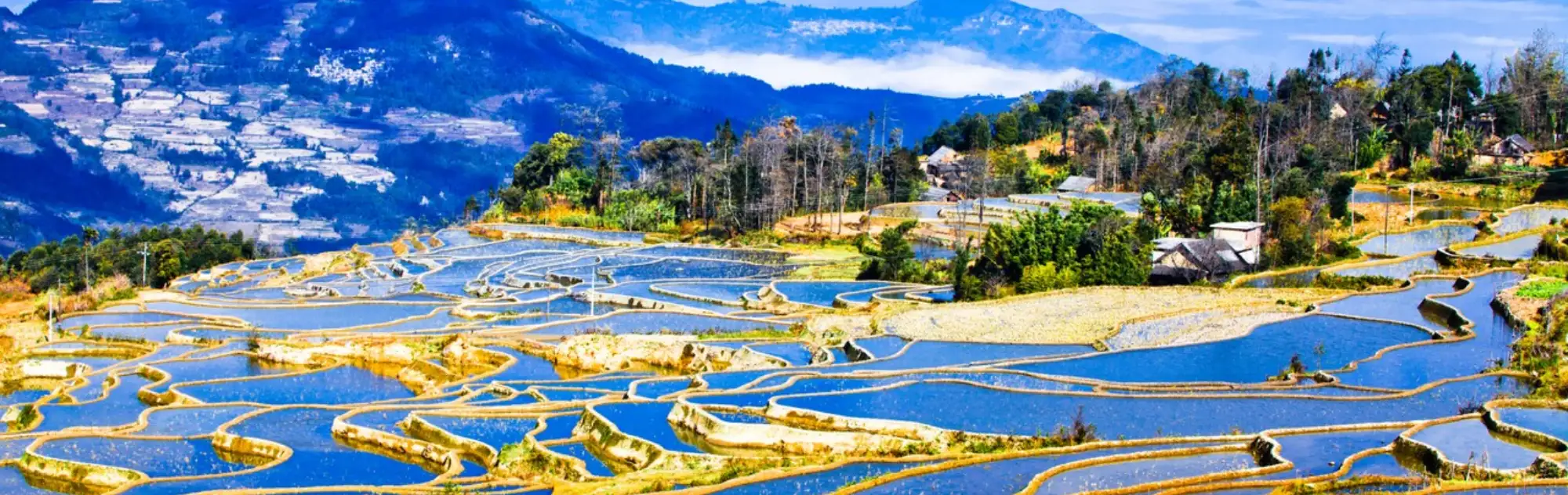
Spanning the southern part of Ailao Mountain in Honghe Hani and Yi Autonomous Prefecture, Yuanyang Rice Terraces is an essential part of the UNESCO-listed Honghe Hani Rice Terraces. With an area of approximately 114 sq. km., these vast terraces have been shaped by local Hani people over the past 1,300 years. Some slopes stretch from 400 meters above sea level in the river valley up to 1,800 meters on the mountain with as many as 3,000 steps.
Besides the centuries-old farming system, the Yuanyang Rice Terraces also reward you with a unique cultural experience of the Hani ethnic group. This guide will introduce you to the top attractions, transportation, recommended itinerary and practical information about where to stay, what to eat, etc.
- Location: in the southern part of Ailao Mountain, within Yuanyang County, Honghe Hani and Yi Autonomous Prefecture, Yunnan, China
- Ticket price: CNY 70/USD 10 per person, valid for 3 days, including Duoyishu, Bada, Laohuzui & Jingkou Folk Village; CNY 30/USD 4 for Azheke Village
- Opening hours: Scenic area accessible all day. Viewing platforms: Duoyishu: 06:00–18:00; Bada & Laohuzui: 08:00–19:30; Visitor center: 08:00–19:00.
- Highlights: The rice terraces, traditional Hani villages, local culture and customs, and stunning sunrises and sunsets.
- Suited to: Nature lovers, photographers, and travelers seeking an authentic cultural experience.
- Recommended time for a visit: 2 – 3 days
Content Preview
- How to Get to and Travel Around
- Top Attractions
- Practical Travel Information
- How to Plan a Tour
- Travel Tips
- Nearby Attractions
- Travel with China Xian Tour
- FAQs
How to Get to and Travel Around Yuanyang Rice Terraces
How to Get There from Kunming
Kunming is the main gateway to Yuanyang Rice Terraces. In Yuanyang, visitors typically arrive at one of the following three hubs first and then take a chartered bus to the scenic spots:
- Nansha Town: downtown area of Yuanyang County
- Xinjie Town: the old county of Yuanyang, the real gateway to the rice terraces
- Hani Town:the main visitor hub located between Duoyishu and Bada.
From Kunming, here are the recommended ways to get there.
By direct bus: Most Recommended
- Dep. – Arr. bus station: Kunming Southern Passenger Station – Visitor Center at Hani Town
- Schedule: 8:35, 10:30
- Ticket Price: CNY 84/USD 12
- Travel Time: about 5 – 5.5 hours.
By long-distance bus:
- Dep. – Arr. bus station: Kunming Southern Passenger Station – Yuanyang Xinjie Town Bus Station
- Schedule: 12:00
- Ticket Price: CNY 79/USD 11
- Travel Time: about 4.5 – 5 hours.
By high-speed train + bus:
- Route: high-speed train from Kunming Station/Kunming South Station to Jianshui/Mengzi Station → take a taxi to Jianshui/Mengzi Passenger Station → take a direct bus to Hani Town
- Train (Kunming → Jianshui/Mengzi):
To Jianshui: 7 daily departures (07:30–18:35); 2 hrs; CNY 51–60/USD 7-8.
To Mengzi: 3 daily departures (08:23–17:53); 3 hrs; CNY 71/USD 10.
- Bus (Jianshui/Mengzi → Hani Town):
From Jianshui: 10:37, 14:40; 1.5–2 hrs; CNY 52/USD 7.
From Mengzi: Frequent departures (07:40–15:20, every 30 mins); 2–2.5 hrs; CNY 40/USD 6.
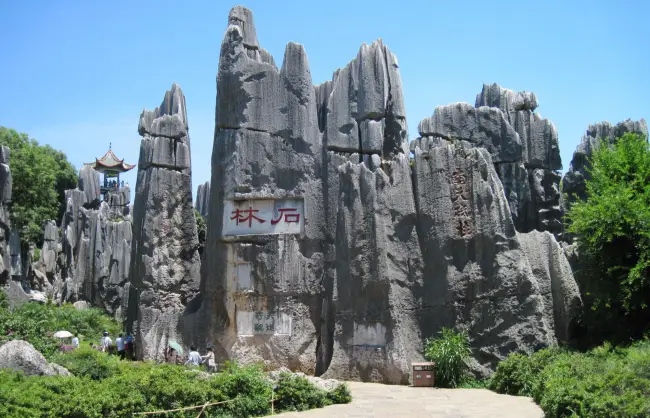
Capture breathtaking sunrises at Duoyishu and sunsets at Bada Rice Terraces, explore Hani mushroom houses in Azheke Village, and wander Kunming's Stone Forest.
How to Travel around Yuanyang Rice Terraces
Since the major attractions of the Yuanyang Rice Terraces are dispersed in different areas, it is challenging for visitors to transfer between each scenic area. Below are some recommended options to travel around the terraced fields, and you can make a choice based on your requirements.
- Sightseeing buses: The sightseeing buses typically have fixed schedules, and stop at major attractions and viewpoints, including Duoyishu, Bada, Laohuzui and Jingkou. The ticket fare is CNY 20/USD 3.
- Private car charter: The cost for a 7-seat car ranges from CNY 200 – 300/USD 28 – 42/day.
- Self-driving: If you are good at driving, you can rent a car after arriving at Yuanyang. But, note that, some stretches of the road can be narrow or winding.
- Hiking: Suitable for people who are rich in time. Hiking among the rice terraces allows you an in-depth exploration of this area, and encounters local Hani people and ethnic villages on the way.
Join a Tour
Another convenient choice for a Yuanyang travel is to join a tour. Because there is no need to reserve the car and plan the itinerary by yourself. China Xian Tour is a trustworthy travel agency. Besides the driver, we will also assign a guide to escort you. Traveling with us, your tour will be hassle free and your travel experience will be more immersive.
Capture Dongchuan Red Land vibrant soil, Yuanyang Rice Terraces UNESCO views, Stone Forest karst formations, and Jianshui Ancient Town Ming-Qing architecture in eight photographic days.
Top Attractions at Yuanyang Rice Terraces
Yuanyang Rice Terraces boasts several principal attractions, each of which offers a unique experience. Below are some of the top recommended ones:
Laohuzui Terraced Field Scenic Area (Tiger’s Mouth Scenic Area 老虎嘴景区):
- Best for: Sunset & Light Drama
- Best photo spots: Upper and Lower Viewing Platform
The Laohuzui Rice Terraces encompasses an area of over 850 hectares, with an altitude difference of more than 1,200 meters. This area features a dramatic display of multi-tiered canvas, fluid lines, and gradations of color. The ripening times between the foot and summit of the mountain differ vastly during the harvest season.
A top highlight of the Laohuzui Scenic Area is its rhythmic light and shadow that changes with time. And its most stunning moments are typically at the sunset. As the sun dips below the horizon, the golden glow of the sunlight bathes the terraces in a spellbinding aura.
If you are lucky, you may encounter the rare scenery when the terraces resemble “two galloping steeds” and a “hidden dragon crouching tiger”. Photographers will thus get a wealth of inspiration while visiting this area.
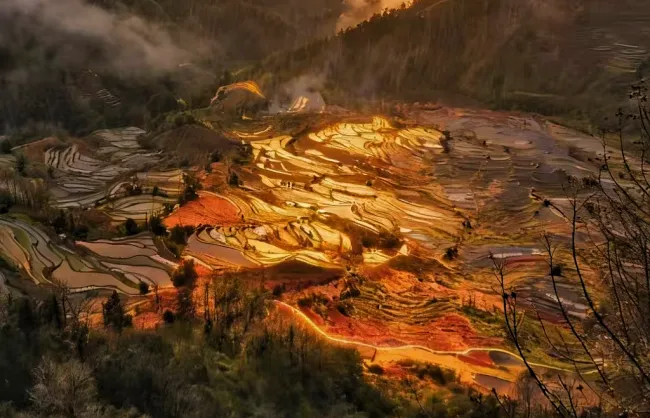
Bada Scenic Area (坝达景区)
- Best for: Sunset, panoramic views of the terraces, cultural immersion
- Best photo spots: No. 2 Viewing Platform, No. 3 Viewing Platform, the roof of Malizhai Tea Factory (ask for permission in advance)
This area covers an impressive area of 14,000 mu (approximately 933 hectares), with over 3,700 steps stretching from an elevation of about 1,100 meters at Magengjia to over 2,000 meters above sea level. It is about 15km from Xinjie and 8km from Duoyishu.
Alongside the Laohuzui Scenic Area, the Bada Scenic Area is another spot to capture and witness breathtaking sunset views over the terraced landscape. As the sun sets, the sunlight will paint the sky with a red glow, and transform the terraced waters into a glittering surface.
Besides the sunset views, Bada Scenic Area is also an excellent spot to capture panoramic views of the terraces thanks to its vast scale and relatively higher altitude. It is particularly breathtaking in the early morning, when misty clouds and fog shroud the terraces.
Also, this area hosts many Hani villages, offering great chances to delve deep into local customs and traditional architecture.
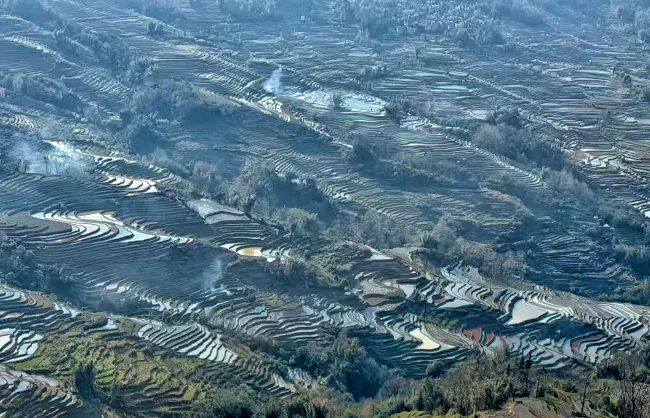
Duoyishu Rice Terraces (多依树景区)
- Best for: Sunrise, otherworldly tiered beauty for the terraces, misty scenery
- Best photo spots: No. 1 Viewing Platform, No. 2 Viewing Platform, east side of Huangcaoling Plank Road
Perched on an elevation of about 1,900 meters, the Duoyishu Rice Terraces covers an area of about 650 hectares. In this area, the rice paddies span across the mountain slopes ranging from 25 to 50-degree angles, showing an otherworldly tiered beauty.
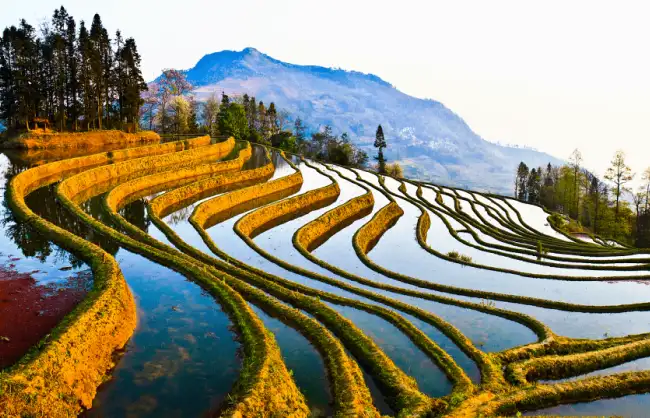
This area is especially known for its stunning sunrise scenery. As dawn breaks, the rising sun sprinkles a golden glow over the terraced water surface, transforming the terraced fields into a gossamer veil that dances gently with the morning mist and breeze.
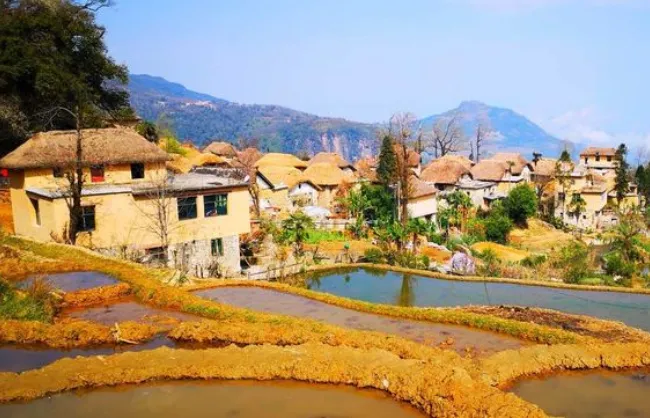
At Duoyishu Rice Terraces, visitors will also encounter the many traditional mushroom-shaped houses dotting the surrounding Hani villages. You can spend a night in a local guesthouse, immersing yourself in magnificent sunrise from the nearby viewing platforms. Moreover, you’ll get chances to look into locals’ agricultural practices, customs, and handicrafts.
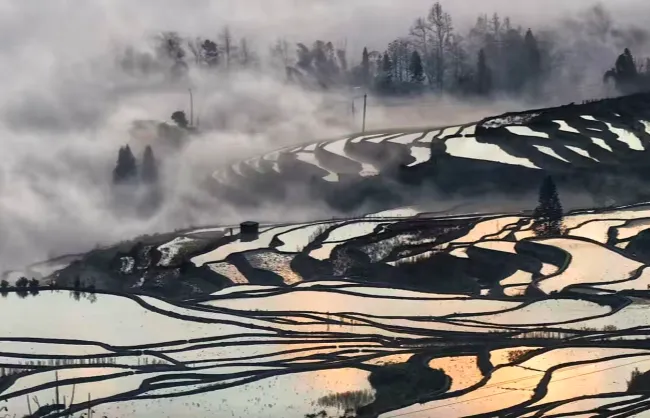
Aichun Blue Terraces
- Best for: Serene Blue Tones & Forested Scenery
- Best photo spots: Roadside viewing alcove, farm path down to the terraces (villagers may charge a small fee of CNY 10 – 20/USD 1 – 3)
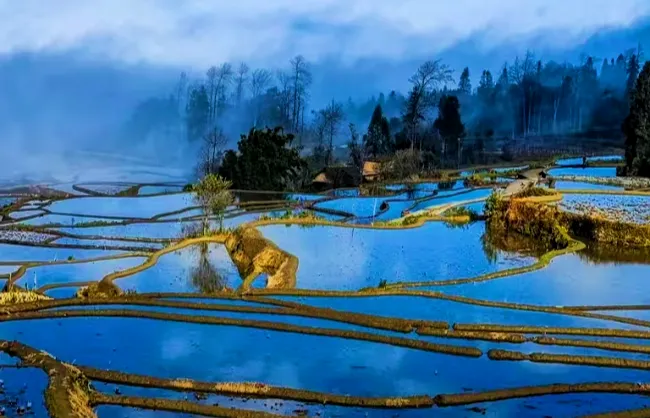
Aichun Terraces (locals call it “Blue Terraces”) are hidden in Yuanyang’s terraced hills. These views are a serene escape, and are known for the otherworldly blue tones and forested calm. Its gentle slopes are cloaked by dense mossy forests, which creates an intimate, crowd-free atmosphere.
The terraces’ striking blue comes from mineral-rich spring water. This color shifts beautifully between a powdery sky-blue and a misty indigo as it blends with reflections of the sky. You’ll find the deepest blues on cloudy days and the softest shades at dawn. Ideal for meditation or photography, Aichun offers untouched beauty, blue tones pop against forest greens, and with few visitors, every angle feels like a hidden secret of Yuanyang.
Azheke Minority Village
- Best for: Cultural Immersion & Authentic Experiences
- Best photo spots: Panoramic viewpoint at the village entrance, small terrace platform behind the village, the village primary school
As a living Hani village, Azheke showcases mushroom-shaped homes, bamboo weavings, and terraced farming. Here you can see women weave bamboo baskets and elders share farming tales. The annual “Long Street Banquet” lights up the village to another level: red lanterns, long tables of zhutongfan (steamed bamboo rice), and villagers in colorful attire singing, dancing, and setting off fireworks.
Join seasonal rice harvests event (families tend shoots together) or savor zhutongfan (soft, bamboo-scented) and suanzhu chicken (spicy sour bamboo shoot chicken). Every song here tells a story of Hani culture, rooted in the land and eager to be shared.
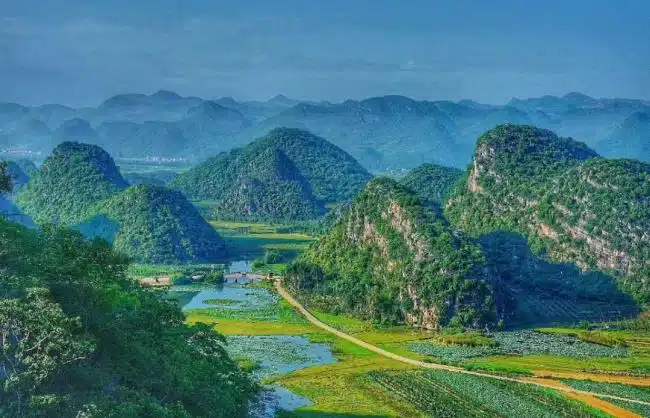
Discover Yunnan's diverse beauty from Kunming to Fuxian Lake, Yuanyang's Hani rice terraces at sunset, Puzhehei karst caves, and Mile's Yunnan Red Chateau wine culture.
Practical Travel Information about Yuanyang Rice Terraces
Yuanyang Weather and Best Time to Visit
Yuanyang County enjoys a subtropical plateau monsoon climate and experiences warm and humid weather all year round. However, due to its complex mountainous terrain, this region may experience rapid and diverse weather changes.
The ideal time to visit Yuanyang Rice Terraces usually falls between November and April, when frequent sunny days create excellent conditions for admiring the terraced landscapes. December to February is particularly recommended. During this period, the crops have been harvested, and the rice fields are filled with water. Just like giant mirrors, the fields reflect sunlight, azure skies, and clouds in a mesmerizing play of light and shadow.
Note: To capture the great sunrise views, photography enthusiasts need to arrive at the viewing platforms in the early morning, about 06:00 – 06:30 in winter and about 05:30 – 06:00 in spring. Considering the cool temperatures in the morning in the mountainous area, it’s advisable to dress in warm clothes.
Where to Stay at Yuanyang Rice Terraces
For a more immersive Yuanyang Rice Terraces experience, staying close to the scenic area is crucial. Here, you’ll enjoy both high-quality accommodations and unobstructed views of the terraces, making it easy for you to follow the magical transformations of the views. Here are the most recommended areas.
- Duoyishu:It is a top pick for sunrise lovers. Its platform area features hotels with balconies that face golden dawn light spilling over mist-cloaked terraces, though prices are relatively high.
- Hani Town (a 10–20-minute drive from Duoyishu):This area offers affordable stays with sweeping terrace views. Oness Resort Yuanyang Terrace stands out, offering both modern comforts and traditional Hani aesthetics to ensure visitors a cozy yet immersive stay.
Wherever you choose, staying within the area guarantees front-row seats to Yuanyang’s breathtaking terraced landscapes at any hour of the day.
What and Where to Eat
Yuanyang’s cuisine is rooted in Hani mountain life, it is simple, hearty, and reflects the history of the land. Xinjie Town, Duoyishu Scenic Area and Hani Town have the most restaurants. Don’t miss these local staples:
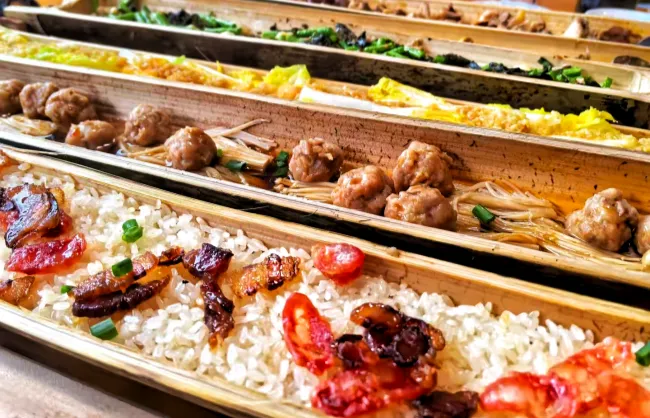
- Zhutongfan (Bamboo Tube Rice): It is one of the most famous Hani signature. The fist process is let glutinous rice steamed in bamboo tubes, infused with the fresh aroma of bamboo. The rice stays soft and slightly sweet, often served with pickled vegetables or chili oil. Try it at family-run guesthouses in Azheke Village or market stalls in Xinjie Town.
- Suanzhu Chicken(Sour Bamboo Shoot Chicken): A spicy-sour classic, made with fermented bamboo shoots (a Hani staple) and free-range chicken. The tangy bamboo shoot cuts through the rich chicken broth, balancing perfectly with steamed rice. Many villages serve this during harvest festivals.
- Terraced Fish: Raise and caught from the irrigated paddies, these small, silvery fish are often pan-fried or grilled simply. Their flesh is typically tender and mildly sweet, which becomes a testament to the purity of the mountain water.
How to Plan a Yuanyang Rice Terraces Tour
Since the beauty of the terraced fields is ever-changing under different times of day and weather conditions, it is best to plan a 2-3 day itinerary to fully appreciate the different beauties. It is also popular to combine it with the nearby Jianshui to enrich the travel experience. Two different 3-day itineraries are listed below for your reference.
Yuanyang Rice Terraces Tour
Day 1: Kunming Arrival – Drive to Xinjie Town – Longshuba Rice Terrace
Day 2: Watch sunrise at Duoyishu Rice Terrace – Aichun Village – Azheke Village – Watch sunset at Bada Rice Terrace
Day 3: Ethnic Market & Bazaar in Yuanyang – nearby traditional ethnic villages – return
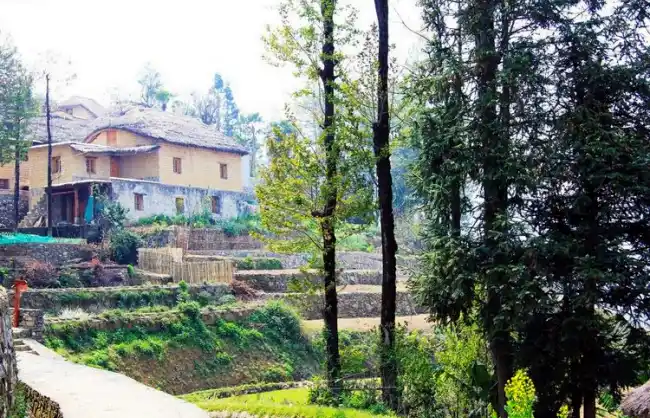
Witness the magnificent Yuanyang Rice Terraces at sunrise and sunset, explore Hani ethnic culture in Azheke Village, and visit lively local ethnic bazaars.
Yuanyang Rice Terraces and Jianshui Tour
Day 1: Xingmeng Mongolian Village – Jianshui – Zhu Family Garden – Jianshui Confucian Temple – Jianshui Old Town
Day 2: Shuanglong Bridge – Tuanshan Village – Zhang Family Garden – Drive to Yuanyang Rice Terraces – Qingkou Village – Watch sunset at Bada Rice Terraces
Day 3: Watch sunrise at Duoyishu Rice Terrace – Azheke Village – return
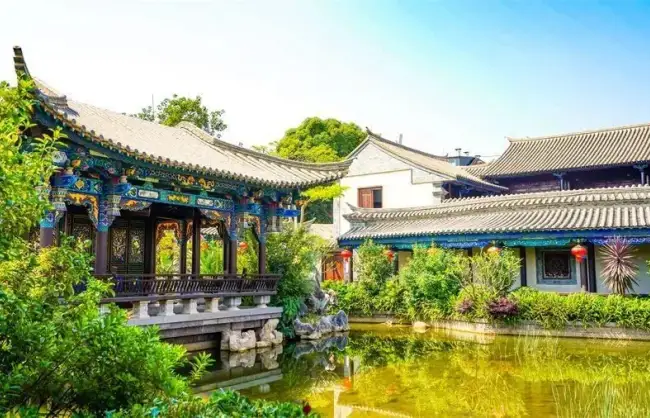
Discover Jianshui's ancient Confucian Temple, Zhu Family Garden, and Tuanshan Village, then witness the breathtaking sunrise at Duoyishu and sunset at Bada over Yuanyang Hani rice terraces.
Yuanyang Rice Terraces Travel Tips
- What to pack: Layered clothing for cool mornings/evenings; a warm jacket; comfortable, waterproof hiking shoes; tripod, spare batteries, and lenses; hat, sunglasses, sunscreen; poncho or umbrella in rainy months
- Snacks & water: There are small stalls selling instant noodles, boiled corn and grilled sausages on the viewing platforms, but the prices are higher. It is better to bring some snacks and enough water with you in advance.
- Cash: Prepare small change in CNY 10, 20, or 50, as small shops and the chartered cars prefer cash.
- Transport: The various attractions in Yuanyang Rice Terraces are far from each other, so it is importantto plan your itinerary carefully and consider how to travel around this area in advance.
- Time to avoid: During May – October, the rice terraces are either green with rice or already harvested. No mirror-like reflections and sea of clouds.
- Photo Etiquette:The mushroom houses are private residences, rather than an open-air museum, so ask for permission before entering and taking photos.
Nearby Attractions
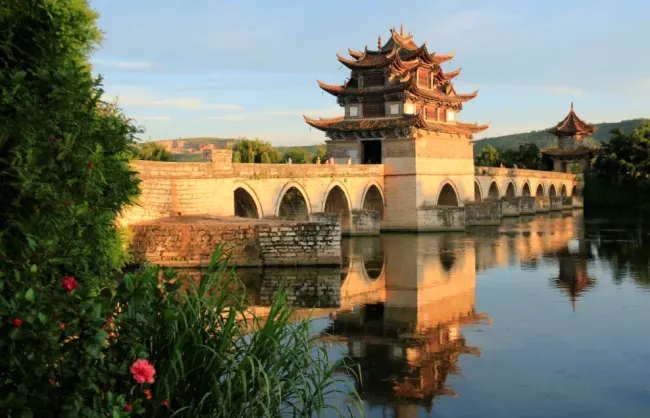
- Jianshui Ancient Town: Located about 100 kilometers north of the rice terraces, Jianshui Ancient Town is a well-preserved ancient town with many historical heritage, such as the Confucius Temple, the Double Dragon Bridge, and the Zhu Family Garden.
- Yuanyang Ethnic Garden: This cultural park showcases the traditional customs and lifestyles of the Hani people, including their unique architecture, clothing, and cuisine.
Plan Your Yuanyang Tour with China Xian Tour
Considering the inconvenient transportation in Yuanyang, travelling with China Xian Tour will save much effort, since all the hotels, driver and guide are included in our trip. What’s more, you will enjoy a perfect tour, because our trip is customized completely based on your demands and preferences. To ensure your tour goes smoothly, our travel consultant will also tackle all the emergency situations in time. So contact us right now.
FAQs about Yuanyang Rice Terraces
What is the main difference between the dry season and the wet season for visitors?
Dry season (Nov–Apr): Even during the dry season, the terraces are filled with water. And they will be like mirrors reflecting the clear blue sky.
Wet season (May–Sep): Terraces will be green with growing rice plants, while July–September offers golden harvest views.
What are the most important things to know about Hani cultural etiquette?
Respect village customs. Ask before taking photos of locals, avoid entering homes uninvited, and dress modestly when attending local events.


