






Written by Clementine |
In the most southwestern part of China, there is a diverse land that features a hugely varied mix of ethnic minorities, antique towns of profound history and a growing diversity of cultural customs. People here are enjoying the most colorful life given because of its pleasant climate and advantageous natural resources including snow-capped mountains, tropical rainforest, flat plateaus and tranquil lakes. It is Yunnan province in southwestern China that enjoys such a high reputation. Set foot on this pure land, live in an ancient town and loaf for a couple of weeks, you’ll resume your spirits quickly and gradually realize the real meaning of life.
Serving as carries of millennium-old history, the ancient town of Shaxi, Dali, Heshun and the like are free from the hustle and bustle of modern cities. They offer visitors a paradise to release their everyday stresses.
Content Preview
- Lijiang Ancient Town: The UNESCO-Listed Naxi Heritage Gem
- The Ancient Town of Shaxi (Jianchuan) – The Authentic Tea-Horse Road Relic
- The ancient town of Xizhou (Dali) – The Bai Minority’s Elegant Cultural Hub
- The Ancient Town of Dali (Dali) – The Lakeside Gateway to Bai Culture
- The Ancient Town of Baisha (Lijiang) – The Quiet Naxi Cultural Cradle at the Foot of the Snow Mountain
- Weishan Old Town (Dali) – The Cradle of the Nanzhao Kingdom & A-Frame of Time
- FAQs about Ancient Towns in Yunnan
- Explore Ancient Towns in Yunnan with China Xian Tour
Lijiang Ancient Town: The UNESCO-Listed Naxi Heritage Gem

The Ancient Town of Lijiang, also known as Dayan Town, is located in the autonomous county of the Naxi ethnic group in Yunnan province. It is a hot travel spot that draws many tourists thanks to the bustling, lively and prosperous vision here. As an important center for the economic and cultural communication between various ethnic groups, the well-preserved settlement presents a wide range of elements in its architecture, as seen in numerous two-storey, tile-roofed, timber-framed houses. This not only incorporates the quintessence of Han, Bai, Tibetan and other ethnic groups, but also epitomizes distinctive Naxi features. In addition, it was inscribed into the UNESCO World Heritage List in 1998.
- Best Time to Visit: Late March to May and mid-October to November. Perfect weather without too many crowds.
- Time Needed: Spend at least 1 full day to wander the alleys, canals and bridges.2-3 days to explore nearby Naxi villages and nearby natural wonders like the snow-capped Jade Dragon Snow Mountain.
- Tickets: No entry fee to the old town itself. Some specific attractions (museums, temples) may require a small fare.
- Signature Local Eats: Naxi minority cuisine: Naxi hotpot, grilled yak, and local rice noodles.
Accommodation Variety
Boutique guesthouses in the old town.
Mid-range hotels a little bit outside the ancient town. They usually offer modern comfort with old-town vibe.
Budget hostels and family-run inns in the old town area.
Getting There
Fly into Lijiang and take a taxi or airport shuttle to the town.
High-speed train from Kunming to Lijiang (3-3.5 hours).
Local buses (e.g., No. 11 to Shuhe, No. 6 to Baisha) for nearby explorations.
What to Do / Unique Town Activities
- Explore the winding cobblestone alleys, bridges and canals at dusk.
- Yunnan also produces high-standard coffee beans. While the town’s gettingincreasingly tourist-oriented, there are still cozy spots where you can smell the fragrance of coffee blended with traditions.
- Day-trip options: Shuhe and Baisha villages (accessible by local bus).
The Ancient Town of Shaxi (Jianchuan) – The Authentic Tea-Horse Road Relic

The most impressive sight as you enter into the Ancient Town of Shaxi may be the mossy flagstones path lined with old-fashioned shops, centuries-old mud-brick inns and elegant eateries serving traditional Bai delicacies like matsutake and goat milk pastry. The town was an important hub on the ancient Tea-Horse Road, which refers to tea caravans borne by horses, mules and yaks traversed across jungle and mountains to link southwest China with India via Tibet. As a historical witness and culture carrier, the small town produces a hectic ambiance of trade and cultural exchanges. Strolling along the narrow lane-ways will offer you a good chance to look deep into locals’ life and trace back to the past days of the antique town.
- Best Time to Visit: Year-round. Spring (March-May) offers flowers and mild weather.
- Time Needed: Half a day to 1 full day for a relaxed visit. Stay overnight gives extra peace.
- Tickets: Town itself has no entrance fee. Some specific attractions may charge a little.
- Signature Local Eats: Goat cheese at Friday market, Bai-style snacks, local mountain produce.
Accommodation Variety
Boutique guesthouses inside the old town (e.g., former caravan inns)
Mid-range hotels on the edge of town with Bai-style architecture
Simple guesthouses for budget travellers
Getting There
Approx. 2 hours by car/taxi from Dali Ancient Town (≈128 km) or from Lijiang Ancient Town.
Shuttle bus available, but private car is more flexible.
What to Do / Unique Town Activities
- Wander the cobbled lanes and admire the old mud-brick inns and Sideng Square.
- Visit the Friday morning market — farmers and ethnic traders gather for produce and crafts.
- Explore the caravan history of the Ancient Tea Horse Road through the town’s old bridges and temples.
- Stay in a traditional Bai courtyard hotel, and soak up the slower pace away from more touristy towns.
√Related reading: 10 Most Famous Ancient Towns in China
The ancient town of Xizhou (Dali) – The Bai Minority’s Elegant Cultural Hub
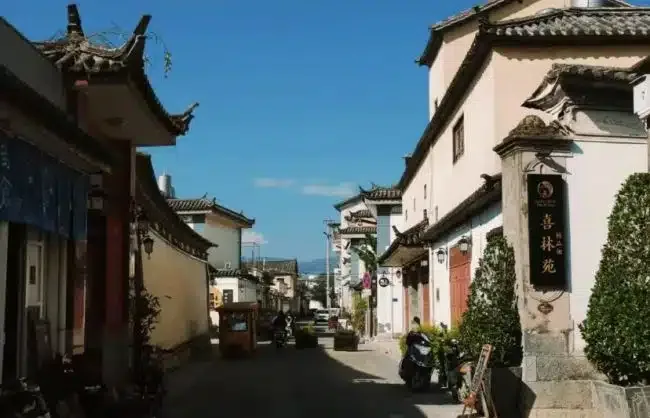
The ancient town of Xizhou, located in Dali Bai Autonomous Prefecture, is a community mainly composed of the Bai people. It was a prosperous commercial center during the Republic of China era (1912-1949) and now emerges as a tranquil serene tourist resort of minority culture. Walking along the mossy flagstone path, you can leisurely explore distinctive local markets and elegantly designed family mansions as well as simple and primitive temples. For example, the Yan Mansion, a typical Bai folk architecture, will draw you with amazing original colored paintings on its walls; and the Ziyun Mountain Temple housing statues of Buddha and Doumu (an exalted deity of Taoism) is a great model showcasing the diversity and inclusiveness of local culture… The unique Xizhou Ancient Town is waiting to offer you a wonderful cultural and historical experience.
- Getting There: Xizhou is approx. 18 km north of Dali Old Town, which is reachable by bus, taxi or rented bike.
- Best Time to Visit: Year-round accessible. But the most ideal months are March to May, September to November. Summer festivals offer cultural events though may be warmer.
- Time Needed: A half-day visit to explore the old town and morning market. Spend a full day if you plan to visit local temples and explore Bai culture in depth.
- Tickets: No entry fee to the old town itself. Some attractions may charge modest fees.
- Signature Local Eats: Xizhou Cake and Bai minority dishes (rice-based dishes, fresh lake fish from nearby Erhai, and three-way tea ceremony treats).
Accommodation Variety
Boutique courtyard guesthouses in Bai-style mansions (e.g., Yan Mansion).
Cozy inns near the market area. Easy access to local life and food.
Simple budget stays for overnight-stop travelers.
What to Do / Unique Town Activities
- Stroll through Xizhou’s traditional Bai mansion compounds (e.g., the Yan Mansion).
- Visit the morning market, step into the most authentic local life.
- Participate in a Bai hospitality ritual: the “three-way tea ceremony”as a beginning.
- Rent a bike or walk to the lakeside of Erhai Lake or to the base of Cangshan Mountain.
The Ancient Town of Dali (Dali) – The Lakeside Gateway to Bai Culture

The ancient town of Dali, with Erhai Lake to the east and Cangshan Mountain to the west, is one of the most popular tourist destinations in Yunnan. It is known for first-class ethnic architectures in Southwest China and unique ethnic customs. Take a look at Wenxian Gateway, mainly composed of two-storey gables and hip roofs, visitors would marvel at the grandeur of ancient city wall. Head for the Dali Christian Church, you will be amazed by the combination of Bai ethnic’s traditional architectures and the Western European style churches. You can also join the local community to appreciate the classical Bai opera, a unique art form combining folk music and dancing and absorbing some of the characteristics of Han operas.
- Getting There: Reachable via train or bus from major Yunnan cities.Then take local transport to old town.
- Best Time to Visit: Spring and autumn are ideal for good weather and clear views.
- Time Needed:1-2 days to explore the old town, lake and nearby villages.
- Tickets: no large entry fee for general access.
- Signature Local Eats: “Xizhou Baba”(a Bai-style dough pie), local freshwater fish from Erhai.
Accommodation Variety
Boutique hotels in the old town of Dali
Lakeside resorts by Erhai Lake
Guesthouses in nearby villages like Xizhou Ancient Town for quieter stays
What to Do / Unique Town Activities
- Stroll the old town and view the blend of Bai architecture, lake and mountain scenery.
- Visit Xizhou for well-preserved Bai residences with beautifully painted walls and courtyards.
- Join Bai-ethnic folk performances or operas in the evenings.
- Take a boat ride on Erhai Lake or cycle around the lake for a relaxed outing.
The Ancient Town of Baisha (Lijiang) – The Quiet Naxi Cultural Cradle at the Foot of the Snow Mountain

The Ancient Town of Baisha is an alluring, pleasantly uncrowded resort at the foot of the Jade Dragon Snow Mountain, about 8km (4.9 miles) to the north of the incredibly popular ancient town of Lijiang. It is home to the Baisha Naxi Embroidery Institute which showcases and protects the art of traditional Naxi embroidery. You can also enter local courtyards to appreciate the beautifully handcrafted tie-dye artworks soaking in the sun. Right here, it is highly recommended to head for Dabaoji Palace to see the amazing Baisha frescoes, which depicts religious tales and activities from Taoism, Buddhism, and Tibetan Buddhism with flowing lines, bright colors and vivid patterns. It is the place where many visitors find themselves strolling along the wider and quieter streets and fully enjoying the pleasant and peaceful way of life.
- Best Time to Visit: All year; spring for blossoms, autumn for clear mountain views.
- Time Needed: Half a day to 1 full day; stay overnight to enjoy peace.
- Tickets: Free to enter the town. Famous murals may charge a little.
- Signature Local Eats: Naxi fresh yak-milk tea, local tie-dye snacks, simple mountain village cuisine.
Accommodation Variety
Traditional Naxi-style courtyards and guesthouses in the village
Small inns with views of Jade Dragon Snow Mountain
Budget homestays run by locals for immersive experience
Getting There
Approximately 8–12 km north of Lijiang Old Town.
Taxi or local bus from Lijiang; biking an option for the fit.
What to Do / Unique Town Activities
- Visit the renowned “Baisha Murals”in Dabaoji Palace – centuries-old artworks blending Naxi, Han and Tibetan motifs.
- Explore the art of Naxi embroidery at the Baisha Naxi Embroidery Institute.
- Enjoy a slower pace: sip coffee with mountain viewsand absorb village life.
- View Jade Dragon Snow Mountain as the backdrop and take a gentle nature walk nearby.
Weishan Old Town (Dali) – The Cradle of the Nanzhao Kingdom & A-Frame of Time
About 1 hour’s drive from Dali, Weishan Ancient Town is mainly inhabited by the Bai ethnic group. Though not as well known as the nearby Dali Ancient Town, Weishan is relatively less touristy and commercialized. Once the birthplace of ancient Nanzhao Kingdom 1300 years ago, the existing Weishan Ancient Town was built in 1389 which was endowed with a large number of well-preserved architectures and typical city layout of the Ming and Qing Dynasties. Scattered along the streets are some stalls and shops, most of which are operated by locals and mainly visited by locals, and many statues introducing traditional local customs and life.
During a trip in Weishan, you can step onto the Gongcheng Gate Tower, the landmark of Weishan, for an amazing panoramic view of the whole city; or head to the Nanzhao Museum to explore architectures and artifacts of ancient Nanzhao Kingdom; or visit Weibao Mountain to admire Taoist temples and elegant natural scene.
- Best Time to Visit: Spring (April-May) and autumn (September-October).
- Time Needed: Half a day can cover major gates and street-scenes. A full day to climb the towers get a deeper exploration.
- Tickets: Free to enter the town. Some specific sites could charge a bit.
- Signature Local Eats: Ba Rou Er Si (smoked meat noodles), Guo Jiang Er Si, Yigen noodles, red snow pear and preserved fruits.
Recommended Tours:
Accommodation Variety
Boutique inns inside the old town featuring Ming/Qing-era timber architecture and local charm.
Mid-range resorts near the outer town offering scenic views.
Budget guesthouses run by local families, ideal for travelers seeking authenticity.
Getting There
About 50 km south of Dali Ancient Town, reachable via bus (~1 hour) or private car.
Take high-speed rail from Dali Station to Lushan Station (~22 minutes) then a short bus/taxi to the old town.
What to Do / Unique Town Activities
- Climb the iconic Gongchen Tower (23.5 m high, supported by 28 pillars).
- Explore the historic grid-pattern streets (25 main streets, 18 alleys) preserved from Ming/Qing dynasties.
- Visit the Taoist sites on neighbouring Weibao Mountain.
- Sit in a local teahouse, savour a slow afternoon, and watch town-life unfold.
FAQs about Ancient Towns in Yunnan
What are the old towns in Kunming?
Well Kunming as the capital area, is less renowned for ancient towns, which is not like some Yunnan’s northwestern region. One of the most famous is Guandu Ancient Town, it has over 1,000 years of history which is known for its temples and markets.
What is the difference between Lijiang Ancient Town and Baisha Ancient Town?
Lijiang Ancient Town (Dayan) is a larger, and its a UNESCO-inscribed site which features a network of canals. It’s quite lively and has a lot of tourists infrastructure.
How can travellers get from Dali Ancient Town to Shaxi Ancient Town?
Travelers can take a private car or taxi (≈2 hours by road) from Dali old town to Shaxi. Shuttle buses are a choice but it can be less flexible.
Which town is known for its well-preserved Baisha Murals and Naxi embroidery?
Baisha Ancient Town is the one. Its murals have made it through all the years since the Ming to Qing dynasties. And the town also hosts the Baisha Naxi Embroidery Institute which allows people to see traditional Naxi handicrafts.
What famous trade route were many of Yunnan’s ancient towns, like Shaxi, part of?
They were part of the Ancient Tea Horse Road (also called the Chama Road), a network of horse-and-tea trade routes connecting Yunnan, Tibet and beyond.
Explore Ancient Towns in Yunnan with China Xian Tour
After thriving decade after decade, these ancient towns in Yunnan are still standing to tell the tale and deliver diverse ethnic culture and life. If you want to uncover more legends of the ancient towns and enjoy the long-lost slow-paced life, China Xian Tour will be happy to help you customize your own Yunnan vacation. Our professional guides will take you to immerse you in ancient town life and ethnic traditions that you may have imagined. And with us taking care of everything for you, you’ll definitely find the most rewarding moments along the way.