



When it comes to lucky and unlucky numbers in Chinese culture, people always think of homophone. However, what you don’t know is that the symbolism, meanings and significance of numbers are inseparable from long-standing history and culture of China. The Chinese culture of lucky and unlucky numbers originates from numerology in ancient times. From then on, numbers were given diversified symbolic meanings and closely related to human visions and expectations, imposing a great influence on Chinese people’s ideas and behaviors. For example, merchants particularly prefer eight so as to pin their hopes of wealth growth. The bride and groom will give preference to the date of nine for their wedding day.
If you are foreigners traveling to China, international businessman, Chinese language learners or foreign researchers of Chinese culture, this article will be a big help to fully learn lucky and unlucky numbers in China.
Content Preview
- Symbolism of Number 1-9 in Chinese Culture
- What are the Auspicious Chinese Numbers?
- Unlucky Numbers in China
- Popular Number Combinations in China and Their Meanings
- Lucky and Unlucky Numbers for Chinese Zodiac Signs
- FAQs about Numbers in Chinese
Symbolism of Number 1-9 in Chinese Culture
Let’s have a look at the basic meaning of nine numbers.
- 1 refers to unity and origination.
- 2 refers to harmony and balance.
- 3 refers to separation.
- 4 refers to death.
- 5 refers to I or me.
- 6 refers to good luck.
- 7 refers to misery.
- 8 refers to prosperity and wealth.
- 9 refers to longevity and perpetuity.
What are the Auspicious Chinese Numbers?
On the whole, such numbers as two, six, eight and nine are auspicious in Chinese culture. If you want to know why, just read on and on.

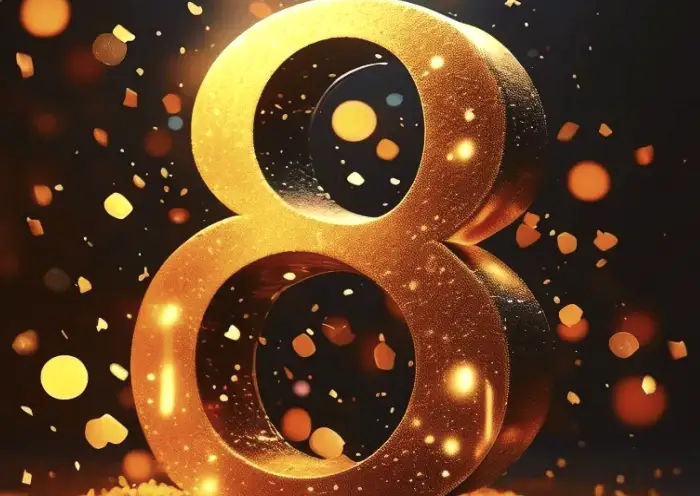
Number 8 – the Luckiest Number in China
In modern society, no number means luckier than eight in Chinese culture because its pronunciation sounds like “fā” in Mandarin, meaning wealth or prosperity. It is so popular that Chinese people will take eight as a first choice while selecting phone numbers, house numbers, license plates or date.
If we delve into Chinese history, the admiration for eight is a time-honored custom in China. The fact that Chinese people are obsessed with eight results in part from The Book of Changes and in part from the imperial ritual system of the Zhou Dynasty. The former described that “therefore in the Yi there is the grand terminus, which produced the two elementary forms. Those two forms produced the four emblematic symbols, which again produced the eight trigrams.” Thus, eight is regarded as the foundation of universe. And, the latter highlights the authority of eight based on the imperial system because the King Wen of Zhou dynasty deduced 64 hexagrams to pave the way for the prosperity of his kingdom.
Number 2
Chinese culture reveals that the fundamental law of the universe turns out to be the unity of opposites. Two represents Yin and Yang, indicating that all things are interdependent and mutually beneficial. Two is human efforts in pursuit of harmony and balance.
Besides, two means double in Chinese culture. An old Chinese saying goes that good things come in pairs. This is why Chinese people are used to give gifts in pairs to express blessings in important occasions, like wedding party and birthday banquet.
Number 6
Six has the same pronunciation of “liù” in Mandarin. It conveys special significance in Chinese culture because of its phonetic resemblance to words meaning of powerful and smooth.
Number 9
Nine is a well-deserved lucky number in China. It pronounces “jiǔ” in Chinese language and means long-lasting or eternity. As the largest odd number, nine symbolizes supreme. In ancient times, nine was related to imperial power and implied respect and privilege. Also, Chinese philosophical thought points out that nine divide by nine is one, nine signifies returning to the origin.
Unlucky Numbers in China
Contrary to lucky numbers, some numbers are considered ominous in Chinese culture, like 4, 7, and3, for their unfavorable pronunciations or associations.
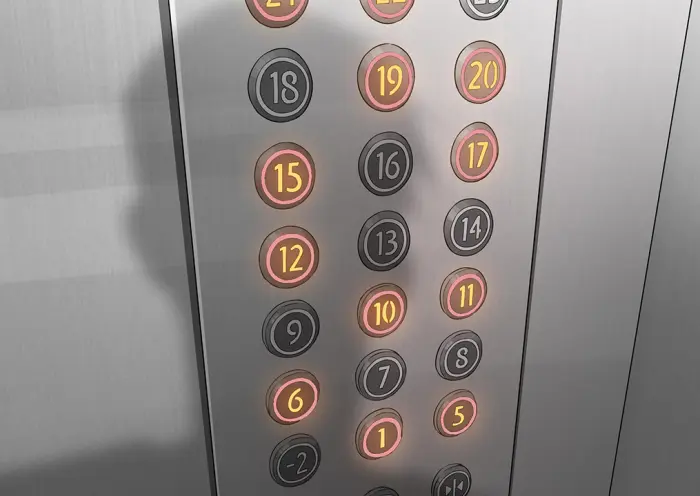

The Number 4 – the Unluckiest Number in Chinese Culture
Chinese people are mostly sensitive about four because it rhymes with the Chinese word of death. This is why people will strive to avoid four while selecting floor, phone number, license plate or the date of important occasion.
The Number 7
Seven sounds like “qī” and means misery and negative emotions in Chinese language. Merchants particularly dislike seven because it symbolizes the loss of financial fortune.
Number 3
Three is taken as an ominous sign because it is associated with flood, fire and drought in Buddhist culture.
Popular Number Combinations in China and Their Meanings
Besides single numbers, people also use certain number combinations to express specific meanings. Sometimes, when more than one lucky number is brought together, it offers double the luck. While when certain numbers are combined, they take on new meanings. Below are some popular Chinese number combinations and their meanings.
168
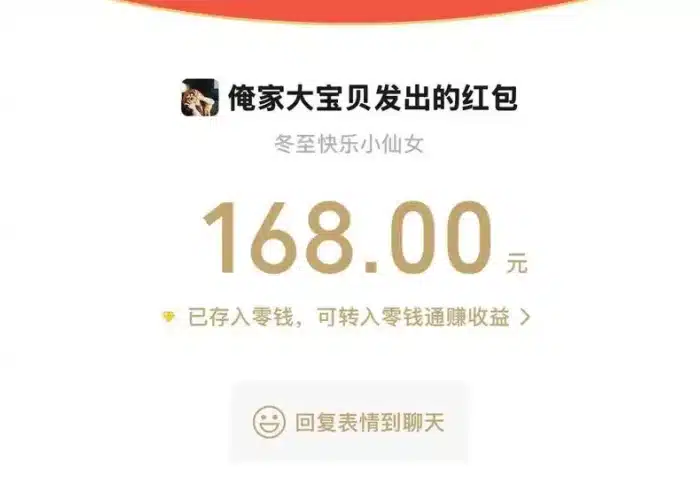
The numerical combination of 168 phonetically sounds like “yī lù fā” in Chinese language, which means “to make a fortune for good.”
520 & 521
The articulation of 520 and 521 resembles “wǒ ài nǐ” in Mandarin. It means “I love you, which is often used for expressing a romantic relationship. In China, men may give red packet of 520 yuan or prepare a bunch of 520 roses to their sweethearts during festivals, especially the Double Seventh Festival.

1314/3344
The combination of 1314 and 3344 phonetically sounds like “yī shēng yī sì” and “shēng shēng shì shì” in Mandarin. It is interpreted as “all one’s life” and “for ever and ever”. It is often used for describing an unwavering love.
88
8 pronounces “fā” and means treasure. 88 naturally means double wealth. So, this number is often used as a price tag. In addition to that, 88 is to say goodbye because its pronunciation is like “bái bái” in Chinese language.
66
There is a Chine set phrase of “liù liù dà shùn” that means “everything goes smoothly”. So, 66 refers to double fortune.
99
Nine itself means permanent. There is a Chinese set phrase of “cháng cháng jiǔ jiǔ”, which indicates something keeps moving forever. 99 is widely used in wedding party to congratulate newlywed on their endless love.
666
The articulation of six is like “liù” and “niú” in Chinese language. 666 indicates that all the best or someone is terrific.
888
888 is an extremely lucky number. 8 itself means prosperity. 888 indicates that your wealth will be triple. So, it is also considered one of the luckiest numerical combinations, often used to pray for the utmost good fortune and wealth.
555
555 is onomatopoeia of “wū” in Chinese language, which means sob or whimper. It expresses a melancholy and depression.
250
250 is a word of abuse in Chinese culture, which stems from folk stories. It indicates that the person is foolish, unreasonable and reckless.
518
The string of 518 phonetically sounds like “wǒ yào fā” in Chinese, which means “I will get rich.”
Lucky and Unlucky Numbers for Chinese Zodiac Signs
The relationship of Chinese zodiac signs and lucky/unlucky numbers is based on Chinese traditional philosophy and folk culture, including five elements theory, sexagenary cycle calendar and homophonic pronunciation of numbers. Here is a simple case. If the person was born in the year of the Snake, his earthly branch is “sì” and his element is “fire”. It can be deduced that his lucky number is 3 and 8, while the unlucky number is 1 and 6.
You can firstly determine your Chinese zodiac signs according to your year of birth, and then find your lucky and unlucky numbers from the table below.
Chinese Zodiac Signs |
Lucky Numbers |
Unlucky Numbers |
Rax |
1, 4, 6, 9 |
0, 5, 2 |
Ox |
0, 5, 2, 7 |
3, 8, 1 |
Tiger |
3, 8, 1, 6 |
4, 9, 7 |
Rabbit |
1, 6, 3, 8 |
4, 9, 5 |
Loong |
4, 9, 6, 8 |
3, 8, 1 |
Snake |
2, 7, 3, 8 |
1, 6, 9 |
Horse |
2, 7, 3, 8 |
5, 6, 1 |
Goat |
0, 5, 2, 7 |
3, 8, 9 |
Monkey |
4, 9, 0, 5 |
2, 7, 6 |
Rooster |
4, 9, 0, 5 |
1, 3, 7 |
Dog |
0, 5, 2, 7 |
3, 8, 9 |
Pig |
1, 6, 7, 8 |
0, 5, 4 |
FAQs about Numbers in Chinese
Is 13 a Lucky Number in China?
Affected by Judas Iscariot who was the betrayer at Jesus Christ’s last supper, thirteen is an unlucky number in western countries. However, Chinese culture has a totally different interpretation. 13 is usually considered an auspicious number in Chinese Buddhist culture. Chinese Buddhism holds that the hell has eighteen layers, while paradise has thirteen layers. The pagoda also has thirteen chattras. For example, the Potala Palace has thirteen floors. The Book of Changes takes thirteen as the number of emperor and power.
Where Lucky and Unlucky Numbers are Usually Found or Avoided in China
In China, unlucky numbers are mostly avoided in buildings, especially hospital. Wards and floors generally skip four because it is the homophone of Chinese character of death. It easily gives rise to the psychological resistance of patients. Besides, hotels will avoid setting the room number with unlucky numbers, like four and seven. This is mainly to cater to guests who seek for treasure and good luck.
Luck numbers are more common in daily life. License plate and phone numbers are prime examples. If such numbers contain multiple eights or sixes, they become highly desirable and can easily fetch a very high price.
In addition to that, Chinese people are particular about lucky number for wedding party and social gifts. Taking wedding party for example, guests generally give cash as a wedding gift. The even number will be prioritized to be the amount, like 600, 800, 666, or 888.
What makes a number unlucky in Chinese culture?
Whether a number is lucky or not is generally associated with its pronunciation in China. In fact, numbers have been given special meanings from ancient times, which cannot be separated from Chinese history, such as philosophical thought, cosmic concepts r folk stories.
Do all Chinese people believe in the concept of unlucky numbers?
Since China has a vast territory, not all Chinese people have a unified cognition about unlucky numbers. The majority of elderly people or businessmen will deliberately avoid unlucky numbers due to traditional concepts or psychological reasons.
However, the social progress and civilization development are breaking down the belief of unlucky numbers. Highly educated individuals and research professionals typically dismiss so-called lucky and unlucky numbers as mere superstitions, actively working to overcome such blind beliefs.
In addition to that, regional differences have a big role to play. Taking Hong Kong, China for example, four pronounces “sēi” in Cantonese, which is similar to the articulation of happiness. So, four is even regarded as auspicious.
Now you know the fascinating world of Chinese lucky and unlucky numbers and their symbolism, meanings, and cultural significance. Whether you’re choosing a phone number for your China tour or simply hoping for a smooth interaction with locals, a little awareness of these auspicious and inauspicious Chinese numbers can largely enhance your journey.