







Written by Clementine |
The dragon is an important figure in Chinese culture. And through the history of thousands of years, this figure has become a mythic symbol of power, luck, and prosperity, and it is now still known as one of the most enduring icons of Chinese civilization. Unlike the dragons in many Western stories, which are often described as fire-breathing or winged (sometimes evil) existence, the Chinese dragon is usually a benevolent and auspicious being that protects lives on this land and has often been related to imperial power in ancient times because of its grand, auspicious and almighty power.
Most importantly, it is always a symbol of national identity from past to the present, as you can notice some Chinese people refer to themselves as “the descendant of dragon”. Indeed, the dragon appears everywhere in Chinese culture, and it remains a living emblem that bridges ritual, statecraft, and everyday life.
Content Preview
- What Is the Chinese Dragon?
- What Does a Chinese Dragon Symbolize?
- Colors of the Chinese Dragon and Their Meanings
- 9 Famous Types of Chinese Dragons
- The Dragon in Chinese Culture and Traditions
- The Legendary Nine Sons of the Dragon
- Chinese Dragon vs. Western Dragon
- Chinese Dragon Facts
- FAQs about the Chinese Dragon
- Explore Chinese Dragon Culture with China Xian Tour
What Is the Chinese Dragon?
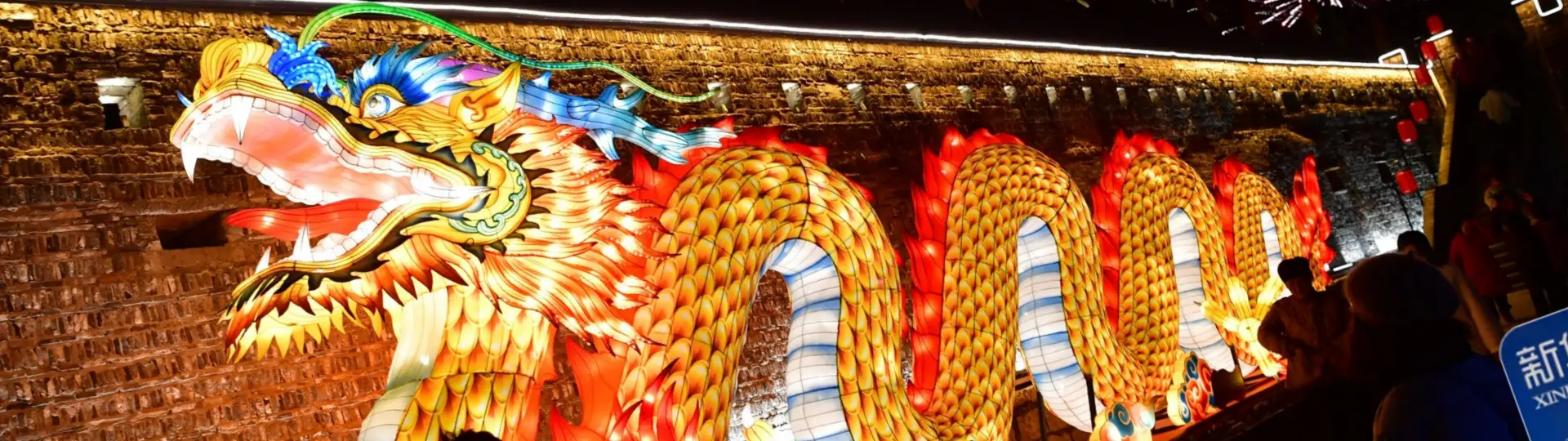
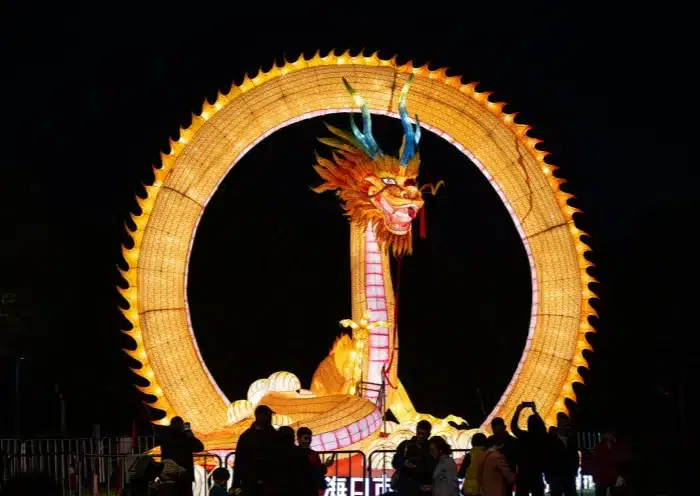
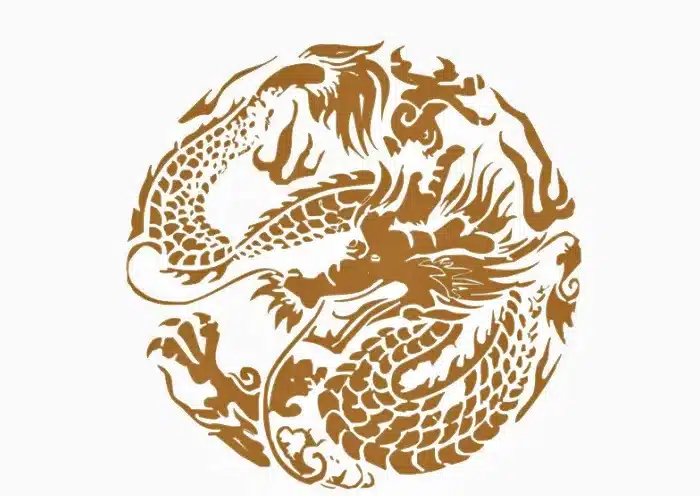
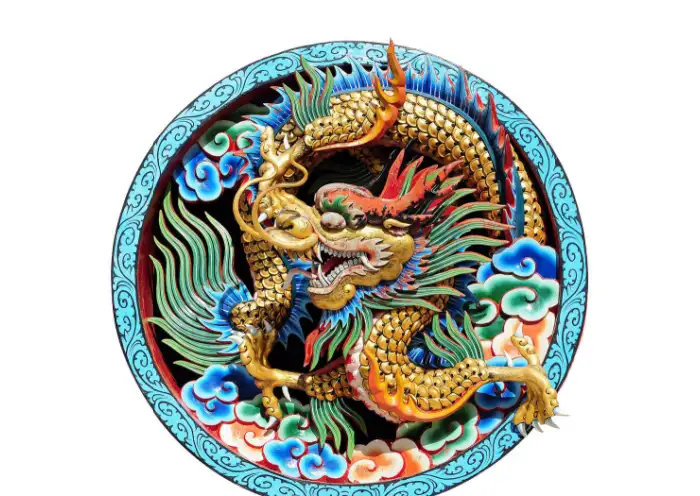
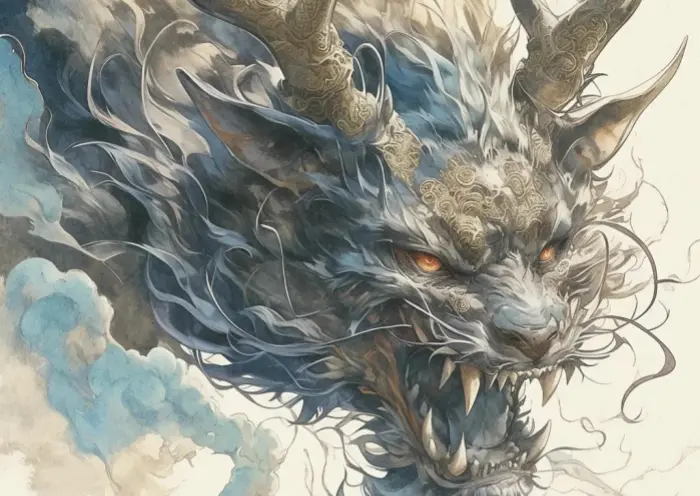
The Chinese dragon is an imaginary animal born in ancient China and one of the twelve Chinese zodiac signs. No one can prove that it exists in reality, so that it usually appears in legends and myths. And the image of the dragon is all made by Chinese people’s imagination and creativity: horns like deer, head like cattle, eyes like shrimp, mouth like donkey, stomach like snake, scale like fish, feet like phoenix, beard like human, and ears like elephant. It is always painted as the following picture.
Historically the Chinese dragon (long, 龍/龙) developed from local totemic and natural-symbol systems and was gradually stylized in art, ritual, and literature. Archaeological finds (including jade and bronze dragon motifs from Neolithic and Bronze Age cultures) show the image is deeply rooted in the Chinese world view. Over millennia, Chinese people have continuously expanded the dragon’s form, functions, and meanings and by the imperial era, it had become inseparable from concepts like cosmology, the court, and popular religion.
What Does a Chinese Dragon Symbolize?
Power, Fortune, and Imperial Authority
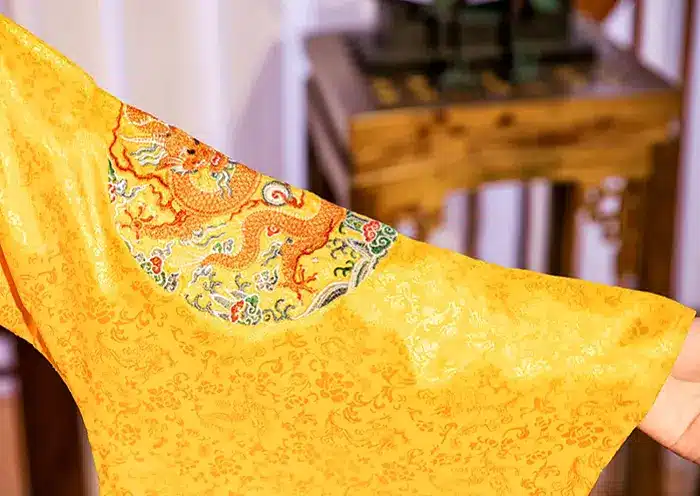
One of the clearest historical uses of the dragon was as a symbol of imperial power. Emperors adopted dragon motifs for robes, architecture, and regalia – the five-clawed dragon in particular signalled the emperor’s special status. Yellow or gold dragons (both the image and the color) were closely associated with the ruler and thus the image itself got to the center of the realm. So that you can see in many materials that the dragon throne, dragon robes, and dragon banners were all used to broadcast authority across the empire.
Master of Nature: Water, Rain, and Harvests
In Chinese culture, dragons are also strongly associated with water, every form of water: rivers, lakes, seas, and rain. The Dragon King (Longwang) and many other dragon deities were invoked to bring rain or to stop floods, since agricultural was essential to life, and dragon, one of the most powerful and auspicious figures, were naturally given such significant duty. Many villages would also hold rituals, processions, and sacrifices to local dragon gods in times of drought or flood, and the Dragon King also appears in classical literature (e.g., Journey to the West) and ritual calendars.
The Ultimate Yang Symbol
The dragon represents yang (阳), the active, heavenly, and masculine principle in the yin-yang cosmology. It pairs across Chinese thought with the phoenix (fenghuang), which is often viewed as a complementary yin symbol. Together they form a balanced cultural pair which is pervasively used in wedding symbolism and court imagery.
Ancestor of the Chinese People
In folklore and nationalist myth, many Chinese people have long referred to themselves symbolically as “descendants of the dragon.” Legendary rulers such as the Yellow Emperor (said as one of the first ancestors of Chinese culture) were linked to dragon imagery to legitimize rulership and cultural origins. The dragon therefore carries both political and identity value.
Recommended tour

Colors of the Chinese Dragon and Their Meanings
In Chinese culture, color itself already carries a lot of implications and meaning, and when it meets dragon, another significant image, the combination would then carry even more symbolic weight, denotes elemental associations, and sometimes signals rank or role.
Gold / Yellow Dragon – wealth, prosperity, and power
- The gold or yellow dragon is closely associated with imperial authority and the emperor. Yellow was the exclusive color of the centre and the emperor in traditional China.
- A yellow/golden dragon often signals abundance, high status, and cosmic centrality — the ruler of all things terrestrial and celestial.
Red Dragon – celebration, luck, protection
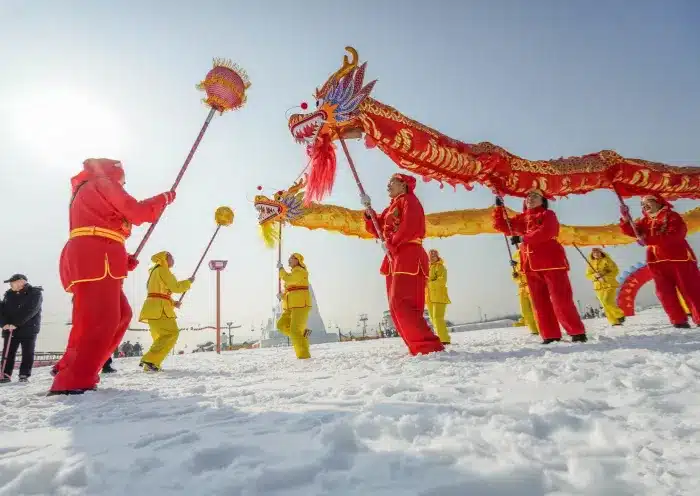
Red in Chinese culture is the colour of joy, festivals, weddings, and good fortune. Accordingly, a red dragon is used in festivals such as the Lunar New Year and in dragon dances to invite luck.
The red dragon may stand for dynamism, courage, vitality and also protective energy (warding off evil).
Black Dragon – authority, vengeance, water, storms
Black dragons are more complex in meaning: associated with winter, the North, water, storms and sometimes destructive power.
In certain folk references, black dragons symbolize vengeance or punishment when moral or natural order is upset.
Blue / Green (Azure/Green) Dragon – growth, nature, health, spring
Blue and green dragons are linked with nature, renewal, vegetation, growth, health and the season of spring.
The “Azure Dragon” (Qing Lóng 青龙) of the East in Chinese cosmology is coloured blue/green and signifies the spring, wood element and east direction.
WuKong Education
White Dragon – purity, mourning, transformation
White dragons are less common, and their meaning is rather mixed: white in Chinese culture can on the one hand, signify purity and virtue, on the other hand, also refer to mourning and death.
A white dragon may thus represent spiritual purity or the cycle of life and death (depending on context).
Related reading

9 Famous Types of Chinese Dragons
The Celestial Dragon (Tiānlóng 天龙) – Protector of the Heavens
This dragon, just as its name suggested, enjoys its place in the skies and the heavenly palaces. It’s like the guardian of the divine realm, and according to myths, this Celestial Dragon often pulls the chariots of gods and stands watch over the celestial order. In Chinese cosmology, this Celestial Dragon also embodies ideas like transcendence, authority, and it also carries the link between heaven and earth.
The Spiritual Dragon (Shénlóng 神龙) – Controller of Weather and Rain
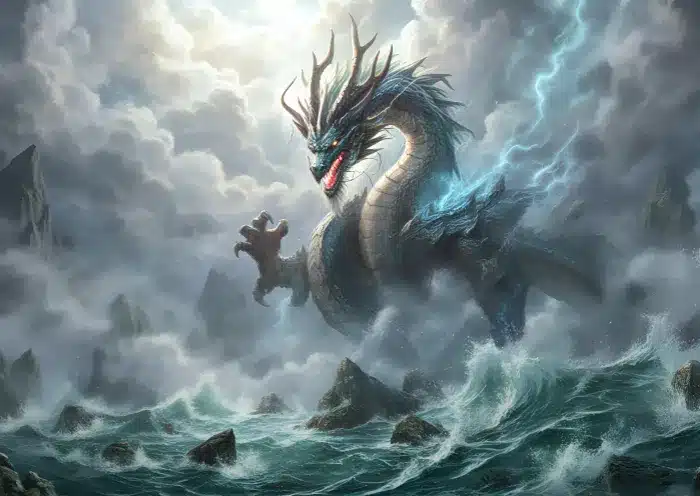
The Spiritual Dragon governs wind, clouds, storms and rainfall. Without its benevolence, agriculture and human life suffer. The dragon is sometimes depicted in azure scale-form, able to summon rain or thunder.
Because it is so deeply linked to cultivation and livelihood, this dragon is central to popular ancient worship and festivals. To invoke the Spiritual Dragon means to ask for favorable weather and good harvests.
The Dragon King (Lóngwáng 龙王) – The Most Powerful, Ruler of the Four Seas
The Dragon Kings are major figures in dragon mythology, yes, there is more than one Dragon King: each pre-eminent among aquatic dragons, each ruling one of the Four Seas (East, South, West, North). They are the commanders of sea creatures which can regulate tides, and deliver or withhold rain and storms.
Because these dragons blend royal imagery with elemental control, they appear in both mythic narrative and temple cults, especially in coastal regions and river communities.
The Coiling Dragon (Pánlóng 盘龙) – The Serpentine, Twisting Dragon
The Coiling Dragon is recognised as the dragon that coils around lakes, pillars or waters, often symbolising latent energy, concealed power or transition from one realm to another.
In decorative arts, the coiling dragon often wraps around architectural features, emphasizing its dynamic, fluid nature and its link to subterranean or aquatic forces.
The Horned Dragon (Qiúlóng 虬龙) – The Mighty Horned Dragon
The Horned Dragon is distinguished by its prominent antler-like horns. In many texts it is regarded as one of the most powerful dragons, sometimes associated with both beneficial rain-bringing and destructive floods.
The Treasure Dragon (Fùcánglóng 伏藏龙) – Guardian of Hidden Wealth
This type of dragon is often hidden underground or within mountains. With its infinite power, it guards precious gems, metals, hoards and the dragon-pearl motif. And some myths had said when this dragon bursts forth, it will also come with volcanoes or earth tremors.
The Underworld (or Earth) Dragon (Dìlóng 地龙) – Master of Rivers, Streams and Underground Water
The Underworld or Earth Dragon supervises the waters beneath the land, the rivers, lakes and perhaps subterranean channels. Some traditions view it as the counterpart or female version of the Spiritual Dragon.
Because water control was vital to agriculture and flood management in ancient China, this dragon also symbolizes the hidden forces shaping prosperity or disaster.
The Winged Dragon (Yìnglóng 应龙) – The Rare Dragon with Wings
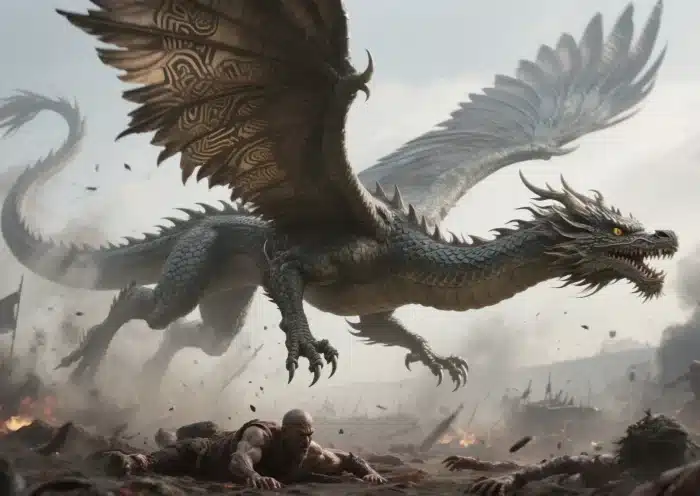
Unlike most Chinese dragons which are wingless, the Winged Dragon actually possesses explicit wings and is often associated with ancient mythic intervention, such as assisting legendary emperors or controlling floods. It’s like an exceptional being that bridges divine power with mobility and transformation.
The Yellow Dragon (Huánglóng 黄龙) – The Imperial Dragon of Centrality
The Yellow Dragon occupies the special category of imperial and cosmological symbolism: often linked to the legendary Fuxi or the centre of the Chinese realm, the element Earth, and the power of kingship.
In myth, the Yellow Dragon emerged from the River Luo to bestow writing or civilising gifts, thus it also embodies culture, governance and the civilized order.
The Dragon in Chinese Culture and Traditions
The Chinese Zodiac Dragon
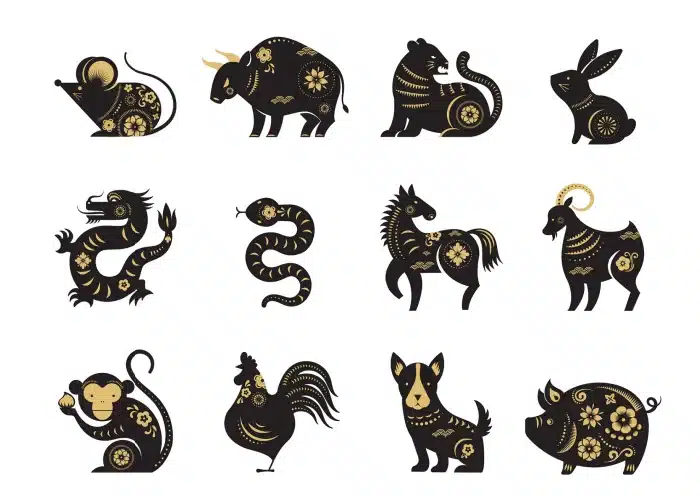
The dragon is the only mythological animal in the Chinese zodiac (others are all real animals you can see in life) and is widely regarded as one brings lucky, charismatic, and ambitious. People born in the Years of the Dragon (for example 2000, 2012, 2024) are stereotypically described as confident, energetic, and fortunate, and these are traits that often emphasized in horoscopes and popular profiles. And because of the positive meanings related to dragon, Years of the Dragon can often attract cultural attention and even influence birth interest.
Dragon Dances and Festivals
There are also many traditions relating to Chinese dragon, such as dragon dance, dragon boat racing. On the Chinese Lunar New Year and Lantern Festival, people will have a dragon dance performance in public places to celebrate and deliver a wish for a prosperous life in the new year. On the Dragon Boat Festival, to commemorate Qu Yuan, a famous Chinese poet in ancient times, people will hold dragon boat racing in many cities. Both practices are now national and international spectacles.
Chinese Dragon Art and Architecture
From imperial palaces (the Forbidden City) to temple roof ridges and shrine door knockers, dragon imagery has appeared everywhere as a central decorative program across dynasties. Sculptors, painters, and craftspeople really like to carve dragons on stair balustrades, cloisonné, textiles, and ceramics in these important places, and they would also placed stylized dragons at thresholds and in funerary art as protective and legitimizing signs. Such pervasiveness, indeed, indicates the dragon’s presence is a signature feature of Chinese visual culture.
Dragon Idioms
Dragons appear in idioms and expressions that convey positive characteristics like excellence, speed, or auspiciousness. For example, one of the most famous and widely said idioms related to dragons is 望子成龙 (wàng zǐ chéng lóng), which literally means “hope one’s son will become a dragon.” It delivers a hope for outstanding success made by someone’s offspring. Such idioms show how dragon symbolism permeates everyday language and aspiration.
The Legendary Nine Sons of the Dragon
Chinese tradition attributes nine sons to the dragon, each with distinct appearance and function.
- Bixi (赑屃 / Bìxì) — a turtle-like sonof dragon. Often used as the base of heavy stone steles (inscribed monuments).
- Chiwen (螭吻 / Chīwěn) — Also dragon-like.It can be commonly seen on roof ridges, which is designed to guard against fire and bad luck.
- Pulao (蒲牢 / Púláo) — Typically loves loud sounds and its image is often applied to decorate bell tops.
- Bi’an (狴犴 / Bì’àn) — Largely associated with law and justice.People carved on prison gates and judicial imagery.
- Taotie (饕餮 / Tāotiè) — A ferocious face motif linked to appetite and ritual vessels.
- Baxia (霸下 / Bàxià) — Similar to Bixi and its image often exist under tablets and on bridges.
- Suanni (狻猊 / Suānní) — This one looks more like lion. You can find on incense burners and Buddhist imagery.
- Jiaotu (椒图 / Jiāotú) — Often used as door guardians. People often associated it with protection and sealing.
- Yazi (睚眦 / Yázì) — fierce and used on weapon motifs and sword guards.

Chinese Dragon vs. Western Dragon
In western narrations, dragons are often described as winged and reptilian creatures and they are associated with destruction or relatively negative concepts like greed (hoarding treasure, fighting knights). However, in Chinese stories, dragons typically lack wings yet are still able to fly and swim; they symbolize auspicious power, and they bring rain and authority to people rather than chaos.
Chinese Dragon Facts
- Dragons have no wings yet are frequently shown flying in clouds or riding the wind.
- Dragons are closely associated with rain, rivers, and other water bodies; local dragon gods were/are asked for rain.
- The standard composite description — deer horns, fish scales, camel face or buffalo head, eagle claws, snake body, and human beard — is an enduring artistic formula.
- The dragon’s pearl (or wish-pearl) is often shown near its mouth and symbolizes wisdom, prosperity, and spiritual power.
- Dragons were imperial emblems: five-clawed dragons were reserved for emperors; lesser claws or different colors signalled rank.
FAQs about the Chinese Dragon
Why is the dragon an important symbol in China?
Because over all the thousands of years, it has gradually attained and combined cosmological meaning (yang, weather control), political legitimacy (imperial emblem), and popular religion (rainmaking and local cults). It continuously operates across elite and popular spheres as a unifying cultural sign.
What is the story behind the Chinese dragon’s origin?
There is no single origin story. Dragons evolved from so many things, such as ancient totemic images, jade and bronze motifs, and regional mythic beings. And later mythmakers linked them to legendary rulers and cosmic functions. Archaeology and classical texts together trace this long formation.
Why are Chinese dragons considered lucky?
Because in myths and legends, they are the creatures that bring rain, ensure harvests, and protect communities for people, and they are also associated with auspicious cosmic order in many materials, all of which translate into material and spiritual well-being.
Why do Chinese people call themselves “descendants of the dragon”?
The image of the dragon has continuously existed for thousands of years, and it has long become an emblem of nationality and cultural pride. Tracing ancestry to a powerful, benevolent mythical ancestor is a rhetorical way for Chinese people to express identity and continuity.
How do Chinese dragons appear in modern culture and media?
Dragons appear everywhere, even in films, advertising, fashion, public art, and national ceremonies. They still take the meaning of cultural identity and that’s why they are also common in diaspora communities’ New Year celebrations. And even in tourism promotion, you can see their images used by China travel and China tour operators.
Explore Chinese Dragon Culture with China Xian Tour
Looking into the features of the dragon is also a way of looking into China’s vast and profound culture. And by tracing its existence in arts, architectures or even the festivals, you’ll naturally get a rewarding China tour that covers many incredible attractions. To make most of your time, you can join a customized trip with China Xian Tour. Our professional guides will take you to explore the stories of dragon while also experience the beauty of China’s history, culture and nature. With us taking care of everything along the way for you, you’ll be able to enjoy every moment with full relaxation.