

Chinese architecture, the constructed buildings of China, serves as both an educational window into Chinese history and a reflection of traditional Chinese art and culture. From imperial palaces and classic garden to temples and regional dwellings, ancient Chinese architecture is China’s most important heritage, and a witness of the country’s 5,000-year-old civilization.
Today, Chinese architecture has been one of the best highlights for international travelers on their China tours.
This guide is an extensive look at Chinese architecture, from its history, types & styles, to distinctive features. Additionally, we gather a selection of the famous ancient Chinese architecture examples for historic and cultural buffs to visit.
Content Preview
- Chinese Architecture Key Features
- Typical Chinese Architecture Styles & Types
- A Journey through the History of Chinese Architecture
- Most Famous Ancient Chinese Architecture Examples
- How to Plan a China Architecture Tour
- Explore China’s Architectural Marvels with China Xian Tour
Chinese Architecture Key Features
Chinese architecture is one of the most prominent architectural styles in the world. Its distinctive wooden architecture system has been co-opted to East Asian countries such as Korea, Vietnam, Japan, and others.
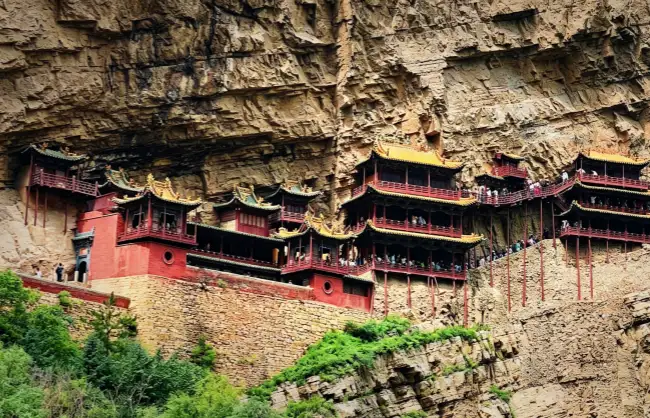
So, what is the main characteristic that distinguishes traditional Chinese architecture from other styles? The most core feature of traditional Chinese architecture is the wooden framework system. The weight of the house is entirely borne by the wooden beams, columns and frames. And it emphasizes group layout, which means that the architecture is composed of several small courtyards connected together, forming an abundant and serene space. The most notable symbol of traditional Chinese architecture is its graceful and large curved roof and brackets. The design is not just for beauty, but also for drainage and the stability of the whole building.
The following traits define traditional Chinese architecture, which is a treasure of ancient Chinese culture that incorporates its historical, philosophical, and aesthetic ideas.
Wooden Structure
Traditional Chinese architecture is characterised by its timber framework, of which the mortise and tenon structure is a prime example. This structure uses the precise mortise and tenon connection to make the building structure sturdy and solid. Along with preserving the original materials of all building components, the wooden structure also adapts to natural disasters like earthquakes.
Traditional Chinese architecture is characterised by its timber framework, of which the mortise and tenon structure is a prime example. This structure uses the precise mortise and tenon connection to make the building structure sturdy and solid. Along with preserving the original materials of all building components, the wooden structure also adapts to natural disasters like earthquakes.
But, why was wood the primary building material in ancient China? It is influenced by traditional cultural concepts of Five Element, in which wood symbolizes spring, life and growth, representing an everlasting force. And the ancient people thought architecture should serve the lives of people at that age, so there was no need to pursue the “eternity” of stone structures. And in ancient China, forests were dense and wood was easy to obtain and process. So wood became the primary material in ancient China.
Distinguished Roof Forms
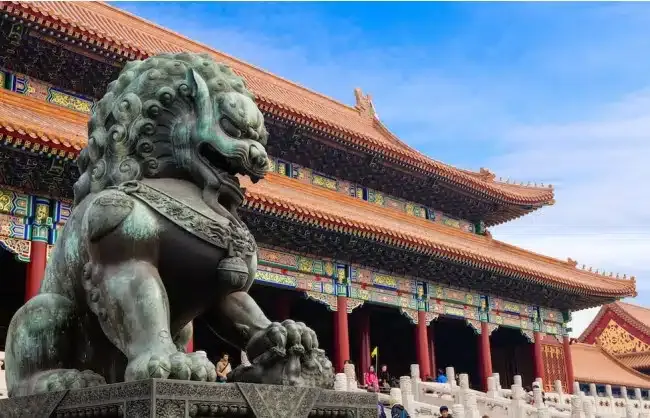
The roofs of traditional Chinese buildings come in many forms. The most typical form of the hill is the Xieshan Roof, which has an inverted double-pitched roof. Other shapes include dangling mountain tops, raising beam straight tops, and so forth. Like the Imperial Palace in Beijing, the roof is typically adorned with ridge creatures, like lions, dragons, etc., that are said to bring good fortune and protect the occupants.
Symmetry and Balance
Traditional Chinese architecture attaches great importance to symmetry and balance. The overall layout of the building is often based on the central axis, symmetrical front and rear, symmetrical left and right or symmetrical center. This symmetry implies order, balance and solidarity.
Courtyards and Gardens
Traditional Chinese architecture often saves areas for courtyards and gardens, which greatly shows Chinese people’s respect and pursuit for the natural environment. While the courtyard is seen as a transitional space between heaven and earth, the primary goal of having a garden is more about create an natural immersion by shaping a landscape within limited space. Water, stone, trees, pavilions, and other components work all together to foster a tranquil and beautiful setting. Private gardens and royal gardens, like the Summer Palace in Beijing and the Lingering Garden in Suzhou, both represent the classic garden designs of ancient China.
Decorative Arts
Chinese traditional architectural decoration is extremely rich and diverse, including carved flowers, painted, brick carvings, wood carvings and murals. These decorations often carry meanings and symbols, such as auspiciousness, reunion, prosperity and health.
Colors
Bright colors such as red, yellow and green are commonly used in Chinese architecture. These colors not only symbolize auspice, imperial power and nature, but also reflect the unique understanding of color aesthetics in ancient China.
Animal Figures on the Roof
What do the animal figures on traditional Chinese roofs symbolize? At the beginning, the animal figures are just nail caps to prevent rain. But later, they gradually became an important symbol of rank. The more animal figures there are, the higher the rank is. Besides, each animal has its own symbolic meaning. For example, the dragon symbolizes imperial power, the phoenix symbolizes auspiciousness and the lion has the meaning of preventing fires and disasters.
Livability and Environmental Protection
The layout and structural design of Chinese architecture provide conditions for lighting, ventilation and thermal insulation to adapt to the wide range of climatic conditions in China. Most of the building materials are made of natural wood, stone, soil and tiles, which has good environmental protection performance.
Recommended best China tours to witness traditional Chinese architecture:
- 9 Days China Cultural Tour of Beijing-Datong-Pingyao-Xi’an
- 8 Days Beijing – Xian – Shanghai Highlights Tour
Typical Chinese Architecture Styles & Types
China is home to a wide variety of architectural styles, each with unique regional and cultural characteristics. The Beijing Style, Suzhou Style, Hui Style, Sichuan Style, Fujian Style, and Jin Style are among the six major types of Chinese architecture.
Architecture Style |
Region |
Key Features |
Beijing Style |
North China (Beijing & environs) |
Red perimeter walls & yellow-glazed roof tiles Hip-and-gable (Xieshan) roofs Layered dougong bracket sets – Strict central-axis symmetry |
Suzhou Style |
Jiangsu (Suzhou & Jiangnan water towns) |
Whitewashed walls & dark gray tiles Curving corridors, small bridges over ponds Exquisite wood- and brick-carving in windows and doors “Borrowed scenery” garden design |
Hui (Anhui) Style |
Southern Anhui (Huangshan region) |
Tall, upturned horse-head walls (Ma Tou Qiang) White walls & black tiles Intricate brick, wood & stone carvings Enclosed quadrangle courtyard layouts |
Sichuan Style |
Sichuan Basin (Chengdu Plains) |
Broad, overhanging eaves for heavy rainfall Flat or shallow-sloped gray-tile roofs Timber-frame structures with carved beams Spacious courtyard arrangements reflecting Ba-Shu culture |
Fujian Style |
Southeastern Fujian |
Tulou earth-rammed communal residences (round & square) Thick earthen walls, small windows Minnan swallowtail roof ridges Red brick & carved granite bases |
Jin (Shanxi) Style |
Shanxi Province (Old merchant towns) |
Courtyard mansions of wealthy merchants High stone plinths & white walls Black tile roofs with upturned eaves Lavish wood-carving on beams, doors, and window lattices |
Beijing Style
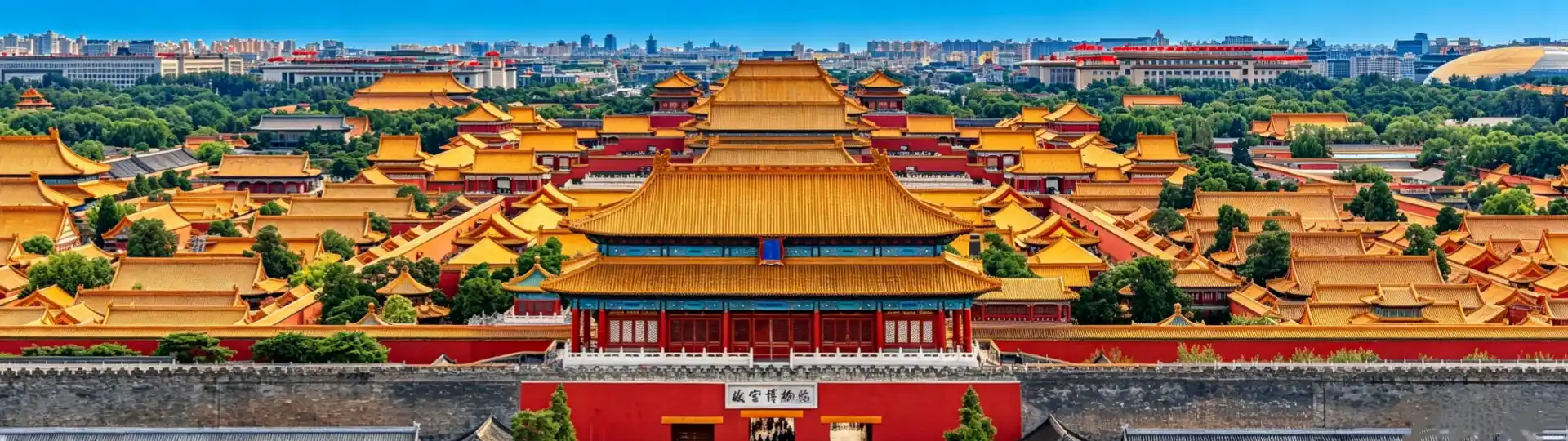
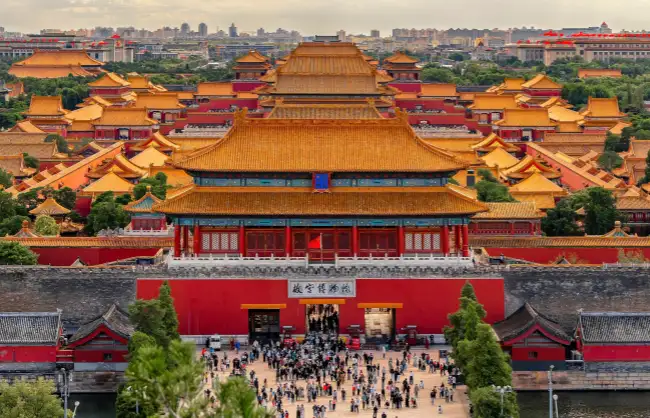
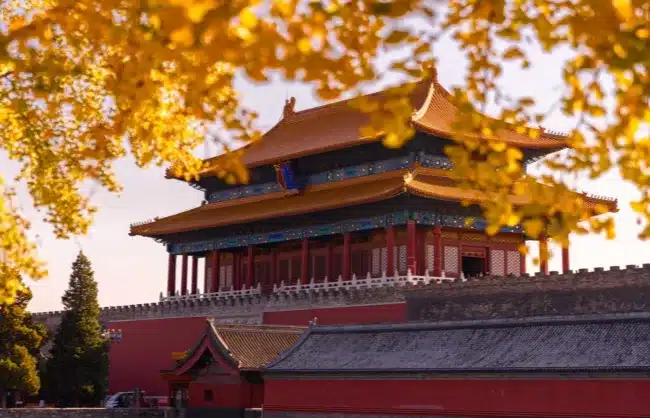
Beijing Style architecture, also called as Chinese official-style architecture, widely dominates northern cities with its symbolic grandeur. The Palace Museum in Beijing built during the Ming and Qing dynasties, remains its finest example. On your Beijing travel, you can spot some of the most characteristic features which blend imperial symbolism with artistic craftsmanship: red perimeter walls, yellow-glazed roof tiles, gently sloping hip-and-gable roofs. Beyond palaces, traditional Siheyuan courtyards reveal old Beijing culture and its soul. It’s a living testament to the quintessential Beijing-style dwelling.
Recommended Beijing Tour
Our guide and driver will pick you up from your hotel at the appointed time. The first stop on today's Beijing tour is Tian'anmen Square, which is the heart and symbol of Beijing and is the largest...
Suzhou Style
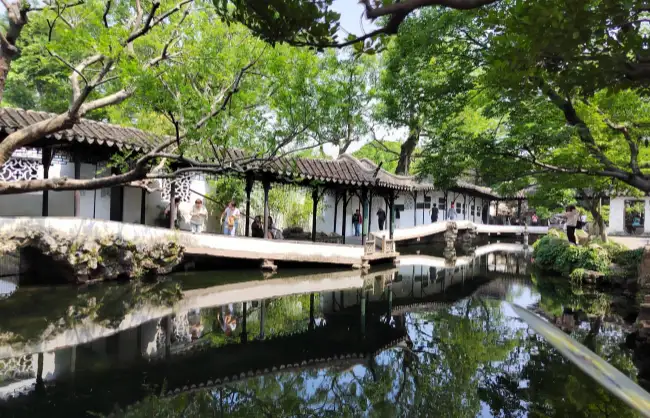
Suzhou-style architecture, a mark of southern China’s Han Chinese heritage, comes alive through Suzhou’s classical gardens. Unlike grand imperial designs, Suzhou gardens emphasize harmony. And these UNESCO-listed places, like the Humble Administrator’s Garden, greatly blend meticulous garden layouts with poetic landscapes. Walking slowly in the space, you’ll see winding ponds, artfully arranged rockeries, and bamboo groves work together to craft peaceful retreats.
Recommended Suzhou tour
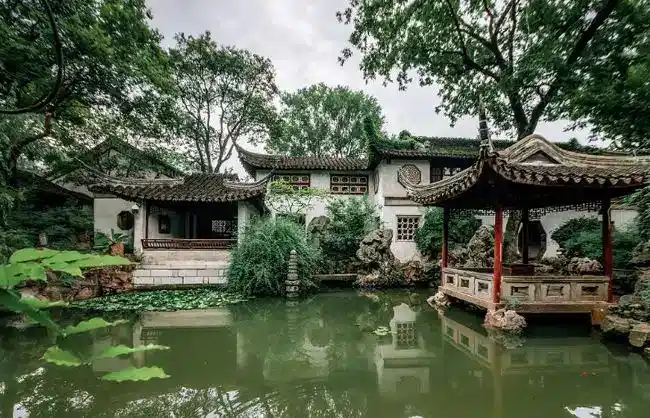
A 3-day Suzhou immersion into UNESCO classical gardens including the Humble Administrator's Garden and Lingering Garden, plus a Grand Canal cruise and the historic Pingjiang Road.
What are the key differences between northern (Beijing) and southern (Suzhou) architectural styles?
The buildings in Northern China are mainly official architecture, whose style is majestic and solemn, and layout is meticulous. The colors are usually bold, which is featured by red walls and yellow tiles. While southern China is good at designing gardens and dwellings with free layout and simple and elegant colors. White walls and black tiles are the main features of architecture in southern China.
Hui Style
Hui-style Chinese architecture is the traditional architecture in Anhui, with distinct regional characteristics and cultural connotations. Black tile, white walls, horse-head walls, and decorative brick, stone, and wood carvings are all features of Huizhou style architecture that capture the distinct charm of the Hui culture. Folk homes, ancestral halls, and archways are the highlights of Hui-style architecture.
Recommended Huangshan Tour to witness Hui-style architecture: 4 Days Huangshan Tour with Hongcun & Xidi Villages

Sichuan Style
Sichuan-style Chinese architecture is a traditional architecture in southwest China, represented by the Wide and Narrow Alley in Chengdu, and the ancient city of Langzhong. Sichuan-style architecture is a combination of Han and Tibetan cultural elements. The use of indigenous materials like bamboo, wood, and stone in Sichuan-style building creates a sensation of simplicity and naturalness.
Recommended Chengdu Tour

Dive into Chengdu's legendary food scene with market tours, street food tastings, a hands-on Sichuan cooking class, and a pilgrimage to Leshan for authentic qiaojiao beef.
Fujian Style
Fujian architecture is represented by Hakka tulou. The building is made of raw soil, wood, stone and other local materials. This architectural style focuses on defensiveness and centrality, forming a unique group of round or square earth buildings, such as Hongkeng Tulou Cluster, and Chuxi Tulou Cluster.
Hakka tulou is without doubt one of the finest examples of traditional Chinese dwelling houses. But, what makes the Hakka tulou a unique architectural style?
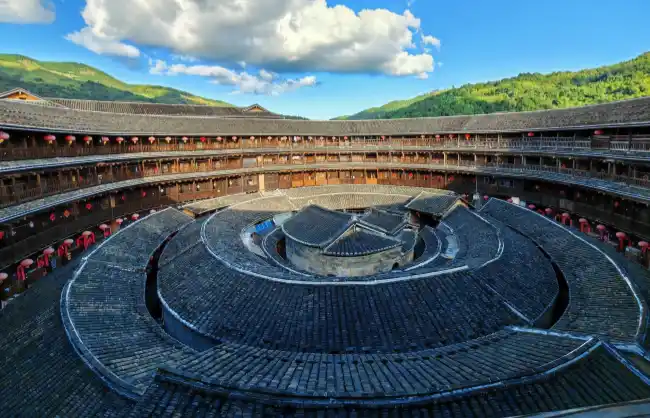
Hakka tulou shows the wisdom of the local people. To defend against enemy, it is constructed as a huge circular structure with a thick outer earth wall, watchtowers and gun holes. The circular structure can also prevent wind and earthquakes and is helpful in keep warm in winter and cool in summer. And only one Hakka tulou can accommodate dozens or even hundreds of families to live together. Besides, the architecture is built with local materials like yellow soil and fir wood, which are firm and cost low.
Recommended Xiamen Tour
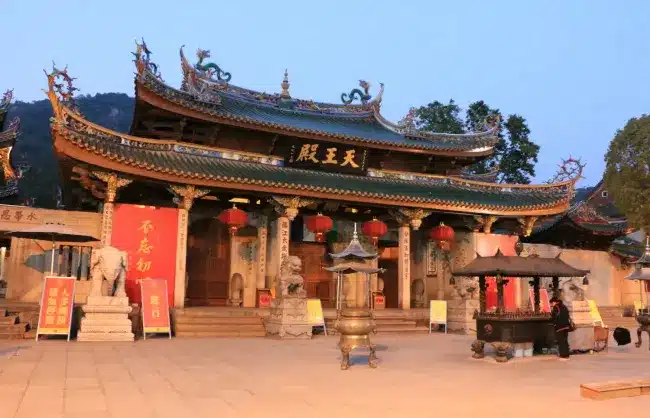
Discover Xiamen Gulangyu Island and Nanputuo Temple, then explore Nanjing and Yongding Tulou clusters including Tianluokeng, Hegui Building, and Zhencheng Building with Hakka cultural experiences.
Jin (Shanxi) Style
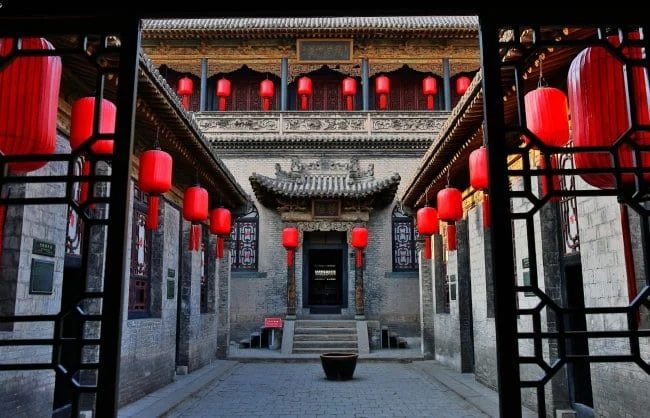
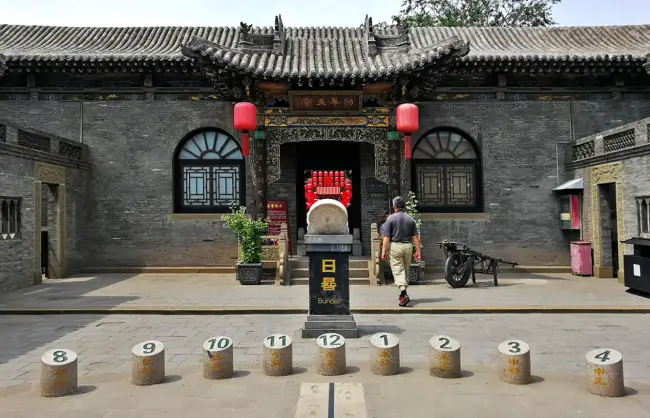
The traditional Chinese architecture in Shanxi is represented by the Shanxi Shanxi Merchants’ compound. Mostly made of wood, Jin-style building emphasizes order and symmetry while showcasing a meticulous architectural design and beautiful carvings. In addition to the family concept and ceremonial culture of ancient Chinese society, it depicts the business culture of Shanxi merchants.
Recommended Shanxi Tour

Journey through Shanxi's historic cities of Pingyao, Taiyuan, and Datong to witness the Qiao Family Courtyard, Jinci Temple, Hanging Temple, and the colossal Yungang Grottoes with 51,000 carvings.
A Journey through the History of Chinese Architecture
If there’s something even more enchanting than the Chinese Architecture, it’s surely its history and back stories.
Neolithic Period (about 8000-2000 BC)
At this time, ancient Chinese architecture in the humid areas of southern China developed from nests to elevated columns. The earliest remains have been found for the Hemudu site in Yuyao, Zhejiang Province 7000 years ago, a combination of mortise and tenon and binding of the column-style building.
In the Loess Plateau area of the middle and lower reaches of the Yellow River in northern China, the houses developed from the semi-cave-dwelling style to the round and square houses with wood and mud walls on the ground, such as the Banpo site in Xi ‘an, and later developed into the two-slope roofed multi-row houses of the Dahe village site in Zhengzhou.
Pre-qin Period (Xia, Shang and Zhou Dynasties from 2070 to1600 BC)
The urban ruins of the Xia and Shang dynasties date back more than 4,000 years. For example, the Erlitou site of Yanshi in Henan Province is the earliest confirmed ruins of the palace city in China and the earliest timber-frame rammed earth building found in China so far.
The site of Fenghu in Qishan, Shaanxi Province, in the early Western Zhou Dynasty, is the earliest and most complete Siheyuan building known in China.
Qin and Han Dynasties (221 BC-220 AD)
The unification of Qin and Han dynasties promoted the exchange of Chinese architectural culture between the Central Plains and Wu and Chu Vassal states. During this period, the buildings were large in scale, diverse in combination and large in roof. Mostly were built in the capital city, and served as palaces, sacrifice places and mausoleums.
At the end of the Han Dynasty, Buddhism was introduced into China. Chinese Buddhist architecture began to appear, such as Da Ci’en Temple in Xi ‘an and White Horse Temple in Luoyang.
Wei, Jin and Southern and Northern Dynasties (AD 222-AD 589)
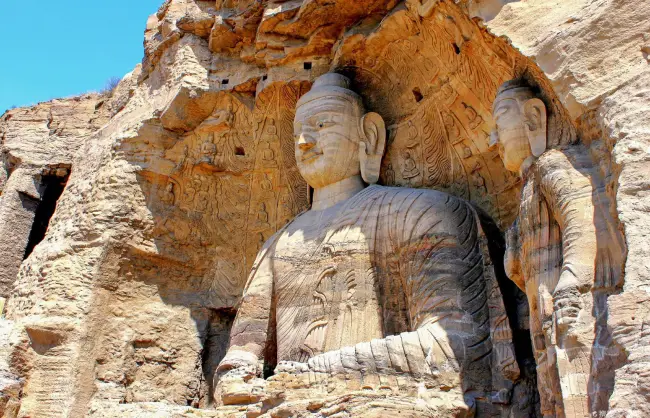
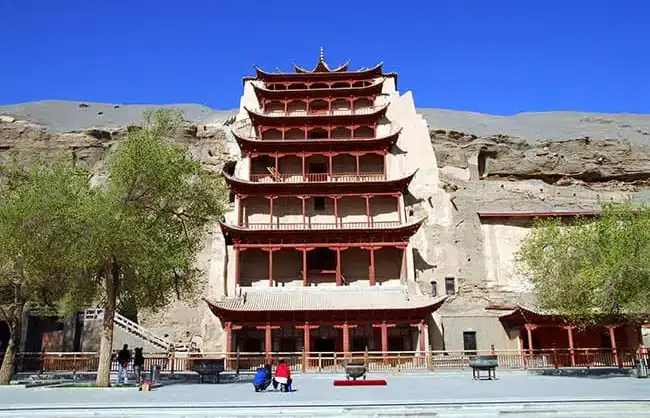
With the rapid development of Buddhist architecture in China, high-rise pagodas, grottoes and Buddha statues were constructed, such as the Mogao Caves in Dunhuang, Yungang Grottoes in Datong, Maiji Mountain Grottoes in Gansu and Longmen Grottoes in Luoyang.
Sui and Tang Dynasties (581-907 AD)
Chang ‘an (modern-day Xi’an) and Luoyang, two capital cities with extensive planning and magnitude, were constructed in the Sui Dynasty. This time, the use of wooden structures was also used to address the technical issue with enormous buildings.
Song, Liao and Jin Dynasties (960-1227 AD)
The traditional Chinese architecture construction technology of Song Dynasty has reached a very high level. Building methods are also becoming more systematic and modular.
Yuan Dynasty
The Yuan Dynasty‘s architecture is primarily Bohemian in style. White glazed tiles, a large look, and logs were used for the majority of the beams.
Ming and Qing Dynasties (1368-1911)
Since the Ming Dynasty, China has entered the late feudal society, when Chinese architecture inherited the construction tradition of the Song Dynasty.
The Ming Dynasty continued to vigorously build the Great Wall. And many important sections of the Wall (e.g. Mutianyu, Badaling) and the fortifications were built with stone bricks.
On the whole, the traditional Chinese architecture of Ming and Qing dynasties has reached the peak, showing the image of concise form and complicated details.
How has traditional Chinese architecture influenced modern Chinese buildings?
The classic gardens inspire modern architects to combine the architecture with natural environment. And the sense of flexible and flowing space of wooden architecture is also similar to the pursuit of free and open space of modern architecture.
Most Famous Ancient Chinese Architecture Examples
Here are 6 classic examples of Chinese architecture to visit on your tours to China:
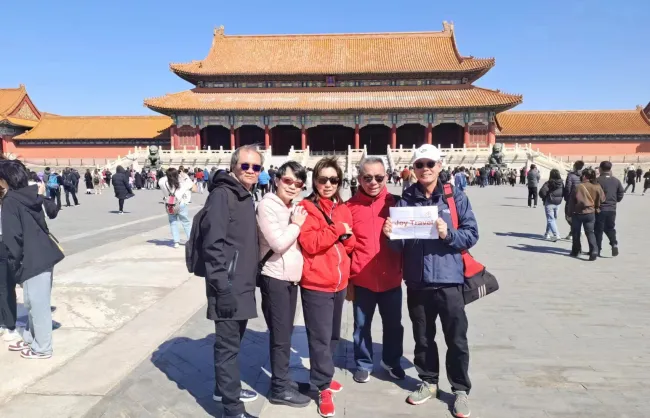
Forbidden City
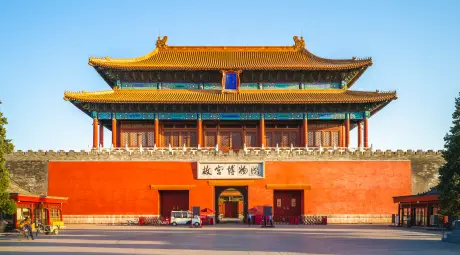
Located at the center of the central axis of Beijing, the Forbidden City is the most famous Chinese architecture. It was built in the 18th year of Yongle, and later became the palace of 24 emperors of the Ming and Qing dynasties.
The buildings in the imperial Palace are divided into two parts: the outer court and the inner Court. The center of the outer court is the Hall of Supreme Harmony, the Hall of Central Harmony, and the Hall of Preserving Harmony, which are the places where grand ceremonies were held. The center of the inner Court is the Dry Qing Palace, the Hall of Communication, and the Palace of Earthly Tranquility, where the emperor and the empress lived.
The Forbidden City was listed as a World Cultural Heritage in 1987.
Tips for Visiting:
- Best time to visit:spring and autumn
- How to get to: Take metro line 1 to Tiananmen West Station Exit B or Tiananmen East Station Exit B, and then walk about 15 minutes to the entrance.
- Ticket:CNY 60 from April to October and CNY 40 from November to May
- Time needed:3 – 6 hours
Related reading: Characteristics of Chinese Palaces and Top Palaces to Visit

Summer Palace
The overall layout of the Summer Palace is based on Kunming Lake and Longevity Hill. It is a large landscape garden based on the West Lake of Hangzhou and drawing on the design techniques of Jiangnan gardens. It is the most complete preserved royal palace in China and is known as the “Royal Garden Museum”.
Tips for Visiting:
- Best time to visit:spring and autumn
- How to get to: Take metro line 4 and get off at Beigongmen Station Exit D, then walk about 5 minutes to the Summer Palace.
- Ticket:CNY 30 from April to October and CNY 20 from November to May
- Time needed:3 – 7 hours
Potala Palace
Don’t miss this masterpiece of Tibetan Chinese architecture on your Tibet tour. Originally used as the palace after Songtsen Gampo moved the capital to Lhasa, the Potala Palace was largely destroyed in the war. It was rebuilt in the 17th century and became the winter palace residence of successive Dalai Lamas.
Tips for Visiting:
- Best time to visit:April – October
- How to get to: There are several bus lines that can get there, including bus lines 1, 8, 9, 10, 13, 14, 36, 34, etc.
- Ticket:CNY 200 from March to October and CNY 100 from November to April
- Time needed: 3 – 4 hours
Pingyao Ancient City
The ancient city of Pingyao has retained the style of the county town in the Ming and Qing dynasties. Viewed from the air, the ancient city is laid out in a turtle shape. In 1997, Pingyao Ancient City was inscribed on the UNESCO World Heritage List — the first time in China that an entire ancient city was inscribed on the World Heritage list.
Tips for Visiting:
- Best time to visit:April – May and September – October
- How to get to: Tourists can take bus line 15, 21, 22, 108, 203, 204, 206, 209, or 211 to the north gate of the Pingyao Ancient Town.
- Ticket:CNY 125 for all 22 scenic spots in the ancient city, do not need the ticket if you do not plan to visit the scenic spots
- Time needed:1 day
Suzhou Classic Gardens
Like historical witnesses, the Humble Administrator’s Garden, the Lingering Garden, the Net Master’s Garden,Lion Grove Garden… all tell their own tales.
Tips for Visiting:
- Best time to visit: The Lingering Garden and Lion Grove Garden: all seasons; Humble Administrator’s Garden, the Net Master’s Garden: spring and autumn;
- How to get to: Humble Administrator’s Garden and Lion Grove Garden can be reached by metro line 6 with the station being Humble Administrator’s Garden. And the Net Master’s Garden can be reached by metro line 5 with the station being Nanyuan South Road. To get to the Lingering Garden, take metro line 2 to Shilu Station.
- Ticket: CNY 40 – 80.
- Time needed: 1.5 – 3 hours
How to Plan a China Architecture Tour
The architecture system in China is various, so it is recommended to choose a theme you are interested in, such as the imperial architecture, unique residential settlements, classic garden, and modern buildings. Then decide on the related cities. The top cities or provinces for an architecture tour usually include Beijing, Xian, Suzhou and Anhui Province, etc. And most tourists will spend about 7 days to explore the characteristic architecture in two or three cities. A brief itinerary of this 8 Days Beijing Luoyang Xian Cultural Tour is listed below for your reference.
Day 1: Beijing Arrival
Day 2: Tiananmen Square – Forbidden City – Summer Palace
Day 3: Mutianyu Great Wall
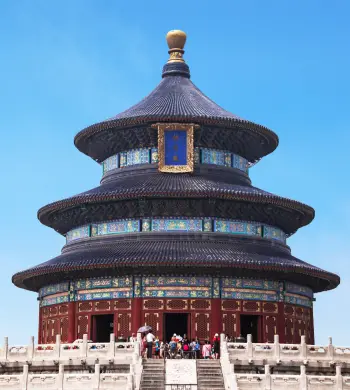
Day 4: Temple of Heaven – Transfer to Luoyang
Day 5: Shaolin Temple
Day 6: Luoyang Museum – Longmen Grottoes – Transfer to Xian
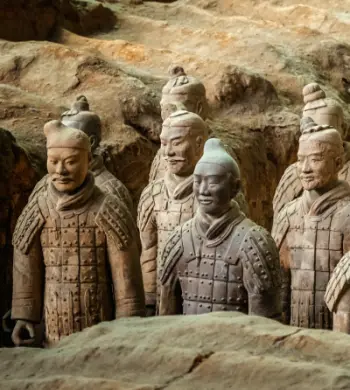
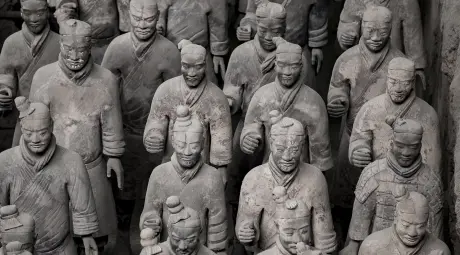
Day 7: Terracotta Army – Ancient City Wall – Muslim Street
Day 8: Big Wild Goose Pagoda – Shaanxi History Museum – departure
Other recommended tours:
- 4 Days Huangshan Tour with Hongcun & Xidi Villages
- 5 Days Shanxi Essence Tour of Pingyao-Taiyuan-Datong
- 9 Days China Tour: Shanghai Suzhou Hangzhou Huangshan
Explore China’s Architectural Marvels with China Xian Tour
From the grandeur of the Beijing Style to the elegant Suzhou Style, and from the mountainous wisdom of the Sichuan Style to the maritime culture of the Fujian Style, China’s architectural landscape boasts an unparalleled diversity of forms and expressions. These diverse regional styles collectively form a rich tapestry of China’s traditional building culture. It is difficult to fully capture the diverse architectural styles in just one article. But those architectural enthusiasts can simply follow this guide to plan their China tour with iconic buildings accordingly. Don’t forget to follow a local expert guide to unravel the history and culture behind all these architectural marvels.