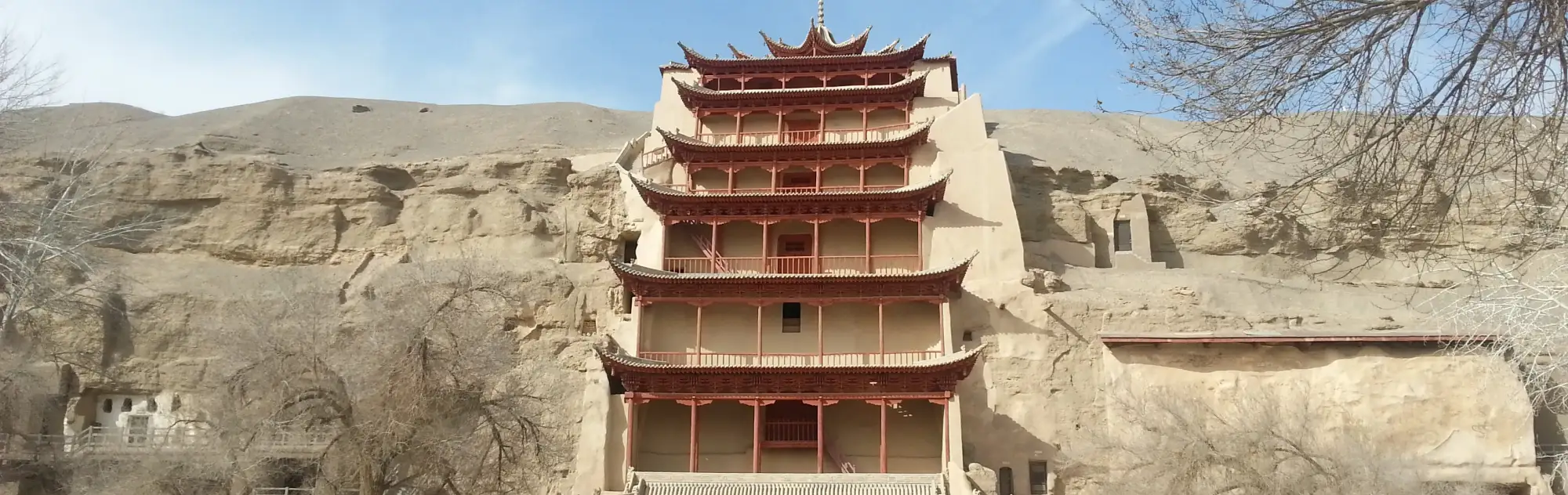
Mogao caves, also known as the Thousand Buddha Caves, are located in Dunhuang. It was built in the sixteen kingdoms period, and it was constantly constructed in the northern dynasties, the Sui, the Tang, the five dynasties and ten kingdoms, the western Xia, the Yuan and other dynasties. It formed a huge scale art treasure that has 735 caves, 45,000 square meters of murals and 2,415 clay painted sculptures, which is the largest extant and the richest collections of the Buddhist art in the world. In 1987, the Mogao caves were listed as a world cultural heritage site, no wonder it is always among the top landmarks in Dunhuang. In China, Mogao caves in Dunhuang, Yungang grottoes in Datong, Longmen grottoes in Luoyang and Maijishan grottoes in Tianshui are known as “four major and famous grottoes”.
Content Preview
- Basic Travel Information
- History and Global Significance of the Mogao Grottoes
- Why Are the Mogao Caves So Significant?
- What to See: The Priceless Murals, Sculptures, and Architecture
- Must-See Caves: A Guide to the Highlights
- How to Visit the Mogao Grottoes: A Practical Guide
- Fascinating Facts About Mogao Caves
- FAQs about the Mogao Caves
- Travel with China Xian Tour for an In-depth Silk Road tour with Mogao Caves
Basic Travel Information
- Location & Name
- Mogao Caves are dug on the cliff at the eastern foot of Mingsha (Echo Sand) Mountain, about 25 km from the center of Dunhuang city.
- Also Known As: Thousand Buddha Grottoes, Mogao Grottoes.
- Pronunciation: Approximate English: “Moh-gaow caves.”
- Opening Hours
Peak season (April 1 – November 30): 08:00–18:00, ticket checks stop at 16:10.
Low season (December 1 – March 31): 09:00–17:00, ticket checks stop at 15:10.
- Ticket Prices
- Regular Aclass: CNY 238 for full-price, includes digital films + 8 caves.
- Low season (normal visit): CNY 140.
- Emergency ticket (4 caves): CNY 100 full price; CNY 55 discounted.
- Special caves (“特窟”): limited quota per day — ~200 slots/day.
- Visiting Duration: total ~3–4 hours.

History and Global Significance of the Mogao Grottoes
A Timeline of Construction: How Old Are the Mogao Caves?
When tracing Mogao Caves’ history, we can first date back to 366 AD. These caves were originally a major center of Buddhist worship, people would come here to do meditation, teaching, and pilgrimage. Over time, more authorities noticed its importance and wealthy patrons, emperors, and merchants all got to sponsor for this richly decorated caves, and murals and sculptures then became visual scripture for teaching and inspiration. Later the site also served as a cultural hub along the Silk Road, and it’s the perfect place for you to see how ancient art, religion, and commerce converged.
Purpose and Function: What Were the Caves Used For?
Originally, Mogao served as a major center of Buddhist worship, pilgrimage, meditation, and teaching. Some caves were residential places for monks, while other caves functioned as assembly halls. And it’s also a cultural hub along the silk road.
The Library Cave (Cave 17) and the Dunhuang Manuscripts
Cave 17, known as the Library Cave, was hidden for centuries and rediscovered in modern times. It contained more than 50,000 manuscripts, sutras, paintings, textiles, and relics in multiple scripts, offering priceless insight into medieval religion, trade, and daily life.
Why Are the Mogao Caves So Significant?
- Artistic richness: The site has about 45,000 m² of murals and over 2,000 (or more precisely ~2,400) painted clay sculptures.
- Cultural fusion: The art reflects strong influences from India, Central Asia, Persia, and Hellenistic traditions, showing how Buddhism and visual styles traveled along the Silk Road.
- Historical records: Many murals depict not only religious stories (Buddha, Bodhisattvas, Jataka tales) but also scenes of war, trade, farming, dance, and daily life.
- World Heritage: Listed by UNESCO in 1987.
- Conservation & research: The Dunhuang Research Academy oversees preservation efforts, including digital documentation, 3D reconstruction, and environmental monitoring.
What to See: The Priceless Murals, Sculptures, and Architecture
The Grandeur of Mogao Cave Murals and Paintings
The murals of Mogao caves were painted on the walls of caves, top of caves and niches. They are rich in content and mainly include seven types such as the figure of Buddha, Buddhist stories, history of Buddhism, decorative pattern and so on. There are a lot of murals showing the hunting, farming, textile, transportation, war, construction, dance, weddings and other various aspects of social life. Some of these paintings are exquisite, while others are magnificent, reflecting the artistic styles and characteristics of different periods. Through observing a large number of murals, people can find that ancient artists learned a lot from Iran, India, Greece and other countries. Mural paintings of different dynasties show different painting styles and reflect the political, economic and cultural conditions of China’s feudal society. They are precious art treasures in the history of ancient Chinese fine arts and provides precious historical materials for the study of ancient Chinese history.
Mogao Caves Architecture
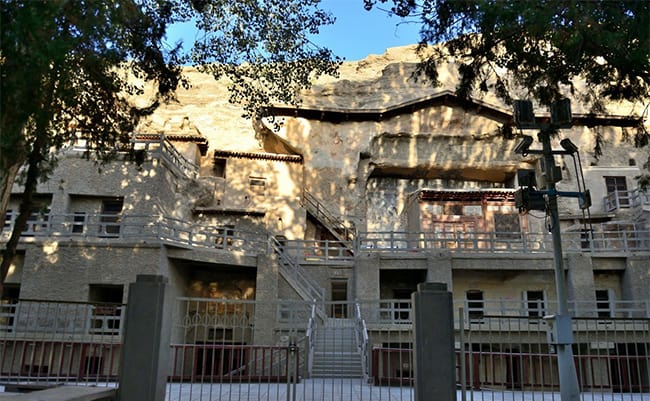
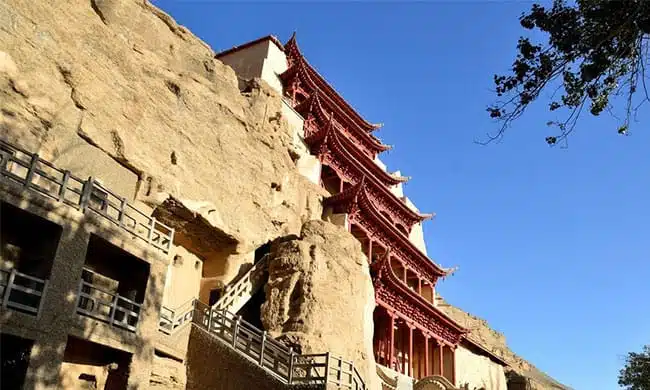
The total length of Mogao Caves is 1680 meters from the north to the south, and there are 735 caves, which are distributed on the 15 to 30 meters high of the cliff. It is divided into two areas: the south and the north The south area is the site of Buddha worship activities. There are 492 cave paintings and painted sculptures in various dynasties and more than 45,000 square meters of murals. The nine-story temple in this area is the landmark of the Mogao caves, where the largest indoor cross-legged clay statue of Maitreya Bodhisattva in the world situated. The 243 caves in the.
The Vivid Painted Clay Sculptures
The majority of caves are excavated on the conglomerate, except for the stone and clay sculptures built against the mountains in the north and south, and the rest are mostly wooden structures. Buddha statues, Bodhisattva statues, disciple statues, heavenly king, Vajra and painted sculptures are the main body of Dunhuang art. The painted sculptures have various forms, such as round sculpture, floating sculpture, shadow sculpture and so on, and the highest one is 34.5 meters and the smallest one is only about 2 centimeters with the rich content and superb skills. This place is alsoknown as the painted sculptures museum of Buddhist.
Must-See Caves: A Guide to the Highlights
Here are some of the must-see caves when visiting the Mogao Grottoes (note that which caves are open may vary):
Cave 45: Famous for Tang dynasty sculptures and fine detail
Cave 17: The Library Cave, historically significant for its hidden manuscripts
Cave 96: Houses the Giant Buddha and the iconic Nine-Story Tower structure
Cave 148 / 158: Known for its Grand Nirvana Buddha or Nirvana-related murals
Cave 220 & 254: Exemplars of Tang-period mural art (220 being a “special cave”)
Cave 257: Depicts the Jataka tale of the Nine-Colored Deer
Cave 285: Early Buddhist art scenes
Cave 428: High Tang murals, renowned for their vibrancy
Cave 249: Famous for flying Apsaras and celestial motifs

How to Visit the Mogao Grottoes: A Practical Guide
How to Get There
By Bus: Visitors can take Bus No.12 at the opposite of Dunhuang Silk Road Yiyuan Hotel. And they can also take bus at Dunhuang Railway Station.
By Taxi: From city center to the Digital Exhibition center is about 9 kilometers.
Important Note: There is no parking lot at the grottoes themselves – all visitors must go via the Digital Exhibition Center.
See details on how to get to Mogao Caves from Dunghuang
The Mogao Grottoes Digital Exhibition Center
Nowadays, there is a Digital Exhibition Center for visitors to watch two interesting movies, namely A thousand years of Mogao cave and Splendors of Buddha Palace. It helps visitors have a deeper understanding about Mogao caves. This center is equipped with shuttle bus service for people to visit the caves.
The Exhibition Center’s hours vary by season:
- Peak season (Apr 1–Nov 30): 07:30 – 16:00
- Off season (Dec 1–Mar 31): 08:30 – 15:00
The Visiting Process: From Booking to the Caves
- Reservation System: The Mogao Grottoes use a real-name, time-slot appointment system. According to the Dunhuang Research Institute, visitors must book in advance and present valid ID when entering.
- Daily Visitor Limit: There is a strict cap of 6,000 “A-type” (regular) visitors per day.
- Group Tours & Guides: Once you board the shuttle, visitors are typically organized into guided groups (about 25–30 people per guide) for cave visits.
- Special / “Emergency” Mode: On very busy days, an “emergency” or overflow model is used — up to 12,000 “B-type” tickets may be offered for that day, allowing access to fewer caves.
- Arrival: Guests are required to arrive at the Digital Exhibition Center at least 30 minutes before their scheduled time.
- After the Tour: Once the cave visit is complete, you return by shuttle to the Exhibition Center, where you exit.
Mogao Caves Ticket Types & Prices
Ticket Type |
Season |
Price (CNY) |
What It Includes |
Daily Limit |
Notes |
Ticket A |
Peak Season (Apr 1–Nov 30) |
238–258 |
8 grottoes + shuttle + 2 films + Dunhuang Research Institute exhibitions |
6,000/day |
Foreign-language guided tours available for an additional fee. |
Ticket B |
Peak Season / Overflow |
~100 |
4 grottoes + shuttle + limited museum/exhibition access |
Up to 12,000/day (on high-traffic days) |
Issued when A-tickets sell out; often called “emergency tickets.” |
Ticket C |
Peak Season (Films Only) |
50 |
2 films at the Digital Exhibition Center |
N/A |
No cave entry; useful when all cave tickets sell out. |
Ticket D |
Off-season (Dec 1–Mar 31) |
140–160 |
10 grottoes + shuttle + 2 films + exhibitions |
Not strictly capped |
Best-value ticket; more caves open in winter. |
Ticket E |
Off-season (Films Only) |
40 |
2 films only |
N/A |
No entry to any grottoes. |
Best Time to Visit
As a renowned tourist attraction in the world, Mogao caves is a desirable place all year around. But if you travel it during the peak season, it is better for you to make a reservation online in advance.
Tips: Visitors had better avoid the official holiday in China, because many Chinese citizens choose to travel on official holidays to ease the pressure of their work. As a result, many Chinese tourist attractions are overcrowded and traffic jams are common. Therefore, visiting China at this time will bring tourists a less pleasant travel experience.
Official Holidays in China
Chinese New Year |
Around January or February |
Winter vacation |
January-February |
Labor Day |
May1st -3rd |
Summer vacation(for students) |
July-August31st |
Around mid-September |
|
National Day |
October 1st-7th |
Other Tips
- Generally, there are many visitors during the July, August and September.The number of tickets is limited a day, so it is better to make a reservation online in advance.
- The recommendedvisiting procedure is to go to the digital center and get the ticket first, and the watch movies there. Then visitors can take shuttle bus to the Mogao caves. At last, visitors can take a bus or taxi back to Dunhuang city.
- To protect the cultural relics, taking photos is notallowed in the cave.

Fascinating Facts About Mogao Caves
- Caves stretch 1,680 meters along Mingsha Mountain cliff
- 492 caves currently contain murals or statues
- 45,000 m² of murals depict religious stories and daily life
- More than 2,400 painted clay sculptures, from 2 cm to 34.5 meters
- Built over 1,000+ years, showing evolution of Buddhist art
- Strategically located on the Silk Road, a crossroads of culture and religion
- Architectural diversity: rock-cut, Zen-style, temple-style, and tower structures
- Library Cave contained over 50,000 ancient scriptures and documents
- Digital preservation projects scan murals in high resolution and create 3D reconstructions
FAQs about the Mogao Caves
Can I visit the Mogao Caves without a tour?
No. Everyone must join the official guided groups, and the entry is tightly controlled.
What is the Mogao Grottoes used for today?
Today, they are primarily a heritage and research site. Their role of monastic dwellings no longer exist.
What is the significance of the Mogao Caves?
The Mogao Caves are a treasure of Buddhist art, showing cultural fusion from a lot of regions. It also preserves murals of religious and daily life, and it had been recognized by UNESCO as a World Heritage site.
How old are the caves in Mogao?
The Mogao Caves were first carved around 366 AD, and development continued for about a millennium, up through the 14th century.
Who discovered the Mogao Caves?
In 1900, Taoist priest Wang Yuanlu found Cave 17, the Library Cave, with thousands of ancient manuscripts. Later, explorers like Aurel Stein and Paul Pelliot documented and studied the site.
Any alternative options to experience the Mogao Grottoes culture?
There are several Silk Road themed shows in Dunhuang, allowing a deeper understanding of the murals and stories in the Mogao Grottoes and the ancient Silk Road. If you are looking for relaxing night options in Dunhuang, watching a Dunhuang Silk Road show should be a good choice.
Travel with China Xian Tour for an In-depth Silk Road tour with Mogao Caves
Mogao Caves’s grandeur cannot be fully explored just through words, an actual visit to this place is the best way to enjoy its profound charm. And to make the most of your journey, join a customized Silk Road tour with China Xian Tour. We’ve been specializing in providing guided trips along the Silk Road for over 10 years, and we’ll design the most suitable customized itineraries for every traveler to fulfill their expectations. With us taking care of all the details during the journey, you’ll get to fully explore Mogao Caves and other highlighted sites with all the ease and best memories.