Dunhuang is known for its key location on the ancient Silk Road. And you can always find somewhere to go. The city’s beauty is infinite, which has attracted not only you but also traders, monks, and scholars traveling here thousands of years ago. There are a lot of iconic sites in Dunhunag, such as the Mogao Caves, Yumenguan Pass and Yangguan Pass. Each of them introduces the one-of-a-kind desert nature while also giving an overview of Dunhuang’s rich cultural and historical heritage.
And this guide will introduce the top attractions in Dunhuang, after finishing reading, you’ll find yourself capable of making a perfect Dunhuang travel plan. In the following paragraphs, you’ll study what to see, what to do in Dunhuang, and how to experience the city as one of the best places to explore authentic Silk Road culture in China.
Content Preview
- The Most Iconic Landmarks to See in Dunhuang
- Historical Silk Road Landmarks Around Dunhuang
- Cultural & Urban Landmarks in Dunhuang City
- Natural Wonders Cannot be Miss in Dunhuang
- How Many Days to Explore Dunhuang’s Iconic Landmarks (with Sample Itineraries)
- Planning Your Dunhuang Landmarks Tour with China Xian Tour
The Most Iconic Landmarks to See in Dunhuang
1. Mogao Caves (莫高窟): A UNESCO Treasury of Buddhist Art
Why It’s a Must-See: It’s a UNESCO World Heritage Site and often called the “Louvre of the East.” It offers an unmatched look at Buddhist art, Silk Road history, and ancient craftsmanship.
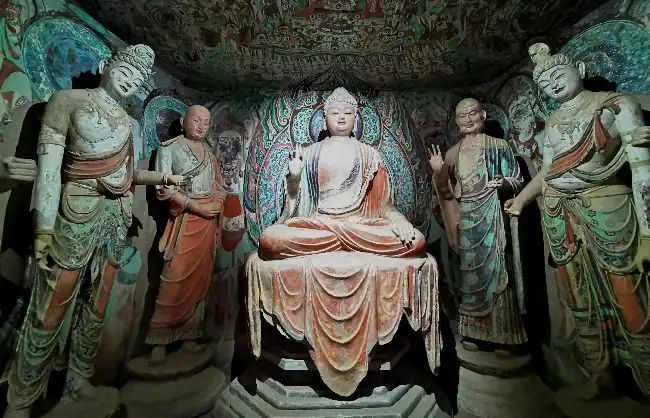
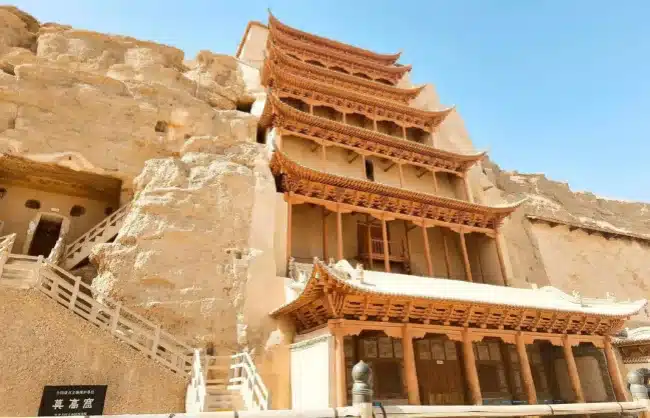
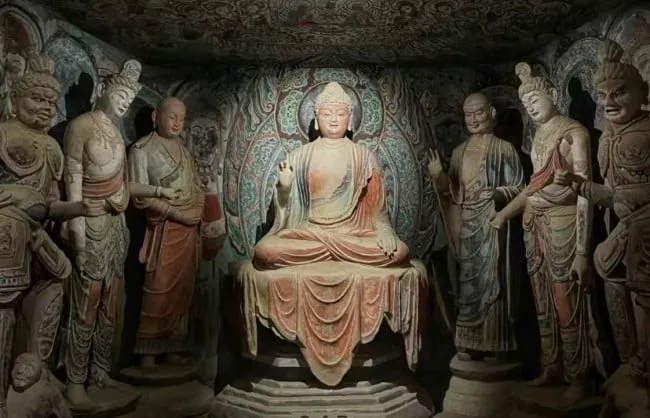
The Mogao Caves are also called the Thousand Buddha Caves. They are the most important cultural landmark in Dunhuang and one of the greatest Buddhist art sites in the world. It took over nearly 1,000 years (from the 4th to the 14th century) for people to create and expand it. Today, the caves’ number is about 492, and there are more than 45,000 square meters of murals and over 2,000 painted sculptures safely preserved here.
Before going to see the caves, you can first go visit the Mogao Digital Exhibition Center (this activity is included in your ticket). There will be two short films displayed here, and they tell the history and symbolism of the caves. And later you will be taken by a guide to explore eight caves with instructions. And be aware that you may not be able to stay too long in one place due to the protective need of the fragile artwork. Photography is not allowed inside the caves, but high-quality replica caves in the exhibition center can be photographed and are well worth seeing.
Top Things to Do:
- Watch the digital films before cave visits
- Join a guided grotto tour to understand the murals
- Visit the replica caves and exhibition hall for photos
Visitor Tip:
Tickets must be booked in advance via the official reservation system, especially in peak season. In lower season, the ticket will only be at half price. A guided Mogao Caves half-day tour with China Xian Tour is highly recommended to secure tickets and avoid the hassle of last-minute availability.
Related reading: How to Get to Mogao Caves
Recommended tour including Mogao Caves
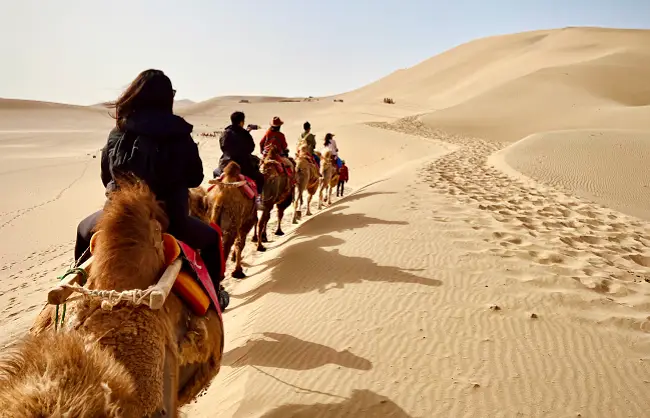
Venture beyond Mogao to discover Yulin Grottoes' Northern Wei murals, ancient Suoyang City ruins, and golden Echo Sand Mountain dunes.
2. Dunhuang Ancient City: A Walk Into Silk Road Movie History
Why It’s a Must-See: It offers one of the best immersive ways to imagine daily life along the Silk Road, especially for photography lovers and families.
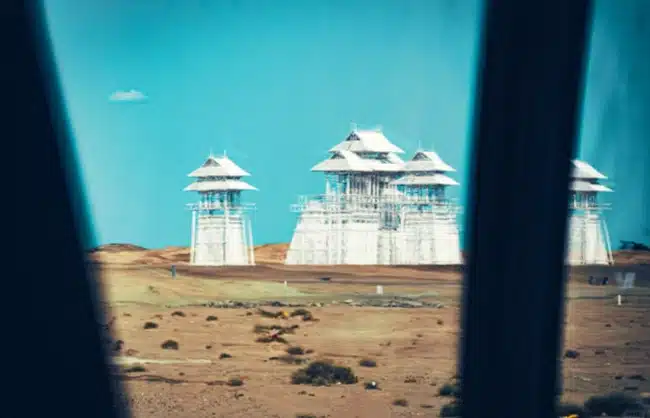
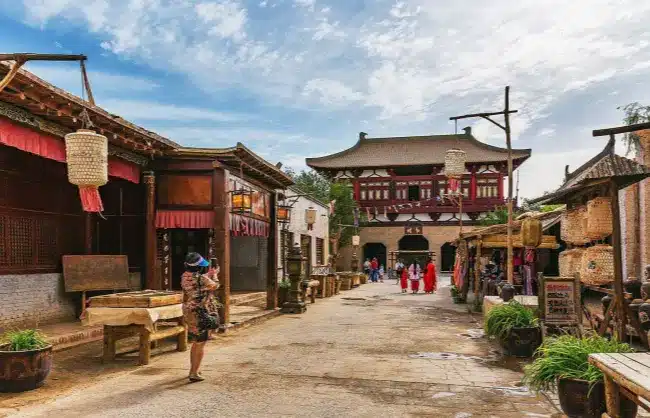
Dunhuang Ancient City is not like the normal ancient towns that you may see in other places. It was originally built as a film set in the desert west of Dunhuang. Buildings are all inspired by architecture in Tang and Song Dynasties. To make visitors feel more like being in an ancient frontier city, the town is also equipped with city gates, inns, markets, temples, and courier stations. The constructions are what you can often see in real old towns. Its dramatic desert backdrop makes it feel like stepping into a real historical epic.
The site has been used to film dozens of Chinese and international films and TV dramas. Today, it’s open for visitors to explore freely. You can dress in traditional costumes and take photos against the desert landscape or try archery or horseback riding. It’s less about archaeology and more about atmosphere and hands-on experience.
Top Things to Do:
- Walk the ancient-style streets and city gates
- Take desert-themed photos or costume shots
- Combine the visit with nearby desert attractions
Visitor Tip:
Visit in the late afternoon when the light is softer and temperatures drop. And usually people would not visit the town solely, many would take desert day tours from Dunhuang that include Dunhuang Ancient City together with sand dunes or other sites for a smoother itinerary.
Historical Silk Road Landmarks Around Dunhuang
3. Yumen Pass (玉门关, Jade Gate Pass): The Ancient Frontier
Why It’s a Must-See: Yumen Pass is the most iconic Silk Road frontier in Dunhuang, famous for the line “Spring winds never cross the Jade Gate Pass” and for its stark, authentic Han Dynasty ruins.
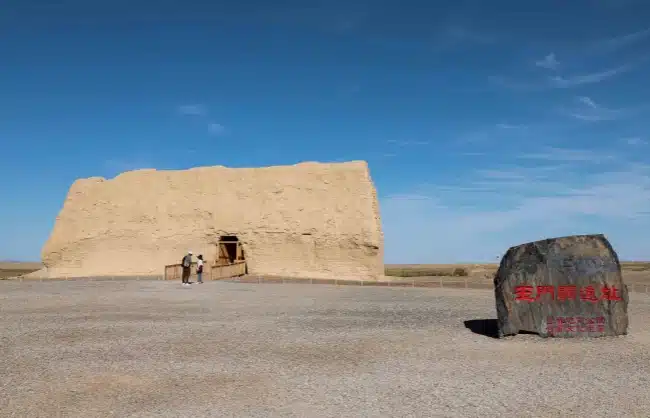
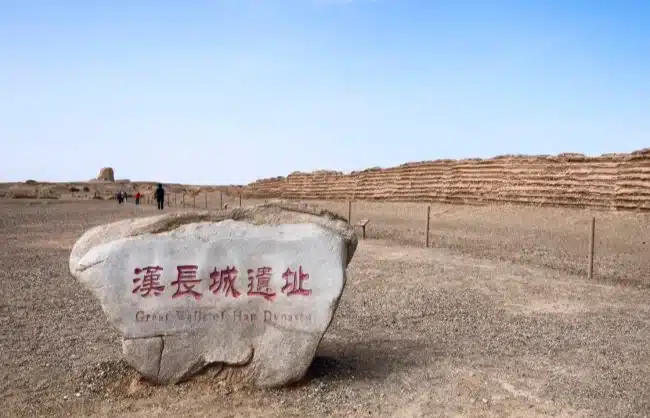
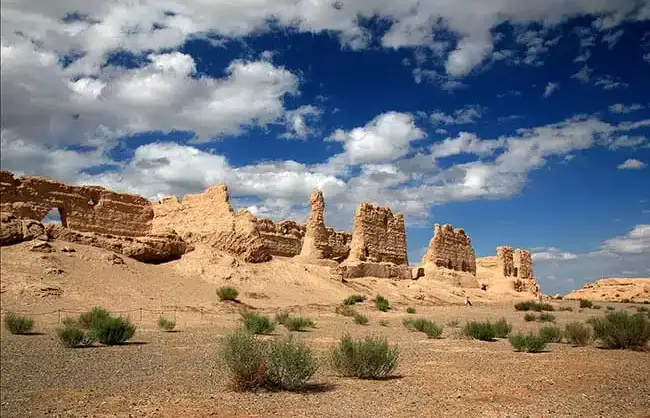
Yumen Pass is 90 km northwest of Dunhuang. It served mainly as a key military gateway on the northern route of the Silk Road during the Western Han Dynasty. It marked the edge of the Han Empire, and after going outsidde of it, what left for people are just vast deserts and foreign lands. And such a desolate and bleak view had inspired many Chinese poems. Today, visitors see the remains of rammed-earth forts, beacon towers, and sections of the Han Great Wall standing in the open Gobi, their aged walls tell a powerful sense of isolation and history.
The core site is Xiaofangpan City, the symbolic “Jade Gate,” once responsible for military passage and defense, while nearby ruins such as Hecang City reveal how grain and supplies were stored for frontier troops. Though little remains above ground, the landscape itself convey the story of ancient border life and long-distance Silk Road travel.
Top Things to Do:
- Walk through the Jade Gate ruins and Han Great Wall remains
- Visit Hecang City
- Seebeacon towers against the Gobi Desert and take photos of them
Visitor Tip:
The site is remote and it’s best visited on a half-day Dunhuang west-route tour. Most travelers would pair it with nearby Han Great Wall ruins. You can consider hiring a guide or audio guide (both available at the entrance but with different prices), which greatly enhances the experience, as the ruins are minimal but historically rich.
Recommended tour
Explore Dunhuang's Yumen Pass, Han Great Wall, Ghost City, and Mogao Grottoes, then witness Jiayuguan Pass and Wei Jin Tombs' brick art.
4. Yangguan Pass (阳关): “The Sunny Pass” to the West
Yangguan Pass is about 70 km southwest of Dunhuang. And similar to Yumen Pass, it was the main gateway on the southern route of the Silk Road also during the Western Han Dynasty. It handled more diplomatic missions and civilian travel and some military services, while Yumen Pass focused mainly on its military importance. The site is best known through poetry, especially the famous farewell line, “no old friends remain beyond the Yangguan Pass to the west.”
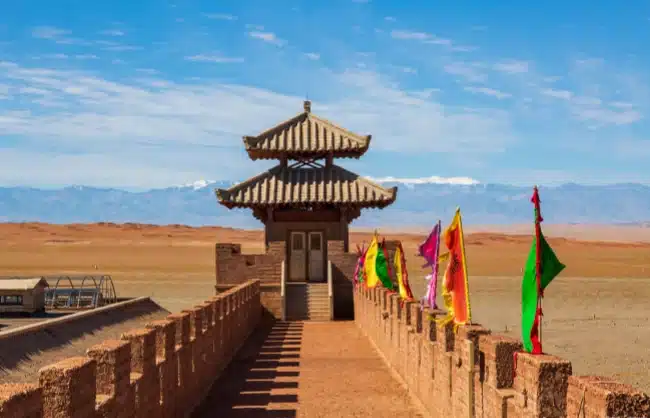
Today, Yangguan has become a larger cultural area for sight-seeing. Its desert scenery with scattered ruins has made it one of the most unique attractions in China or even in the world. The must-visits include beacon towers, ancient roads, Han Great Wall remains, and the Yangguan Museum. Together they explain the ancient Silk Road travel and border administration. Compared with Yumen Pass, Yangguan feels more emotional and symbolic, closely tied to themes of departure and reunion.
Why It’s a Must-See:
Yangguan represents the human side of the Silk Road. It’s a place to see farewells, journeys, and cultural exchanges that once happened in such a vast desert. So it is also one of the most poetic landmarks in Dunhuang.
Top Things to Do:
- Visit the Yangguan Museum for historical context
- Walk the ancient Silk Road route or climb a beacon towerto trace the past
- Watch sunset over the desert ruins
Visitor Tip:
See whether you visit during the late afternoon, since temperatures now cool down with golden light covering the whole site. Many travelers would go for a Yangguan cultural experience tour, which often includes museum visits, desert walking routes, and optional camel riding.
Cultural & Urban Landmarks in Dunhuang City
5. Dunhuang Museum (敦煌博物馆): Putting Dunhuang Into Context
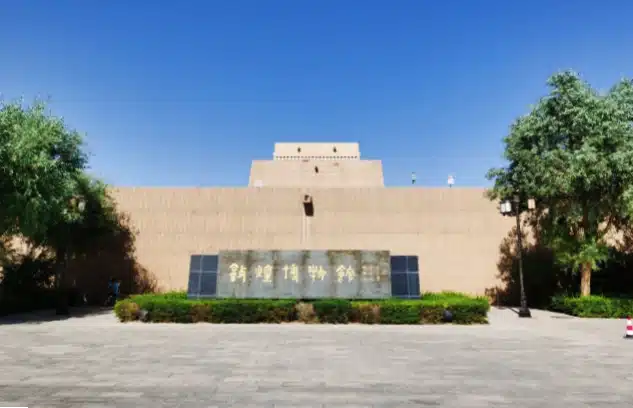
Dunhuang Museum is located in the city center. It clearly shows how Dunhuang as an oasis town gradually evolved from a frontier outpost into a major Silk Road hub. The museum presents Dunhuang’s history in a clear chronological order, basically from the Han Dynasty through the Tang, Song, and later periods. It’s an ideal introduction before or after visiting sites like the Mogao Caves or the ancient passes.
There are many collections here, including Han Dynasty bamboo slips, Silk Road documents, murals replicas, sculptures. Also, there are everyday objects that reveal ancient people’s lives along the Silk Road. Many travelers also compare the experience to watching a live version of the Hexi Corridor documentary, and mosty of them say walking through the museum is informative and surprisingly engaging.
Why It’s a Must-See: The museum provides essential historical context that helps visitors truly understand Dunhuang landmarks.
Key highlights include: 1) Silk Road manuscripts; 2) frontier defense artifacts; 3) a full-scale replica cave inspired by Mogao art.
Top Things to Do
- Join an official guided tour (in the museum) to better understand Silk Road history
- Focus on the Han–Tang galleries for military and cultural highlights
- Visit before/afterMogao Caves to enhance your appreciation of the murals
Visitor Tip
Admission is free, but official guided tours are highly recommended and well worth the small fee. For a more budget-friendly experience, join a shared group if possible.
6. Dunhuang Night Market (敦煌夜市): A Taste of Silk Road Life After Dark

Why It’s a Must-See: This is the best place to experience Dunhuang’s living culture. Not ancient relics with heavy historic weight, but real flavors, conversations, and evening rituals that locals enjoy every day.
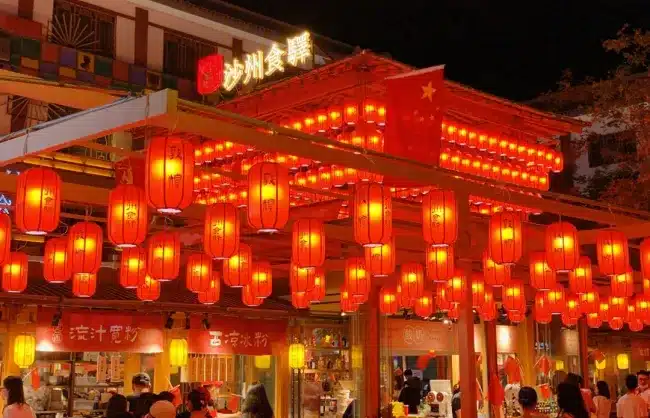
Dunhuang Night Market is also called Shazhou Night Market. It is the liveliest urban landmark in the city after sunset. The whole venue is built in a Tang-style setting and you can see Flying Apsaras and Silk Road motif everywhere. This market offers you a glimpse of Dunhuang’s real daily life. Trying the dazzling local food is always the best way to regain energy after a day’s walk.
The market is divided into several zones, but do have a look at Shazhou Food Court, since it is the absolute highlight. There are authentic Silk Road cuisines such as red willow lamb skewers, donkey meat noodles, grilled river fish, and local snacks made with desert ingredients. Compared with daytime attractions, the night market is a more relaxed and deeply local place for you to go deeper into Dunhuang.
Top Things to Do
- Sample classic Silk Road dishes and Xinjiang-style barbecue
- Shop for handicrafts and Dunhuang-themed souvenirs
Visitor Tip
Head straight to Shazhou Food Court for the best food quality and variety. Go early in the evening for dinner, then return later if you want a more atmospheric, lively scene. Many Dunhuang evening food tours include guided tastings here, which helps avoid tourist traps.
Recommended tour
Begin in Dunhuang with Mogao Grottoes and desert camel rides, then fly to Xian for Terracotta Warriors and a leisurely bike ride atop the ancient city wall.
Natural Wonders Cannot be Miss in Dunhuang
7. Crescent Lake & Singing Sand Dunes (月牙泉 & 鸣沙山): A Desert Miracle
Why It’s a Must-See: One of China’s most iconic desert landscapes. It combines the awe of sand dunes with the serenity of a natural oasis. The dunes “sing” when the sand shifts, creating a rare natural phenomenon.
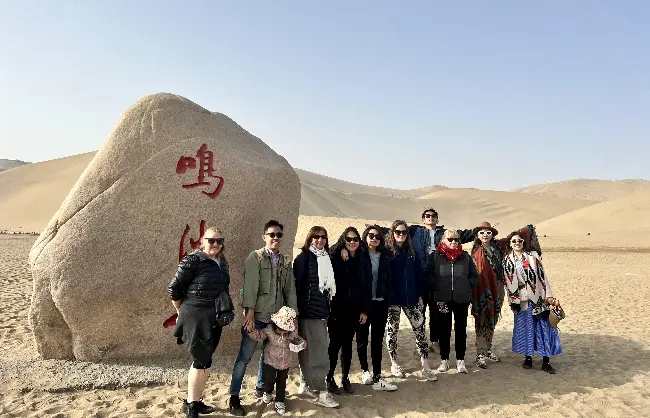
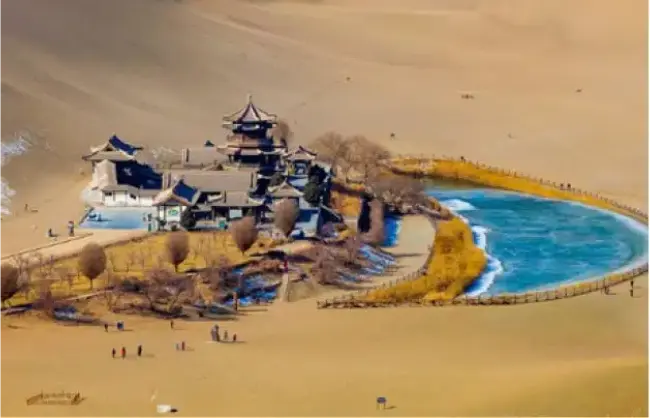
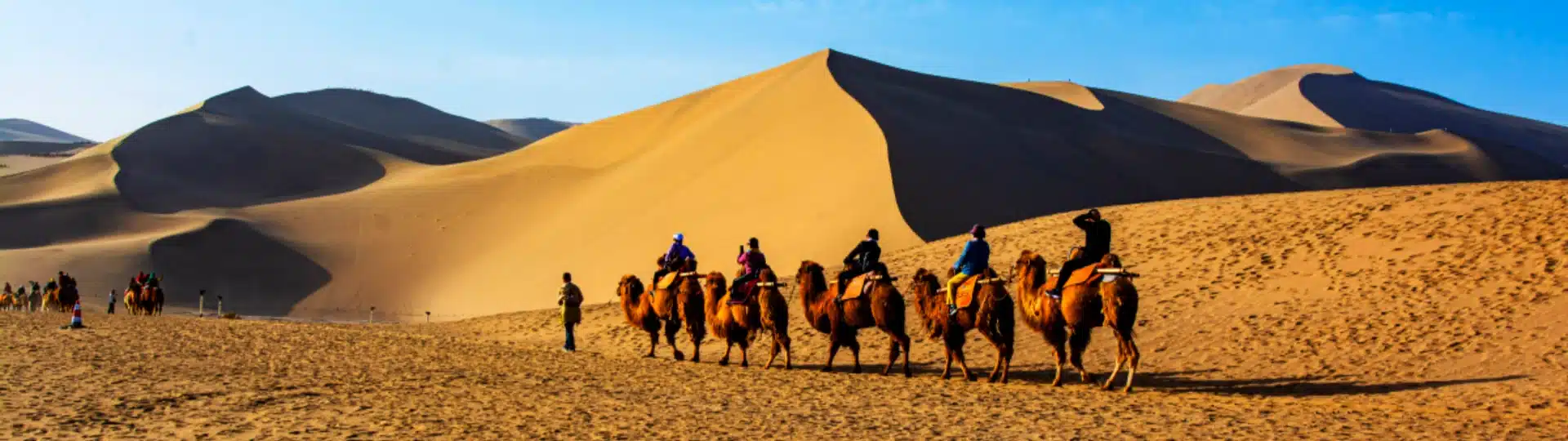
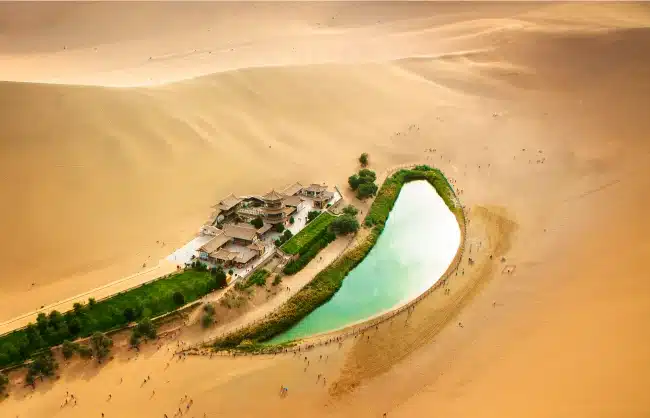
The Crescent Lake & Singing Sand Dunes Scenic Area covers 76.82 km², its core area is about 12.79 km². The Singing Sand Dunes stretch 40 km east–west and 20 km north–south. The most attractive views are the dunes of five colored sand (red, yellow, green, black, white). Crescent Lake sits in the embrace of the dunes, shaped like a crescent moon, so it got its name “crescent”. For all time, it has always been the source of life even in harsh desert conditions.
Top Things to Do:
- Camel rides across dunes (from 100 RMB per ride)
- Sandboarding or sliding down dunes (≈50 RMB)
- Climb dunes for panoramic views of Crescent Lake
- Optional: helicopter or paragliding for aerial desert views
Visitor Tip:
- Tickets require online reservation and ID verification.
- Late afternoon to sunsethas the best light
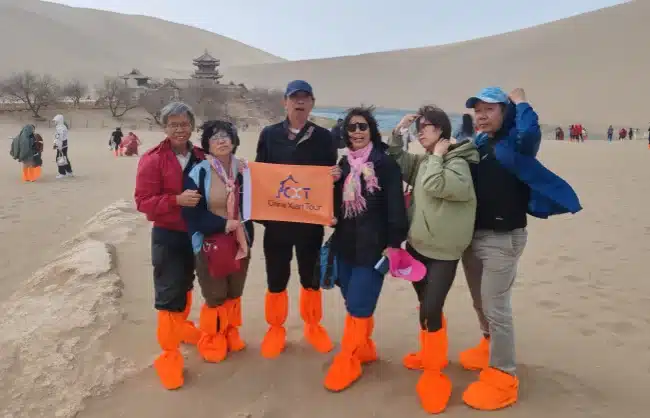
- Bring hat, sunglasses, sunscreen, and sand-proof shoes, since UV is intense here
- Dunes can be steep, so choose trails with ladders for safer climbs.
Recommended tour
Savor Dunhuang at a relaxed pace with Mogao Caves, camel rides on golden dunes, Crescent Spring, and free time to explore independently.
8. Yadan National Geopark (雅丹国家地质公园): Sculpted by Wind
Why It’s a Must-See: The park has the world’s most extensive and mature yardang landscapes. It offers a unique desert experience that you may not find in other attractions.
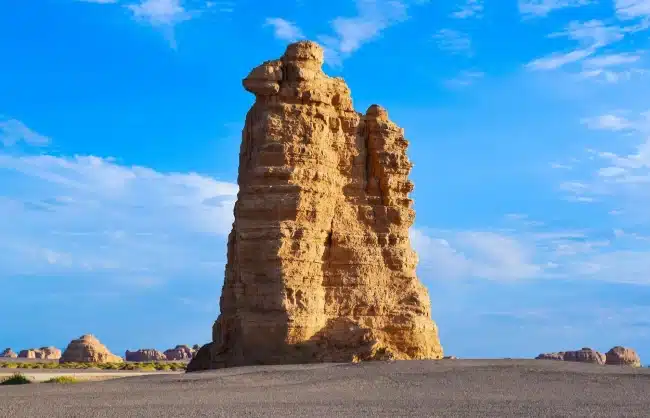
This park is 168 km northwest of Dunhuang, and it’s kind of close to Yumen Pass. It spans 398 km², and some of its formations are up to 100 m high. Dunhuang Yadan park features thousands of wind-eroded yardangs, looking like ridges, towers, and walls, so that it’s also called the “Ghost City” (and this nickname is probably more familiar to people). It is divided into North and South Zones, with scenic bus and off-road vehicles for deeper exploration.
Top Things to Do:
- Scenic bus tour through the North Zone (≈70 RMB, includesshuttle)
- Visit iconic formations like “West Sea Fleet” and “Sphinx”
- Capture desert sunset and, if time allows, stargazing along the route
Visitor Tip:
- Use a full-day tour to explore both zonesand while traveling through the site, sit on the left side of the vehicle for best views.
- Book tickets online in advance.
Recommended tour
Camp overnight in the vast Dunhuang desert, witness stunning sunrises over sand dunes, explore Mogao Caves' Buddhist art, and enjoy camel riding at Mingsha Mountain.
How Many Days to Explore Dunhuang’s Iconic Landmarks (with Sample Itineraries)
If you just want to go through some of Dunhuang’s most iconic landmarks, then prepare 2–3 days would be enough. But if you want deeper Silk Road connections (e.g., extension to Jiayuguan or Yardang Geopark), expect 4-5 days on the journey. Below are some sample itineraries for your reference.
Best for First-Time Visitors (2–3 Days)
Day |
Main Activities & Landmarks |
Day 1 – Dunhuang Arrival + Desert Intro |
Arrive in Dunhuang → Visit Crescent Lake & Singing Sand Dunes → Dinner and Dunhuang Night Market experience |
Day 2 – Mogao Caves + City Culture |
Morning at Mogao Caves → Lunch → Dunhuang Museum → Free time in city |
Day 3 – Frontier Passes Half-Day Tour |
Yumen Pass + Yangguan Pass day tour → Departure |
Extended Exploration (3–5 Days)
Day |
Main Activities & Landmarks |
Day 1 – Arrival + Desert Sunset |
Arrive Dunhuang → Crescent Lake & Singing Sand Dunes → Dinner and Dunhuang Night Market experience |
Day 2 – Mogao Caves + City Stops |
Mogao Caves visit (half day) → Lunch → Dunhuang Museum → Free exploration |
Day 3 – Silk Road Frontier Tour |
Yumen Pass + Yangguan Pass → Dinner back in Dunhuang |
Day 4 – Yardang National Geopark |
Full day Yadan National Geopark tour |
Day 5 – Leisure/ Departure |
Optional free morning → Departure |
Planning Your Dunhuang Landmarks Tour with China Xian Tour
For anyone who want to go deeper into the Silk Road’s grand historical and cultural heritage, Dunhuang is certainly a must-visit city. And also, for those who’re interested in desert views, Dunhunag’s landmarks are also something you cannot miss in your visit to China. This is a bleak but also poetic place, what you can experience here will go far beyond sightseeing itself. And as a travel agency who’s been customizing Silk Road Tour for over a decade, China Xian Tour knows the best of how to explore Dunhuang smoothly and pleasantly. We can help you secure tickets, handle transfers and introduce all the historic stories behind. So contact us now and start your best Dunhunag journey.