


The Silk Road in history was an essential trading route between the East and the West, first opened up in the Western Han Dynasty (202BC–8AD). This ancient road spanned over 6,000 kilometers from Xi’an in China to the Mediterranean Sea and was so named because silk products were the most sought-after commodities exchanged along the route. The Silk Road enjoys a splendid history of over 2,200 years and still plays a vital role in strengthening cultural and economic ties between China and the Western world.
Content Preview
- What Exactly Was the Silk Road?
- Why was the Silk Road an Important Part of Chinese History?
- Western Han Dynasty (202BC–8AD) – The Opening of Silk Road
- Eastern Han Dynasty (25-220) – Extension of Silk Road to Europe
- Southern and Northern Dynasties (420-589) – Facilitate the Development of Buddhism in China
- Tang Dynasty (618-907) – The Golden Age of Silk Road
- Song and Yuan Dynasties (960-1368) – The Busiest Period of Silk Road
- Ming Dynasty (1368-1644) – Maritime Route Reached Its Peak
- Qing Dynasty (1644-1911) – The Decline of Silk Road
- Why did China stop using the Silk Road?
- Today (From 2013) – The New Beginning of the Silk Road
- Popular Historical Anecdotes Related to the Ancient Silk Road
- Geography and Specific Routes
- Travel along the Silk Road
- FAQs about Silk Road
- Explore the Silk Road with China Xian Tour
Learn more basic information on 12 Fascinating Silk Road Facts You Didn’t Know
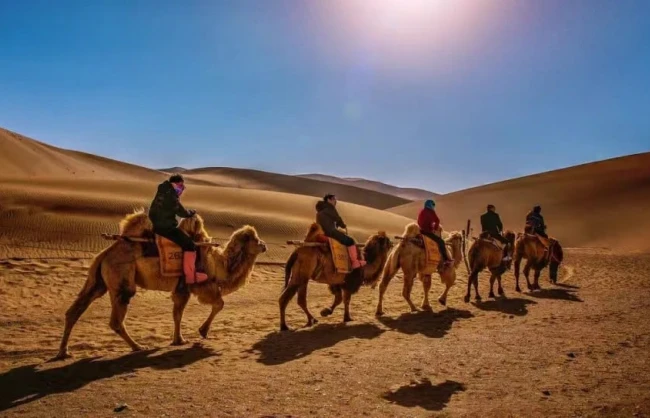
What Exactly Was the Silk Road?
In essence, the Silk Road is an ancient business trade and cultural exchange network spanning Asia, Europe and Africa. Its core role in history is the major artery of the exchange between Eastern and Western civilizations, which promotes the mutual learning in fields like politics, economics, cultures and technologies. Now, it is an important historic symbol in the Belt and Road, showing our Silk Road spirit of peace, cooperation, openness and inclusiveness.
Why was the Silk Road an Important Part of Chinese History?
A variety of Chinese commodities, such as porcelains, tea, silk, spice, and crops, were traded to the world, which contributed a lot to the economic development of China and finally made China a great power in the world at the time. Meanwhile, rare products, advance technology, and knowledge, as well as foreign cultures and religions were introduced into the Central Plains, which greatly promoted the economic and cultural prosperity of ancient China.
Read more about Why Was the Silk Road Important?
Western Han Dynasty (202BC–8AD) – The Opening of Silk Road
Early before the establishment of the Qin Dynasty (221-207BC), exchanges and trades between eastern and western regions in China already existed, but on small scales. Until 139 BC, Emperor Wu of the Han Dynasty (156-87BC) sent Zhang Qian (164-114BC) as an envoy to establish relationships with the Western Regions against their common enemy the Huns.
After several victories, the Han court finally took over Hexi Corridor – a vital communication line between Central Plains and Western Regions – and came to rule the current Xinjiang area. Since then, more frequent contacts and trades took place among different cities and countries along the route, marking the beginning of the China Silk Road history. It was during this period that Buddhism was firstly introduced into China along the route.
Eastern Han Dynasty (25-220) – Extension of Silk Road to Europe
In 73AD, a renowned official named Ban Chao (32-102) went westward on a diplomatic mission with a delegation of 36 men. He managed to free tribes and states in Western Regions from the control of the Huns and convinced them to pay allegiance to the Han court. The next year, Ban Chao sent envoys to build connections with the Rome Empire. It was the first time in history that the Silk Road extended to Europe.
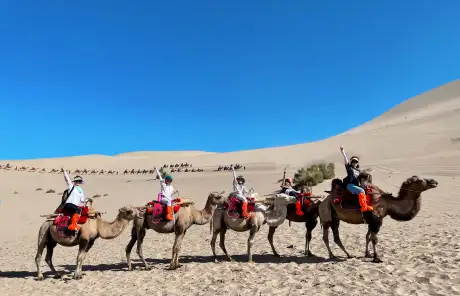
Discover the Hexi Corridor's treasures from Dunhuang's Mogao Caves to Zhangye's rainbow-colored Danxia mountains and Jiayuguan's Great Wall fortress on a seven-day group Silk Road tour.
Southern and Northern Dynasties (420-589) – Facilitate the Development of Buddhism in China
Southern and Northern Dynasties is another important period of the Silk Road history. The Silk Road had been developed and expanded to enhance exchange in both economy and production techniques during this period. It was in this time that China had frequent contacts with Persia. A lot of Persian diplomatic missions were sent to Central Plains, together with the glass production process.
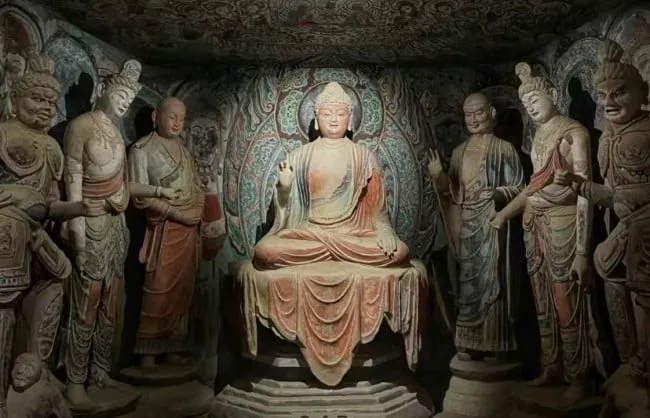
Meanwhile, the Buddhist culture also got greatly enriched in China as nearly 200 Mahayana sutras and precious Buddhist relics were brought into Luoyang (the capital of China at the time) along the Silk Road.
Tang Dynasty (618-907) – The Golden Age of Silk Road
Tang Dynasty was an essential period in the history of the Silk Road, as the development of this route moved to a higher level. Numerous countries and states in the West Regions constructed extensions to connect the Silk Road and the route even reached Arab Empire and Eastern Roman Empire in Europe. Major cities in western China, such as Dunhuang, Yangguan and Yumen, became bustling trading centers, with numerous caravans coming in an endless stream. Besides, Chinese merchants and envoys can also go on a voyage to reach the Central Asia and Europe from coastal cities, including Guangzhou, Shanghai and Quanzhou.
Apart from commodity trading, both China and the West benefited a lot from the increased exchange of ideas, knowledge and culture. The remarkable development of Buddhism in the Tang Dynasty was the best example, thanks to the great contributions made by eminent monks, Xuan Zang and Yi Jing. Both trekked for years along the Silk Road to the Central Asia and India, and managed to carry hundreds of Buddhist scriptures back to China.
Song and Yuan Dynasties (960-1368) – The Busiest Period of Silk Road
The weak national power made the Song court no longer in charge of the Hexi Corridor, leading to the decline of the overland Silk Road. But the marine route saw a great rise in this period. After the Mongolian Empire overthrew the rule of the Song court and established the Yuan Dynasty, the territory experienced a quick and mass extension, and a lot of courier stations were set up. Since then, the overland route has flourished again and entered the most thriving period in the Silk Road history.
At that time, the capital city Dadu (today’s Beijing) was crowded with merchants and caravans from Europe as well as Central and Western Asia. Descriptions of the prosperous scenes in Dadu can be found in a lot of foreign historical records. Marco Polo (1254-1324) depicted the booming scenery in his book and mentioned that all precious, rare things in the world can be found in Dadu and the number of items sold there was more than anywhere else in the world.
Ming Dynasty (1368-1644) – Maritime Route Reached Its Peak
The maritime Silk Road was in its heyday in history during this period, with Guangzhou, Quanzhou and Ningbo as the major ports. It was in this time that Zheng He, leading the most powerful fleet in the world, made 7 voyages to the Western Seas and visited more than 30 countries in South Asia and East Africa. This grand feat brought a significant development to overseas trade and introduced a great many new products, raw materials and techniques into China.
Qing Dynasty (1644-1911) – The Decline of Silk Road
This was the last stage in the history of the ancient Silk Road. The Qing court adopted an isolation policy and cut off all the ties with the world. Both overland and maritime Silk Road went into an overall decline.
Why did China stop using the Silk Road?
The stop mainly refers to the gradual decline of the land route of the Silk Road. It is not closed officially, but because of various factors in history. And instead, the maritime Silk Road takes the leading role. The following are the main reasons.
From Yuan Dynasty, China’s economic center moved southward gradually, and the production of silk, porcelain and tea was well-developed in the southeast coastal areas. With large capacity, low cost and high safety factor, marine transport has become the main trading way.
In Ming Dynasty, the government issued a ban on maritime trade. The political center moved to the eastern area, making it less important to operate the northwest land route. And the focus of the country shifted to defending against the nomadic tribes in the north rather than exploring the Western Regions.
The frequent wars in Central Asia also resulted in an increase in trade costs and risks. And in the 15th century, the Europeans opened up new sea routes to Asia, and the trade center shifted to the Atlantic coast.
Today (From 2013) – The New Beginning of the Silk Road
In recent years, the Chinese government has come up with the Belt and Road Initiative, a modern-day revival of the Silk Road that aims to promote global trade and cultural exchange, and tourism development. A great number of international rail networks and sea routes have been opened up to make countries and regions along the way more closely connected with each other. Today, the glorious Silk Road has entered upon a new period of history and restored its vitality.
Popular Historical Anecdotes Related to the Ancient Silk Road
Zhang Qian’s missions and hardships: Emperor Han Wudi sent Zhang Qian to the Yue-chi people to ask for their help against the Xiongnu. Unfortunately, Zhangqian was caught and detained for 10 years, but he did not forget his mission and escaped finally. Though after arriving, the Yue-chi people did not agree with the request, he brought back plenty of information about the geography, products and folk customs of each country and this transportation route was opened up.
Journey of Xuanzang (Xuan Zang) and his stay in Nalanda: In Tang Dynasty, the monk Xuanzang spent 17 years walking westward for 50,000 kilometers to India to seek Buddhist scriptures and finally reached Nalanda Monastery, where he studied for several years. After returning, he translated many Buddhist scriptures, and recorded rich information about 138 countries, regions and states based on his experiences and hearsay.
Role of Sogdian merchants as cultural carriers: Sogdians are the commercial people in Central Asia. They established a large business network on the Silk Road and even formed their own tribes in some major towns. So they have become the carrier of both goods and cultural exchanges. The unearthed relics record the details of their trade activities.
Marco Polo’s impression of Dadu: Marco Polo travelled from Venice all the way to the Yuan capital, and was astonished by the prosperous scenes before his eyes. So he wrote a travelogue, which aroused Europe’s boundless yearning for the East.
Geography and Specific Routes
The Silk Road is not a single road, but is a complex transportation network composed of the following three routes.
Northern Route: This route mainly passes the Mongolian Plateau and the Eurasian steppe and connected powerful nomadic empires such as the Xiongnu, the Turks and the Uighurs. So fur, feather and livestock are the main goods. It has flourished from Former Qin to Yuan and Ming Dynasties.
Central Route: the most classic route known by most people. It starts from Chang’an or Luoyang and passes Hexi Corridor, Tarim Basin and Pamirs. Along the road, Qiuci and Shelue are important Oasis Cities where merchants can obtain precious water and food supplies. It takes about 1.5 – 2 years to travel from Chang’an to Rome.
Southern Route: This route consists of southwest land route and maritime route. The land route is Chengdu – Yunnan – India. Due to the complex terrain of Hengduan Mountains, small-scale trades and Buddhist culture exchange are the main themes. Maritime route is from China’s southeast coast through the South China Sea to the Indian Ocean. It mainly transports heavy or bulk goods such as porcelain and spices.
Travel along the Silk Road
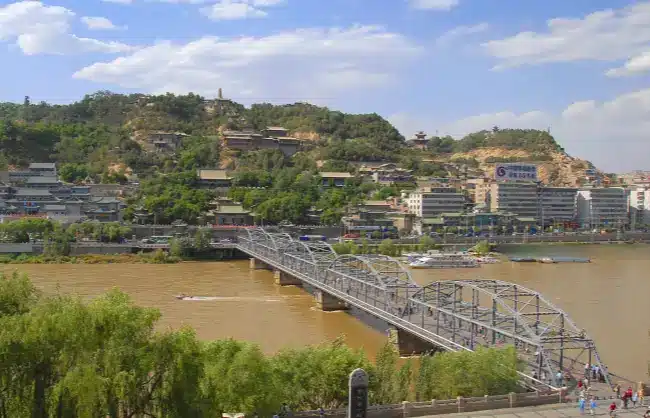
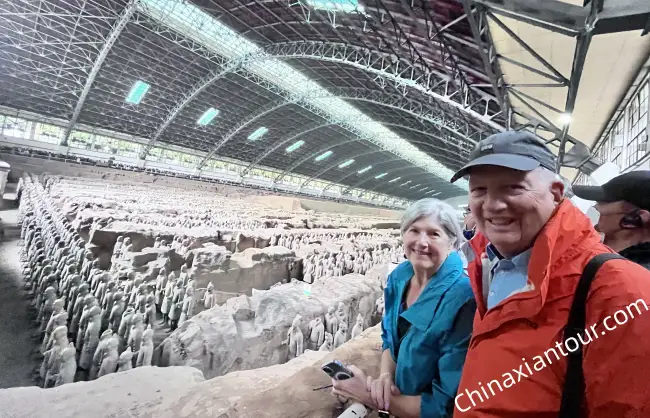
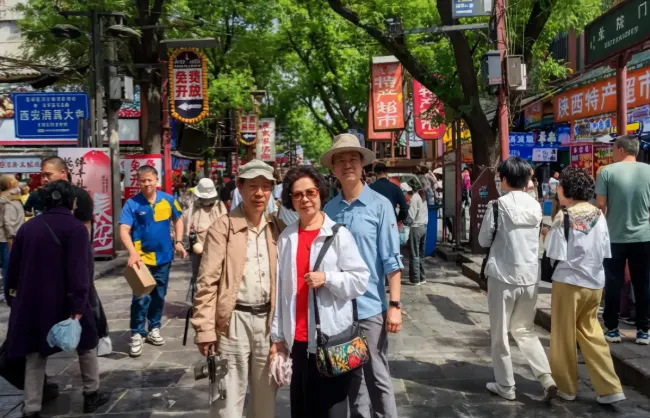
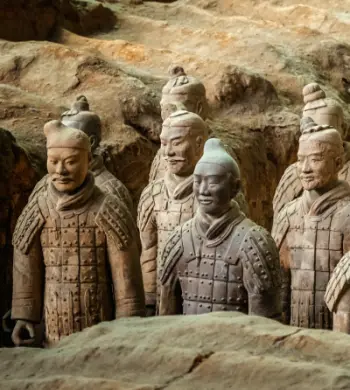
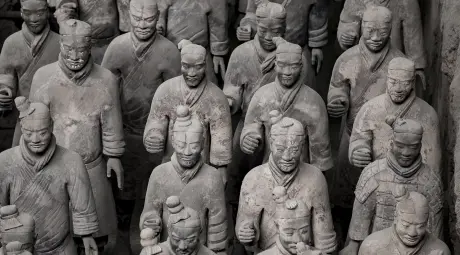
Nowadays, the Silk Road, with a history of over 2,200 years, has become a great traveling route traversing some of the most popular tourist destinations in China, such as Xi’an, Dunhuang, Zhangye, Qinghai, and Xinjiang, where visitors can marvel at a vast number of historical relics and magnificent natural sights, from Terracotta Warriors to Mogao Caves, from dazzling Danxia landforms to picturesque Qinghai Lake…
Besides, regions such as Qinghai and Xinjiang are mainly inhabited by ethnic minorities like Tibet and Uyghur. Here, visitors will take an immersive cultural exploration to appreciate characteristic architectures, enjoy folk art performances, feel a distinctive religious atmosphere…
FAQs about Silk Road
Who started the Silk Road and why?
Zhangqian started the Silk Road and his original purpose was to establish a military alliance.
What religions spread along the Silk Road?
Buddhism, Islam, Christianity, Zoroastrianism and Manichaeism are the main religions which spread along the road.
Which dynasties contributed most to the development of the Silk Road?
It is definitely Tang Dynasty.
What role did the Silk Road play in early globalization?
It is the first communication network spanning Europe, Asia and Africa, laying the foundation for modern globalization.
Explore the Silk Road with China Xian Tour
For tourists interested in Chinese culture, the Silk Road will be one of your best choices. Through the visit to the cities along the way, you will experience different cultures and feel its importance in ancient China and today’s China. Follow China Xian Tour, we will tailor a trip to cover all the attractions you prefer to visit and satisfy all your needs. Our local guide will introduce the stories of each scenic spot, so you will enjoy an in-depth tour. Do not hesitate to contact us.
Read for more travel tips on:
- How to Plan a Silk Road Trip
- Top Attractions along the Silk Road
- Top 10 Foods You Must Try When Traveling along the Silk Road
- Top 6 Reasons to Visit the Silk Road