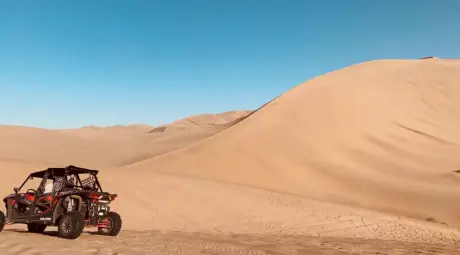

Located to the north of Qilian Mountain, south of Heli Mountain, west of Wushaoling Ridge, east of the border between Xinjiang and Gansu, the 1,000 kilometers long Hexi Corridor has been a place of abundance since ancient times. Speaking of the corridor, most people simply remember it as the must-pass route along the Silk Road. Actually, it was also the lifeblood of many dynasties’ military actions, economy and cultural exchanges for over 2,000 years. Now if you allow us several minutes, you will definitely be amazed at how great Hexi Corridor is. It is a kaleidoscope with splendid Buddhist art, wonderful historical sites and diverse landforms.
Content Preview
- Fast Facts about Hexi Corridor
- Geography and Core Significance of Hexi Corridor
- Hexi Corridor History
- Major Destinations along the Hexi Corridor
- Have a Date with the Museums on the Silk Road
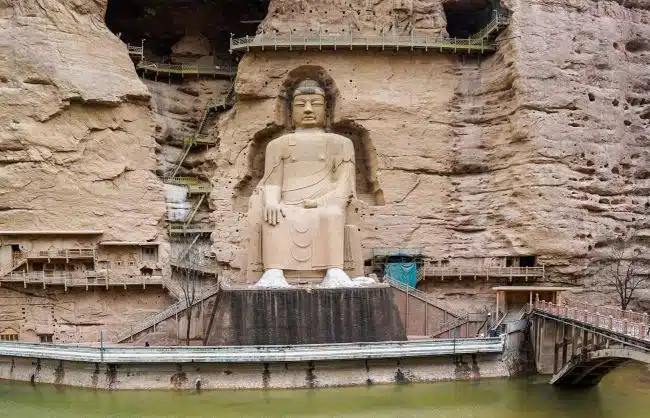
- Feel the Power of Faith
- Step Back in Time at the Historical Sites
- Marvel at the Various Magical Landforms
- Planning Your Hexi Corridor Tour
- FAQs about the Hexi Corridor
- Plan Your Silk Road Tour with China Xian Tour
Fast Facts about Hexi Corridor
- Chinese Name: 河西走廊 (Héxī Zǒuláng)
- Pronunciation: Hé-xī Zǒu-láng
- Length: ~ 1,000 km
- Location:Northwestern Gansu Province.
- Historical Significance: 1) A crucial artery of the Silk Road.2) A military and economic lifeline for many dynasties.
- Main Cities: Wuwei, Zhangye, Jiuquan, Jiayuguan, Dunhuang
Geography and Core Significance of Hexi Corridor
What is the Hexi Corridor and Where is it?
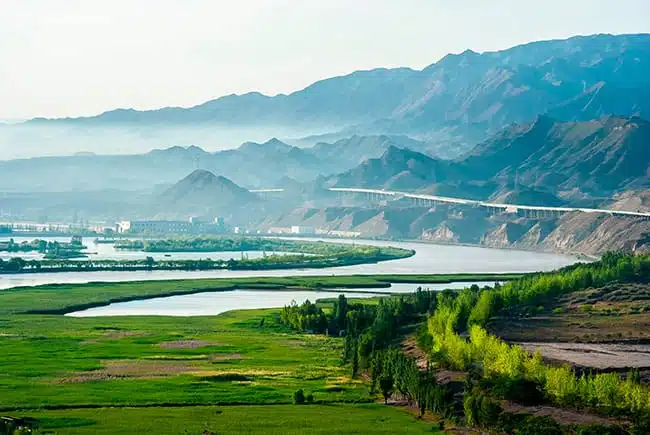
The Hexi Corridor (河西走廊) is a narrow, elongated geographic region in Gansu Province. It has a roughly southeast–northwest orientation. To its south, there are Qilian Mountains, and to the north there are a series of ridges (such as the Heli Mountains).
Hydrologically, the corridor is fed by several internal river systems, for example, the Shiyang, the Heihe (Black River), and the Shule, all originating from the Qilian Mountains. These meltwater streams is the major support of the green oases in the desert-like environment, and that’s why agriculture is still possible even in an otherwise arid region.
Why is the Hexi Corridor Important? – A Pillar of the Silk Road
Historically, the Hexi Corridor was like the “throat” of the Silk Road, it was an essential overland passage connecting China’s heartland and the Western Regions (Central Asia). Because of its strategic location, it not only served as a trade route but also a military and cultural lifeline.
Militarily: The corridor had been used to station troops in multiple Chinese dynasties. During these times, it also played a crucial role in defending against nomadic incursions that coming from the northwest.
Culturally: It was a corridor of civilization exchange. Many of those precious legacies like Buddhist ideas, art, scripts, and religions had all passed through here.
Economic: The region supported local agriculture via its oases, and that’s also how it became a grain and commodity base.
Hexi Corridor History
The Han Dynasty saw some major decisions made on the corridor (especially under Emperor Wu). The country started to put great emphasis on controlling this region. Thus, in 111 BC, Wuwei Commandery was established as a military-political center in the corridor.
Over successive dynasties, the corridor kept remaining its role as a strategically vital point.
In the Tang period, the region’s agricultural productivity peaked. And during the most prosperous time, the corridor produced a huge amount of grain and then it get even more economically important to the central government.
During the Ming Dynasty, fortifications like Jiayuguan Pass (嘉峪关) (on the east end of the corridor) became critical defense points.
In modern times, the corridor continues to be significant. It helps connectivity and railway would runs along this historic route.
Major Destinations along the Hexi Corridor
Here are some of the key sites you should know for a Hexi Corridor tour:
Wuwei
Historically known as Liangzhou. And it was the eastern terminus of the corridor.
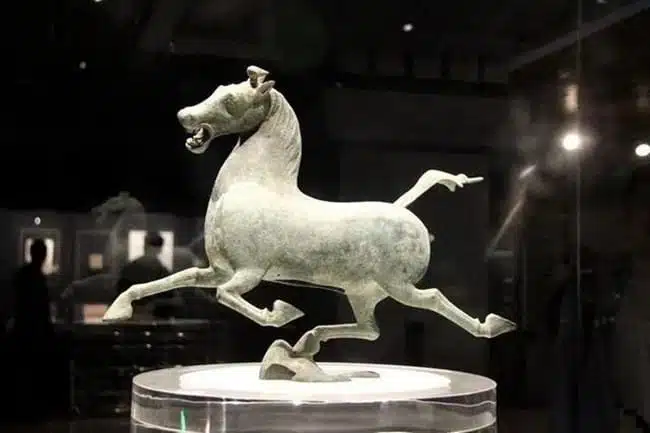
Important relics: 1) Bronze “Galloping Horse” (the famous Bronze Galloping Horse, 马踏飞燕). 2) Tiantishan Grottoes 3)White Tower Temple.
Jiuquan
Known in ancient times as Suzhou (not to be confused with the more famous Suzhou in the east, they are totally two different places).
It is a key node on Silk Road node. And here you can see historic passes (like Yumen Pass) that controlled access.
Zhangye
Located centrally in the Hexi Corridor.
It served as a strategic outpost for protecting the frontier and accessing the Western Regions.
Notable site: the Dafo Temple houses China’s longest wooden reclining Buddha.
Jiayuguan
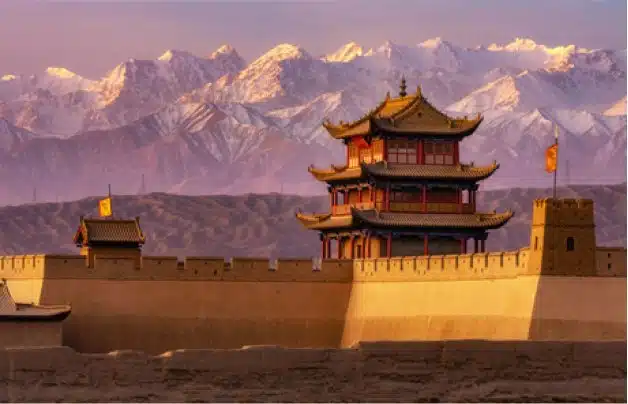
Famous for Jiayuguan Pass, often called “No. 1 Strategic Pass in the World.”
It marks a major defensive and trading point at the western end of the Great Wall.
Dunhuang
Historically, it was the western terminus of the Corridor and a major Buddhist art center (e.g., Mogao Grottoes).
Recommended tour: 5 Days Hexi Corridor Silk Road Tour of Lanzhou-Wuwei-Zhangye
Have a Date with the Museums on the Silk Road
Gansu Provincial Museum | Go to admire the real Bronze Galloping Horse Treading on a Flying Swallow
Gansu Provincial Museum boasts a collection of more than 350,000 pieces of precious cultural relics, among which the most important and well-known ones are painted pottery, bamboo slips and documents of the Han Dynasty, treasures from the Han and Tang dynasties reflecting the ancient Silk Road, and the pick of Buddhist art. Visiting the museum is the easiest and yet inevitable way to understand the history of Hexi Corridor.
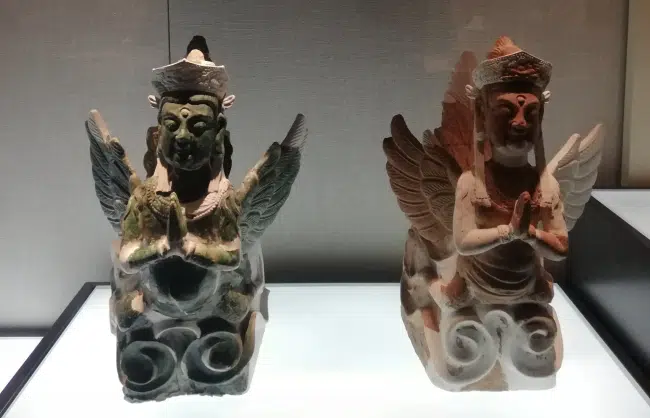
Wuwei Municipal Museum | Visit one of the earliest Chinese grottoes — Tiantishan Grottoes
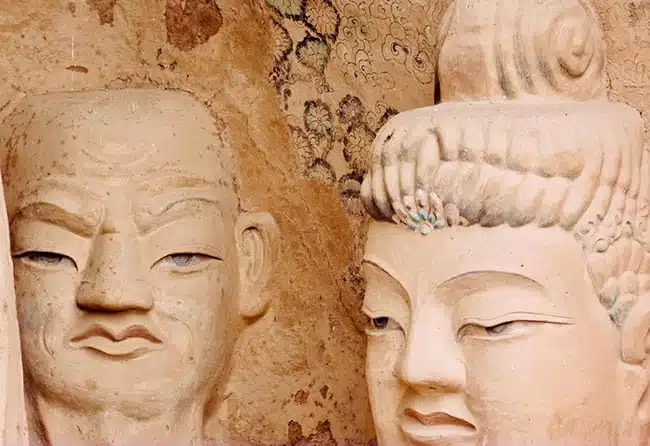
Then why go to Wuwei Municipal Museum to see Tiantishan Grottoes? Tiantishan Grottoes, built in Beiliang during the Eastern Jin Dynasty, is one of the earliest grottoes in China. Tracing back to the source of the famous Yungang Grottoes and Longmen Grottoes always leads to Tiantishan Grottoes. It is known as the “Originator of Chinese grottoes”. In history, a large number of Buddha statues and murals in the grottoes were removed to construct a reservoir. Thankfully, the statues and murals were restored and kept in the Buddhist exhibition hall of the museum.
Wuwei Western Xia Dynasty Museum | Have a look at the only existing “dictionary” of the Western Xia Dynasty
As the auxiliary capital of the Western Xia Dynasty (established by Dangxiang nationality, one of the ancient northern minorities), there are many remains of the Western Xia Dynasty unearthed in Wuwei. Among them, the only surviving stone tablet with the characters of both Dangxiang people and Han people provides the most important materials for studying the Western Xia Dynasty. The museum is a must-see place for us to understand the mysterious dynasty.
Feel the Power of Faith
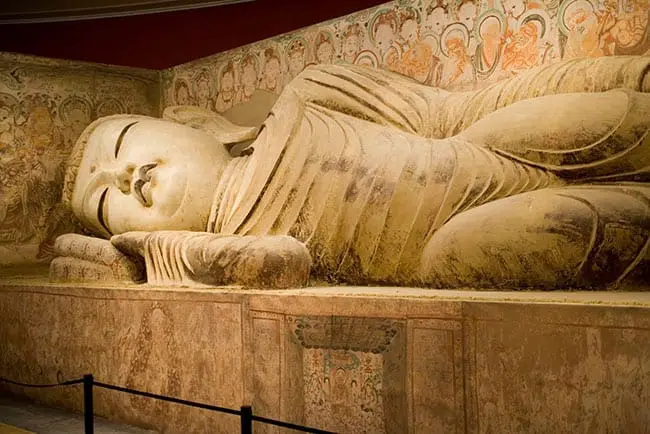
Dunhuang Mogao Grottoes | Tick off a holy land of art that one must visit once in a lifetime
If you only have time to visit one grottoes site on your Silk Road tour, you must go to Mogao Grottoes. In 1987, it was selected as a World Cultural Heritage Site. Its southern area alone houses more than 2,000 painted sculptures, 45,000 square meters of murals, and 5 wooden cave eaves, showing us the Buddhist art that has lasted for thousands of years.
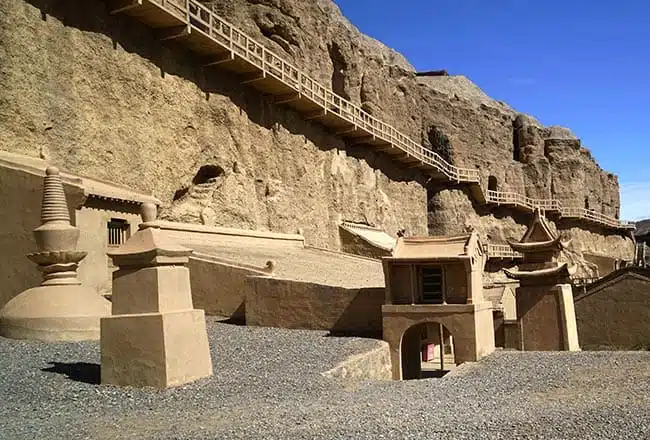
Yulin Grottoes | Visit sister of Mogao Grottoes
Yulin Grottoes, so to speak, made the glorious Dunhuang art together with Mogao Grottoes. Yulin Grottoes also has its own unique styles. Its murals reflecting Han Buddhism in the caves chiseled in the Tang, Western Xia, and Yuan dynasties as well as those showing Esoteric Buddhism (a sect of Tibetan Buddhism) help fill the missing ones in Mogao Grottoes.
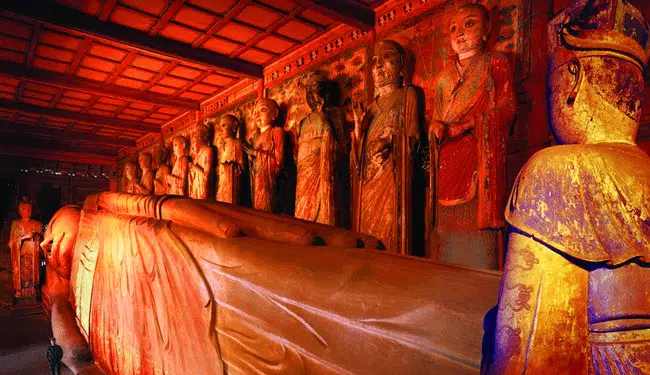
Zhangye Giant Buddha Temple | Pay respects to the largest reclining Buddha in the country
The Giant Buddha Temple is the only surviving temple built during the Western Xia Dynasty. It is famous for the largest indoor wooden reclining Buddha in China, 34.5 meters long and 7.5 meters wide across the shoulder.
Step Back in Time at the Historical Sites
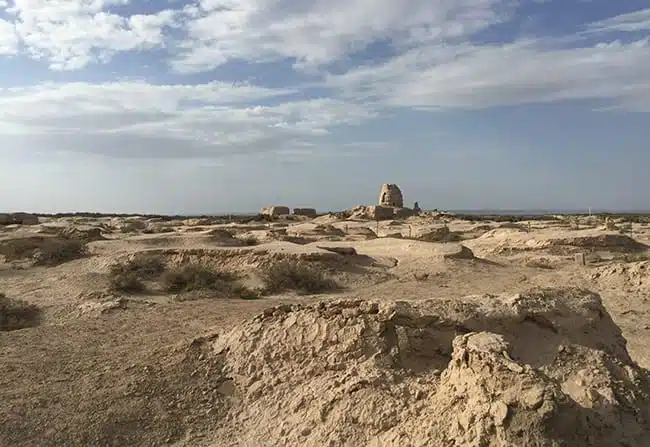
Suo Yang City | Have a glimpse of a complete military town of the Tang Dynasty
Suo Yang City, initially built in the Han Dynasty, prospered in the Tang Dynasty. It is a typical Tang Dynasty style ancient city. It has the best preserved ancient military defense system and farmland irrigation system in China.
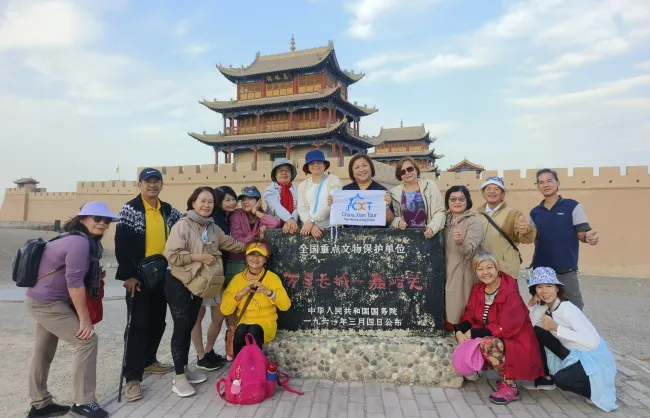
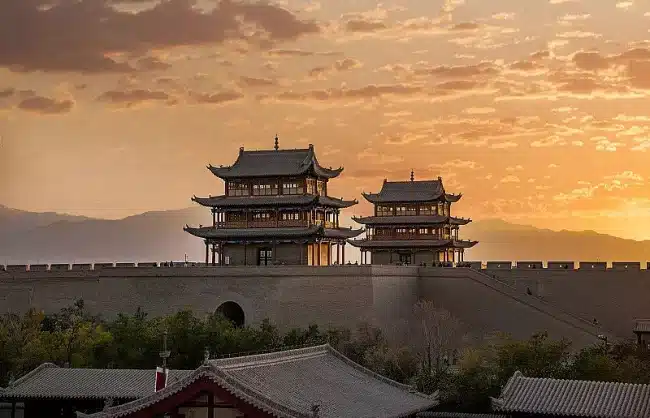
Jiayuguan Pass | Stand at the end of the Ming Dynasty Great Wall
Jiayuguan Pass, dubbed “No. 1 Strategic Pass in the World”, was capable of both attacking and defense. It formed a rigorous military defense system with the nearby Great Wall, trenches, beacon towers, and other facilities. Visitors can climb upstairs to look far into the desert in the west.
Marvel at the Various Magical Landforms
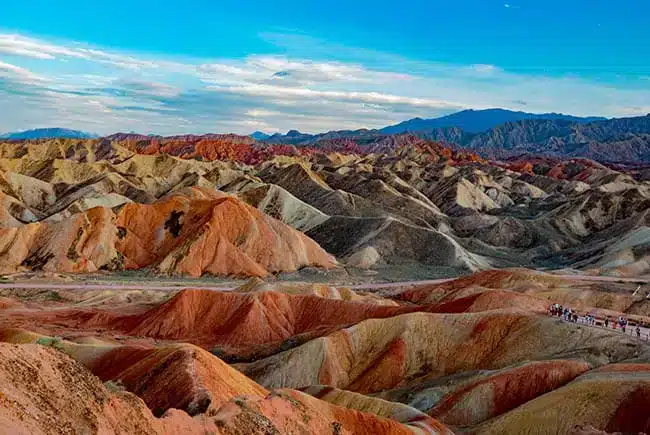
Zhangye Danxia Landform | Cannot believe such a surreal thing really exists
Zhangye Danxia Landform Geological Park is so colorful and majestic that it is called “China’s Rainbow Mountains”. Here you will be stunned by the creation of the nature.
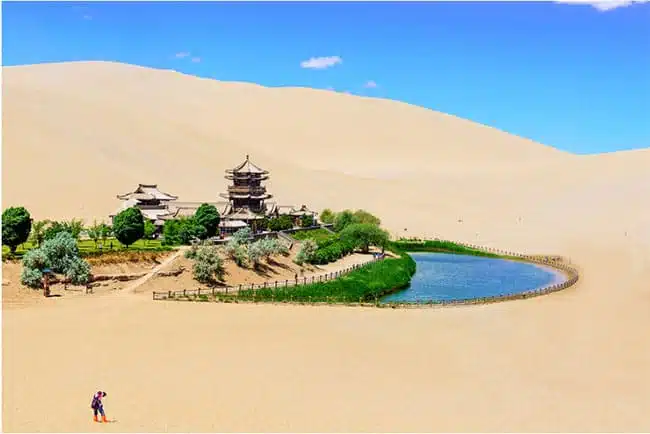
Echoing-sand Mountain & Crescent Lake | Wonder how the sand and spring coexist
The best of Echoing-sand Mountain is that the sand can make different sounds when the wind blows. Crescent Lake, surrounded by Echoing-sand Mountain but not buried by the sand, is truly a miracle. They are like twins in the endless desert, inseparable from each other.
Planning Your Hexi Corridor Tour
Climate and Best Time to Visit
- The Hexi Corridor’s climate is arid to semi-arid. Rainfall is something rare in a lot of places.
- Best time to visit: spring and autumn.They are the most comfortable seasons to visit those highlights (particularly because of its weather)
How to Get There and Travel Around
By Rail: There are many trains and high-speed trains running along Lanzhou–Xinjiang railway everyday, they’ll take you to your destinations fast and comfortable.
By Car / Self-drive: Driving is one of the most flexible ways to explore from city to city. Major cities are all connected by well-maintained highways and some of them are long, open desert roads.
Local Transport: Local buses, taxis, or tour services to reach sites
Suggested Hexi Corridor Itineraries
Here are two ideas depending on how much time you have:
5–6 Days Classic Silk Road Tour
- Day 1: Lanzhou → Wuwei (Museums. Tiantishan Grottoes.)
- Day 2: Wuwei → Zhangye (Dafo Temple. Reclining Buddha.)
- Day 3: Zhangye → Jiayuguan (Jiayuguan Pass)
- Day 4: Jiayuguan → Dunhuang (Mogao Grottoes.Yumen Pass.)
- Day 5: Dunhuang (Echoing-sand Mountain & Crescent Lake)
- Day 6: Return / departure
Short 3-Day Itinerary
- Day 1: Wuwei + Zhangye
- Day 2: Jiayuguan Pass + nearby Great Wall relics
- Day 3: Dunhuang grottoes + desert scenery
Suggested tour: 6 Days Zhangye Jiayuguan Dunhuang Tour
FAQs about the Hexi Corridor
Q: Why was the Hexi Corridor crucial to the ancient Silk Road?
A: Because one of its most important responsibility was the overland passage protecting and connecting the Chinese heartland with Central Asia. It also contributed a lot in military and economic sense for Chinese dynasties.
Q: Is the Hexi Corridor primarily a desert region? And where does its water supply come from?
A: Much of the corridor is arid. However, it also has oases which are sustained by meltwater from the Qilian Mountains. And these water also feed rivers like the Shiyang and Heihe.
Q: What is the significance of the Jiayuguan Pass in relation to the Hexi Corridor?
A: It was a key defensive point (“strategic pass”) on the western edge of the Great Wall. It protected the corridor and controlled trade passing through the site.
Q: Why was the Hexi Corridor called the “throat” of the Silk Road?
A: First of all it’s because of its geographic shape. And besides, its strategic location (in military and economic discourses) made it like a “throat” or gateway.
Q: How many days are needed for a proper Hexi Corridor tour?
A: Usually, people would prepare 5–6 days to cover the main sites. If you don’t have that much time, a 3-day itinerary is also fine.
Plan Your Silk Road Tour with China Xian Tour
The Silk Road has long been a popular site for people who want to trace the unique and legendary history. And along the way, you’ll hear all the wonderful sites whispering the past stories. To better enjoy the Silk Road’s beauty, come and join a guided tour offered by China Xian Tour. We’ve been specializing in providing travelers with the best Silk Road trip for over 10 years. And no matter which part of the road you want to focus, our travel experts will be able to design an itinerary that fulfills all your expectations. And with us taking care of everything for you along the way, every moment is going to be unforgettable and rewarding.