



A well-planned Silk Road trip in China usually starts in Xi’an and heads west through the Hexi Corridor, with stops in Zhangye, Jiayuguan, and Dunhuang before continuing into Xinjiang. Turpan and Kashgar make natural additions further west.
When planning a Silk Road trip, don’t set your goal as squeezing in as many places as possible. Set aside 10–14 days if you expect a good mix of ancient sites, desert scenery, and Xinjiang culture. With only seven days, stick to either Gansu or Xinjiang rather than rush through the whole route.
And also remember to use trains for shorter sections and flights for long distances to avoid spending too much of your trip in transit.
Silk Road Trip at a Glance
Duration |
Recommended Route |
Best For |
6–8 days |
Xi’an → Zhangye → Jiayuguan → Dunhuang |
Limited time, first Silk Road experience |
10–12 days |
Xi’an → Dunhuang → Turpan → Kashgar |
Silk Road highlights |
13–15 days |
Xi’an → Zhangye → Jiayuguan → Dunhuang → Turpan → Urumqi → Kashgar |
First-time visitors wanting a complete trip |
16–18 days |
Classic route + Pamir Plateau + Tashkurgan |
Photography, culture, and in-depth travel |
Content Preview
- Best Silk Road Destinations
- Recommended Itineraries
- Best Time for a Silk Road Trip
- Silk Road Transportation
- Where to Stay
- What to Eat
- What to Prepare
- Customize Your Silk Road Tours with China Xian Tour
Best Silk Road Destinations: What to See and Do
You do not need to visit all of the Silk Road destinations. For first-time visitors, it makes more sense to keep the stops that offer a noticeably different experience.
Key Destination |
Top Things to See |
Recommended Stay |
Xi’an |
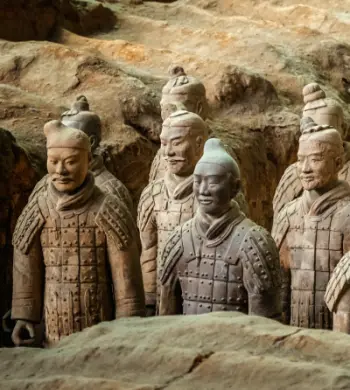
Terracotta Army, City Wall, Big Wild Goose Pagoda, Muslim Quarter |
2–3 days |
Zhangye |
Rainbow Mountains, Giant Buddha Temple |
1–2 days |
Jiayuguan |
Jiayuguan Pass, Great Wall remains, Wei-Jin Tombs |
1 day |
Dunhuang |
Mogao Caves, Mingsha Mountain and Crescent Lake, Yumen Pass |
2–3 days |
Turpan |
Jiaohe Ruins, Karez Wells, Tuyugou, Flaming Mountains |
1–2 days |
Urumqi |
Tianchi Lake, International Grand Bazaar, Xinjiang Museum |
1–2 days |
Kashgar |
Kashgar Old City, local markets, Pamir Plateau |
2–3 days |
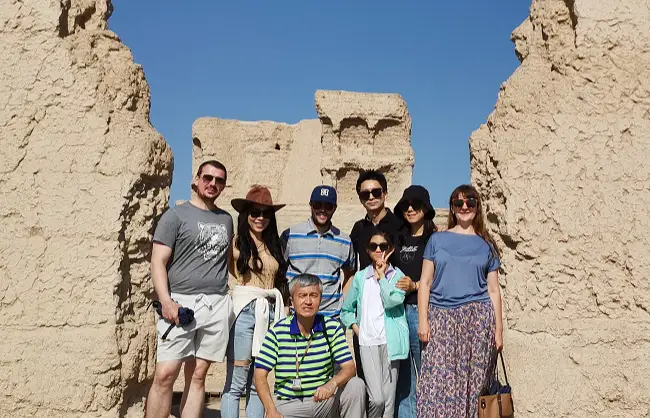
Travel the entire ancient Silk Road from Xi'an's Terracotta Warriors through the Hexi Corridor to Kashgar's vibrant old city and Central Asian bazaars in ten days.
Xi’an: Where the Silk Road Story Begins
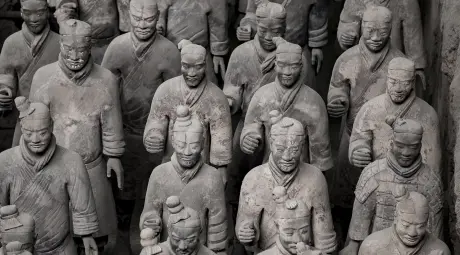
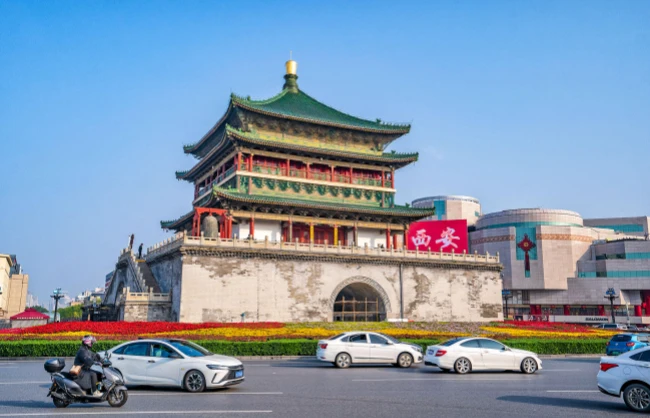
The Terracotta Army in Xi’an is one of the most rewarding sites to visit; though it’s not a Silk Road site, it gives first-time visitors useful background on China’s Qin and Han history.
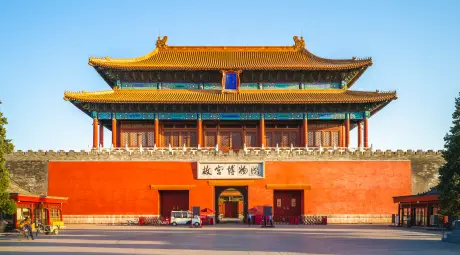
Spend some time around the Big Wild Goose Pagoda, Xi’an City Wall, and Muslim Quarter, then it’ll be easier to picture Chang’an as an ancient cosmopolitan city where different cultures met and mixed.
Zhangye: The Scenic Side of the Hexi Corridor
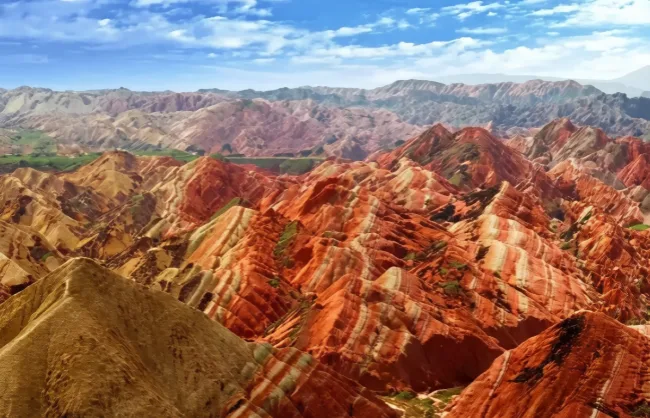
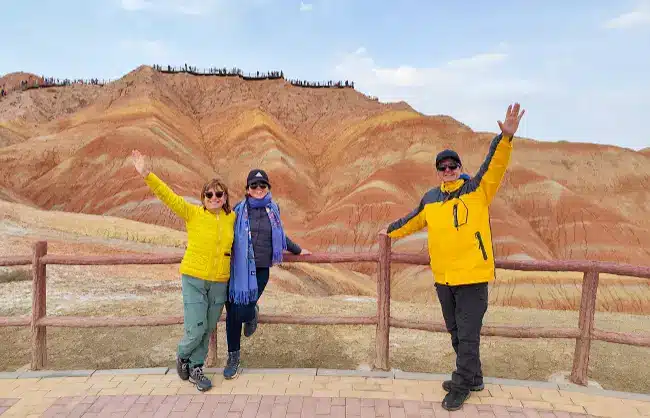
The colorful Danxia landform is the main draw in Zhangye, and it’s especially worth a stop if you’re into photography. Try going in the late afternoon, when the sunlight brings out more depth and definition in the mountains.
Jiayuguan: Understanding the Hexi Corridor
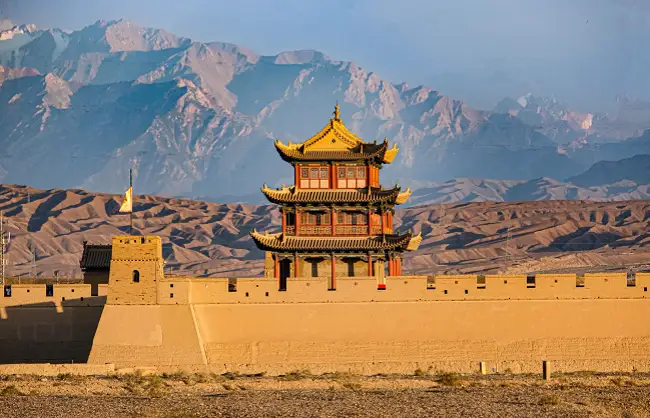
Jiayuguan is about more than seeing a historic pass. A visit here helps put the Hexi Corridor into perspective and shows how ancient Chinese dynasties controlled this key route between the heartland, Dunhuang, and the Western Regions.
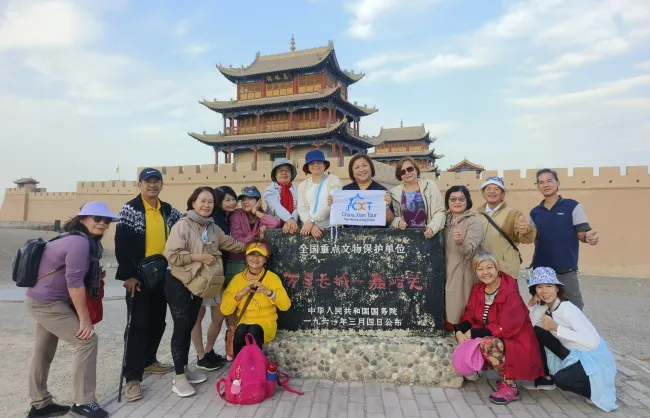
Dunhuang: The One Stop You Should Not Skip
Dunhuang is one of the places you should definitely keep on a first Silk Road trip, even if you have to trim the itinerary elsewhere.
The Mogao Caves alone are a major reason to come, as they preserve extensive murals, sculptures, and documents that reflect how Buddhism, art, and different cultures traveled along the Silk Road.
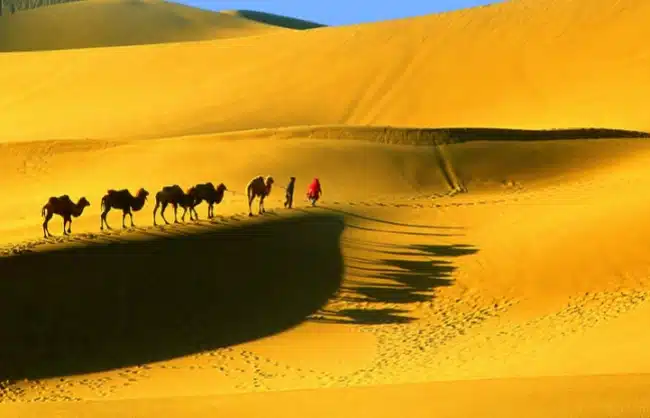
Outside the caves, Mingsha Mountain and Crescent Lake bring you into a completely different landscape, with desert dunes and an oasis side by side.
More Silk Road Stops in Gansu: There’s more to see in Gansu if you have extra time. Tianshui, Lanzhou, and Wuwei can all be added to a longer route. Wuwei was an important city along the Hexi Corridor, while Tianshui and Lanzhou were key Silk Road stops before the route reached the corridor.

Trace the ancient Hexi Corridor from Lanzhou through Wuwei to Zhangye, exploring Confucius Temple, Leitai Han Tombs, and the stunning Danxia rainbow mountains.
Turpan: Seeing How an Oasis Survived the Desert
Jiaohe Ruins and the Karez Wells offer a clear look at how people and ancient travelers survived in an extremely dry environment.

Urumqi: A Useful Hub, Not Always a Must-Stay City
Urumqi is an important transport hub, and you do not necessarily need to spend much time here. If you’re short on time, simply use it as a transit stop. Staying a little longer makes sense if you want to learn more about Xinjiang’s history at the Xinjiang Museum or get some time in nature at Tianchi Lake.
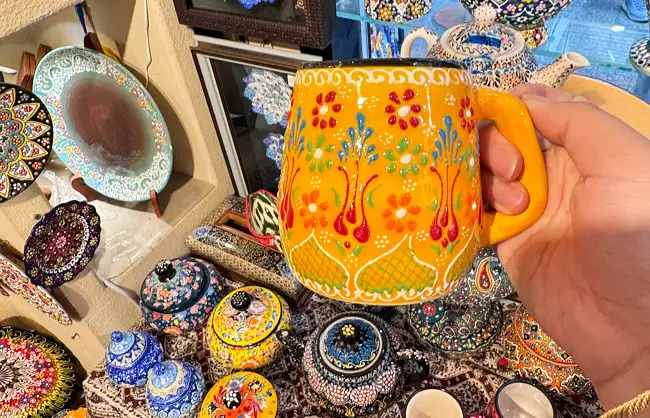
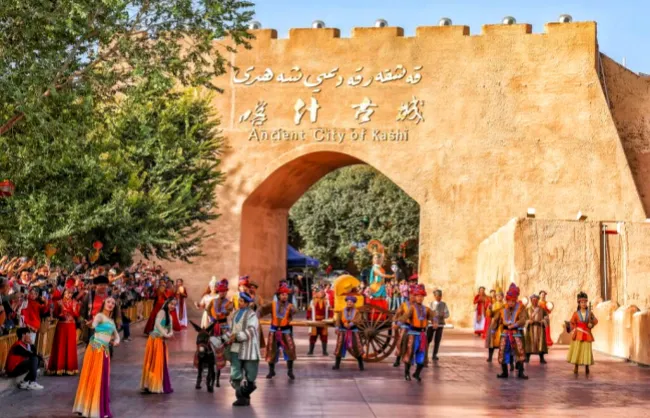
Kashgar: From Ancient Sites to Local Life
Kashgar feels quite different from the Gansu stops, where historic sites and ruins tend to be the main focus. In Kashgar, you may experience more of the city itself—the markets, local food, traditional handicrafts, and everyday life on its streets.
If you have a few extra days, continue from Kashgar to Karakul Lake, Tashkurgan, and the Pamir Plateau, being one of the best additions for a longer Silk Road trip.
How Many Days for a Silk Road Trip in China & Recommended Itineraries
For a first China Silk Road trip, you may follow the most practical route: Xi’an → Zhangye → Jiayuguan → Dunhuang → Turpan → Urumqi → Kashgar. And of course, you’ll have different experiences with different travel durations.
You may have already noted that Silk Road tours usually start from Xi’an. Xi’an (known as Chang’an in ancient times) was one of the most important eastern starting points of the overland Silk Road. Today, Xi’an is also a convenient gateway, with well-developed air and rail connections to other cities along the Silk Road.
12–14 Days: The Best Length for First-Timers
Suggested itinerary:
- Day 1–2: Xi’an
- Day 3: Zhangye
- Day 4:Jiayuguan
- Day 5–6: Dunhuang
- Day 7–8:Turpan
- Day 9:Urumqi
- Day 10–11: Kashgar
- Day 12–13: Pamir Plateau / Tashkurgan
- Day 14: Departure
Two weeks is close to the sweet spot for a Silk Road trip. With this much time, you can cover the main Silk Road destinations without turning the trip into a daily cycle of checking out and checking in.
A 14-day group tour along the Silk Road from Xian to Urumqi, passing through Lanzhou, Xiahe, Zhangye, Jiayuguan, Dunhuang, and Turpan by bullet trains.
7 Days: Xi’an and the Hexi Corridor
Suggested itinerary:
- Day 1–2: Xi’an
- Day 3: Zhangye
- Day 4: Jiayuguan
- Day 5–7: Dunhuang
Seven days is enough to cover cities including Xi’an → Zhangye → Jiayuguan → Dunhuang, but it makes for a fairly tight Silk Road itinerary. Some days will have to combine sightseeing with a long transfer.
For first-time visitors to China who would rather not change hotels every night, dropping either Zhangye or Jiayuguan is a better way to keep the pace manageable.
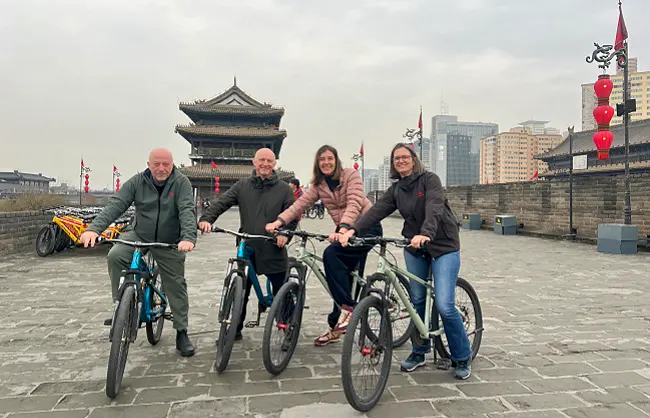
A 7-day Silk Road train tour from Xian through Zhangye and Jiayuguan to Dunhuang, featuring Terracotta Warriors, Rainbow Mountains, Great Wall fortresses, and Mogao Grottoes.
10 Days: Gansu and Xinjiang Highlights
Suggested route: Xi’an → Zhangye → Dunhuang → Turpan → Urumqi
If Kashgar is your main priority, cut Zhangye or Urumqi and follow this route instead: Xi’an → Dunhuang → Turpan → Kashgar.
Ten days is not enough to cover the entire Hexi Corridor and southern Xinjiang, so you’ll need to prioritize your stops.
For a trip centered on history and ancient sites, include Zhangye, Dunhuang, and Turpan. For more of a focus on Xinjiang culture, skip Zhangye and Jiayuguan and give those extra days to Kashgar.
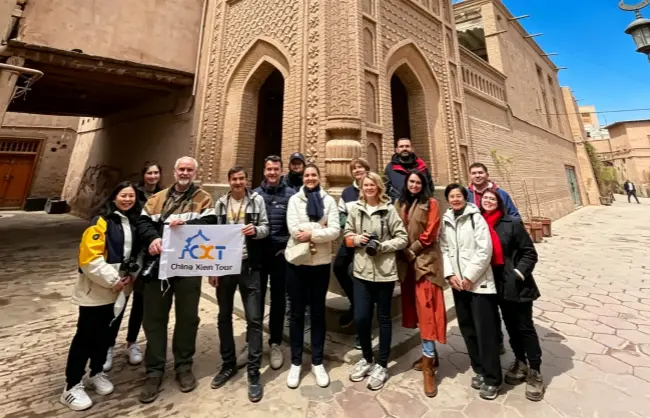
Trace the ancient Silk Road from Xi'an's Terracotta Warriors through Dunhuang's Mogao Grottoes, Turpan ruins, Urumqi's Heavenly Lake, to Kashgar's vibrant bazaars.
Best Time for a Silk Road Trip: Weather by Season
The Silk Road stretches across Shaanxi, Gansu, and Xinjiang, so the weather varies quite a bit along the way.
For the full Xi’an–Gansu–Xinjiang route, May and June, as well as September, tend to offer the most comfortable conditions. October is also a good option, although temperatures drop noticeably in Xinjiang, especially around the Pamir Plateau.
Overall, May–June and September–October are the most favorable windows for the full route. If you have to pick just one month, go for September, which usually offers the best balance.
Time |
Travel Experience |
Things to Note |
April |
Fewer visitors and cooler weather |
Mornings and evenings in Xinjiang can still be cold |
May–June |
Comfortable temperatures for the full route |
Strong sun and large day-night temperature swings |
July–August |
Great time for natural scenery in northern Xinjiang |
Dunhuang and Turpan can be very hot, with more summer visitors |
September |
One of the best overall times to travel |
Popular attractions may require advance reservations |
October |
Clear, dry weather and good conditions for photography |
Nights in Xinjiang become noticeably colder |
November–March |
Fewer visitors and relatively lower prices |
Long outdoor activities can be affected by weather |
In summer, Dunhuang and Turpan can get extremely hot during the day. Desert areas and outdoor attractions are more comfortable to visit in the morning or late afternoon.
Temperatures can drop noticeably after sunset. Even in summer, a light jacket is usually needed in Gansu and Xinjiang. Bring warmer layers if you plan to visit the Pamir Plateau in spring or fall.
Silk Road Transportation: Train, Plane, or Private Car?
Traveling the Silk Road by train is absolutely possible, but taking the train for every leg isn’t the most practical approach.
The Hexi Corridor is well suited to rail travel, while longer distances in Xinjiang are better handled with a mix of flights and trains. For sights outside the main cities, a private car is often the more convenient option. Consider different transportation based on your destinations.
Route |
Recommended Transport |
Xi’an → Lanzhou → Zhangye → Jiayuguan → Dunhuang |
Train |
Dunhuang → Turpan |
Train + road transfer |
Urumqi → Kashgar |
Flight / overnight train |
Kashgar → Karakul Lake → Tashkurgan |
Private car / private tour |

Check the Departure Station
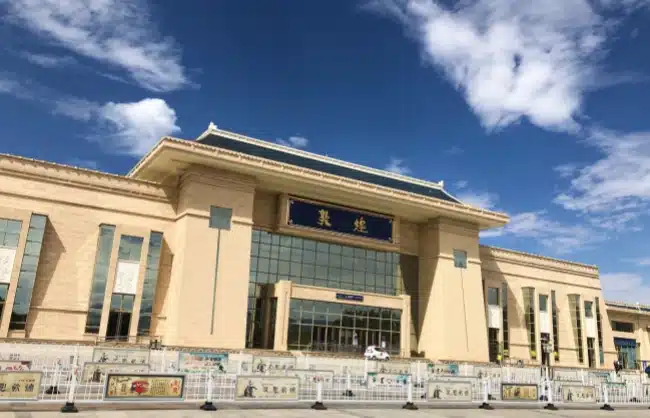
This tip is particularly related to the Dunhuang–Turpan leg. When looking up a Dunhuang to Turpan train, check the departure station carefully.
Not every train to Xinjiang leaves from Dunhuang Station even if it shows “Dunhuang to Turpan” on the ticket. Some of the faster services depart from Liuyuan South instead, which is a station outside Dunhuang city.
Getting to Liuyuan takes about two hours by road, so this transfer should also be added to your travel time.
One small detail can save you a lot of trouble: When booking, check the station name rather than searching by city alone.
Book Train Tickets with Your Passport
Foreign visitors can register and buy tickets on the English version of the China Railway 12306 website using a passport. Please note that China’s railway system uses real-name ticketing, so the name and passport number entered when booking must match the travel document exactly.
Choose Based on Your Time and Group
With only 10–14 days for the trip, flying usually makes more sense. It saves almost a full day, leaving more time for Kashgar Old City and the Pamir Plateau. For 2–4 travelers, a private car or private tour usually makes the day much easier to manage.

Where to Stay on the Silk Road
When choosing hotels along the Silk Road, first consider your sightseeing plans and transportation for the next day.
Staying in a central area is usually convenient for seeking restaurants and seeing city attractions, but a hotel closer to the train station or airport may make more sense if you have an early departure.
Good areas to consider include:
- Xi’an: Around the Bell Tower or South Gate, with easy access to transport and plenty of places to eat
- Zhangye: Near the Drum Tower or Central Square
- Jiayuguan: Around Jiayuguan Square in the city center
- Dunhuang: Near Shazhou Night Market; for easier access to sunset at Mingsha Mountain, you can also stay nearby
- Turpan: In the city center, which makes it easier to arrange a private car for the next day
- Urumqi: In the city center or around Hongshan
- Kashgar: Around the outskirts of Kashgar Old City, where you can walk to the old town while still making vehicle pickup easier

What to Eat on the Silk Road
Food is another big part of the Silk Road experience, and the flavors change quite a bit as the route runs from Shaanxi into Xinjiang.
- Xi’an: Roujiamo, yangrou paomo, and biangbiang noodles
- Gansu: Beef noodles, different types of noodles, and lamb
- Dunhuang: Donkey meat yellow noodles, grilled lamb, and apricot peel drink
- Xinjiang: Lamb skewers, pilaf, naan, latiaozi, baked buns, and seasonal fruit
Halal restaurants are common across Xinjiang and many parts of Northwest China. For vegetarians or travelers with other dietary restrictions, mention your requirements clearly when ordering.

What to Prepare Before Your Silk Road Trip
A Silk Road trip covers far more ground than a typical Beijing–Xi’an–Shanghai itinerary, so there is a little more to sort out before you go. A few things are worth checking before you book your flights.
1. Check the Visa Requirements for Your Silk Road Route
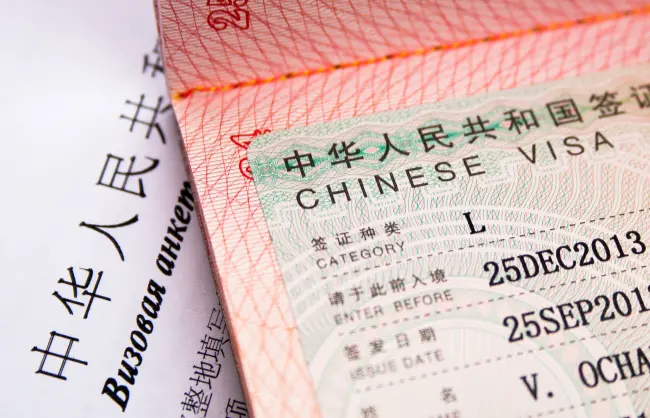
Do not assume that China’s 240-hour visa-free transit policy will cover your entire Silk Road trip. At present, the policy allows eligible travelers to stay within designated areas across 24 provinces, regions, and municipalities, while Gansu and Xinjiang are not included.
Anyone planning a longer route such as Xi’an–Dunhuang–Turpan–Kashgar should check their nationality-specific requirements in advance to see whether a Chinese visa or another visa-free policy applies.
2. Book the Mogao Caves Before Your Trains
During the peak season, tickets for the Mogao Caves are limited. Once you start planning a Silk Road trip, lock in your Mogao Caves visit date first, then arrange your Dunhuang hotel and transportation around it.
Foreign travelers should purchase tickets through the official Mogao Caves channel with passports. Avoid services that claim to offer ticket-grabbing services.

3. Set Up Chinese Mobile Payments in Advance
Alipay and WeChat Pay are widely used in China and also support relevant payment services for overseas users. Still, keep an international bank card and a small amount of RMB cash as a backup.

4. Pack for Sun and Dry Air
High-SPF sunscreen, sunglasses, a hat, lip balm, moisturizer, a water bottle, and comfortable walking shoes are all useful on a Silk Road trip. Gansu and Xinjiang are generally dry, so sun protection and moisturizer are especially important.
5. Dress and Photograph Respectfully at Religious Sites
Avoid overly revealing clothing when visiting religious sites, and follow the rules at mosques and other religious venues. If you want to photograph local residents, especially for close-up portraits, ask for permission first.
6. Slow Down Between Long Travel Days
Distance is what catches many first-time Silk Road travelers off guard. Try to stay two nights in the same city every 3–4 days. On a first trip, Xi’an, Dunhuang, and Kashgar are particularly worth slowing down for.
7. Leave Time for Sunrise and Sunset Photography
For photography, Zhangye Danxia, Mingsha Mountain, and the Pamir Plateau are better saved for sunrise or sunset rather than the middle of the day. Drones are a different matter.
Rules can vary around airports, borders, and other restricted areas, so check the latest local requirements before flying.
Customize Your Silk Road Tours with China Xian Tour
Having operated China Silk Road tours for over 15 years, we know this ancient trading route like the back of our hand. Whether you want personalized Silk Road tours for seniors, solo travelers, or kids, our professional team can craft your ideal itinerary based on your unique energy, preferences, travel styles, and time frame. If you have any travel ideas or inquiries, please feel free to contact China Xian Tour.


