

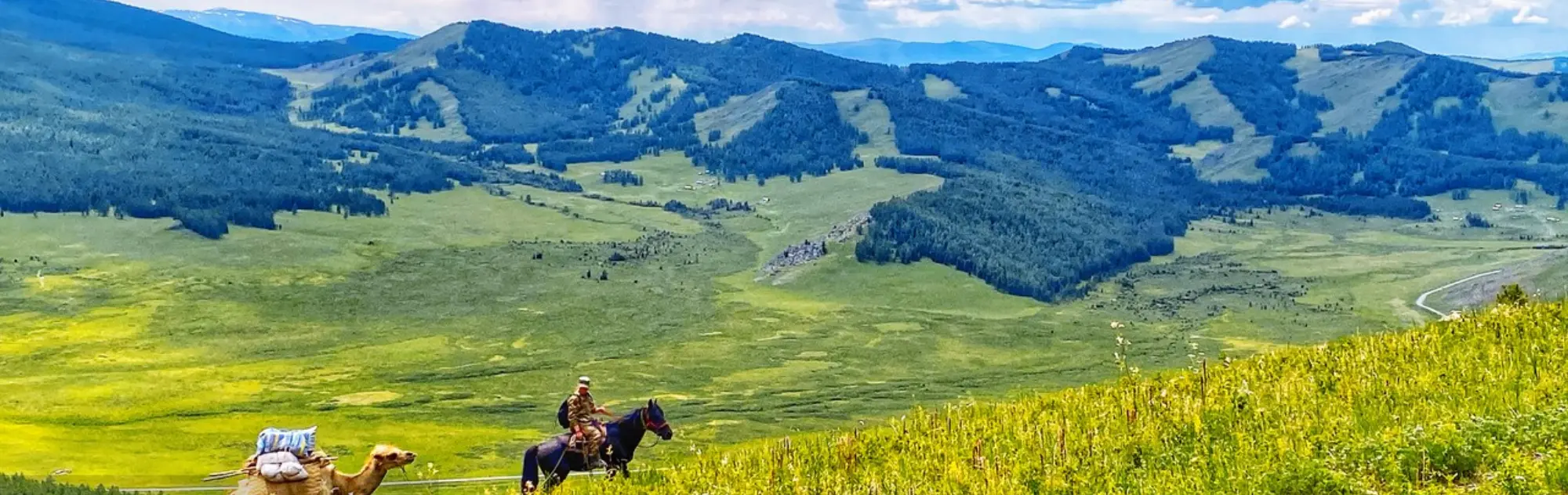
Altay Mountains are located in the northernmost end of Xinjiang Province. This giant mountain range spans 500 kilometers in China. Its splendid natural scenery attracts numerous tourists every year. The Kanas Scenic Area and Keketuohai National Geological Park are dreamy destinations for many travelers during their Xinjiang tour. Besides, its unique nomadic culture and Tuva villages have a great appeal to every tourist to explore. In winter, the international ski resorts wait for you to conquer. Now, follow this article to have a deep understanding of this beautiful mountain and find out what you can experience during the tour.
Content Preview
- Where are the Altai Mountains?
- Where are the Altai Mountains in China?
- Fast Facts of Altay Mountains
- Geography of the Altai Mountains
- Attractions around the Altai Mountains in Xinjiang
- Culture and Life around Altay Mountains
- Weather and Best Time to Visit Altay Mountains in Xinjiang
- How to Get to Altai Mountains in Xinjiang
- Most popular/scenic hiking or trekking routes
- Where to stay
- What and Where to Eat
- FAQs about Altai mountain
- Explore the Altay Mountain Area with China Xian Tour
Where are the Altai Mountains?
Altai Mountains, or Altay Mountains is one of the most majestic mountain ranges across the Eurasian continent, spanning across territories of China, Kazakhstan, Russia, and parts of Mongolia. It is the source of several important rivers, including the Irtysh River and Ob Rover. A visit to the Altai Mountains will not only reward you with breathtaking scenery but also encounters with rich biodiversity.
Where are the Altai Mountains in China?
Within China, the section of the Altai Mountains encompass a narrow portion in the northernmost region of the Xinjiang Uygur Autonomous Region. It stretches about 500 kilometers in length, functioning as an important part of Xinjiang’s geographical landscape that is known as the “three mountains and two basins” pattern.
At the northern foothills of Altai Mountains in Xinjiang sits the Altai Grand Canyon. This unique high-mountain canyon scenic area is often hailed as one of the most beautiful destinations in China. Thanks to the cascading waters from glacial melt in this area, the canyon is the source of several important rivers, including the Irtysh River and Ob River. Its breathtaking landscapes and unique environment have attracted countless tourists to visit here on their travels to Xinjiang.
Fast Facts of Altay Mountains
- Location: in the northernmost region of the Xinjiang Uygur Autonomous Region in China, bordering Kazakhstan, Mongolia, and Russia.
- Highlights: The Altay Mountains offer a range of activities, including hiking, climbing, horseback riding, camping, and rafting.
- Suited to: Outdoor enthusiasts, hiking lovers, nature lovers, and adventurers.
- Time needed: more than one day.
Geography of the Altai Mountains
Altai Mountain is a typical block mountain and descends from northwest to southeast in a stepped pattern. The west part is wide and the east part is narrow. The highest peak is Youyi Peak with a height of 4,374 meters. A very significant feature of the mountain is the vertical zoning. The zone over 3,000 meters is a world of modern glaciers and ice and snow. Between 2,300 and 3,000 meters are vast alpine and subalpine meadows. Following are the mountain forests in the zone of 1,100 – 2,300 meters. It is the most representative vegetation in the Altai Mountains and accounts for 70% of the mountain areas. Below 1,100 meters are the grasslands and deserts. The whole mountain is like steps built by nature. The climate of the mountains is the continental climate, which features long and cold winters, short summers, and indistinct springs and autumns.
Attractions around the Altai Mountains in Xinjiang
Kanas Lake
- Location: north of Burqin County, Altay Prefecture
- Opening hours: 08:00 – 20:00
- Ticket: CNY 160
- Time needed: 1 day
- Highlights: splendid lake scenery, abundant plants and animals, outdoor activities
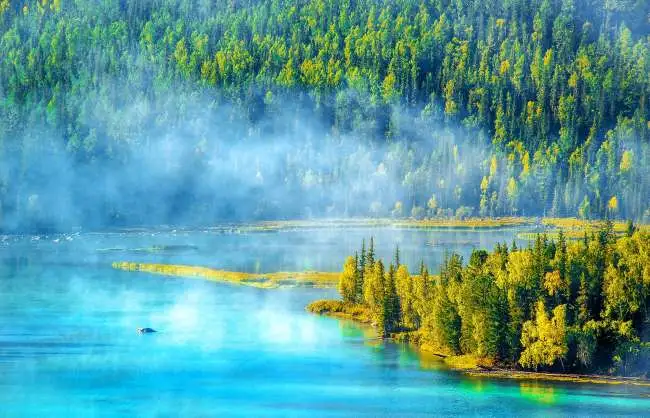
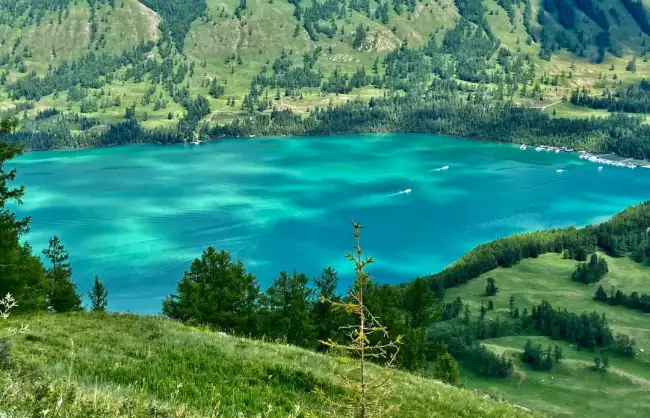
Nestled in the dense forests of the Altai Mountains in Xinjiang, Kanas Lake is an AAAAA-rated national scenic spot that boasts to be the deepest freshwater lake in China. It is often praised as one of the most beautiful lakes in China, with dense forests and snow-capped peaks surrounding its crystal-clear waters.
As an awesome place for natural lovers, Kanas Lake will reward its visitors with many enjoyable outdoor activities, including leisurely hiking around the lake and sightseeing, boating rides with a unique perspective of the surrounding landscape, etc.
Hemu Village
- Location: 30 km east of Kanas Lake, Burqin County, Altay Prefecture
- Opening hours: May 1 – Oct. 15: 08:00 – 22:00; Oct. 16 – Feb.: 10:00-18:00
- Ticket: CNY 100/3 days
- Time needed: 1 – 2 days
- Highlights: wooden house village, unique culture, breathtaking autumn scenery, horseback riding
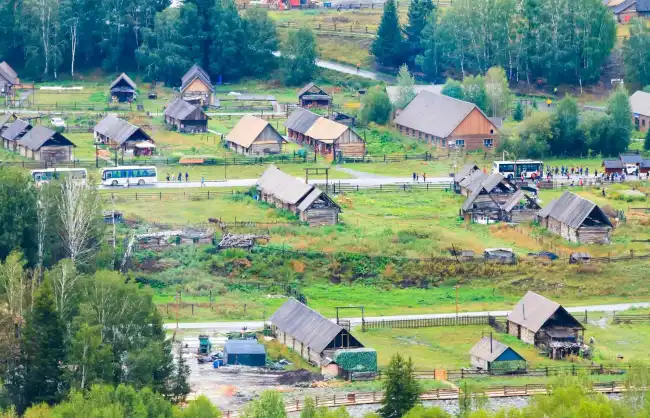
About 30 kilometers east of the Kanas Lake is the Hemu Village, a remote rustic village that is home to Tuva and Kazakh ethnic groups. Here the ethnic people still live their traditional lifestyle of animal grazing and hunting.
As you enter the village, the many simple wooden houses scattered among the valleys will catch your eye. These houses are all half-buried underground and scattered harmoniously among the dense forests across the valley, greeting visitors with a mesmerizing view.
The village enters its peak season in autumn as the surrounding forests turn into vibrant golden yellow, transforming the village into a radiant world. Many travelers will include both Hemu Village and Kanas Lake in the itinerary when traveling to Northern Xinjiang.
Keketuohai National Geological Park
- Location: Fuyun County, Altay Prefecture
- Opening hours: 16 – Oct. 31: 09:30-19:30; Nov. 1 – Apr. 15: 10:00-18:00
- Ticket: CNY 90
- Time needed: 4 – 6 hours
- Highlights: granite peaks, Irtysh Grand Canyon, earthquake fault zone of Kara Siegel, Yileimu Lake, Kekesuli Wetland
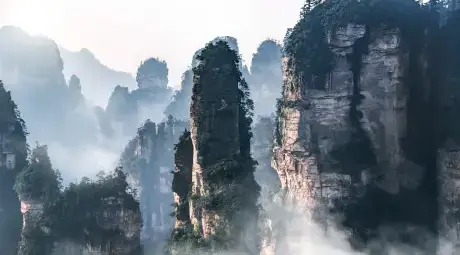
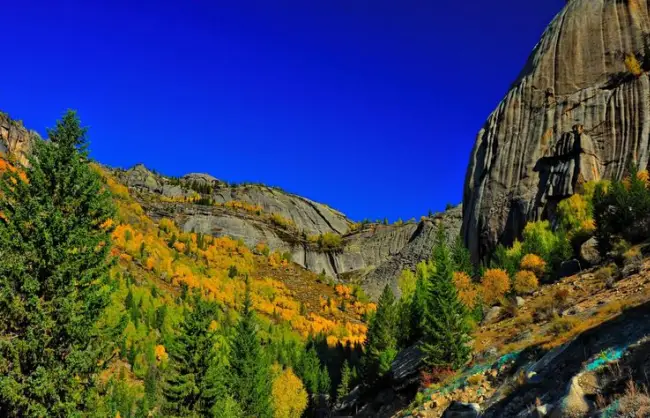
Koktokay National Geopark is the first national geological park in China which has been listed as a UNESCO Global Geopark in 2017. The park features the typical mineral deposits, mining heritage sites, and a unique granite landform. Due to the thousands of years of erosion by wind, rain, and river cutting, the park was endowed with dramatic deep gorges, canyon rivers, peculiar seismic fault zones, charming lakes, forested mountains, and geological culture.
Burqin Beaver National Nature Reserve
- Location: Qinghe County, Altay Prefecture
- Ticket: free
- Time needed: 1 – 3 hours
- Highlights: rare beavers, various birds, natural wetlands
Located at the eastern end of the Altai Mountains, the Burqin Beaver National Nature Reserve covers an area of over 50 kilometers and serves as the only beaver nature reserve in China. The beavers in this area belong to the Mongolian subspecies within the Eurasian beaver species, which are much lower in numbers. Besides the precious beavers, the reserve is also home to various bird species, including swans, black storks, and hooded cranes, and 46 mammal species.
Wucaitan
- Location:Burqin County, Altay Prefecture
- Opening hours:09:00 – 21:00
- Ticket:CNY 45
- Time needed:2 – 4 hours
- Highlights:a strong contrast of Yardong landform and river valley
The most striking feature of Wucaitan is its magnificent landscape of “two different worlds separated by a river”. Standing on the viewing platform, you will be able to see the completely different scenery on north and south banks of the Irtysh River.
On the north side, the typical Yardang landform will definitely amaze you. You will feel like entering a colorful dreamy world. The sandstone, mudstone and conglomerate present various colors, like red, light yellow, light green, under the sunlight. On the south side, a green river valley will feast your eyes. The lush green trees and grasses, winding river, deserts and the blue sky complement each other. This contrast makes it a paradise for photography.
Culture and Life around Altay Mountains
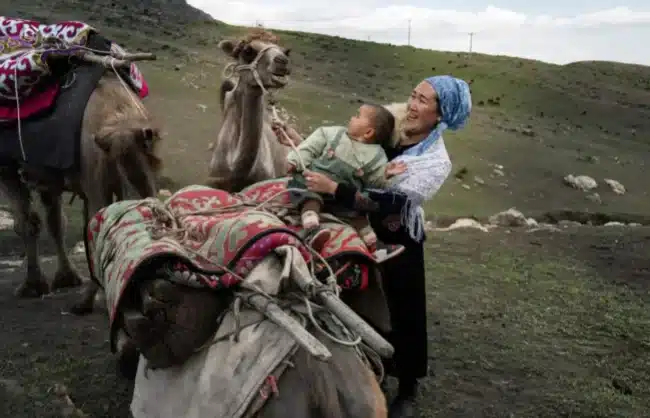
The Altay Region is home to 36 ethnic groups, including the Kazakhs, Han, Hui, Uyghur and Mongolian and so on. Among them, the Kazak is the main nationality and its population accounts for about half of the total population.
Nomadic Culture & Lifestyle
The most eye-catching cultural label of the Kazak is the seasonal migration. In brief, the local herdsmen will carry their yurts and belongings and drive their cattle, sheep, horses and camels back and forth between pastures on mountains, hills and plains. Another character is the lifestyle of the Tuva people. They rely on hunting while engaging in herding. In fact, they are a branch of Mongolians. So they retain the original Mongolian customs, costumes and religious beliefs.
Music and Art
There is a saying in Kazak, “Horse and Music are the two wings of Kazakhstan”. It vividly depicts the importance of music in their life. And the Dombra is their traditional musical instrument. Their songs usually tell stories of history, legends and people’s emotions. The local arts have a close contact with life, such as the hand embroidery and yurt-making. The most representative artworks should be the unique Turkic rock paintings. These paintings are widely distributed in the region. They are created by the nomadic ethnic groups living here in history and the contents include animal images, hunting scenes, herding activities, dance sacrifices, etc.
Festivals
Navruz festival is a very important local traditional festival, it symbolizes the coming of spring and the melting of ice and snow. Every family will make the Navruz porridge and visit relatives and friends during the festival. There are also various performances, competitions (such as horse racing and wrestling) and blessing ceremonies in each place. It is usually held around March 21st and the celebration activities will last from 3 to 15 days.
Weather and Best Time to Visit Altay Mountains in Xinjiang
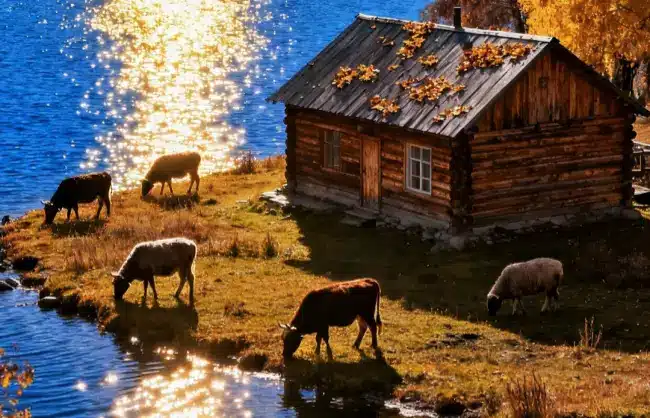
The area around the Altai Mountains in Xinjiang has a temperate continental climate, featuring four distinct seasons, large temperature differences, cold winters, and mild summers. Summer and autumn from June to October are the best times to visit the Altai Mountains.
Summer is the perfect time for hiking and enjoying natural scenery in this area when the climate is mild, the forests and meadows are verdant, and the wildflowers are in full bloom.
In autumn, visiting Kanas Scenic Area, Hemu, Keketuohai National Geologic Park is a feast for your eyes when the birch trees turn a golden yellow, the European aspen trees transform into a vibrant red, and other plants show a variety of colors.
How to Get to Altai Mountains in Xinjiang
To get to the Altai Mountains area in Xinjiang, you can get to Urumqi first, then take a long-distance bus or rent a car to get to the Altai Mountains area.
Or you can rent a car to explore the scenic areas around the mountain with more flexibility.
For a foreign tourist, the most convenient way is to book a private tour with a reliable travel agency (like Chinaxiantour.com) and customize a Xinjiang tour including the Altai Mountain scenic areas according to your needs and preferences, and have the transportation and accommodation covered.
Most popular/scenic hiking or trekking routes
The Altay Mountain is a paradise for hiking lovers. The magnificent snow mountains, serene lakes and golden forests along the route will make everyone feel at peace. Below are the most popular hiking routes.
Route |
Highlights |
Length |
Duration |
Difficulty |
Classic loop route of Jiadengyu – Hemu – Kanas |
Cover core landscapes such as Hemu Village, Xiaohei Lake and Kanas Lake, offer the most comprehensive experience |
About 60 km |
4 – 5 days |
Medium high |
Light walk of Fairy Bay – Moon Bay – Wolong Bay by the lake |
Cover the most famous three bay, a fully paved wooden walkway, very safe |
About 4.8 km |
About 2.5 hours |
Very easy |
Kanas – Xiaohei Lake – Hemu Route |
A mature route with most hikers, connect Kanas Lake with Hemu Village |
About 36 km |
About 2 days |
Medium |
Where to stay
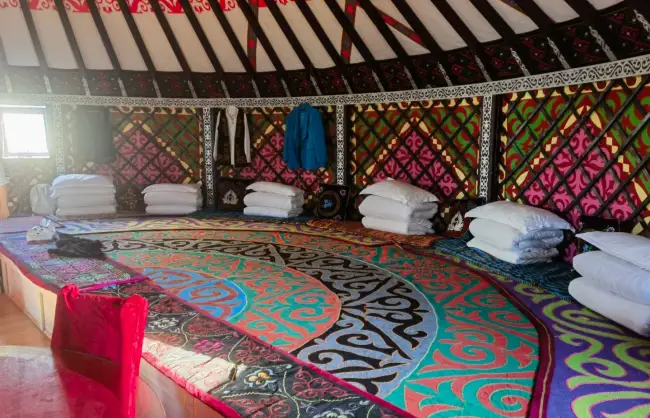
According to the accommodation options, there are mainly two types. The first one is to live in yurts, such as the Hemu Village and the villages in Kanas Scenic Area. Another one is the established hotels in nearby cities, including Burqin County and Altay City.
It is a very unique experience to live in yurts. In fact, you are living in the scenery. The snow mountains and forests are just outside the window. And the surrounding environment is very quiet. For photographers and tourists seeking for special experience or deep relaxation, this is the best choice. But the facilities are relatively simple and activities at night are fewer.
If you seek for a comfortable and convenient living environment, the nearby cities suit you more. As a transportation hub, the hotels here range from economic hotels to luxury hotels and all are well-equipped. Besides, there are more restaurants and shopping malls. But its distance to the core scenic area is farther.
What and Where to Eat

With high mountains, grasslands and river valleys, the Altay Region boasts a variety of materials, such as coldwater fish, wild mushrooms, mutton, beef, etc. All are excellent and common materials used in the local dishes. The grilled pike is a signature dish. The fish is caught from the Ertix River. Its meat is firm and contains high protein and low fat. Burqin County is famous for this dish.
Another unmissable dish is the wild mushroom soup. The mushroom grows in the Altay valley and is scarce. But it tastes extremely delicious. Other representative foods are boiled mutton, naan pit meat, huldak, stir-fried meat with noodles, pilaf, etc. About local drinks, try the Kazakh salty milk tea and dairy products, such as yogurts and milk curd. To taste these foods, Altay City is the best place.
FAQs about Altai mountain
Can you visit the Altai mountains?
Foreign tourists can also visit the Altay region. But you may need to apply for a frontier pass through a travel agency if planning to visit the scenic spots inside the Border Management Area.
Why are the Altai mountains important?
Because it is an important ecological barrier and a crucial passage on the Silk Road. And it boasts diverse rare animals and abundant mineral resources.
What is unique about Altay culture?
There are over 30 ethnic groups living here, forming a colorful cultural atmosphere. And it is featured by ancient grassland culture and nomadic tradition. Another uniqueness is the original ecological villages of the Tuva people.
Is there reliable internet (Wi-Fi/cell signal) available in Hemu Village and the Kanas area?
In the Hemu Village, Kanas Village and other tourist gathering places, the internet is available. But in the surrounding forests and remote areas, the signal may be weak and inaccessible.
What are the must-see viewpoints at Kanas Lake (e.g., Fish Watching Pavilion, Moon Bay)?
The must-see attractions are Fish Watching Pavilion, Fairy Bay, Moon Bay, Wolong Bay, Baihaba Village and Hemu Village.
What is the temperature difference between day and night in the Altay Mountains, even in summer?
The temperature difference in one day in the Altay Mountains can reach about 10 ℃. In summer, it is about 8 ℃ in the plains and over 10 ℃ in the mountain area.
What rare fauna can you encounter in this area?
In Altay regions, you may encounter snow leopards, argalis, mountain goats, Capra ibexs, etc.
Explore the Altay Mountain Area with China Xian Tour
For foreign tourists, it is strongly recommended to travel with a travel agency. Because the cities and scenic spots are far from each other, transportation is a major problem. China Xian Tour can solve the problem for you. Besides, we can tailor a Xinjiang tour based on your needs and preferences and book the hotels and tickets for you in advance. You will enjoy a hassle-free tour. Just contact us right now.