

Located in the remote northwest China, Xinjiang is a vast land boasting diverse ethnic groups, cultures, religions, and landscapes. As an important site on the ancient Silk Road, it is home to many fortified settlements, castles, grotto temples, tombs, and beacon towers that witnessed the exchange of goods and cultures between different civilizations. Natural enthusiasts will also not be disappointed here for it is endowed with rich landscapes, including snow-capped peaks, fertile valleys, arid deserts, stunning alpine lakes, and unique Yardang landforms. Moreover, a Xinjiang travel will reward you with an authentic cultural immersion while meeting various ethnic groups, such as the Uyghurs, Kazakhs, Kyrgyz, and Mongols, and visiting their homes, mosques, temples, markets, and festivals.
Below is a curated list of the top things to do in Xinjiang, inviting you to discover the enchanting allure of this mysterious and vast territory.
Content Preview
- 1. Embrace the Serenity of Kanas and Hemu Village
- 2. Step Back in Time at Kashgar Old City
- 3. Be Enchanted by Heavenly Lake
- 4. Discover the Vastness of Naraty Grassland
- 5. Bask in the Beauty of Ili’s Apricot Valley
- 6. Unearth the Secrets of Jiaohe Ruins
- 7. Behold the Magnificence of Id Kah Mosque
- 8. Marvel at the Beauty of Sayram Lake
- 9. Immerse Yourself in Buddhist Art and Culture at Bezeklik Caves
- 10. Savor the Flavors of Xinjiang: Foods and Fruits
- 11. Experience the Bustle of Erdaoqiao International Bazaar
- 12. Uncover the Past at Xinjiang Regional Museum
- How to Plan a Xinjiang Tour
- FAQs Top Things to Do in Xinjiang
- Tour Xinjiang with China Xian Tour
1. Embrace the Serenity of Kanas and Hemu Village
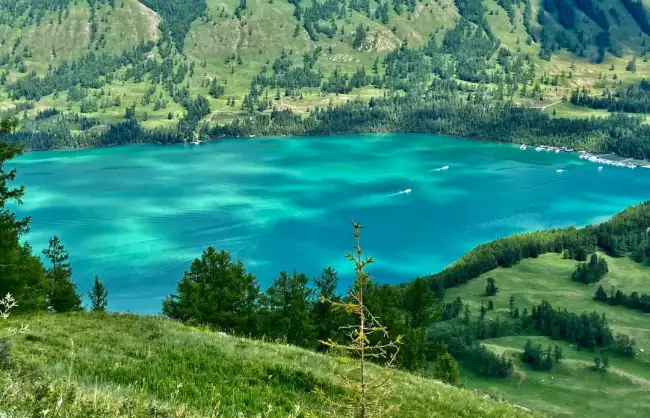
Kanas Lake and Hemu Village are two hidden gems in the Altay Mountains, inviting visitors with the stunning natural beauty and rich ethnic diversity.
Kanas: Nature’s Masterpiece
The crescent-shaped Kanas Lake is nestled among towering snow-capped mountains, lush forests and grasslands, offering various colors according to the season and weather. A visit here will reward you with fairy-tale landscape and encounters to diverse rare animals and plants. Beyond its picturesque natural beauty, the lake is also a site of mysteries as the legend goes that there is a large mysterious monster claimed to be seen in the water.
Hemu Village: A Glimpse into life of Tuva People
Most tourists add a Hemu Village visit after the Kanas Lake discovery. Located about 62 kilometers from Kanas Lake, Hemu Village is one of the three remaining Tuva villages in China. A visit here will introduce you to the simple and traditional lifestyle of Tuva people who live by grazing animals and hunting. Many tourists are impressed by the many wooden houses here which are embraced by towering mountains, birch forest, and Hemu River. Autumn is the most recommended time to visit Hemu Village when the birch forest turns golden, creating a beautiful landscape painting with the mist-shrouded distant mountains.
2. Step Back in Time at Kashgar Old City
Explore History of Ancient Silk Road & Rich Islamic and Uyghur Culture
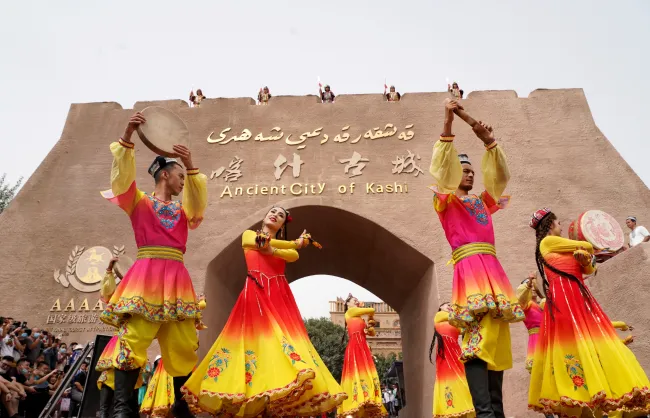
Not only a tourist attraction, Kashgar Old City is also a living community where you can explore ancient Silk Road relics and experience authentic and diverse Uyghur culture.
With a history for over two millennia, Kashgar Old City is a former hub of the Silk Road where you can witness many old mud-brick buildings dating back to centuries ago. Id Kah Mosque and the Apak Hoja Tomb are two of the most notable buildings here.
The vivid life of local Uyghur people unfolds before your eyes as you stroll through the narrow alleys that crisscross the Old City, forming a maze of shops, houses, mosques, and teahouses. Immerse yourself in the local neighborhood dotted with colorful fabrics, carpets, pottery, and jewelry, and be amazed by the songs and dances in the Old Tea House, a popular gathering place for locals and travelers alike.
Don’t miss the vibrant Kashgar Sunday Bazaar where you can gain more insights into local life and culture. This is one of the largest market in Central Asia, attracting people from different ethnic groups to to trade animals, fabrics, household items, foods, nuts, dried fruits, etc. You can pick up some souvenirs and learn to bargain like a local.
3. Be Enchanted by Heavenly Lake
Diversity of Nature and Culture
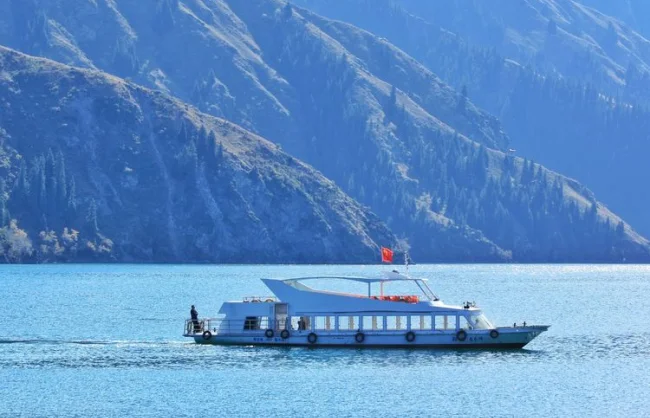
Heavenly Lake is an iconic alpine lake in Xinjiang, sitting at an elevation of 1,910 meters above sea level, and with its 100 meters deep water reflecting the Bogda Peak. The lake is set within the Tianshan Mountains and is surrounded by spruce forests and alpine meadows, making it a popular destination for hiking, boating, photography and admiring natural beauty.
Besides the stunning natural scenery, you will also meet some traditional yurts around the Heavenly Lake which are homes to the Kazakh people. An ethnic minority group in Xinjiang, Kazakh people still preserves their nomadic lifestyle, and are good at horse riding and folk music. During a Heavenly Lake visit, you can visit a yurt of the Kazakh people, see the decorations inside the yurt, try their distinctive cuisine and closely experience their culture and customs.
4. Discover the Vastness of Naraty Grassland
Nature’s Bounty
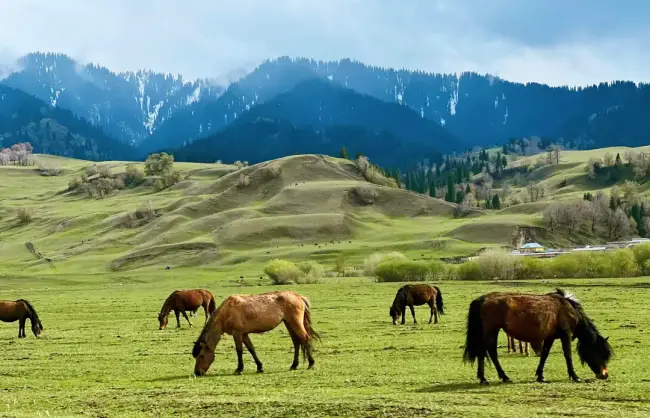
A stunning alpine and valley grassland in Xinjiang, Naraty Grassland (aka Nalati Grassland) in the Ili Kazak Autonomous Prefecture stretches about 10,000 square kilometers and sits about 2,200 meters above sea level. It is claimed as one of the most beautiful grasslands in China, featuring diverse landscapes such as flat river valleys, high mountain peaks, deep gorges, lush forests, and endless meadows.
Due to its exceptional vastness, Naraty Grassland is divided into three routes. Sky Grassland is the top recommended route in Naraty Grassland, featuring endless grassland on the rolling ridges stretching to the sky. On this route, you can also visit Xuelian Valley with snow-capped mountains, glaciers, and waterfalls.
If time permits, you can also visit Panlong Valley combining grassland, forest, caves, valleys, rock formations and river. The Panlong River in this area is the source of the Ili River.
Hegu Grassland is the great place to experience Kazakh culture and customs, and explore the forest park.
5. Bask in the Beauty of Ili’s Apricot Valley
A Floral Wonderland
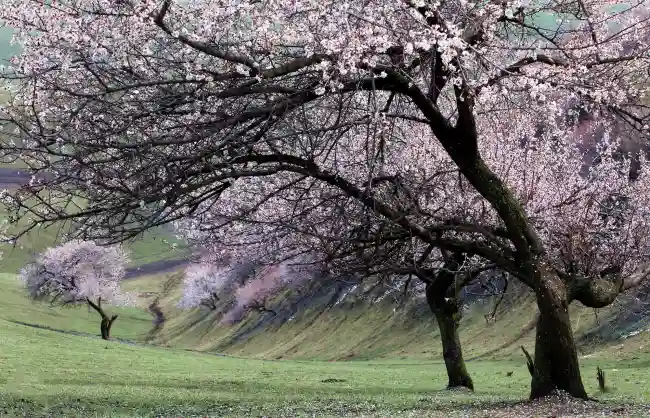
Located in Turgen Township, about 205 km away from Yining City, the Apricot Valley is famous for its dense wild apricot forests which is especially stunning from late March to early May when the apricot trees are in full blossom. The sea of white and pink flowers complements the lush grassland and surrounding snow-covered mountains, creating a picturesque scene. And the the diverse array of flora and fauna in the valley enhances the charm of this area.
Beyond the scenic beauty, the Apricot Valley is also rich in history and culture. It was once an important pass on the ancient Silk Road and a witness of Genghis Khan’s westward expedition, and was left with rich ethnic traditions and customs. The annual Nadam Fair from late July to early August serves as a notable example.
6. Unearth the Secrets of Jiaohe Ruins
A City Lost in Time
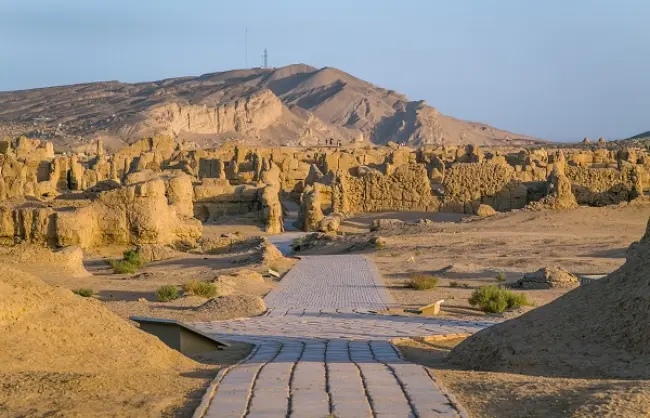
This is the largest and oldest raw-earth building in the world dating back to over 2,000 years ago. Once the capital of Tocharian kingdom of Jushi, Jiaohe Ruins is located between two deep river valleys, with the steep cliffs and the rivers as its fortress. No wonder it had no walls.
The city firstly flourished during the ancient Silk Road era when it served as an important stop along the trading route. And the prosperity continued to Tang Dynasty when the rulers established the Protectorate General of the Western Regions (a regional military command headquarters) here.
Today, tourists can still look into the clear layout of the city, with the eastern part serving for the rulers, and the western part serving for the commoners, discovering the diverse cultures that once coexisted here. Many artistic and cultural relics are still well-preserved here, including monastery, sculptures, murals, coins, stupa tower, and inscriptions.
7. Behold the Magnificence of Id Kah Mosque
A Place of Worship and a Cultural Hub
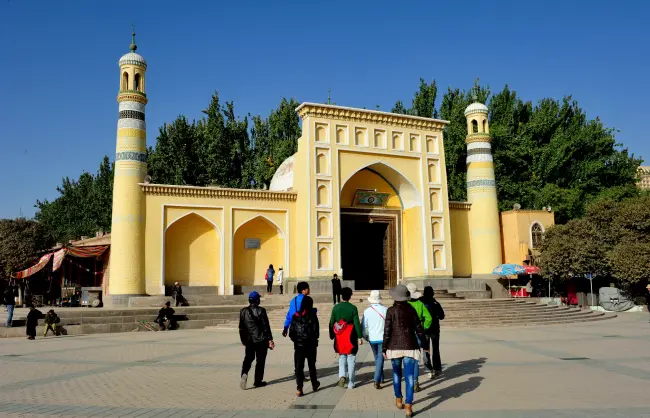
An iconic landmark of Islamic culture in Xinjiang, Id Kah Mosque is the country’s largest mosque with a yellow-tiled facade and elegant minarets. It covers an area of about 16,000 square meters, showcasing a seamless blend of Islamic and Chinese architecture style. You’ll be impressed by its glazed tiles on the roof, the wooden carvings on the doors and windows, the Arabic inscriptions on the walls, and the colorful carpets, chandeliers, and paintings on its prayer hall.
After witnessing important events and changes of this region for over 500 years, the mosque now is an important religious center for Uyghur people, and can house up to 20,000 worshippers. Moreover, it is also a place of celebration with various festivals and ceremonies held here. No matter you are an architecture lover or a history and culture fun, the Id Kah Mosque is no doubt worth your visit.
Suggested tour: 2 Days Kashgar Local Cultural Tour in Xinjiang
8. Marvel at the Beauty of Sayram Lake
A Natural Wonder
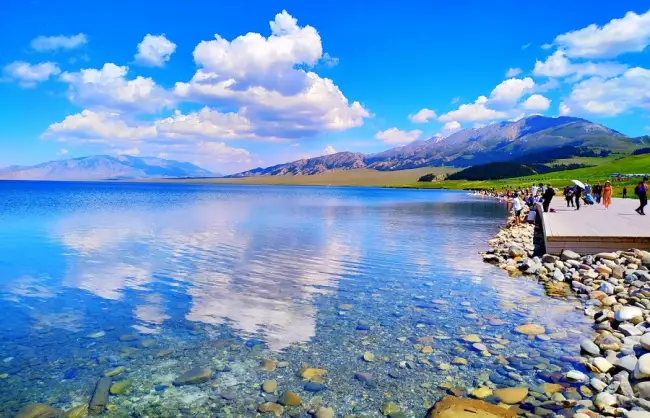
Another alpine lake in Xinjiang, Sayram Lake sits on an elevation of 2,073 meters and covers an area of 458 square kilometers. This largest and highest lake in Xinjiang is surrounded by snow-capped mountains, lush forests, and colorful wildflowers, creating a paradise for various species of plants and animals. It is home to flocks of ducks and swans, over 600 species of seed plants and various kind of waterbirds. The lake and its surrounding scenery changes according to the time of year, and May to October marks the best time to visit it when the flowers are in full bloom.
Live around the lake area are Mongol and Kazak ethnic groups who consider the lake as a sacred and blessed place, and celebrate festivals and rituals here. Consider to make a visit to a family of the ethnic group, learn their culture and custom and many mysterious legend about this lake.
9. Immerse Yourself in Buddhist Art and Culture at Bezeklik Caves
The Cliffside Sanctuary
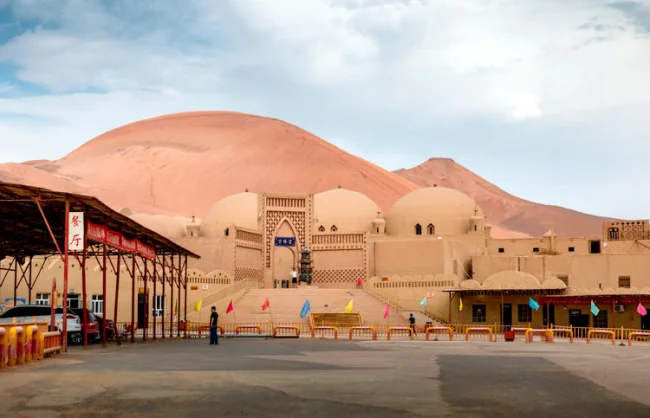
Don’t miss the Bezeklik Caves if you are interested in the ancient Buddhist art and culture of Xinjiang. Aka Thousand Buddha Caves, the Bezeklik Caves is a complex of cave temples carved into the cliffs of the Flaming Mountains, and can be dated back to the 5th to 14th centuries.
The caves have witnessed the rise and down of various kingdoms and dynasties. Visitors can discover the diverse cultural influences in this region from its exquisite murals. Covering a total area of over 1200 square meters, the murals in the caves showcases various scenes of different dynasties and characters from various backgrounds. You can also discover elements of art styles from different countries.
10. Savor the Flavors of Xinjiang: Foods and Fruits
A Culinary Adventure
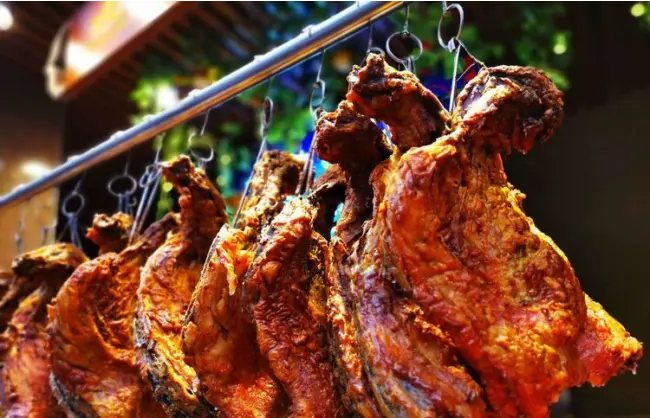
Xinjiang is a diverse region which is home to many ethnic groups, including Uyghur, Kazakh, Hui, Mongol, and others, and features diverse geography and climate. Its rich ethnic culture endowed the region with rich cuisine culture. Sampling Xinjiang’s cuisine seems to one of the best way to in-depthly experience Xinjiang’s culture. As most people in Xinjiang are Muslim, the most popular food in Xinjiang are mainly halal. Some of the most recommended ones include Lamb kebabs, Polo, Laghman, Nan.
Thanks to the region’s variety of geography and climate, Xinjiang also produces varied fruits, vegetables, and grains. Some of the specialties include Turpan grapes, Hami melons, Korla pears, Kucha apricots, Yecheng pomegranates, Kashgar figs, and Hotan walnuts.
11. Experience the Bustle of Erdaoqiao International Bazaar
A Shopper’s Paradise and a Cultural Crossroads
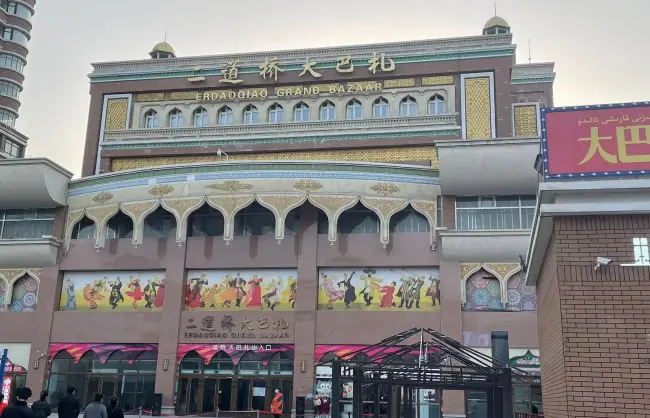
Covering an area of 100,000 square meters, Erdaoqiao International Bazaar in Urumqi is a sprawling market showcasing the diverse cultures and traditions of the regions. It houses over 3,000 shops selling carpets, silk, jade, jewelry, handicrafts, nuts and many other items. All the items here are from different ethnic groups in Xinjiang and neighboring middle Asia countries, allowing a glimpse into diverse cultures and daily life of local people.
Besides buying and bargaining, you can also expect to enjoy colorful performances of folk music and dance and taste delicious cuisines of different regions in the market.
Related reading:
12. Uncover the Past at Xinjiang Regional Museum
A Journey Through Time
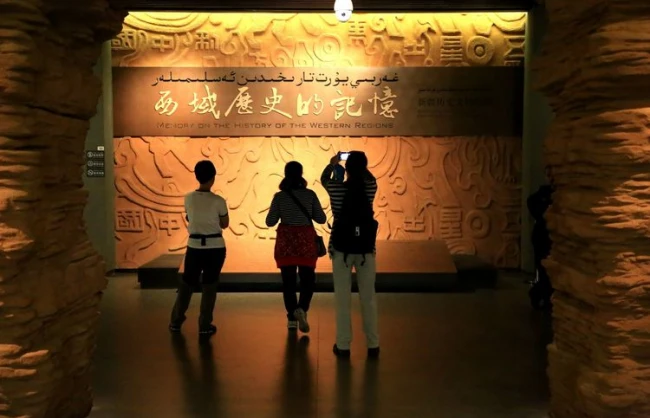
Showcasing the past and present of Xinjiang, Xinjiang Regional Museum will show you the rich and diverse heritage of this region with its over 50,000 exhibits. Here you can see artifacts, costumes, tools, paintings, and other items that reflect the life and customs of different ethnic groups and historical periods in Xinjiang. All these exhibits are displayed in four sections, among which, the Ancient Corpses Exhibition is the most fascinating one, featuring 20 well-preserved mummies that date back to thousands of years ago. Explore these mummies to discover the physical characteristics of ancient people in this area, and learn about their clothing styles, and burial customs.
Related reading: Xinjiang Travel Itinerary Guide: The Ultimate Planner
How to Plan a Xinjiang Tour
Xinjiang is a huge region, which actually takes up about one-sixth of China. So that make a smart plan is essential for you to have a good experience. The whole region can be generally divided into Northern Xinjiang (Beijiang) and Southern Xinjiang (Nanjiang), so that many would choose only one of them as the major travel direction. And even if it’s just one direction, it can still cover various highlights which takes around 7 days to do a full exploration. However, if your time allows you to visit the entire Xinjiang, then this journey will certainly offer a richer and more immersive experience.
How Many Days to Visit Northern Xinjiang (Beijiang)?
- Recommended: 6–10 days
Northern Xinjiang features cooler weather, and there are more alpine lakes, forests, and wide grasslands. Distances are rather long but roads are generally excellently paves. As a result, self-driving and private tours through this area are quite popular.
Northern Xinjiang Itinerary (8 days)
Day 1: Urumqi Arrival
Arrive in Urumqi and rest or explore the city lightly.
Day 2–3: Heavenly Lake → Sayram Lake
Visit Heavenly Lake, then head west to Sayram Lake via the Guozigou Valley.
Day 4–5: Naraty & Kalajun Grasslands
Explore Naraty’s and continue to the wide rolling hills of Kalajun. Horse riding available with brilliant photo viewpoints.
Day 6: Drive to Kanas
A full day of driving with scenic stops along the way. Stay near Kanas.
Day 7: Kanas → Hemu
Visit Kanas Lake (Moon Bay, Dragon Bay). Then heading to Hemu Village for birch forests.
Day 8: Hemu → Urumqi
Return to Urumqi by car or flights.
Recommended tour: 8 Days Northern Xinjiang Group Tour of Urumqi-Fuyun-Burqin-Kanas-Hemu
How Many Days to Visit Southern Xinjiang (Nanjiang)?
- Recommended: 5–9 days
If you want to explore Uyghur culture, then Southern Xinjiang is definitely where you should go. It is famous for attractions like ancient towns, bazaars and Silk Road sites.
Sample Southern Xinjiang Route (7 Days)
Day 1: Urumqi Arrival
Free time to rest or explore.
Day 2–3: Turpan Highlights
Drive to Turpan to visit sites such as Jiaohe Ancient City, Flaming Mountains, Karez System, and Emin Minaret. Then fly to Kashgar.
Day 4: Kashgar Old City
Old Town, Id Kah Mosque, and the Grand Bazaar.
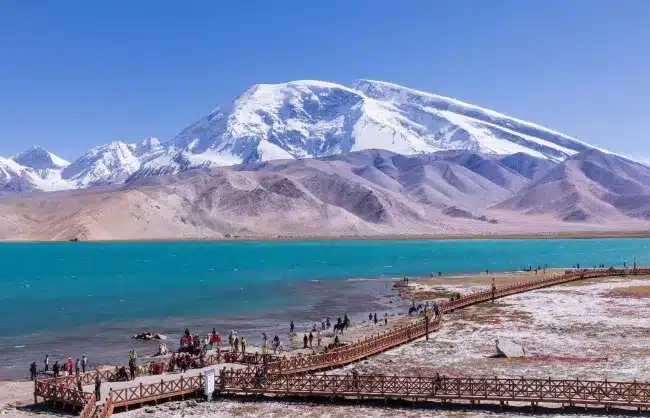
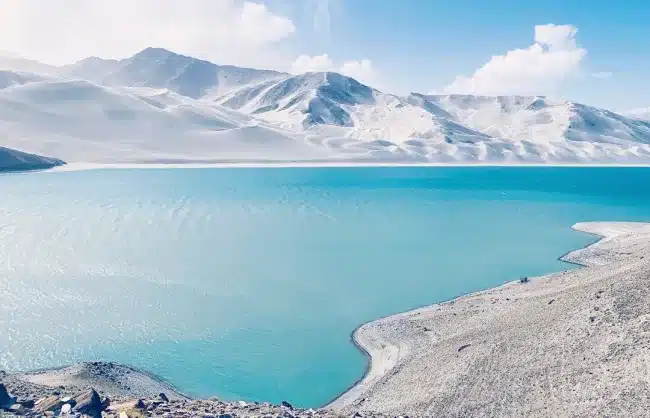
Day 5: Karakoram Highway → Karakul Lake
Full-day drive to Karakul Lake along the Karakoram Highway for lake views.
Day 6: Optional Yarkand/Hotan Desert or Kashgar Suburbs
Choose a Taklamakan Desert experience or keep exploring Kashgar
Day 7: Return to Urumqi
Fly back to Urumqi for departure
Recommended tour: 7 Days Southern Xinjiang Tour
FAQs Top Things to Do in Xinjiang
Q: What is Xinjiang best known for?
Definitely its extraordinary variety: 1) Silk Road history and ancient sites (Kashgar, Jiaohe). 2) Unique ethnic cultures (Uyghur, Kazakh, Kyrgyz) 3) Dramatic landscapes (Tianshan peaks, Kanas, Taklamakan desert)4) Signature fruits (Hami melon, Turpan grapes).
Q: How many days do you need in Xinjiang?
Short highlights: 5–8 days (pick north or south). And to explore the whole region, expect12–16 days for a trip.
Q: Which month is best to visit Xinjiang?
A: May–October but avoid the extremely hot summer. September–October is the time when autumn colors come alive.
Q: What activities are popular around Kashgar Old Town?
- Wandering the Old City alleys
- Paying a visit to the Id Kah Mosque and Apak Hoja Tomb
- Shopping at the Sunday Bazaar
- Spend some time in Uyghur tea houses. Watch local music/dance performances.
Q: Best outdoor adventures in Xinjiang?
- Kanas: hiking and boating
- Heavenly Lake and Nalati: horse-trekking and yurt stays
- Taklamakan edges: exploring desert landscapes and camel treks
- Sayram/Koktokay: long or short walks
Q: Most famous lakes & mountain areas in northern Xinjiang?
- Kanas Lake
- Heavenly Lake (Tianchi)
- Sayram Lake
- the Altay and Tianshan mountain ranges
- plus Nalati grassland.
Tour Xinjiang with China Xian Tour
Are you planning a trip to Xinjiang and wondering where to start? Look no further than our popular Xinjiang tours! We’ve curated a selection of the best experiences that showcase the region’s breathtaking natural scenery, rich cultural heritage, and delicious cuisine. Whether you’re an adventure seeker or a history buff, China Xian Tour have a tour that’s perfect for you. Select any of the following tours to embark on an unforgettable journey through the stunning landscapes and vibrant communities of Xinjiang.