
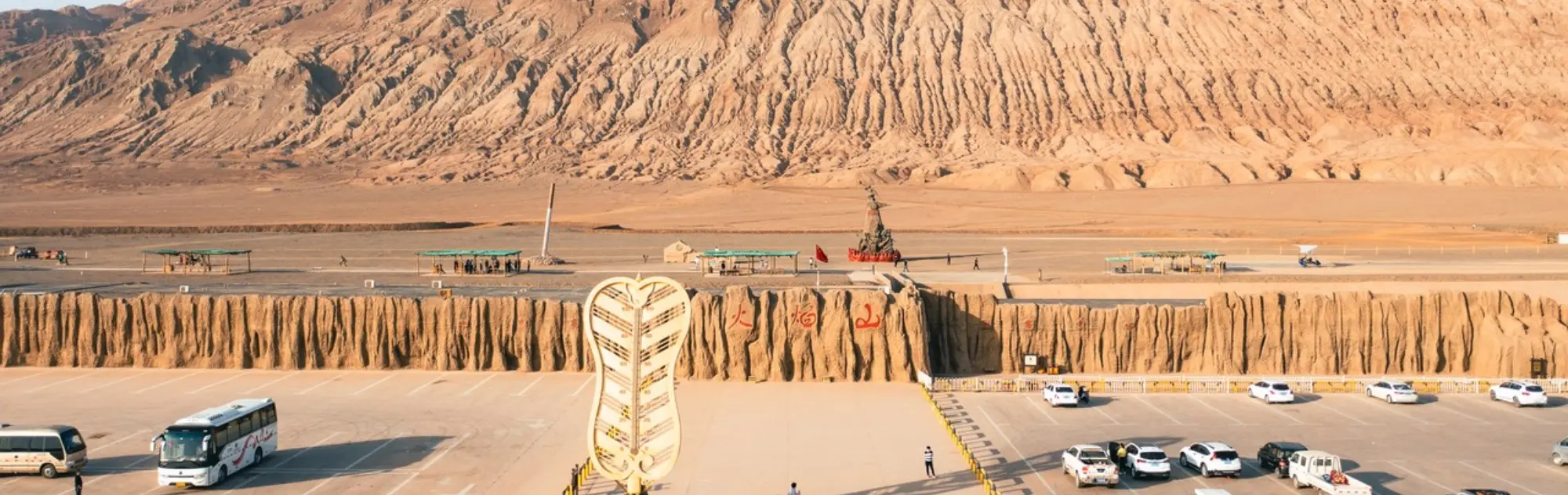
Situated in the northern edge of Turpan Basin, Xinjiang, and the northern route of the ancient Silk Road, the Flaming Mountains scenic spot features fiery reddish brown sandstone landform. This place was historically the location of the ancient Gaochang Kingdom. And according to legend, it is the location of Flaming Mountains where Tang Monk and his disciples borrowed the palm-leaf fan to extinguish the fire in Journey to the West. So the Flaming Mountains is a popular destination for many tourists who love Chinese culture during their Turpan travel.
The range of Flaming Mountains runs in an east-west direction, with a total length of over 100 kilometers and a maximum width of 10 kilometers. Covering 290 square kilometers, it has an elevation of about 500 meters and its main peak (Qinglongzui) has an elevation of 831.7 meters. Turpan belongs to a typical continental arid desert climate. Turpan Flaming Mountain is the hottest place in China, with the highest temperature reaching 47.8 ℃ and the highest surface temperature reaching 89 ℃ in summer. Eggs can be roasted in the sand. There are more than 100 days a year when its temperature is above 35 ° C.
In 2018, the Flaming Mountains Scenic Area was shortlisted for the “100 Wonders in Northwest China”.
Content Preview
- Fast Facts About Flaming Mountains
- Naming and Legends of Flaming Mountains
- How Was the Flaming Mountain Formed?
- What to See and Do in Flaming Mountains
- Best Time to Visit Flaming Mountains
- How to Get to Flaming Mountains
- Attractions Nearby Flaming Mountains
- Planning a trip around the Flaming Mountain
- FAQs about the Flaming Mountain
Fast Facts About Flaming Mountains
- Chinese Name: 火焰山 (Huoyan Shan)
- Location: North of National Highway 312, Gaochang District, Turpan City, XinjiangUygur Autonomous Region
- Opening Hours: 08:30-20:00 all year around
- Ticket Price: RMB 40 per adult
- Time Needed: About 1-3 hours
- Best time to go: autumn (September to October) and spring (March to May)
- Highlights: The hottest place in China, fiery red rocks and cliff landforms, a sacred land for The Journey to The West.
Naming and Legends of Flaming Mountains
Origin of Name
Flaming Mountains is called “Kiziltag” in Uygur language, meaning “Red Mountain”. During the Tang Dynasty, people called it “volcano” due to its scorching heat.
The surface of Flaming Mountains is bare, with no grass growing and rare flying birds. During the height of summer, under direct sunlight, the reddish brown mountains shimmer with sandstone, and the hot air rises like blazing fire with flames soaring into the sky, hence the name Flaming Mountains.
Folk Legend
There is a legend among the Uygur people about the Flaming Mountains. Legend has it that deep in the Tianshan Mountains, there is an evil dragon that likes eating boys and girls. The highest ruler of the area, Shatok Bukhara Khan, dispatched Hara Hezhuo to subdue the evil dragon in order to protect the people.
After a thrilling battle, the evil dragon was killed by Hala Hezhuo at the Qijiaojing in the northeast of Turpan. The evil dragon escaped westward with injuries, and the whole mountain was stained red with blood. Therefore, the Uygur people call this mountain Huoyan Shan, which is what we call Flaming Mountains.
Mythical Legend: Journey to the West
Xinjiang Flaming Mountains not only has its unique natural appearance. And in the late Ming Dynasty, Wu Cheng’en wrote the story of Tang Sanzang being blocked by Flaming Mountains and Sun Wukong borrowing the palm-leaf fan three times into the famous ancient novel Journey to the West. This links Flaming Mountains with Tang Monk, Sun Wukong, Princess Iron Fan, and Bull Demon King, making it full of magical colors and a wonderful place not to be missed in Turpan tours.
How Was the Flaming Mountain Formed?
It was formed due to the power of nature. About 50 to 60 million years ago, the Himalayan orogeny resulted in the folding and rising of the land, which formed the basic terrain of the Flaming Mountain. The fiery red rocks here are composed of red sandstone and mudstone from the Jurassic and Cretaceous geological periods. Because the rocks are rich in ferric oxide, they look like flame in the sunlight. About the extremely hot weather, it is because of its location, in inland China and in a low basin. The heat is easy to accumulate but not to dissipate. What’s more, the surrounding rock mountains also function the same, resulting in the long-term hot weather.
What to See and Do in Flaming Mountains
Turpan Flaming Mountains is mainly composed of fiery red sand, conglomerate, and mudstone, and is an important scenic spot on the northern route of the ancient Silk Road. Known for its mythical legend and unique natural landscapes, the Flaming Mountains Scenic Area is divided into two parts: under-ground and above-ground.
Under-ground Exhibitions
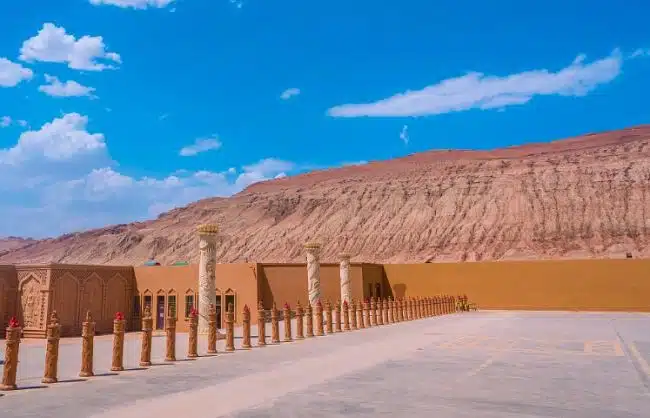
Generally, tourists who come here will first go to the underground part. The underground palace has a construction area of 9,000 square meters, including the Journey to the West Cultural Corridor, the Flaming Mountains Geography and Culture Hall, and the Gaochang Historical Celebrity Hall. The outer circle is the local customs of Turpan Flaming Mountain, bars, leisure shopping centers and so on.
- The Journey to the WestCultural Corridor uses 24 vivid reliefs to depict the hardships of Tang Monk and his disciples in the journey to the West to obtain Buddhist scriptures.
- The FlamingMountains Geography and Culture Hall uses a miniature sand table to showcase the terrain and landforms of Flaming Mountains, and the surrounding walls systematically introduce the local customs and geographical culture of Turpan through murals and relief texts.
- The Gaochang Historical Celebrity Hall showcases 14 lifelike figuressculptures, as well as stolen 1:1 restored murals, presenting visitors with the history of ancient Gaochang Kingdom.
Above-ground Landscapes
The above-ground landscape of the Flaming Mountains is composed of fiery red rocks and cliff landforms, which is very spectacular. The formation of Flaming Mountains can be traced back to the Himalayan orogeny period 50 to 60 million years ago. We can see from Flaming Mountain photos that it has different colors at each time period.
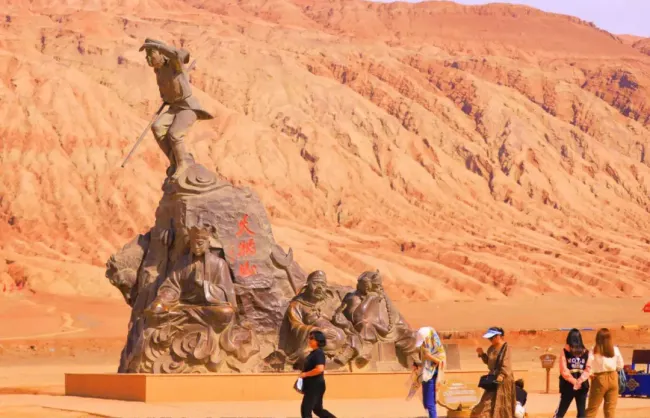
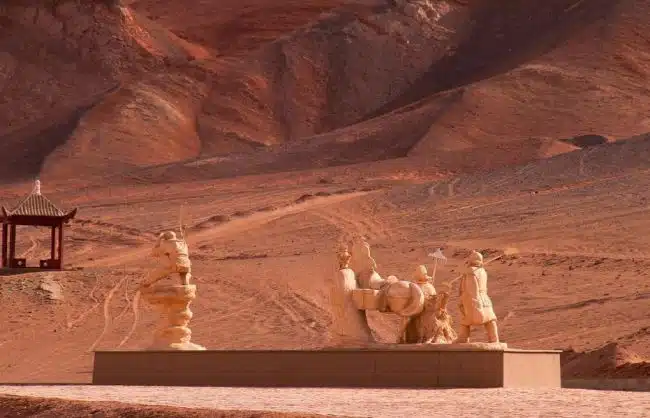
There are also sculptures with Journey to the West themes such as “Tang Monk and his disciples”, “Bull Demon King”, “Princess Iron Fan”, and a huge thermometer on the Flaming Mountains square. This giant “Jingu Bang” shaped thermometer with a diameter of 0.65 meters and a height of 12 meters is the world’s largest three-dimensional thermometer and a symbol of the Flaming Mountains scenic area.
Entertainment Activities
Turpan Flaming Mountain Scenic Area also offers camel riding, goat carts, donkey carts, tank armored vehicles, off-road sand vehicles and other projects. You can roam the entire Flaming Mountains and also take a powered delta wing or helicopter to overlook the Flaming Mountains.
Best Time to Visit Flaming Mountains
The Flaming Mountains has its unique charm every season, but it is particularly recommended for autumn (September to October) and spring (March to May). These two seasons have pleasant climate and beautiful scenery, suitable for outdoor sightseeing and photography. >> Read more about Xinjiang Weather
Travel Tips
The weather in Flaming Mountains during summer is particularly hot and the climate is very dry. Visiting here at this time is definitely a special experience during your Xinjiang tour. However, it is important to bring plenty of drinking water and prepare sun and dust protection equipment such as sun hats, sunglasses, and headscarves to prevent heatstroke. Please note that summer noon is not an ideal time for sightseeing.
How to Get to Flaming Mountains
- The Flaming Mountains scenic area is located about 30 kilometers east of Turpan city. The most convenient and fast way to travel from the city center of Turpan is to take a tourist bus or taxi, charter a car, or drive your car to Flaming Mountains (Huoyan Shan), which takes about 35 minutes.
- 64 kilometers away from Shanshan County, whichtakes about 1 hour by car.
- 220 kilometers away from Urumqi, whichtakes about 3 hours by car.
Attractions Nearby Flaming Mountains
- Grape Valley: one of the famous tourist attractions in Turpan. There are a wide variety of grapes here, with a sweet taste, especially the seedless white grape, which is renowned both domestically and internationally. 25 kilometers away from Flaming Mountains.
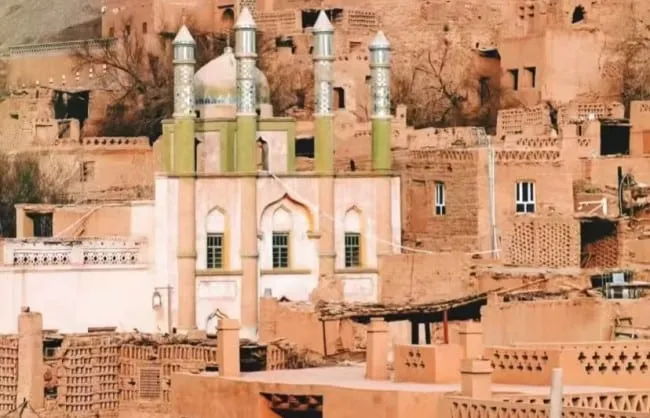
- Jiaohe Ruins: With a history of over 2,300 years, it is known for the unique earthen architecture and rich historical and cultural relics. ThisTurpan’s unmissable World Heritage site is 40 kilometers away from Flaming Mountains.
- Bezeklik Thousand Buddha Caves: As an important Buddhist site in the Western Regions, it is one of the most numerous and richly decorated cave groups in Turpan’s existing grottoes. 9 kilometers away from Flaming Mountains.
- Turpan Museum: a national first-grademuseum, showcasing the history and culture of Turpan, including the world’s most complete giant rhinoceros skeleton fossil, Fuxi and Nüwa silk painting, China’s earliest grape vine, and other precious cultural relics.
- Aydingkol Lake: It is the lowest point in China, with an altitude of -154 meters. The unique scenery by the lake makes it a great place for photography enthusiasts. 45 kilometers away from Flaming Mountains.
Planning a trip around the Flaming Mountain
To experience the charm of the Flaming Mountain and the nearby scenic spots, one day is suitable and classic. Below are the two routes of different themes, you can choose as you like.
- Essence Tour of Natural Wonders and Folk Custom Experience
This route will take you to experience the hot of the Flaming Mountain, the serenity of the villages inside the valley and the vastness of the desert.
When it is not very hot in the morning, head to the main scenic area first to marvel at the giant thermometer and underground palace. At noon, visit the rare mountain and the Bezeklik Thousand Buddha Caves. In the afternoon, watch the traditional Uyghur yellow clay architecture and experience the simple local customs in Tuyugou Village. At dusk, enjoy the sunset at Kumutage Desert.
- Historical and Cultural Tour with Oasis
Different from the above route, this route will take you to experience the coolness and wisdom of Flame Mountain.
The first stop in the morning is the Grape Valley, the Peach Garden in this hot place. The valley offers a cooler temperature. Tourists can stroll under the grape trellis and taste the sweet grapes. Then explore the Karez Paradise. This unique irrigation system brings in the water of life for the locals. Finally, visit the Turpan Museum to learn about the local history and culture.
FAQs about the Flaming Mountain
Where are the Flaming Mountains located?
It is in the central Turpan Basin, Gaochang District, Turpan City, Xinjiang Uygur Autonomous Region.
What is the flaming mountain known for?
It is known for the hottest place in China, the unique red mountain and the culture of the Journey to the West.
Is it possible to hike or climb on the mountains?
Hiking is permitted but very challenging, so beginners should not try it and professional persons also need to prepare well.
Why is the soil and rock so red?
Because the rich ferric oxide in the rocks turns red after oxidation due to the high temperature.
What is the highest temperature ever recorded at the Flaming Mountain?
It is 49.6℃, when the surface temperature even reaches 89℃.