
Xinjiang, also known as the Western Regions in ancient times, is located in the northwestern frontier of China and the heartland of Eurasia. The Regional Museum of Xinjiang is a must-visit spot during a Urumqi tour for anyone interested in exploring the region’s diverse cultural heritage.
Established in 1953, the Xinjiang Uyghur Autonomous Region Museum is the only provincial-level comprehensive local museum in the autonomous region. Awarded the status of a first-class national museum in 2008, Xinjiang Regional Museum holds over 40,000 artifacts, including 381 first-grade cultural relics.
Xinjiang Regional Museum Facts
- Address: 581 Northwest Road, Shayibake District, Urumqi City
- Type: Museum, Silk Road Site, Landmark
- Best Time to Visit: All Seasons
- Time Needed: 2 – 3 hours
- Opening Hours: Apr. 15 – Oct. 15: 10:00 – 18:30 (last entry: 18:00); Oct. 16 – Apr. 14: 10:30 -18:00 (last entry: 17:30); closed on Mondays
- Tickets: Free Admission, but you need to make reservation through the WeChat mini-program of “新疆维吾尔自治区博物馆” in advance.
- Suited To: People interested in Silk Road culture and Xinjiang history
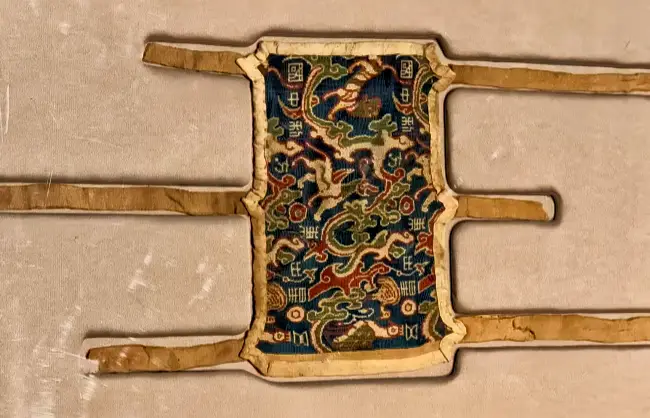
- Treasures: Loulan Beauty, the Small River Princess, brocade armband embroidered with “Five stars rising in the east favor the Middle Kingdom”, Silk painting of Fuxi and Nüwa
Content Preview
- Must-see Exhibits
- Highlighs
- What to Do
- How to Get to
- Best Time to Visit
- Useful Travel Tips
- Nearby Attractions
- Travel with China Xian Tour
- FAQs
Must-see Exhibits in the Xinjiang Regional Museum
The collections in Xinjiang Museum are very abundant, and they are proofs of the cultural integration of ancient Xinjiang with the central plain and western countries. Below are the main exhibits you can not miss.
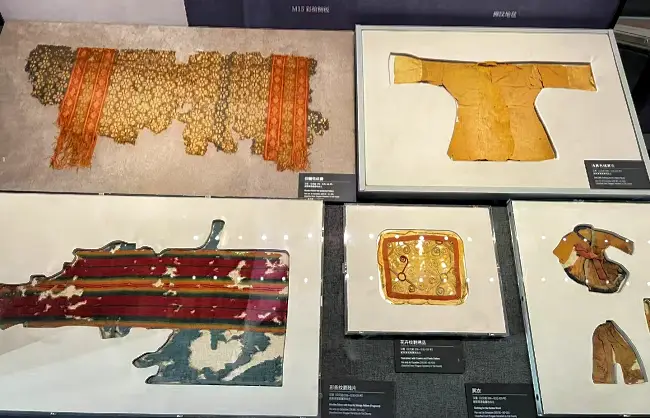
- Textiles and clothing:treasures of the Silk Road trades. The exhibits are from different ethnic nationalities, but all show exquisite skills. The patterns integrate eastern and western cultural characteristics. Embroidery with Phoenix Patterns from the Warring States Period is the representative artwork.
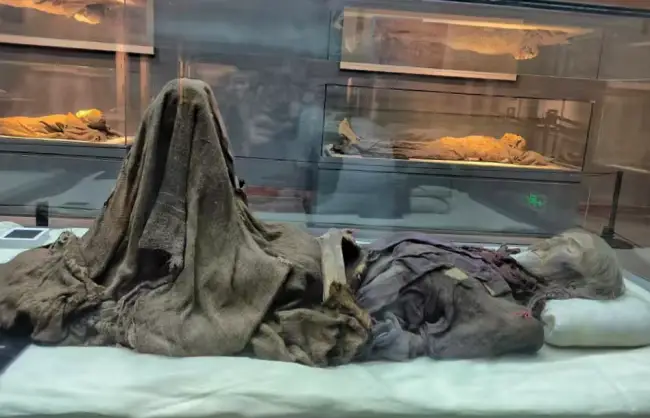
- Ancient mummies: They areformed naturally due to the unique climates. These well-preserved mummies are precious specimens for the research of ancient people and life. The Loulan Beauty mummy and Xiaohe Princess mummy are very famous.
- Various manuscripts and documents:These documents are in different languages and record politics, economy, military affairs and daily life. All are the living archive of ancient Western Regions.
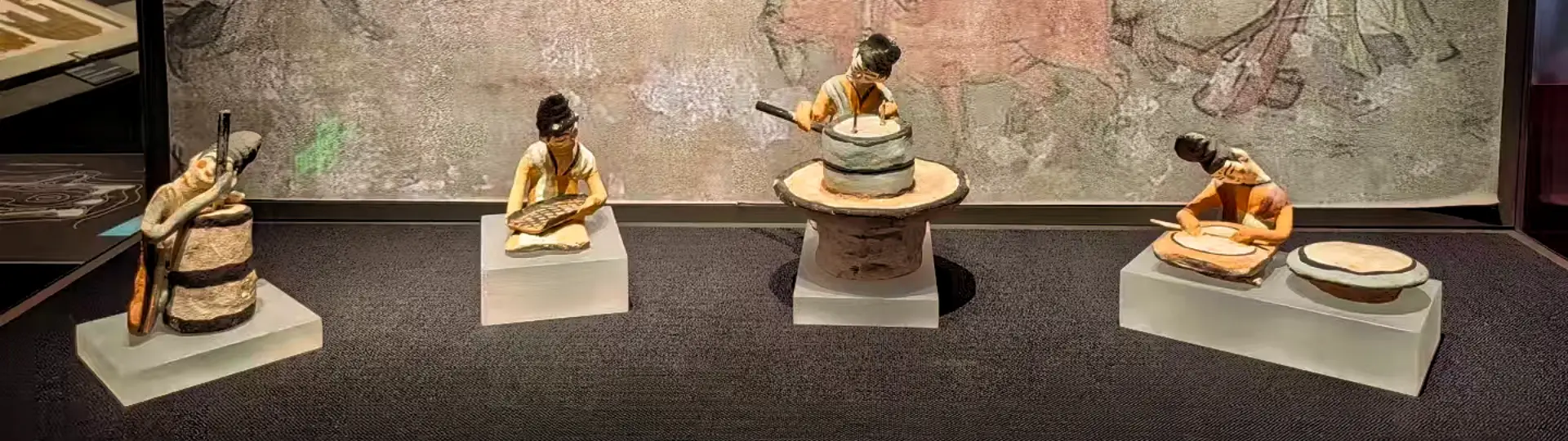
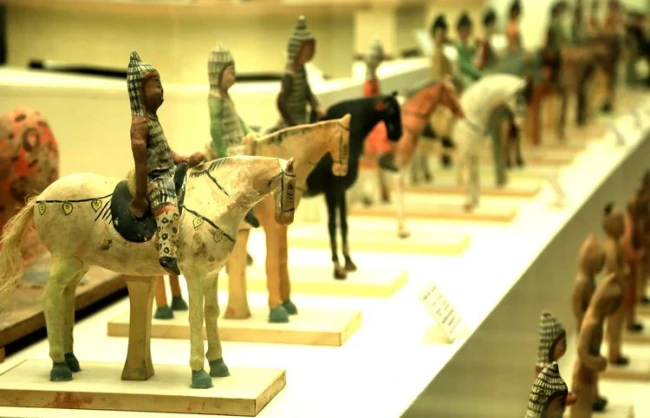
- Sculptures and figurines: These collections are vivid and made ofdiverse materials, such as wood, clay and bronze. All of them reflect the social life and burial arts of the Jin and Tang Dynasties. The Wooden Figures with Silk Garments and Polychrome Paintings is unmissable.
- Metalware and ceramics: They show the craftsmanship level and aesthetic taste of different dynasties.
- Other important collections: coins, seals, bamboo slips, musical instruments, Buddhist statues and murals, etc.

Discover Urumqi's cultural and natural highlights on this 3-day private tour featuring the breathtaking Heavenly Lake of Tianshan Mountain and Xinjiang Regional Museum.
Highlights of Xinjiang Regional Museum
Xinjiang Regional Museum features several themed exhibitions, including “Ancient Xinjiang Historical Relics,” “Xinjiang Revolutionary Historical Materials,” “Xinjiang Ethnic Customs,” and “Ancient Mummies of Xinjiang.”
Xinjiang Historical Relics Exhibition
The Xinjiang Historical Relics Exhibition was launched on May 18, 2022, during the opening of the museum’s new Phase II building. It focuses on the history of ethnic interactions and integration, and the cultural exchanges along the Silk Road.
The exhibition brings history to life through nearly 2,000 carefully selected artifacts from the pre-Qin period to the Qing Dynasty, including nearly 500 new items unveiled to the public for the first time. These items, mostly from recent major archaeological discoveries in Xinjiang, systematically display the region’s brilliant historical culture and showcase the beauty of Chinese history, geography, and culture .
Xinjiang Ethnic Customs Exhibition
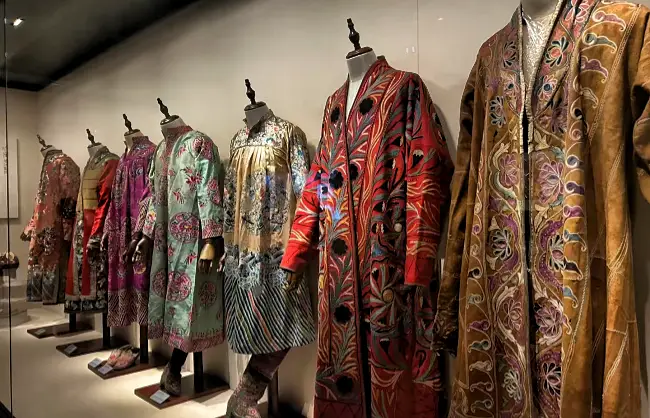
The Xinjiang Ethnic Customs exhibition comprehensively presents the folk cultural history of Xinjiang through photos, portraits, miniature architectural models, and historical documents. The exhibition displays nearly 800 pieces (sets) of high-quality artifacts and exhibits, covering traditional folk cultures of various ethnic groups such as the Uyghur, Kazakh, Kyrgyz, and Tajik. These exhibits in the Regional Museum of Xinjiang reflect aspects of daily life, traditional architecture, food and clothing, folk crafts, festivals, life rituals, and music and dance.
Xinjiang Revolutionary Historical Materials Exhibition
The Revolutionary Historical Materials exhibition of Xinjiang Regional Museum consists of four parts: “A New Beginning,” “A New Era,” “A Great Transformation,” and “A Profound Impact.” It includes revolutionary relics, photos, historical documents, and scene reconstructions. The exhibition displays over 200 revolutionary relics and 200 photos, divided into four sections to introduce the contributions and support of the Communist Party of China to Xinjiang’s development at different historical stages.
The Mummy Exhibition
Covering an area of over 700 square meters, the mummy exhibition hall in the Xinjiang Regional Museum not only displays several ancient corpses but also a large number of burial artifacts. Through photos, texts, and multimedia displays, visitors can gain a comprehensive understanding of the history and culture of these mummies.
In the field of archaeology, mummies are classified into several categories, including mummies, frozen bodies, jerked bodies, tanned bodies, and wet bodies. When it comes to mummies, the most well-known are the Egyptian mummies, which are artificially preserved through special techniques. However, the mummies unearthed in Xinjiang are quite different. They are naturally formed mummies in the dry environment of Xinjiang, without any artificial treatment.
What to Do in Xinjiang Regional Museum
Experience the Creative Fusion
The Xinjiang Regional Museum’s cultural and creative products (CCPs) blend artistic value with practicality, launching a series of visually appealing, fun, and meaningful items. These products cover daily use items, stationery, rural specialties, and food, with a total of 817 types and 46,905 sets. These CCPs allow visitors to connect with history and evoke memories even after their immersive museum experience.
Immerse in the Cultural Relics
The vast territory and the scattered distribution of immovable cultural relics in Xinjiang may limits visitors’ exploration sometimes. To response, the Xinjiang Regional Museum has leveraged technology to empower its exhibitions. Utilizing digital resources of its collections and interactive technologies such as VR and AR, the museum has created a fusion of virtual and real experiences.
Aiming to provide a “one-stop” journey through Xinjiang, the project integrates movable and immovable cultural relics in an organic and complementary manner. It allows visitors to experience the deep historical connections between different regions in an immersive way during their Xinjiang travels.
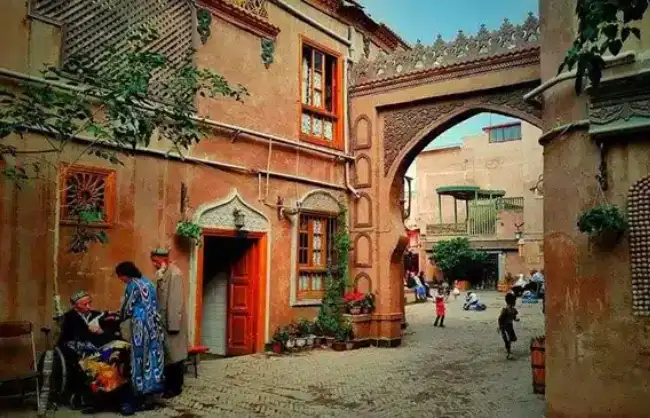
Combine Urumqi and Kashgar in 5 days with a 2-hour flight, exploring Heavenly Lake, Kashgar Old Town alleyways, Id Kah Mosque, and the serene Karakuri Lake.
How to Get to Xinjiang Regional Museum
By taxi: As the museum cannot be accessed directly by metro, taxi is the most convenient option. Below is the travel time and cost from major sites in Urumqi to the museum.
From |
Travel Time |
Cost |
Downtown Urumqi |
10 – 15 min |
CNY 12 – 18/USD 2 – 3 |
Urumqi Diwopu Airport |
30 – 35 min |
CNY 35 – 45/USD 5 – 7 |
Urumqi Station |
About 20 min |
CNY 20 – 25/USD 3 – 4 |
Erdaoqiao International Bazaar |
15 – 20 min |
CNY 20 – 25/USD 3 – 4 |
By metro + taxi: The nearest metro station is Balou Station of metro line 1, but it is still about 3 km from the museum. After arrival, you can take a taxi to get there, which will cost CNY 10/USD 1 and take about 10 minutes.
Best Time to Visit Xinjiang Regional Museum
The museum itself is suitable for visiting year-round thanks to its stable indoor temperature. But considering that you will pair it with other attractions in Xinjiang, June – October is the best time to explore the outdoor landscapes in the region.
During the week, it sees fewer crowds from Tuesdays to Fridays. To make the most of your trip, it is advised to arrive right at its opening time or after 15:00 to avoid crowds.
Useful Travel Tips
- Reservation: You can make a reservation 1 – 7 days in advance via the WeChat mini-program of “新疆维吾尔自治区博物馆”. And please enter at the reserved time slot. Early or late entry will not be admitted.
- Luggage storage: Both Security Check Rooms No. 1 and No. 2 offer luggage storage service free of charge, and backpacks and suitcases up to 28 inches are accepted.
- Guided tour service: There are three kinds of guided tour services. The first one is the Wechat mini-program. You can scan the code on site, then you will see the map, introduction of the main cultural relics and the position of the service facilities. The second one is the audio guide, which is divided into the smart audio guide and the self-service audio guide. Both of them are free, but require a deposit fee of CNY 300 and CNY 200, respectively. The last one is the manual explanation. Its cost is CNY 150 per hour.
- Photos: Tourists can take photos in the exhibition hall, but the flashlight, tripod and selfie stick are not allowed to use. Without permission, commercial shooting, live streaming and recording are prohibited.
- Dressing: Please wear appropriate clothes and do not wear slippers.
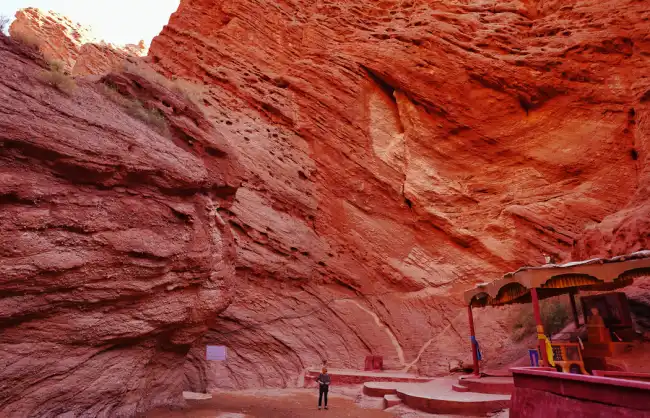
A 10-day Southern Xinjiang tour from Kashgar through Tashkurgan, Shache, Kuqa, and Turpan to Urumqi, exploring ancient grottoes, mosques, and diverse natural landscapes.
Attractions Nearby the Regional Museum of Xinjiang
If you have extra time, there are several attractions near the Xinjiang Regional Museum that are worth visiting, including:
- Red Hill Park: Red HillPark is a symbol and landmark of Urumqi, Xinjiang. With an elevation of 910.8 meters, the park is composed of purplish-red conglomerate, which gives it its reddish-brown appearance.
- International Grand Bazaar: The International Grand Bazaar is a massive indoor market that offers a glimpse into the local culture and traditions of Xinjiang. The market sells various goods, including textiles, handicrafts, and food.
Join China Xian Tour for an In-depth Discovery of Xinjiang
Besides the museum, there are also many other historic and cultural sites and natural scenery in Xinjiang, which attract plenty of tourists every year. Follow China Xian Tour to discover Xinjiang from different perspectives. Our tailored trip can include all the attractions you prefer and meet all your other demands. To escort you in this large area, a professional guide and a local driver will also be assigned. So do not hesitate to contact us.
FAQs about Xinjiang Museum
Why is the Xinjiang Regional Museum considered so important?
Because its collections directly prove the exchanges and mutual learning among diverse civilizations along the Silk Road, so you can not miss it during your Xinjiang tour.
What facilities are available (restrooms, café, gift shop)?
Restrooms, a baby care room, a free storage area, a restaurant, a cafe, and merchandise stores are available for tourists.


