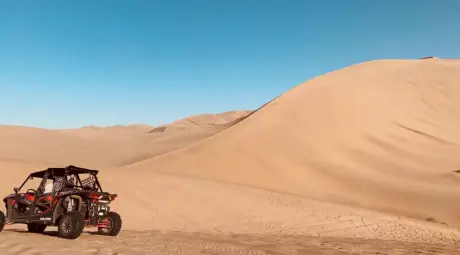
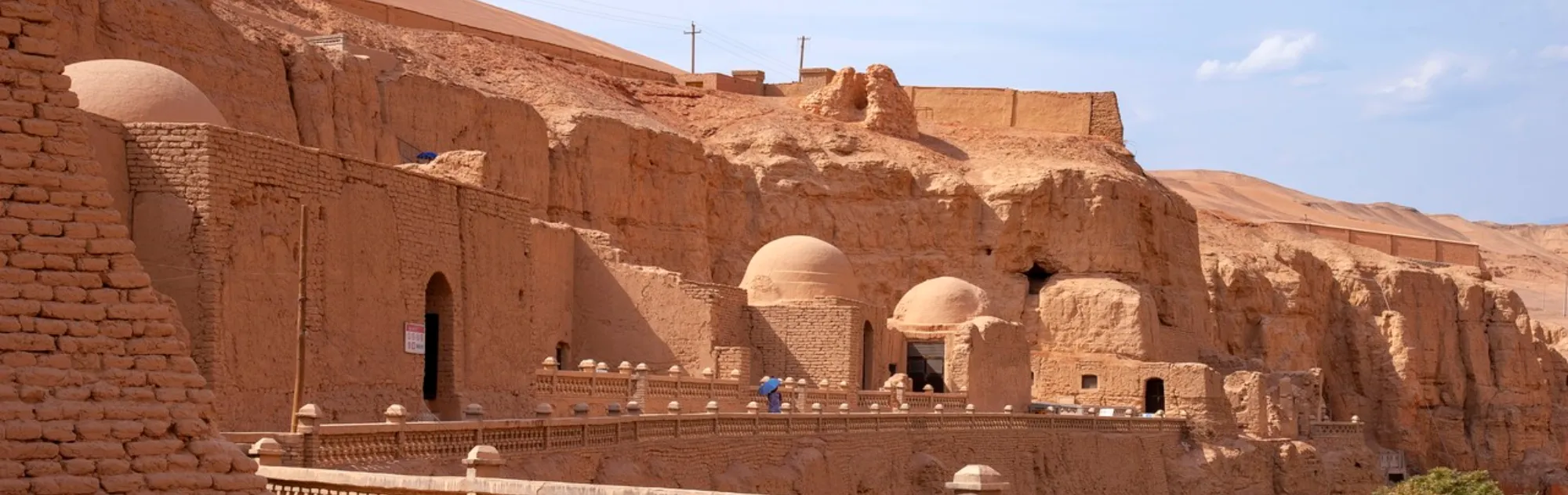
Carved into the cliffs of Mutou Valley deep, where the Flaming Mountains cast their fiery glow over the desert, the Bezeklik Thousand Buddha Caves whisper fading stories of unnamed devotion, ethereal art, and time’s relentless passage. For thousands of years, she has fought to preserve the most blissful dreams of our ancestors from being erased by time and human hands. Once a thriving Buddhist sanctuary along the China Silk Road, this remarkable site near Turpan in Xinjiang carries a legacy of cultural fusion, where Persian, Indian, and Chinese influences intertwined in vibrant murals—now softened by centuries of wind and sand.
Today, travelers from around the world still weep their eyes for her enduring beauty, which stands resilient against the scars of time and destruction. Whether you’re a history enthusiast or an art lover, you will catch a glimpse into a lost, yet mesmerizing world—where you can find vivid scenes from the life of Buddha as well as images of other important religious figures and symbols. The Bezeklik Caves are also an important archaeological treasure, designated as a UNESCO World Heritage Site.
Content Preview
- Quick Facts of Bezeklik Caves
- What to See and Do When Visiting Bezeklik Caves
- Decoding the Murals You Can Still See
- Recommended Tour Route – Approximately 2 hours
- Best Time to Visit
- Bezeklik Caves Location & Transportation
- Tips for Visiting the Bezeklik Caves
- Attractions Nearby Bezeklik Caves
- FAQs about Bezeklik Thousand Buddha Caves
- Plan Your Xinjiang Turpan Tour with China Xian Tour
Quick Facts of Bezeklik Caves
- Location: Bezeklik Thousand Buddha Caves is located in the Flaming Mountains near Turpan City, Xinjiang, China.
- Travel essentials: Bring water, sunscreen, and comfortable walking shoes.
- Area: Approximately 1200 square meters.
- Time Needed: Around 1-2 hrs.
- Highlights: Home to 77 rock-cut caves, with the largest spanning 42 meters in length and 13 meters in width. Notable sites include Caves No. 18, 20, 33, 38, as well as Grottoes 82 and 83 (detailed introductions to follow).
- Entrance fee: CNY 40
- Best For: History buffs, art lovers, and explorers drawn to the cultural echoes of the Silk Road.
- Opening hours: 09:30 – 19:00
What to See and Do When Visiting Bezeklik Caves
A Glimpse into the Past and Her Fate
Dating back to the 5th century (A.D. 499 – 640), the Bezeklik Thousand Buddha Caves were first excavated. Caves No. 18, 29 and 48 were built in this time, No. 18 being the earliest existing cave with murals can be seen. The cave flourished under the Gaochang Kingdom (5th–7th centuries) and continued to evolve through the Tang, Five Dynasties, Song, and Yuan periods for seven hundreds years in history.
Approximately a century ago, German explorer Albert von Le Coq’s expedition reached the Bezeklik Thousand Buddha Caves, only to find them buried in sand and inhabited by nomads. As the team archaeologists cleared away the deep layers of sand, they were enveloped by waves of color and stunned to see a long-forgotten tale gradually revealing itself on the walls. As von Le Coq himself described, they discovered “splendid paintings in colors as fresh as if the artist had only just finished them” (translated from Auf Hellas Spuren in Ostturkistan: vol.1).
Despite her grandeur, the Bezeklik Thousand Buddha Caves have endured centuries of hardship in history. The arrival of Islam led to the decline of Buddhism, and as a part of Buddhist cave temples, some murals were defaced, their figures’ eyes and mouths deliberately removed. In the early 20th century, 90% of the murals were cut from the caves and transported abroad by international expedition teams due to their survey methods, now collected at museums in other nations like Germany, Japan and Britain.
Discover the Masterpiece of Cross-Cultural Art
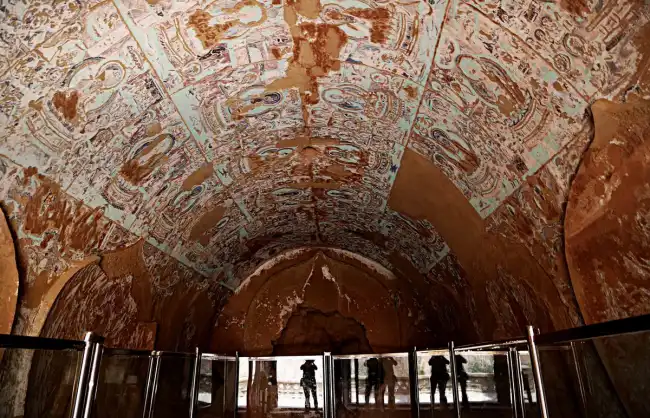
The Uighur word “Bezeklik” means “a place with paintings” or “a beautifully decorated place.” The murals of Bezeklik Caves are a testament to the Silk Road’s vast cultural exchanges. Traders, monks, and travelers from distant lands like Persia and India once converged here in ancient Turpan, their artistic heritage reflecting a multiethnic tapestry that slowly unfolds to invite interpretation. Chinese painting techniques (baimiao, 白描) blend seamlessly with foreign religious and symbolic traditions, resulting in a unique and vivid aesthetic.
The murals, spanning over 1,200 square meters, are breathtaking in both scale and detail. Monks, kings, celestial beings, and common worshippers gaze out from walls painted with intricate Buddhist narratives. One of the most significant murals in Cave 33 portrays Buddha’s Nirvana, where mournful disciples surround the reclining figure in a moment of reverent sorrow. Meanwhile, Cave 20 preserves rare depictions of the Uighur royal family, the rulers who once patronized these sacred halls.
Learn about Buddhism and Buddhist Uyghurs
Bezeklik Thousand Buddha Caves were named “Ningrong Temple” (宁戎寺) in the Tang Dynasty. For those interested in Buddhism, the Bezeklik Thousand Buddha Caves offer a wealth of research opportunities. Once nearly 83 in number, with 57 still surviving, these caves served as a spiritual and artistic hub for the thriving Buddhist communities of the region. Each figure features distinct facial features, attire, and adornments.
Cave 38 presents scenes from the life of ancient Manichaeism, while Grottoes 82 and 83 are small commemorative spaces specially built for Buddhist monks during the Gaochang period. The most notable mural in the Bezeklik Caves is the large mural known as the “Praṇidhi Scene,” named by the German expedition team. This mural is believed to depict Sakyamuni’s “promise” or “praṇidhi” from his past life. Although carefully collected by Albert von Le Coq and once exhibited in the Berlin Ethnological Museum, it was tragically destroyed during the Allied bombing of Berlin in World War II. The only remnants of this masterpiece are photographs and plates that survived the devastation.
Find Your Personal Ways to Connect
The Bezeklik Thousand Buddha Caves offers stunning open views of the canyon of Flamming Mountain in Turpan. For a unique experience, you can consider a camel ride through the surrounding desert, immersing yourself in the tranquil landscape. Although photography is prohibited inside the caves, you can unleash your creativity by sketching the memorable murals onto your notebooks. Some travelers find joy in drawing directly from these ancient artworks. Anyway, standing where monks once prayed and artists once painted, you will truly feel how time has left its mark.
Decoding the Murals You Can Still See
- Cave No. 16: Carved in the middle Tang Dynasty, it is one of the representative caves among the early caves. The murals are scenes of Sakyamuni preaching the Dharma.
- Cave No. 17: It is one of the most ancient caves, which was first carved in the late Northern and Southern Dynasties. Look up, you will see the mural of the Bodhisattva, who is saving humans.
- Cave No. 20: The pictures of the king and queen of the Gaochang Kingdom of the Uighurs are painted in the cave, all of them are precious materials to learn about the royal family at that time.
- Cave No. 27: On the ceiling are the thousand Buddhas. There are many patterns in the shape of flying saucer dotted among the Buddhas. In fact, they are the simplified petals.
- Cave No. 31: In this cave, you can observe the costumes and appearances of the nobility and the mountain pictures and dragon patterns with a style of the Central Plains.
- Cave No. 33: The back wall is depicted with the Buddha’s Nirvana Picture. In the picture, the disciples stand in silence in sorrow after the Buddha’sNirvana, and their expressions are highly touching.
- Cave No. 38: There are murals reflecting the life scenes of Manicheism in ancient time. They are the rare proofs of cultural exchange and integration between religions.
- Cave No. 39: This cave is the typical cave of the Gaochang Kingdom of the Uighurs. You can observe its overall layout.
Recommended Tour Route – Approximately 2 hours
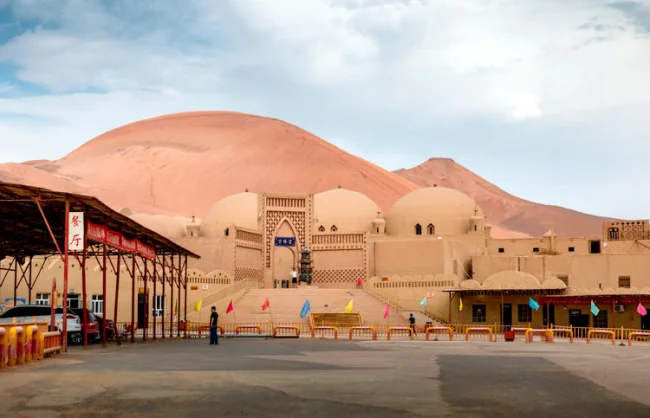
From the entrance square, you can take a panoramic view of the Flaming Mountain Canyon, witnessing the miracle of a lush oasis in a barren land.
Then visit the essential caves – Caves 20, 33, and 38. Interpret the stories of the murals with the help of the guide’s explanation boards.
From the cliff viewing platform – Look down at the Wood Valley River Valley, contrasting the red rocks with the green oasis.
At “The Elderly Musician’s Place” – Take a break and listen to local Chinese music, experiencing the unique atmosphere of China’s Western Regions.
Best Time to Visit
The best time to visit Bezeklik Thousand Buddha Caves is during the months of April to October, when the weather is generally mild and pleasant, making it ideal for exploring the caves and the surrounding areas. However, this is also the busiest time, so if you prefer to avoid crowds and higher prices of accommodation, then November to March would be a good choice. During these months, the weather is cooler and there are fewer tourists, so you can enjoy a more peaceful and personal experience. See our Xinjiang travel guide for more details and top tips.
Bezeklik Caves Location & Transportation
Bezeklik Thousand Buddha Caves are located at the Flaming Mountain Area, Gaochang District, Turpan. 39 km from Turpan downtown, it is easily accessible. First, reach Turpan via the Lanzhou-Urumqi High-speed Railway or by flying from major cities like Lanzhou, Beijing, or Chengdu. From Turpan to the caves is about a 45-minute drive. The most convenient way to get there is by taxi, with round-trip fares ranging from CNY 150-200. Car rentals are available for CNY 300-400 per day. Alternatively, take a local bus to Shanshan County, then transfer to a tuktuk or shared taxi for the final leg. For a guided experience, consider joining a Xinjiang tour with us to get rid of Language barriers.
Tips for Visiting the Bezeklik Caves
- Put onyour comfortable walking
- The Bezeklik Thousand Buddha Caves area cliff-side Buddhist art treasure trove with perilous terrain. The area is quite challenging. To ensure your safety, please do not visit the unopened areas.
- A local professional guide can help you understand its Buddhist culture and historical knowledge.
- Let’s protect the murals. Do not take photos or videos inside the cave. If you do, you will face a fine.
- Please do not touch the murals.
- Do not smoke inside the caves.
- The altitude here is approximately 2,000 meters. For most people, if they do not engage in strenuous activities, they will not experience altitude sickness.
Attractions Nearby Bezeklik Caves
Bezeklik Thousand Buddha Caves are located in a region rich in natural and cultural attractions. Some of the top attractions nearby include:
- Grape Valley:Grape Valley is a scenic area located near Flaming Mountains, known for its vineyards, fruit orchards, and natural beauty.
- Jiaohe Ancient City: Jiaohe Ancient City is an ancient Silk Road city located near Flaming Mountains, featuring well-preserved ruins and artifacts from the Han and Tang dynasties.
- Turpan Museum:Turpan Museum is a must-visit attraction for history buffs, featuring artifacts and exhibits related to the region’s rich cultural heritage.
FAQs about Bezeklik Thousand Buddha Caves
What is the historical significance of the Bezeklik Thousand Buddha Caves?
It is the representative of Gaochang caves and an important component of the world’s Buddhist grotto art. The mural art here integrates cultural elements from the Central Plains, Kucha and Persia, etc. The unearth documents include several kinds of characters and the content involves the Buddhism, Manichaeism, Taoism and Confucianism.
What does the name “Bezeklik” mean in the Uighur language?
Bezeklik means the mountainside. It vividly depicts the location of the cave, on the mountainside of the cliff.
When were the caves first excavated, and during which dynasties did they flourish?
The caves were first excavated in the late Northern and Southern Dynasties. Specifically, it is during the period of the Gaochang Kingdom of Qu family (499-640 AD). In the Gaochang Uighur Kingdom (9th – 12th centuries), it reached the peak and was established as the royal temple.
What facilities (restrooms, visitor center, etc.) are available on-site?
The visitor center is at the entrance, where you can buy tickets and deposit your items. The restroom is also inside the center. It opens from 10:00 to 19:00. There is no restaurant in the scenic area.
Plan Your Xinjiang Turpan Tour with China Xian Tour
Xinjiang is not only featured by the cultural landscapes, its important role on the Silk Road and the natural wonders here, such as the Sayram Lake, are also attractive for tourists. To plan a tour here, the most important problem is the transportation. The reason is that most scenic spots are far from each other, it is hard to arrange the transportation between them. But travel with China Xian Tour, you will not worry about it. We will tailor a reasonable itinerary based on your needs to avoid detours and arrange a driver to escort you. So you can enjoy a carefree tour. Do not hesitate to contact us.