



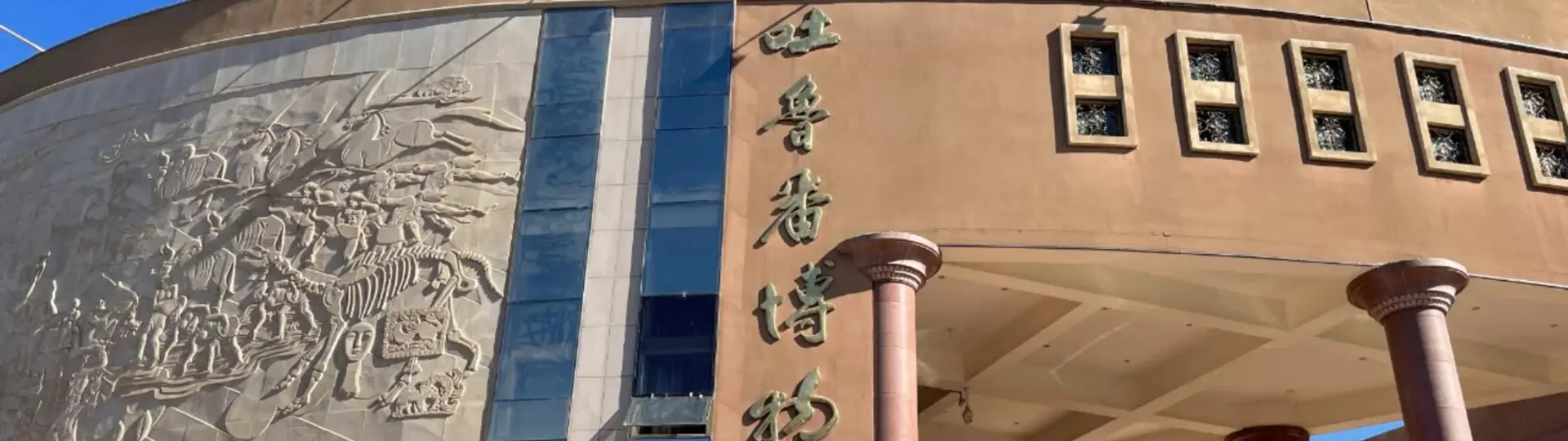
Turpan, a mysterious and ancient place, has been a cradle of rich historical and cultural treasures. Turpan Museum was established in 1965 and later relocated to the current location. This cultural gem in the hot area covers a total area of 17,571 square meters, with an exhibition area of 4,278 square meters, making it huge in scale and only second to the Xinjiang Uygur Autonomous Region Museum.
The large collections here show the brilliant civilization from the Western Han Dynasty to the Tang Dynasty, the time when the Silk Road reached its heyday. Most of these precious relics are from Turpan, and it has turned into one of the world’s richest open-air archaeological museums. For those who are about to start a China Silk Road travel adventure, Turpan Museum gives a telling insight into the region’s rich past.
Quick Facts of Turpan Museum
- Chinese Name:吐鲁番博物馆
- Location:On Muna’er Road, No. 1268, in Gaochang District, Turpan City, Xinjiang Uygur Autonomous Region.
- Opening Hours:10:00-18:00 (Tuesday-Sunday)
- The Entrance Fee: Free of Charge
History of Turpan Museum
Turpan Museum, founded in 1956, initially held a humble ground of about 9 acres with a building area of 2,000 square meters. But with several relocations and expansions, it became what it is today. In December 1989, extensive preparatory measures were made for Turpan Museum in China to pave the way for the construction of the new museum. The milestone was reached by September 2006 with the preparation for the new museum. After meticulous planning and construction, the new museum’s doors were finally opened to the public on September 26, 2009.
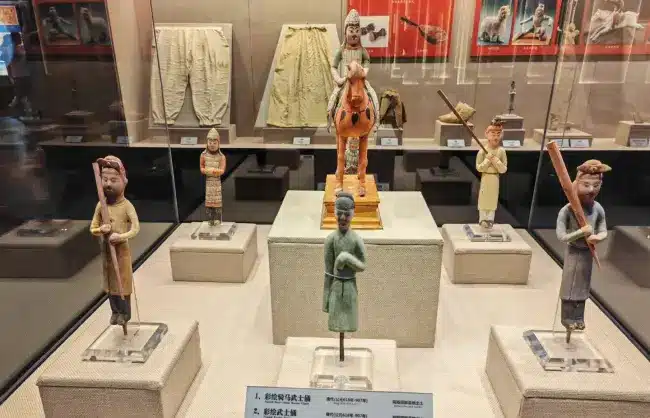
Top Things to See in Turpan Museum
Stepping into the Turpan Museum feels like a Turpan tour of space and time, immersing oneself into the long stretch of history. Here are some highlights you cannot miss when visiting the museum:
General History Exhibition of Turpan Area
Uncover the history and culture of Turpan, from the Stone Age to the Qing Dynasty, along a chronological timeline. Over 380 artifacts, ranging across more than 30 categories like stoneware, pottery, woodwork, and textiles, are on display. Highlights include shards of “Records of the Great Tang Dynasty in the Western Regions,” the world’s oldest known prosthetic limbs, the earliest mooncakes, and China’s oldest grapevines, all leaving you gasping.
Giant Rhinoceros Fossil Exhibition
The treasure of the museum is the exquisite giant rhinoceros fossil in the exhibition hall. It was unearthed in 1993 and is 9 meters in length, 5 meters in height. It is China’s only complete skeleton of a giant rhinoceros that has been discovered to date. The giant rhinoceros, one of the largest land mammals ever discovered, fascinates tourists with its enormity and natural wonders.
Exhibition Hall of Turpan Unearthed Mummies
Witness eleven mummies in Turpan Museum, spanning from the Spring and Autumn and Warring States Periods to the Qing Dynasty. The mummies were formed under Xinjiang’s unique natural conditions and retain their bones, internal organs, skin, and hair in good shape. From generals and shamans to common people, they are of immense value in uncovering ancient climate, ethnicity, society, clothing, and diseases in Xinjiang.
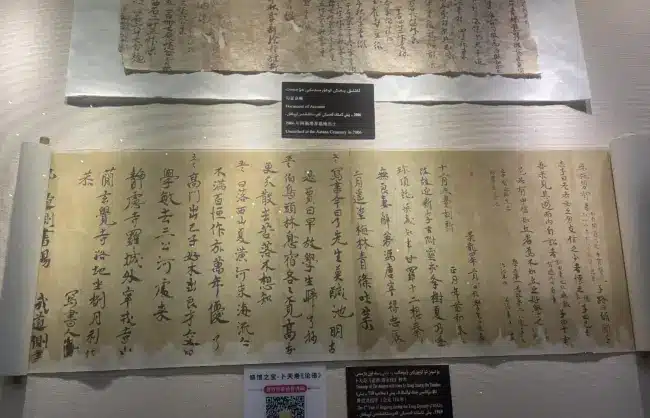
Turpan Unearthed Documents Exhibition
Another place of interest is the richness of ancient documents. Household registers, grain vouchers, medical prescriptions, official documents, private letters, Buddhist scriptures, and sales contracts, 24 scripts in total, are valuable historical materials for studying the ancient societies of the Western Regions and Turpan. Not only do they document the political, economic, cultural, religious, and ethnic background, but they also reflect vividly on everyday life in those times.
Turpan Unearthed Coins Exhibition
Another key feature is a collection of ancient coins. Central Plains and Turpan local currencies, those circulated in Central Asia, West Asia, and even Europe, all appear here. These coins record economic and cultural exchanges on ancient Silk Road centuries ago, casting an impression of ancient prosperity in business.
Multimedia Interactive Display
Talk to portraits in the mural “Six Screens of Liansheng Jianxun Tu” at multimedia display case. This massive mural, discovered in the tomb of a Tang Dynasty Gaochang official, represents the gentlemen rules of behavior in six portraits of individuals and objects. Through interactive interaction, visitors are given additional information about ancient manners and morals.
Fuxi Nuwa Statue
The two statues standing side by side are impressive. One depicts them as Hu people with deep-set eyes, tall nose, and curly beard, the other appearing to be closer to the Han people of the Central Plains. The statues illustrate the knowledge of the ancient world on the universe and life and cultural exchanges and fusions between ethnic peoples.
The Frescoes of Life in the Manor
Discover the mural “Life in the Manor,” found in Turpan Astana Ancient Tomb Complex’s M408 chamber, where Turpan Basin ancestors are shown vividly planting grapes and brewing wine 1,600 years ago. With ink lines sketching out the entire process of juicing, filtering, boiling, distilling, and canning grapes, the mural takes tourists back to those times of prosperity, making Xinjiang tours more appealing.
Best Time to Travel
The best time for Xinjiang travel to the Museum tends to be between March and September annually. During these periods, the weather of Turpan is actually quite suitable for traveling and tourism exploration and to sightsee. True, June and July experience the scorching heat, with temperatures often crossing 40 degrees. But if you are ready for the harsh weather and decide to go early morning or late afternoon, you can escape the hot sun and still enjoy Turpan Museum’s fascinating historical and cultural displays.
How to Get to Turpan Museum
Public Transportation
- Train
From Urumqi, take a train to Turpan North Railway Station. Depending on the time of departure you select, the journey is 1 to 2 hours.
- Buses
Turpan city center has buses that directly take a trip to Turpan Museum. Although the bus fares are affordable, it’s best to check their timetable so that there won’t be any delay.
Self-Driving
Self-driving from Urumqi or wherever you’re coming from is another convenient option. The drive is well signposted, with you having an eyeful of stunning sceneries while you drive into Turpan city Museum.
Taxis/Ride-Sharing Apps
No matter whether you are at Turpan North Railway Station or walking in the city, simply take a taxi or ride-sharing service to get there easily.
Attractions near Turpan Museum
- Karez Well System: It’s a very significant water project and one of the top things to do in Turpan. It is composed of wells, tunnels, outlets, canals, and reservoir ponds. It utilizes the ground slope intelligently to bring up the water for farming, satisfies the thirst of people and animals.
- Sugong Pagoda and County King’s Mansion: Sugong Pagoda is the largest in Xinjiang, with over 240 years to its credit. It was built by Emin Hezhuo, the Qing Dynasty hero and king of Turpan, and it speaks volumes about his staunch loyalty.


