


If you’re interested in Chinese history or considering a visit to China, you might have already encountered the term “the Silk Road” quite a few times. Many are wondering, what are some facts about the Silk Road? In this article, we have put together the top 8 Silk Road facts that might be of interest to you.
1. What & Where is the Silk Road

The Silk Road fact #1, it is the world’s longest overland trade route stretching between East Asia and the Mediterranean region as well as parts of North Africa. For thousands of years, it has been used for international trade and cultural exchanges. Traders, diplomats, and travelers journeyed through deserts, mountains, and vast plains, with precious goods, knowledge, and beliefs that shaped civilizations across continents.
2. There Were Five Silk Roads from China
The Silk Road usually refers to the land Silk Road, but in fact, there were five Silk Roads that started from China.
- The mainland Silk Road went from China’s capital at the time through Central Asia to Europe.
- The southern route went through the Karakorum mountains.
- The northern route went into Russia and then westward.
- The Tea Horse Road went through Tibet to India.
- And the Maritime Silk Road went across the South China Sea to Southeast Asia, the Indian subcontinent, Africa, and Europe.
3. Where Does the Silk Road Start and End
As mentioned before, the Silk Road generally refers to the mainland Silk Road, which started in Chang’an (today’s Xi’an), the capital of the Western Han Dynasty, and ended in Rome. It went across countries including Kazakhstan, Kyrgyzstan, Tajikistan, Afghanistan, Iran, Iraq, Syria, Lebanon, Israel, Turkey, Greece, and Italy.
The Maritime Silk Road had no fixed endpoints but primarily connected China’s southeastern ports (e.g., Guangzhou, Quanzhou) with many regions in Southeast Asia, including the Indian subcontinent, East Africa, and the Mediterranean.
4. How Long was the Silk Road?
The total distance of the land Silk Road is about 4350 miles (7000 kilometers), passing through Kazakhstan, Kyrgyzstan, Tajikistan, Afghanistan, Iran, Iraq, Syria, Lebanon and more.
The sea route stretches about 9,320 miles (15,000 km), linking Indonesia, Malaysia, Thailand, Sri Lanka, India, Bangladesh, Pakistan and more.
Popular China Silk Road Tours from Xian
- 10 Days Ancient China Silk Road Tour from Xian to Kashgar
- 11 Days Essence Silk Road Tour from Xian to Urumqi
- 15 Days In-depth Silk Road Tour from Xian to Xinjiang
- 11 Days Xinjiang Silk Road Tour from Kashgar to Xi’an
5. What Countries Did the Ancient Silk Road Pass Through?
The Silk Road was a transcontinental network. It had several routes that passed through dozens of regions and modern-day countries:
- Land Route: China, Kazakhstan, Kyrgyzstan, Tajikistan, Afghanistan, Iran, Iraq, Syria, Lebanon, Israel, Turkey, Greece, Italy.
- Sea Route: China (coastal ports), Indonesia, Malaysia, Thailand, Sri Lanka, India, Bangladesh, Pakistan, Oman, Somalia, Kenya, Tanzania, Greece, Turkey.
6. Why is it Called the Silk Road
This massive network of traffic was not officially named until 1877 when the German geographer and traveler, Ferdinand von Richthofen, first used the term “Silk Road” to describe the trade channel between Europe and East Asia. Silk was the most prominent product of trade in China.
7. History of the Silk Road: When Did it Begin and End
Another Silk Road fact, it began as an official trade network in 130 BC during Western Han Dynasty under the reign of Emperor Wu. The first person recorded in history to walk this route was Zhang Qian, an envoy sent by Emperor Wu.
In 142 BC, he was ordered to go from Chang’an to the west. On his way, he was imprisoned by the Xiongnu army twice. After 13 years of running, he finally returned to Chang’an and reported what he had learned about the Western people and the regions during his journey.
After Zhang Qian’s visit, envoys from Persia and other countries also came to Chang’an to visit, bringing their local specialties and treasures in exchange for Chinese silk, porcelain, and other products. From then on, countless businessmen traveled the route exchanging not just products, but language, religion, and culture as well.
The prosperity of the Silk Road began to wane during the Yuan Dynasty when the Mongols invaded China and heavily influenced Chinese culture and the economy. Then the Ming Dynasty adopted isolationism in 1371 and put a complete stop to cross-border trade and overseas expeditions.
8. Who Started the Ancient Silk Road?
The Silk Road’s formal emergence is the work of Emperor Wu of the Western Han Dynasty (141–87 BCE), who wanted to seek a way to counter threats from the Xiongnu nomads. In 130 BCE, he dispatched Zhang Qian, a royal envoy, to the West. Zhang then started a 13-year journey (138–125 BCE), marked by imprisonment by the Xiongnu, he still made the eventual return. His journey revealed the existence of distant lands, prompting China to establish official trade relations with other regions.
While Zhang Qian is credited as the first recorded traveler, subsequent envoys from Persia, Rome, and other regions followed, transforming the route into a bustling trade artery.
9. The Trade along the Silk Road
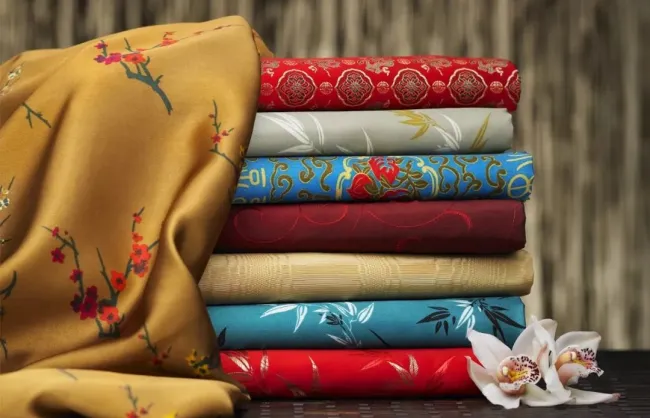
Many important goods were traded on the Silk Road. Apart from silk, China also exported a large amount of porcelain, tea, and bronze products. In exchange, foreign merchants brought horses, woolen products, exotic foods, spices, and glass.
It wasn’t just items that were exchanged on the Silk Road. Significant inventions in human history also went around, like papermaking techniques, gunpowder, glass making.
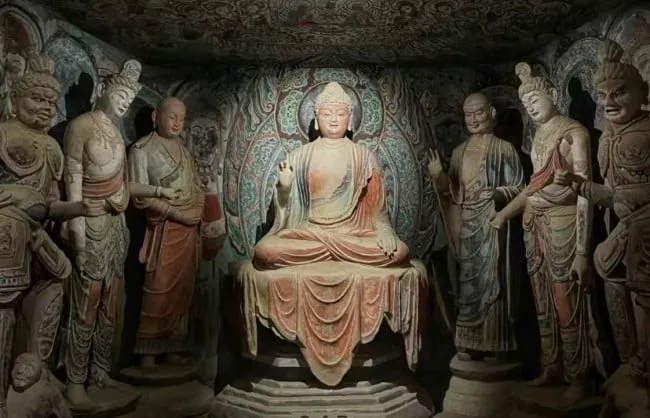
What was equally important was the spread of religion and philosophy. Buddhism, Islam, and Christianity all traveled on these routes carried by people of different backgrounds and races. Most notably, Buddhism was introduced into China and had since become very popular. If you travel along the Silk Road today, you’ll still find many impressive landscapes, Buddhist grottos and sculptures (e.g. Mogao Grottoes), that stand as a testament to history.
Unfortunately, the merchants and travelers carried not just goods, but diseases as well. The Black Death, which broke out in 1347, was a terrible disaster that got spread along the Silk Road. Some research suggests that the roads brought it to Mediterranean regions, where they spread north and south to Europe and Africa.
Recommend Central Asia Silk Road tour:
10. Traveling the Ancient Silk Road: Routes and Challenges
Traveling the Silk Road was never an easy thing.. Merchants, envoys, and pilgrims who embarked on a journey through the Silk Road would have to cross some of the harshest landscapes on earth, such as the Pamir Plateau, all on their own foot or just horseback and camel caravan.
Sometimes if merchants were traveling with precious goods like silk and porcelain, they would also gather together to for large groups which were protected by guards, as there were always bandits and natural dangers along the way.
This arduous journey also shows how human determination and exchanges between regions shaped the course of civilizations.
11. Famous Travelers on the Silk Road
One of the most famous travelers on the Silk Road is Marco Polo, who went to China with his father and uncle when he was 17 years old. After returning to Italy in 1295, he brought back not only great wealth, but accurate information about China as well. His book about his journey made him throughout history.
Another famous traveler was monk Xuanzang, who made a 17-year pilgrimage to India and brought Buddhist teachings into China. His journey to the west was recorded and became a legendary tale in Chinese history.
Recommend Silk Road Group Tours at the best prices:
- 10 Days China Silk Road Tour from Lanzhou to Urumqi
- 7 Days Silk Road Small Group Tour of Xian-Zhangye-Jiayuguan-Dunhuang
12. Significance of the Silk Road
The Silk Road has had a drastic impact on world history. The network connected powerful civilizations, most notably Han Dynasty, the Parthian Empire, and the Roman Empire.
They exchanged crops and animals which spurred a growth in population, major religion including Buddhism, Islam, and Christianity, and world-changing technologies such as papermaking and gunpowder. In this process, China gained significant wealth and power.
Today, the Chinese government is working on the revitalization of the ancient Silk Road. China has announced plans about highway and train routes constructions to Europe. 40 railway lines already connect China and Europe, making a train ride to Germany only 18 days. This trillion-dollar project aims to make traveling quicker and cheaper by building a modern Silk Road.
The ancient Silk Road has also attracted countless travelers from China and abroad. Many have made the pilgrimage to witness the rich history along the journey. The newly installed infrastructure has made traveling a lot easier for backpackers and cyclists. Visitors also take buses and trains along the Silk Road or make road trips.
Read more about Why Was the Silk Road Important?
What are the Major Historical and Natural Sites along China Silk Road?
Site |
Type |
City/Region |
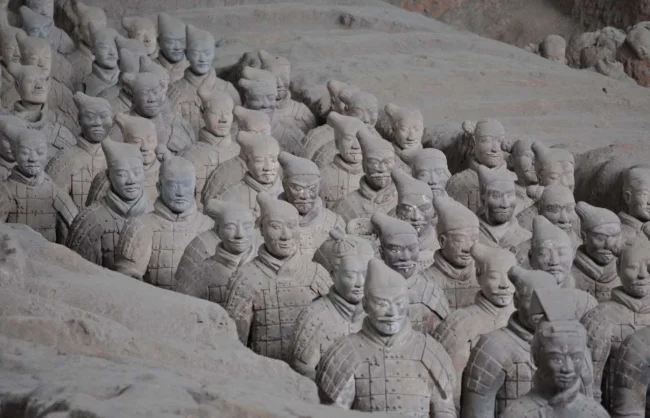
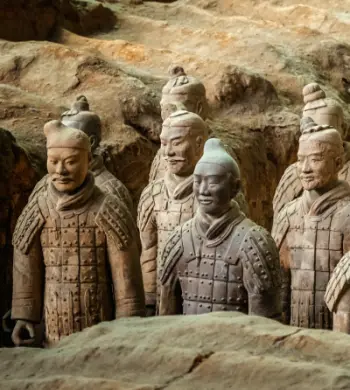
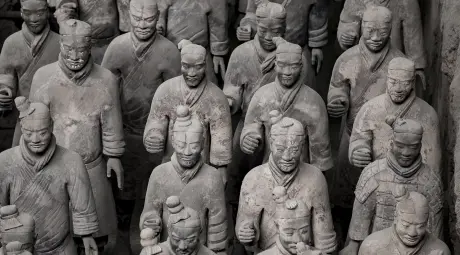
Terracotta Army |
Historical/Archaeological |
Xi’an, Shaanxi |
Mogao Grottoes |
Buddhist Art/UNESCO |
Dunhuang, Gansu |
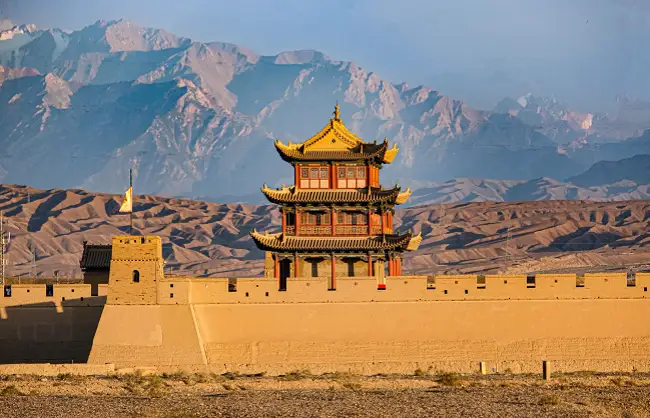
Jiayuguan Pass |
Great Wall Fort/UNESCO |
Jiayuguan, Gansu |
Flaming Mountains |
Natural Landmark |
Turpan, Xinjiang |
Jiaohe Ancient City |
Ruins/UNESCO |
Turpan, Xinjiang |
Kashgar Old Town |
Historical/Islamic Culture |
Kashgar, Xinjiang |
Taklamakan Desert |
Natural Desert |
Xinjiang |
Kizil Caves |
Buddhist Caves |
Kucha, Xinjiang |
The Ancient Route is Home to Many UNESCO World Heritage Sites
You will meet a lot of UNESCO World Heritages sites along the Silk Road. Attractions such as the Mogao Caves in Dunhuang, Jiaohe Ruins in Turpan, and the Jiayuguan Fortress have all attracted countless visitors with their cultural and historical richness. Together, these places are like pieces of a jigsaw, putting all of them together then you’ll get a full picture of how Eastern and Western civilizations continuously got blended along the Silk Road for centuries.
FAQs about the Silk Road
Which major cities served as key trading hubs along the route?
Xi’an, Dunhuang, Samarkand, Kashgar, and Baghdad were some the most important hubs.
Why did the Silk Road decline?
Several factors contributed: the rise of maritime trade routes, political instability, Mongol invasions, and the Ming Dynasty’s policy of isolation.
Did the Silk Road operate continuously throughout its history?
No. While the route existed for centuries, factors like wars, natural disasters, and shifting empires had often stopped people from traveling the road. The most flourishing time for silk road travel was always the stable times, especially under the Han and Tang Dynasties.
What were the most important goods traded on the Silk Road besides silk?
Besides silk, there were also precious porcelain, tea, and paper being exported from China. Imports included horses, glassware, spices, wool, and precious stones.
Explore the Epic Silk Road with China Xian Tour
Traveling along the Silk Road tours has long become a highlight of China tour, because it allows you to see some of the most magnificent cultural, historical, and natural heritages you can find on this planet. However, since there are too many iconic attractions waiting for you to explore, planning a smooth Silk Road trip on your own can be quite overwhelming, and that why we recommend you to travel with China Xian Tour.
With experiences accumulated over a decade, we’re dedicated to making your journey effortless and rewarding. Our expert local guides, who will be there for you for 24 hours a day, are looking forward to sharing the most in-depth stories of the site along the Silk Road, while our customized itineraries and reliable transfers can ensure you travel at your own pace without stress. From start to finish, we’ll take care of all the preparation for you so that you can fully enjoy the incredibly beautiful pictures revealing in front of your eyes.